A new study made the case for personalized diagnostic toilets capable of tracking health data from feces and urine.
Why it matters: Don't laugh — what comes out of your body can be very revealing about the state of your health. Smart toilets would enable us to track that health data at home, which suddenly seems more useful.
A new report recommends stimulus spending to help close the digital divide revealed by pandemic social distancing.
Why it matters: Right now many Americans can't easily access remote work or education, which leaves them behind and limits their ability to safely carry out social distancing. Stimulus spending could be diverted to address those gaps, which would also leave us better prepared to respond to the next pandemic.
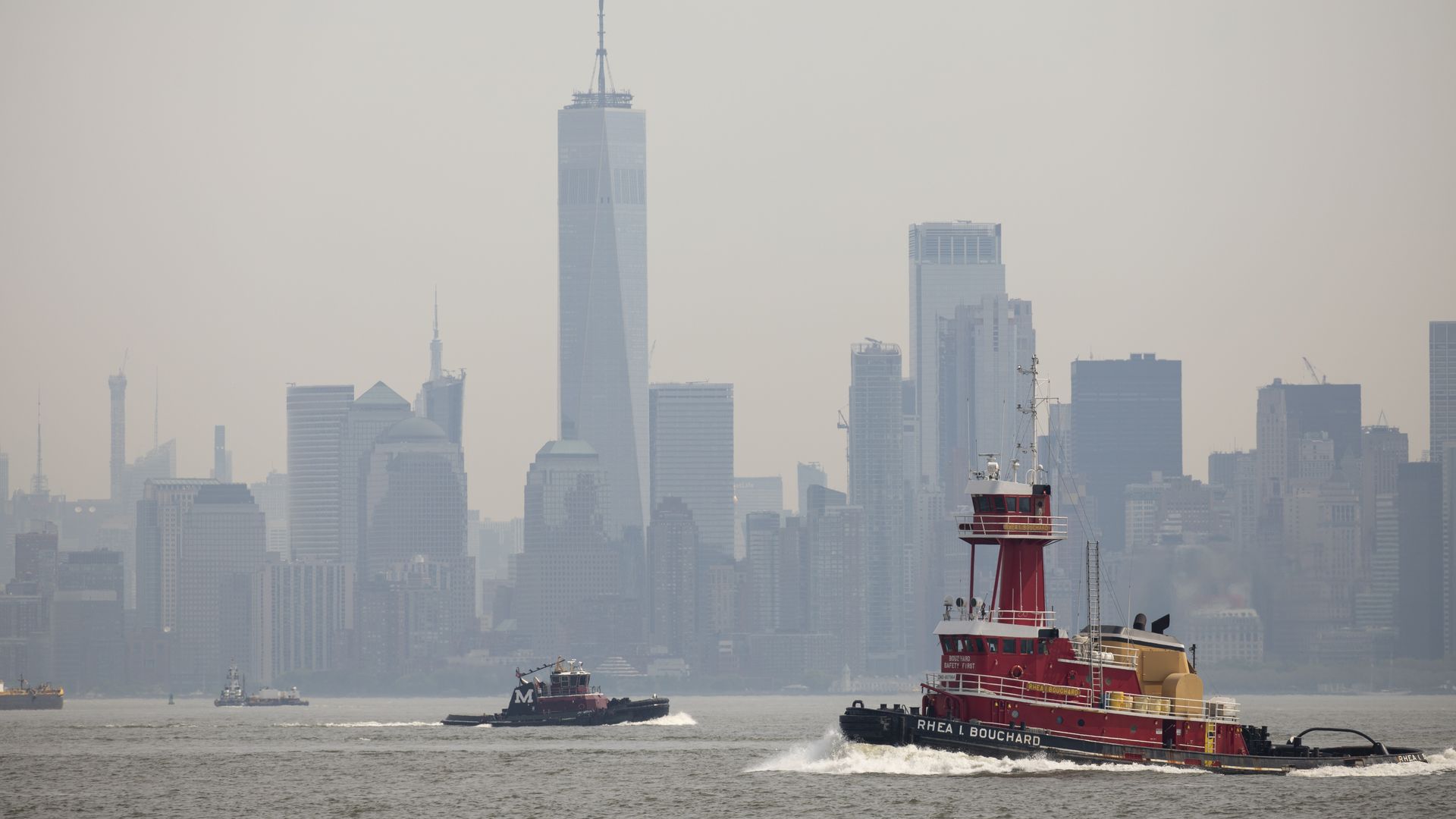
COVID-19 is underscoring the connection between air pollution and dire outcomes from respiratory diseases.
Why it matters: Old-fashioned air pollution is almost certainly the single biggest environmental health threat, contributing to the deaths of some 7 million people a year according to the WHO, making it comparable to deaths from smoking.
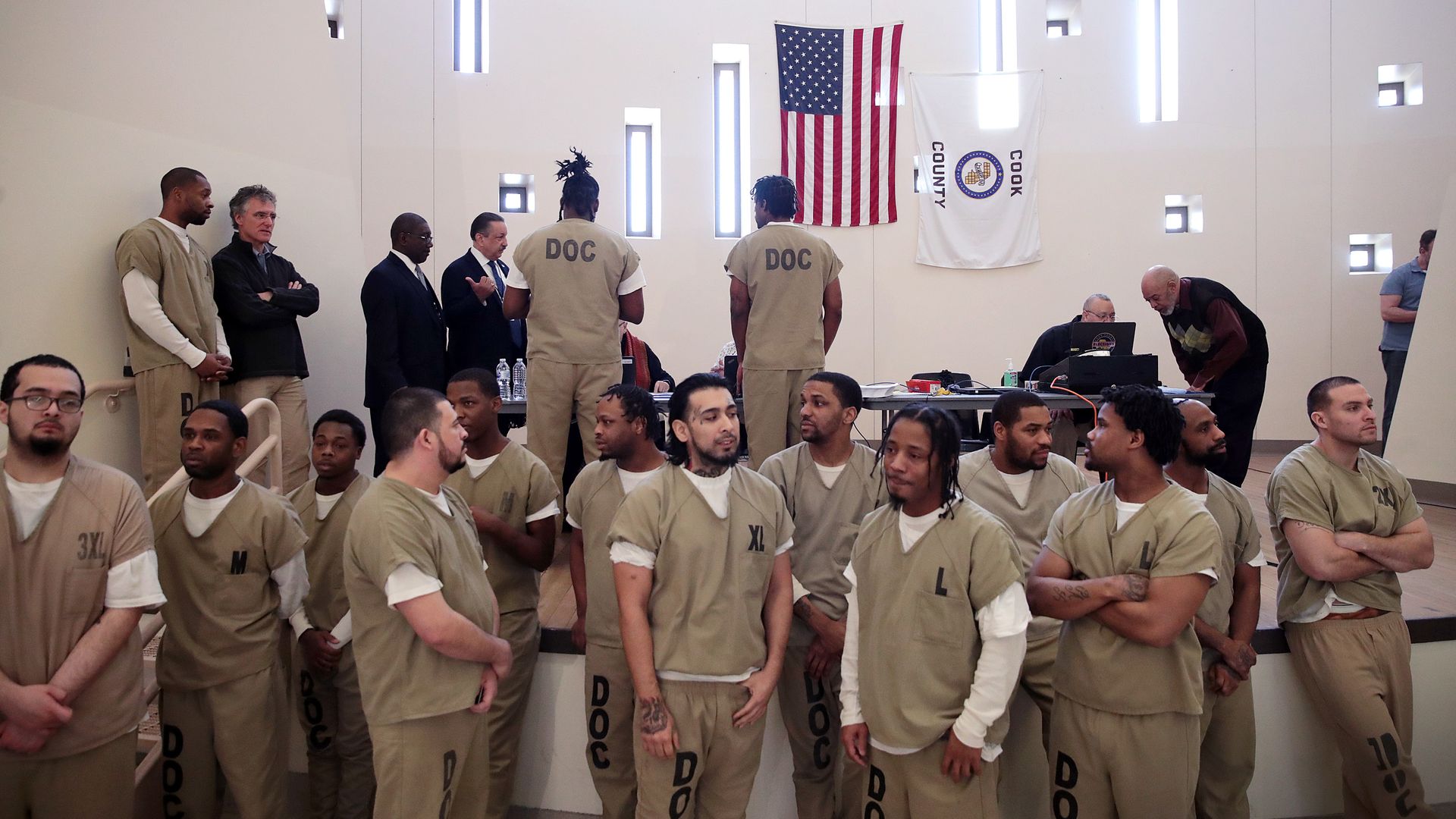
Chicago's Cook County jail is the largest-known source of coronavirus infections in the U.S., the New York Times reports.
The big picture: Several state-run jails — including the Cook County facility — have released prisoners to fight the spread of virus between inmates who live in overcrowded and often unsanitary spaces.
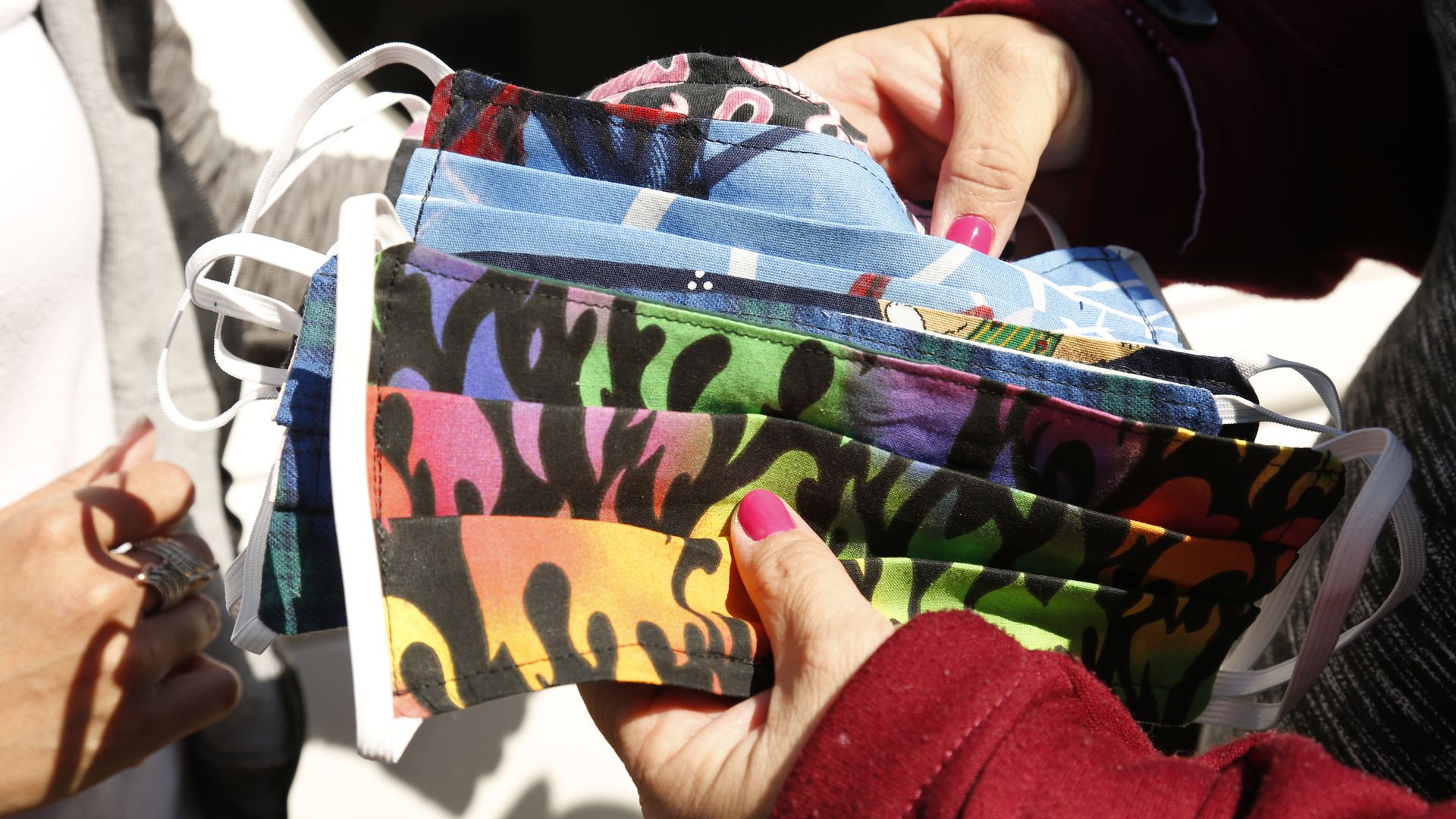
Top Trump administration officials had been developing a plan to give cloth masks to huge numbers of Americans, but the idea lost traction amid heavy internal skepticism.
The big picture: The scale of this undertaking would have been extraordinary, mobilizing an enormous public-private partnership to deliver protective cloth masks to millions of people — in one iteration of the idea, maybe even to every American.
As many as one-third of U.S. jobs may be vulnerable as a result of the coronavirus pandemic, and it will disproportionately displace low-income workers that do not have the financial cushion to absorb the economic blow.
Why it matters: The dire economic ramifications of the national shut-down stand to devastate those that can least afford it. Nearly 10 million Americans have filed for unemployment claims in recent weeks.
Air travel — and the jet fuel powering it — are plummeting alongside most other parts of our modern economy as vast swaths of the world shut down to fight the coronavirus.
The big picture: Data that has newly become available shows the dramatic impact of global shutdowns, which will reverberate across the livelihoods of people working in these sectors.
A rare bipartisan group of lawmakers is calling on global health organizations to permanently ban the buying and selling of live wildlife, which is likely the root cause of the novel coronavirus outbreak.
Driving the news: Nearly 70 Democrats and Republicans from both chambers of Congress are sending a letter on Wednesday calling on top officials at the World Health Organization, UN and World Organization for Animal Health to do just that.
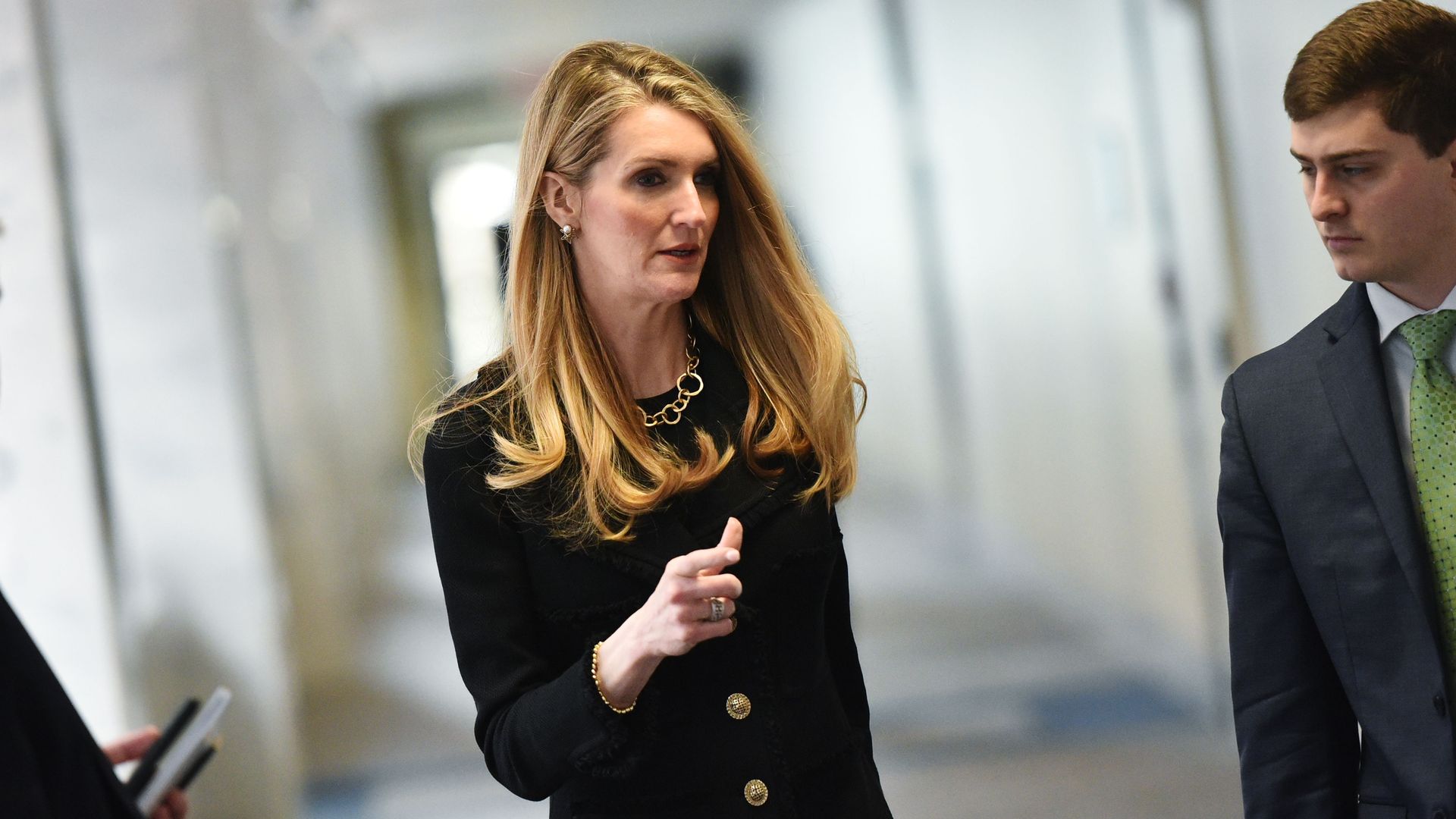
Sen. Kelly Loeffler (R-Ga.) and her husband Jeffrey Sprecher are liquidating their stock portfolio and moving holdings into exchange traded funds (ETFs) after coming under fire for purchasing and selling roughly $1.4 million in stock just before the market crashed in response to the coronavirus pandemic.
Why it matters: Loeffler, who faces a competitive reelection fight in November, is one of several senators under fire for selling shares shortly after a private briefing on the coronavirus — sparking accusations of insider trading.
Jack Dorsey, Bill Gates and other billionaires are pledging big money to address the coronavirus crisis. But as billionaires do good, do they become too powerful? Dan digs in with Recode reporter Teddy Schleifer.
Amid the coronavirus pandemic, nearly one-third of apartment renters in the U.S. didn't make their April payments, according to numbers from the National Multifamily Housing Council and a group of real-estate data providers.
By the numbers: 69% of tenants paid some rent between April 1-5, down from 81% in the first week of March and 82% in April 2019.
The U.S. is starting to see "glimmers of hope" when it comes to the coronavirus pandemic, despite recent increases in the rate of reported deaths due to the illness, Dr. Anthony Fauci, Director of the National Institute of Allergy and Infectious Diseases, told Fox News.
The big picture: Fauci said deaths generally lag behind the number of new cases and hospitalizations. The latter two indicators are what's "fueling the outbreak," Fauci said. He pointed to stabilizing or decreasing numbers of key indicators in New York as a sign that "we should start to see the beginning of a turnaround," after this week.
The major tech companies are scrambling to craft digital options for this year's summer intern class, as businesses remain shuttered due to the coronavirus pandemic.
Why it matters: Internships serve as key learning opportunities for students, but are also critical for the recruiting and diversity efforts of the Big Tech companies who compete fiercely for college talent.
Staples recently informed landlords that it will not pay April rents for its U.S. stores, even though the locations remain open, Axios has learned.
Why it matters: Commercial landlords are stuck in a tightening vise, forgiving or deferring payments from shuttered tenants while still needing to meet their own mortgage obligations.
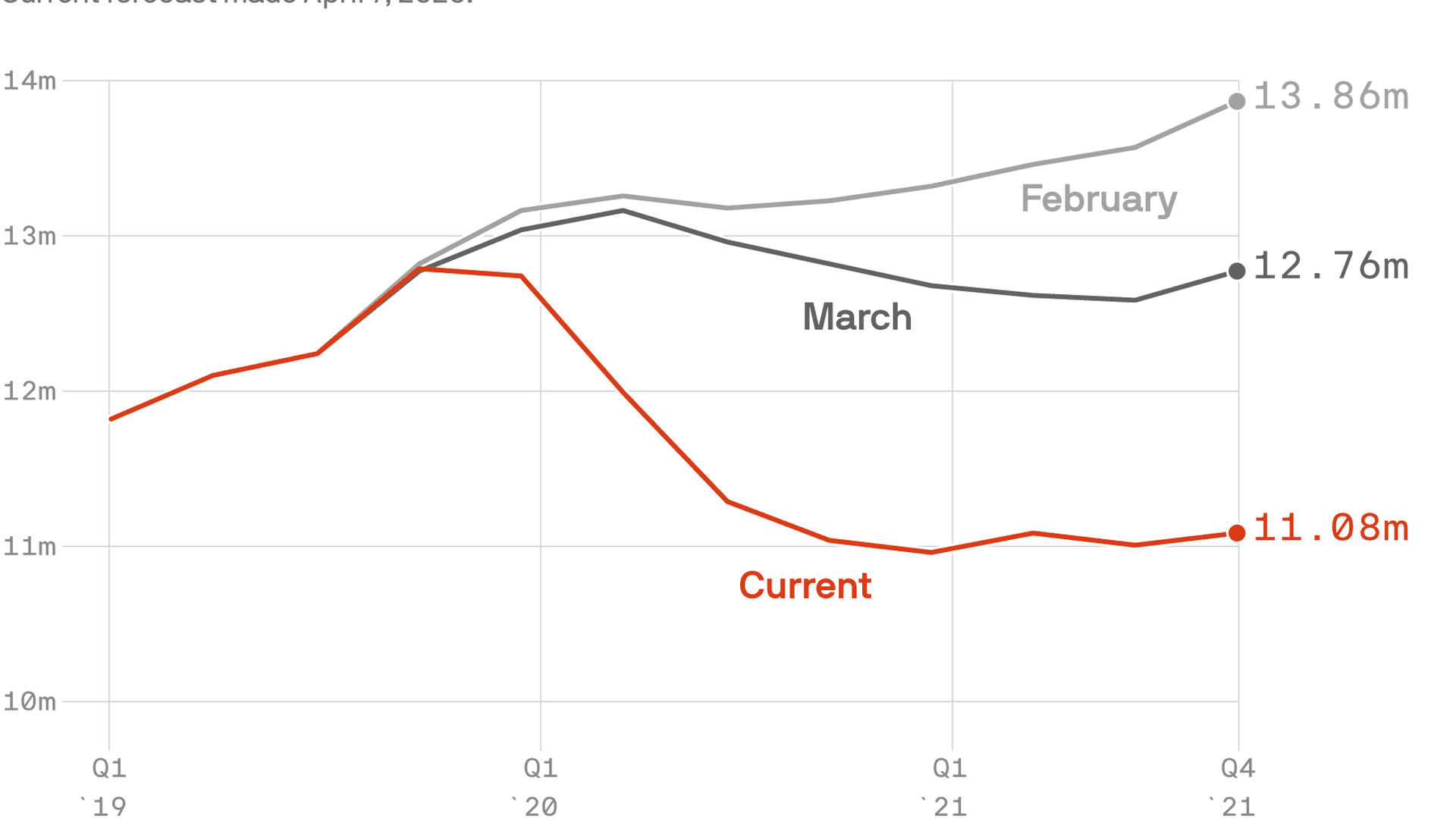
Pain in the U.S. oil patch from the coronavirus outbreak is no longer on the horizon. It's here, and several new reports and data points show how quickly it's happening.
Driving the news: The Energy Information Administration yesterday released a sharp downward revision to its U.S. crude oil production forecast.
If there's no baseball season in 2020, Mike Trout could lose his best chance at a career year — and it could ultimately keep him from becoming baseball's new home run king.
The state of play: Trout's power numbers (HR and slugging percentage) have steadily increased through his career, while his strikeouts and stolen bases have gone down. That's indicative of a player who understands how to age gracefully — and because he's also a hitting savant, you can understand why he may be headed for a HR boom.
In an attempt to skirt federal and state guidelines during the coronavirus pandemic, the UFC plans to hold its April 18 pay-per-view event on tribal land in California, per multiple reports.
The state of play: Even as the rest of the sports world hits pause, UFC president Dana White has remained adamant that fights must go on, and appears to have settled for a shutdown casino in a state with the fourth-most confirmed cases of coronavirus.
After largely ignoring the coronavirus outbreak in January, news about the pandemic has been just about the only thing that has mattered to investors since the market's initial fall from record highs on Feb. 23.
Why it matters: Stock prices have bounced back since hitting a low on March 23, but analysts warn the gains are likely "bear market rallies" not backed by data.
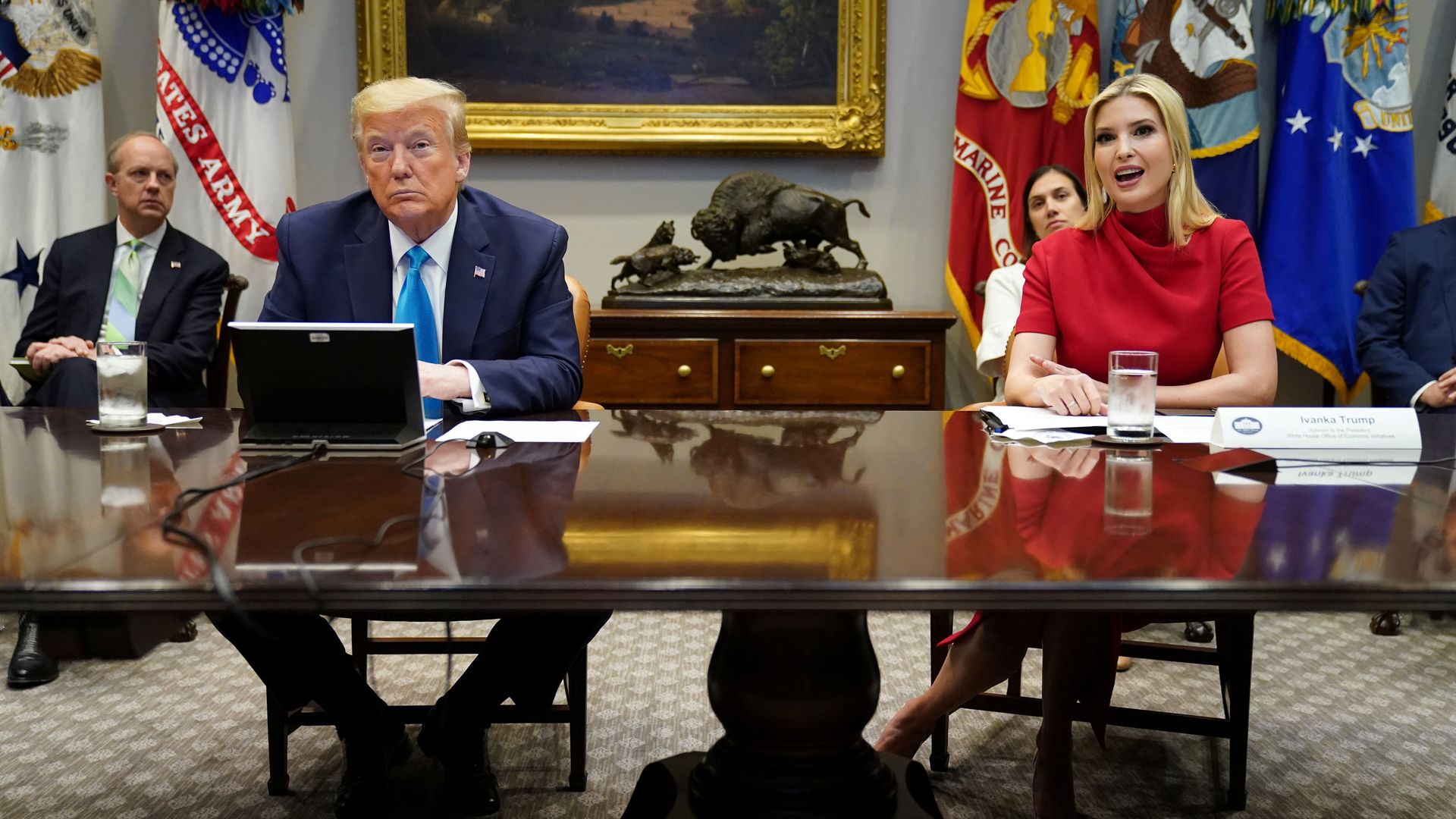
Ivanka Trump personally lobbied top bank executives to line up the $1.5 billion in commitments to small business that were announced yesterday at a videoconference among the bank executives and President Trump — stoking competitive juices among the execs to drive up their commitments.
The state of play: Ivanka, who has had workforce development in her portfolio going back to 2017, plans an increasing emphasis on small businesses in the weeks ahead as they navigate the rescue bill’s Payroll Protection Program, sources tell me.
Public transit systems across the country are experiencing a painful trifecta: Ridership has collapsed, funding streams are squeezed, and mass transit won't bounce back from the pandemic nearly as fast as other modes of transportation.
Why it matters: Transit agencies could see an annual shortfall of as much as $38 billion due to the coronavirus pandemic,according to TransitCenter. At the same time, they're more important than ever, with more than 36% of essential workers relying on public transportation to get to work.
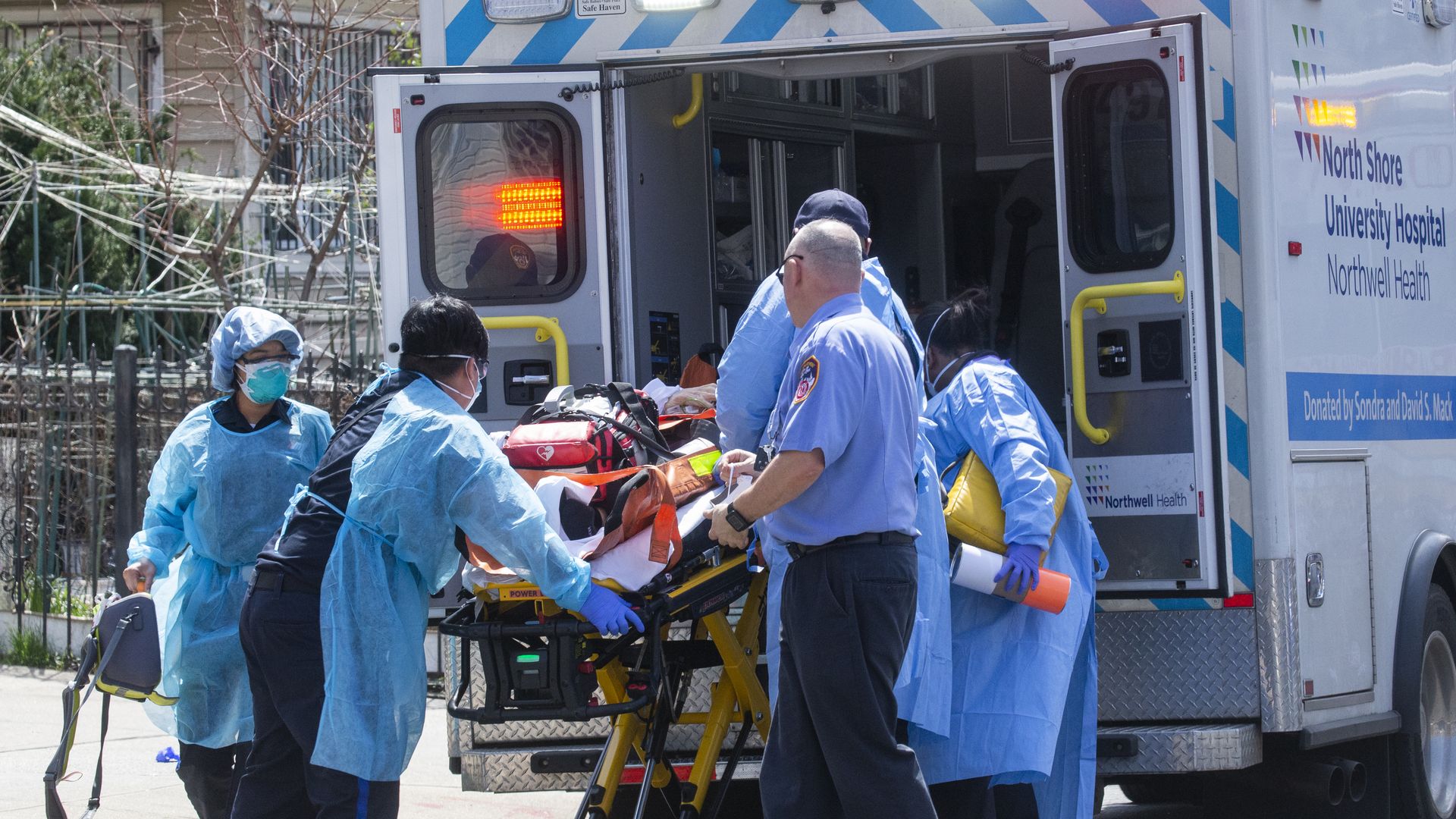
There's some hope the wave of coronavirus cases in New York City, the hardest-hit area of the country, is starting to plateau.
The big picture: Deaths keep rising, but hospitalizations, intensive care unit admissions and intubations have mostly been stagnant or declining in recent days.
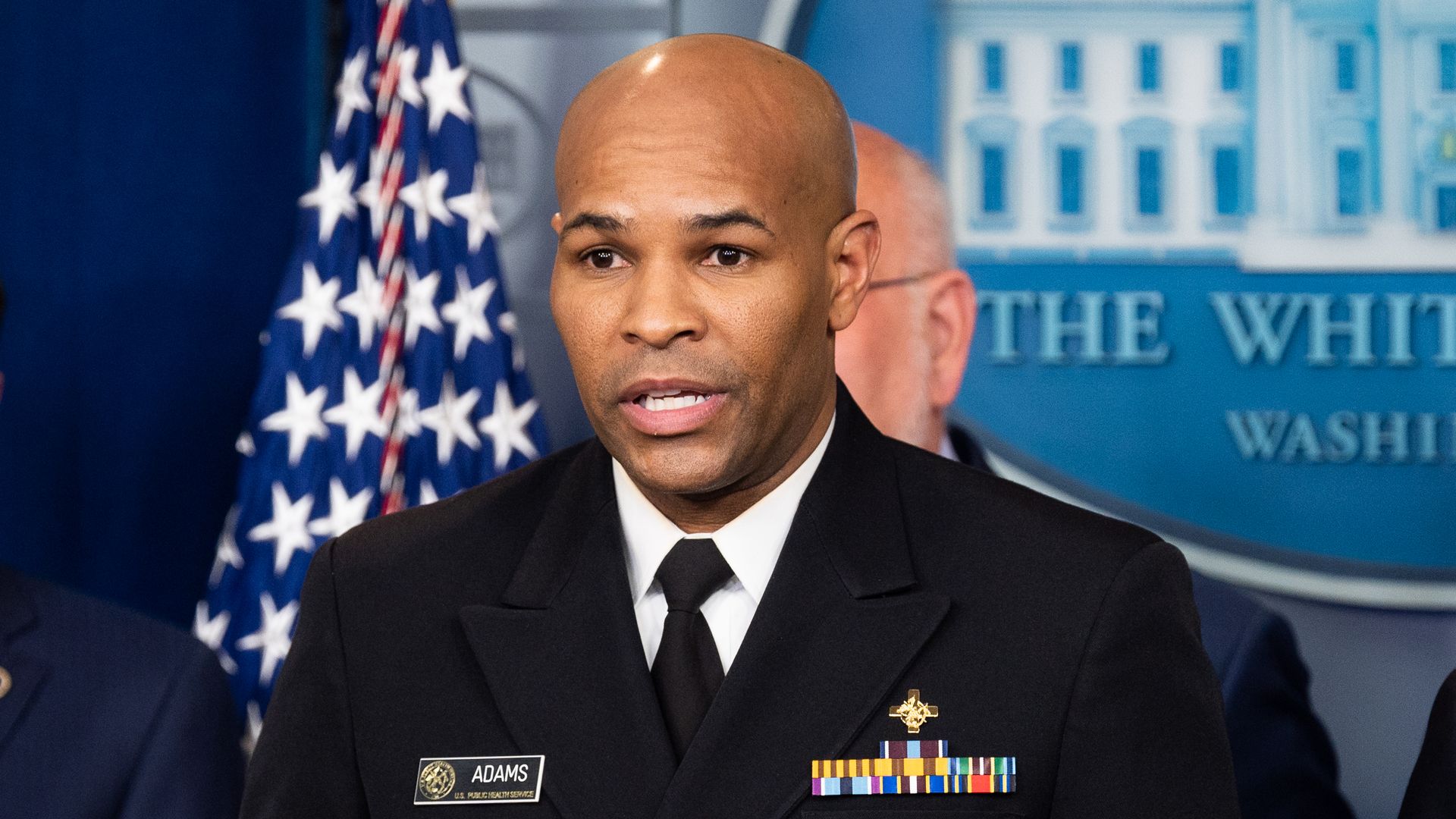
U.S. Surgeon General Jerome Adams has highlighted the disproportionate impact the novel coronavirus is having on African American communities, telling CBS Tuesday "many black Americans are at higher risk for COVID."
Driving the news: Several states and cities have reported that African Americans are dying from the virus at higher rates than any other racial demographic. Not all agencies have released a breakdown of data, but the virus is spiking in cities with large African American populations, including New York, Chicago, Detroit, Milwaukee and New Orleans.
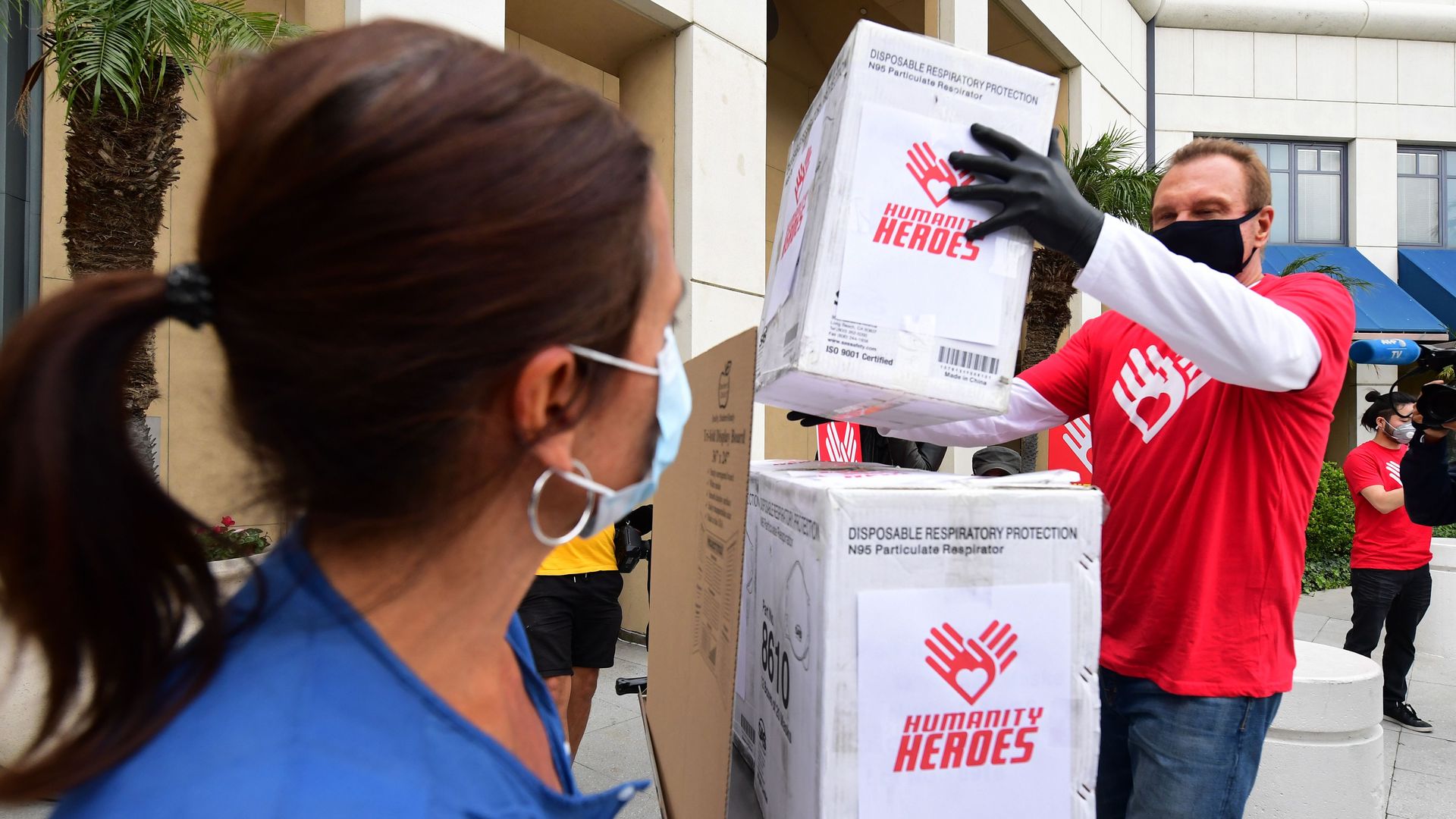
California Gov. Gavin Newsom is confident that more than 150 million N95 masks and over 50 million surgical masks will be delivered to the state "at a monthly basis starting in the next few weeks," he said Tuesday on MSNBC's Rachel Maddow Show.
The big picture: States, hospitals and the federal government are trying to make existing medical supplies last while they desperately try to find more equipment.
President Trump claimed at a press briefing on Tuesday that the World Health Organization "probably" knew about the dangers of the novel coronavirus pandemic months before the agency sounded the alarm.
The big picture: The WHO declared COVID-19 a public health emergency of international concern on Jan. 30 — 9 days after the CDC confirmed the first case in the U.S. and 10 days after South Korea announced its first case. Chinese officials told the WHO's China office about cases of COVID-19 on Dec. 31.
President Trump cast doubt on the reliability of mail-in voting for the 2020 election at a White House briefing on Tuesday, calling it "very dangerous" and "corrupt," without offering evidence.
Why it matters: Several states have elected to expand mail-in voting for 2020 primaries as more than 300 million Americans in nearly all states are being asked to stay home to fight the spread of the novel coronavirus.