Why it matters: The popularity of such stories, which largely describe behavior as old as time, reveals something important about how the American Dream has changed significantly in the wake of the pandemic, especially for Gen Z and younger Millennials.
Sports franchises only ever seem to rise in value — as do the value of the contracts those teams give their players. Much of that money comes from fans, in one way or another. But a lot of it comes from non-fans, too.
Why it matters: If you're one of the large but dwindling band of Americans who still buys a cable bundle, then you almost certainly fall into one of two groups — people who watch sports, and people who don't.
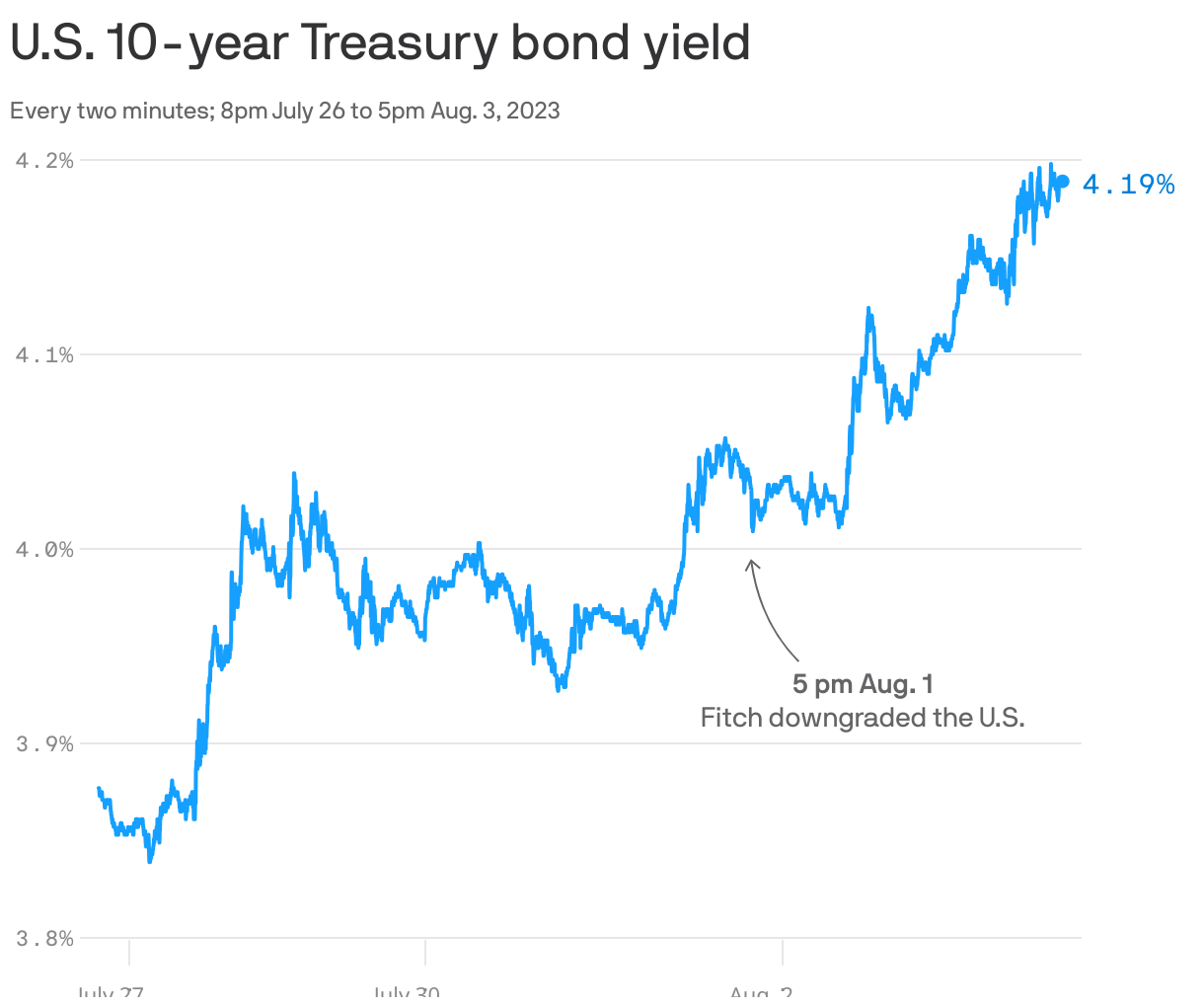
Two noteworthy thingshappened in the world of Treasury bonds last week: Fitch Ratings downgraded the U.S., and the benchmark 10-year bond yield rose to a level not seen since November.
Why it matters: The Fitch report hit the U.S. on multiple fronts, citing "fiscal deterioration," "erosion of governance," and more.
Working remotely, watching movies at home, texting instead of meeting up — all of it, while useful in many ways, contributes to a crisis of isolation that concerns author Andy Field.
Why it matters: At a time when a feeling of disconnectedness is prevalent for many Americans — whether due to the pandemic, social media, work trends or content streaming — it's easy to forget the power of encountering someone in real life.
The great hiring boom of the pandemic recovery is ending, but July's jobs numbers show the super-hot labor market isn't.
Why it matters: A long-awaited deceleration in job creation is underway, which should take some steam out of growth, but it is occurring against the backdrop of a labor market that remains as tight as nearly anyone can remember.
There's one sector where hiring moderation is clear: leisure and hospitality.
Why it matters: In 2022, the labor market was fueled by restaurants, bars, hotels and others in the sector staffing up at a furious pace, and offering big pay gains to pull in workers they let go during the pandemic.
Vince McMahon could be the folding metal chair for Endeavor's plans to form a new sports entertainment giant that would merge the WWE and UFC into a publicly traded company called TKO.
Driving the news: WWE this week disclosed in an SEC filing that "federal law enforcement agents executed a search warrant and served a federal grand jury subpoena on Mr. McMahon."
Fearless Fund, an Atlanta-based venture capital firm focused on startups led by women of color, is being sued by a group founded by Edward Blum, the man behind the recent Supreme Court case that struck down affirmative action in higher education.
Why it matters: This is the opening salvo in a new effort to challenge race-based policies in Corporate America, including within a venture capital market where Black founders last year raised just 1% of all funding.
In a research note about Friday's jobs report, the chief economist at consulting firm RSM US did something surprising: Instead of talking about rate hikes or soft landings, he made the case for universal child care.
Why it matters: Child care for kids under the age of 5 is increasingly an issue for more mainstream economists who are concerned about the prospect of long-term labor shortages in the U.S.
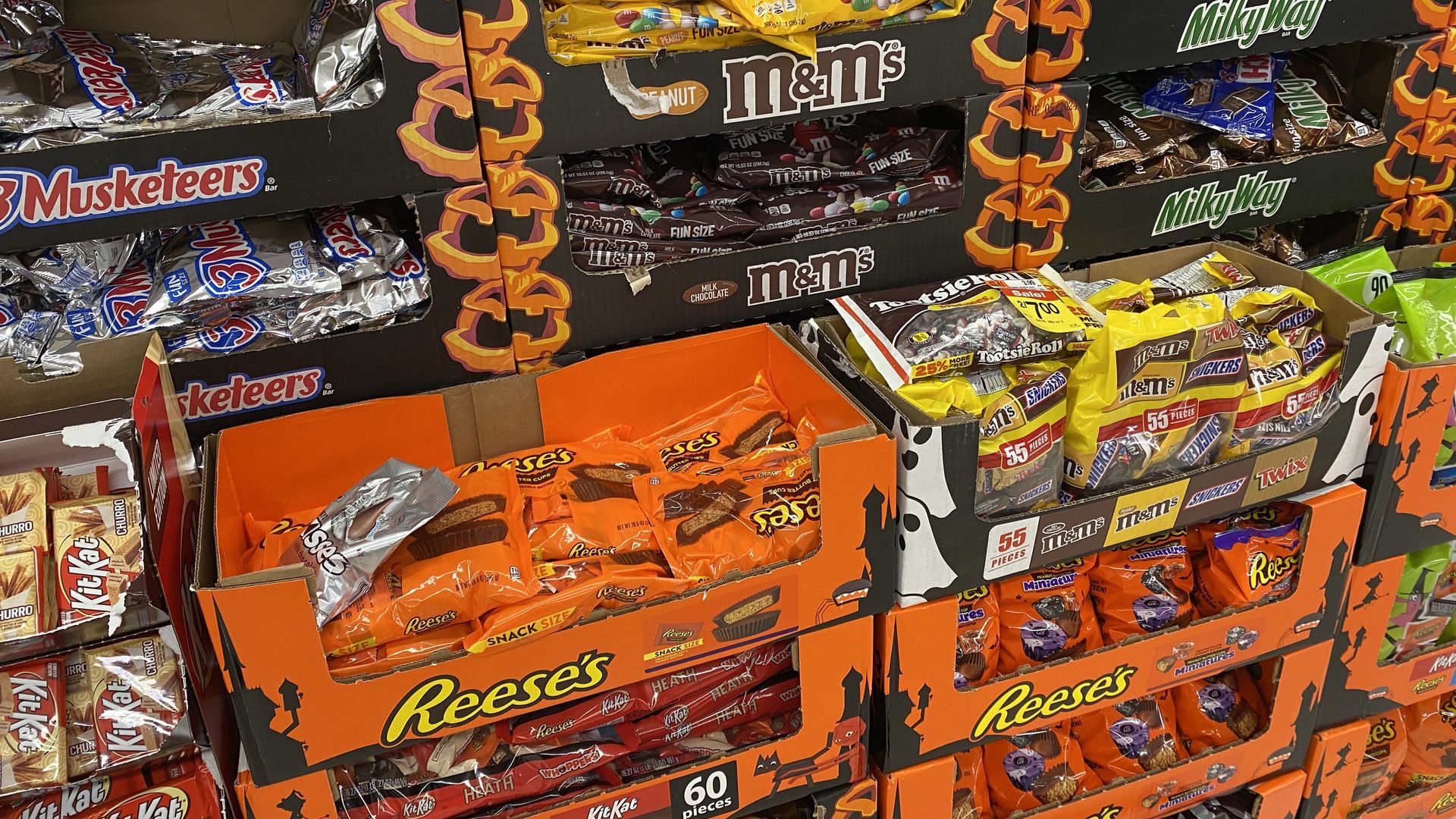
The photo above of a Halloween candy display in a suburban New York supermarket would be pretty unremarkable in October, or even September — but it was taken in July.
What's happening: The "Halloween season" — yes, that's a thing — got longer.
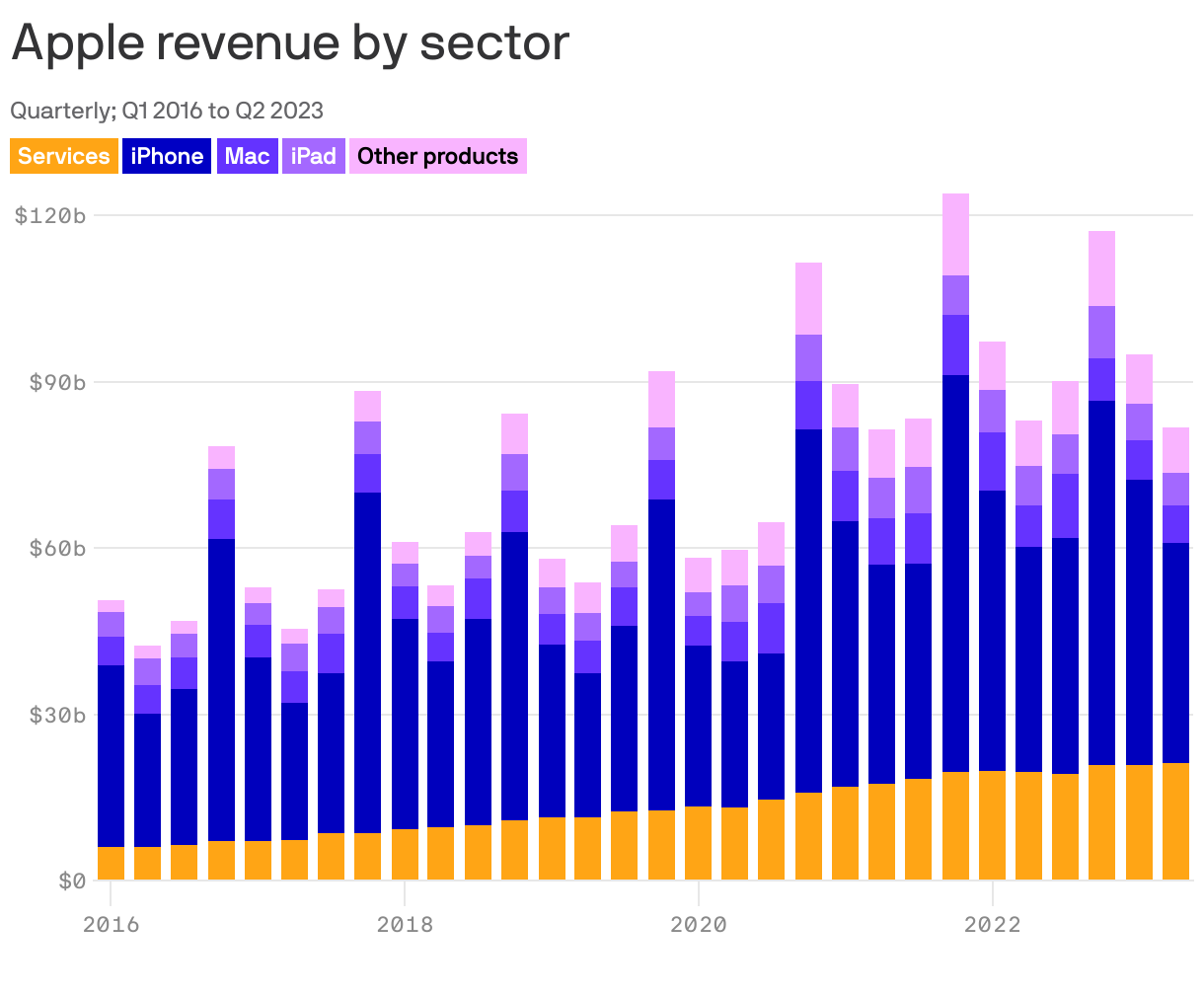
Data: Company reports from earnings; Chart:Tory Lysik and Alice Feng/Axios Visuals
Apple on Thursday said it now has more than 1 billion paid subscriptions across all of its services, including Apple Music, iCloud, Apple News, Apple TV+ and more.
Axios is kicking off a series of interviews with top leaders from business and beyond who will discuss lessons on life and leadership with Axios senior business reporter Hope King, who co-writes the Axios Closer newsletter.
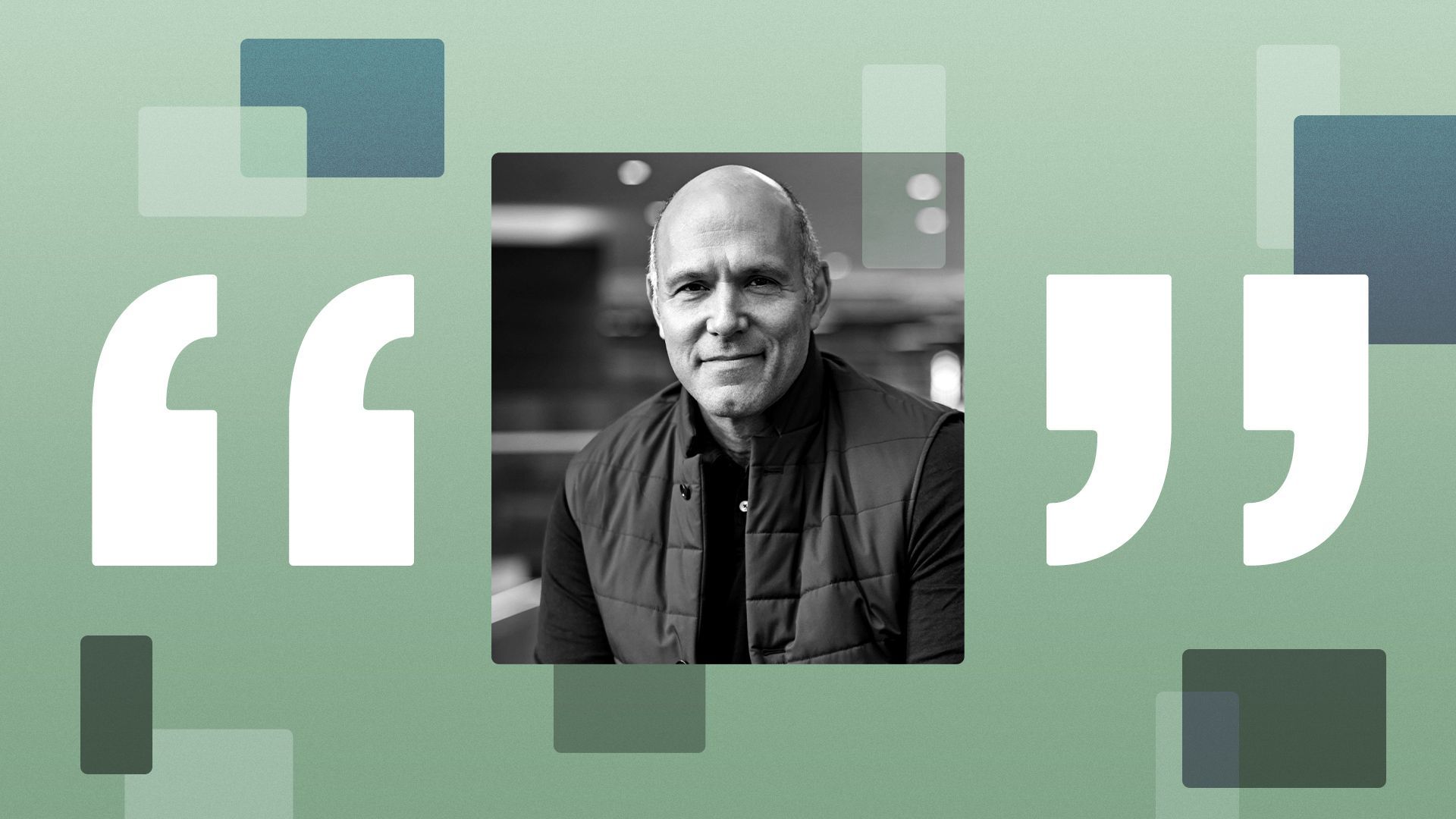
Hope's first guest is Peter Kern, 56, who is CEO of the travel-booking giant Expedia Group. He talked by Zoom on Tuesday from the company's London office.
Why he matters: Kern leads a global team of 16,500 people who help consumers satisfy their wanderlust. Kern's job is to make it as easy as possible for travelers to see the world.
1. What one sentence describes your leadership style?
"My leadership style is about empowering people."
2. What's the one book — business, philosophical or cultural — that most shaped or reflects your leadership?
But Peter says most of his leadership know-how didn't come from books: "You can learn to be a better speaker, you can learn to be a better communicator, you can learn to get better at interviews. But leadership has to come from within… You've got to want to drive and motivate people."
3. What's your blind spot?
Sending too many weekend emails: "My wife tells me I need to learn to use the 'schedule outbox.'"
4. What's your biggest management pet peeve?
Long decks to explain something that went wrong: "I'm always trying to encourage ... a willingness to make quick evaluation of failure and move past that — as opposed to nursing it along, trying to make it work, or trying to defend it. That's a waste of energy."
5. What's one unorthodox idea or dimension of your leadership?
"I don't come from a viewpoint of 'What have you done for me,' so much as: 'What can I do to unlock you?'"
6. What is the one part of your leadership game you're working hardest to improve?
"More communications [and] clear communications with employees, getting everybody rallied around a strategy and understanding the strategy down through the company."
7. What's the one thing you do outside of work that helps you perform optimally at work?
Barry's Bootcamp (arms day is his favorite) and watching college football.
8. What has parenting taught you about management?
"Everything you do is not for yourself."
1 fun thing: What's on your bucket list?
Traveling to Egypt and Morocco.
We'd love your thoughts — and your ideas for future interviews. Drop us a note: [email protected].