That whisper you hear is the sound of air rushing in from the initial public offering window, which finally may have cracked this week because of moves by restaurant chain Cava and airline company Surf Air.
Why it matters: A market in turmoil and an uncertain economy have chilled IPOs for over a year, but there are no shortage of companies patiently waiting for an opening.
Ryan Cohen, the chairman of GameStop,fired CEO Matt Furlong this week.
What happened: It is normal in such cases to name a new CEO, even if that's an interim CEO. But Cohen didn't do that. Instead, he just appointed himself executive chairman of the company.
The huge and very risky banking industry is likely to see a major toughening of regulations in the near future.
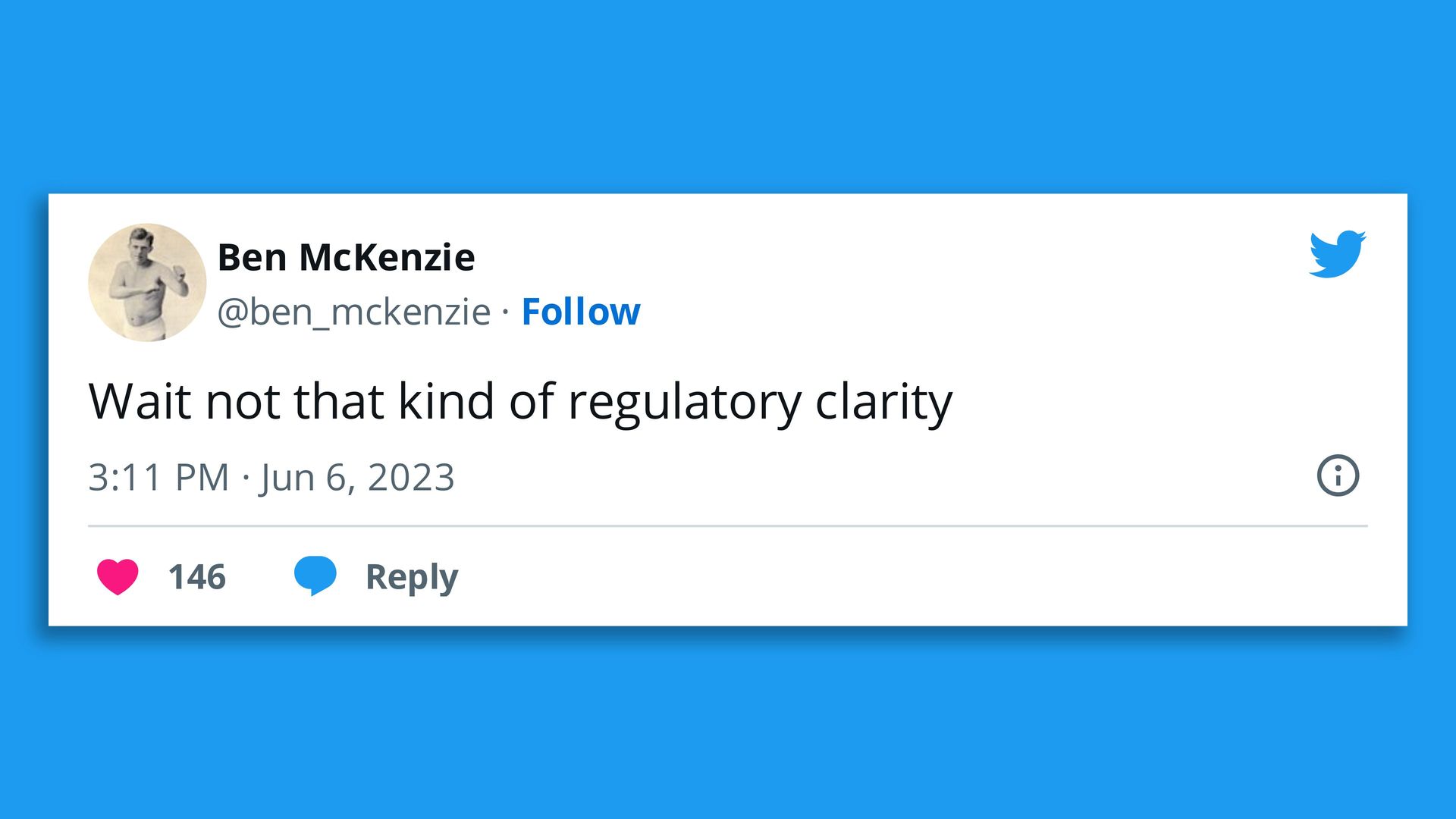
Why it matters: Just as the FTX debacle gave the SEC all the reason it needed for a crypto crackdown, the 2023 banking crisis has given the Fed justification for forcing banks to increase their equity capital.
The evolving workplace dynamic has led to a renaissance for co-working spaces.
The big picture: Co-working spaces, which were once a specialized product, have now become a phenomenon for workers who don't want to return to the office post-pandemic but don't want to work in isolation, either.
An onslaught of tipping requests — with employees often inches away — is increasing social pressure around gratuities and even pushing some consumers to give less.
The big picture: The economic stress of inflation coupled with confusion around who and how much to tip are pushing Americans against the practice: 66% have a negative view about tipping and 32% say they're annoyed about pre-entered tip screens, a new Bankrate survey says.
Experts warn the task of distinguishing what's real from what's not will impose a significant mental and cognitive burden on people in the AI era.
Why it matters: Misinformation has already fueled significant social problems, ranging from polarization to vaccine skepticism. AI-generated content risks intensifying those issues and making it more difficult for people to make sense of the world around them.
Employers are looking for one thing from recent grads that they can’t get from artificial intelligence: humanity.
State of play: The ability to communicate is the No. 1 skill most requested by employers in job postings for new college graduates, according to research by Lightcast.
It’s among a host of people skills that employers seek from recent grads, according to Lightcast, which assessed more than 1.3 million job postings for entry-level workers with a bachelor’s degree.
“There are certain things that AI can’t do,” Lightcast senior economist Rachel Sederberg tells Axios. “And those are going to be increasingly important.”
By the numbers: 44% of job postings for recent grads require communication skills, while 28% want demonstrated management ability and 27% want customer service experience, Lightcast reports.
The intrigue: For now, there’s little sign of employers seeking AI skills in job postings for new grads, despite companies pursuing AI at a feverish pace, Sederberg says.
“It’s still a little early to see that,” she said, but “it is going to be creeping in more and more.”
Job descriptions often “take a while to be updated,” she says. Sometimes “the recruiter puts up the same job description year after year.”
Zoom in: Though there are signs of the job market beginning to tighten a bit — jobless claims hit their highest weekly rate since October 2021 on Thursday — recent grads don't have much to fear.
“It’s still a very strong market,” Sederberg says. “There’s still a lot of opportunity out there for recent graduates. We still have a massive number of job openings relative to the unemployed.”
Health care makes up about 18% of new grad jobs, with positions such a registered nurse particularly in demand.
Although many major employers — like Google and JPMorgan Chase — are demanding workers to come back to the office, about 100,000 job openings for recent grads were fully remote, according to Lightcast.
Be smart: One reason why recent grads are finding so many opportunities is that so many older workers retired during the pandemic.
Many of them “aren’t coming back into the labor force,” Sederberg says.
The bottom line: Recent grads have reason to be hopeful about their job prospects despite the advent of AI.
Netflix's tightening of password-sharing among users has led to a surge in new sign-ups, with viewers opting to pay lest they miss out on the next big streaming thing.
Why it matters: Until just recently, Netflix password sharing was de rigueur among users. But the streaming giant raised eyebrows this year by enforcing — then expanding — a policy designed to dramatically limit the ability of family, friends and even former paramours to use a single login.
Driving the news: On Friday, analytics firm Antenna released data that showed a massive jump in U.S. user acquisition in the immediate aftermath of Netflix alerting U.S. subscribers last month that it would begin curbing shared passwords.
Netflix saw close to 100,000 daily sign-ups on May 26 and May 27, Antenna shared in a blog post.
"Average daily Sign-ups to Netflix reached 73k during that period, a +102% increase from the prior 60-day average. These exceed the spikes in Sign-ups Antenna observed during the initial U.S. Covid-19 lockdowns in March and April 2020."
Some Netflix subscribers opted to cancel, but those numbers were swamped by new sign-ups, Antenna noted.
What they're saying: In its first-quarter earnings report, Netflix itself predicted that the crackdown would create a halo effect on sign-ups and revenue.
"Paid sharing is another important initiative as widespread account sharing (100M+ households) undermines our ability to invest in and improve Netflix for our paying members, as well as build our business," it said in a shareholder letter.
"But as borrowers start to activate their own accounts and existing members add 'extra member' accounts, we see increased acquisition and revenue."
The Justice Department on Friday announced charges against two Russian nationals accused of laundering cryptocurrency one of the most notorious cyberthefts in the history of Bitcoin: Mt. Gox.
Driving the news: Alexey Bilyuchenko, 43, and Aleksandr Verner, 29, are accused of attempting to whitewash 647,000 in bitcoins (worth around $17 billion today) and using the funds to launch another exchange that was popular with various kinds of criminals: BTC-e.
A British startup called Uncommon is seeking to create lab-grown bacon, and just raised $30 million to further its efforts.
Why it matters: Venture capitalists continue to plug big money into cultivated meat startups, even though the products themselves remain illegal in every country but Singapore.
The embrace by General Motors and Ford of Tesla's charging standard in future electric vehicles is a clear win for consumers, making charging easier and more accessible.
But it's also a win for Tesla, the EV industry's 800-pound gorilla, which seems to have scored a landmark victory in its effort to make its charging standard the dominant one.
As we await new inflation data and a Federal Reserve decision next week, there's an important backdrop emerging from the markets. Bond prices imply that the Fed's war on inflation is, in effect, won.
Why it matters: This backdrop makes it easier for the Fed to pause its rate hikes next week, as it has telegraphed it may, regardless of what the backward-looking May Consumer Price Index data due out Tuesday says.
Plenty of teenagers are nabbing summer jobs this year and the pay is way better than you'd think.
Why it matters: The surge of young folks into the workforce has been happening for the past few years and at first seemed like a pandemic blip —but turns out it's a trend with some legs.
Why it matters: It could trigger a series of unprecedented changes to America's federal food assistance system as legislators gear up to reauthorize the farm bill.
When I was trying to recruit her away from The Washington Post to run client partnerships for Axios, Jacquelyn Cameron had a blunt request. She wanted me to teach her to be a CEO.
Why it matters: Jacquelyn's direct ask — Hey, help me do your job! — launched some of the most productive monthly mentoring sessions of my life.