Nestlé, the world’s largest food company, said earlier this week that it is predicting that the prices of staple items will continue to rise this year.
The big picture: Following more than a year of price increases, consumer giants continue to warn about more hikes to come as households struggle to buy groceries.
AliveCor, a California-based medical device startup, was founded in 2011 by Dave Albert.
Flashback: The company introduced its KardiaBand for the Apple Watch in 2016. The device, based on the original sensor tech developed by AliveCor, consisted of an Apple Watch-compatible wristband, with a sensor embedded.
In 2018, Apple announced that the latest version of its Watch would include an EKG sensor, and that it was cleared by the Food and Drug Administration to provide consumers with EKG readings immediately.
At the time, AliveCor said Apple's announcement boosted the startup's sales and brought more attention to the category, however, it then discontinued its Apple Watch band the following year.
In December 2020, AliveCor sued Apple in U.S. District Court for the Western District of Texas for infringing on three of its patents.
In April 2021, it filed a complaint with the ITC over the patents, and a month later the agency formally began an investigation.
Also in May 2021, AliveCor filed an antitrust lawsuit against Apple in California federal court for preventing third-party heart rate analysis for its Watch.
In October 2022, a group of Democratic members of Congress asked the ITC not to ban the Apple Watch.
On Dec. 6, 2022, the U.S. Patent and Trademark Office's Patent Trial and Appeal Board invalidated AliveCor's patents following a request by Apple for a review of the patents.
Then on Dec. 22, the ITC ruled in favor of AliveCor (upholding an earlier administrative judge's ruling) and imposing an import ban on infringing devices (Apple Watch Series 4, 5, 6, 7 and 8 have EKG technology). The ban, however, is suspended during appeals for a related dispute before USPTO.
Today: AliveCor sells three small, portable EKG devices, with prices ranging from $79 to $129, per its website.
It has raised about $300 million in total venture funding from investors such as Khosla Ventures, Qualcomm Ventures, Oklahoma Life Science Fund and GE HealthCare, according to PitchBook.
Famed Silicon Valley investor Vinod Khosla's latest legal battle has a big opponent on the other side: Apple. A medical device company Khosla backed, AliveCor, is battling the tech giant over patents, and could win.
Why it matters: If you ask Khosla, the outcome could have a broad impact on technology inventions, and whether startups and VCs even bother with them going forward.
Rail operator Norfolk Southern executives reported a rise in accident rates in recent years just weeks before a train derailment in East Palestine, Ohio forced the company to vent and burn carcinogenic chemicals, according to the New York Times.
The big picture: The rate of accidents on the company's railway increased in each of the last four years, according to a Norfolk Southern earnings call presentation on Jan. 23.
Compound Banc pays an eye-popping 7% on deposits — or at least things that look and feel a lot like deposits. But it's not a bank, and the deposits — technically, they're risky bonds — are not insured by the FDIC or anybody else.
Why it matters: People looking for improbably high interest rates on their money have learned the hard way to avoid crypto. That's created an opening for dollar-denominated products taking advantage of various regulatory loopholes — and of the fact that Americans are increasingly comfortable handing over their money to digital institutions.
It took almost a decade, and 17 movies, for the Marvel Cinematic Universe to branch out from white, male directors. But once it did, the floodgates opened.
Driving the news: "Ant-Man and the Wasp: Quantumania" — the newest MCU movie, released on Friday and directed by Peyton Reed — is only the second Marvel movie released since 2021 that is directed by a white man.
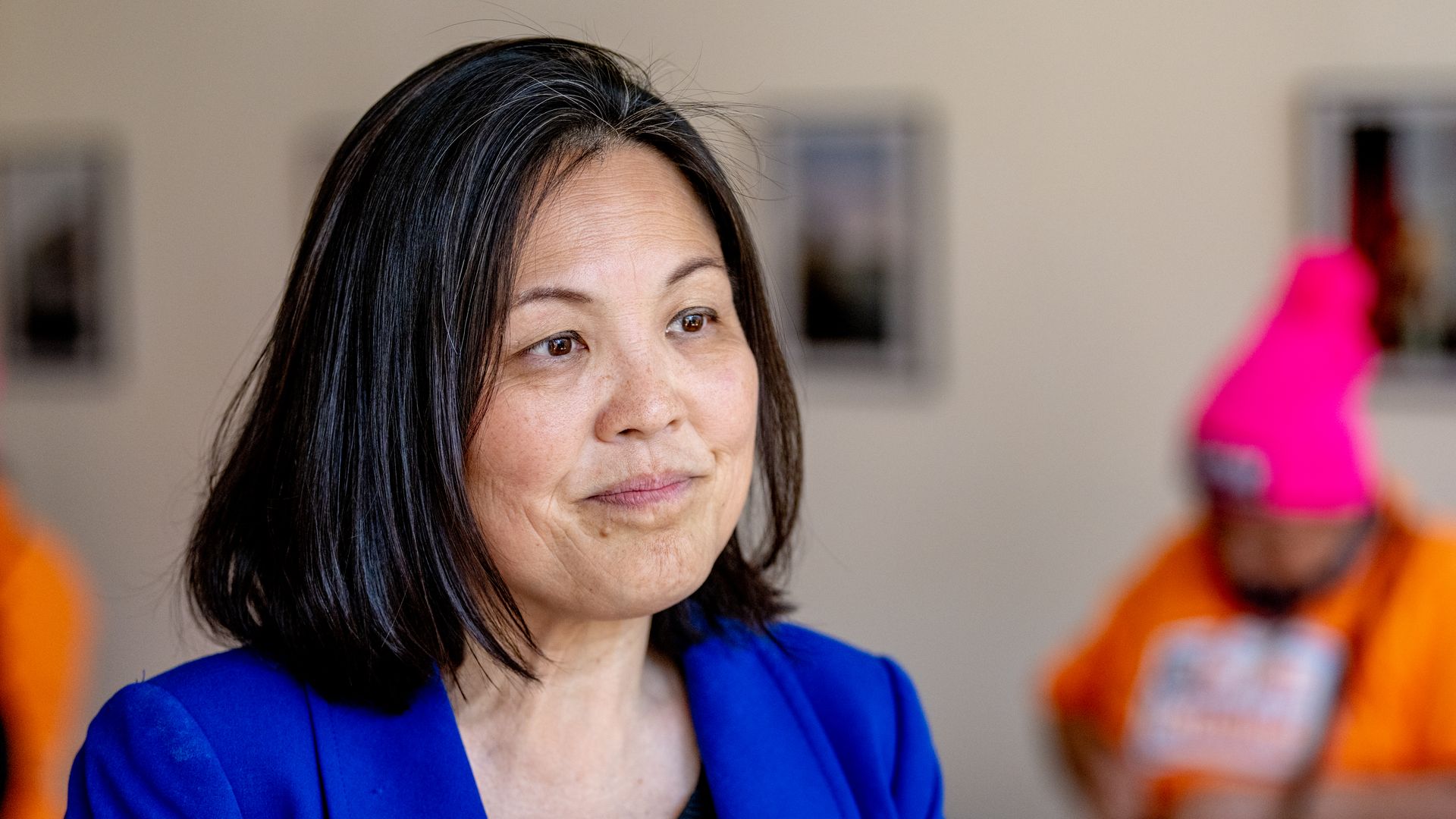
More than two dozen Democratic lawmakers are urging President Biden to nominate Julie Su to replace outgoing Labor Secretary Marty Walsh, renewing their calls on Biden to boost Asian American representation in his Cabinet.
Why it matters: Senators — who help decide whether the president's nominees ultimately get the job — have previously criticized the White House for the lack of Asian American and Pacific Islander heritage among the administration's Cabinet-level secretaries.
Being first can give you the edge. Or it can sully your reputation.
Why it matters: The chance to secure first-mover advantage has enticed companies like Microsoft, Ford and Tesla to release groundbreaking new products. But recent developments underscore the potential pitfalls of moving fast.
Housing is one of the few areas of the economy where the impact of monetary tightening is on vivid display. The surge in interest rates this month could cause a new wave of pain in the sector, however.
As Axios Markets' Emily Peckrecently wrote, there have been signs of a reawakening in the housing market to start the year, after taking it on the chin from the Fed's moves in 2022.
Indeed, homebuilder sentiment rebounded sharply for the second straight month as mortgage rates drift lower. That offered at least some reprieve to buyers, according to a long-running survey by the National Association of Homebuilders.
By the numbers: The recent surge in yields, however, could freeze out that activity rebound. The average 30-year fixed rate mortgage rate was 6.78% yesterday, according to Mortgage News Daily, up from 6.04% on Feb. 1.
That's still below the recent highs of over 7% seen this past November, which caused a contraction in home-buying activity, but not by much.
Yes, but: The improved outlook on jobs and wages to start the year might make potential homebuyers more willing to take on a mortgage than they were in the fall, when recession talk was at a high ebb.
The Federal Reserve will have to raise rates more to cool down inflation. But economic activity and corporate earnings are robust enough to hold up anyway.
The intrigue: Bond yields have moved up sharply this month, reflecting expectations the Fed will crank rates higher than previously thought. In that same time frame, prices for stocks and other risky assets have been roughly flat.
It's a contrast to last year, when there was a close relationship between the prospect of tighter money and a stock market selloff.
Why it matters: Markets are betting that the economy will remain resilient even in the face of further rate increases, while last year, there was more of a sense that tightening would necessarily trigger a recession.
Where it stands: The moves in the bond market this month have been swift, reflecting the possibility that the Fed will have to hike ever higher to cool the economy. The market, for instance, is no longer fully pricing in that the Fed will slash rates this year.
It comes on the heels of a blockbuster jobs report two weeks ago and too-hot-for-comfort reports on both consumer and producer prices and retail sales this week.
Yesterday, two Fed officials — Cleveland Fed president Loretta Mester and the St. Louis Fed's Jim Bullard — suggested they may have preferred to raise rates half a percentage point at the policy meeting Feb. 1, not the quarter-point that the committee embraced.
By the numbers: Take a look at the yield on the U.S. two-year Treasury securities, which is most sensitive to monetary policy shifts. On Feb. 1, the two-year borrowing rate was 4.19%. As of this morning, it was 4.68%.
By contrast, the S&P 500 over that same time frame is essentially flat — down 0.7%, as of yesterday's close.
Between the lines: This is a reversal of a pattern that prevailed from roughly November through January, when markets started pricing in Fed cuts in 2023, essentially assuming inflation will come down on its own.
The current pattern — markets accepting that there will be higher rates for longer, yet financial conditions not really tightening as a result — raises questions about the effectiveness of the Fed's tools in fighting inflation.
If financial markets and consumer spending remain buoyant in the face of higher rates, it raises the prospect of a harder path to bringing inflation down than has become the mainstream view.
What they're saying: "An economy that grows quickly is not inherently problematic, but elevated inflation, caused by unanchored inflation expectations, could arise if growth continues," said Tuan Nguyen, U.S. economist at RSM, in a note.
"The so-called no-landing scenario, in which the economy continues to grow and avoids a contraction, is not a situation that the Fed is willing to bet on," Nguyen wrote.
Nothing brings a city together — or tears it apart — like arguing over pizza.
What's happening: After five rounds of competition, and more than 22,000 votes from Axios readers across our 26 local newsrooms, we can now crown a winner of our ultimate pizza bracket … *drumroll please* … Chicago!
The next phase of the Avengers' story begins this weekend with "Ant-Man and the Wasp: Quantumania."
The big picture: The newest Marvel movie is expected to be one of the biggest hits of the year and establish a new narrative path that Marvel Cinematic Universe fans have been itching for, all in lead up to "Avengers: The Kang Dynasty" in 2025 and "Avengers: Secret Wars" in 2026.
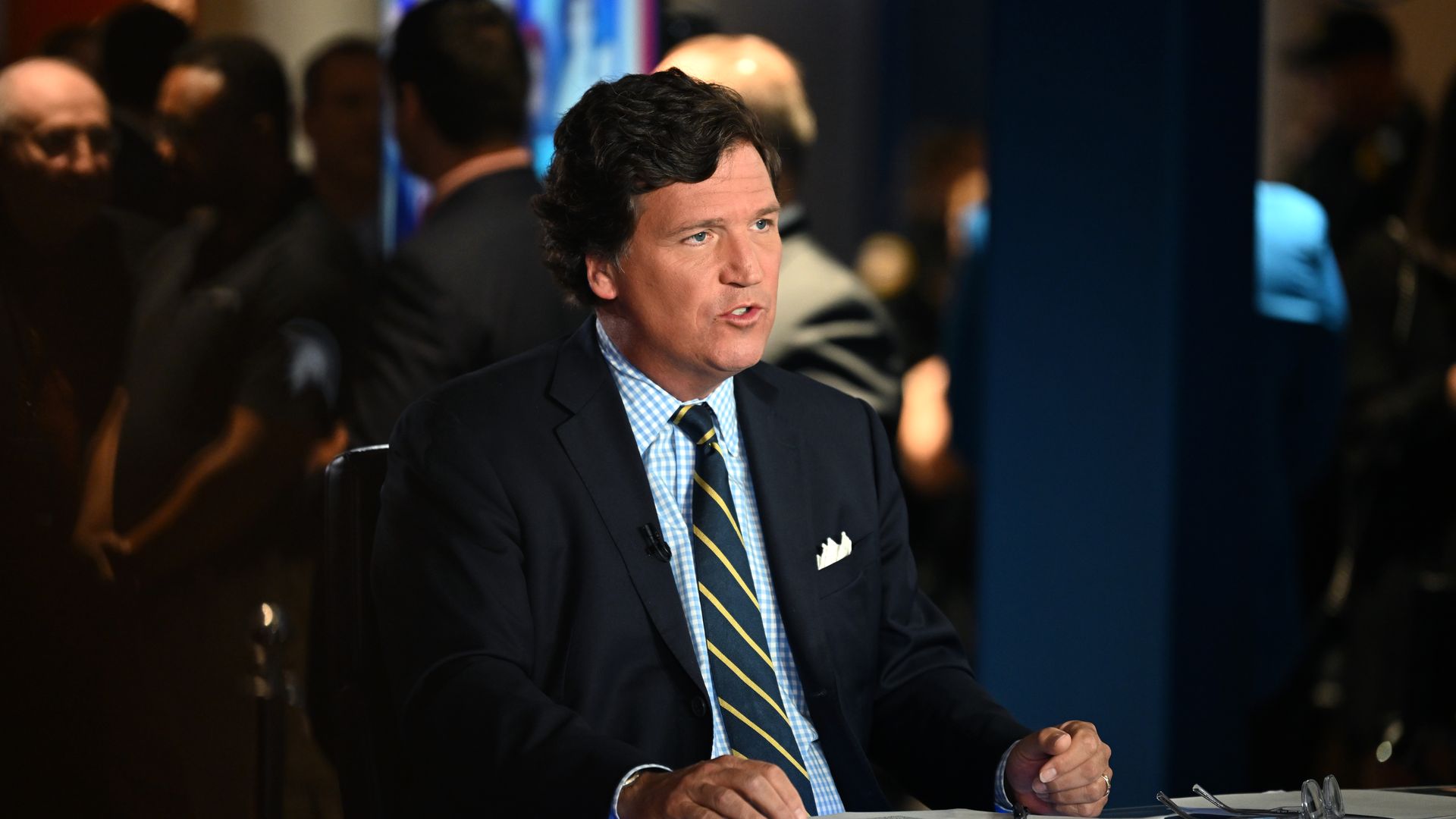
Top hosts and executives at Fox Newsprivately slammed former President Trump's election fraud claims as "total BS," according to court documents filed in Dominion Voting Systems' defamation lawsuit against Fox.
Why it matters: The filing argues that Fox "knew that Donald Trump lost the election" while "Fox viewers heard a different story— repeatedly."
French stocks bolted from the gates this year, briefly hitting record highs on Thursday. France's blue-chip index, the CAC-40, is up nearly 14% in 2023.
Why it matters: The performance of the Paris bourse reflects some of the surprising dynamics at play in the world economy.
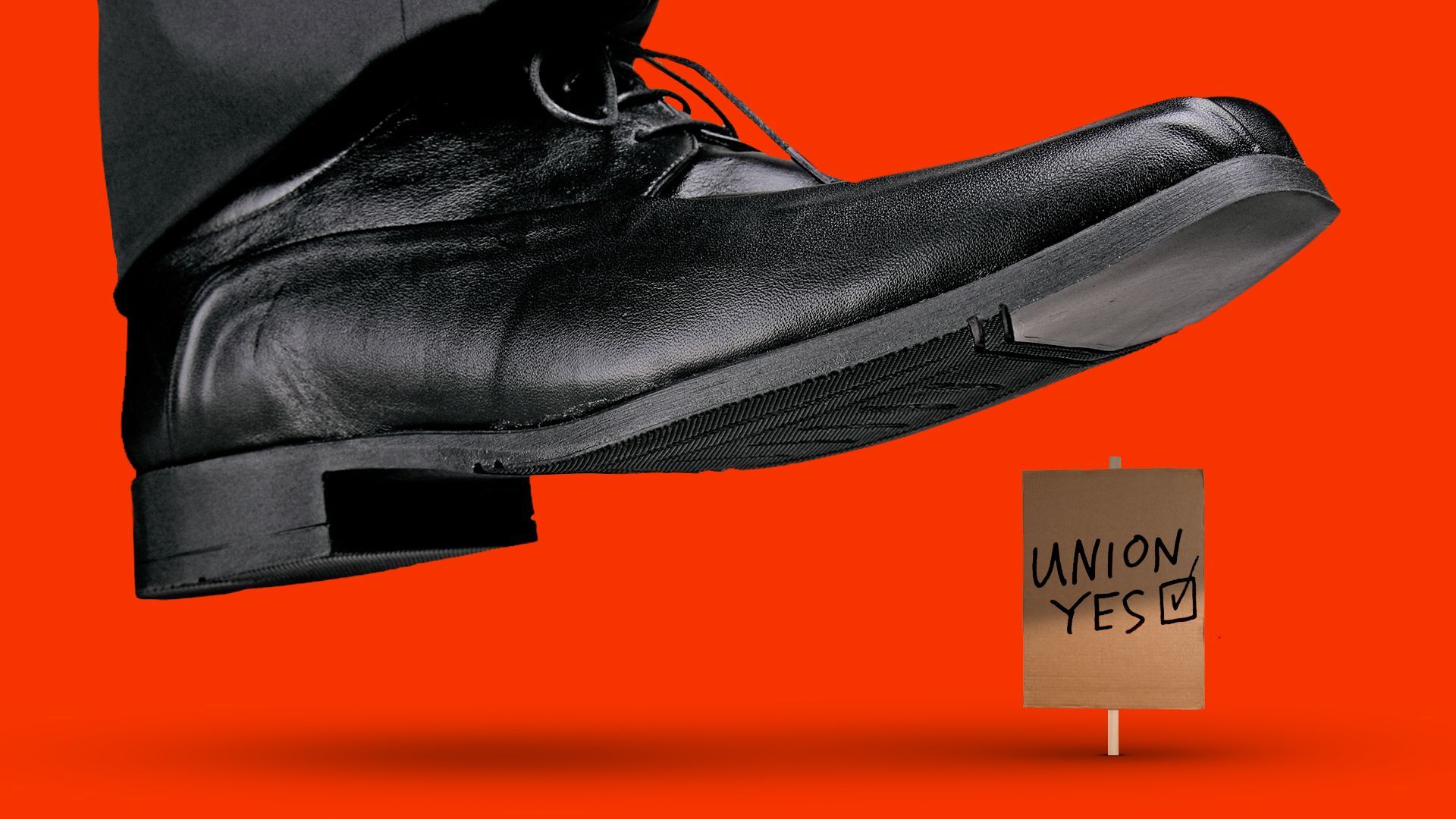
Starbucks workers are struggling to clear the biggest hurdle when it comes to union organizing — negotiating their first contract.
Why it matters: Though surveys show that the public is increasingly pro-labor, big employers — even widely recognized brands like Starbucks, Amazon and Tesla — are not shy about aggressively fending off unionization.
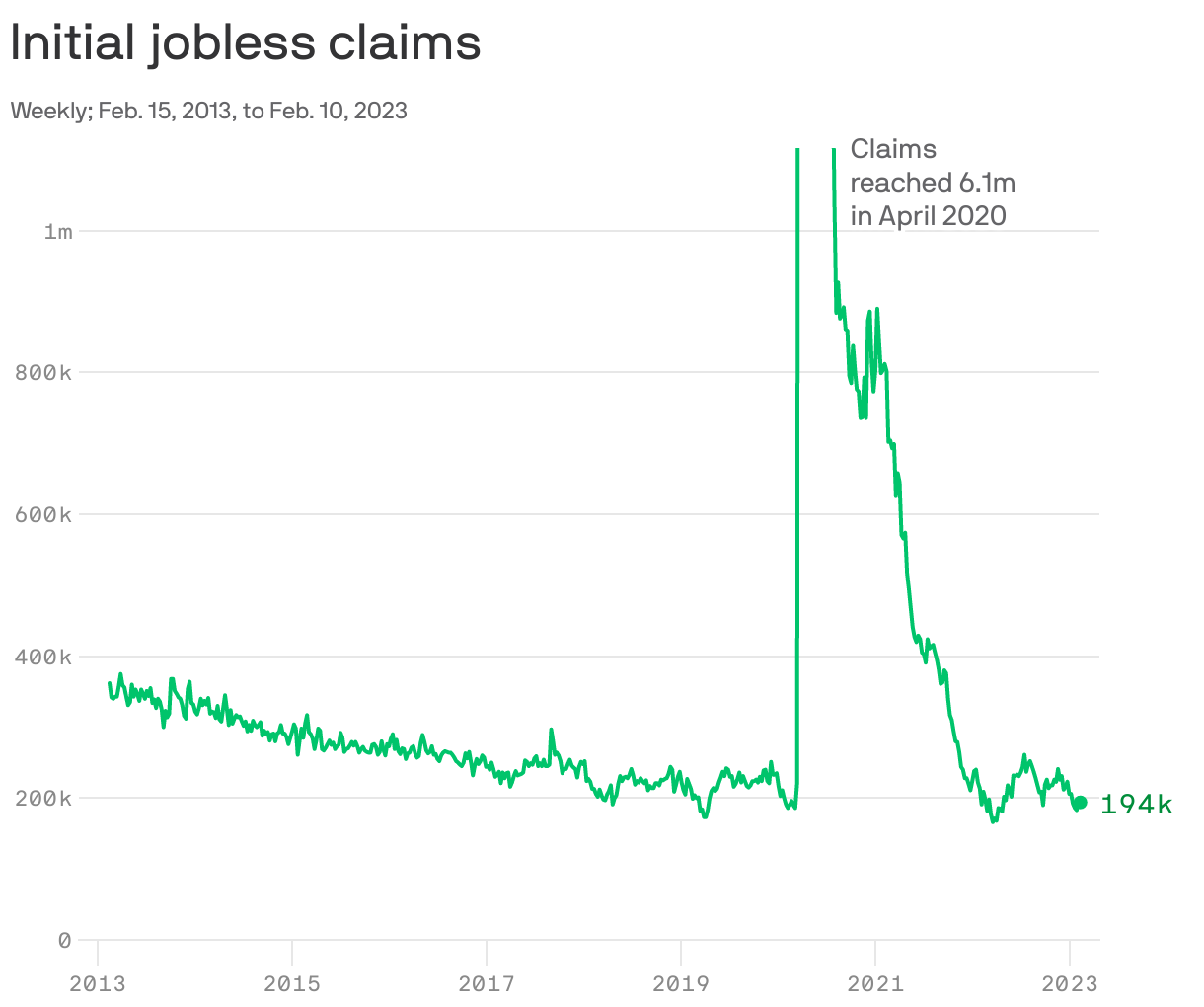
Data: FactSet, Department of Labor; Chart: Alice Feng/Axios
Over the last few months, there's been a steady stream of large, high-profile layoffs — while unemployment claims remain at rock-bottom levels.
Why it matters: The apparent discrepancy is stark enough that some folks have started asking if generous severance packages are keeping this key measure of the labor market artificially low. JPMorgan analysts decided to tackle the question.
Mushrooms, pickles and maybe — just maybe — ranch dressing are the big pizza trends to watch this year, according to a new report from Slice, an ordering app for locally owned pizzerias.
State of play: Slice identified a few winners and losers in the great toppings debate by tracking orders across the 19,000 mom-and-pop pizzerias using the platform nationwide.
Nothing destroys more relationships, teams or companies than insecure people in power, Jim VandeHei writes.
Why it matters: Beneath all bad motives, bad behavior and bad people — at work and in life — lurks deep and dangerous insecurity.
It's an insidious form of cancer that spreads effortlessly — and quickly.
A little insecurity is normal and healthy. It grounds and motivates us. I'm talking about insecurity so deep it shapes a person's character and decision-making.
So many of the lessons I have learned the hard way came from watching profoundly insecure people do the wrong thing for the wrong reason.
I wish this were a happy column about how not to be insecure. Take that up with your therapist — or parents.
This is more about how to spot it — and flee:
Selfishness. If your boss or colleagues are routinely focused on themselves, they have issues. If they do it persistently, they're unfixable.
Smallness. Confident people don't do petty things, like talk smack about others or stir the pot. Insecure people marinate in that crap to shift focus away from their shortcomings.
Bitterness. People who whine or wish ill on others are like the flu in an unventilated room. Their negativity is destined to spread and sap the energy of those around them.
Loneliness. One telltale sign of the profoundly insecure is that they attract other insecure people — and repel confident, positive people. Don't let yourself get sucked into their misery.
Meanness. Good people aren't asses. Insecure people often are. We all have bad days. But if someone seems like a bad person consistently, it's because they are one.
The big picture: I wasted years of my life believing I could change insecure people. You can't. The best thing to do is ... run.