Nestlé, the world’s largest food company, said earlier this week that it is predicting that the prices of staple items will continue to rise this year.
The big picture: Following more than a year of price increases, consumer giants continue to warn about more hikes to come as households struggle to buy groceries.
AliveCor, a California-based medical device startup, was founded in 2011 by Dave Albert.
Flashback: The company introduced its KardiaBand for the Apple Watch in 2016. The device, based on the original sensor tech developed by AliveCor, consisted of an Apple Watch-compatible wristband, with a sensor embedded.
In 2018, Apple announced that the latest version of its Watch would include an EKG sensor, and that it was cleared by the Food and Drug Administration to provide consumers with EKG readings immediately.
At the time, AliveCor said Apple's announcement boosted the startup's sales and brought more attention to the category, however, it then discontinued its Apple Watch band the following year.
In December 2020, AliveCor sued Apple in U.S. District Court for the Western District of Texas for infringing on three of its patents.
In April 2021, it filed a complaint with the ITC over the patents, and a month later the agency formally began an investigation.
Also in May 2021, AliveCor filed an antitrust lawsuit against Apple in California federal court for preventing third-party heart rate analysis for its Watch.
In October 2022, a group of Democratic members of Congress asked the ITC not to ban the Apple Watch.
On Dec. 6, 2022, the U.S. Patent and Trademark Office's Patent Trial and Appeal Board invalidated AliveCor's patents following a request by Apple for a review of the patents.
Then on Dec. 22, the ITC ruled in favor of AliveCor (upholding an earlier administrative judge's ruling) and imposing an import ban on infringing devices (Apple Watch Series 4, 5, 6, 7 and 8 have EKG technology). The ban, however, is suspended during appeals for a related dispute before USPTO.
Today: AliveCor sells three small, portable EKG devices, with prices ranging from $79 to $129, per its website.
It has raised about $300 million in total venture funding from investors such as Khosla Ventures, Qualcomm Ventures, Oklahoma Life Science Fund and GE HealthCare, according to PitchBook.
Famed Silicon Valley investor Vinod Khosla's latest legal battle has a big opponent on the other side: Apple. A medical device company Khosla backed, AliveCor, is battling the tech giant over patents, and could win.
Why it matters: If you ask Khosla, the outcome could have a broad impact on technology inventions, and whether startups and VCs even bother with them going forward.
Rail operator Norfolk Southern executives reported a rise in accident rates in recent years just weeks before a train derailment in East Palestine, Ohio forced the company to vent and burn carcinogenic chemicals, according to the New York Times.
The big picture: The rate of accidents on the company's railway increased in each of the last four years, according to a Norfolk Southern earnings call presentation on Jan. 23.
Compound Banc pays an eye-popping 7% on deposits — or at least things that look and feel a lot like deposits. But it's not a bank, and the deposits — technically, they're risky bonds — are not insured by the FDIC or anybody else.
Why it matters: People looking for improbably high interest rates on their money have learned the hard way to avoid crypto. That's created an opening for dollar-denominated products taking advantage of various regulatory loopholes — and of the fact that Americans are increasingly comfortable handing over their money to digital institutions.
It took almost a decade, and 17 movies, for the Marvel Cinematic Universe to branch out from white, male directors. But once it did, the floodgates opened.
Driving the news: "Ant-Man and the Wasp: Quantumania" — the newest MCU movie, released on Friday and directed by Peyton Reed — is only the second Marvel movie released since 2021 that is directed by a white man.
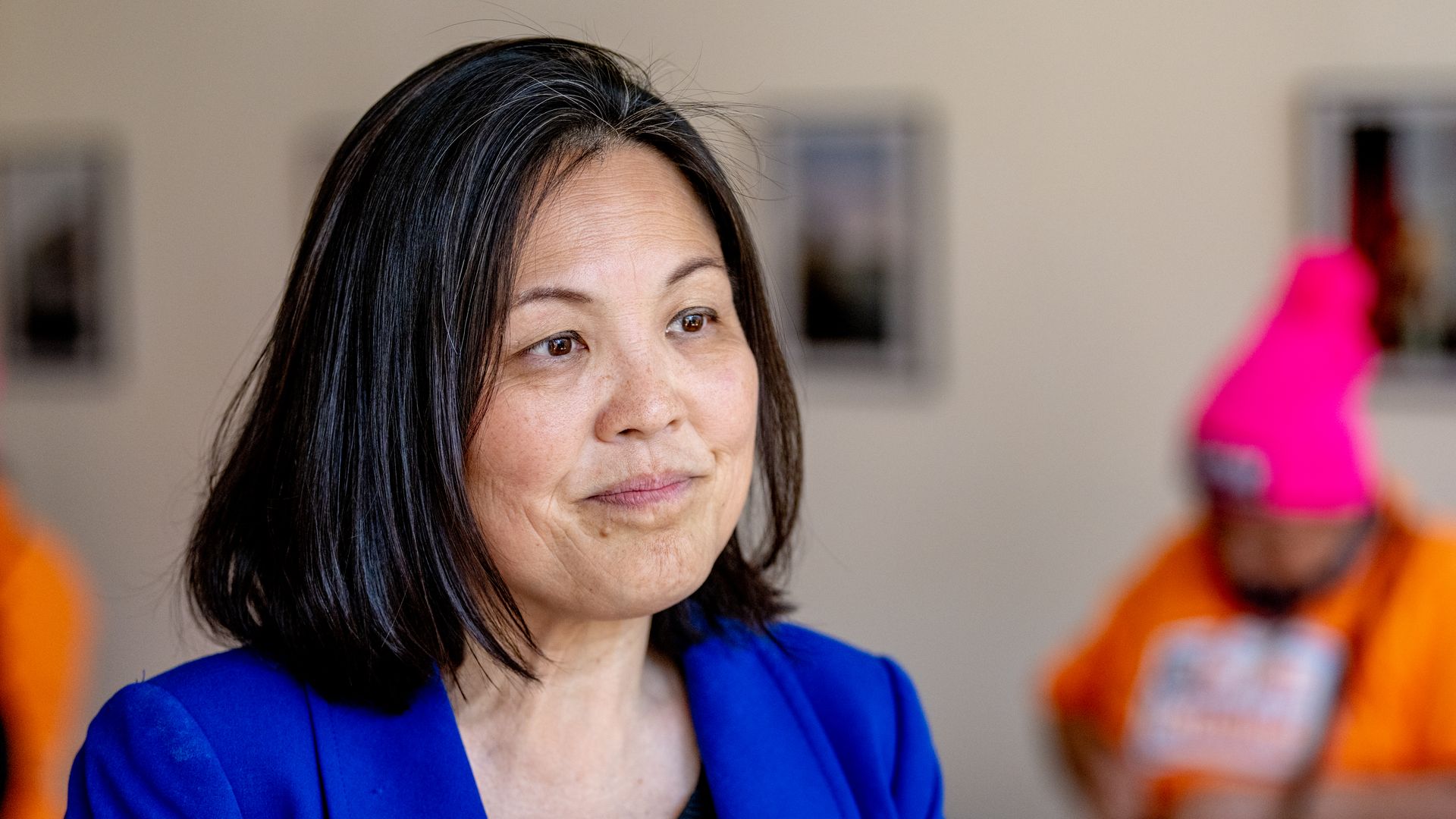
More than two dozen Democratic lawmakers are urging President Biden to nominate Julie Su to replace outgoing Labor Secretary Marty Walsh, renewing their calls on Biden to boost Asian American representation in his Cabinet.
Why it matters: Senators — who help decide whether the president's nominees ultimately get the job — have previously criticized the White House for the lack of Asian American and Pacific Islander heritage among the administration's Cabinet-level secretaries.