The U.S. will now hit the debt limit on Dec. 15, revising an initial deadline of Dec. 3, Treasury Secretary Janet Yellen said in a letter to House Speaker Nancy Pelosi (D-Calif.) on Tuesday.
Why it matters: An October vote to raise the federal debt ceiling allowed Congress to narrowly avoid a government default at least until Dec. 3. The Treasury's new estimate will give lawmakers slightly more time to work out a deal to raise the debt ceiling
Retail sales soared 1.7% in October, the best month since March.
Why it matters: The numbers aren’t adjusted for inflation, so some of that jump is because most everything costs more. Still, prices rising at the fastest pace in 30 years hasn't deterred some shoppers.
Nike is the latest company to distance itself from rapper Travis Scott following his fatal Astroworld concert where at least 10 people died.
Driving the news: Scott's Nike “Air Max 1 x Cactus Jack” sneakers had been slated to drop today. But the company pulled its campaign at the last minute.
Netflix on Tuesday unveiled a new website that's meant to provide a more transparent look at how its content is performing. It also unveiled a new way to measure that performance.
Why it matters: Netflix has long faced criticism that the numbers it reveals about its content are inconsistent and, because they aren't vetted by third parties, they're biased.
When SPAC kingpinMichael Klein agreed in June 2020 to buy MultiPlan for $11 billion, there was much rejoicing in blank checkville. It was a then-record deal size, and MultiPlan was a decades-old health cost management company with blue chip customers, not a flying taxi startup with blue chip ambitions.
The big picture: Those cheers were silenced just months later, when short-seller Muddy Waters published a report claiming that MultiPlan was poised to lose its largest customer, UnitedHealthcare (UHC). If not immediately, then over the long term because UHC had created a rival product called Naviguard.
Conductor, a New York-based SEO and enterprise marketing company that bought itself back from WeWork in 2019, raised $150 million from Bregal Sagemount.
Why it matters: This is an ad-tech phoenix rising from the ashes of WeWork's fire sales. It's also a strong return for Conductor employees, all of whom received equity via the buyback.
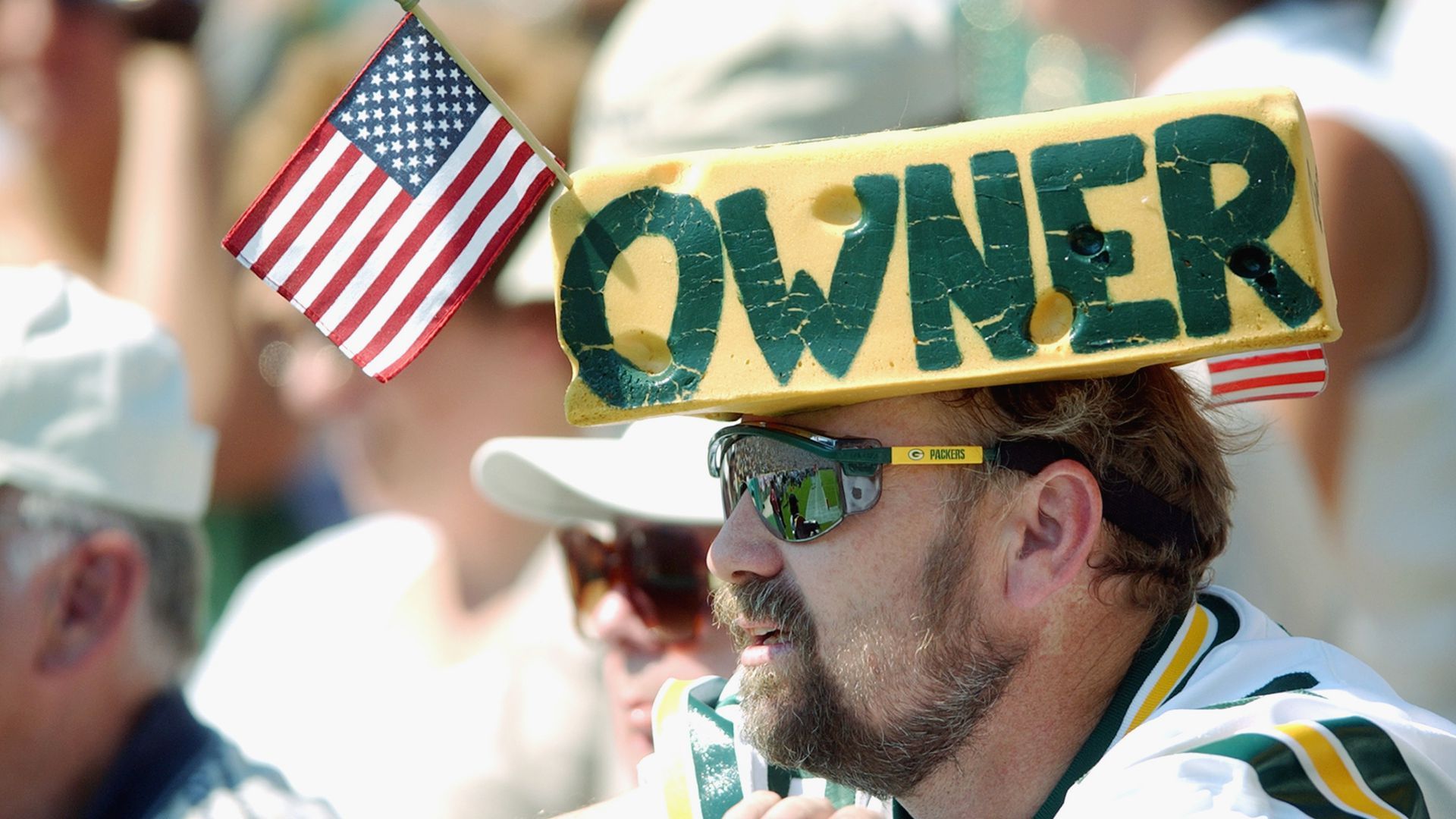
So you want to own a sports team? Now's your chance.
Driving the news: The Packers — the only publicly-owned, not-for-profit major professional sports team in the U.S. — are selling shares of "stock" for just the sixth time in the franchise's 102-year history.
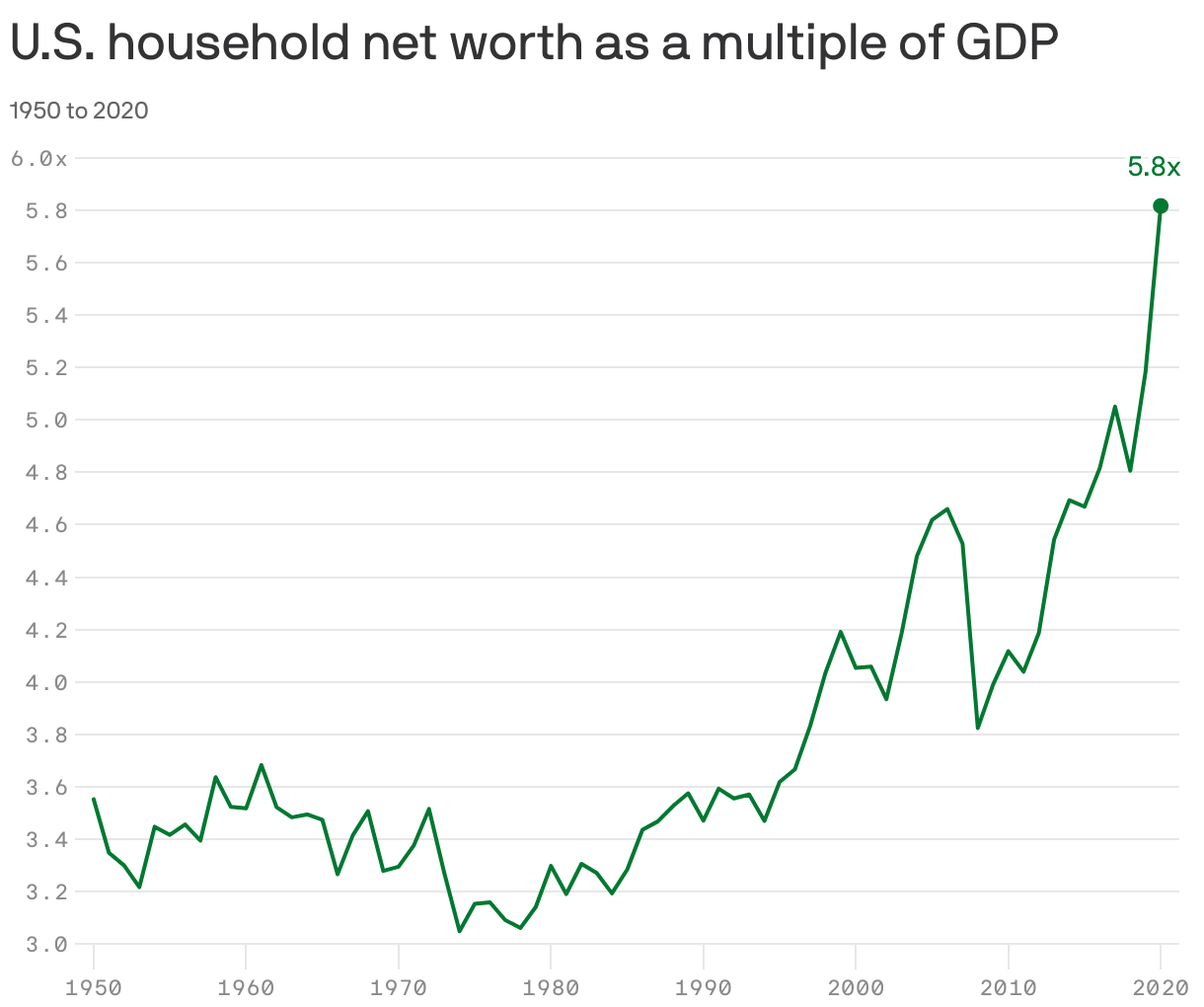
Data: Bureau of Economic Analysis; Federal Reserve Board; World Bank; McKinsey Global Institute analysis; Chart: Axios Visuals
U.S. household net worth has soared to a nearly sixfold multiple of the country’s gross domestic product.
Why it matters: The past two decades of growth in net worth are mostly due to the appreciation of assets like real estate and equities — not to the accumulation of savings, according to a new report out from McKinsey Global Institute.
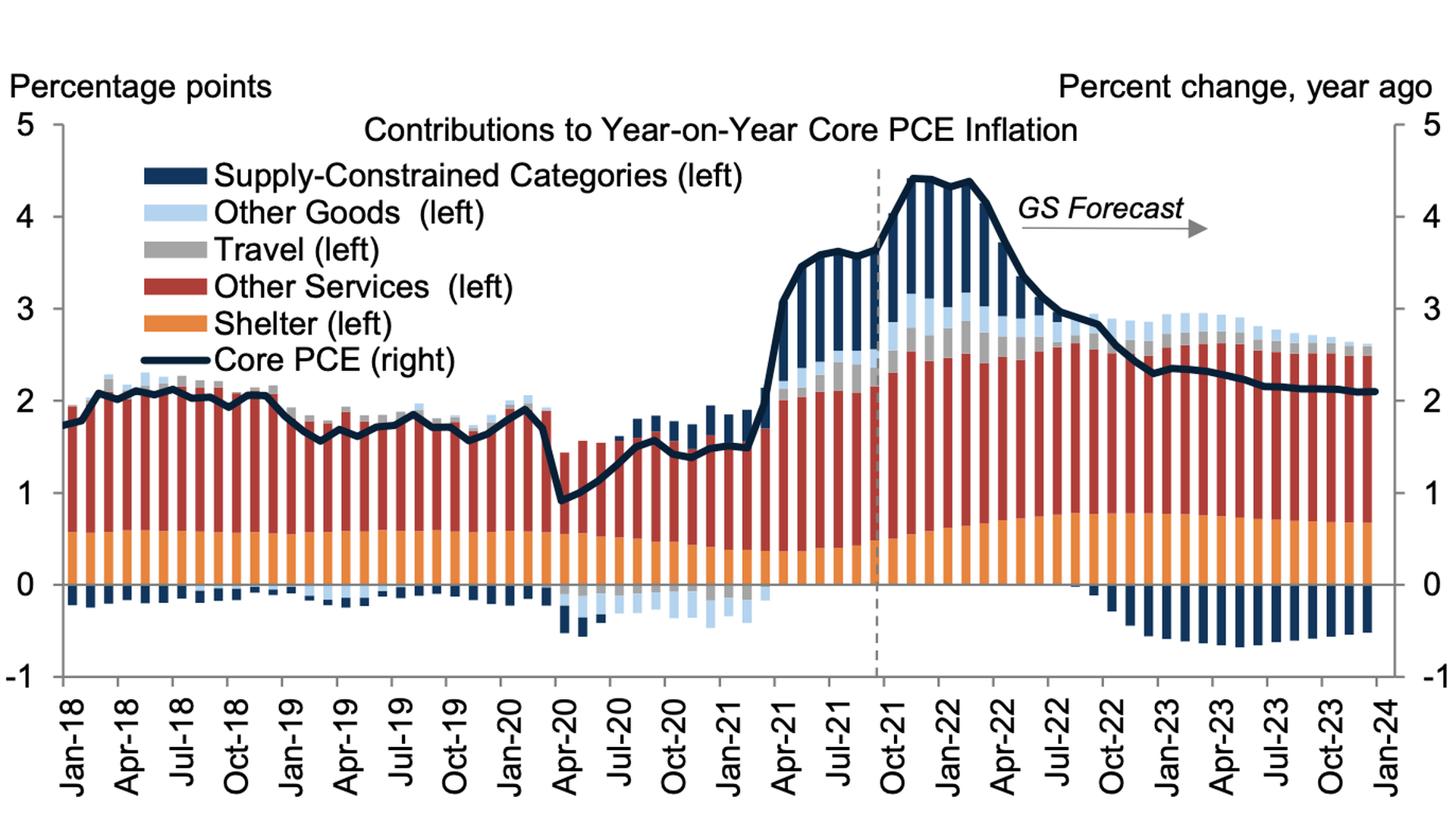
"The current inflation surge will get worse this winter before it gets better," Goldman Sachs Global Investment Research warns clients in a "2022 U.S. Economic Outlook."
Driving the news: But Goldman expects the economy "to reaccelerate to a 4%+ growth pace over the next few quarters as the service sector continues to reopen, consumers spend part of their pent-up savings, and inventory restocking gets underway."
There are some stark disconnects between what Americans think society values at work, and what they themselves think is important, according to a new survey from the think tank Populace, provided first to Axios.
Why it matters: CEOs need to understand what workers really want out of their jobs as they deal with unprecedented attrition amid the "Great Resignation."
Three giant conglomerates announced their breakups in the past week. All of them are seeking to put their recent past behind them.
Why it matters: GE, Johnson & Johnson, and Toshiba weren't the last of the conglomerates. Giants both old and new remain. (Think 3M, or Softbank.) In today's financially-optimized stock market, however, the arguments for internal diversification have mostly lost the day.
The promise of a "metaverse" is being used by companies across entertainment, tech and gaming to lure developers and excite investors.
Why it matters: While each company defines metaverse differently, the broad concept of bringing people together in a virtual interactive world seems to have taken over the chatter inHollywood and Silicon Valley.
Forbes defined house hacking as "a strategy that involves renting out portions of your primary residence to generate income that is used to offset the cost of your mortgage and other expenses associated with owning a home."
While it sometimes involves a single-family home, it's "typically done with small, multi-family properties like duplexes, triplexes, or any properties with divisible living spaces," per Good Housekeeping.
"That way the owners can live in one unit while renting the other units to tenants."
Why it matters: House hacking represents "the natural culmination of the way in which housing has been transformed into an investment vehicle over the last 50 years,"according to a New York Times article on how cutthroat bidding wars in hot markets like Austin have priced people out.
The back story: The term was coined in 2018 by a blogger named Brandon Turner who described it in a manifesto: "An Intro to House Hacking: Here’s How I Get Paid to Live for Free."
The other side: There are lots of potential pitfalls in renting out your living space to others. Risks include possible lawsuits, falling afoul of tax laws, and winding up with toxic tenants who won't leave.
After yesterday's infrastructure-bill signing,President Biden, Vice President Harris and Cabinet members are beginning a months-long road show to showcase the benefits — beginning with a Biden trip today to a bridge in Woodstock, N.H.
The big picture: In addition to coast-to-coast travel,the plan includes local and national TV, social media, and Spanish-language and African American focused media.
Bloomberg Philanthropies and John Hopkins University have established what they say is a first-of-its-kind program to educate current and future civil servants.
Why it matters: The Bloomberg Center for Public Innovation, backed by $43 million from Bloomberg Philanthropies, aims to foster innovation in local government at a time when cities face myriad challenges.
The pandemic may be on the wane, but the appetite for homes where residents can each have their own space — and enjoy time indoors — will be a lingering legacy.
Why it matters: Builders, architects and interior designers are all adjusting to a new reality in which we spend more waking hours at home and don't take for granted that household members will leave every day for work or school.
California Attorney General Rob Bonta announced Monday that the state has ordered Amazon to pay $500,000 for "concealing COVID-19 case numbers" from workers.
Why it matters: The court judgment is the first of its kind under California's new "right to know" law, which aims to bolster worker safety by requiring employers to disclose coronavirus cases to employees and local health agencies, among other provisions.
JPMorgan Chase filed a lawsuit against Tesla Monday, accusing the electric car firm of "breach of contract action" over stock warrants following CEO Elon Musk's 2018 tweet that he might take his firm private.
Why it matters: JPMorgan alleges the bank and Tesla "entered a series of warrant transactions, which required Tesla to deliver either shares of its stocks or cash to JPMorgan" if the car company's share price was above the contractual "strike price" when the warrants expired.