Amazon's competitors are multiplying. Traditional retailers are trying to replicate the e-commerce giant's playbook.
Driving the news: Macy’s is set to launch a third-party sellers marketplace next year, the company said today, becoming the latest legacy retailer to enter an arena dominated by Amazon.
NBCUniversal on Thursday announced that it had edged out rivals for the coveted rights to broadcast Premier League soccer games in the U.S. for the next six years.
Why it matters: The deal allows NBC to hold onto its existing Premier League rights, which will help the company drive subscribers to its streaming service Peacock.
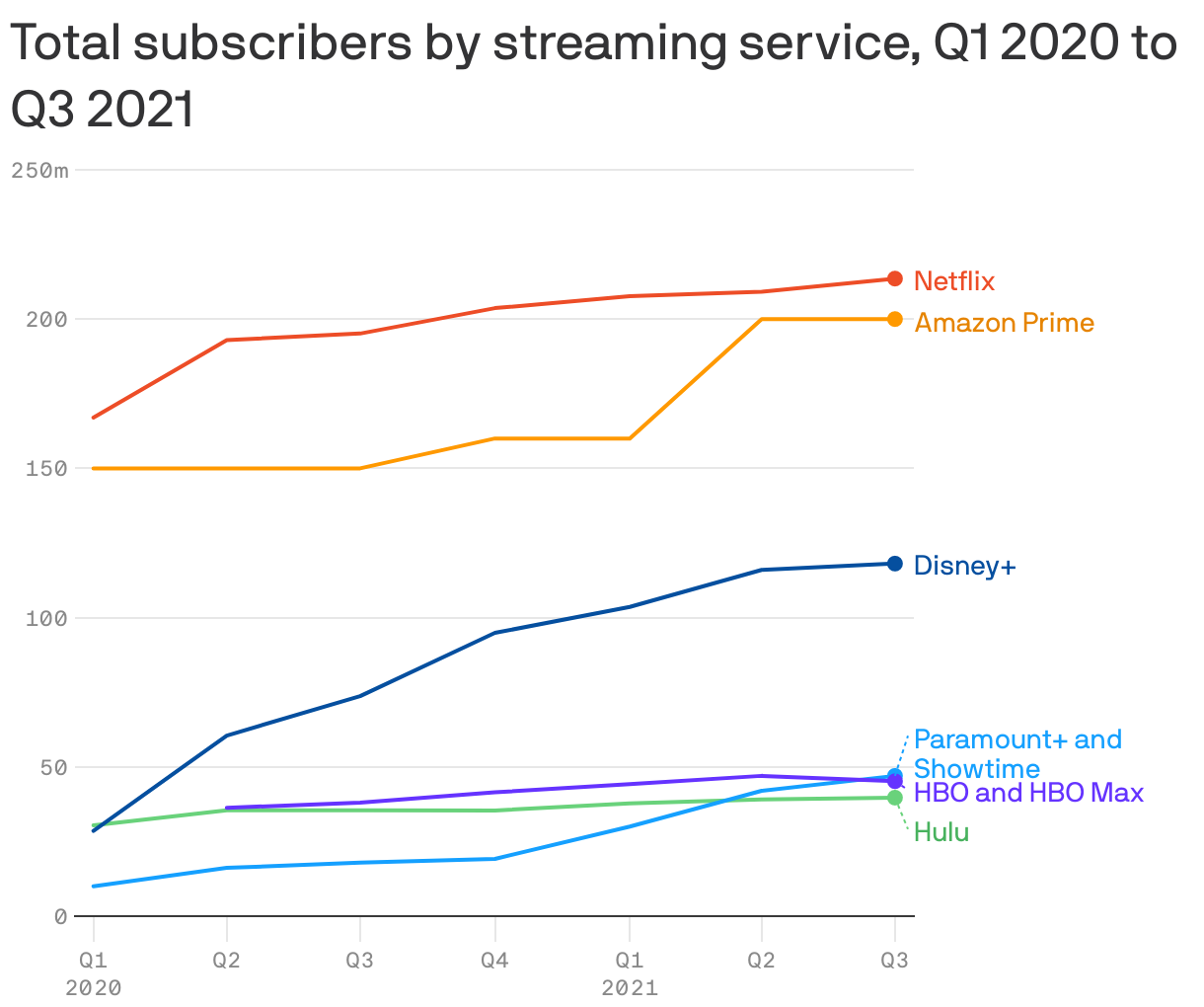
Data: Company filings; Note: "Paramount+ and Showtime" was formerly "CBS All Access and Showtime"; Chart: Kavya Beheraj/Axios
Subscriber growth slowed last quarter for most of the major streaming services, prompting analysts to consider whether the subscription streamers are prepared to compete globally as the U.S. market saturates.
Why it matters: "Consumers sampled many different SVODs during the height of the pandemic. Churn is a challenge as consumers get back to a new normal routine," said Andrew Hare, SVP of research for global media & entertainment at media research firm Magid.
Salad restaurant chain Sweetgreen was valued at $5.5 billion when it began trading as a public company on Thursday.
By the numbers: The Los Angeles-based company priced its IPO shares at $28, which was above its proposed $23-$25 offering range, for a $2.98 billion market value. It then didn't begin trading until after 1:30pm, opening at $52 per share.
Facebook on Thursday said it is expanding the controls it gives advertisers to make it easier for them to limit the types of News Feed content their ads show up next to. Excludable categories include news and politics, tragedy and conflict and debated social issues.
Why it matters: The move ispart of a wider effort by Facebook to help advertisers avoid misinformation, hate speech or other content that may not be deemed "brand safe."
Axios' favorite unprofitable salad vendor, Sweetgreen, starts trading as a public company today. At the IPO price of $28 per share, it has an enterprise value of $2.85 billion, or 9.5 times the $300 million of revenue it saw over the past 12 months.
Why it matters: Other restaurant chains can only dream of such a valuation, but Sweetgreen has managed to persuade the market that it's as much a fast-growing tech company as it is a salad shop.
SSE, the listed British utility with a market cap of nearly $23 billion, disclosed plans to sell 25% stakes in its transmission and distribution grid units, but said it won't spin off the businesses into independent companies. It also doesn't plan to separate out its renewables assets.
Why it matters: This not only bucks the recent trend of corporate breakups — as employed by GE, J&J and Toshiba — but also pushes back against the wishes of activist investor Elliott Management.
Donald Trump was president when SPACs stopped being a cottage industry and instead became Wall Street waterfront. Now he might be indirectly responsible for reining in some SPAC excesses.
Driving the news: Sen. Elizabeth Warren (D-Mass.) Wednesday sent a letter to Securities and Exchange Commission chair Gary Gensler, asking his agency to investigate the proposed merger between Trump's amoebic social media company and a SPAC called Digital World Acquisition Corp.
Joe Biden could be the first president since Jimmy Carter who wants to make the Federal Reserve more hawkish.
Why it matters: Standard political calculus has been turned upside down this year, as the Democrats start preparing for what is certain to be a bruising 2022 midterm campaign. Instead of trying to maximize economic growth and full employment, their new priority is to ensure that inflation comes down as quickly as possible.
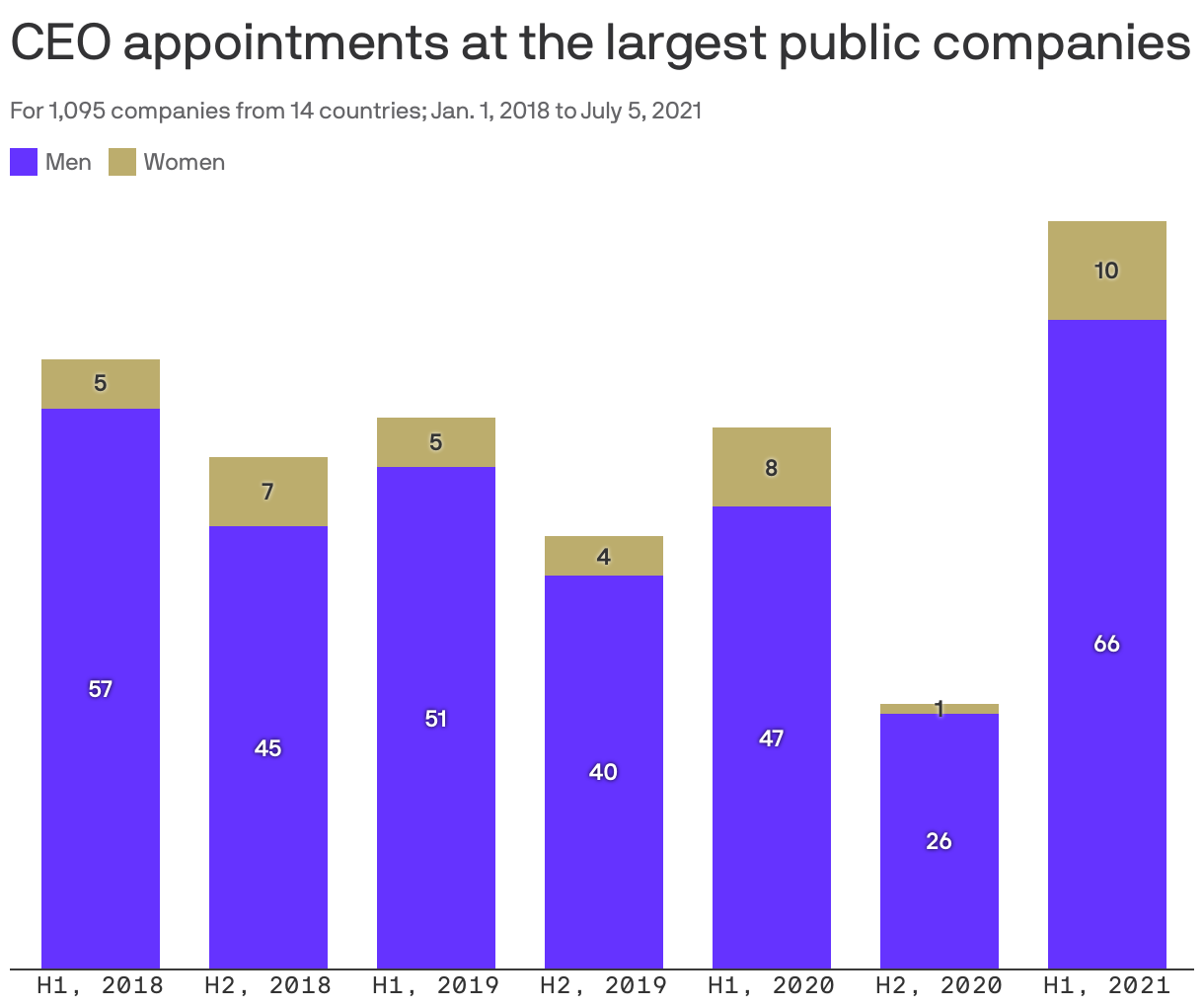
Reproduced from Heidrick & Struggles; Chart: Axios Visuals
CEOs,like the workforce at large, delayed their job quitting plans in the chaos of 2020. Now they’re making up for lost time, and are just as much a part of the Great Resignation as their employees, a report out today from executive search firm Heidrick & Struggles shows.
Why it matters: The latest class of CEOs will help lead the world through a host of thorny modern issues — like cybersecurity, sustainability and digital transformation.
Crypto has gone Hollywood, and vice versa, as the two industries are deepening their financial and strategic ties.
The big picture: For crypto, these partnerships are about building brand awareness. For entertainers and entertainment companies, it's about fear of missing out on the next big thing.
The rental fashion market continues to explode, as people emerge from COVID hibernation eager to socialize and try fresh looks — and avoid the frustration of retail store shortages.
Why it matters: Some factors driving the trend include millennials and Gen Zers feeling comfortable wearing "used" clothes, sustainability concerns around new threads, and the nascent revival of holiday parties.
A bipartisan group of House lawmakers is introducing a bill Thursday that aims to narrow the scope of qualifying cryptocurrency "brokers" subject to a tax reporting provision included in the new infrastructure law.
Why it matters:The provision created an uproar in early August within the cryptocurrency industry as it would force a wide range of network participants to report transaction information to the government even if it's technically impossible for them to do so.
Some 10,000 unionized Deere & Company workers ended their monthlong strike Wednesday after ratifying a new contract offer by a vote of 61% to 39%, the United Automobile Workers (UAW) union announced Wednesday.
Why it matters: The first labor strike at the John Deere tractors maker since 1986 symbolizes the effect the pandemic has had on the economy and workers, as almost two years of COVID-19 measures including lockdowns spurred many employees to campaign for better conditions, per the Washington Post.
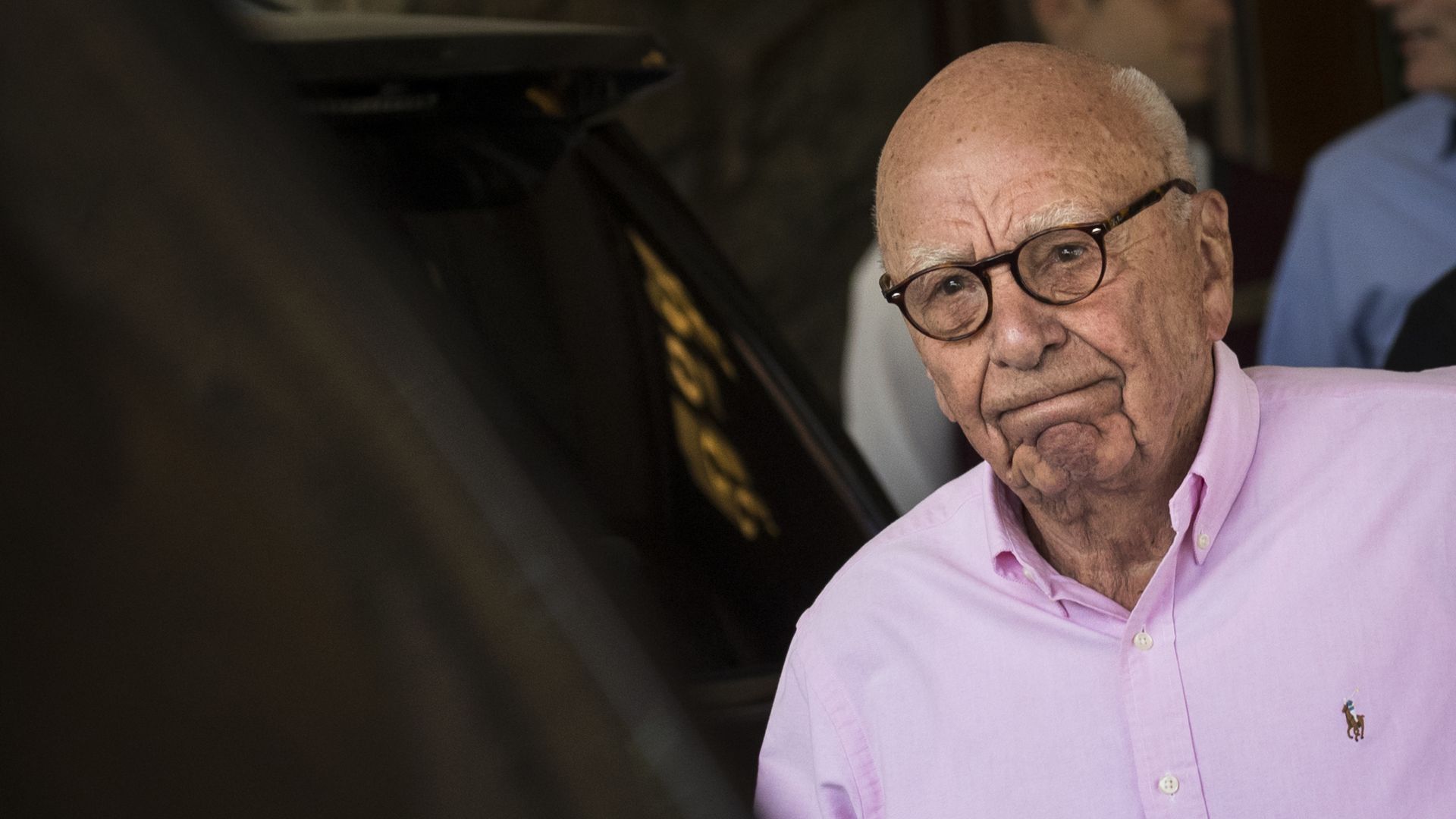
Rupert Murdoch took a dig at former President Trump Wednesday, telling investors that conservatives can't move forward while Trump stays focused on the past.
Why it matters: Murdoch and Trump's relationship soured after the media titan, best known for his ownership of conservative-leaning outlets like Fox News and the Wall Street Journal, reportedly made the final call to give his team the go-ahead on calling Arizona for President Biden on election night last year.
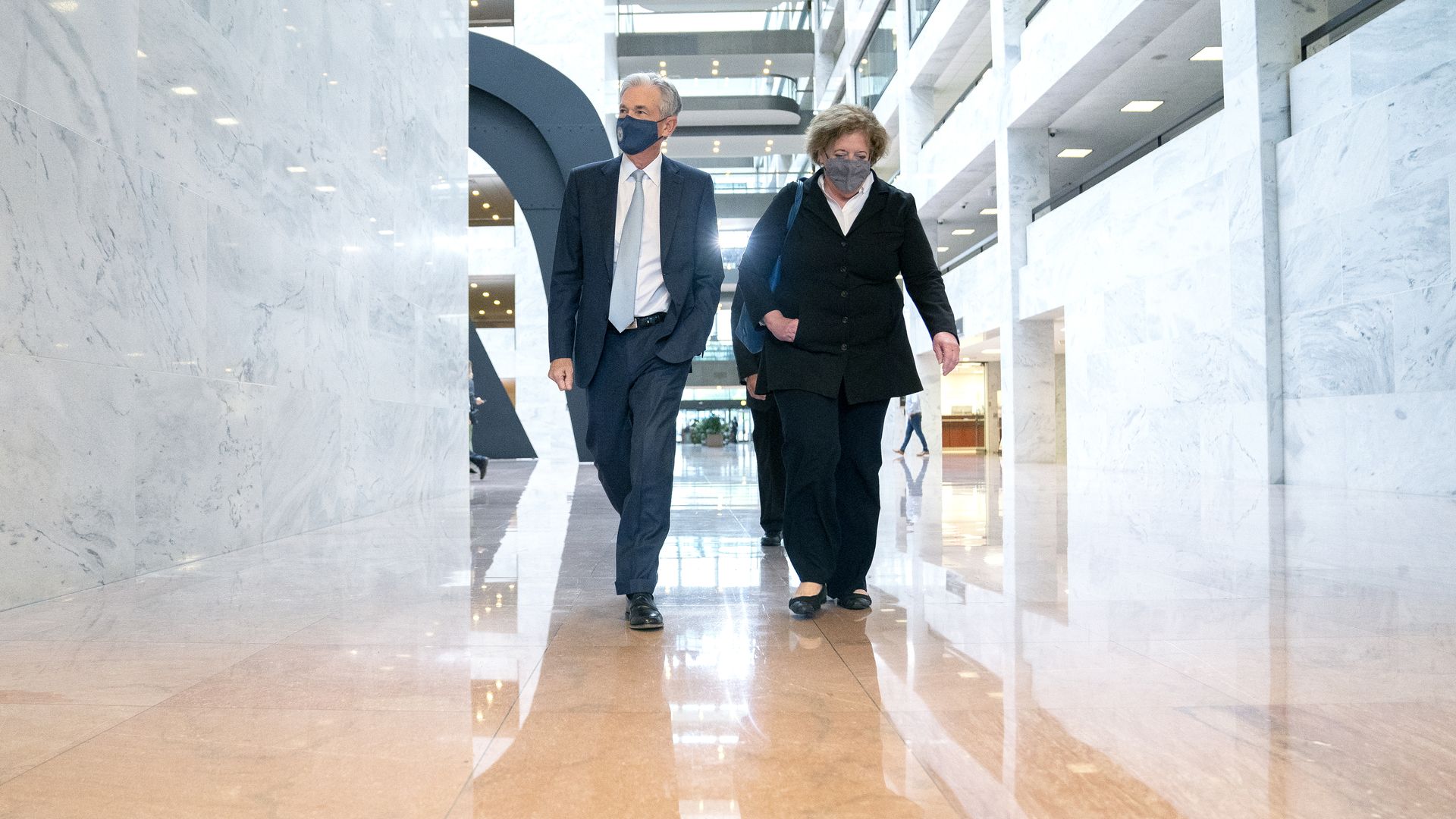
Federal Reserve Chairman Jerome Powell is facing questions in private meetings with Democratic senators this week about how he plans to counter soaring inflation, people familiar with the matter tell Axios.
Why it matters: The Democrats' intense focus on inflation reveals their concern rising prices are becoming a political liability. It also shows they're looking to the next Federal Reserve chair to devise a strategy to defeat it. President Biden promised to announce his choice as early as Friday.
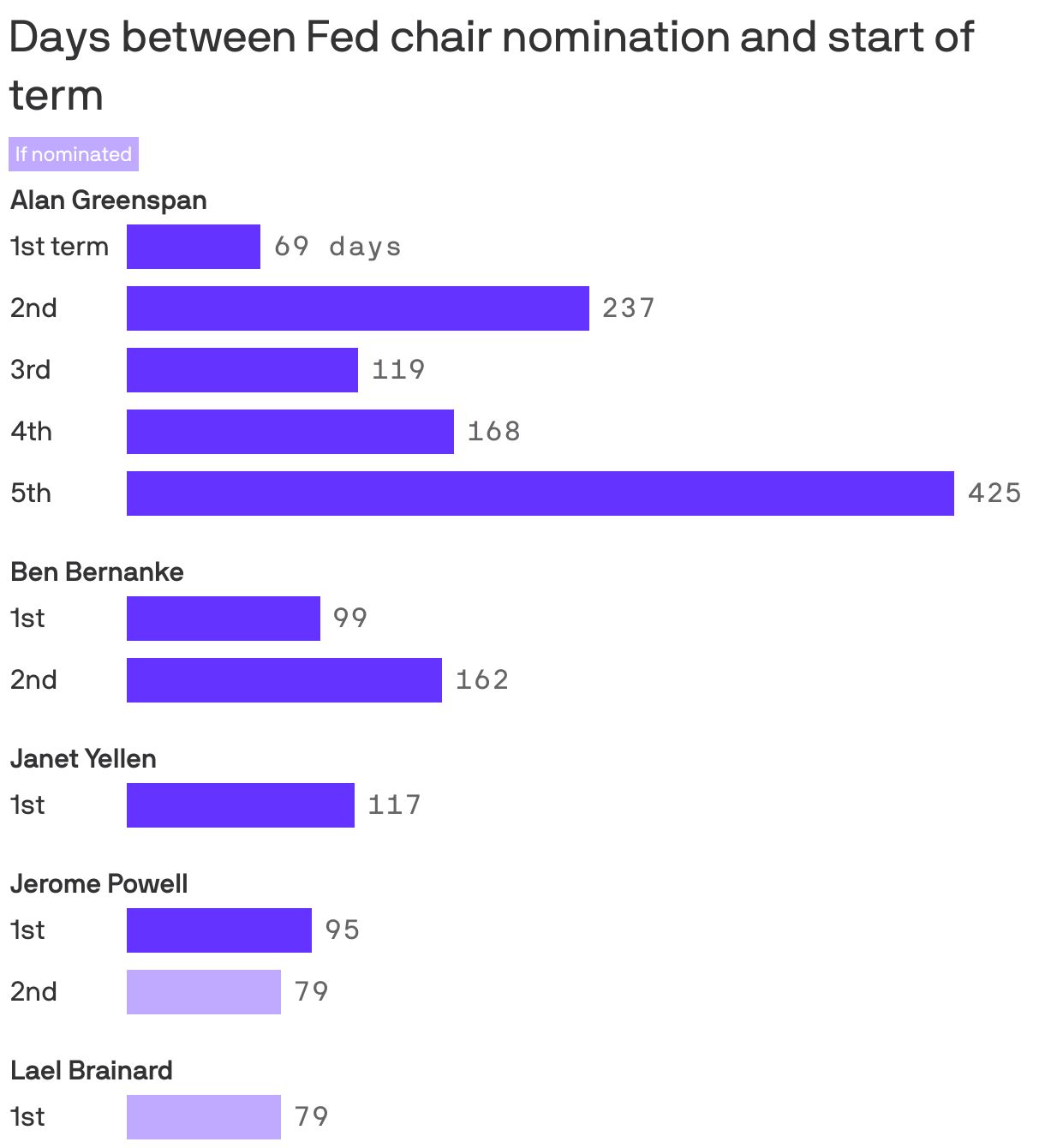
Reproduced from The Atlantic Council's GeoEconomics Center; Note: This graphic assumes Powell or Brainard would be nominated this Sunday, Nov 20; Chart: Axios Visuals
President Biden is late in announcing his decision for the next chairman of the Federal Reserve, according to data and analysis by the Atlantic Council.
Why it matters: Presidents typically give markets — and the Senate — much more time to digest such monumental financial news, especially during a time of economic turmoil.
The White House is making public all agency-waiver requests to the administration's "Buy American" rule, Axios has learned.
Why it matters: The federal government is the single largest purchaser of consumer goods in the world, spending nearly $600 billion annually on procurement. The new process allows the public to scrutinize the president's commitment to foster sales of U.S.-made products.