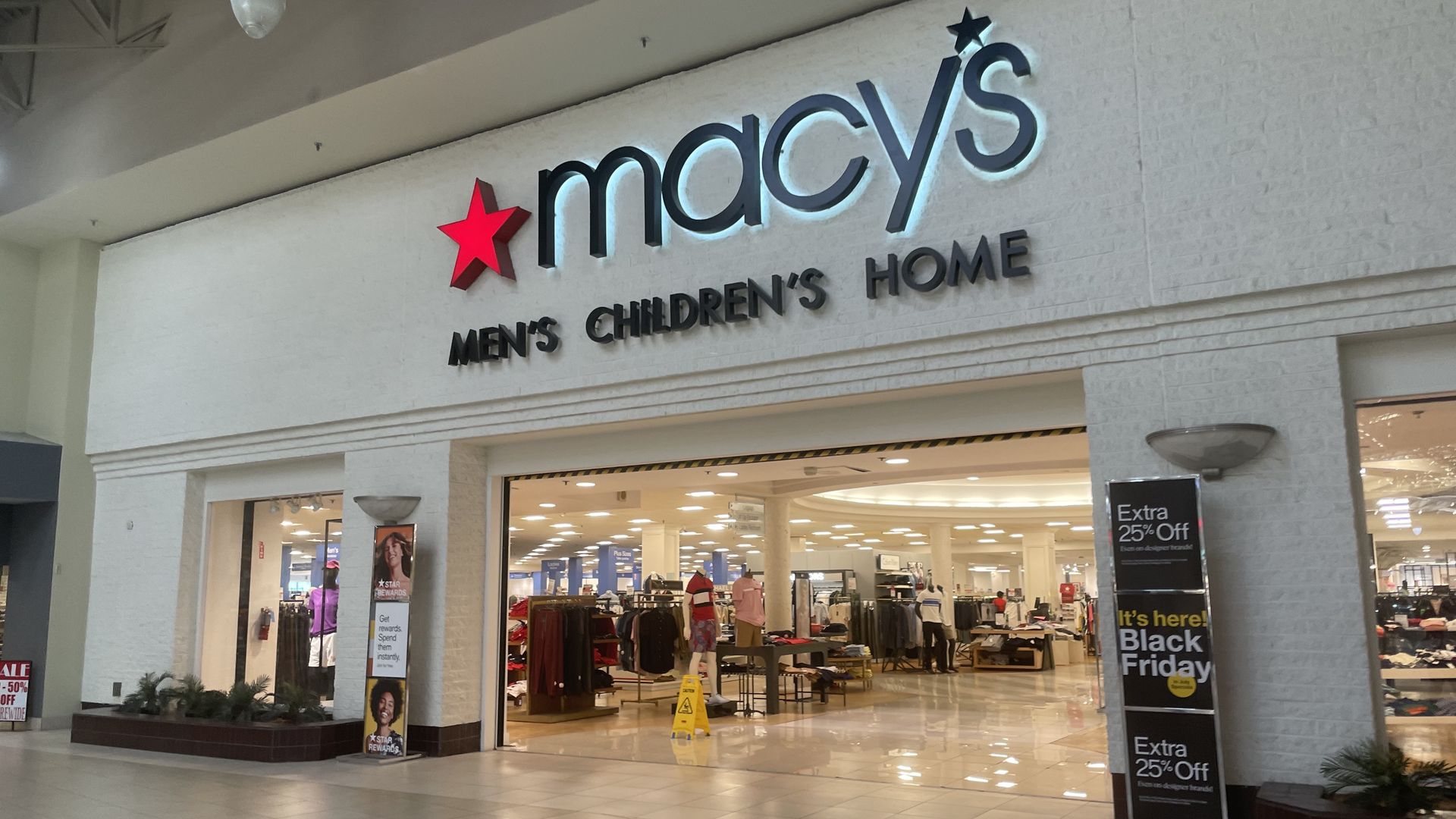
Macy's is closing five stores and trimming its workforce by 3.5%, the retailer confirmed to Axios Thursday.
Why it matters: While Macy's had a strong third quarter relative to its past performance, the department store category remains deeply troubled, Axios' Richard Collings reports.
Zoom in: Along with how to design physical stores to compete with online shopping, those were among the most sought-after discussions at this year's National Retail Federation Big Show in New York on January 14-16.
Former President Trump's social media platform, Truth Social, generated just $1.07 million in revenue during the third quarter of 2023, according to SEC filings.
The big picture: Truth Social has become Trump's main means of communicating with the masses, but it hasn't yet leveraged his political popularity into a a financially sustainable business.
Walmart is increasing pay for store managers and said Thursday it will hike the current average manager salary from $117,000 to $128,000 starting Feb. 1.
Why it matters: The nation's largest private employer and largest retailer is hoping to attract and retain managers in a competitive labor market.
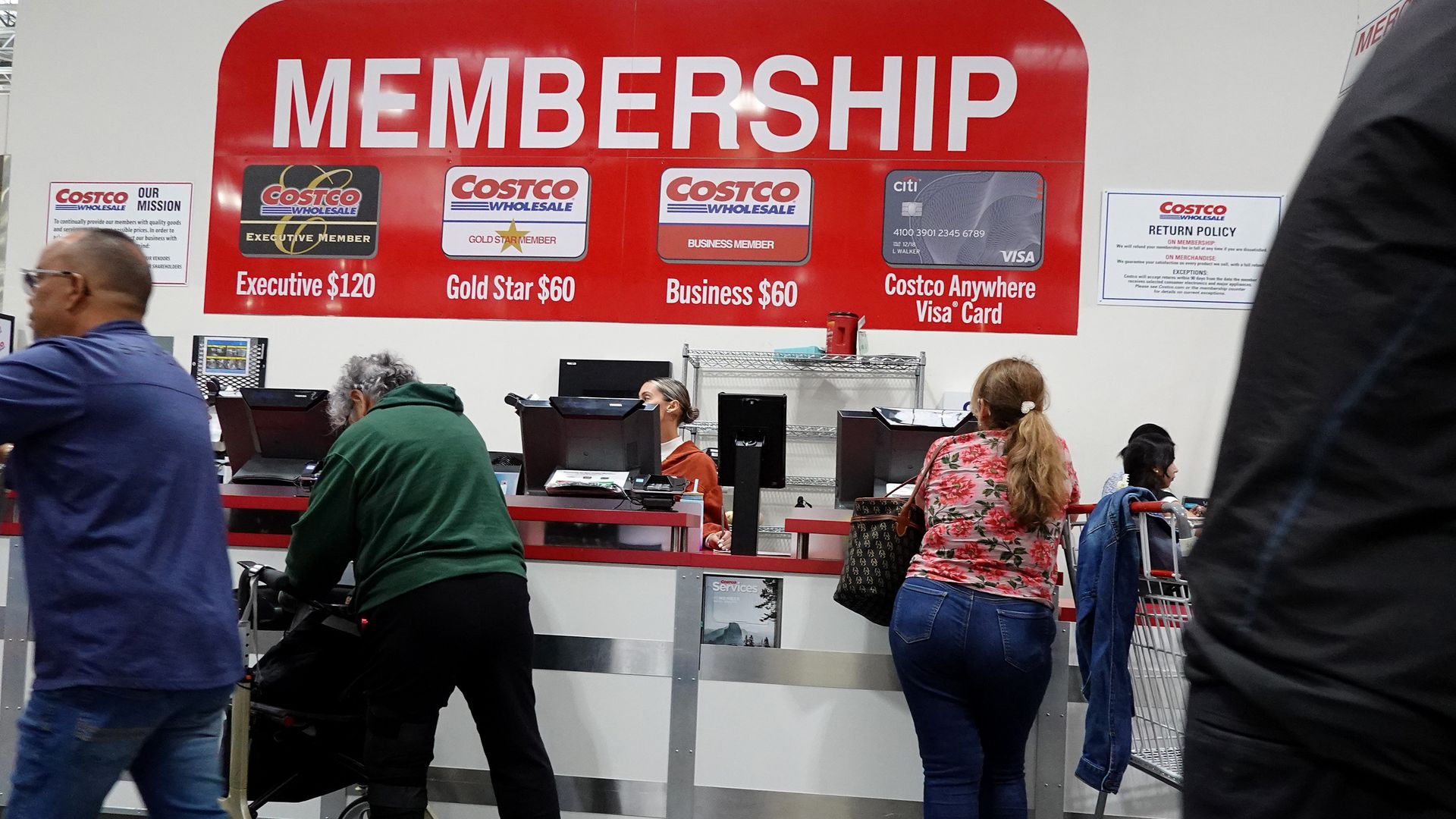
Costco is taking its crackdown on membership sharing to the next level with a trial at some locations that requires members to scan their cards when entering stores.
U.S. private equity is about to get a big boost from Australia's largest pension fund.
Driving the news: AustralianSuper, which manages nearly US$200 billion, tells Axios that it plans to double its global private equity exposure over the next five years, with between 70-80% of those new dollars heading to the U.S.
Subway is looking to capitalize on America's growing snacking appetite with three new footlong snacks that hit restaurants nationwide Jan. 22.
Why it matters: Snacks make up about a quarter of what Americans eat in a day with 90% of people eating one to three snacks, according to arecent report in the journal Nutrients.
Top communicators are increasingly going off on their own to launch independent advisory firms.
Why it matters: These challenger firms— or high-level, strategic communications advisories that are more agile than the agencies of lore — are changing the PR business model and its offerings.
Macroeconomic factors like shrinking budgets and an influx of available talent have normalized the collective model — which is being embraced by firms and consultancies of all sizes.
Why it matters: Collectives allow for "Avengers"-like communication teams to assemble for one-off projects or particularly thorny assignments.
State of play: The Weber Shandwick Collective recently began tapping outside experts — like former White House officials, CCOs, academics and policy experts— to service their clients in advisory roles.
There's also the so-called 1099 strategy (named after the tax form for consulting work). Gray Wolf is the latest firm to operate on this "fluid workforce" model — meaning its founders, Endeavor alums Shaun Clair and Layton Lassiter, run the day-to-day operations and tap a network of 30 freelancers, independent consultants and small independent agencies for special projects as needed.
It's fairly common to see fractional chief marketing or chief financial officers — and these temporary or part-time opportunities are starting to normalize in the communications role too.
Why it matters: This represents yet another flexible and cost-effective way for companies or brands to tap into senior-level expertise.
Driving the news: A group of former CCOs and an experienced recruiter recently launched CommsCollectiv, a firm specializing in fractional employment for seasoned communications professionals.
Since its launch in November, CommsCollectiv has filled roles for Fortune 500 companies, professional services firms and smaller, private-equity-backed entities looking for senior-level executives available on a short-term basis.
As chief communications officer of Booking Holdings, Leslie Cafferty considers herself to be the voice of the company.
Why it matters: Booking Holdings is the parent company of travel and leisure brands like Booking.com, Kayak, Priceline and OpenTable and reaches millions of travelers each year.
A new reportsaying billionaire Patrick Soon-Shiong has sunk hundreds of millions of his own money into an unprofitable Los Angeles Times underscores how desperate the news industry is to chart a plan for survival in the digital era.
Why it matters: If billionaire owners can't make the L.A. Times or the Washington Post profitable, then the news industry has to ask itself: What can?
Oil prices have fallen, despite escalating Mideast violence.
Why it matters: Since at least the Yom Kippur War of 1973 — and the Arab nations' oil embargo that followed — the region's regular episodes of violence and political volatility have often generated spikes in oil prices.
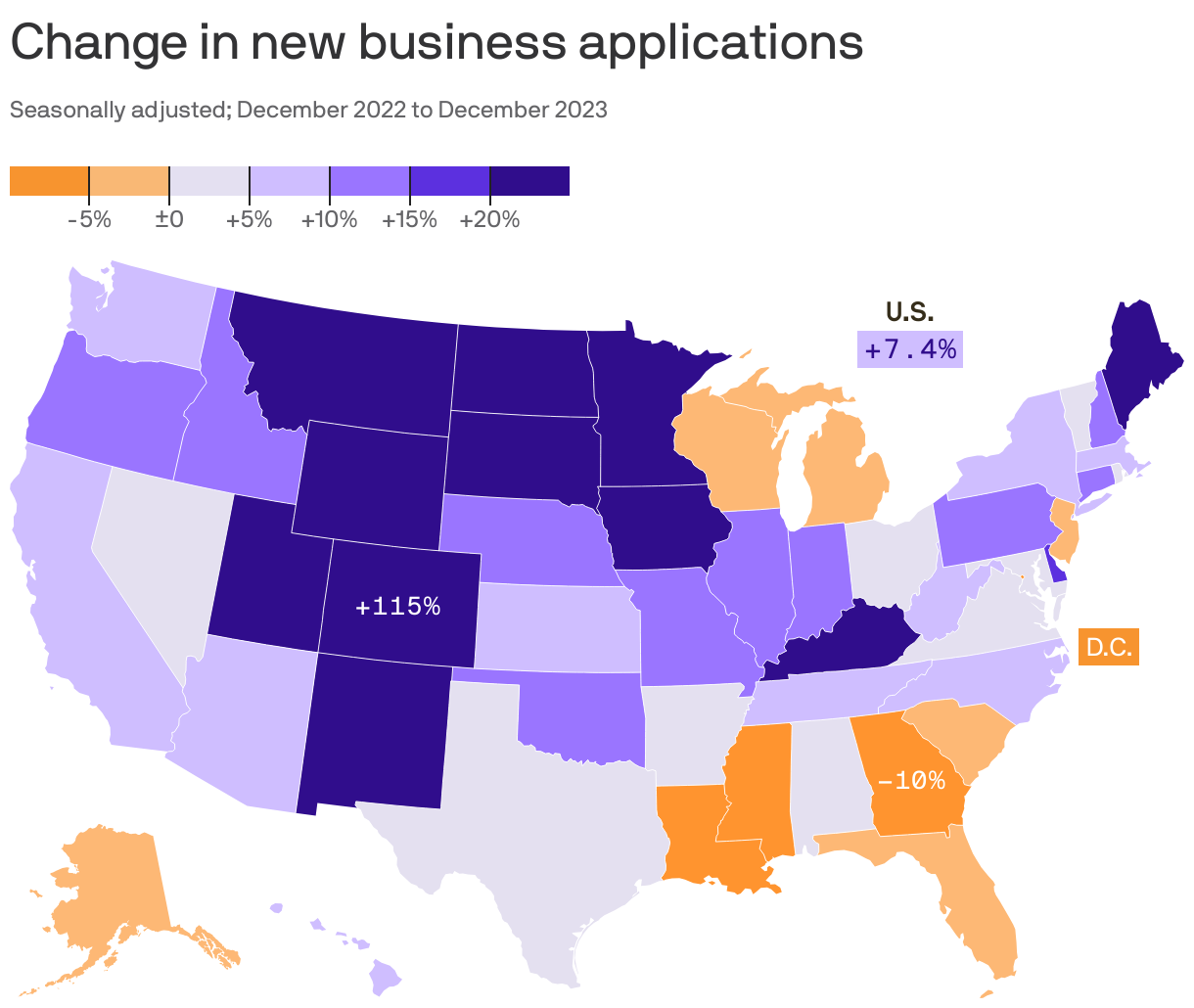
The Midwest and Mountain West are America's latest new-business hotspots, a new Axios analysis finds.
Why it matters: New business applications — which rose 7.4% nationallybetween December 2022 and December 2023 — are an excellent indicator of economic sentiment. Few people try to start a company when they foresee bad times ahead.
The Apple Watch Series 9 and Ultra 2 will go on sale in U.S. stores Thursday morning without their blood oxygen features, the company announced.
Driving the news: The announcement came after a federal appeals court ruled Wednesday that Apple couldn't import wearables with this feature into the country while the company appeals the U.S. International Trade Commission's finding that the devices infringe patents.