The European Commission announced an investigation into X on Thursday over allegations that the platform spread disinformation about the war between Hamas and Israel.
The big picture: Misinformation and disinformation about the conflict could amplify political divisions globally, as false and misleading reports have multiplied online in the wake of escalating fighting in the region.
A Montana judge questioned Thursday the state's new TikTok ban, which will prohibit the Chinese-owned app statewide beginning in January.
Driving the news: U.S. District Judge Donald Molloy heard arguments challenging the ban after TikTok and various creators filed a lawsuit against the state in May, alleging First Amendment violations, among other laws.
A yearlong wave of layoffs is rattling video game developers, some of whom are struggling to reconcile the industry's success with the abundance of cuts, they tell Axios.
Driving the news: More than 6,000 games industry jobs have been eliminated since the start of the year across more than 100 studios, according to VideoGameLayoffs.com, a site managed by game developer Farhan Noor.
The U.S. commodities regulator has sued the former chief executive of crypto lender Voyager Digital for fraud.
Why it matters: The Commodity Futures Trading Commission today alleged that Stephen Ehrlich "fraudulently solicited participation in and operated" Voyager in a way that led to its bankruptcy in July 2022, owing U.S. customers over $1.7 billion.
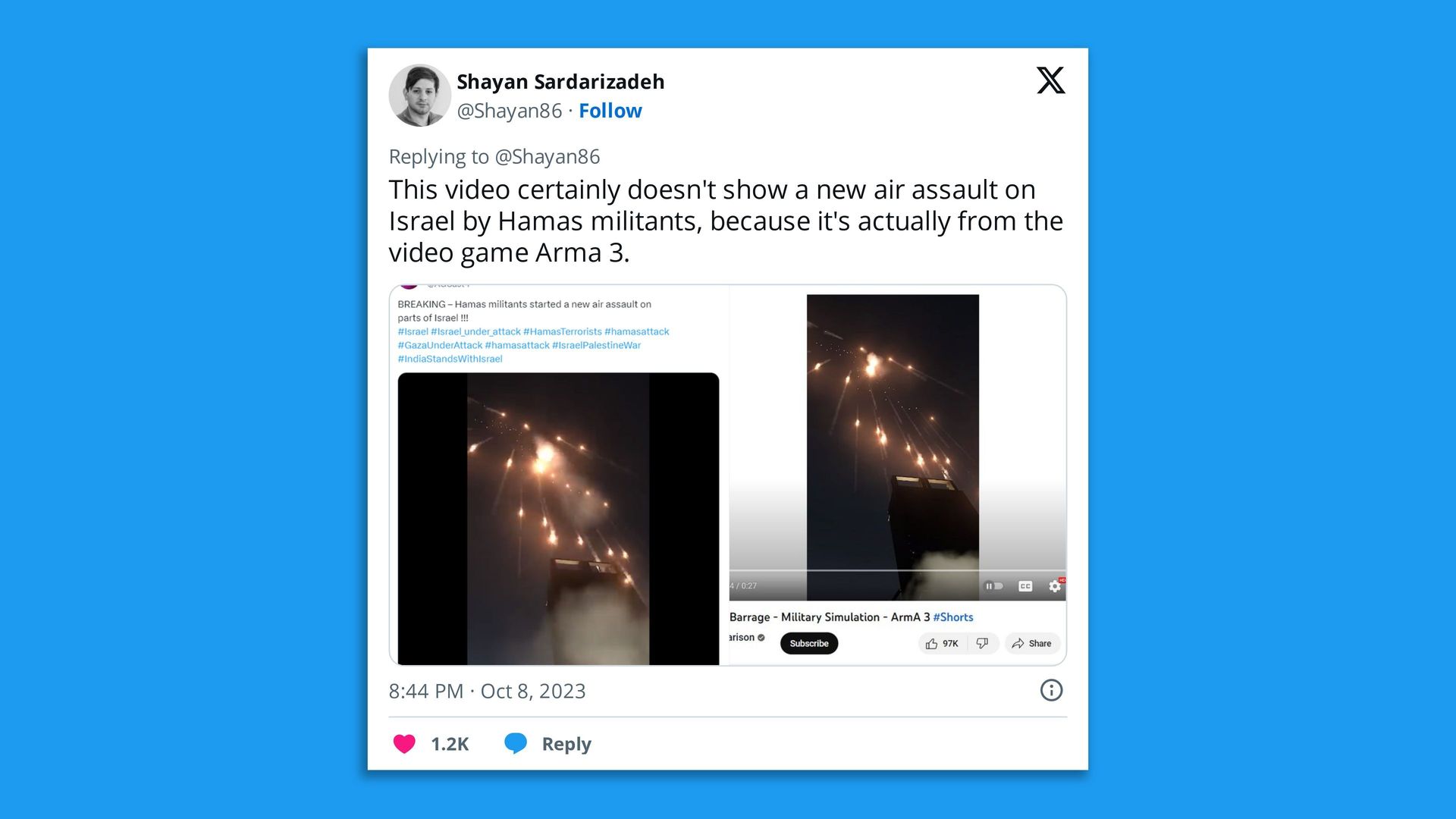
Some viral posts purporting to show military engagements in the conflict between Israel and Hamas are actually just clips from video games, mainly the 2013 PC game Arma 3.
The big picture: Misinformation about the conflict has been rampant on social media this week.
Axios BFD returned to New York to bring you exclusive conversations with industry leaders who are driving headlines, markets and the most consequential deals of the year.
Inflection AI co-founders Reid Hoffman and Mustafa Suleyman urged government regulation of powerful AI, at the Axios BFD event in New York City, Thursday, despite risks of ineffectiveness.
Why it matters: The White House is preparing an AI executive order, expected in coming weeks.
New York-based tech firms and investors see the advent of AI as the latest opportunity to try to unseat the Bay Area as tech's global capital.
What's happening: To achieve its potential, the generative AI industry must win adoption in key industries concentrated in the New York area — finance, communications and media, law and medicine.
The oil price surge that followed Hamas' attack on Israel has paused for the moment, suggesting markets don't see the conflict immediately spreading or reaching key producing areas.
State of play: Crude remains well off the 2023 highs reached in late September despite the jump when markets opened Sunday.
Booz Allen Hamilton launched a new set of AI capabilities aimed at federal military and civilian clients, and will tell investors on Wednesday that it's aiming for $500 million to $700 millionin government AI contracts in fiscal year 2024, per data shared exclusively with Axios.
Why it matters: Generative AIoffers government and military organizations the chance to deliver faster and better services — pushing officials to better organize and apply the huge amounts of data they already collect.
Instead of viewing AI as a wholesale substitute for human workers and tasks, smart organizations and products are putting it to work in narrower niches.
Why it matters: AI is still far from being able to take over soup-to-nuts projects like writing entire articles or performing whole movie roles, but it can effectively shoulder painful but necessary tasks that people find tough or tedious.