DC Attorney General Karl Racine has subpoenaed Facebook for documents and data to determine whether the company has kept its word about reducing vaccine misinformation on its platform, his office revealed Thursday.
Why it matters: Research has indicated that exposure to online COVID-19 misinformation can make Americans less willing to be vaccinated.
Popular trading app Robinhood on Thursday filed for its initial public offering, and disclosed that it will set aside up to 35% of shares for retail investors who rarely get to buy at a company's IPO price.
Driving the news: Earlier this week, Robinhood agreed to pay a record $70 million in fines and restitution, as part of a settlement with the Financial Industry Regulatory Authority over providing customers with "false or misleading information."
Spurred by a major reversal by the NCAA, video game giant Electronic Arts says it is in the "early stages" of exploring the "possibility of including players in EA Sports College Football," a company rep tells Axios.
Why it matters: EA, once the subject of a major lawsuit from NCAA athletes over the use of their likeness in the company's video games, seemingly has the option to use them again, as restrictions against paying college athletes fall.
A new, high-tech consumer entertainment experience opening today in Atlanta promises to transport users to exotic destinations with the aid of immersive video, touch feedback and more.
Why it matters: Illuminarium — which is set to expand to other cities in coming months and years — is a bet that consumers are ready to come back for in-person entertainment, and that the latest in visual technology can come close to replicating some of the experience of traveling to some of the world's most remote locations.
Congress's infrastructure framework includes $65 billion for broadband, and now the real fight for internet dollars begins.
Why it matters: That record infusion of funding, spurred by the pandemic's spotlight on the digital divide, has the potential to make the White House's goal of connecting all Americans a reality — unless it gets mired in squabbling.
A resurgent Zynga is much more than the company that got everyone playing "Farmville" on Facebook many years ago, company president Bernard Kim tells Axios.
Why it matters: One of the best-known social gaming companies has transformed itself into a mobile giant and is also setting its sights on consoles.
Sony is under firefrom indie developers who say it charges over $25,000 for prime placement on the PlayStation store and gives them "no ability to manage their games."
Why it matters: The process of getting listed, and then selling, games on the PlayStation store is a bureaucracy that small developers have no control over.
Robinhood lied to its customers for years, costing them millions of dollars and breaking numerous regulatory rules, according to a blockbuster disciplinary action revealed on Tuesday by the Financial Industry Regulatory Authority, the brokerage's chief regulator.
Why it matters: Robinhood burst onto a relatively sleepy discount-brokerage scene by offering disruptive mobile-native free stock trading. Finra's complaint, coupled with a record $70 million in fines and restitution, reveals the degree to which Robinhood failed at core components of what a brokerage must be able to do.
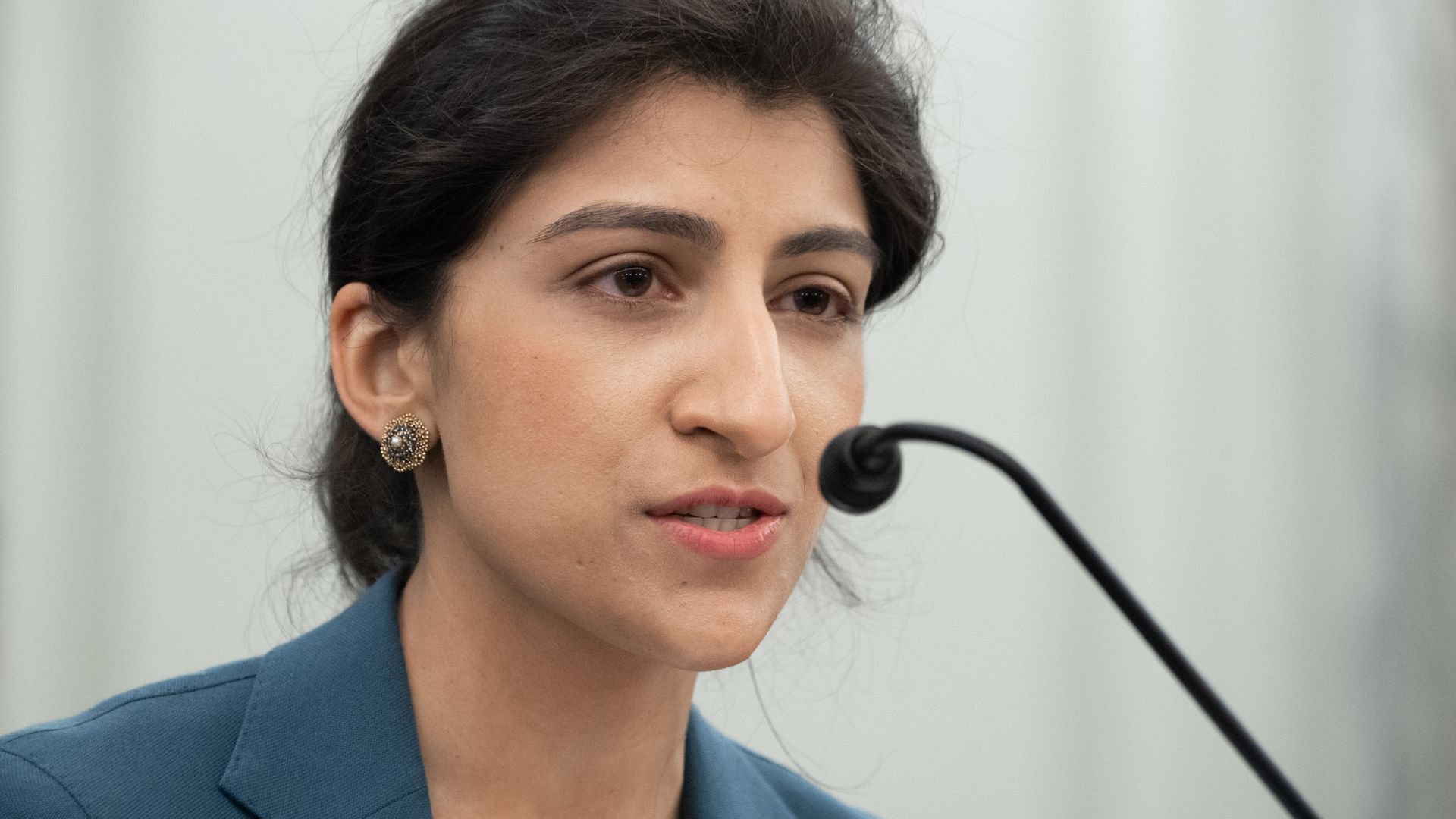
Amazon wants Federal Trade Commission chair Lina Khan recused from any antitrust investigation targeting the company, arguing her past statements about the e-commerce giant create the appearance that she has prejudged the company.
Why it matters: Amazon's purchase of MGM will reportedly be reviewed by the FTC.
TikTok on Wednesday said it removed more than 7 million accounts "from the full TikTok experience” during the first quarter of 2021 for potentially belonging to people under the age of 13.
Why it matters: The disclosure marks the first time the tech giant has revealed the number of accounts it has had to address for possibly belonging to kids and pre-teens.
Facebook, Google and Apple take note: Microsoft is spending a fortune to bulk up its legal staff in anticipation of years of new tech regulations around the globe. And Microsoft isn't even the company in most regulators' crosshairs.
Driving the news: As first reported by Axios, Microsoft plans to increase the size of its corporate and legal affairs team by 20%.
New imaging technology is designed to address a dangerous blind spot when it comes to today's assisted driving systems: they don't always brake for pedestrians.
Why it matters: About 6,200 pedestrians are killed by motor vehicles every year, according to federal statistics, accounting for 16% of all traffic deaths. Three-fourths of those deaths occur at night.
Millions of cars are equipped with automatic emergency braking systems, which are supposed to detect and avoid pedestrians. But they are often "ineffective" at night, AAA testing found.
These systems are powered by radar and visible cameras, which have trouble seeing in low-light, glaring sun or bad weather.
Adding thermal sensors could greatly improve pedestrian safety in these situations, as recent tests performed by VSI Labs, a technical advisor to self-driving car developers, found.
What's happening: Oregon-based Teledyne FLIR Systems, a maker of thermal-imaging and night-vision technology for the military and others, has developed a new type of sensor that can simultaneously detect both light and heat.
In a recent demo, I saw how well the so-called "thermal camera" picked up vulnerable road users like a woman crossing the street carrying a child's slide or smokers taking a break in the shadows of a parking garage.
The "blended thermal/visible technology" can also help detect humans and animals for forthcoming augmented reality systems in cars, FLIR's John Eggert told me.
How it works: Regular cameras make pictures from visible light but can struggle in high-contrast light/dark environments.
Thermal cameras make pictures from heat energy, not visible light, so they're largely unaffected by sun glare and shadows.
Heat (also called infrared, or thermal, energy) and light are both parts of the electromagnetic spectrum, but a camera that can detect visible light won’t see thermal energy, and vice versa.
The bottom line: Sensor fusion — combining multiple perception systems into one — will help improve how cars of the future will see.
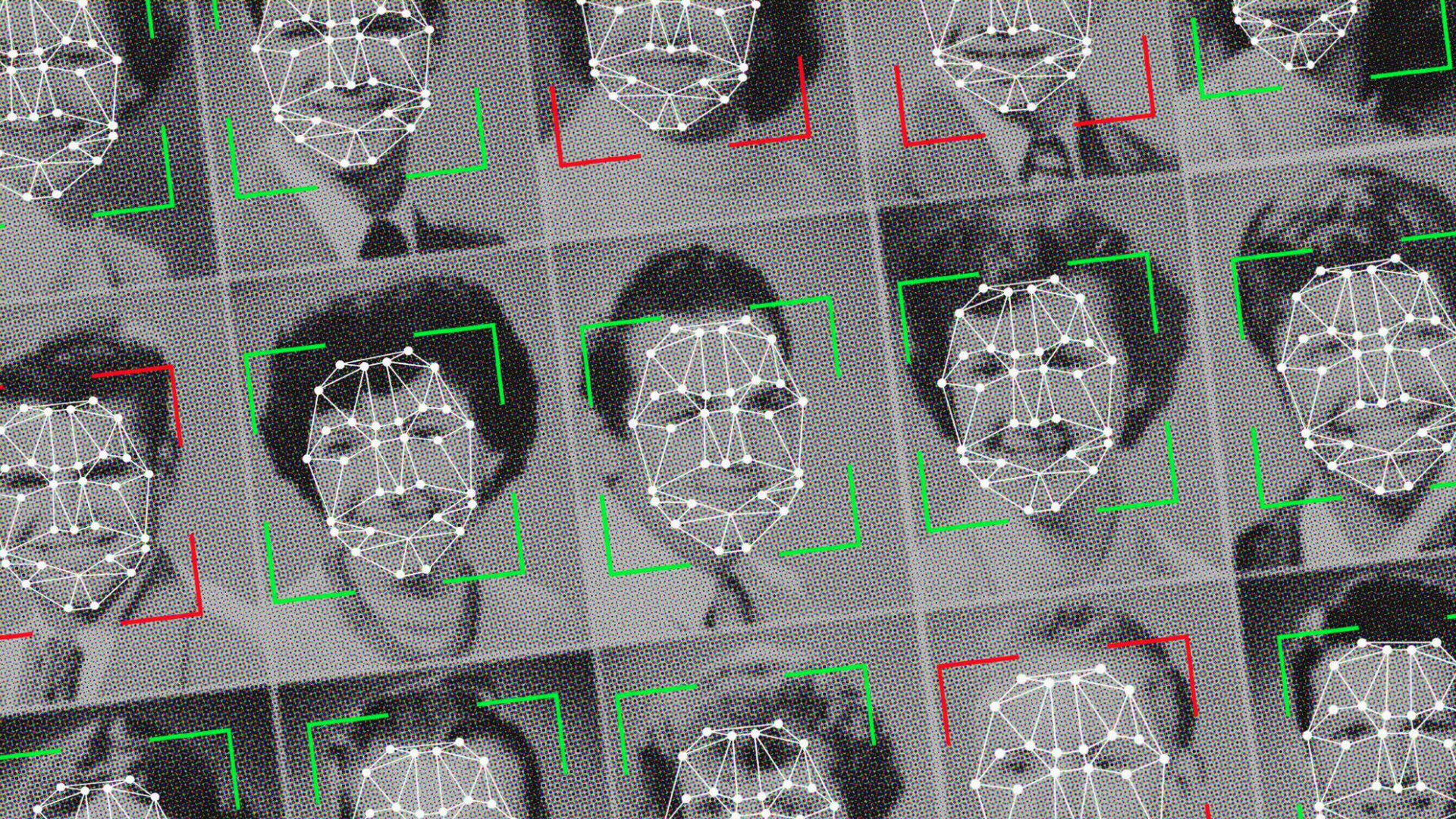
The Government Accountability Office said in a new report Tuesday that federal law enforcement agencies need to track use of facial recognition technology more closely to better protect privacy.
Why it matters: Use of face-recognition tech is becoming more widespread within the federal government, with 20 out of 42 federal agencies that employ law enforcement officers using it.
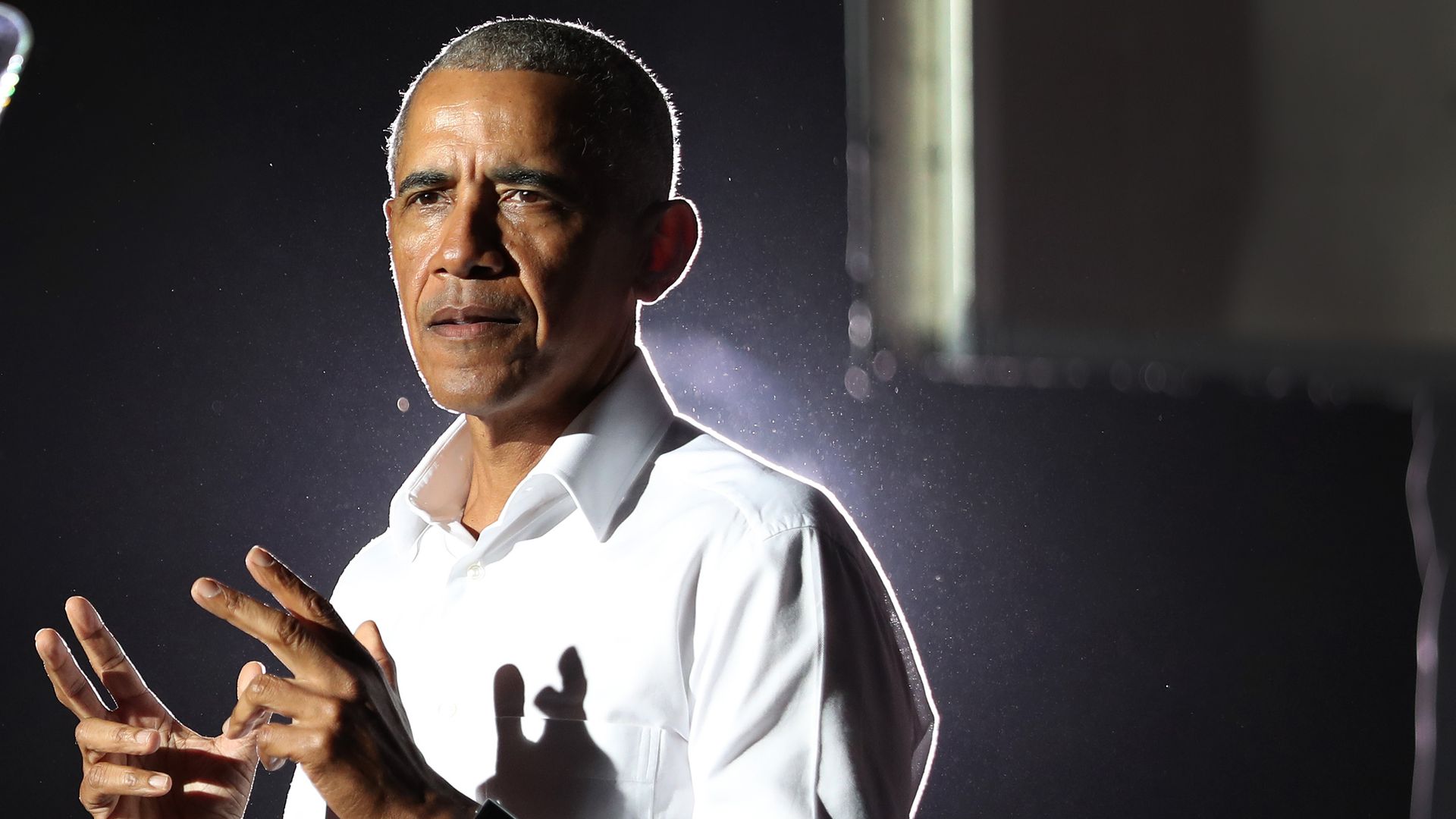
Former President Obama said at the American Library Association's annual conference Tuesday "we should all be worried" by the rise in misinformation, like that which led to the Capitol riot, per CNN.
Details: Obama told moderator Lonnie Bunch he saw some misinformation happening during his presidency, with former President Trump "one of the perpetrators" of stoking sentiment against him. He accused Trump of being "somebody who surfed that for their own advantage."










/2021/06/30/1625082224219.gif?w=3840)