Nick Bilton,named this week as the fifth executive producer in the 58-year history of "60 Minutes," on Friday spent his first day in the new role at CBS News in New York, meeting some of the 80+ show staff, walking the halls and introducing himself.
The Texas Senate race has become a national laboratory for anti-"woke" politics, testing whether voters still recoil from the language of 2020 amid the economic pain of 2026.
Why it matters: Republicans came away from 2024 convinced they had won more than an election — they had broken through on culture, turning Democrats' progressive language and identity politics into symbols of elite detachment.
As exurban cities near booming metro areas explode in growth, hundreds of U.S. communities are losing residents at a pace that signals deep structural decline.
Why it matters: The shrinking cities are a crisis in plain sight.
A federal judge ordered President Trump to respond to "grievous" accusations that his settlement with the IRS, which led to the creation of his anti-weaponization fund, was "premised on deception."
Why it matters: The order comes the same day a separate judge placed a temporary hold on the $1.776 billion pot of money, another potential hurdle to the administration's controversial settlement plan.
President Trump's name must be removed from the Kennedy Center, according to an order signed Friday by a D.C. district judge.
The big picture: The ruling is a hit to the president's effort to renovate the performing arts venue, which was scheduled to close later this year so work could begin. Friday's order also halted the closure.
A private detention center in New Jersey has again become a major flashpoint in the fight over the Trump administration's immigration policies.
Why it matters: It's the first major clash under Homeland Security Secretary Markwayne Mullin's leadership. Protesters have been arrested outside the facility while detainees reportedly take part in a hunger strike over claims of inhumane living conditions and inadequate medical care.
Two-thirds of the announced lineup for the Freedom 250 concert series have dropped out, with most artists citing concerns about being tied to an event billed as nonpartisan but described by critics as a MAGA celebration.
Why it matters: President Trump has promoted the nation's250th birthday events as a grand patriotic affair, but the withdrawals underscore artists' fears of alienating fans amid partisan divides.
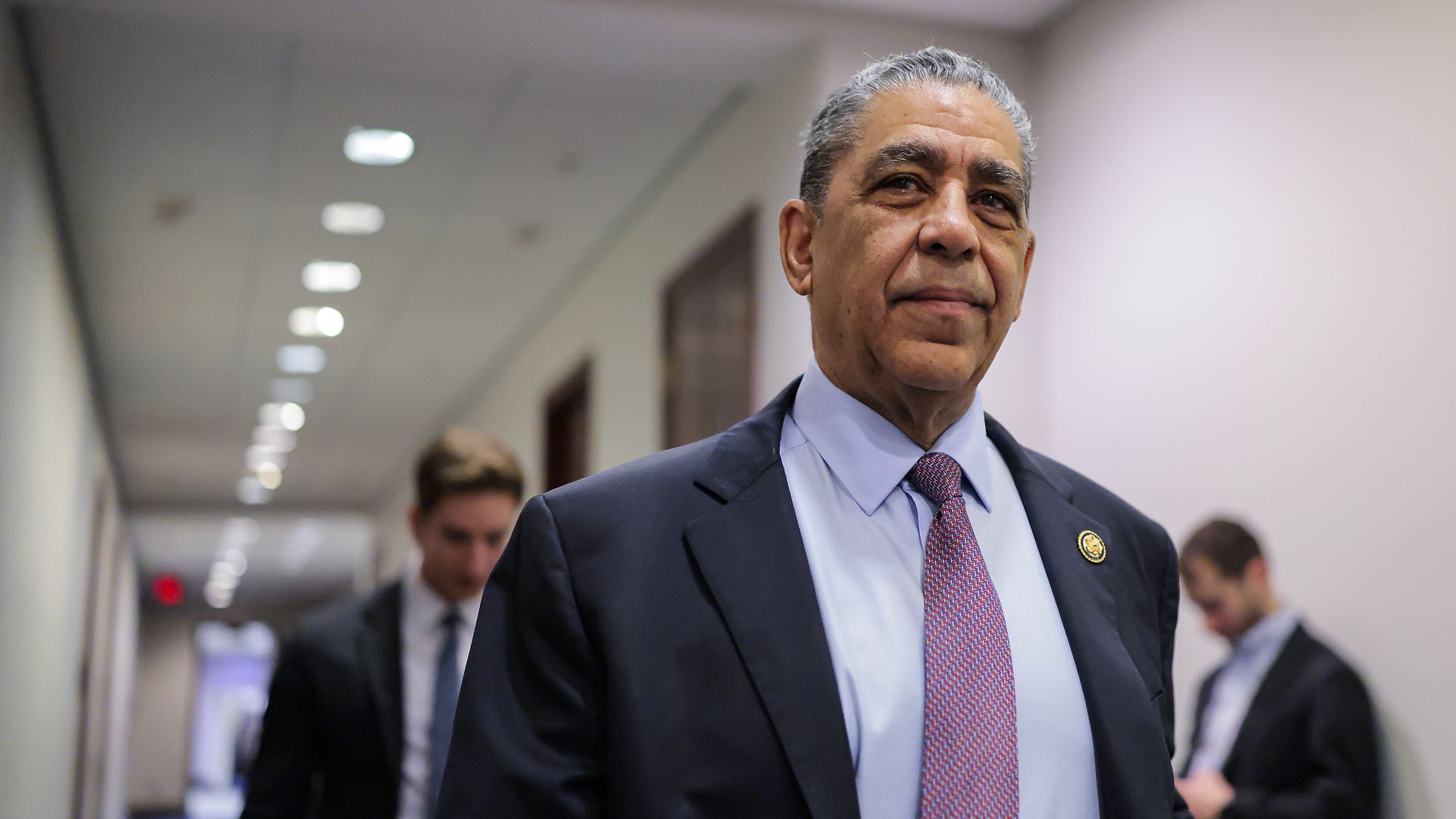
Congressional Hispanic Caucus chair Adriano Espaillat (D-N.Y.) is in what fellow House Democrats and other sources familiar with his race describe as an "existential" battle for reelection.
Why it matters: The race embodies the Democratic civil war being waged across the country, with an establishment-aligned member of the party's old guard fending off a challenge from a younger leftist.
House Speaker Mike Johnson (R-La.) is staring down a brutal stretch of deadlines and uncomfortable votes when the House returns from recess next week.
Why it matters: Johnson bought himself time this spring by punting a series of politically difficult fights. But those deadlines are now coming due, setting up a brutal June for House Republicans.
The big picture: The controversial plan aims to create an unprecedented mechanism to compensate people who claim they were wrongfully targeted by the government.
President Trump's immigration crackdown is causing one of the sharpest slowdowns in U.S. population growth in decades. Economists are beginning to tally the effects, with some warning that the damage will stick around.
Why it matters: The policy-driven immigration reversal underway has few modern parallels. The immediate result is evident in monthly employment figures, with the economy cranking out fewer jobs.
But over time, fewer immigrants could be a productivity drag lasting well into the second half of this century.
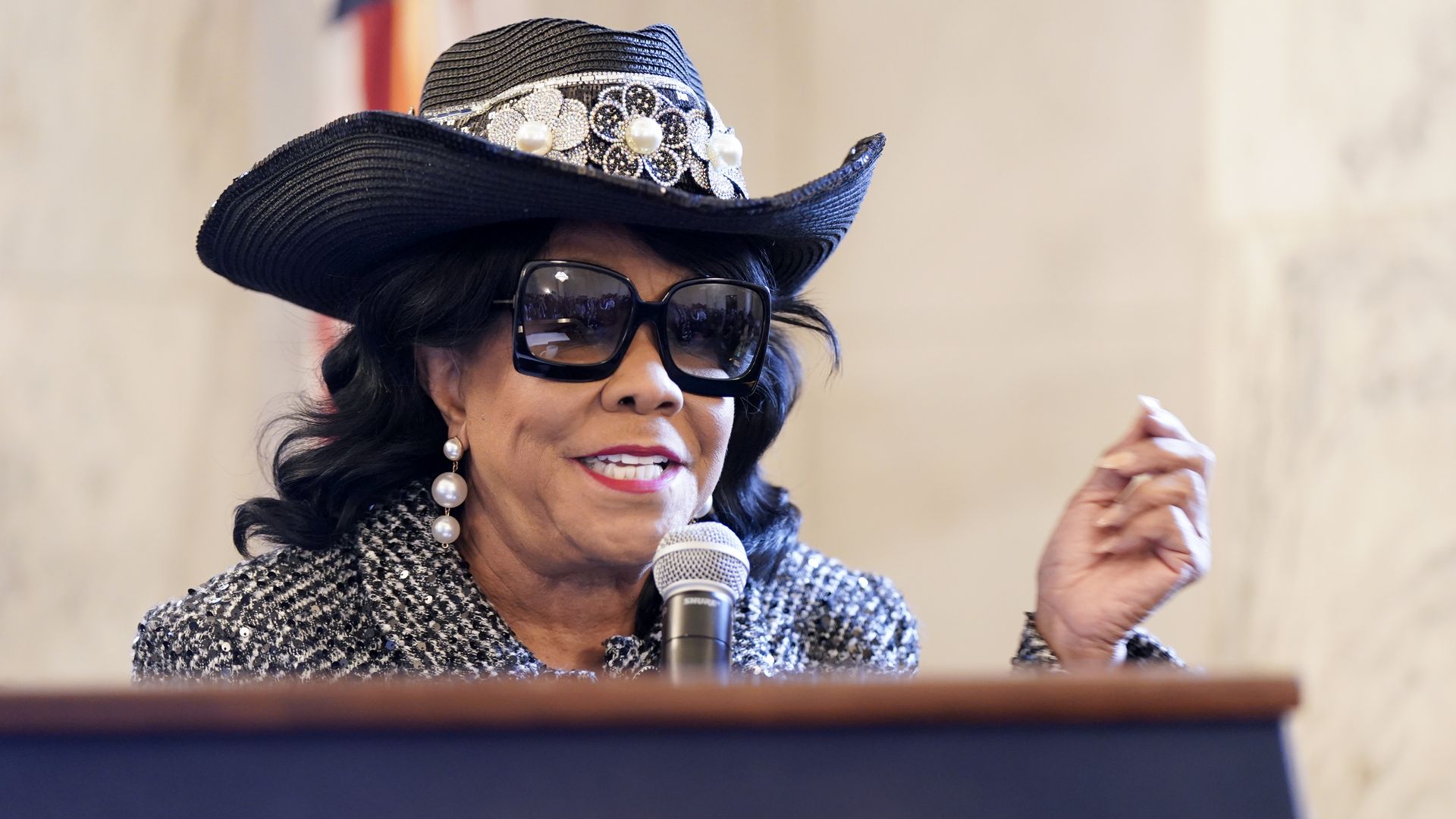
Rep. Frederica Wilson (D-Fla.) confirmed Friday that she will retire from Congress, just days after denying Axios' reporting that she had told allies she wouldn't seek another term.
Why it matters: The 83-year-old had been under considerable pressure not to run for reelection after missing weeks of House votes, as she recovered from a major eye surgery.
President Trump said on Friday that he's convening his national security team in the White House Situation Room to make a final decision about the agreement reached between U.S. and Iranian negotiators.
Why it matters: The signing of the memorandum of understanding (MOU) would be the most significant diplomatic breakthrough since the war started, but a final agreement tackling Trump's nuclear demands would require further negotiations.
Senate Democrats recently committed to tackling one of health care's most under-the-radar dilemmas: how to accommodate the long-term care needs of the fast-aging U.S. population.
Why it matters: The elder care infrastructure isn't ready for the demographic change heading its way.
Between the lines: This isn't the stuff that typically lights up a debate stage. But the math suggests that more and more American families are going to be confronted with a broken status quo and no easy solutions.
"If the U.S. health care system is dysfunctional, then the long-term care situation is a complete and utter disaster," Penn Medical Ethics and Health Policy professor Zeke Emanuel wrote in a recent MarketWatch opinion piece with Benjamin Veghte, director of a new Washington state initiative.
"With only the very poor or very rich having any way of paying for long-term care, that leaves the families of the broad middle class struggling financially and emotionally to keep mom and dad safe," they added.
The big picture: This is essentially about who is going to help seniors and people with disabilities with daily tasks, whether there's enough care available and how will it be paid for.
And the kind of care we're talking about is very different from cutting-edge surgeries or groundbreaking new therapies that drive most health care affordability debates.
It's labor-intensive tasks like feeding, bathing and medication management.
Where it stands: Though there areideological differences over what to do, there's pretty universal agreement that the existing state of affairs can't continue.
The first fundamental problem is that most seniors can't afford many forms of long-term care out-of-pocket, yet an estimated 70% of them will need it before they die.
The average person who turns 65 will eventually incur around $130,000 in long-term care costs, according to a Bipartisan Policy Center analysis.
But the private market for long-term care insurance has largely collapsed, with only around 3% of people over 50 holding policies.
The only public support for care is through Medicaid and requires seniors to deplete their assets before theybecome financially eligible.
And while Medicaid is required to covernursing home care, coverage for home- and community-based services — which seniors generally prefer — is much patchier.
The alternative to these formal arrangements is unpaid care provided by family and friends, which makes up an estimated three-quarters of total long-term care.
As baby boomers age, the ratio of people needing care to available caregivers will head in the wrong direction. And there's also often a huge financial burden placed on the caregivers themselves.
Caregiving can also force people out of the workforce. And in a population that also has a worsening ratio of workers to dependents, it's not a good idea to shrink the pool of productive workers.
The second basic problem is the workforce that's supposed to care for all of these baby boomers.
There's already a shortage of long-term care workers, and the profession is generally low paying. Immigration crackdowns are taking a toll on the sector, which relies on a substantial number of foreign and undocumented workers.
It's unrealistic to think that efforts to make care more affordable will actually make care more accessible if there aren't enough workers to provide it.
There's no shortage of ideas about how to fix the long-term care situation, but like nearly everything else in health care policy, they all come with trade-offs.
The first question is whether to provide more government benefits or private solutions.
A group of Senate Democrats recently made long-term care a plank on their health care affordability initiative, right after prescription drug prices and private insurance reforms.
They would"invest in Medicaid home- and community-based services and establish a home care guarantee for people with Medicare."
Yes, but: The most obvious barrier to a new federal benefit is the huge cost.
The Paragon Health Institute, an influential right-leaning think tank, focuses on encouraging people to privately save for long-term care that they'll need later in life.
It argues that Medicaid eligibility is already too generous, and that if it wasn't as accessible, people would save more for themselves before they need care.
Washington state is about to start paying out long-term care benefits paid for by payroll taxes next month, providing a testing ground for whether such a model could work on a larger scale.
How it works: Similar conceptually to Medicare, workers pay 0.58% from each paycheck into the state long-term care fund, and then can later qualify for $36,500 in lifetime benefits from the program, called WA Cares.
Of course, that covers less than a year of some of the forms of care we discussed above. But it's more than anyone else in the U.S. gets in public long-term care benefits.
America's billionaires are developing their own prescriptions for AI-fueled inequality, anxious to defuse a populist revolt aimed at their ballooning fortunes.
Why it matters: The AI boom has dramatically raised the stakes of the wealth-tax debate, unleashing a technology that could wipe out millions of jobs while minting the world's first trillionaires.
Sonny Joy Nelson, special assistant to the president and White House director of media affairs since President Trump began this term, is leaving the White House to start her own media booking and communications consulting firm, Cornerstone Strategics.
Nelson, a proud North Carolina native, was one of the first communications hires on Trump's 2024 campaign, where she was director of media affairs, and has held communications roles in Trumpworld since 2020.
Thursday's Michigan Democratic Senate debateshowed why party insiders are so nervous about holding retiring U.S. Sen. Gary Peters' seat.
Why it matters: Democrats agree Michigan is essential for retaking the Senate, but they have a trio of well-funded candidates tearing each other apart ahead of the Aug. 4 primary.
AI companies, the cryptocurrency industry and pro-Israel groups are spending like never before to sink their least favorite members of Congress and congressional candidates.
Why it matters: Thevolume cannot be ignored. It's the kind of spending that can kill careers and stop political movements in their tracks.