D.C. schools are banning cellphones, joining almost half of the nation

Add Axios as your preferred source to
see more of our stories on Google.
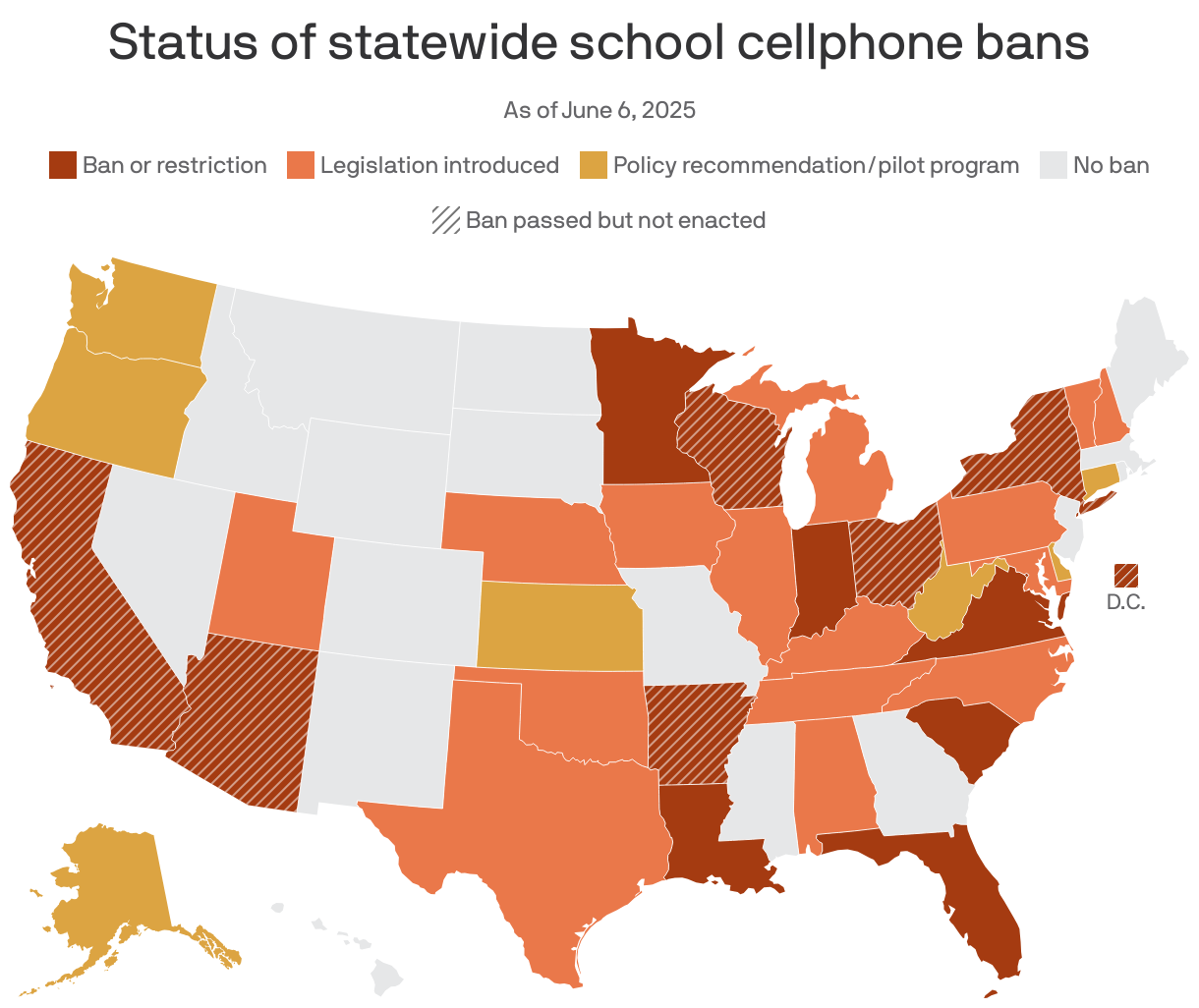
D.C.'s public schools will enforce a cell phone ban starting next school year, the district said on Friday.
Why it matters: D.C. joins nearly half the country in the bipartisan push to limit students' cellphone use in the classroom.
- D.C. middle schools and several of its high schools already implemented the ban, the district said.
Catch up quick: Phone bans have gained momentum across Democratic and Republican state legislatures in recent years.
By the numbers: As of April, 11 statewide phone bans or restrictions were implemented and seven states issued policy recommendations, according to health nonprofit KFF.
- An additional 17 states introduced legislation to ban or restrict cellphone use in schools.
State of play: The phone bans are aimed at boosting students' attention during class as they struggle to recover from COVID learning loss.
- Screen time is also partially at fault for a youth mental health crisis, research has found.
What they're saying: "Piloting a phone-free program in our middle schools demonstrated that storing students' personal devices throughout the school day enriches academic, social, and emotional learning," Lewis Ferebee, D.C. schools chancellor, said in a statement.
- "From increased classroom engagement to reduced anxiety and stronger student relationships — DCPS is ready to scale the program so we can keep driving outcomes that positively impact our students."
- About half of the city's public school students will be affected by the ban. The policy does not apply to the other half, who attend charter schools.
What we're watching: Sens. Tom Cotton (R-Ark.) and Tim Kaine (D-Va.) reintroduced a bipartisan bill in February to study the effects of cellphones in schools, but the legislation has not seen movement since.
- The bill proposes $5 million annually for five years for a pilot program to provide schools with secure containers for the phones.
- It would allow exceptions for students with health conditions, disabilities and non-English speakers.
Go deeper: School cellphone bans keep bipartisan momentum
Editor's note: This story was updated with additional context.
