How AI, crypto and AIPAC are ending political careers

Add Axios as your preferred source to
see more of our stories on Google.
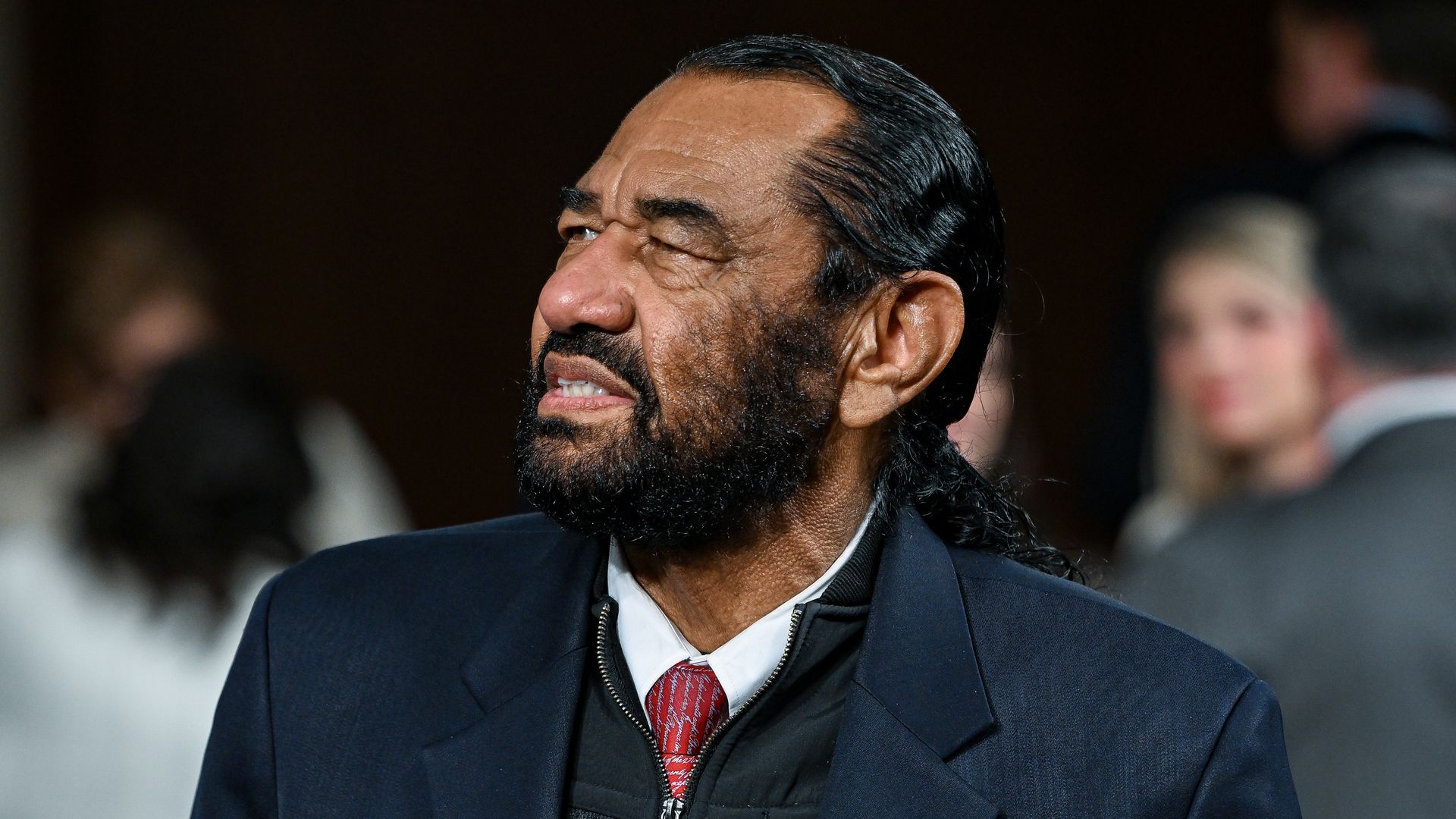
Rep. Al Green in the U.S. House chamber ahead of the State of the Union on Feb. 24. Photo: Kenny Holston/The New York Times/Bloomberg via Getty Images
AI companies, the cryptocurrency industry and pro-Israel groups are spending like never before to sink their least favorite members of Congress and congressional candidates.
Why it matters: The volume cannot be ignored. It's the kind of spending that can kill careers and stop political movements in their tracks.
- Pro-Israel groups spent nearly $8 million to oust GOP Rep. Thomas Massie in Kentucky's 4th District, helping to fuel the most expensive House primary in American history.
- Crypto-aligned Protect Progress was by far the largest spender in Texas' 18th District, pouring nearly $5 million into unseating longtime Rep. Al Green (D-Texas) in favor of freshman Rep. Christian Menefee (D-Texas).
By the numbers: Eight of the 12 top outside spenders in House primaries this cycle are PACs affiliated with crypto, AI or pro-Israel groups, an Axios analysis of FEC data found.
That includes the top four:
- Protect Progress, the Democratic arm of leading cryptocurrency PAC Fairshake, had spent the most as of Thursday with $15.8 million across nearly a dozen Democratic primaries.
- United Democracy Project, affiliated with AIPAC, has spent $11.6 million — including against Massie and former Rep. Tom Malinowski (D-N.J.).
- Elect Chicago Women, an AIPAC-aligned organization, spent an eye-watering $9.8 million to support just two House candidates in Illinois: former Rep. Melissa Bean (D-Ill.) and state Sen. Laura Fine.
- Think Big, the Democratic arm of pro-AI PAC Leading the Future, has spent $8.2 million, including support for Bean. It's going after New York U.S. House candidate Alex Bores for his support for AI guardrails.
Zoom out: The only entities that can really compete with these levels of spending are the two parties' main super PACs, the Democrats' House Majority PAC and the Republicans' Congressional Leadership Fund.
- These groups rarely spend large sums in primaries, however, focusing their energy on supporting battleground-district candidates in the general election.
- The Democratic Congressional Campaign Committee has gotten involved in a few primaries, but only to protect its chosen candidates from what it alleges is GOP meddling.
- That leaves House primaries open for outside groups to flood the zone with as much spending as they deem necessary to get their preferred candidates over the finish line.
Between the lines: House members and candidates targeted by this spending have tried to make the groups' presence the big issue in their primaries, but the tactic has had mixed results.
- Some progressives, such as Daniel Biss and Analilia Mejia, have been able to make that strategy work by narrowly homing in on AIPAC's involvement in their races.
- But crypto and AI groups have largely succeeded in elevating their preferred candidates, with AIPAC also notching several wins using groups such as Elect Chicago Women to obscure their intervention.
- There seems to be even less of a stigma on the GOP side: AIPAC didn't hide its involvement in Kentucky's 4th, for instance, but Massie's attacks on it and other pro-Israel groups and donors failed to help him keep his seat.
What they're saying: Rep. Marc Veasey (D-Texas) told Axios in a phone interview Thursday that "people want to campaign on" these PACs spending against them, but "quite frankly, I don't think that many people are ... moved by it."
- Lawmakers and candidates "like the idea that people are moved by it, and ... like the romanticism that people are moved by it," he said, "but I don't think people really give a sh*t."
- Veasey said he, like many of his Democratic colleagues, wants to eliminate big money in politics, but "people have to figure out how to work in that world ... and be realistic."
Yes, but: Some aren't convinced that this spending adds up to an unstoppable behemoth.
- "You don't have to spend hundreds of millions of dollars if your candidates or policies are popular," said Usamah Andrabi, a spokesperson for the left-wing Justice Democrats — which often finds itself on the opposite end of this spending.
- Rep. Jared Huffman (D-Calif.) said AIPAC has "overplayed its hand" with its heavy-handed involvement in Democratic primaries in recent cycles, arguing that it will "take a long time for them to rebuild their credibility."
What to watch: These groups aren't nearly done yet, with plenty of primaries still ahead.
- Maryland's 5th District: UDP and Protect Progress have both spent heavily in the race to replace former House Majority Leader Steny Hoyer (D-Md.). Both are backing Hoyer-endorsed state Del. Adrian Boafo.
- New York's 12th District: While drawing millions in opposition from Think Big — whose donors include OpenAI — Bores has received support from Anthropic-backed Jobs and Democracy PAC, as well as crypto-aligned PAC You Can Push Back.
