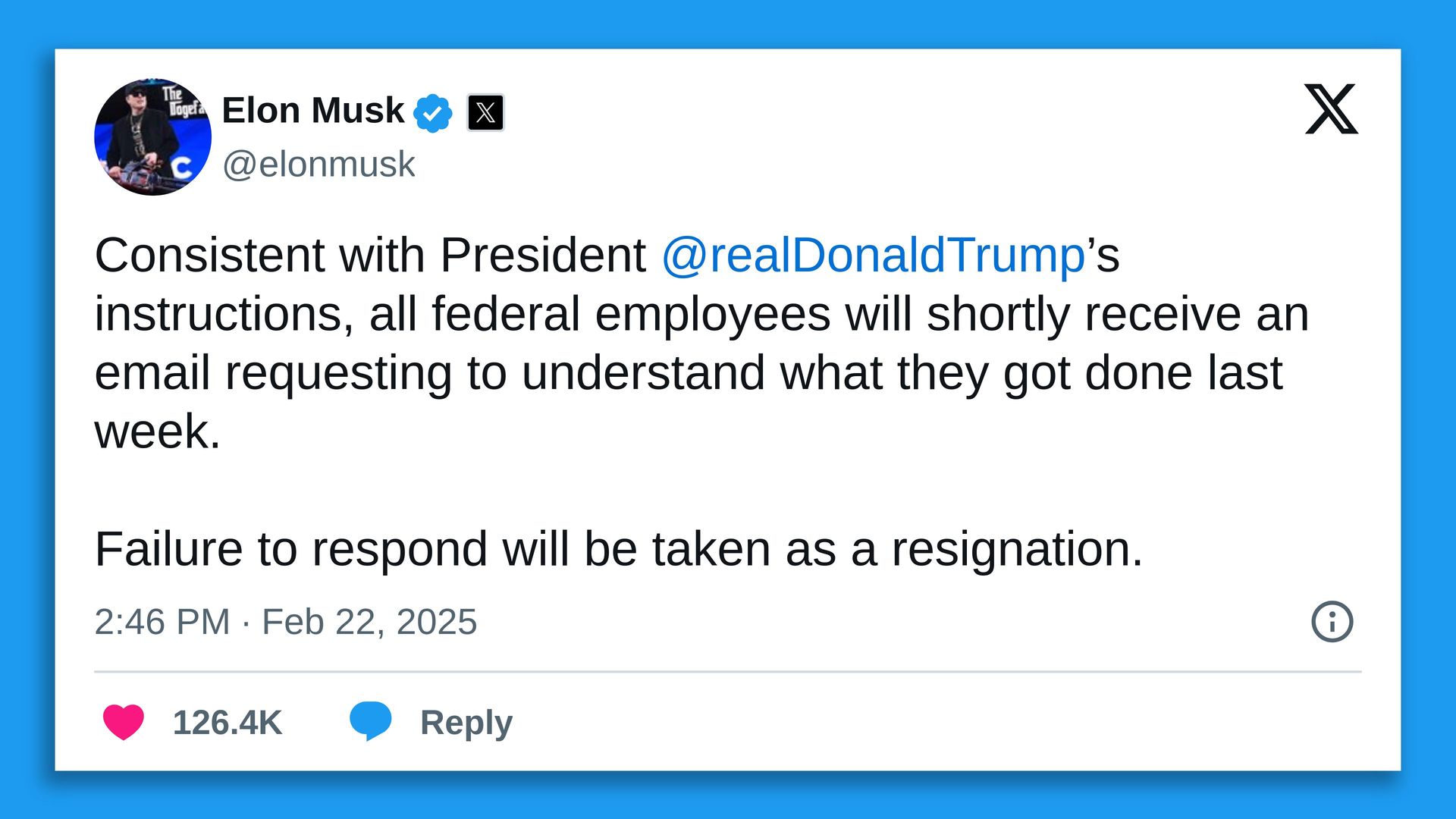
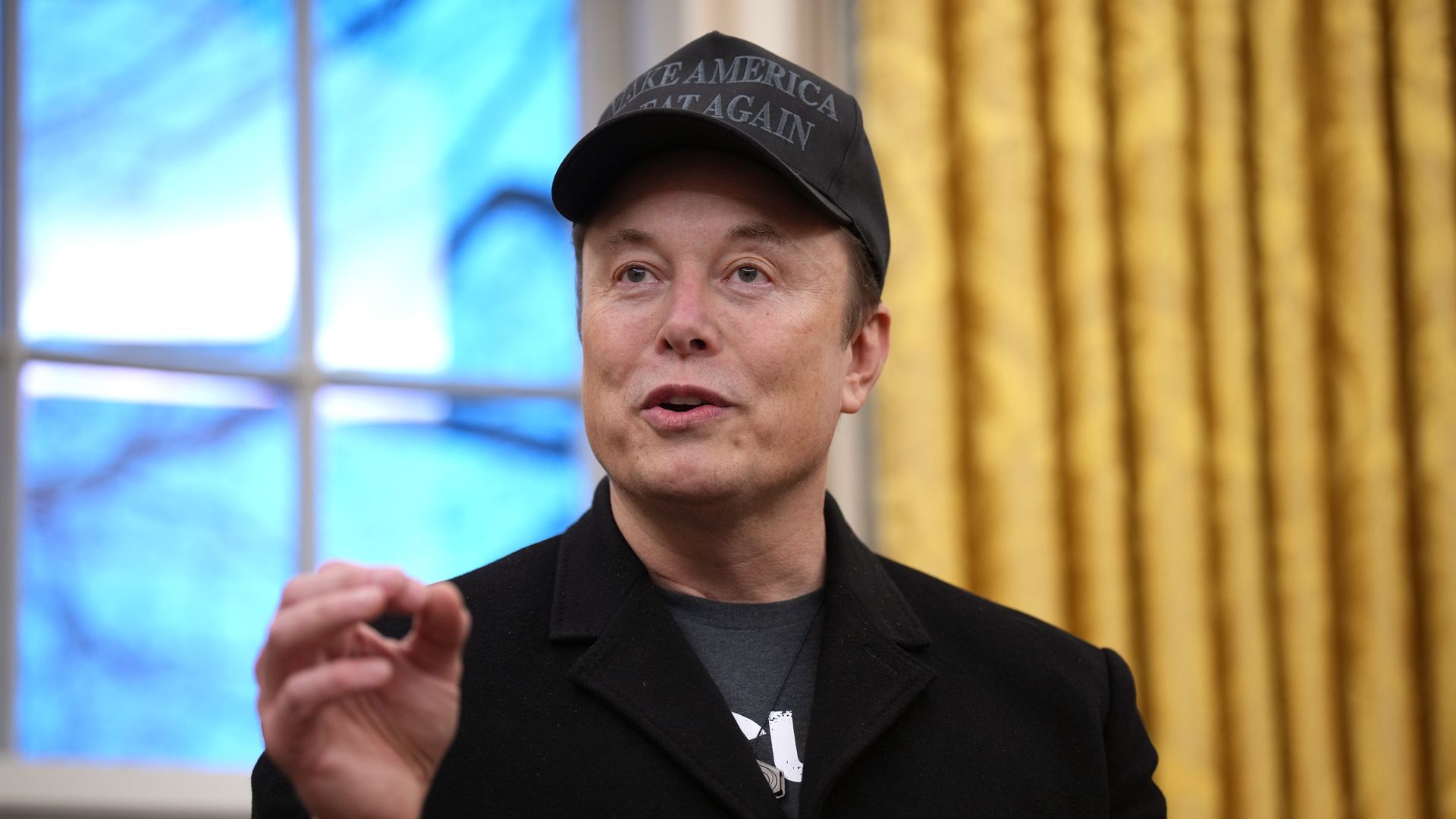
Elon Musk on Saturday said all federal employees will be required to send an email reporting what they accomplished in the last week — and failing to do so will be considered a resignation.
Why it matters: It's a page straight out of the playbook Musk used when he took over Twitter, making workers justify themselves to stay employed.
Advocates, historians, and descendants of enslaved people are planning to join a 60-mile walk in Texas to bring attention to the Underground Railroad to Mexico — a lesser-known route that helped enslaved people escape to freedom.
Why it matters: The "Walking Southern Roads to Freedom,"scheduled for March 3 to 9 in South Texas, is the latest development drawing attention to a largely forgotten episode of Black/Latino history amid a new surge of research and advocacy around the route.
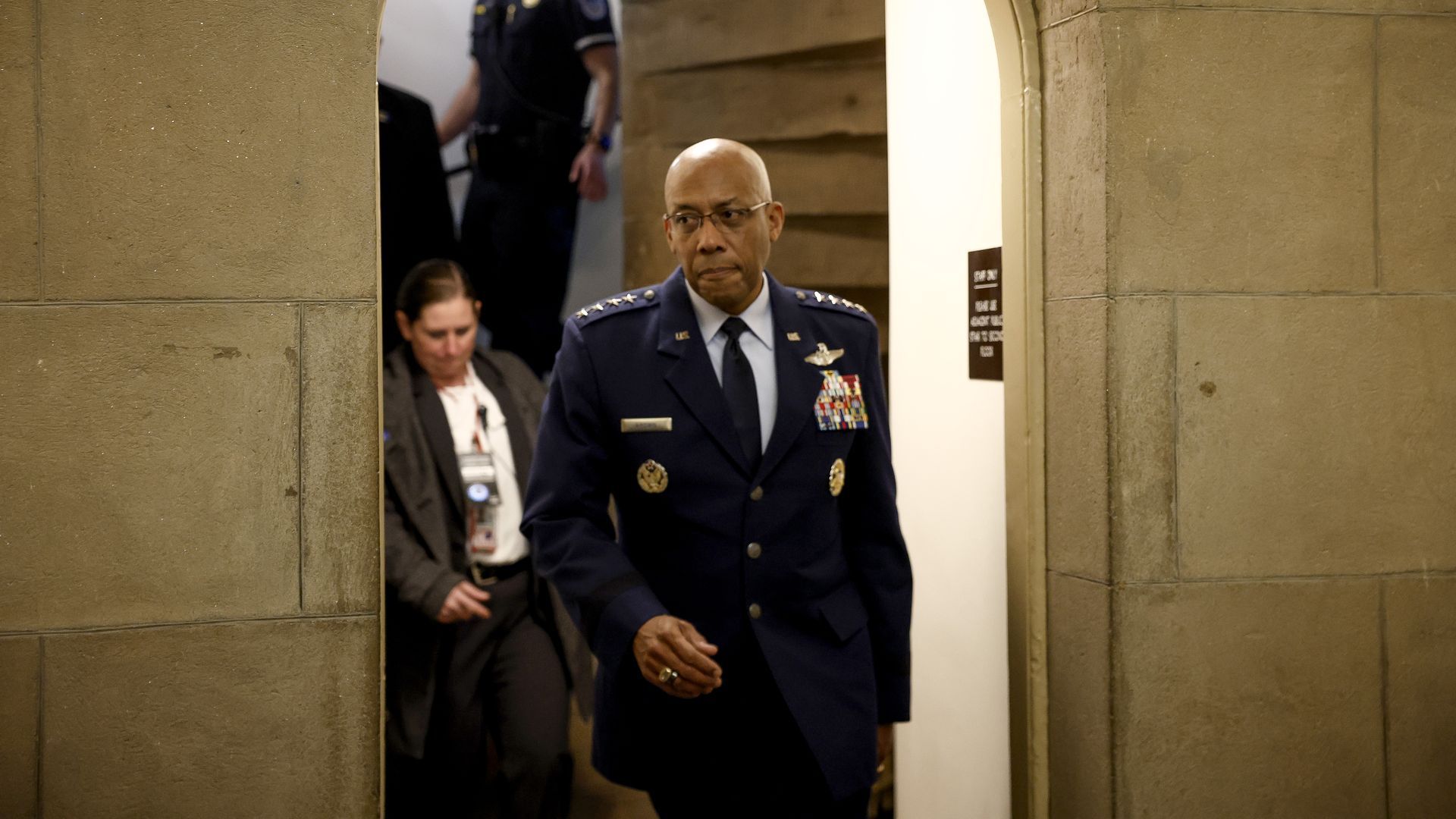
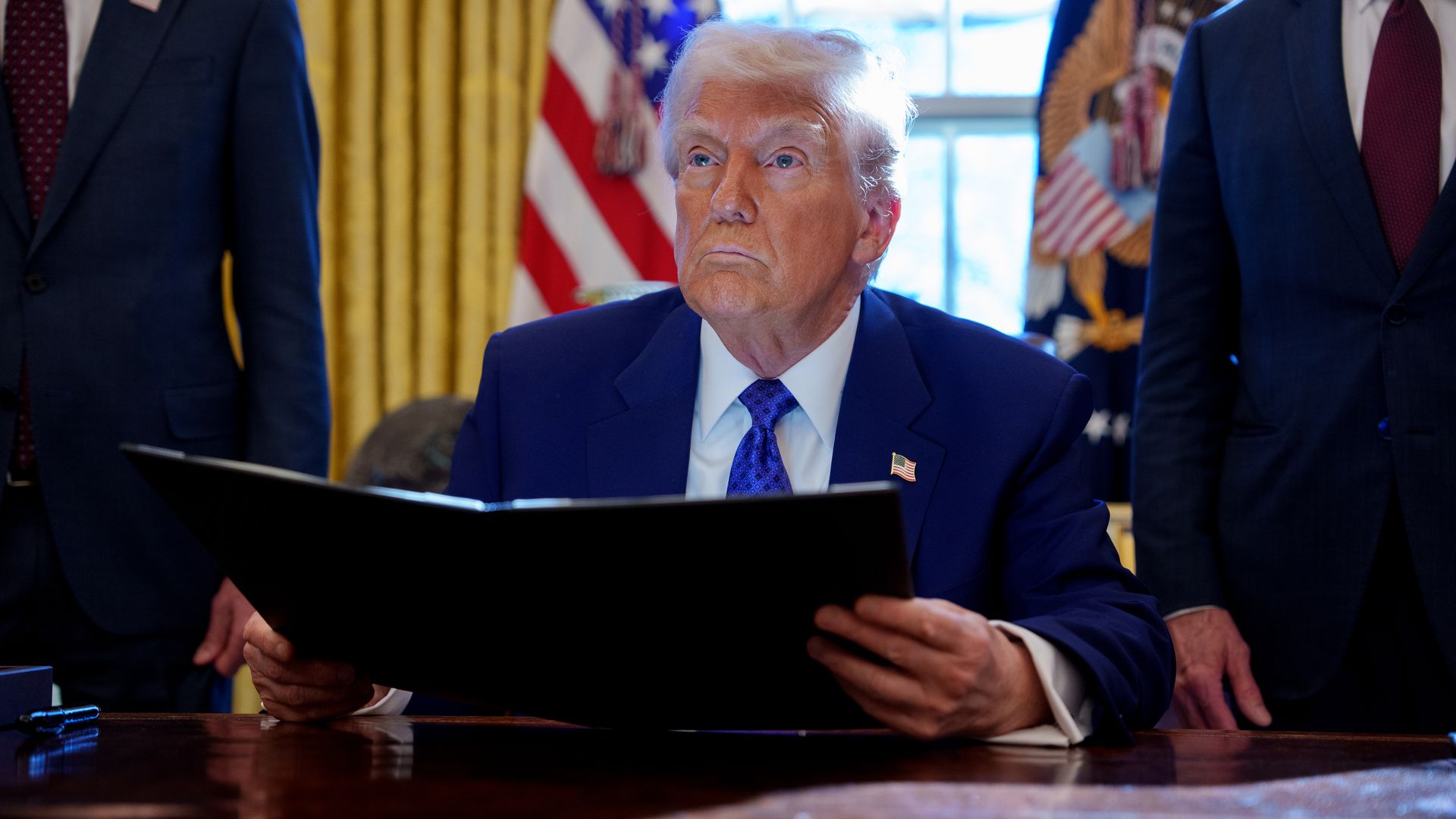
President Trump fired Joint Chiefs of Staff chair Gen. Charles "CQ" Brown, Jr. and other top military leaders on Friday.
The big picture: The terminations, also reaching Adm. Lisa Franchetti and Vice Chief of Staff Gen. James Slife, come amid the Trump administration's mass firings and pushback against diversity, equity and inclusion efforts.
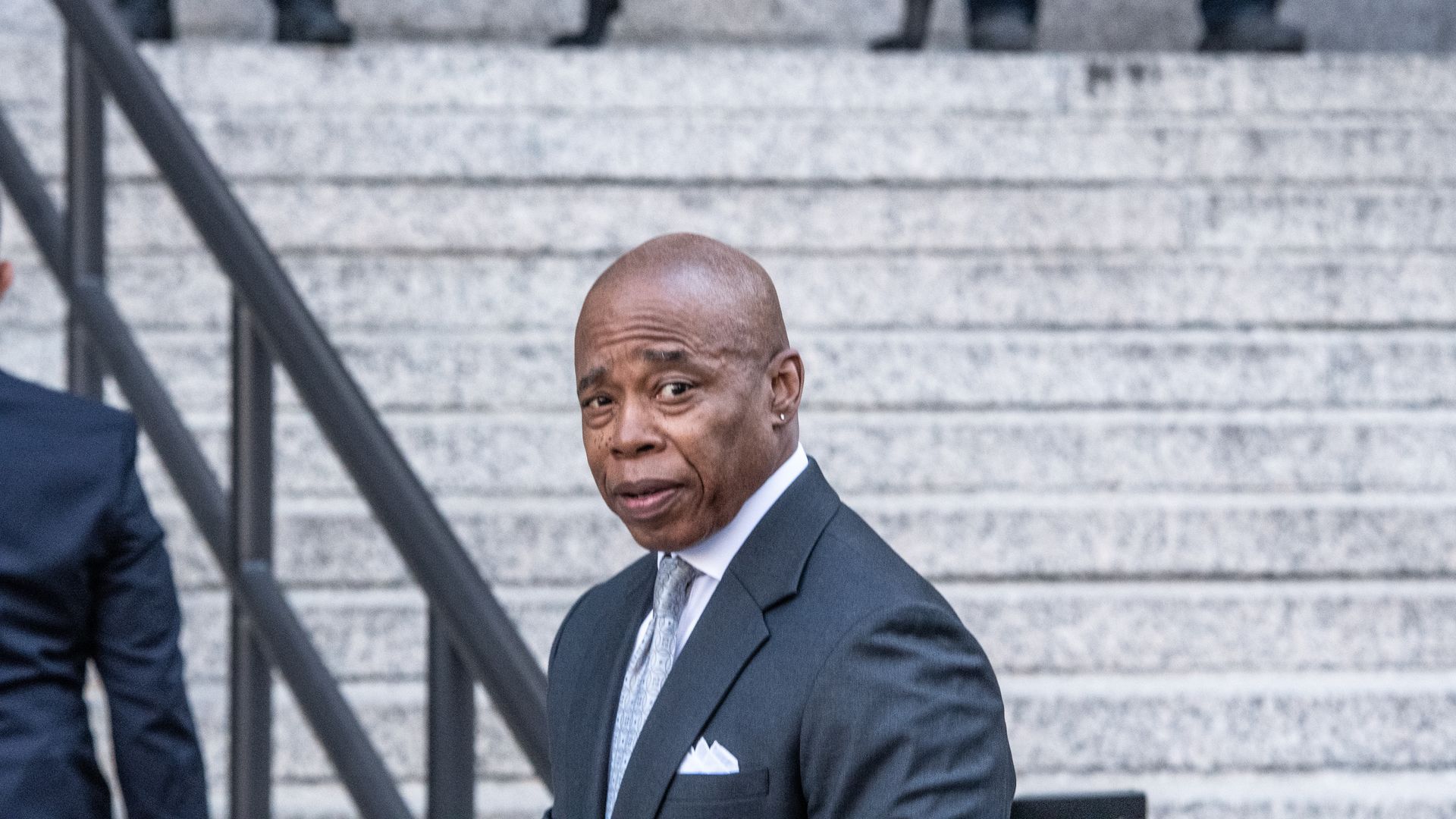
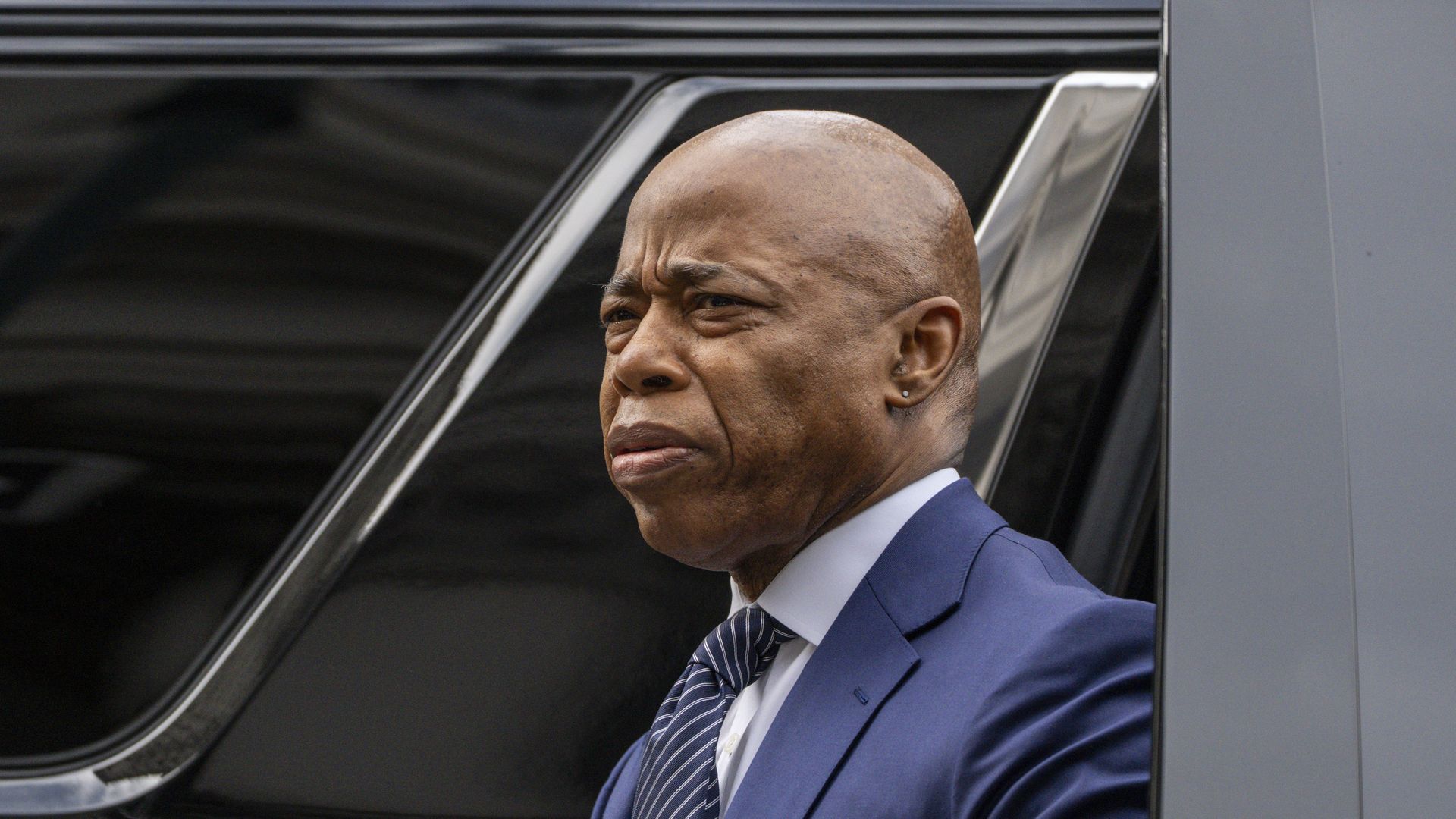
New York City Mayor Eric Adams says the city is suing the Trump administration, alleging it unlawfully took back more than $80 million in Biden-approved funding to pay costs related to housing asylum seekers.
The big picture: It's an unexpected move by Adams, who faces federal bribery and fraud charges the Justice Department fought to have dropped to incentivize the mayor's compliance with Trump-era immigration policies.
The U.S. Supreme Court is holding off on interfering in a lower court decision to block the Trump administration from firing the head of an independent watchdog agency that investigates federal workers' whistleblower reports.
Why it matters: The case concerning the removal of Hampton Dellinger as head of the Office of Special Counsel is the first of what's expected to be several appeals to the high court since President Trump regained office and moved to fire government workers in a federal workforce overhaul.
The Securities and Exchange Commission told OpenSea on Friday that it was dropping the case it had been building against the NFT marketplace, the second sign in 24 hours that the agency is backing off its campaign against the digital-asset industry.
Why it matters: The SEC is ushering in a new U.S. regulatory scheme for digital assets.
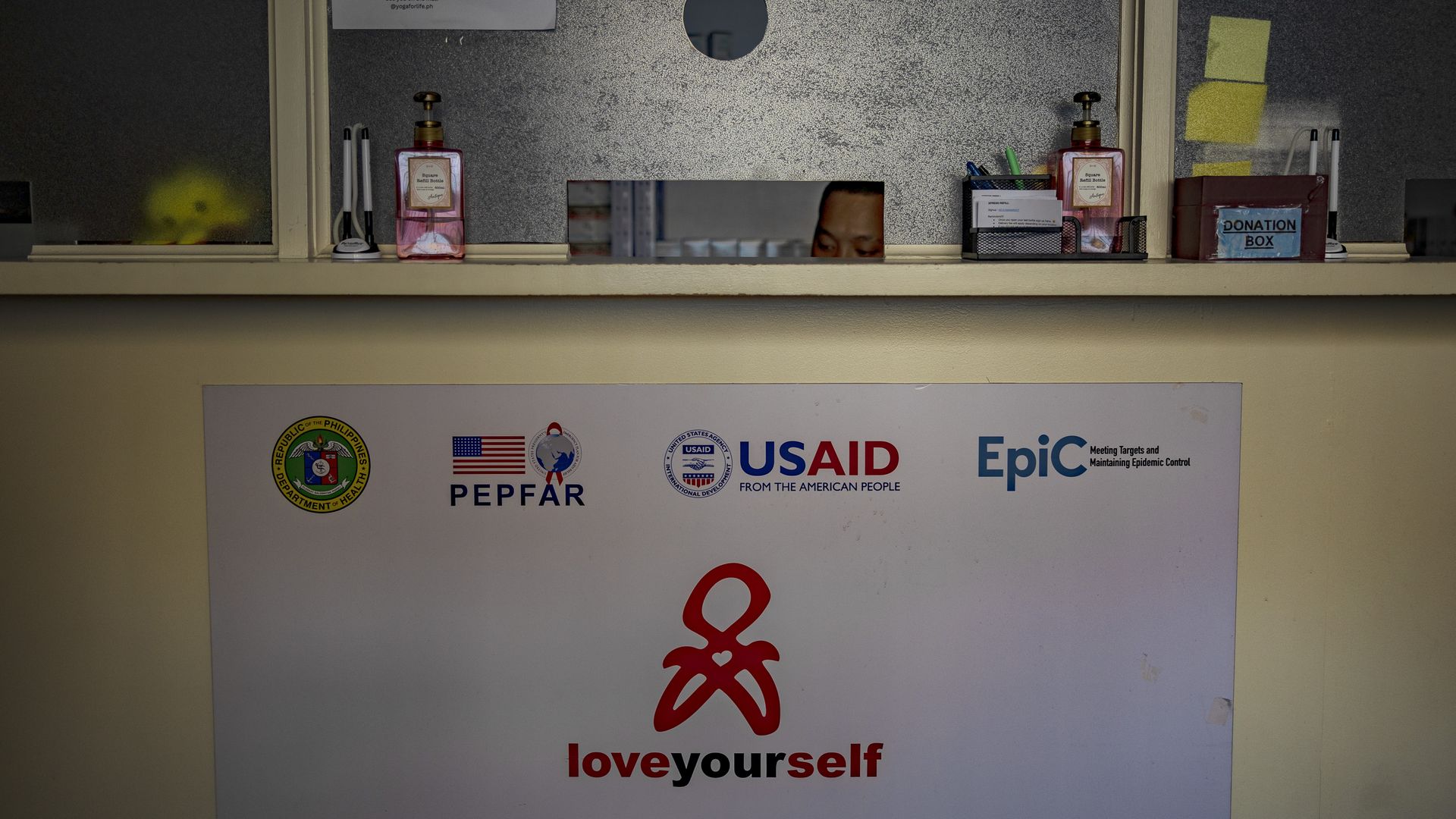
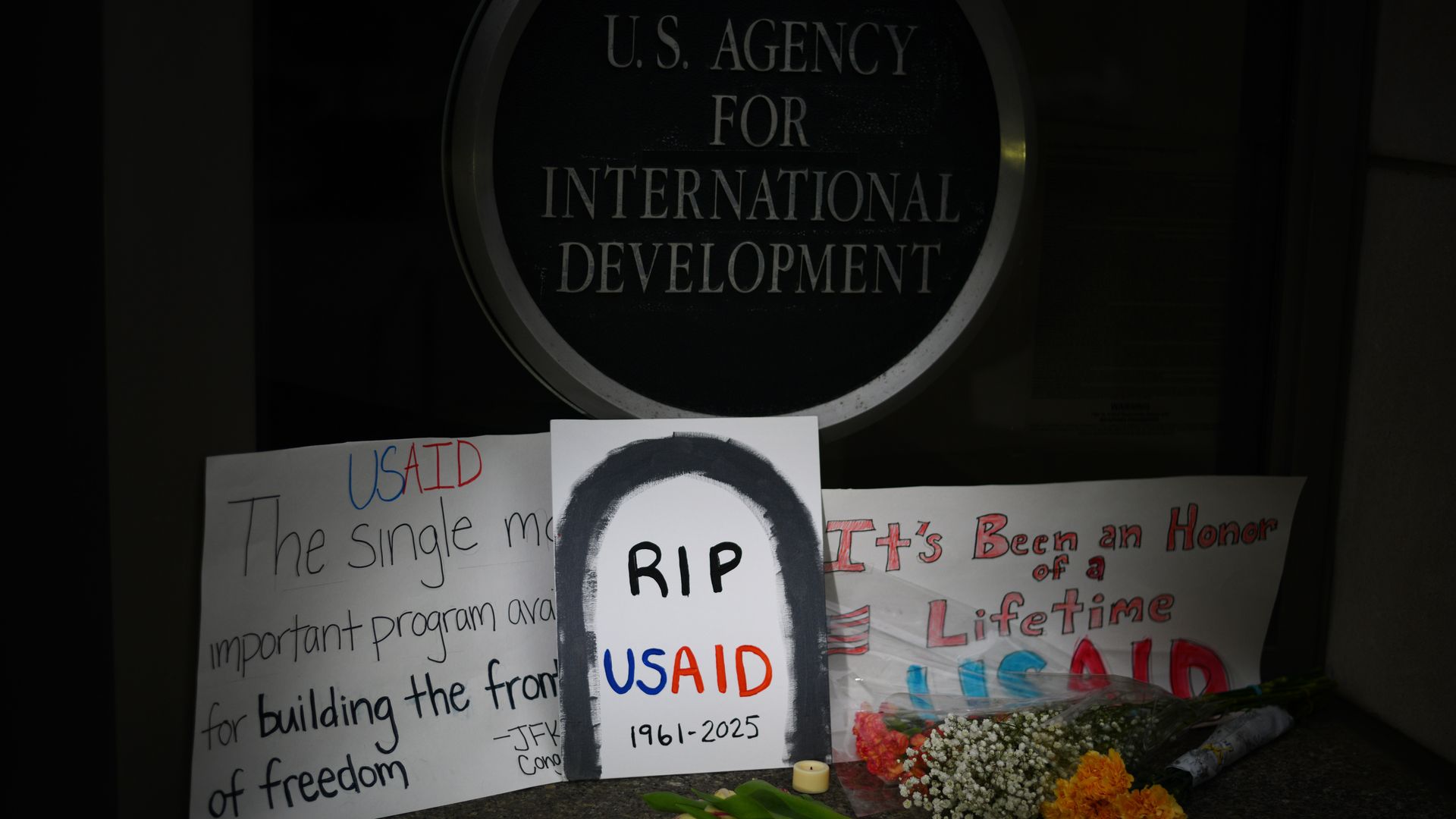
A federal judge on Friday allowed the Trump administration to place thousands of U.S. Agency for International Development (USAID) employees on paid administrative leave.
Why it matters: This clears the administration to continue dismantling the large-scale humanitarian operation and marks another loss for labor unions challenging Trump's sweeping actions.
Why it matters: Republicans in Congress are zealously turning to impeachment as their go-to tool to try to strong arm the federal judiciary into allowing Elon Musk's DOGE to work its will on the executive branch.
President Trump on Friday threatened to withhold federal funding from Maine if the state does not comply with his recent executive order banning transgender women from women's sports.
Why it matters: The brief clash between Trump and Maine Gov. Janet Mills (D) underscores the tenuous position that many Democratic governors are navigating, as they face the persistent threat of losing federal funding if they go against White House policies.
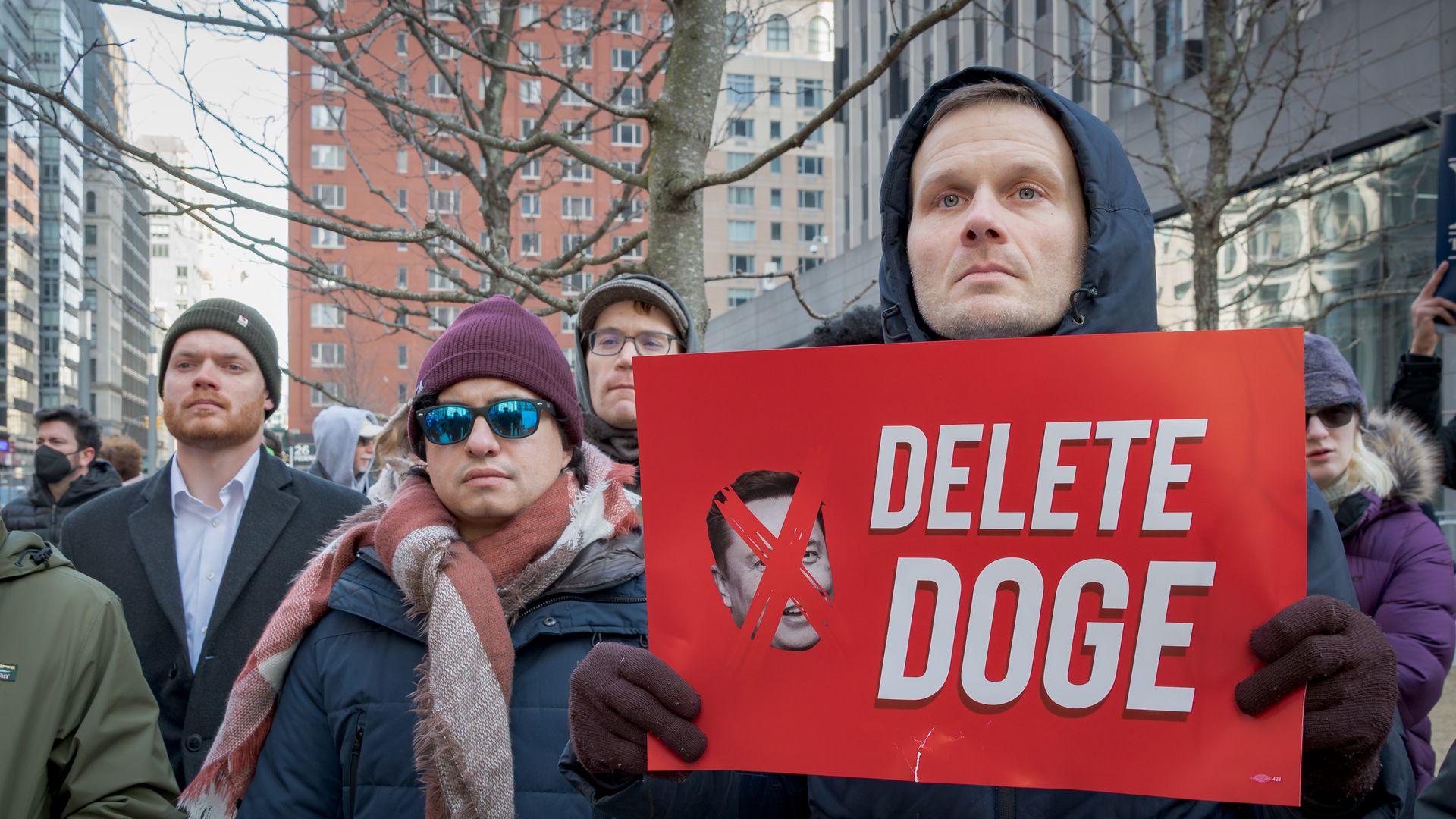
While DOGE has begun facing a measure of GOP backlash, some Republicans are privately brushing off a spate of raucous protests and town halls in their districts targeting President Trump's government efficiency efforts.
Why it matters: The muted reaction signals at least some willingness, even by electorally vulnerable Republicans, to continue marching into this firestorm on behalf of the president to whom they've tethered their fates.
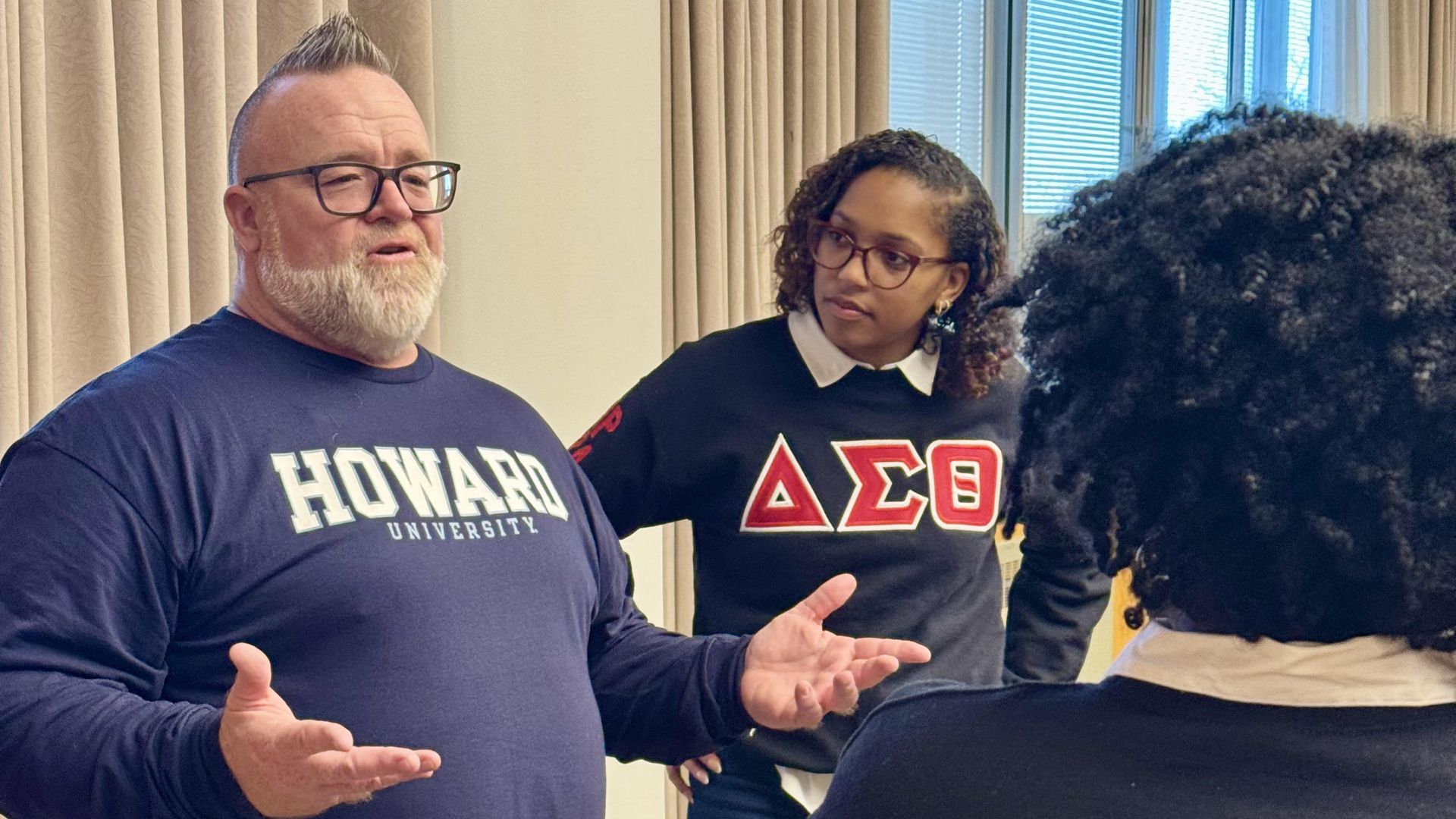
George Sedberry grew up in a family tied to the fight over Little Rock desegregation — without questioning their stance. Now, he's armed with a new viewpoint and traveling the country, teaching Black history, and confronting the racist beliefs he once held.
He's grown a powerful and influential social media following, with over 500,000 followers on TikTok and 250,000 on Instagram, to turn little-known Black history into viral moments that spark debate, education and engagement.
President Trump said on Friday that Israeli Prime Minister Benjamin Netanyahu has no qualms about resuming the war in Gaza.
Why it matters: The first phase of the hostage-release and ceasefire in Gaza agreement between Israel and Hamas is set to expire in eight days and could end a 42-day period without fighting.
A federal judge on Friday indefinitely paused New York City Mayor Eric Adams' criminal fraud trial but didn't dismiss his charges.
Why it matters: Instead, the judge appointed conservative former U.S. solicitor general Paul Clement to challenge the Justice Department's order to toss the case.
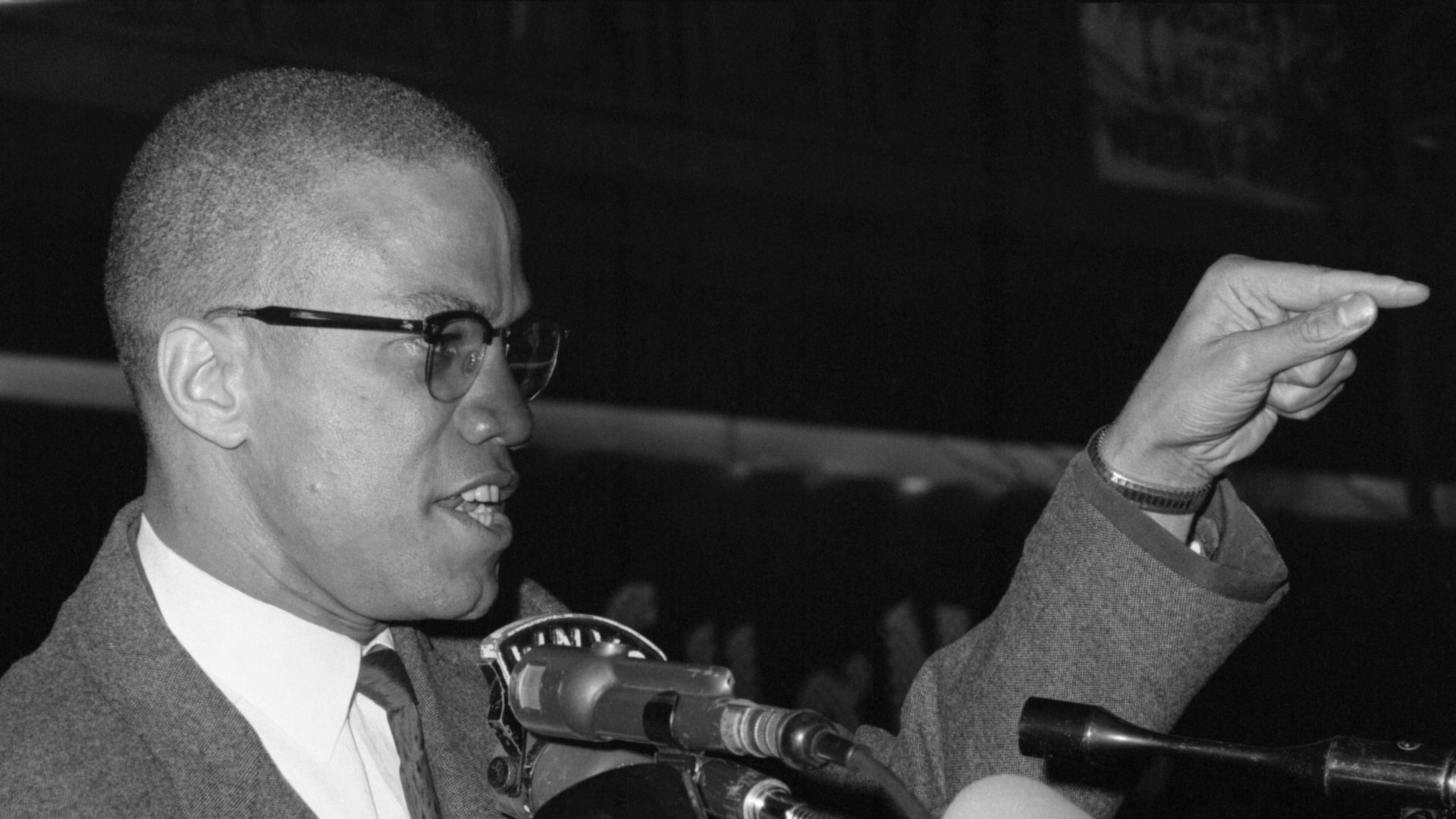
Friday marks the 60th anniversary of the assassination of Malcolm X (also known as el-Hajj Malik el-Shabazz) following a brief but lasting career as a civil rights advocate and Black nationalist.
Through the lens: Here are some images of Malcolm X's evolution from a life of crime, to a prominent leader in the Nation of Islam, to an international traveler investigating racism against Asians, to a cultural icon.
The shock-and-awe firings of the new Trump administration's first month continue to unleash turmoil in Washington's cybersecurity workforce.
Why it matters: The Trump team's aggressive downsizing of federal cyber employees could encourage nation-state hackers who already target the U.S. and could leave American companies less protected from their attacks.
French far-right leader Jordan Bardella canceled planned remarks at CPAC Friday, after ex-Trump adviser Steve Bannon made a "gesture referring to Nazi ideology," according to a statement to French news agency Agence France-Presse.
Why it matters: Bardella's change of plans is the strongest rebuke yet of Bannon, who, during his remarks at the annual conservative conference made a gesture that appeared to mimic a Hitlergruß, or Nazi salute.
The pharmaceutical industry is framing itself as a key partner for President Trump and HHS Secretary Robert F. Kennedy Jr. in their push to address America's chronic disease burden.
The problem: Kennedy doesn't seem to be buying it.
Why it matters: One of America's most powerful industries is in uncharted territory. It's now in the position of convincing critics that its products are not just safe, but crucial to solving the country's diciest health problems.
Driving the news: The PhRMA forum, held this week at one of D.C.'s coolest concert venues, featured a stream of not-so-subtle indications that the industry wants to make the case that the best way to reduce the country's chronic disease burden is to find more and better drugs to treat chronic conditions.
Attendees received name tag lanyards with the event's slogan — "Commitment to a Healthier America" — printed at the top.
While speakers hit on familiar policy goals, such as cracking down on pharmacy benefit managers and removing the government's hand from drug pricing, there was a lot of talk about how to keep people out of hospitals through more preventative care.
Pharmaceutical leaders kicked off Kennedy's tenure at the helm of HHS not with defensiveness or aggressiveness, but with declarations of optimism and mutual goal-sharing.
"We have a disruptor-in-chief in President Trump and a new HHS secretary — both of which are committed to overturning the status quo," PhRMA president and CEO Steve Ubl said in his remarks at the industry group's policy forum this week.
"We embrace disruption because we are disruptors," he added. "We see an opportunity to fix what's broken, to get more impact out of every health care dollar we spend and to make America healthier by launching a new era of medical innovation."
"What we need to do is keep people well," GSK CEO Emma Walmsley told me in an offstage interview. "Making the country healthier is a really good idea. But people should see the drug industry not as the enemy in that, but as part of the solution."
And speakers made it blatantly clear that former President Biden was bad for the industry, while Trump has the potential to be very good.
"I truly believe that the opportunities truly outweigh the risks," Pfizer CEO Albert Bourla told the crowd.
While a big partnership on vaccines is "probably not" in the cards, such a partnership on cancer or chronic disease could "absolutely" happen, Bourla added.
But at nearly the same time, Kennedy's welcoming remarks to HHS staff threw some cold water on the idea of an intimate partnership.
After a long list of chronic disease statistics, he said, "Our only solution to these issues seems to be more and more pharmaceutical interventions that don't seem to be alleviating the problem, and in many cases, appear to be worsening it. Overmedication, particularly in children, is a growing issue."
As has been widely reported, the childhood vaccine schedule and psychiatric drugs were both on Kennedy's list of possible contributors to chronic disease that will be investigated.
There is no evidence that childhood vaccines are unsafe or cause chronic disease, and Kennedy has amplified debunked conspiracy theories about vaccines.
"Secretary Kennedy put PHARMA on notice that solutions to the chronic illness epidemic are going to be found upstream through prevention not through pharmaceutical interventions," texted David Mansdoerfer, a former senior HHS official in the first Trump administration.
An assessment of the threat posed by psychiatric and weight-loss drugs was also ordered in a recent executive order from the White House this week establishing a "Make America Healthy Again Commission."
Just yesterday, the first meeting of the CDC vaccine advisory committee since Kennedy's confirmation was postponed, creating more consternation over how Kennedy will approach vaccines as secretary.
HHS also ordered the CDC to shelve some vaccine promotions, saying Kennedy wants ads that feature "informed consent" in vaccine decision-making instead, STAT reported later yesterday.
And Kennedy is planning to replace members of vaccine advisory committees that he perceives to have conflicts of interest, Politico reported.
Drug company and PhRMA executives once again met with Trump yesterday, though to what avail is unclear.
"PhRMA president and CEO Steve Ubl and members of our board had a productive conversation with President Trump today. We expressed our commitment to strengthening American leadership in biopharmaceutical innovation, revitalizing domestic manufacturing and lowering costs for patients," said Alex Schriver, PhRMA's senior vice president of public affairs.
Reality check: Yes, the drug industry hates that Medicare now negotiates the prices of some drugs. But the new law has, so far, failed to cause much of a hit to big drug companies' finances, and there is plenty of reason to think things may actually get worse for the industry under the Trump administration.
Put aside Kennedy's vaccine history, he and Trump have both been critical of the fact America pays so much more for drugs than other wealthy countries.
If that criticism ever turns into meaningful policy, it could hit the industry way harder than Biden's Medicare negotiations.
The Department of Justice (DOJ) indicated Thursday that it will drop a case accusing Elon Musk's company SpaceX of discriminating against asylees and refugees in its hiring process.
Why it matters: Musk's companies had faced a slew of potential legal and regulatory ramifications under the Biden administration,but Thursday's filing could make the SpaceX discrimination case one of the first to be formally dropped under President Trump.
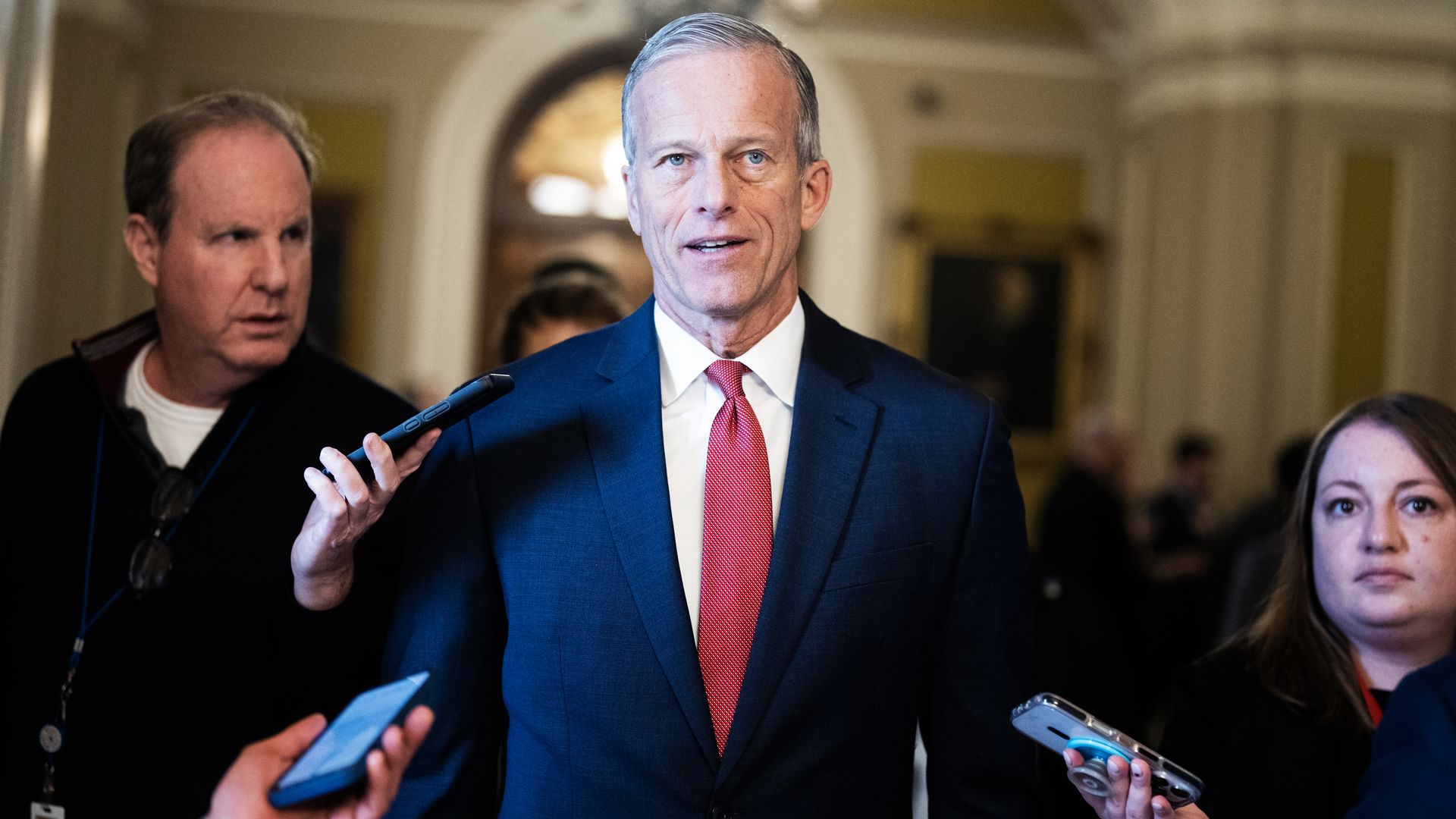
Why it matters: Majority Leader John Thune (R-S.D.) has barreled forward with his backup plan as Speaker Johnson (R-La.) scrambles on his mega-package that would also make good on President Trump's tax promises.
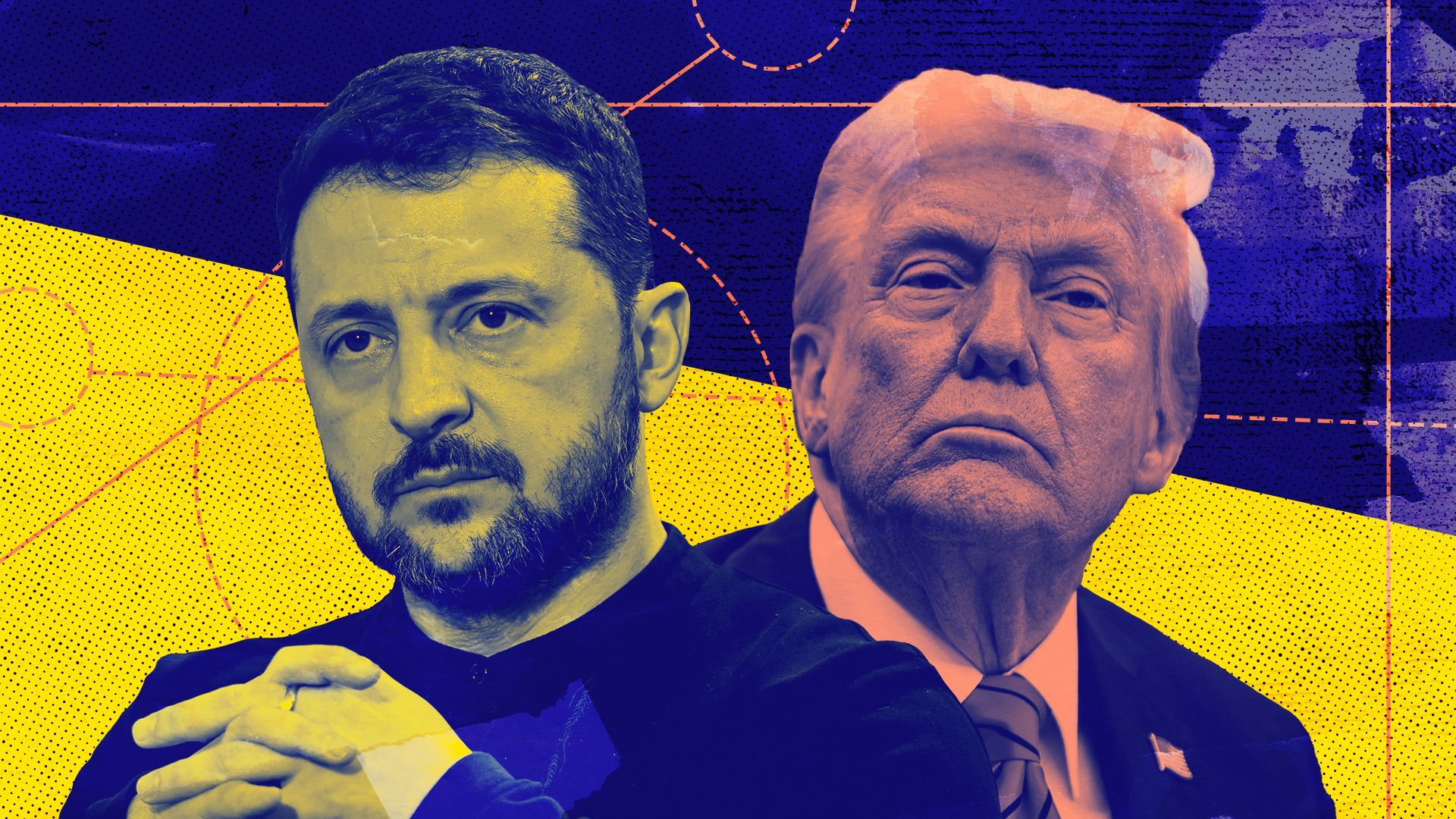
Ukraine President Volodymyr Zelensky angered Donald Trump so much during the peace talks with Russia that Trump was on the verge of withdrawing American military support from Ukraine, three U.S. officials familiar with the discussions tell Axios.
Why it matters: The conflict between Trump and Zelensky escalated into a war of words between the two that scared European allies who are worried about emboldening Russian dictator Vladimir Putin and rewarding his brutal expansionism.
The Trump administration has "not complied" fully with a court order pausing a freeze on foreign aid, a federal judge in D.C. ruled Thursday evening.
The big picture: U.S. District Court Judge Amir Ali decided not to hold the State Department and Office of Management and Budget in contempt, but said to the extent they "have continued the blanket suspension, they are ordered to immediately cease it."
Canada beat Team USA 3-2 in an overtime 4 Nations Face-Off Championship Game thriller in Boston on Thursday night, which saw political tensions spill into the arena.
The big picture: Canadian Prime Minister Justin Trudeau took a swipe at President Trump's call for Canada's annexation as the 51st U.S. state moments after the win, saying on X: "You can't take our country — and you can't take our game."
Axios CEO Jim VandeHei wrote this column for Finish Line, our evening newsletter:
We're flooded with reader feedback on covering politics in this wild era. It ranges from calling me a "Beta Soy Boy" who should have been aborted to a soulless suck-up, wittingly enabling tyranny.
A civil rights attorney is asking the Trump administration to declassify the FBI and CIA files linked to Malcolm X on the 60th anniversary of his assassination.
Why it matters: The plea comes on the heels of President Trump ordering the declassifying of FBI files connected to the assassinations of President John F. Kennedy and Dr. Martin Luther King Jr.
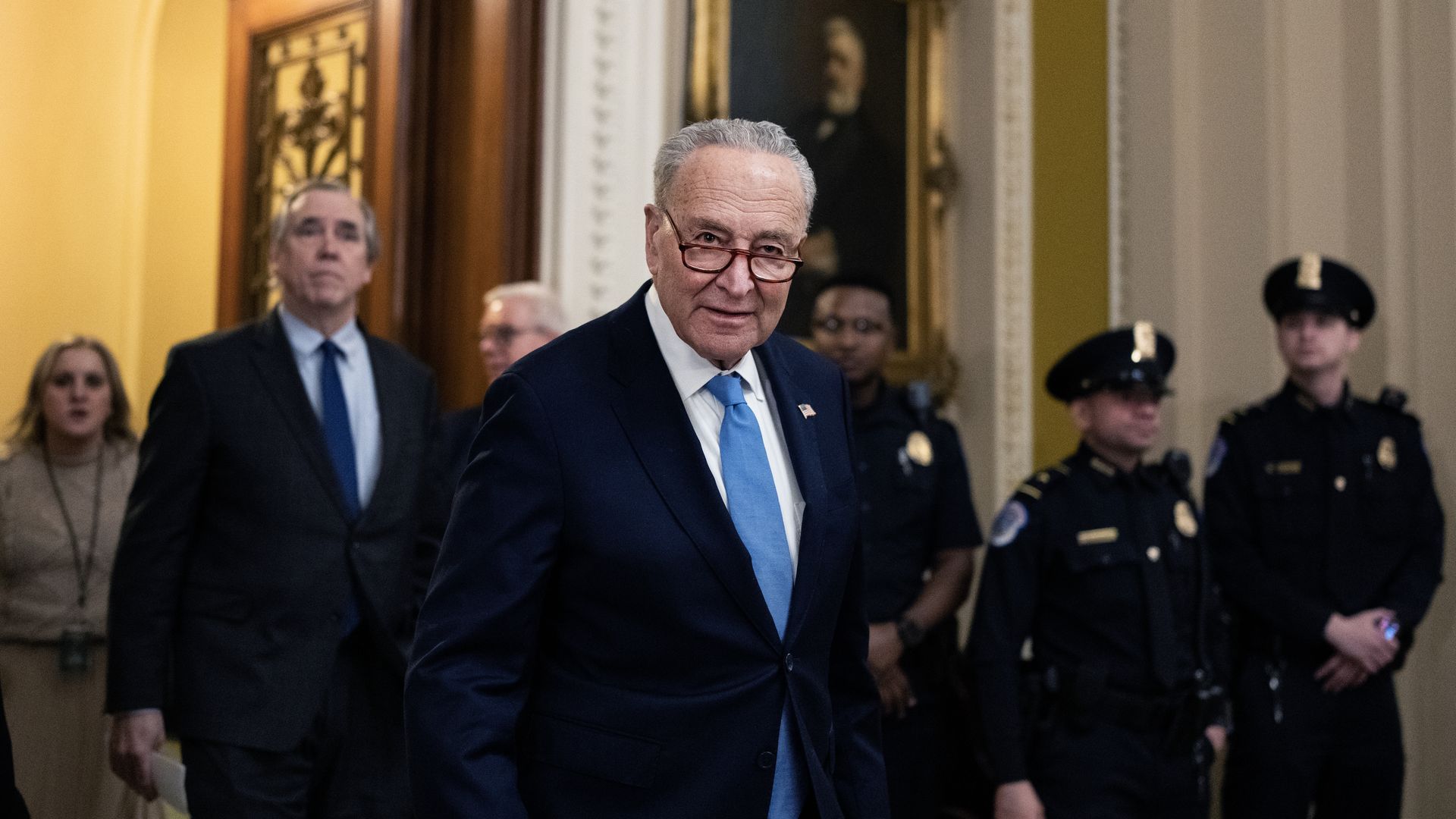
For Senate Minority Leader Chuck Schumer (D-N.Y.), the overnight session on Thursday is about proving Democrats have a path — and the guts — to get out of the political wilderness.
Why it matters: Schumer sees the budget "vote-a-rama" as his shot to convince voters that President Trump's GOP serves billionaires, not the working-class people who make up the new MAGA coalition. Axios scooped Schumer's thinking earlier this week.