Far-right gains trigger elections in France, reckoning in Europe

Add Axios as your preferred source to
see more of our stories on Google.
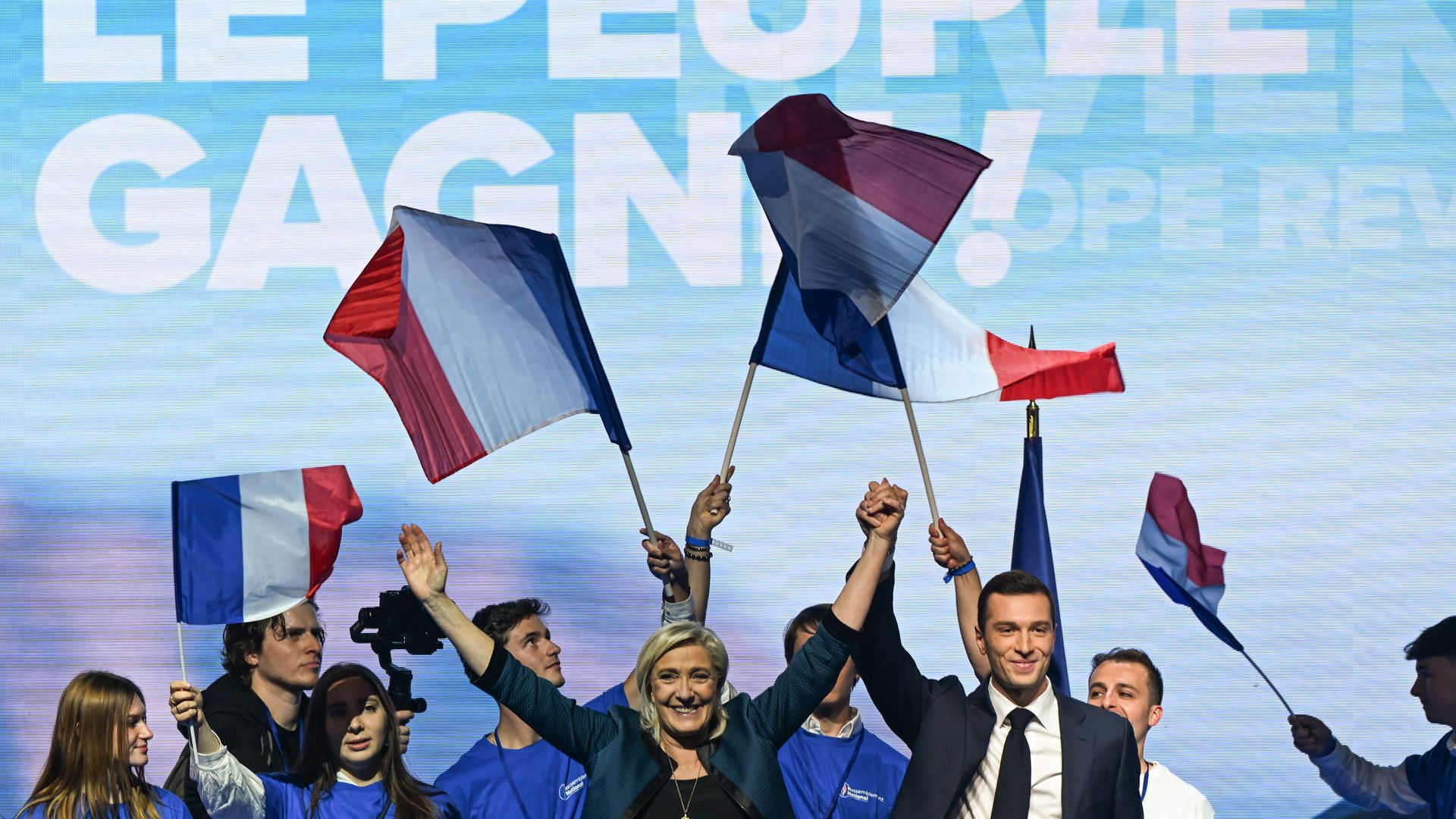
National Rally leaders Marine Le Pen (center) and Jordan Bardella (right) at a rally in Paris on June 2. Photo: Artur Widak/NurPhoto via Getty Images
Europe's far right gained historic ground in continent-wide elections Sunday, with devastating losses forcing French President Emmanuel Macron to concede that the threat from nationalists could no longer be ignored.
- The center held in some countries, but a surge by the radical right — especially in Germany — has put pro-democracy parties on notice.
Why it matters: Macron stunned Europe last night by announcing he would hold new legislative elections later this month — three years early, and in the middle of preparations for the Paris Olympics.
- The extraordinary gamble came moments after European Parliament exit polls pointed to a dominant showing by Marine Le Pen's National Rally and major gains for other far-right parties across Europe.
- "The rise of nationalists and demagogues is a danger for our nation and for Europe," Macron said. "After this day, I cannot go on as though nothing has happened."
The big picture: This year's European elections — in which 370 million people were eligible to vote across 27 countries — were ground zero for the wave of anti-incumbent fervor sweeping the globe.
- Conservative and hard-right parties gained seats at the expense of Macron-aligned liberal and Green parties — with the latter suffering from backlash to the EU's aggressive climate transition plans.
- As in the U.S., immigration, inflation and threats to democracy dominated the campaign, which was plagued by spurts of political violence in the final weeks before the election.
Zoom in: In Germany, the EU's largest and most important country, the extremist-right AfD party finished second to the conservatives — but ahead of Chancellor Olaf Scholz's Social Democrats.
- In Italy, right-wing Prime Minister Giorgia Meloni solidified her cult of personality with a comfortable victory that will make her one of the EU's most powerful leaders — and a potential conservative king-maker.
- In the Netherlands, anti-Islam campaigner Geert Wilders came in close second to a progressive coalition after pulling off a shock victory in November's national elections.
The intrigue: The AfD and other far-right parties continue to make significant inroads with young voters, according to exit polls, a trend that has alarmed pro-democracy activists.
The other side: Despite the setbacks, a centrist, pro-EU majority remains in firm control of the European Parliament.
- In Poland, Prime Minister Donald Tusk's allies eked out a hugely symbolic victory over the right-wing Law and Justice party, which was accused of undermining democratic institutions during its eight years in power.
- Hungary's ruling Fidesz Party, led by illiberal Prime Minister Viktor Orban, was on track for its worst result ever in a European Parliament election.
The bottom line: The center of gravity in Brussels has undoubtedly shifted, but Europe's firewall against the far-right remains intact. The fate of the governments in France and Germany could dictate how long that remains true.
