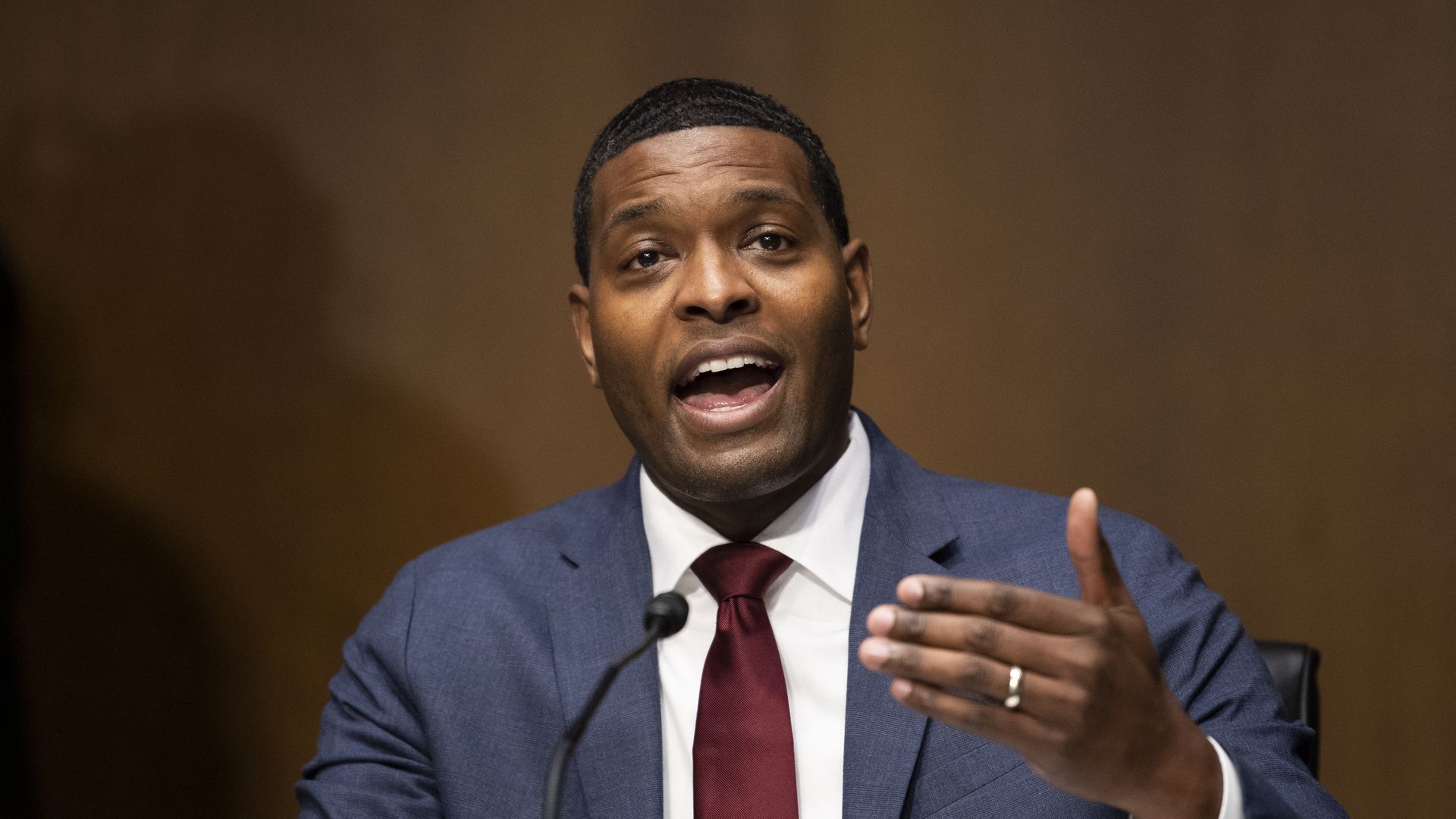
The Senate voted 66-34 on Wednesday to confirm Michael Regan, North Carolina's top environmental regulator, as head of the Environmental Protection Agency.
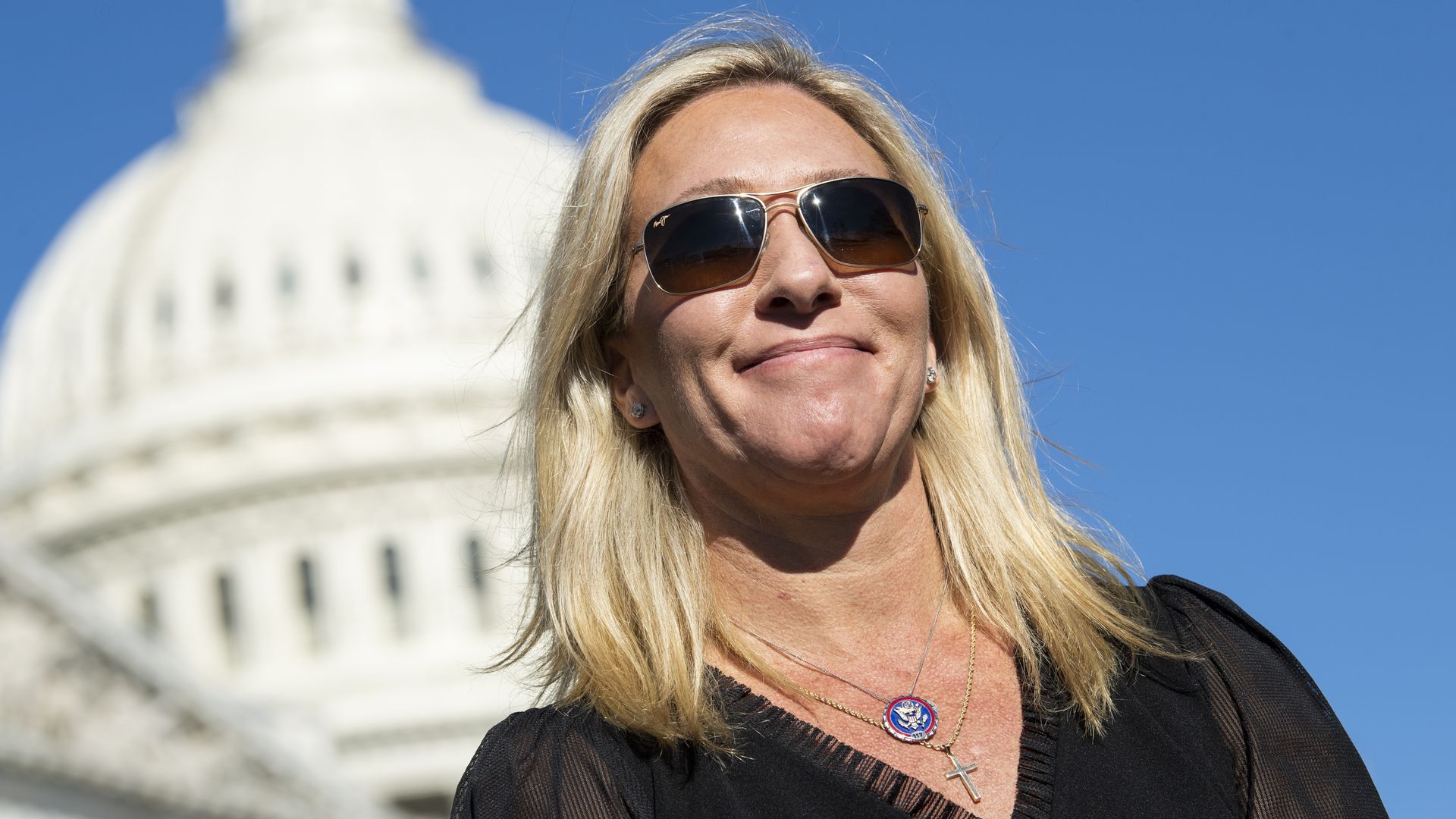
Rep. Marjorie Taylor Greene's vote to adjourn proceedings Wednesday drew criticism on both sides of the aisle after she delayed the House's vote on the $1.9 trillion COVID relief bill.
Why it matters: President Biden's relief bill passed along party lines after Greene protested the bill by using a procedural tactic to slow down the vote. Her procedural quagmires are adding to the conflict among Republicans in Congress.
The Centers for Medicare & Medicaid Services and Centers for Disease Control and Prevention updated their guidance on Wednesday to expand in-person visitation for nursing home residents.
Why it matters: Millions have been forced to remain separated from their loved ones in long-term care throughout the COVID-19 pandemic. Now that nursing home residents are getting vaccinated against the coronavirus at high rates, the risk of transmission has dropped, according to the CMS.
100,441 people attempted to cross into the U.S. along the Southwest border last month, a 28% increase since January, Customs and Border Protection senior official Troy Miller told reporters in a Wednesday call.
Why it matters: President Biden faces a mounting humanitarian crisis at the border, as children are being held for days in border stations and more migrants flee political oppression and economic devastation.
Author, speaker and Bible teacher Beth Moore said she is "no longer a Southern Baptist" over her “staggering” disorientation from seeing her denomination's leaders support former President Trump, she told Religion News Service.
Why it matters: Moore, who has a large following with evangelicals, became increasingly critical of Trump for his abusive behavior toward women that was revealed in the 2016 “Access Hollywood” tapes. The footage captured him bragging about sexually abusing women, according to the New York Times.
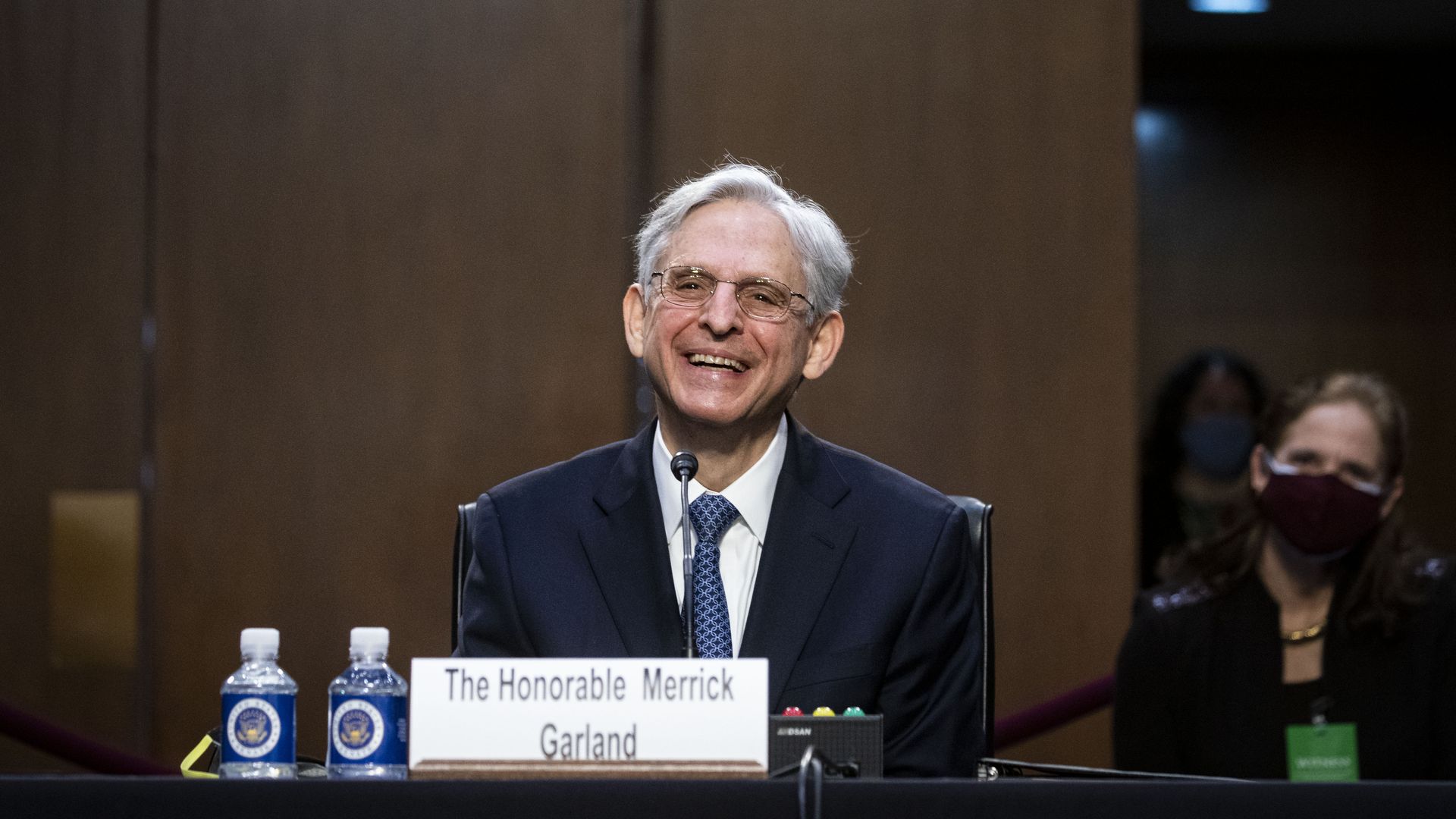
The Senate voted 70-30 on Wednesday to confirm Judge Merrick Garland as U.S. attorney general.
Why it matters: Garland takes over the Justice Department after a tumultuous four years under former President Trump, who frequently sought to politicize the law enforcement agency. The former Supreme Court nominee has pledged to make prosecuting the Jan. 6 Capitol insurrectionists a top priority for the Justice Department.
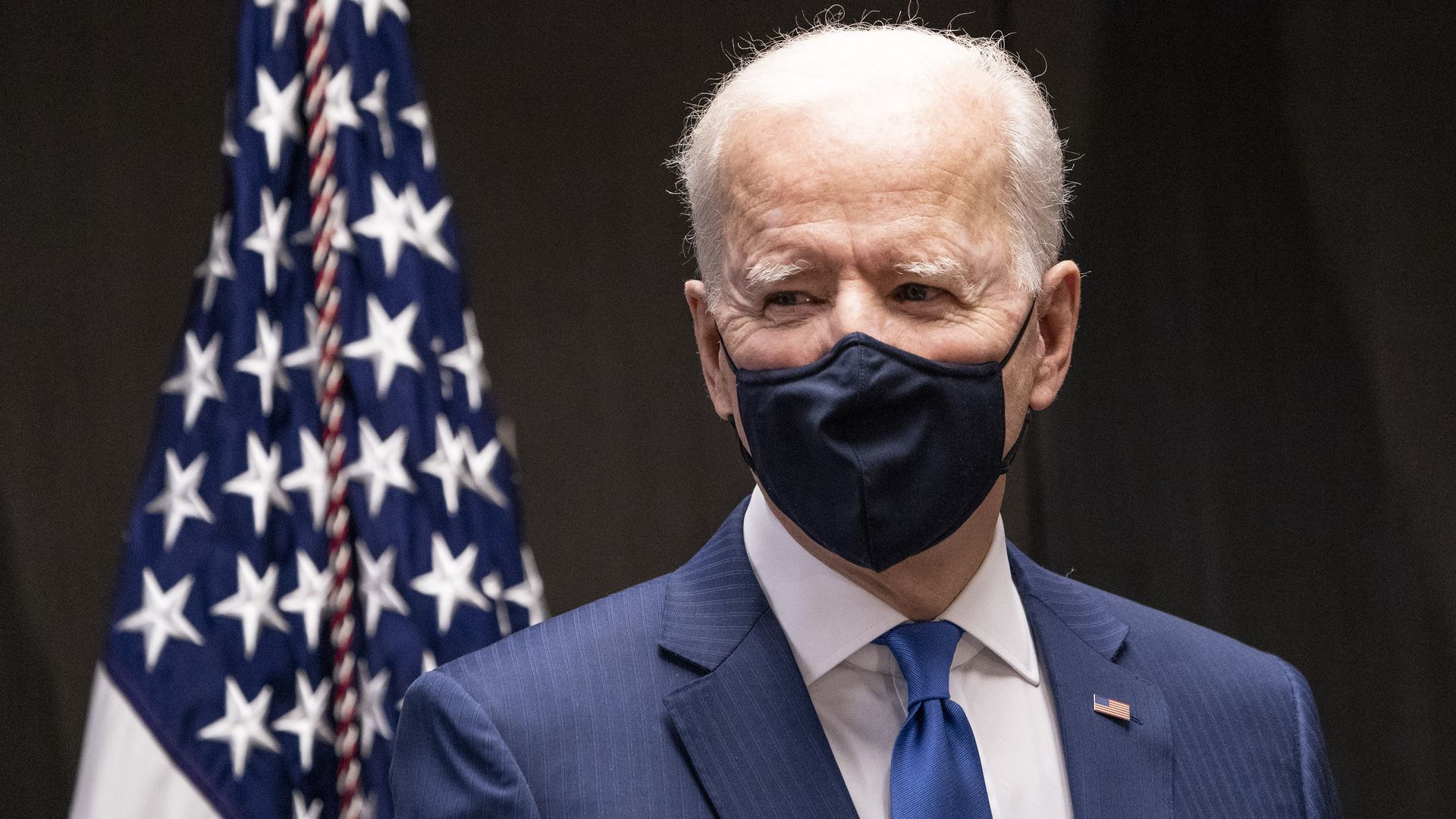
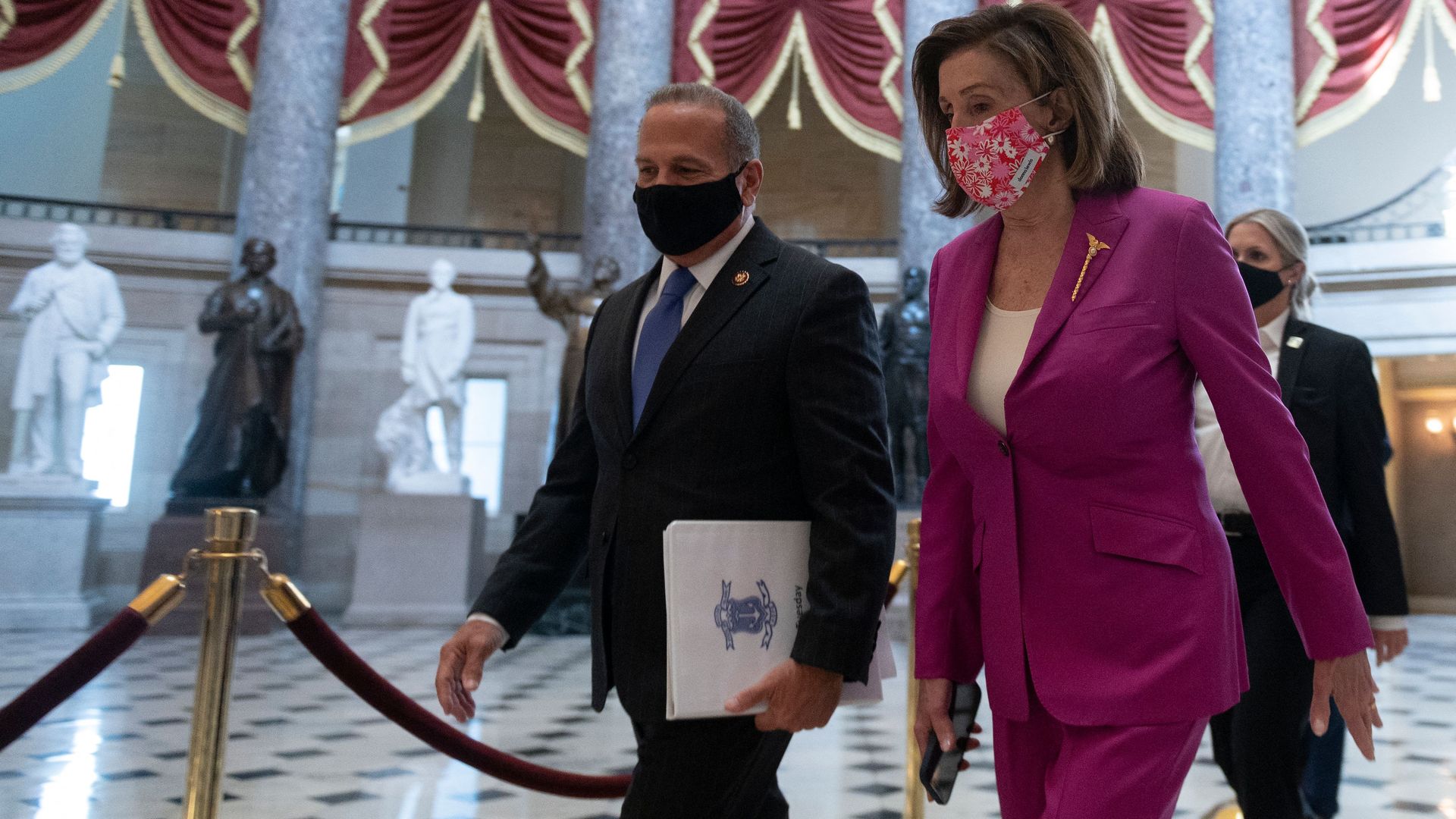
The House voted 220-211 on Wednesday to approve the Senate's revised version of President Biden's $1.9 trillion coronavirus relief package, sending the bill to Biden's desk to be signed.
Why it matters: The passage of the American Rescue Plan is the first — and potentially defining — legislative victory of Biden's presidency, marking a key milestone in his pledge to steer the U.S. out of the coronavirus crisis.
The inclusion of a higher child tax credit is the most significant part of the latest $1.9 trillion coronavirus stimulus package, Rep. Ritchie Torres (D-NY) told Axios in a virtual event on Wednesday.
Why it matters: The child tax credit helps offset the cost of raising children, and the expanded credit would provide families with $3,600 for children up to age 5 and up to $3,000 for ages 6–17. Some Democrats are hoping the policy can be extended after the pandemic.
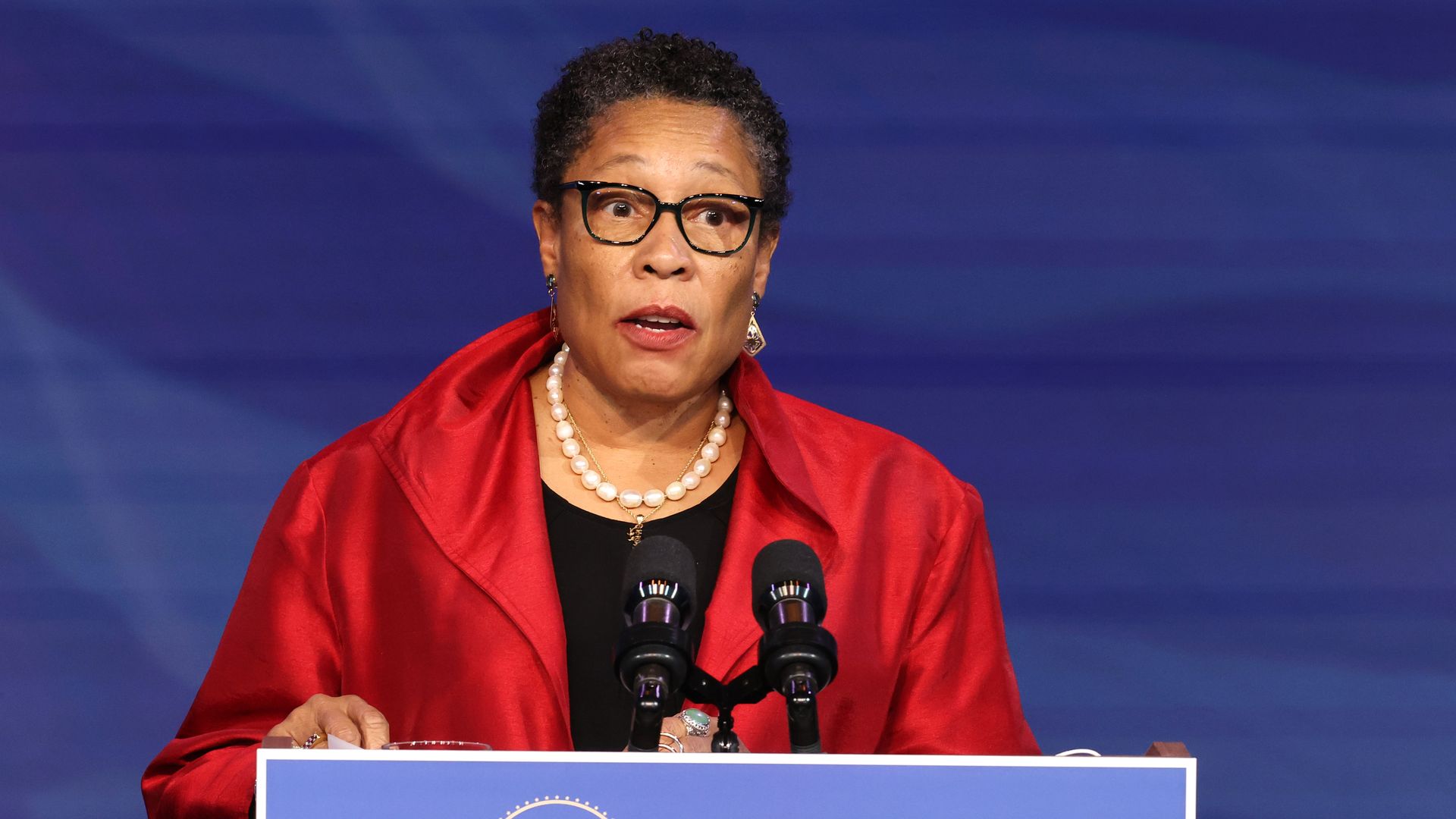
The Senate on Wednesday voted 66-34 to confirm Rep. Marcia Fudge (D-Ohio) as secretary of the Department of Housing and Urban Development.
Why it matters: President Biden pledged while running in 2020 to improve fair housing practices, end redlining and increase the supply of high-quality affordable homes. Fudge will now spearhead those efforts by the administration.
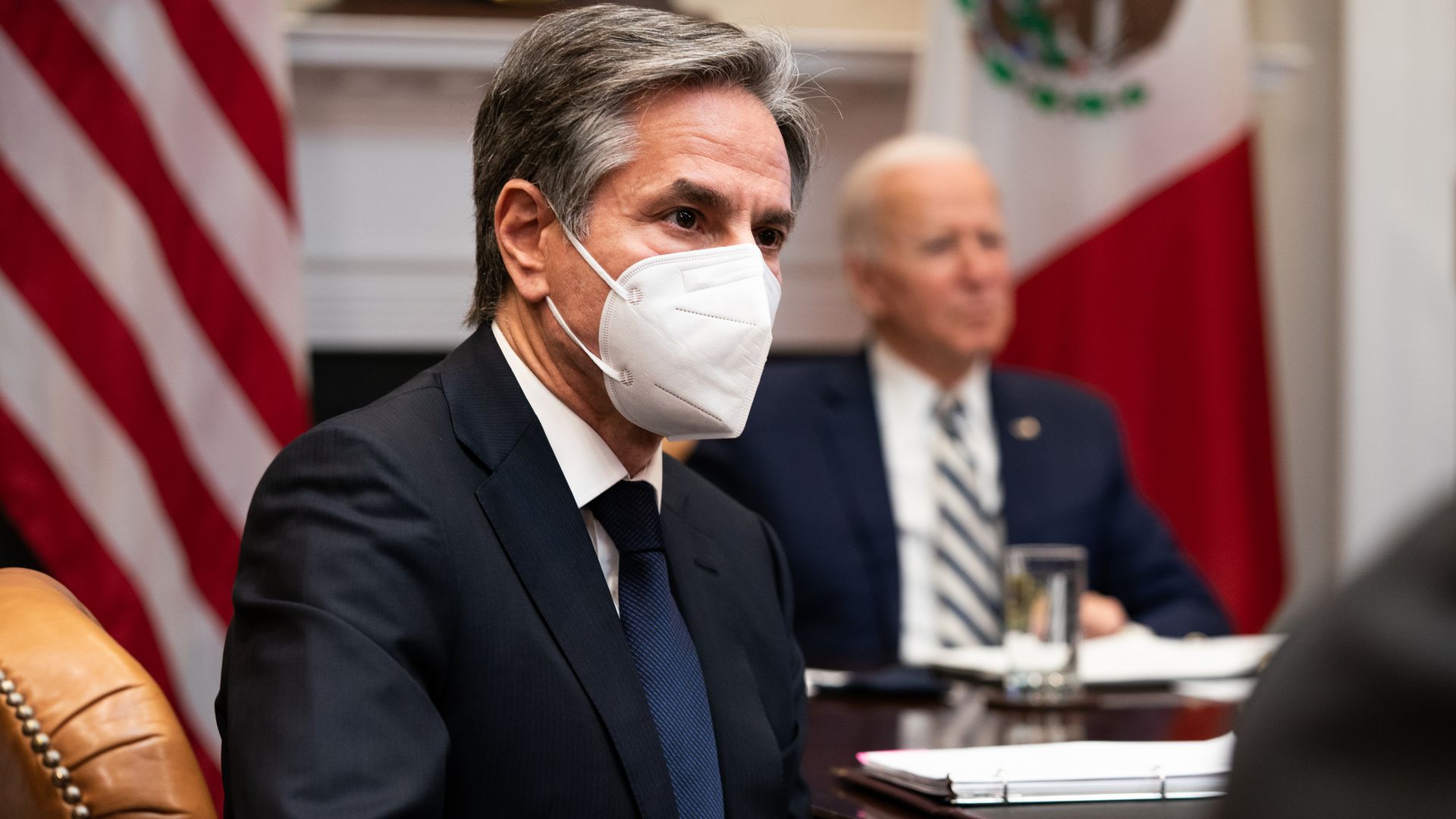
Secretary of State Antony Blinken and White House national security adviser Jake Sullivan will meet with two top China officials next week in Anchorage, Alaska, the State Department announced Wednesday.
Why it matters: This will be the first in-person meeting between senior U.S. and China representatives since President Biden took office, at a time when tensions between the world's two largest economies have escalated to new heights.
House Majority Whip Jim Clyburn (D-S.C.) said Wednesday that Sen. Lindsey Graham (R-S.C.) "ought to be ashamed of himself" for claiming that aid for disadvantaged farmers in President Biden's COVID relief package amounts to "reparations."
Context: The $1.9 trillion bill set to be passed by the House on Wednesday includes a $5 billion fund for disadvantaged farmers, about a quarter of whom are Black.
This week is providing fresh hints of the Biden's administration's efforts on both climate funding and climate-related risks to the financial system.
Driving the news: Secretary of State Antony Blinken told the board of the U.S. International Development Finance Corporation (DFC) that its work will be "front and center" at the global climate summit the White House is holding April 22.
President Biden's decision to halt new oil drilling leases on federal lands will have very minor effects on U.S. production through at least the end of 2022, per the Energy Information Administration's first analysis of the policy change.
Why it matters: The leasing freeze is among the most controversial energy decisions from the nascent administration, drawing strong attacks from Republicans and the oil industry.
As the global pandemic thrust technology to the center of our lives, it also gave Big Tech an unexpected respite from federal regulatory threats, pushing COVID-19 response ahead of other Washington priorities.
What we're hearing: With the Biden administration fixated on vaccine distribution and cabinet confirmations, fleshing out a tech-industry regulatory agenda will continue to take a back seat for at least a few more months.
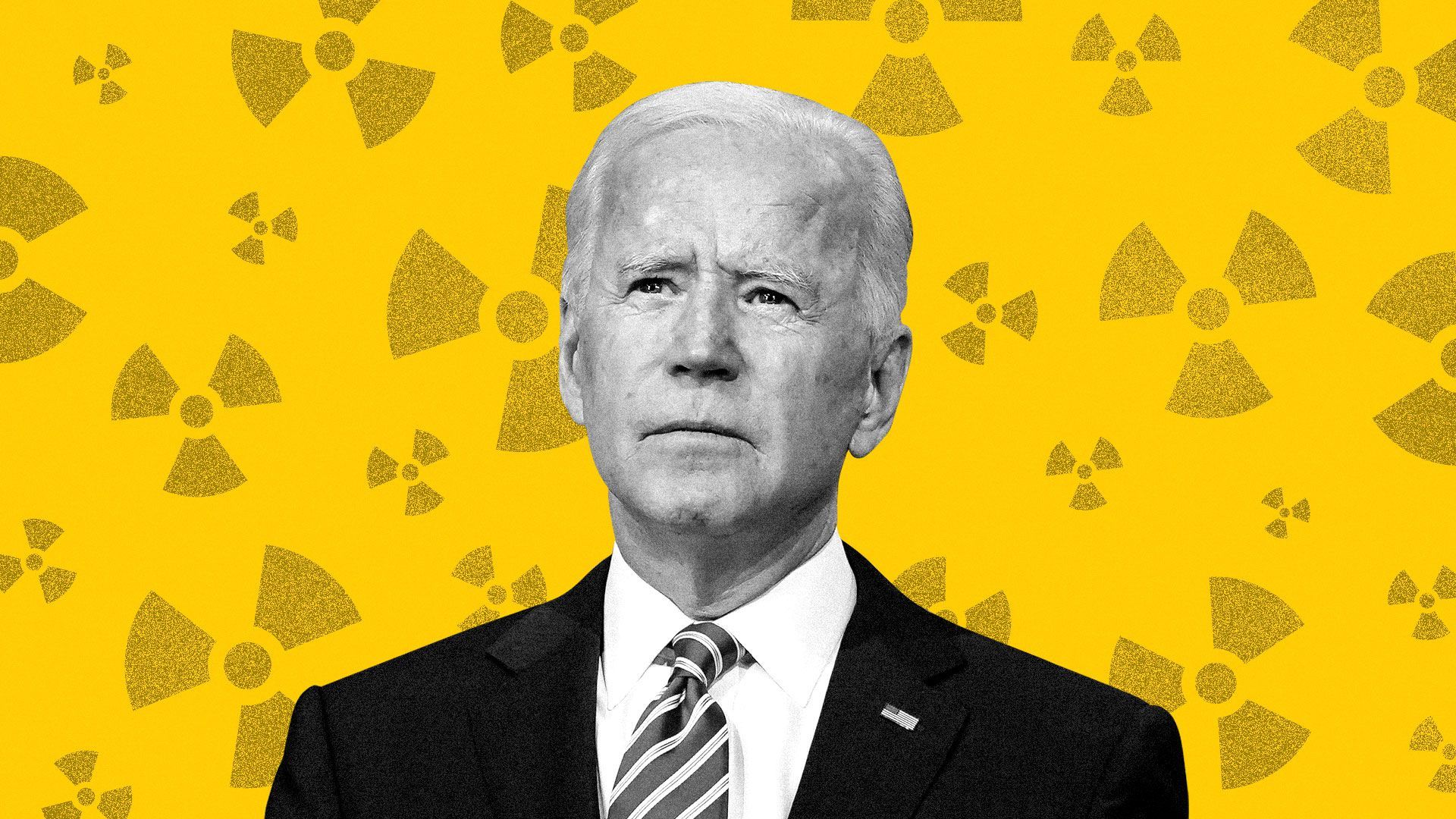
Iran's elections in June are not a factor in the Biden administration’s decision-making for how to proceed with nuclear talks, State Department Iran envoy Rob Malley told me in his first interview since taking office.
Why it matters: Iran’s President Hassan Rouhani and Foreign Mohammad Javad Zarif, who pushed for the 2015 nuclear deal and supported engagement with the U.S., are not running in June's elections and will finish their terms in August. The next Iranian president is likely to be more skeptical of nuclear diplomacy with the U.S.
Democrats' coronavirus relief bill will dramatically change many low-income families' lives over the next year. And in the process, it's setting a new precedent for what Washington can and will do in a crisis.
Why it matters: Once President Biden signs the latest relief bill into law, Washington will have spent more than $5 trillion in less than a year — far more than it has spent in past crises.
Brazil is facing "overload and even collapse of health systems" because of surging COVID-19 cases, a report by the state-run Fiocruz institute warned Tuesday, as the country set a new daily coronavirus death record.
Driving the news: The institute said over 80% of intensive care unit beds are occupied in 25 of Brazil's 26 state capitals. In Rio de Janeiro, 93% of ICU beds are occupied and Brasília has only 3% available. The cities of Campo Grande (106%) and Porto Alegre (102%) have exceeded capacity.
The House voted 225-206 Wednesday evening to pass a sweeping labor rights bill aimed at making it easier for workers to unionize and provide them increased collective bargaining rights in workplace disputes.
Driving the news Five Republicans joined Democrats in favor of the Protecting the Right to Organize Act.
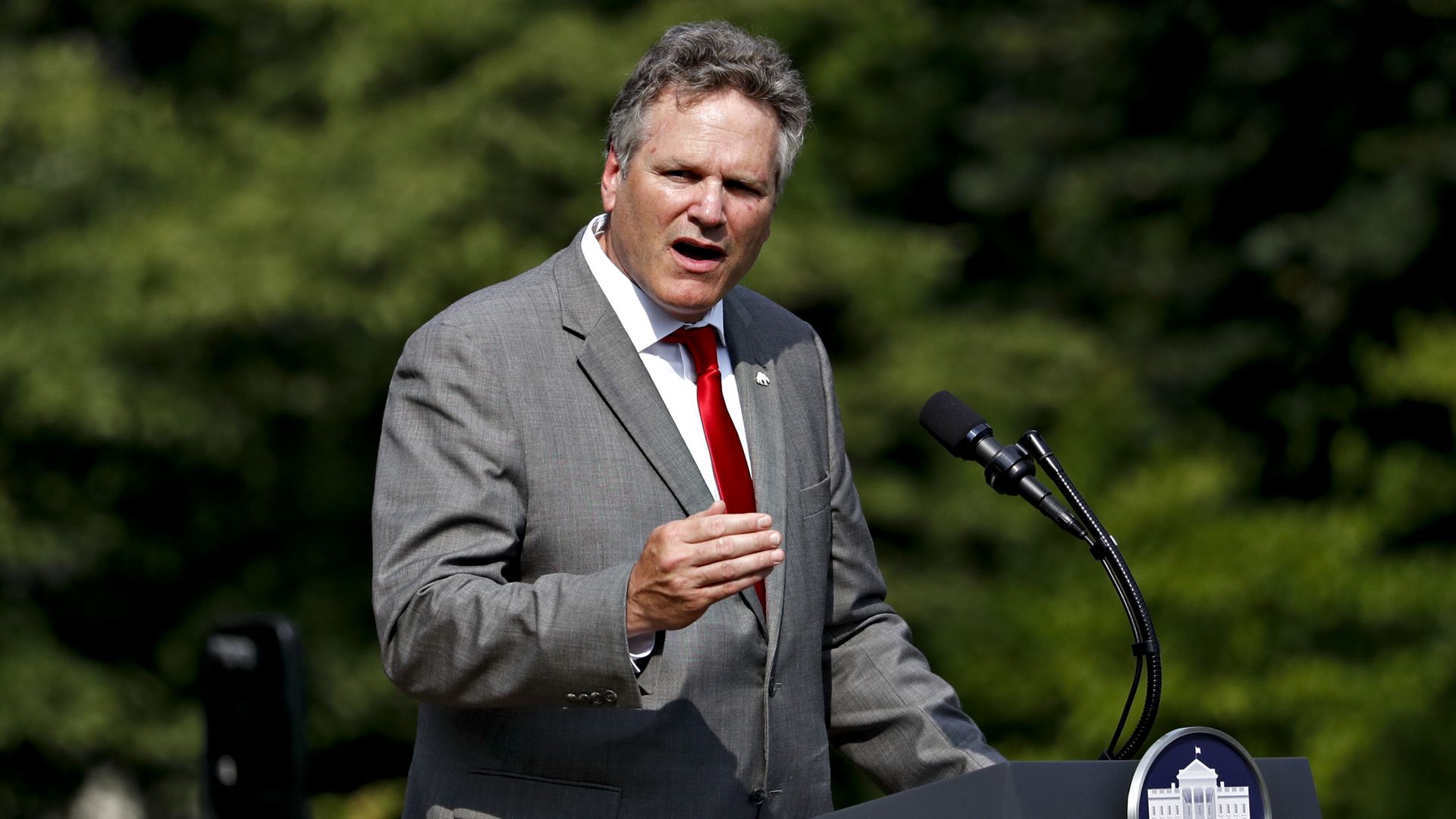
Alaska will allow anyone in the state over the age of 16 to get the COVID-19 vaccine, Gov. Michael Dunleavy (R) announced Tuesday night, adding the measure is "effective immediately."
Why it matters: Alaska is the first state to allow people under 18 to get vaccinated and the first to remove eligibility requirements.
The Tennessee Historical Commission on Tuesday voted 25-1 in favor of removing the bust of Ku Klux Klan leader and Confederate Gen. Nathan Bedford Forrest from the state Capitol, per the Tennessean.
Why it matters: "This is the first time the state has contemplated the removal of a monument or statue in the capitol under the Tennessee Heritage Protection Act," the state's Lt. Gov. Randy McNally said in a statement sharing his concerns over the precedent, per News Channel 3.
Children nationwide will be able to receive free meals when schools break for the summer after the U.S. Department of Agriculture extended several waivers on Tuesday because of the coronavirus pandemic.
Why it matters: The department said as many as 12 million children are currently living in households where they may not have enough to eat, meaning they may rely on meals from school.
The 10 states that saw tax collections dive the most because of the COVID-19 pandemic saw revenue fall from 5.6% to over 40% from 2019 to 2020, according to a data analysis by the Urban Institute
Why it matters: Given the shortfall, those states are the most likely to benefit from the $350 billion in state and municipal aid included in the $1.9 trillion coronavirus relief package expected to pass the House on Wednesday.
Digital operatives are in preliminary discussions about an attempt to overhaul the Republican Party's small-dollar fundraising apparatus, multiple officials with knowledge of the discussions tell Axios.
Why it matters: Democrats crushed the opposition in 2020 when it came to fundraising. Now, top GOP operatives are trying to craft a strategy and technology infrastructure that will get them closer to parity.
President Biden's inner circle has spent a ton of time thinking about how to sell his $1.9 trillion American Rescue Plan around the country — long after he signs it into law this week.
Why it matters: Total opposition from elected Republicans in Washington renders public popularity and bipartisanship across the U.S. vital to maintaining support for the president's agenda.
One in three women — about 736 million around the world — face physical or sexual violence, according to a new report from the World Health Organization (WHO) published Tuesday.
Why it matters: Violence against women remains a global epidemic. The pandemic has further increased exposure to violence, the WHO warned, due to lockdowns and disruptions to vital support services.
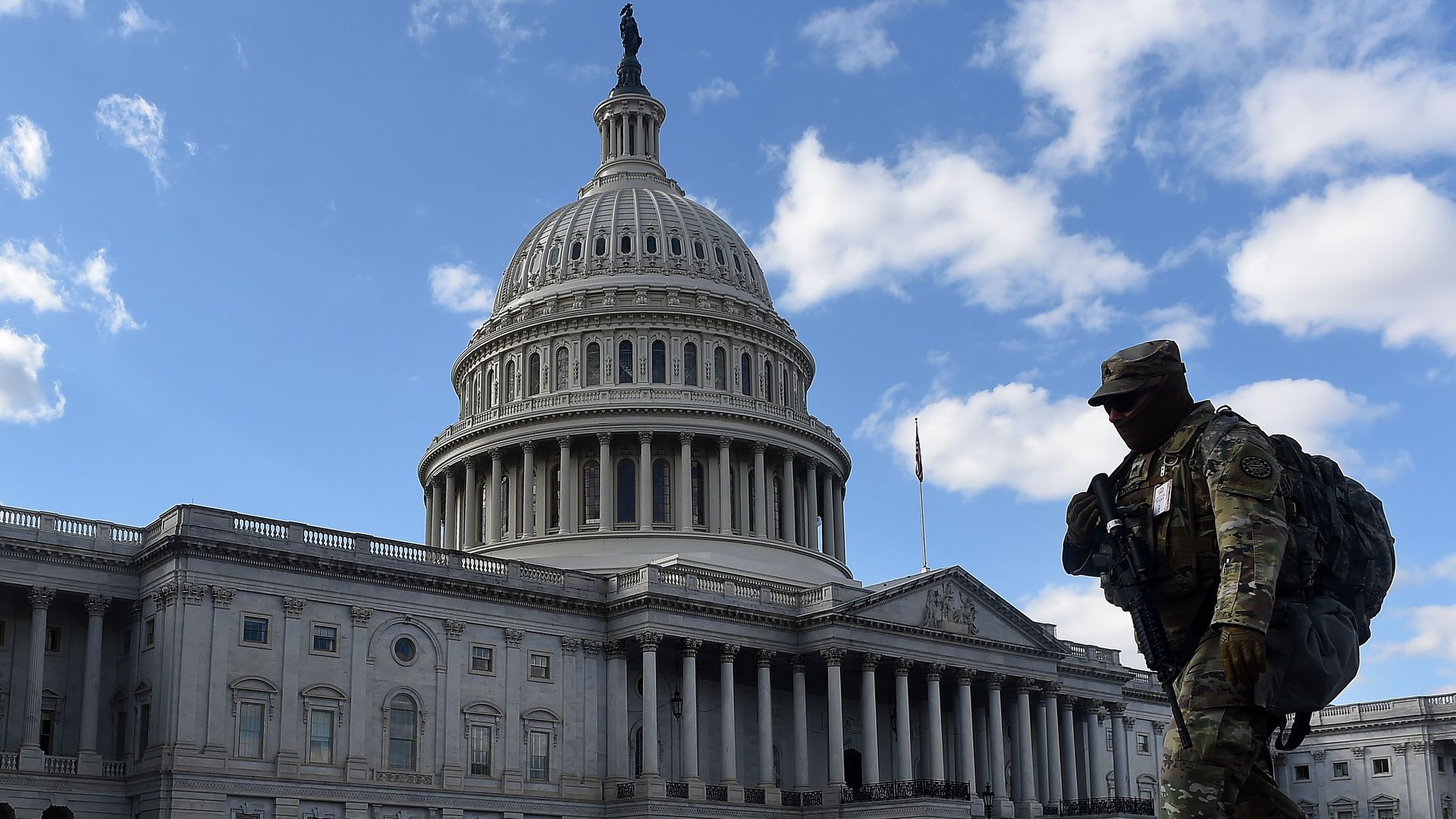
Roughly 2,300 National Guard troops will support Capitol Police efforts in Washington, D.C. through at least May 23 after Defense Secretary Lloyd Austin approved a request to extend their deployment on Tuesday.
The state of play: Theapproval for continueddeployment represents a 50% reduction to the current number of troops at the Capitol, which has been occupied by the Guard since the Jan. 6 attack by pro-Trump supporters.
Former President Trump on Tuesday doubled down on his demand that supporters donate to his PAC and not other Republicans, saying that doing so will help the "America First movement."
Why it matters: Trump asked supporters in an email Monday night to donate directly to his PAC — hours after the Republican National Committee rejected his demand to stop using his name and likeness to fund-raise.