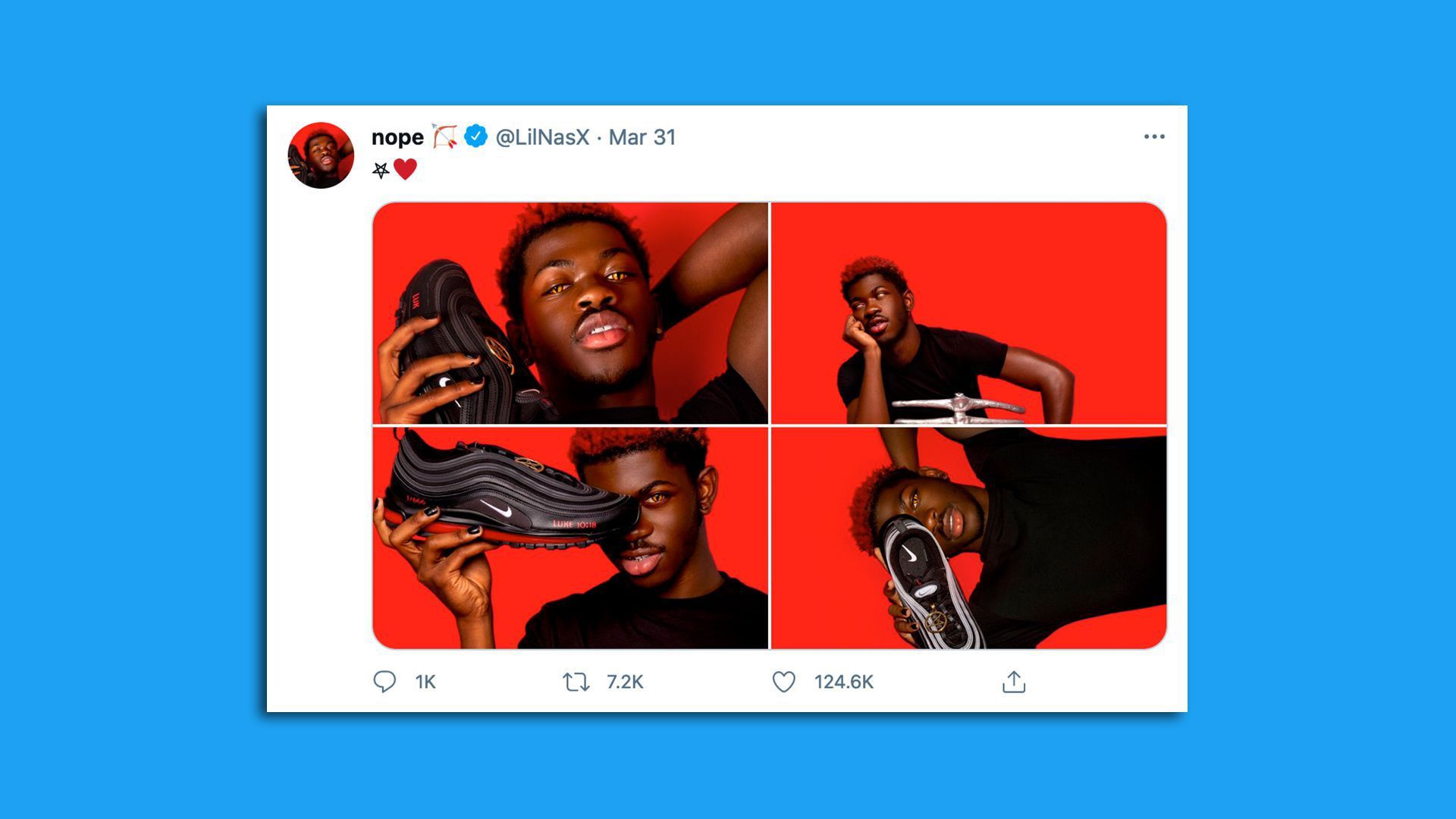
Nike said Thursday it has settled its lawsuit against MSCHF, the stunt company that made the controversial "Satan Shoe" in collaboration with rapper Lil Nas X.
The big picture: MSCHF agreed to initiate a "voluntary recall and buy back" of any of the satanic-themed shoes for their original retail price. Given their secondary-market value, it is highly unlikely that any customers will ask the company to buy back their shoes.
The National Rifle Association's battle to keep itself in bankruptcy court is heating up, just as President Biden escalates his efforts to tackle gun violence.
Driving the news: NRA CEO Wayne LaPierre said he should have disclosed yacht trips he took that were paid by contractors and vendors. His admission came during virtual testimony in a Dallas bankruptcy court Wednesday when a federal judge heard a motion to dismiss the NRA’s Chapter 11 case.
The big picture: Axios' politics reporter Lachlan Markay writes that at precisely the moment that the administration is pushing new gun safety measures, the biggest and most influential gun rights group in the country is consumed by infighting and legal battles.
That will likely have a major impact on any legislative fights. It would be like a fight over abortion rights with a handicapped Planned Parenthood.
What’s happening: New York Attorney General Letitia James wants to dismiss the NRA's bankruptcy case entirely or appoint a trustee, which could result in LaPierre losing control over the organization or be a “death sentence” to the association.
The gun rights group is seeking bankruptcy protection to reincorporate in Texas after James sued the NRA, LaPierre and other executives last summer to dissolve the organization over alleged illegal use of funds.
James and the NRA's biggest creditor, its former advertiser Ackerman McQueen, argue the protection was filed improperly and in an effort to skirt the lawsuit.
LaPierre acknowledged in a disclosure this week that he sheltered on yachts provided by vendors in 2012 and 2018 following the shootings at Sandy Hook Elementary School and Marjory Stoneman Douglas High School because he and his family were under threat.
Situational awareness: President Biden on Thursday called gun violence in the U.S. an “epidemic,” and urged a ban on assault weapons and high-capacity magazines, among other congressional actions.
Gun violence killed nearly 20,000 people in America in 2020, and has so far killed nearly 5,000 this year, according to the Gun Violence Archive.
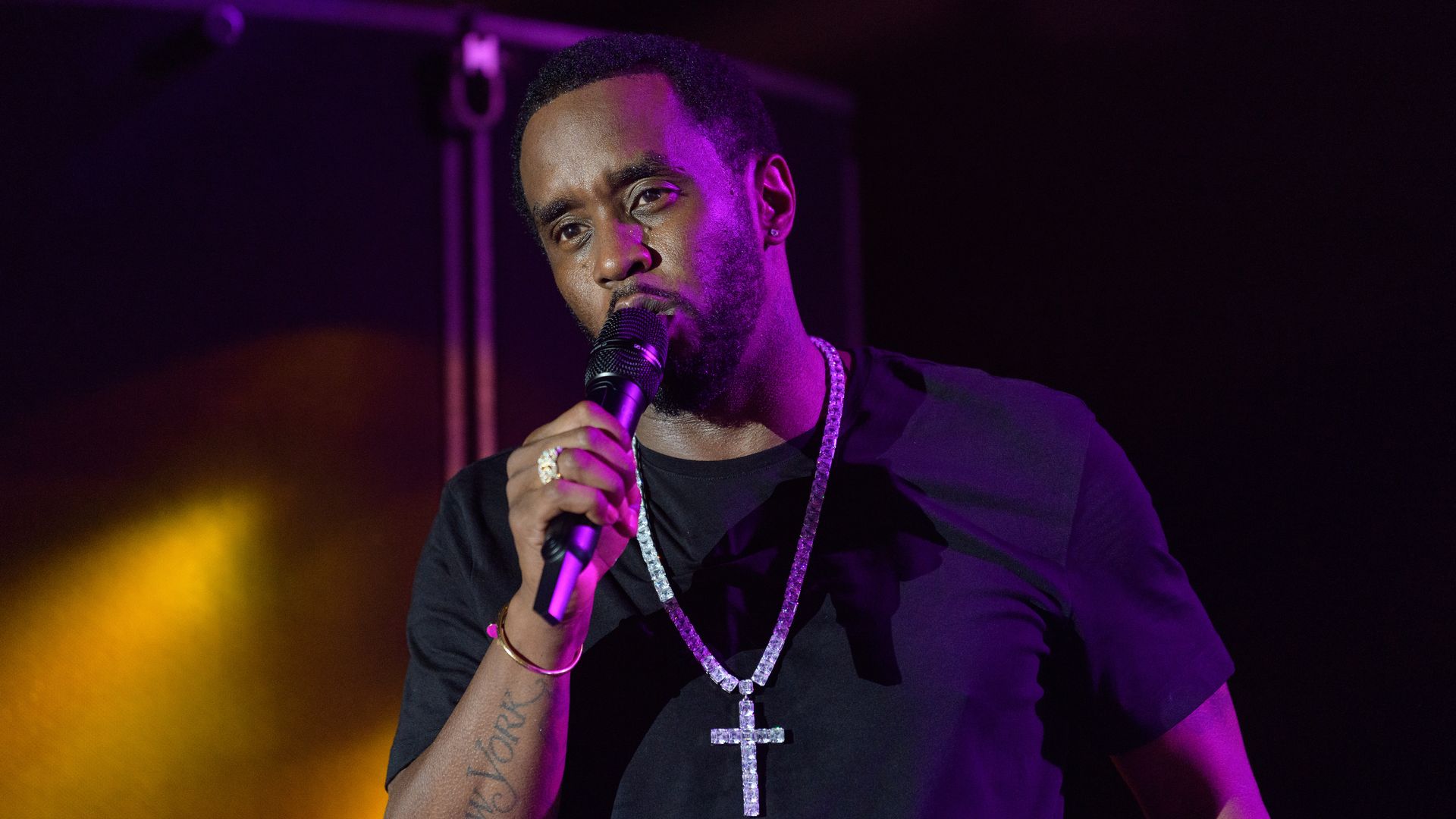
A fight between Black-owned media and corporate America is heating up. The latest to jump into the fray: Sean "Diddy" Combs.
Why it matters: It's a new ripple in a decades-long battle to get businesses to diversify how they spend ad dollars, a critical revenue source for media companies to survive.
What they're saying: "We demand that Corporate America reinvest an equitable percentage of what you take from our community back into our community," Combs, who founded digital network Revolt, wrote in a new letter today.
"If the Black community represents 15% of your revenue, Black-owned media should receive at least 15% of the advertising spend."
Catch up quick: For weeks, there's been tension brewing between Black media executives and General Motors.
A group of Black industry leaders — led by media mogul Byron Allen — called out the automaker as particularly egregious for spending less than 0.5% of its ad budget with Black media. (GM disputes this figure).
Driving the news: The car company last week vowed to raise its share of advertising with Black-owned media to 8% by 2025, amid the growing pressure.
Combs name-dropped GM in his letter, after the company listed Revolt as one of the companies it advertises with.
GM has agreed to have "a series of meetings with Black-owned media over the next few weeks," a spokesperson says. (That includes Revolt, that company tells Axios.)
A previously scheduled meeting with Black media execs was postponed by GM CEO Mary Barra last month, the Detroit Free Press reports — causing more tension.
Where it stands: Combs says less than 1% of ad dollars went to Black-owned media companies in 2019.
A Procter & Gamble executive estimated last year that roughly 5% of marketing spend goes to non-white owned businesses.
The big picture: "We're literally making $1 out of half of a penny," Detavio Samuels, Revolt's CEO, tells Axios.
"In a world where advertisers only give you 1% of their total budget, or distributors refuse to carry you, you can't get the revenue to make the content your audience deserves," Samuels says.
The backdrop: Allen has long pushed for major companies to spend at least 2% of their marketing budgets with Black-owned media outlets, Axios Media Trends author Sara Fischer notes. Verizon this week became the latest to get on board.
The issue of a lack of investment in Black media channels came to a head last summer during the Black Lives Matter protests, as companies pledged to address their role in inequality.
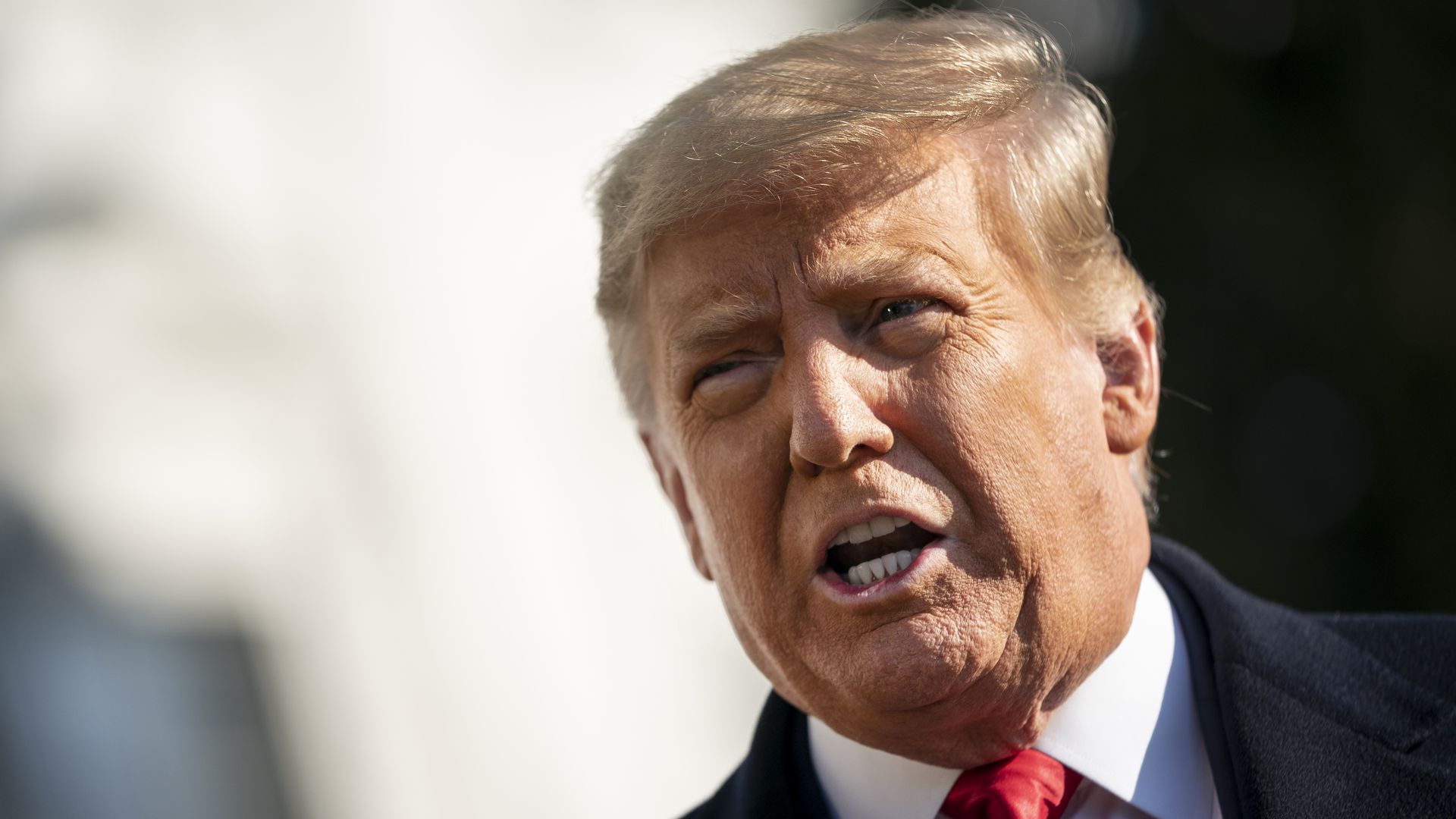
Twitter won't let the National Archives create a federally preserved version of former President Trump's tweets from his banned personal account, Politico first reported Wednesday.
Why it matters: The National Archives and Records Administration (NARA) is working archiving online Twitter posts by Trump while president — including the tweets that led to him being permanently banned from the platform in January following the U.S. Capitol riots.
Netflix and Sony Pictures Entertainment have struck a major, multi-year deal beginning in 2022 that will give Netflix access to Sony's biggest franchises, like "Spider-Man" and "Jumanji."
Why it matters: Sony is one of the only major movie studios that doesn't have its own streaming platform to distribute on its content on.
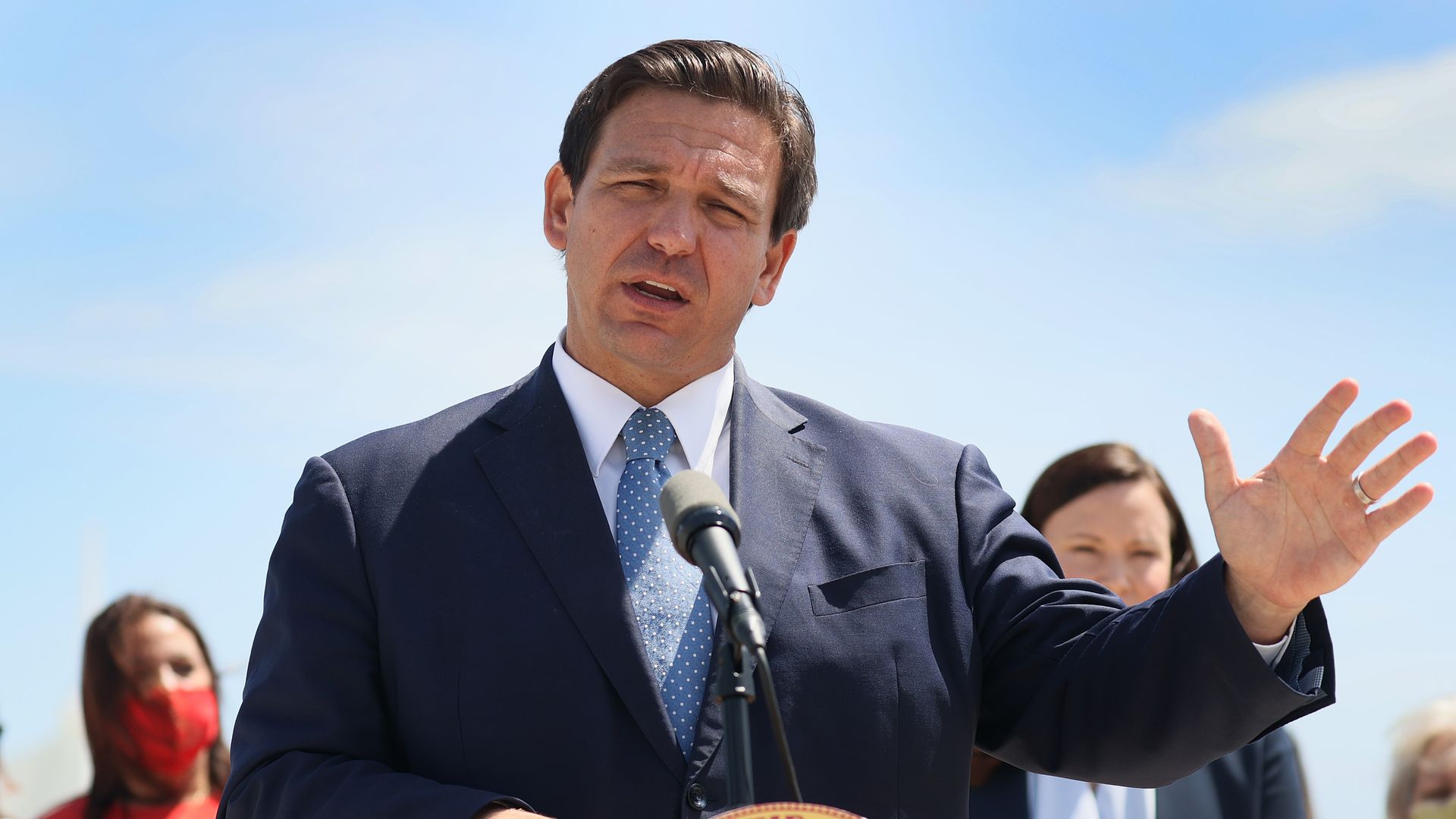
Florida Gov. Ron DeSantis (R) on Thursday announced he has filed a lawsuit against the Centers for Disease Control and Prevention, demanding cruise ships be "reopened immediately."
Why it matters: The CDC issued new guidance this week to allow cruise ships to begin trial runs before returning to normal operations. But DeSantis wants the cruises — which are a large industry in coastal Florida — to be allowed to resume immediately, the Miami Herald reports.
JetBlue on March 25 made a $1,000 PAC contribution to Rep. Nicole Malliotakis (R-N.Y.), one of the lawmakers who voted against certifying Biden's win in the Electoral College, per an FEC filing released this week.
Why it matters: JetBlue appears to be the first company to break from a coalition of corporations suspending political contributions after the Jan. 6 Capitol attack, Bloomberg first reported. The insurrection was driven by many supporters of former President Trump who aimed to interfere in counting the electoral votes.
General Motors is reducing production in some of its North American plants due to a global semiconductor chip shortage.
Why it matters: The chip shortage is affecting automotive companies around the world, with semiconductors functioning as a key component for steering systems, car brakes and other automobile features.
KKR agreed to invest $500 million in Box (NYSE: BOX), a Silicon Valley cloud content management company that plans to use most of the proceeds for a stock buyback.
Why it matters: This feels like protection money, as Box has been under reported pressure from activist investor Starboard Value, which is Box's largest outside shareholder. Not only does Box now have a new deep-pocketed investor in its corner, but Starboard has a path to exit at a profit.
T-Mobile made a series of moves Wednesday aiming to show both the strength of its 5G network and that it hasn't lost its competitive spirit. Specifically, the carrier announced the launch of its home broadband replacement service as well as offers to lure new and existing customers with free and discounted 5G phones.
Why it matters: T-Mobile has some key advantages in 5G, thanks in large part to the 2.5 GHz spectrum it acquired with its Sprint purchase. That mid-band spectrum offers a mix of high speeds and decent coverage that, at least for now, AT&T and Verizon can't match.
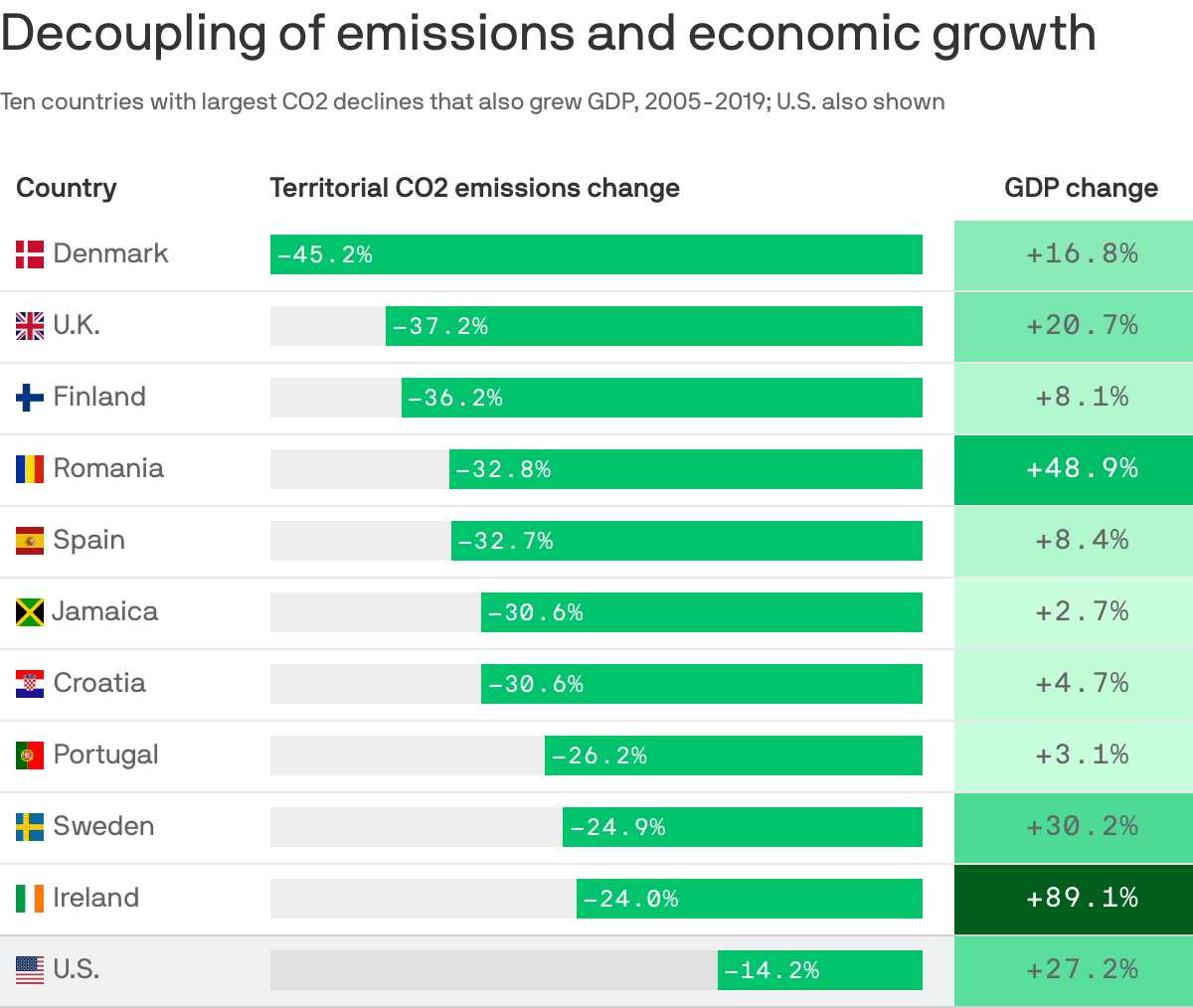
Data: The Breakthrough Institute; Chart: Sara Wise/Axios
An analysis finds "increasing evidence" of a fraying connection between economic growth and higher carbon emissions — a needed first step toward steep CO2 cuts.
Driving the news: The Breakthrough Institute's Zeke Hausfather finds that since 2005, emissions have become "decoupled" from GDP growth in 32 nations with a population of at least 1 million people.
There are a growing number of signs the bull market in equities is overheating, with indicators of investor complacency and risk-seeking reaching the highest levels since 2007 and 1999.
Why it matters: Those periods of extreme euphoria were followed by market crashes.
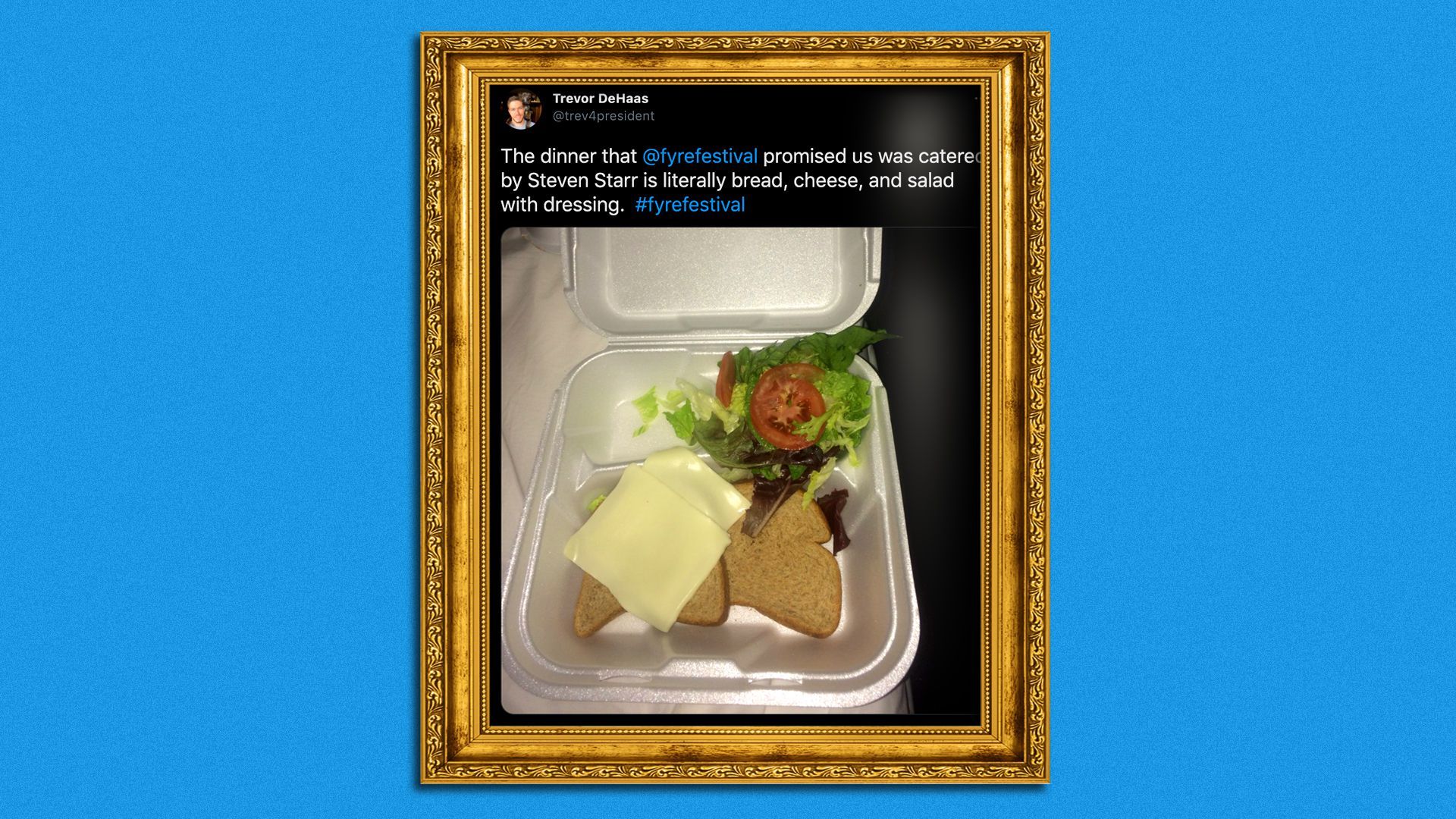
The man behind the iconic tweet of the Fyre Fest dinner — two limp slices of white cheese on wheat bread with "salad" in a styrofoam container — is teaming up with one of the men who helped organize the infamous festival to sell the tweet as an NFT. Because of course, he is.
Details: In an email, Trevor DeHaas tells Axios he's hoping to collect upwards of $80,000 that he'll put toward medical expenses from his daily dialysis and kidney transplant.
The White House wants to lower broadband prices and make the industry more competitive — a sign that President Biden's approach to the telecom sector will be much tougher than his predecessors'.
Why it matters: Tech giants and internet platforms have been in the brightest spotlight of regulatory scrutiny, but the new administration looks ready to cast a much wider net.
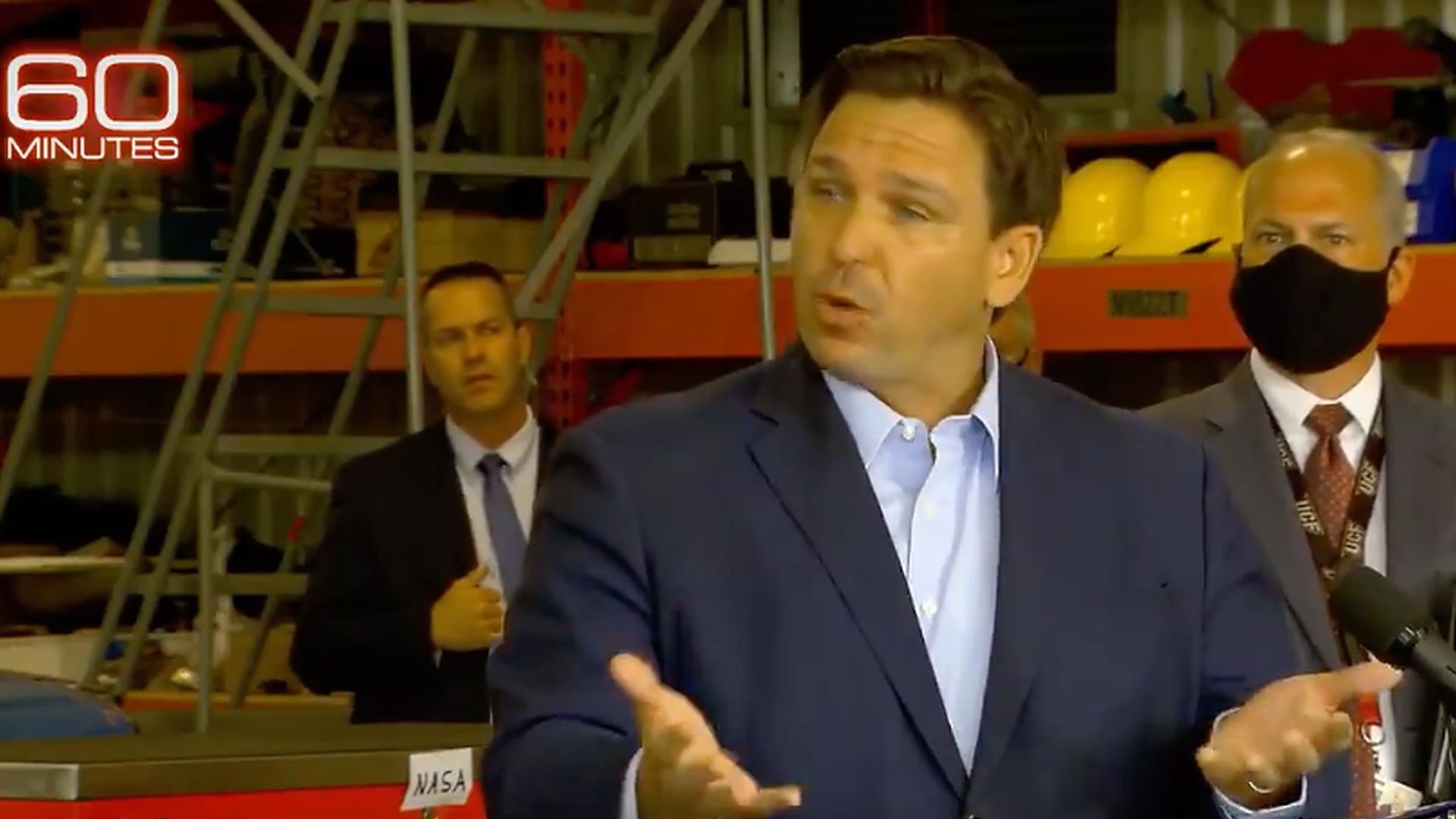
CBS issued a statement defending "60 Minutes" Wednesday, after Florida Gov. Ron DeSantis (R) said the program was "dishonest" about the state's partnership with Publix dominating COVID-19 vaccine distribution in Palm Beach County.
Driving the news: DeSantis called the show "smear merchants" for reporting Sunday that poorer communities had been left behind, with no Publix Super Markets in Belle Glade, in the Glades area of Palm Beach County.
Over 25 million Americans are to receive the fourth round of COVID-19 stimulus payments this week, sent out under President Biden's American Rescue Plan, the IRS announced Wednesday.
The big picture: More than 156 million payments have been disbursed so far under the relief package, at a cost of about $372 billion. The rollout began last month shortly after the package was passed by Congress.