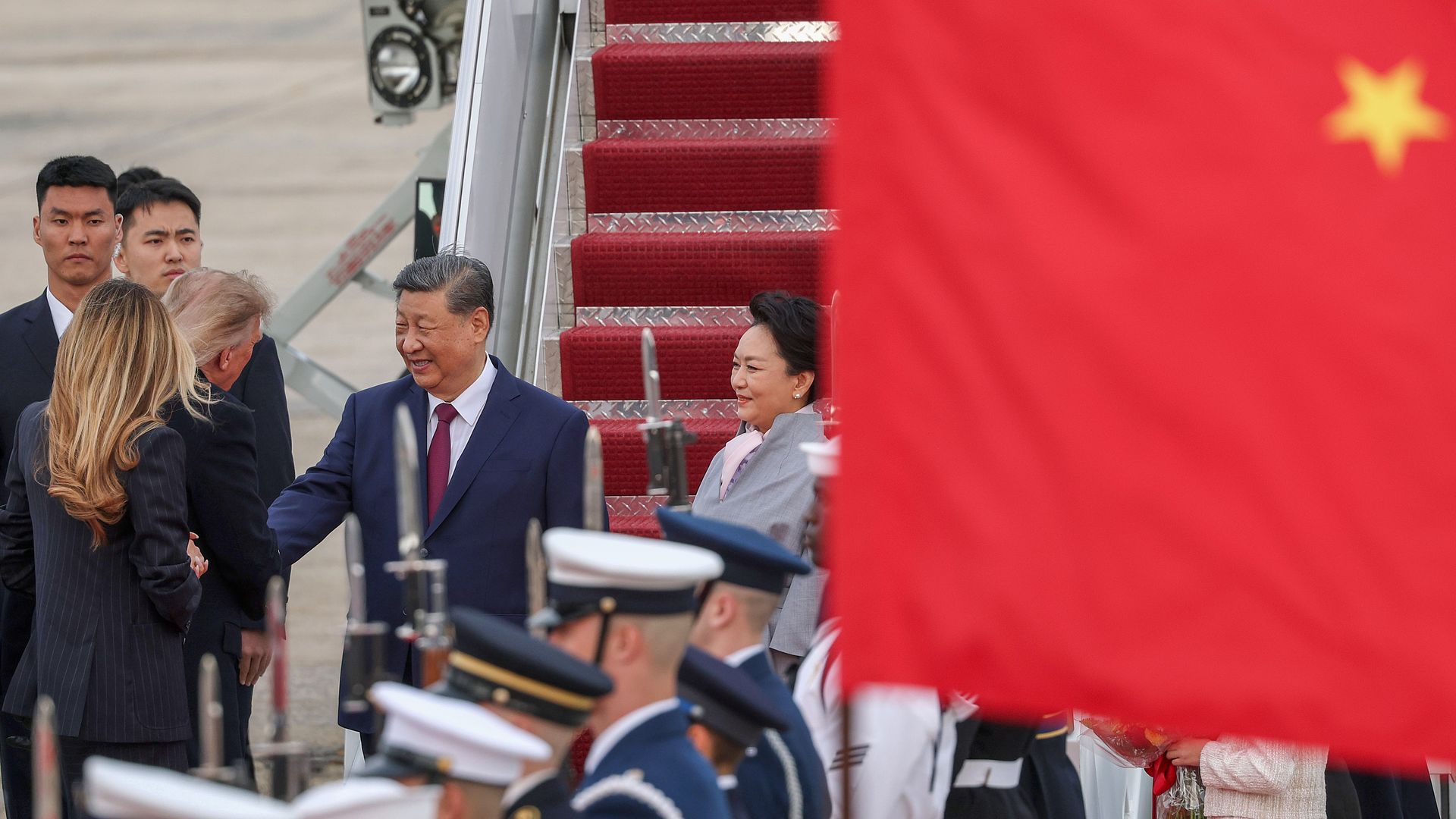
President Trump welcomed Xi Jinping at Joint Base Andrews for the Chinese leader's state visit to Washington D.C. Wednesday evening.
Why it matters: U.S. presidents typically receive visiting foreign leaders at the White House, making Trump's airport welcome an unusual diplomatic gesture.
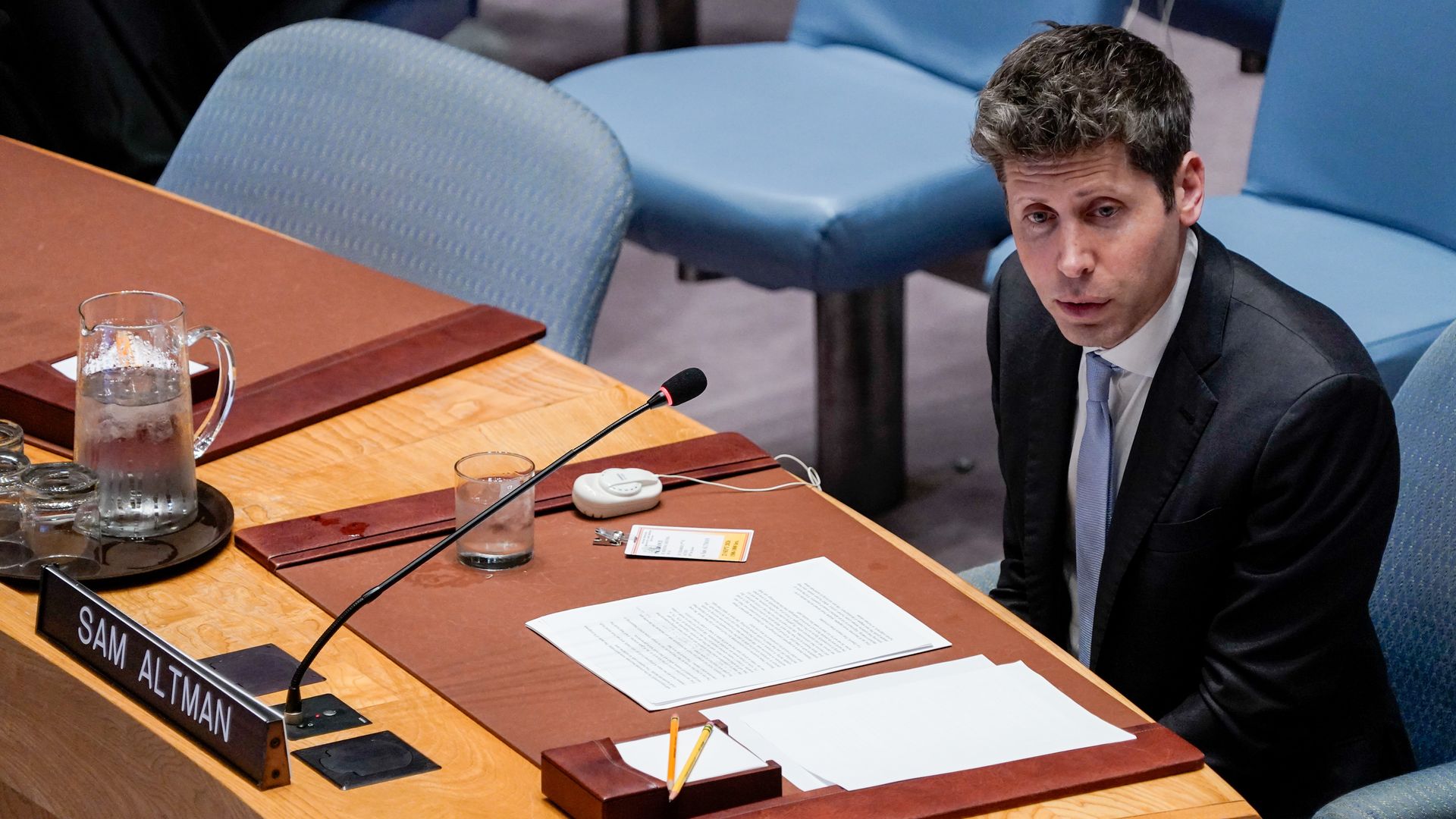
Executives from leading artificial intelligence organizations urged global cooperation Wednesday to address risks from increasingly autonomous AI systems during a UN Security Council meeting.
The big picture: AI capabilities are advancing faster than governments are developing safeguards, raising concerns about whether humans can maintain control over increasingly autonomous systems.
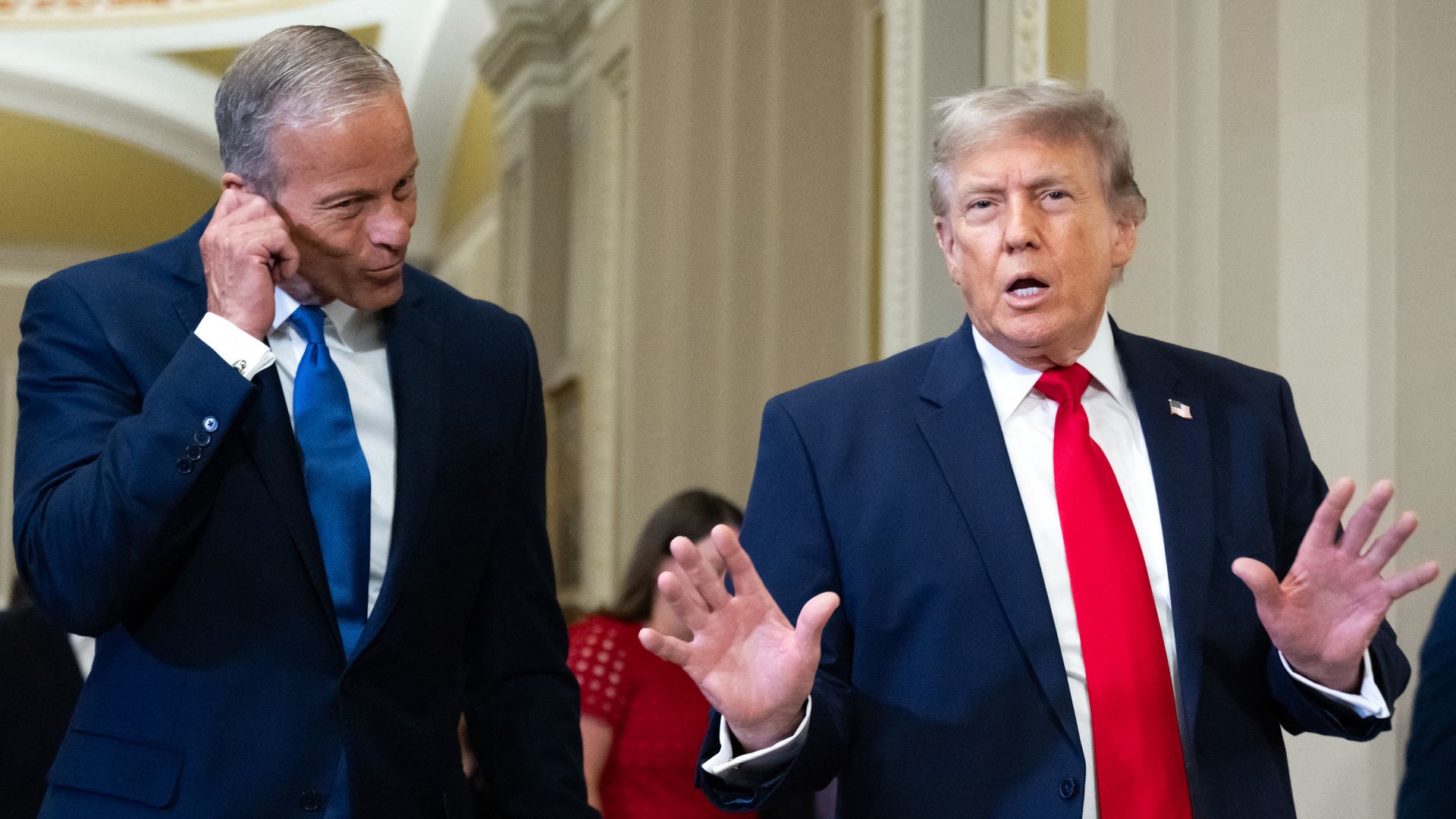
Senate Majority Leader John Thune says he doesn't believe President Trump is "really dug in" against guardrails for AI, despite Trump's public campaign against restricting the technology.
Why it matters: Thune told Axios he spoke privately with Trump as the AI issue was getting "pretty hot" a few weeks ago and believes some of Trump's strong pushback is against public "paranoia and noise around the subject."
The U.S. economy is expected to grow much faster this year than any other major advanced economy as its domestic policies inflict pain across much of the world.
Why it matters: The global economy has proven surprisingly resilient to successive shocks. The U.S. stands out even against that backdrop, with the AI investment boom helping it grow much faster than other economies.
But that exceptionalism comes at a cost: more persistent inflation and interest rates that may need to stay higher for longer to restrain it.
Driving the news: The Organisation for Economic Co-operation and Development (OECD) expects the U.S. economy to grow 2.2% this year, roughly twice the pace projected for the eurozone, Germany and the U.K. Growth is expected to be even weaker in Japan (0.8%) and in Canada (0.9%).
That growth gap is expected to persist next year, when U.S. growth clocks in at2.1%, compared with roughly 1% across much of the rest of the world's major advanced economies.
The OECD has become more optimistic about the U.S. since June, lifting its growth estimate by 0.2 percentage points for 2026 and 0.3 points for 2027.
That contrasts with downgrades to next year's outlook for the broader global economy, the eurozone, Canada, the U.K. and Japan.
What they're saying: "The major risk is still the evolution of the conflict in the Middle East and the impact on the energy market. But there are also a number of other risks — some of which seem to have gained some momentum from the June projection," OECD chief economist Stefano Scarpetta told reporters this morning.
Scarpetta pointed to rising sovereign bond yields, risks surrounding the AI investment boom and the potential for extreme weather to push food prices higher.
Zoom in: The AI boom has given the U.S. economy a powerful shock absorber that many other economies lack, the OECD says.
Rapid growth in AI investment and production has "partially counterbalanced" the economic hit from the Middle East conflict — with data center and technology spending directly boosting U.S. growth.
The other side: The inflation outlook looks more stubborn than a few months ago.
The OECD expects U.S. headline inflation to fall from 3.6% this year to 2.6% next year — but that 2027 forecast is half a percentage point higher than it projected in June.
U.S. core inflation is projected at 3.3% this year — among the highest rates across major advanced economies — and 2.5% next year.
That persistence helps explain why the OECD expects another Federal Reserve rate hike this year, with rates then staying at 4%-4.25% through the end of 2027.
What to watch: The AI boom boosting U.S. growth is beginning to come with its own macroeconomic downside effects.
Long-term borrowing costs are at their highest in at least 15 years across most major advanced economies, the OECD says.
It warns that heavy borrowing by AI companies is helping push yields higher, potentially raising costs across the economy and leaving markets vulnerable if AI profits disappoint.
The bottom line: America has helped make the global economic environment tougher. Its own economy has so far weathered it better than almost any of its peers, but that resilience is coming alongside an inflation problem that remains difficult to shake.
Iranian President Masoud Pezeshkian forcefully rejected President Trump's portrayal of Iran as a source of terrorism at the UN General Assembly on Wednesday, insisting instead that Iranians are "victims of terrorism."
Why it matters: Pezeshkian used one of the world's biggest diplomatic stages to directly challenge Trump on U.S. soil — as the U.S.-Israel war with Iran rages on.
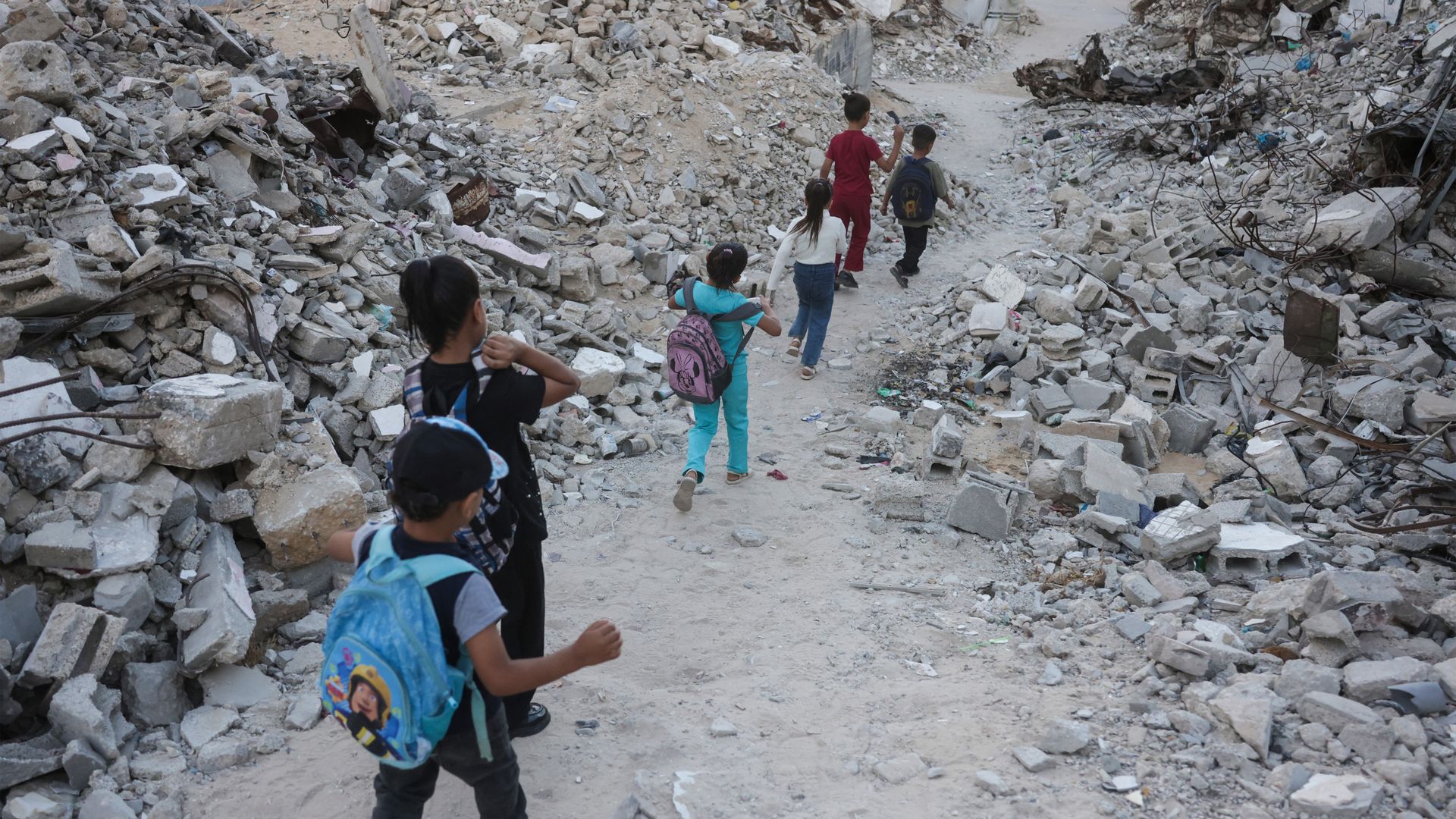
President Trump's Board of Peace will unveil a six-month, $2.45 billion recovery plan for Gaza at a meeting of its members on Wednesday.
Why it matters: The 66-project proposal offers one of the most comprehensive roadmaps yet for what the early months of post-war reconstruction and governance in Gaza would look like.
Vulcan Elements will make magnets for the U.S. Army's SkyFoundry initiative, which seeks stateside mass production of small drones, CEO John Maslin told Axios.
The big picture: Supply-chain surety is a national-security imperative.
China's rare-earth crackdown has strained manufacturers across the world while also complicating the relationship between Washington and Beijing.
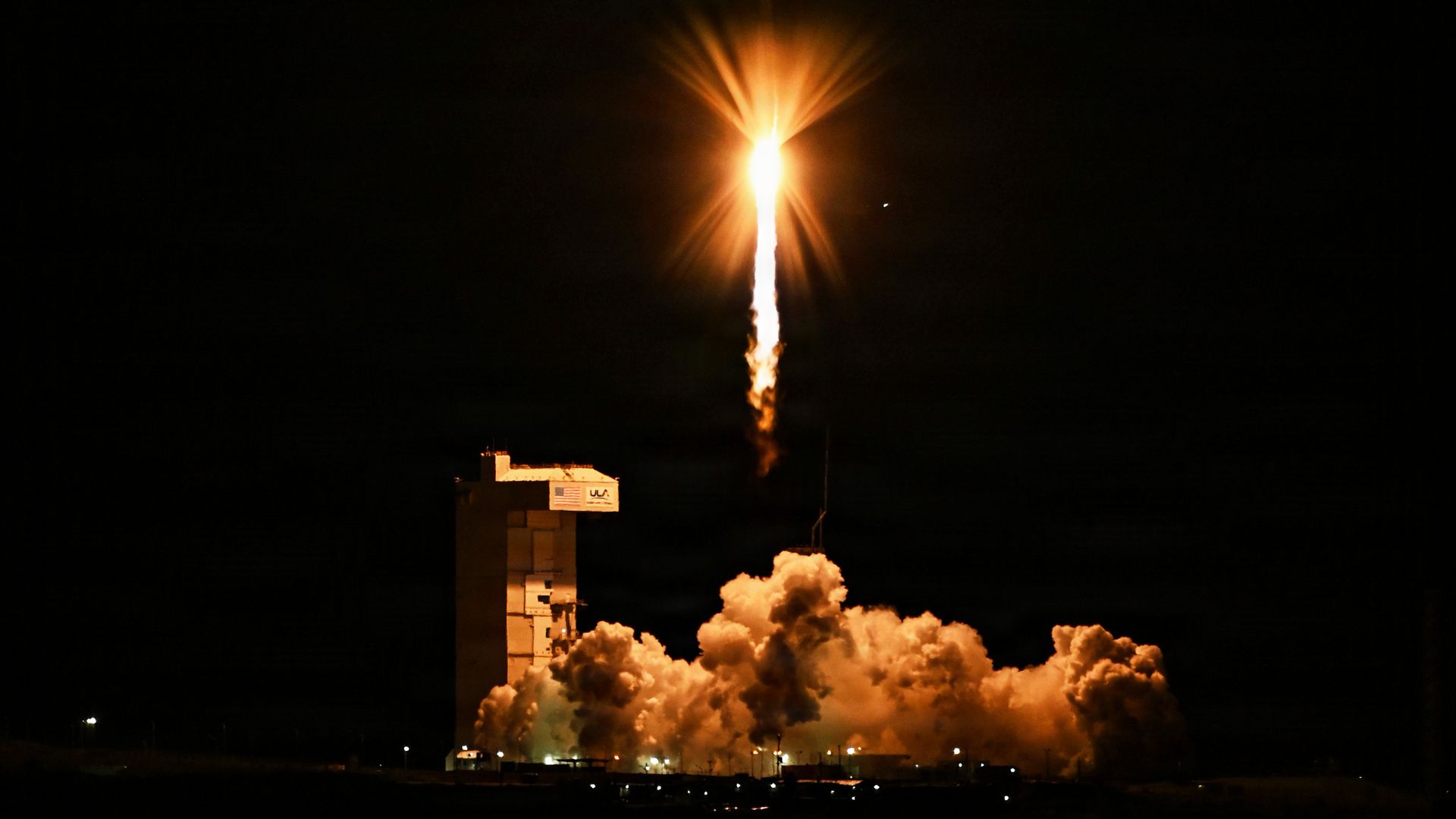
Three U.S. military leaders in just as many days changed how the public talks about war in space, including the secretive weapons already among the stars.
Why it matters: Space fights will happen. They will look nothing like conflict on the ground or on the water. And the consequences will be enormous.
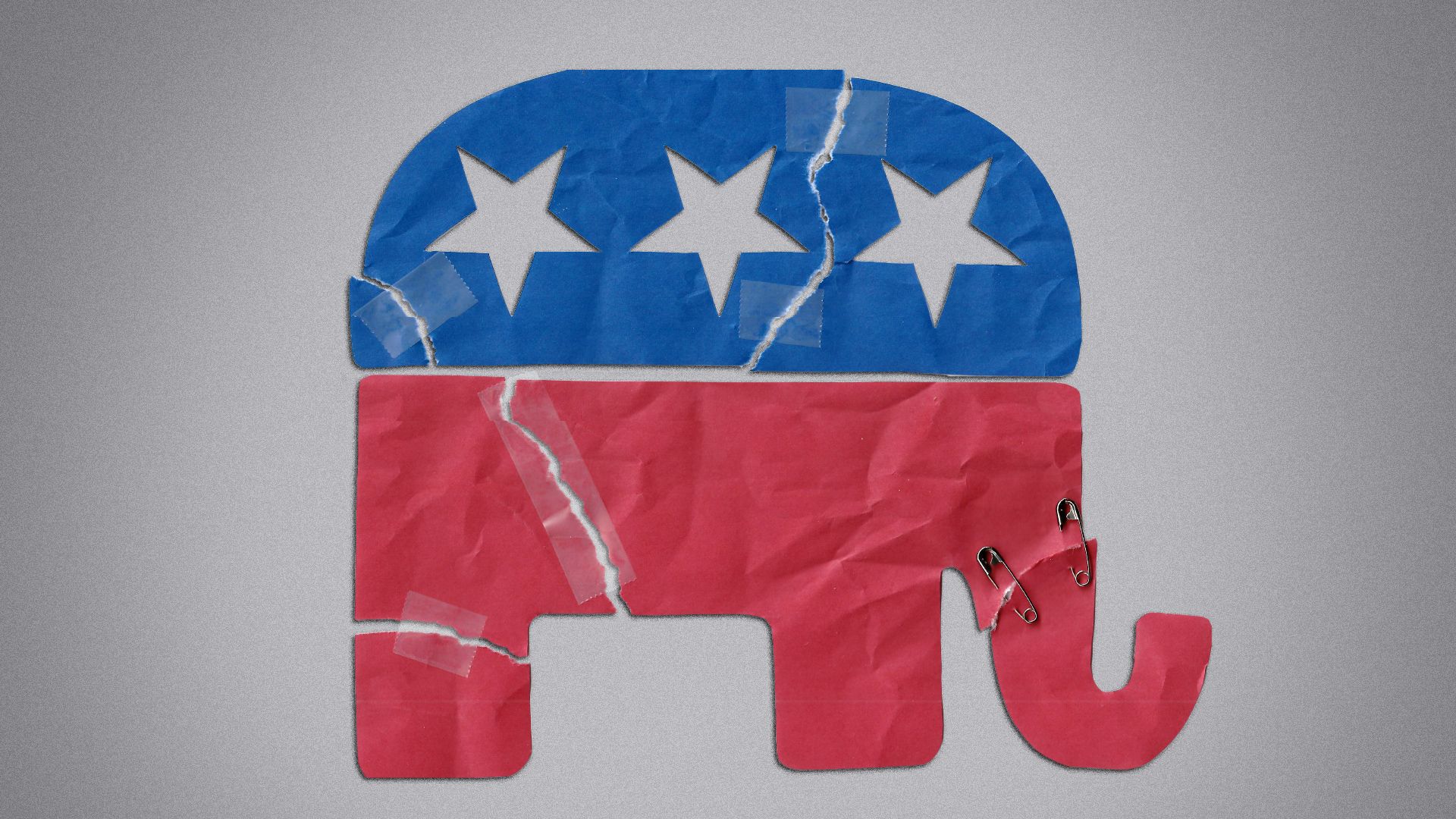
Congressional Republicans are increasingly breaking with an unpopular president on foreign policy and pocketbook issues as they try to stop their majorities from slipping away.
Why it matters: They aren't engaged in a full-scale revolt against President Trump, but some Republicans are testing new ways to distance themselves from him — a sign of their election anxiety.
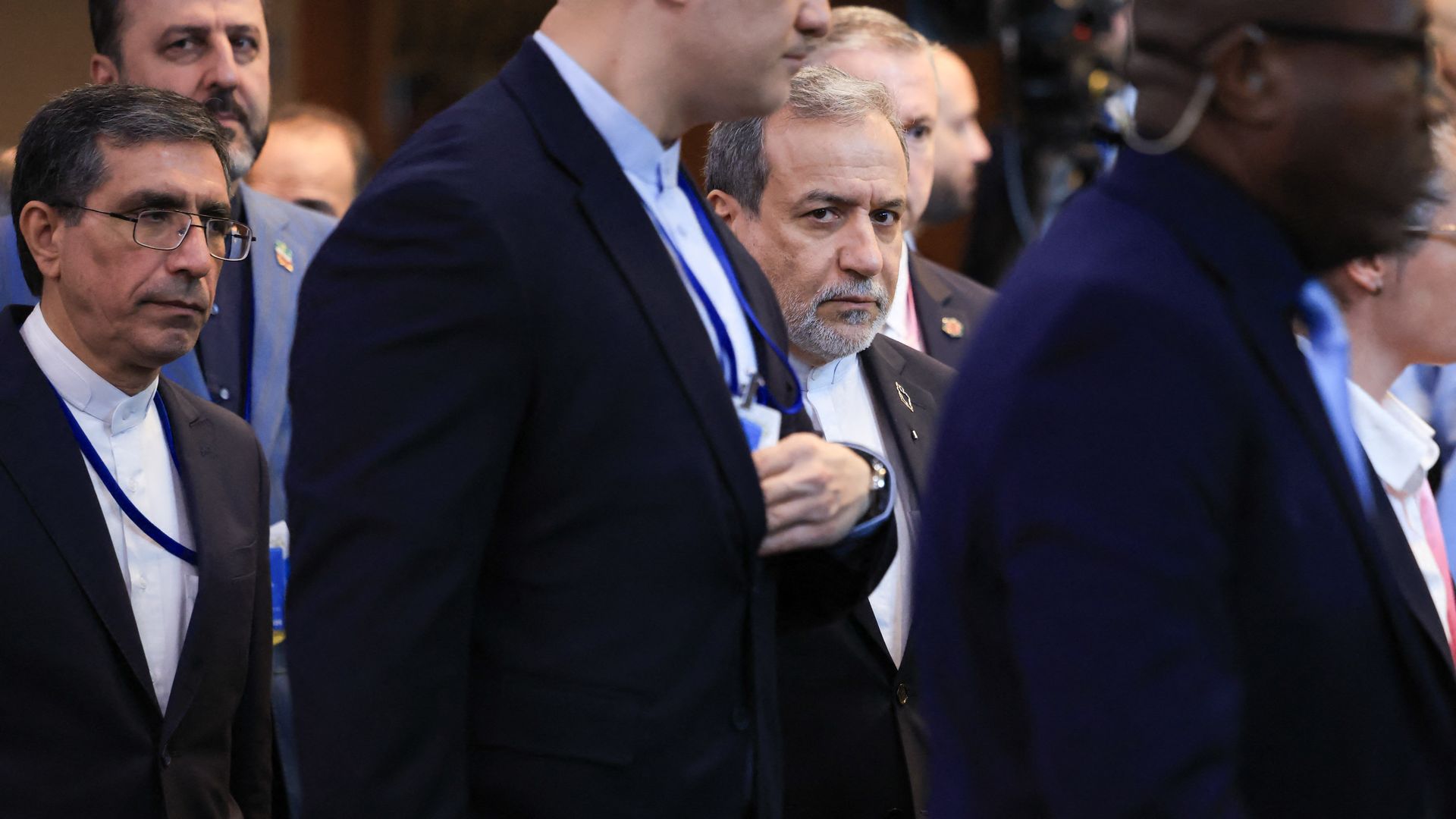
President Trump said U.S. officials met for three hours with the Iranian delegation to the United Nations General Assembly in New York on Tuesday.
Trump envoys Steve Witkoff and Jared Kushner attended the meeting from the U.S. side, and Iranian Foreign Minister Abbas Araghchi from the Iran side.
"Steve and Jared had a very productive meeting today with mediators of Iran," Trump said later, before meeting with Arab leaders. "I think there's a lot of momentum for them to make a deal. That's what we are hearing from everybody."
Iran state television said the meeting was requested by the U.S. and "driven by the need to convey Iran's conditions for reopening the Strait of Hormuz," which include lifting the naval blockade, releasing frozen Iranian assets and ending the war on all fronts.
Sen. John Curtis (R-Utah) is urging Senate Judiciary leaders to subpoena Donald Trump Jr. and Hunter Biden to investigate whether presidential family ties have been used for private family gain.
Why it matters: The Republican Curtis is pressing a Republican-led Senate committee to scrutinize President Trump's eldest son, arguing the same congressional oversight applied to Hunter Biden should apply to presidential families of both parties.
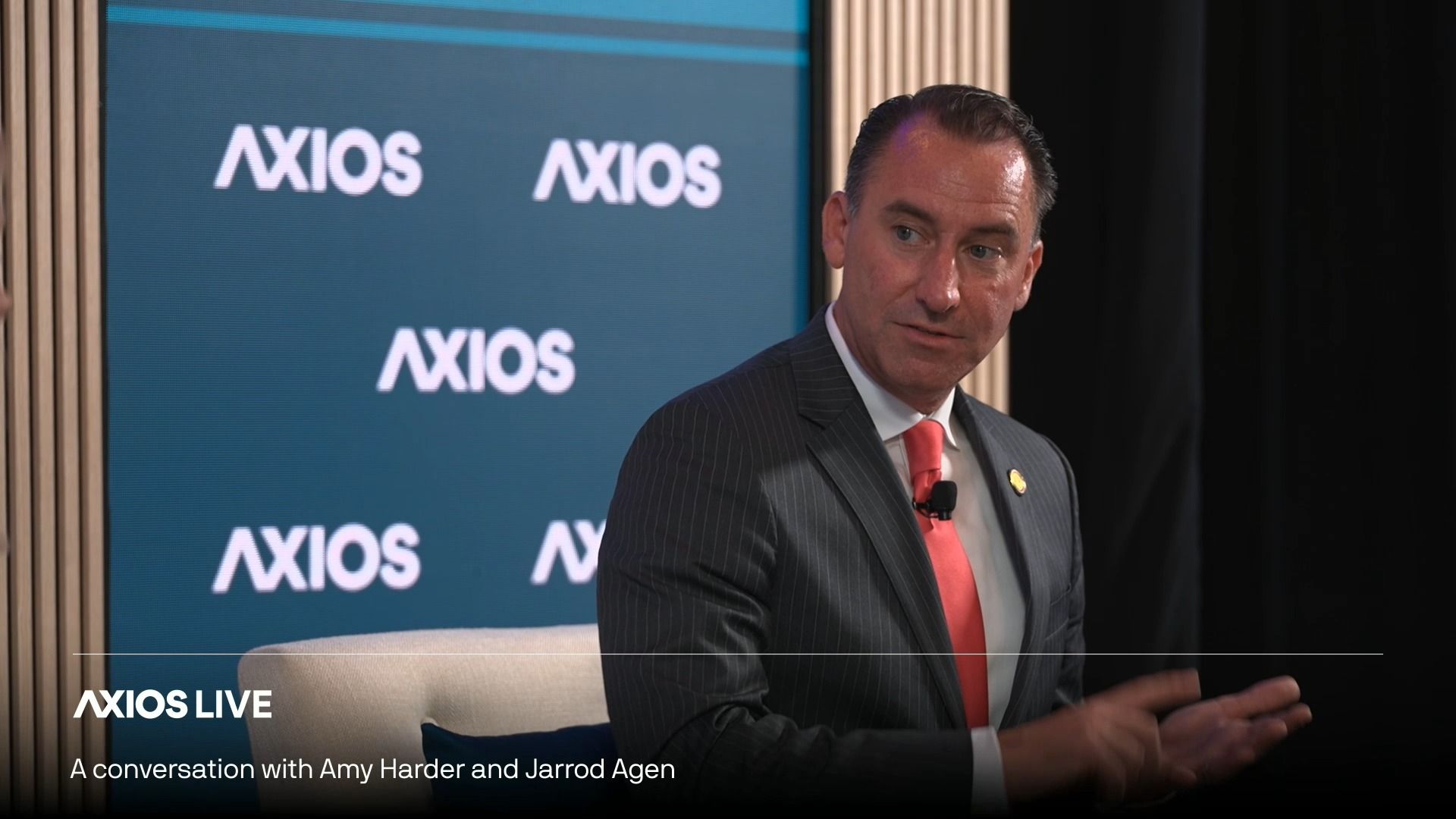
The affordability of gasoline remains "the top issue that the president looks at," Trump energy adviser Jarrod Agen said at an Axios House event Tuesday.
Why it matters: The Trump administration is championing energy savings from its deregulatory push as overseas conflicts, including the Iran war, rattle oil markets, driving up fuel costs and threatening an expensive winter for millions of households.
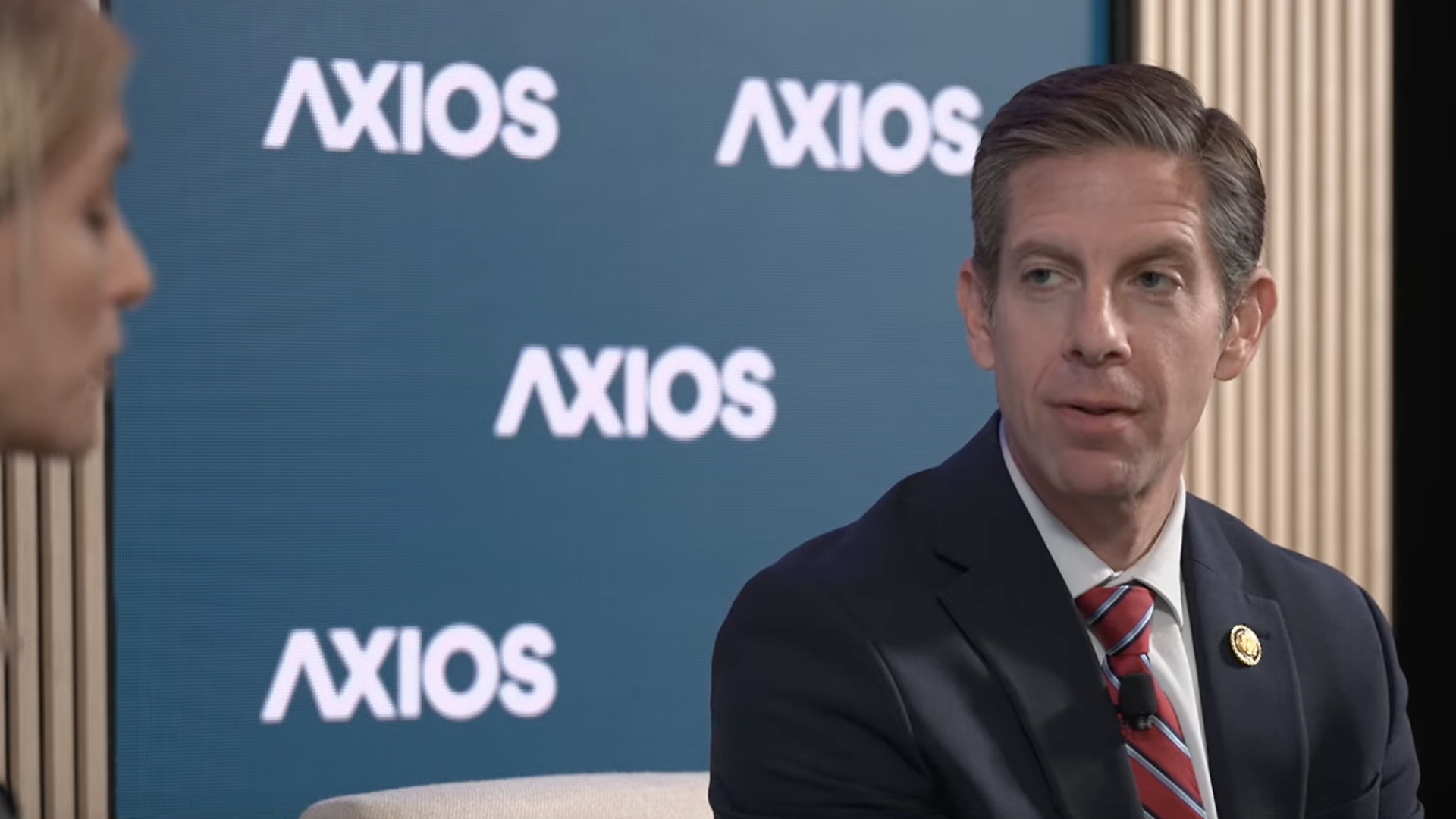
U.S. voters are tuned in to the idea that "their bills are too high," despite President Trump's promises to lower costs, Rep. Mike Levin (D-Calif.) said Tuesday while speaking at Axios House at Climate Week & UN General Assembly.
Why it matters: High gas prices stemming from the Iran War and lingering inflation are liabilities for Republicans heading into the midterms, where the party is trying to hold on to its congressional majorities.
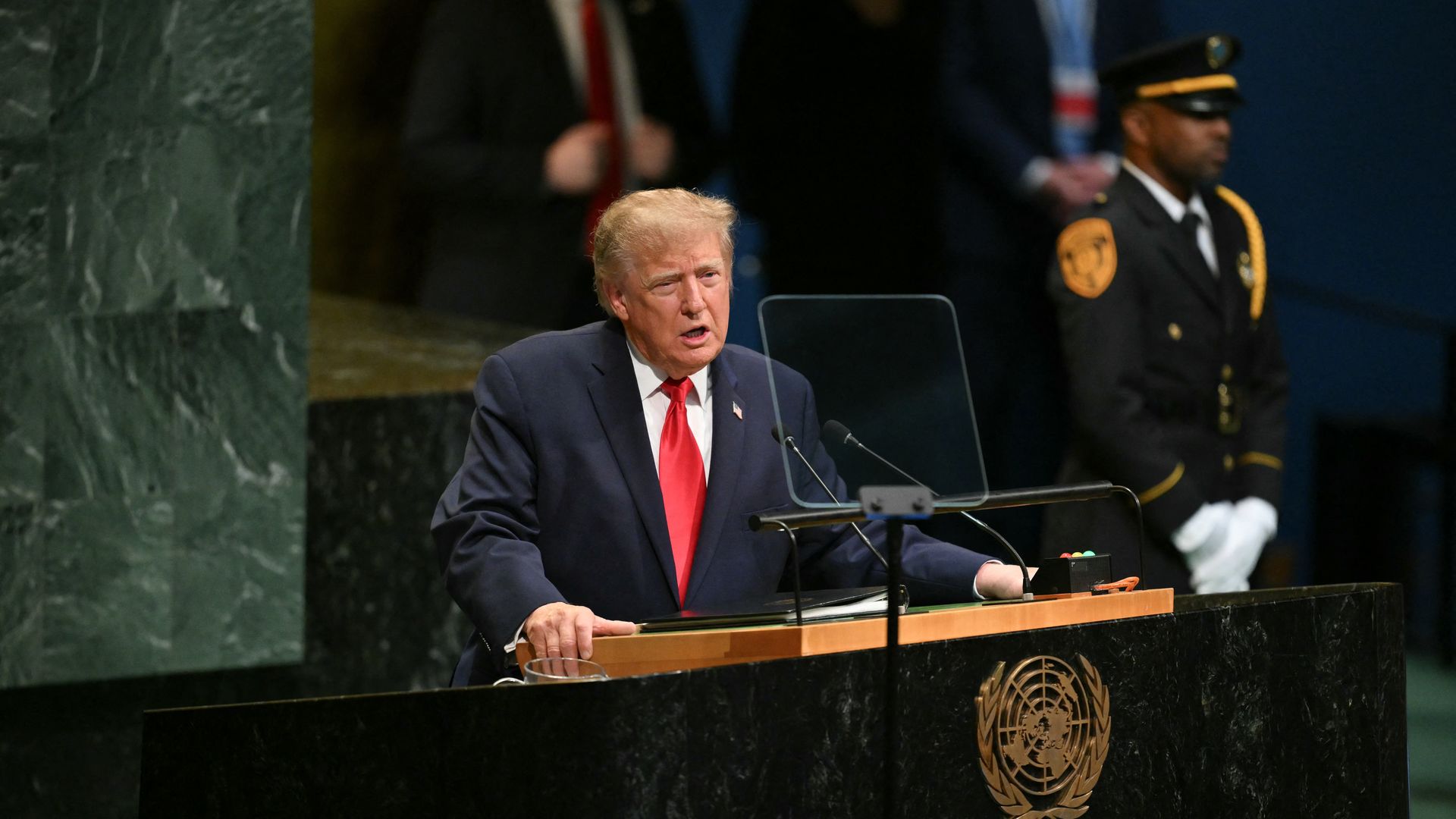
President Trump predicted Tuesday at the UN General Assembly that Iran and the U.S. will strike a deal after the midterms — his latest prediction after repeatedly claiming throughout the war that it was nearly over.
The big picture: The shadow of his Iran war — one that's scattered global supply chains — loomed large over Trump's speech to adversaries and allies alike. The ties with those allies are historically strained, taut from the pull of tariffs, conflict and Trump's threats.
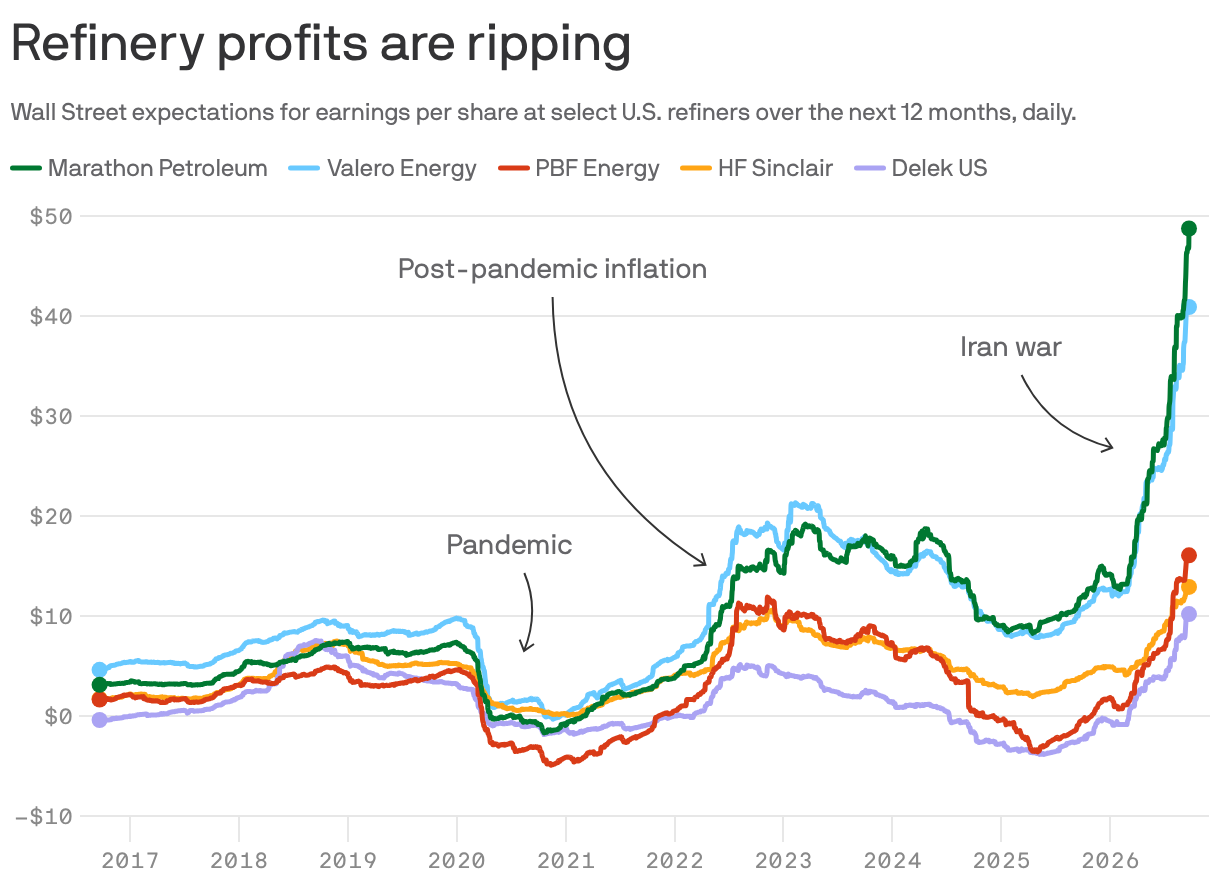
The global scramble to secure fuel supplies — diesel, above all — is supercharging profit expectations for refineries.
Why it matters: While painful at the pump, surging fuel prices have made refinery stocks a bright spot for the market.
Of the 126 subindustry groups represented in the S&P 500, oil and gas refining and marketing is by far the best performer of 2026, rising 145.4% through Friday's close, according to FactSet data.
A distinctly Cold War calculus is looming over this week's Trump-Xi summit in Washington, as the U.S. and China weigh an emergency "red phone" for the day AI goes haywire.
Why it matters: U.S.-China relations are so brittle that an AI hotline — not a trade pact, strategic slowdown or diplomatic reset — could emerge as the summit's most meaningful outcome.