Drones dominate as U.S. Air Force feels out the future

Add Axios as your preferred source to
see more of our stories on Google.
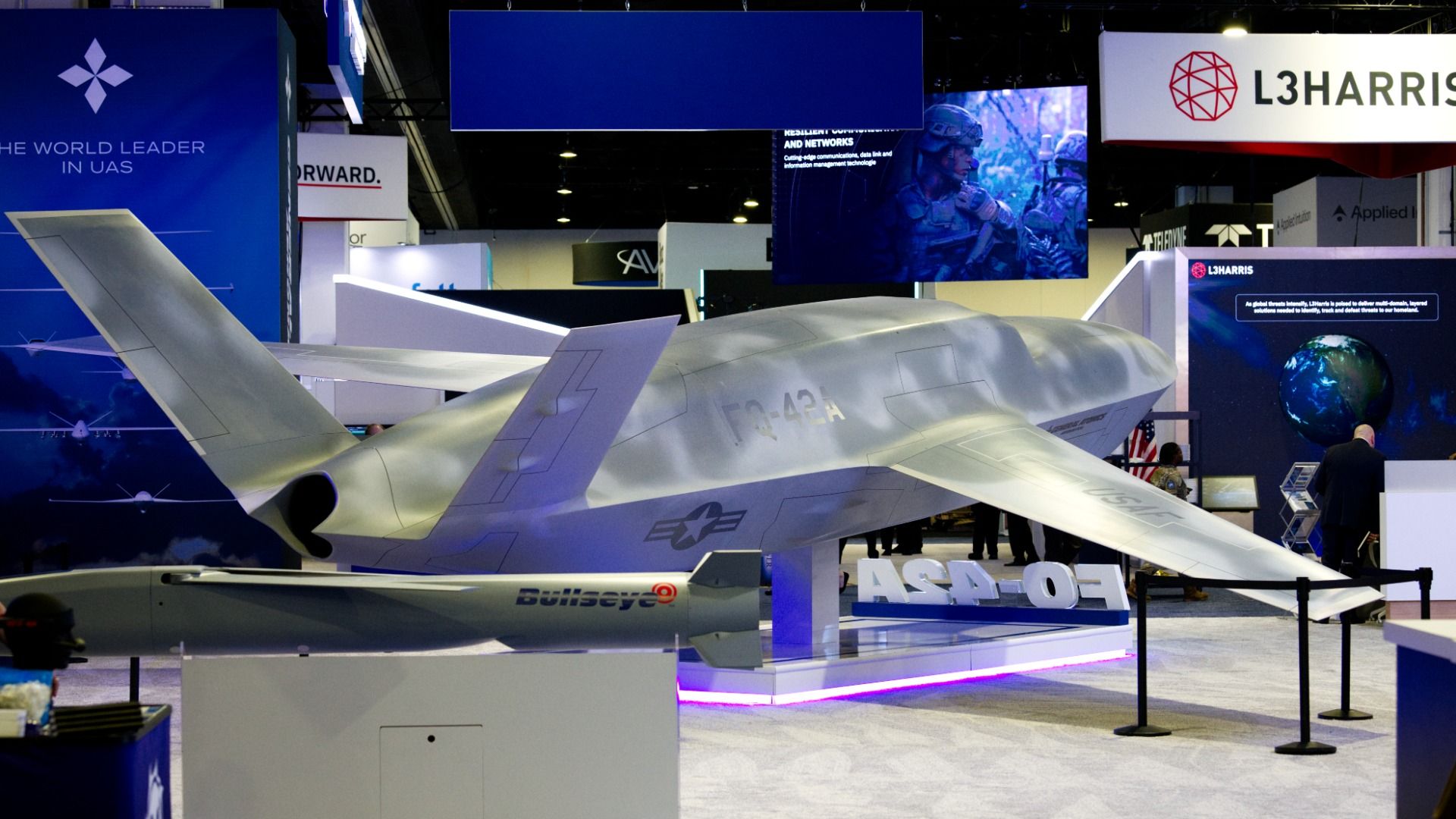
A view of the General Atomics booth, early Monday morning. Photo: Colin Demarest/Axios
Exploring the halls and hallways of the Air, Space & Cyber Conference south of the Capitol this week makes one thing clear: The drones are here, and they're here to stay.
Why it matters: War is changing, stimulated by smart-machinery assaults in Eastern Europe, bloody air-defense lessons in the Middle East and a marathon hardware-software competition with China.
- Pilots are being augmented by processors; cockpits are being swapped for cargo holds.
Driving the news: U.S. Air Force Secretary Troy Meink on Monday committed to having hundreds of these futuristic aircraft in hand in 2032.
- The service's arsenal will include Collaborative Combat Aircraft and Massed Modular Aircraft.
- The former effort seeks robo-wingmen for fighters, like Lockheed Martin's F-35 and Boeing's F-47. The latter, the newer of the two, seeks a cheap successor to General Atomics' MQ-9, a wildly successful drone beaten up in the Iran war.
- "When we pair manned aircraft with lower-cost autonomous systems, we will be able to unlock combat power at scale," Meink said.
Zoom in: Industry is jazzed. Some companies this week revealed new products, while others piled onto what was already public. Of note:
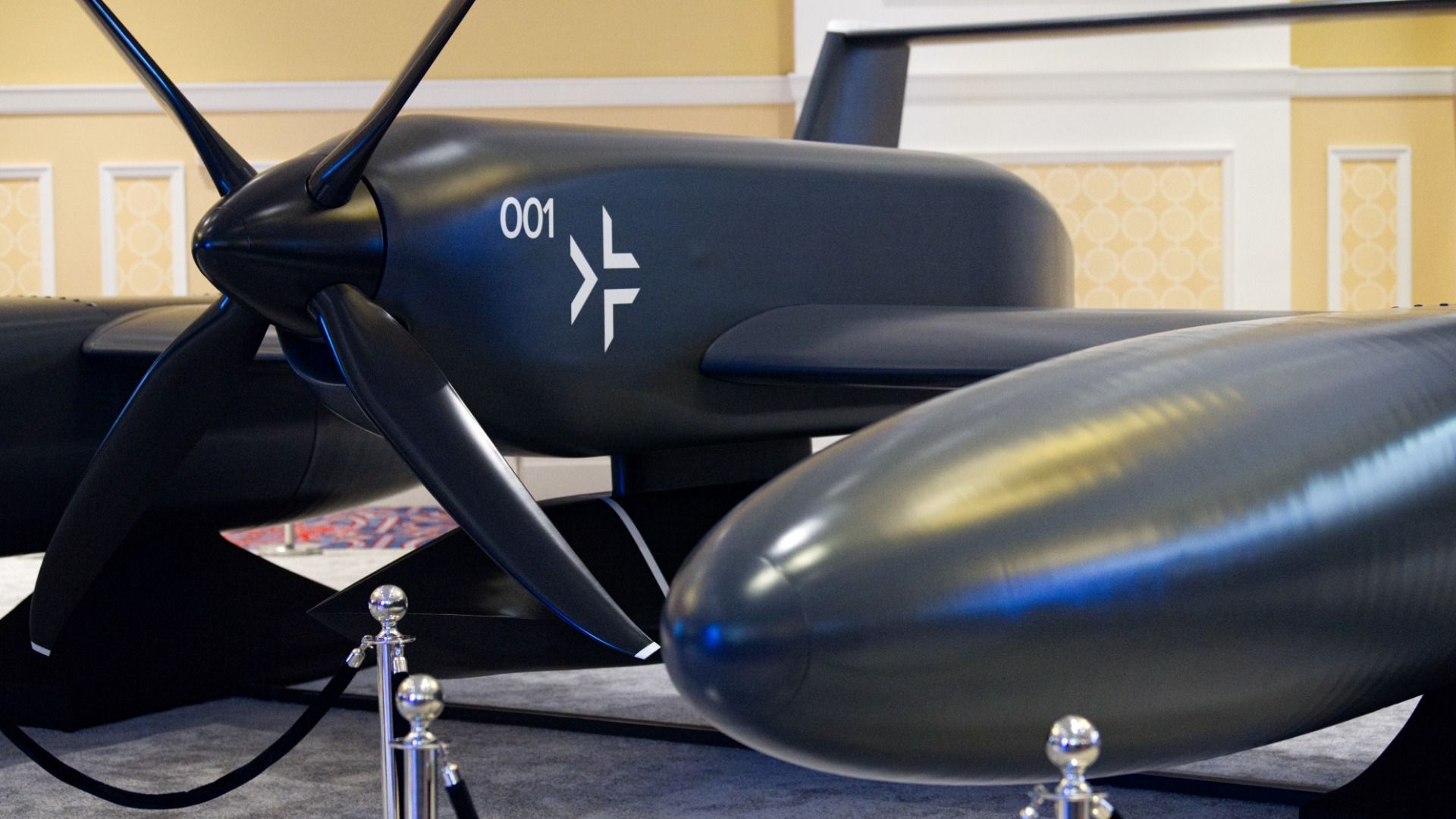
Swarm Aero lifted the curtain on Gamera, a Group 5 drone with a 72-foot wingspan, seven hardpoints and a turboprop engine. It will initially be built in California, with plans for future production in Arkansas.
- "The modularity allows us to do all the same missions the MQ-9 can do: sensing, electronic warfare, signals intelligence, communications relay, cargo and logistics," co-founder Oliver Palmer told Axios.
- "This is a first principles, ground-up build to optimize the overall swarm."
Merlin and Textron Aviation introduced the autonomous Cessna SkyCourier UX, designed with contested logistics in mind and expected to shuttle thousands of pounds of materiel loaded through a nose that flips up and open.
- "There's been a lot of wargaming that's happened over the past 12–24 months around, 'Hey, if we did have to go operate in areas where we don't necessarily control 10,000-foot runways, where would that break down?'" Merlin CEO Matt George told Axios.
- "The point is the customer shouldn't have to adapt their cargo to the aircraft. The aircraft should be capable of handling it."
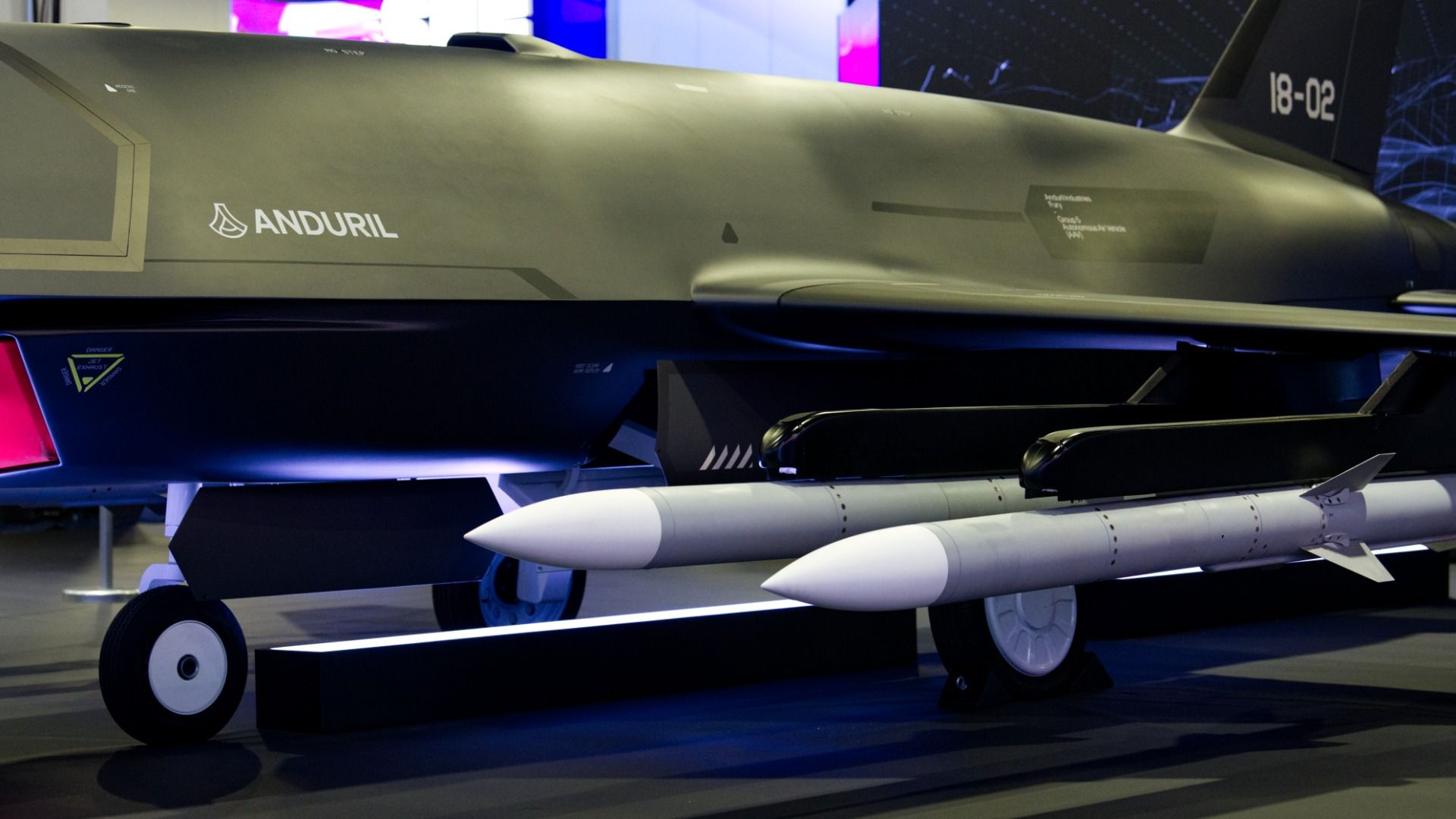
Anduril Industries revealed it's considering additional armaments for its FQ-44, including 500-pound guided bombs, low-cost cruise missiles, rocket pods and targeting pods. Some 150 aircraft could be produced annually at Arsenal-1, the mega-factory in Columbus, Ohio.
- "This is a pretty unique capability. The external storage makes it really fast to hot reload the aircraft," Jason Levin, senior vice president of air dominance and strike, told reporters.
- "We've already begun integration and fit-check on our aircraft with other munitions."
Lockheed Martin committed to building four more Vectis, bringing the total to five. The stealthy drones are roughly 34 feet long, 38 feet across and feature a submerged inlet. A full-scale model dominated the company's pavilion.
- "We've been building drones for a very long time," Ron Fehlen, Skunk Works vice president and general manager, told reporters.
- "We are on schedule to fly by the end of 2027, so we are extremely excited."
The bottom line: "Every booth that you go to, you see autonomous systems, something new," Matt Milas, president of defense and space at Honeywell Aerospace, told Axios.
Go deeper: For the Pentagon's drone push, the "factory is the weapon"
