Witkoff meets powerful UAE official amid crackdown on Iran

Add Axios as your preferred source to
see more of our stories on Google.
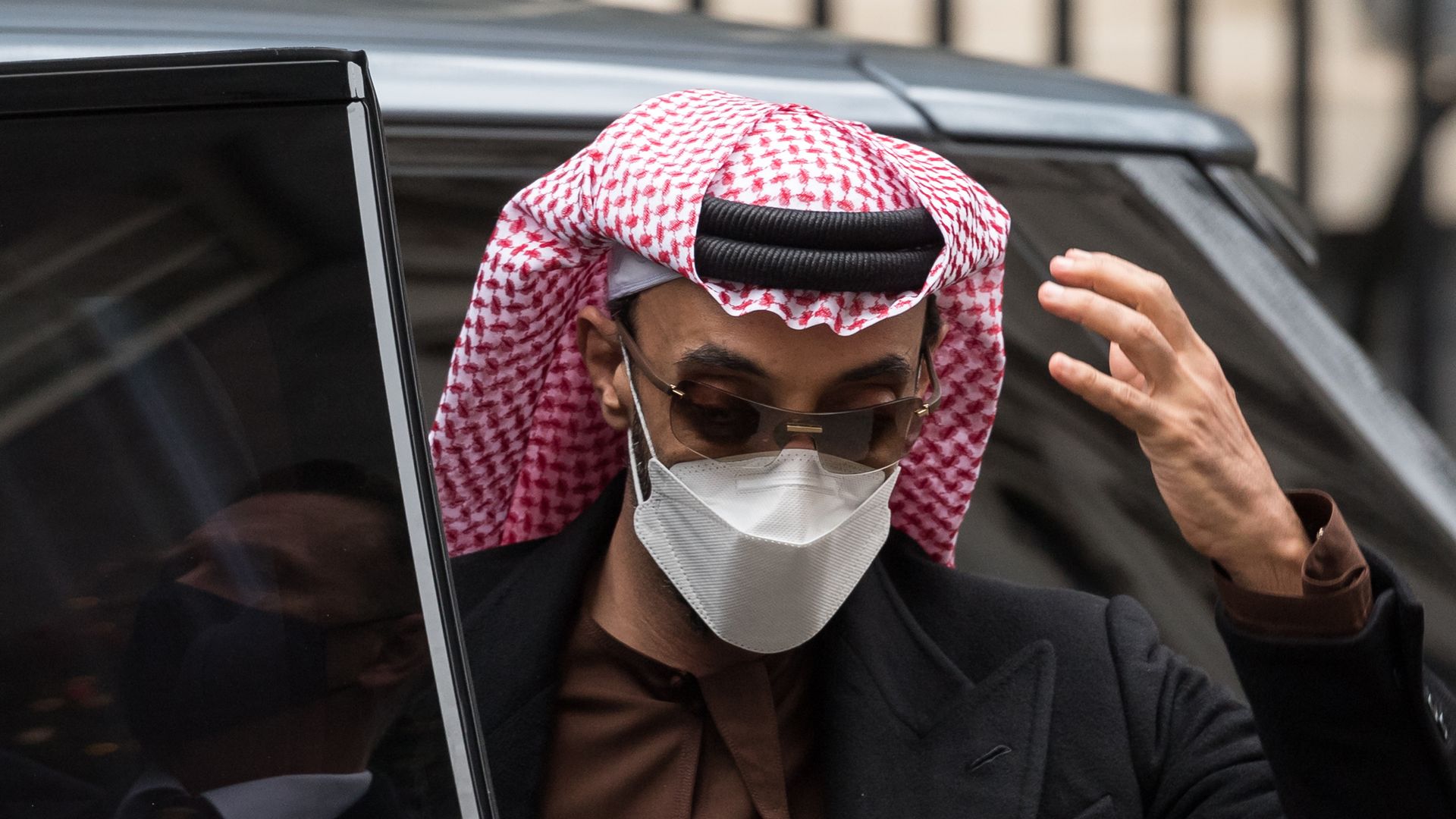
Sheikh Tahnoon Bin Zayed Al Nahyan, the UAE's national security adviser, in London in 2020. He met with Trump envoy Steve Witkoff last weekend. (Photo credit should read Wiktor Szymanowicz/Future Publishing via Getty Images)
White House Envoy Steve Witkoff met last weekend with the national security adviser of the United Arab Emirates to discuss next steps on Iran, according to two sources with knowledge of the meeting.
Why it matters: The talks, which weren't announced by the White House and haven't been reported until now, took place amid the Trump administration's push to reopen the Strait of Hormuz while choking Iran economically. Witkoff met with Sheikh Tahnoon Bin Zayed al Nahyan (TBZ) on the Mediterranean island of Sardinia.
- The UAE has been the key partner in the U.S.-led operation to reopen and guide oil tankers through the strait. It is also critical to the success of the U.S. economic pressure campaign against Iran.
- TBZ is one of the UAE's most powerful figures: He is the brother of President Mohammed bin Zayed, the country's national security adviser and deputy ruler of Abu Dhabi, and oversees the UAE's vast investment and technology interests.
- Witkoff and TBZ brainstormed next steps in the Iranian crisis and discussed other issues, the sources said.
- The White House didn't respond to a request for comment.
Driving the news: The meeting took place several days after Treasury Secretary Scott Bessent announced "Operation Economic Outcast" — a vow to level punishing sanctions on countries and entities that do business with the Islamic Republic.
- Bessent spoke to TBZ ahead of the announcement, according to a source with knowledge of the call.
- On the day of Witkoff's meeting with TBZ, the Treasury Department moved to cut off the UAE branches of Egypt's Banque Misr from the U.S. financial system over its business with Iran. The proposed action would block the bank's dollar transactions.
- The UAE central bank said it would conduct an "urgent examination" of the transactions that the Egyptian bank's branches had with Iran.
Zoom in: Several days before the Trump administration's sanctions announcement, the UAE decided to halt all trade, commercial exchange and financial transactions with Iran.
- It was a dramatic move because the UAE — primarily Dubai — had served as a major trading and re-export hub for Iran. Trade between the countries in 2024 reached $28 billion.
- A second source with knowledge of the matter said Emirati officials told the Trump administration that any economic pressure campaign against Iran must include all key countries that trade with the Islamic Republic in order for it to be effective.
Behind the scenes: The upcoming Trump administration secondary sanctions against Iran were a factor in the UAE's decision, but not the main reason, according to two sources with knowledge of the issue.
- On Aug. 11, an Iranian delegation visited Abu Dhabi for low-key diplomatic talks with Emirati officials, sources said.
- During the talks, the sources said, the Iranians said they wanted to deescalate and improve relations — after Iran had fired thousands of missiles and drones at the UAE during the war.
- The Iranians even asked the UAE for help securing food and medicine, and urged the Emiratis not to cooperate with U.S. sanctions — a request that was immediately rejected, the sources said.
- But in the following few days, the IRGC intensified its attacks on UAE national oil company tankers that tried to transit through the Strait of Hormuz.
- The Emiratis were furious and decided to suspend all business with Iran, the sources said.
What to watch: Secretary of State Marco Rubio earlier this week instructed all U.S. embassies around the world to send an official diplomatic demarche about Operation Economic Outcast to the most senior level of their host governments, U.S. officials said.
- U.S. embassies were told to demand that countries "immediately and systematically" sever all trade with Iran and identify illicit Iranian business activity.
- The U.S. demarche stressed that countries, companies and individuals that continue doing business with Iran risk being sanctioned and disconnected from the dollar system, the U.S. officials said.
- One of the officials said a special message was sent to U.S. diplomatic posts in Abu Dhabi, Muscat, Hong Kong, Doha, London, Berlin and several Central Asian capitals. The missive instructed them to demand that their host governments shut down all branches of Iran's Melli and Saderat banks that are affiliated with the IRGC.
What's next: The Trump administration is working to set up an interagency task force to coordinate the implementation and enforcement of the economic pressure campaign against Iran, the U.S. official said.
