
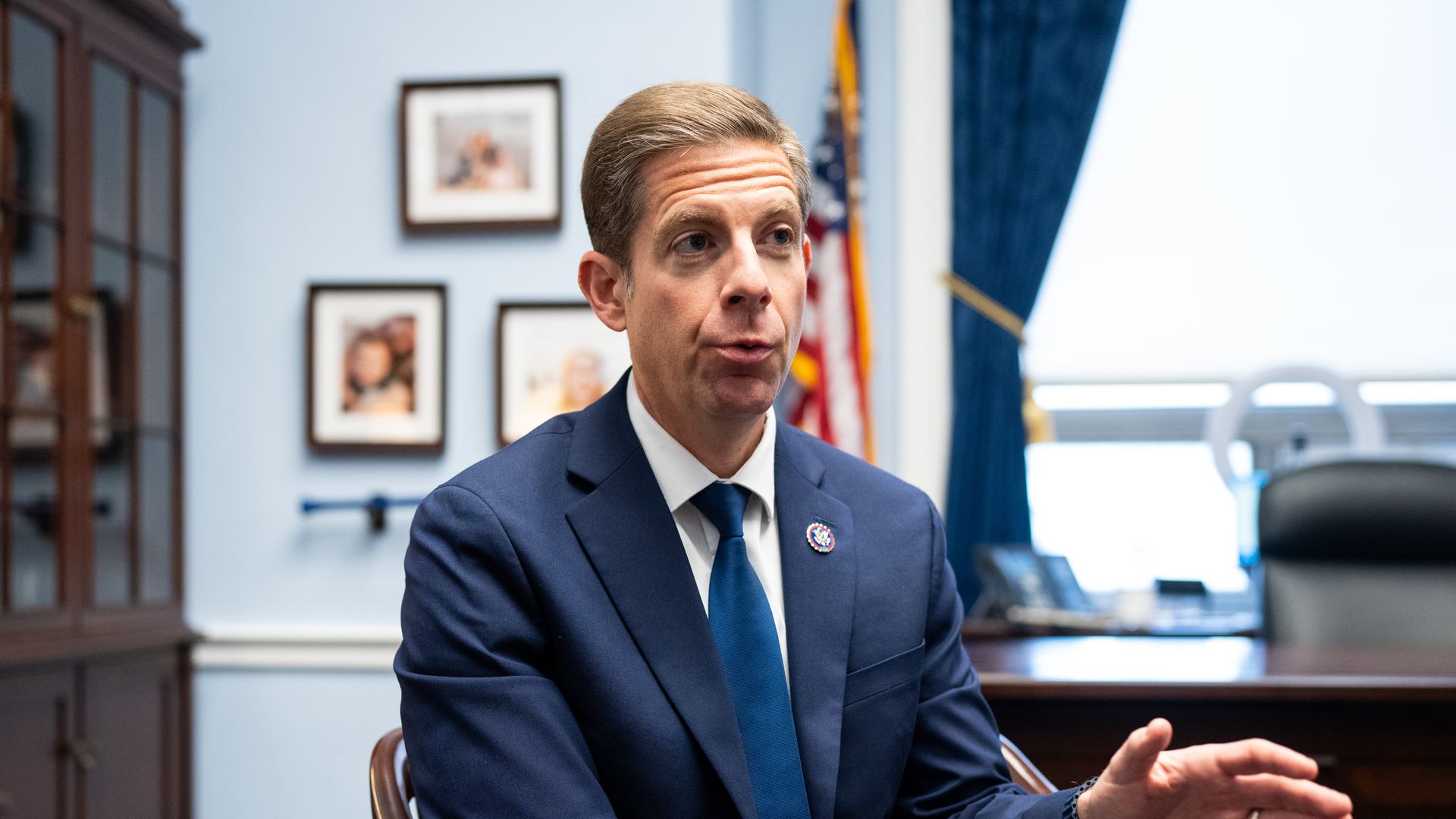
Levin in 2023. Photo: Bill Clark/CQ-Roll Call via Getty Images
Rep. Mike Levin is dropping a bipartisan bill today that would completely overhaul how the federal government handles spent nuclear fuel.
Why it matters: It's a fresh effort to find a solution to the nation's long-standing waste dilemma, drawing on years of outside recommendations and research.
Driving the news: The Nuclear Waste Administration Act, introduced with GOP cosponsor Rep. August Pfluger, would set up a new agency to handle siting and storage, taking that authority outside of DOE.
- It revives legislation first proposed by a bipartisan group of senators more than a decade ago, based on ideas from DOE's 2012 blue ribbon report on nuclear waste.
- "The real key is to insulate the management of spent nuclear fuel from the political process," Levin told Axios.
Zoom in: The new agency would be funded by a nuclear waste fee paid by utilities — and interest from the government's existing Nuclear Waste Fund —that could be made available without an annual appropriation from Congress.
- The bill would also explicitly authorize a consent-based siting process to build a permanent disposal facility.
Between the lines: DOE is going ahead with a consent-based approach for an interim storage facility for the commercial waste that's spread out across dozens of reactor sites around the country.
- Levin has led a charge to get that effort funded, and he said he's "pleased" with how it's gone so far.
- "But I think it would be far better to not have to have funding for spent nuclear fuel contingent on Congress passing annual government funding bills, which we all know is a struggle," he said.
What's next: Levin said he's had "ongoing" conversations about a potential Senate companion (Sen. Lisa Murkowski and others have been sponsors on previous iterations).
- "The hope is that we can grow bipartisan support through the end of the year and into the next Congress."
The bottom line: Congress has floundered on this issue since the demise of the Yucca Mountain repository. If this bill ever gets legs, it's a really big deal.
