Trump thumbs his nose at the American voter

Add Axios as your preferred source to
see more of our stories on Google.
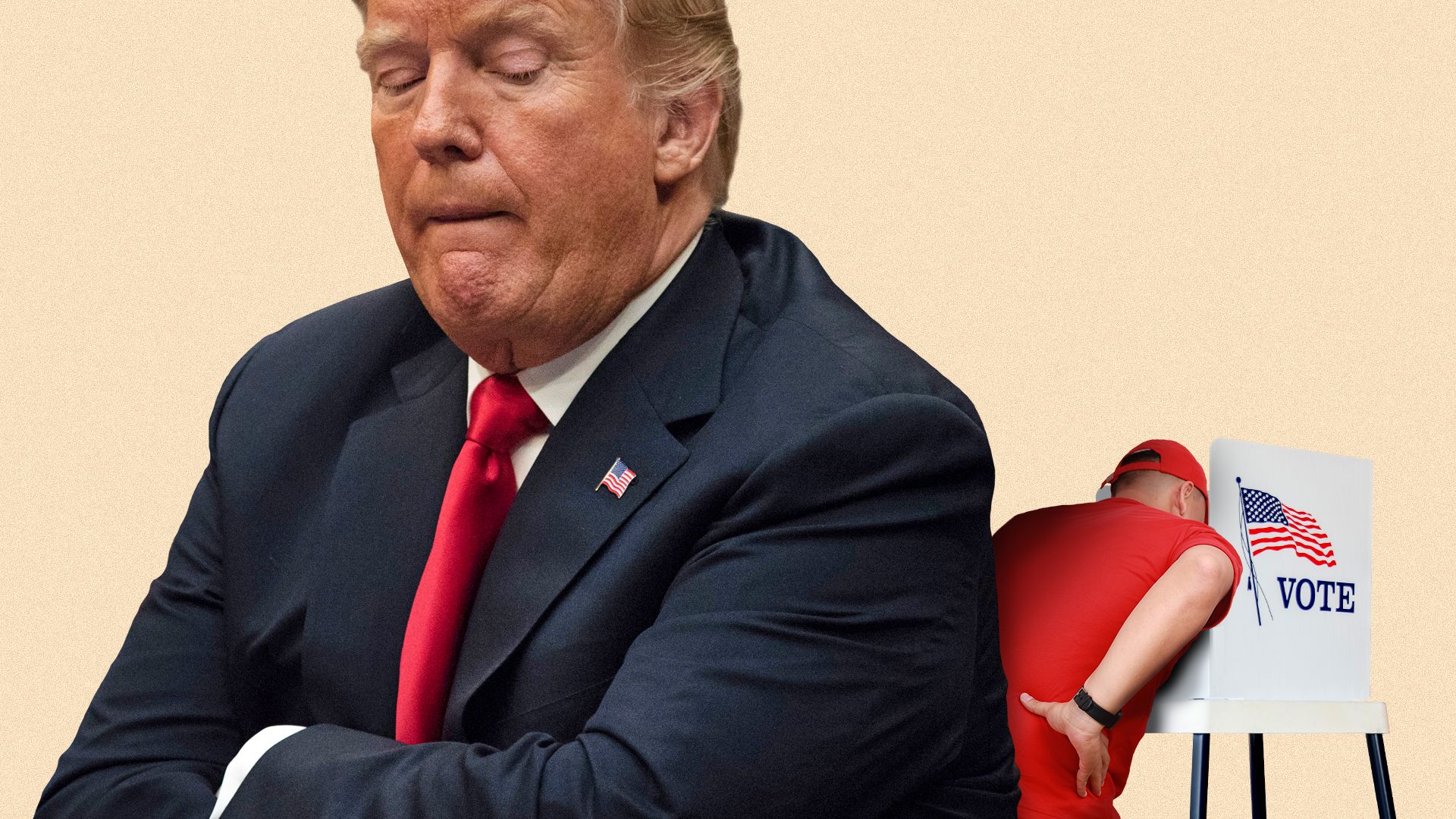
Photo illustration: Sarah Grillo/Axios. Photo: Calla Kessler/The Washington Post via Getty Images
When President Trump told AI moguls pleading for government regulation to take a hike, it was just the latest instance of him positioning himself directly at odds with voter sentiment.
Why it matters: Trump proved he could win the presidency twice without listening to polls or conventional wisdom. But his defiance on many of the things Americans care about most comes as voters are about to decide an election that could hobble the rest of his presidency.
The big picture: Trump the populist now finds himself on the wrong side of public opinion — on AI, the economy and the Iran war. And the worse his poll numbers get, the more he insists people agree with him.
Zoom in: Trump keeps touting AI, even as its own creators cast doubts about it and voters sour on it.
- "The only reason that communities throughout the U.S.A. should not want Data Centers is if they want to end up being backwards and poor," he wrote on Truth Social late last month. "If they want to be successful and rich, with far lower taxes and jobs all over the place, let Data Reign."
- He was just as colorful on Monday, after a weekend in which AI bosses practically begged his administration to help save humanity from the potential excesses of their product. He called the warnings a "HOAX" and claimed "there is a SICK conspiracy going on against AI and Data Centers."
- Meanwhile, only 1 in 9 Americans — 11 percent — say they'd want a data center built in their community, according to a UMass-Amherst poll out Monday. Even Republicans reject the projects by a 3-to-1 ratio.
- 57% of Americans gave Trump poor marks for his overall handling of AI — a 7-point increase since March — against 23 percent who approved.
Zoom out: AI isn't the only issue Trump has sided with the minority on.
- He's gone all-in on tariffs — insisting they don't cause inflation when many economists disagree. Only a third of adults approve of his handling of tariffs.
- He dismissed the Epstein files controversy as a "Democrat hoax" and resisted calls for the release of documents, before reversing himself. A June Quinnipiac poll showed 70 percent of voters believed Trump wasn't doing enough to hold Epstein's associates accountable.
But the most consequential break from public opinion was going to war in Iran.
- It was unpopular when it started and it's more unpopular now. On March 1, the day after attacks began, 48 percent of Americans opposed the conflict and 35 percent supported it, per Silver Bulletin's rolling average of polls. Those figures now: 56 percent against, 36 percent support.
Connecting the dots: The knock-on effects have battered Trump's standing with voters.
- The cost of food, gas and utilities has remained stubbornly high, as the war constricts the flow of oil out of the Gulf.
- Voters rank cost of living above every other concern: 48 percent said it would be the most important factor in how they vote in the midterms, up 9 points from January, per a Reuters/Ipsos poll out last month.
The other side: "President Trump's instincts have always been grounded in putting American workers, businesses, and communities first, and these instincts have helped deliver trillions in job-creating investments, a secure border, and the biggest drop in violent crime in American history," a White House spokesperson said in a statement.
The bottom line: Trump follows his instincts, not the polls, and it's worked for him more often than not.
- But going to war and embracing a technology most Americans resent puts those instincts to an unusually direct test.
