One of the most hyped token projects to come out of the heady days of 2017's crypto boom was the security project Quantstamp.
Driving the news: The U.S. Securities and Exchange Commission announced a $3.5 million deal Friday with the firm behind that project to settle allegations that its initial coin offering was a violation of U.S. securities laws.
Shares for Facebook parent Meta spiked roughly 5% in after-hours trading Wednesday, after the tech giant handily beat Wall Street expectations on revenue, earnings and user growth for the second quarter of the year.
Why it matters: Meta also issued positive guidance for the third quarter, giving investors a dose of optimism amid an otherwise mixed earnings season for ad-supported digital platforms.
Activision says it is getting ahead of a legal threat by suing the creator of a popular TikTok video after the company used audio from his clip in its own post.
Why it matters: Activision is testing the theory that repurposing content on TikTok is fair game, and not something it has to pay for.
Four leading AI providers this morning launched the Frontier Model Forum — an industry-led body aiming to ensure "safe and responsible development" of the most powerful AI models.
Anthropic, Google, Microsoft and OpenAI are the forum's founding members, but are inviting competitors and civil society organizations to partner.
Amazon expects generative AI to jolt its middle-aged Alexa voice assistant to new life.
Why it matters: The giant online seller sees the AI boom as a chance to dust off the more than half a billion devices that have Alexa built in and give them fresh relevance as delivery channels for the equivalent of a voice-enabled ChatGPT — and more.
The Senate moved Tuesday to require U.S. investors to notify the Treasury Department when they take stakes in Chinese companies in certain sectors, such as artificial intelligence and quantum computing.
Why it matters: The 91-6 vote is a barometer for how willing the Senate is to impose new rules for outbound investment, as both Congress and the White House explore ways to ensure that China’s military does not achieve a technological advantage over the U.S. and its allies.
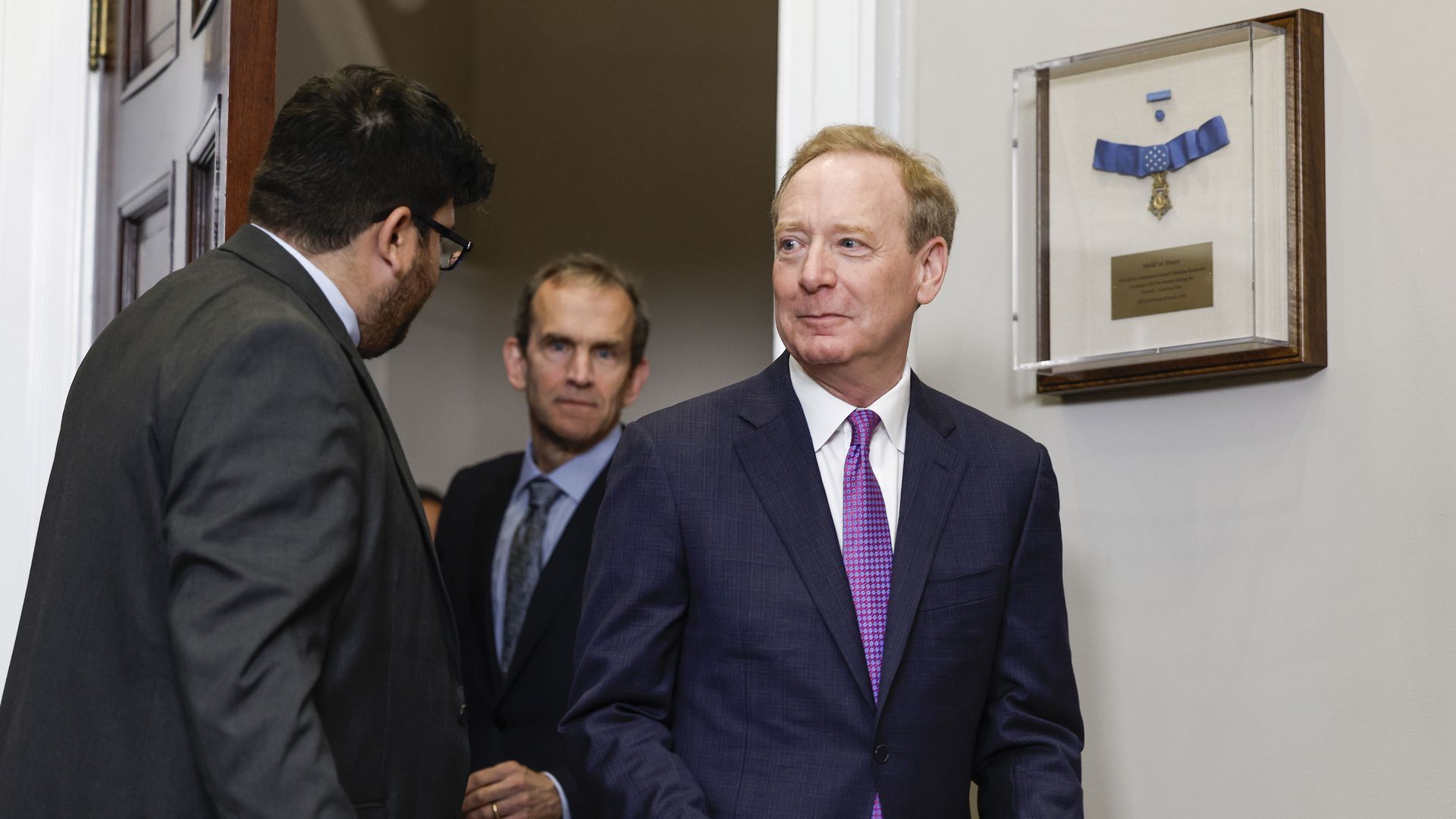
Continued growth in its cloud business and strong demand for generative AI features helped Microsoft's quarterly sales and earnings exceed Wall Street expectations, the software giant said Tuesday.
What they're saying: "Organizations are asking not only how, but how fast, they can apply this next generation of AI to address the biggest opportunities and challenges they face — safely and responsibly,” Microsoft CEO Satya Nadella said in a statement.
President Biden intends to nominate Harry Coker, a former NSA and CIA official, to be the next national cyber director, the White House announced Tuesday.
Why it matters: The position has been vacant for roughly five months after Chris Inglis, the first-ever national cyber director, stepped down in February.
The number of ransomware attacks more than doubled in June from the same month last year, fueled partly by a Russia-linked ransomware gang's exploitation of the MOVEit file-transfer tool, new data suggests.
By the numbers: In June, 456 companies were listed as victims across various dark web extortion sites run by ransomware gangs, according to recent research from cyber insurer Corvus.
An unknown nation-state appears to be laying the foundation for its next hacking campaign, but little is known yet about what its motivations may be and who's at risk, security researchers tell Axios.
What's happening: Researchers at Infoblox released new details Tuesday about a malware campaign they're calling Decoy Dog that has all the characteristics of a potential espionage campaign.
The “every VC fund is an AI fund” meme is starting to quickly become reality.
Driving the news: Andreessen Horowitz announced this morning the hiring of Anjney Midha. The Ubiquity6 co-founder and former CEO is joining the firm to lead its artificial intelligence investing efforts.
Elon Musk's bet-the-house, against-the-odds gamble on Twitter is about to get substantially riskier — with exponentially higher stakes.
Why it matters: Musk is obsessed with killing the Twitter name, and transforming the platform into a merger of a moneyless marketplace + public square + video content factory — his everything vision for an everything app.
Cigna Healthcare is facing a federal class action lawsuit which alleges the company used algorithms to "deny payments in batches of hundreds or thousands at a time," as part of an almost completely automated claims decision process.
The suit was filed in California's eastern district on Monday, alleging violations of California law, which require medical professionals to conduct "thorough, fair, and objective" reviews of insurance claims.
The most important question about AI right now isn't whether it will destroy humanity or become sentient — neither of which looks likely any time soon — but how its creators intend to profit from it.
What's happening: Investors are pumping AI-related valuations into the stratosphere. That means companies seeking "monetization" will start getting creative and aggressive about revenue any day now.
Move over, fake IDs: Biometric systems that can "read" a person's face or palm image and determine if they're too young for a beer are gaining traction at sports stadiums and liquor shops.
Why it matters: While these tools are handy for alcohol sellers — and can offer more privacy for consumers than handing over a driver's license to a store clerk — they tap into fears about potential abuses of facial recognition systems.