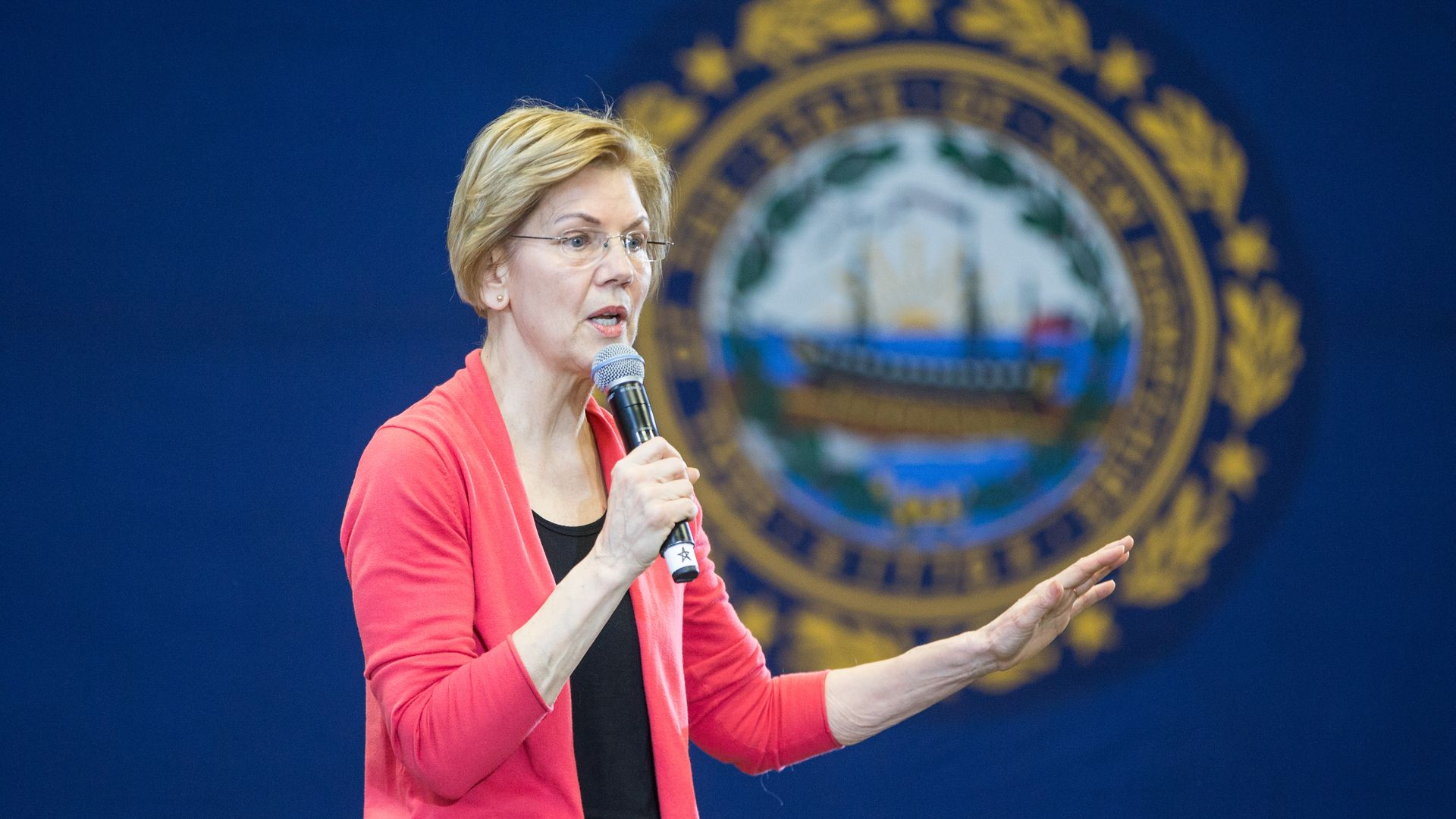
Sen. Elizabeth Warren (D-Mass.) has apologized to the Cherokee Nation for her controversial decision to take a DNA test to prove her Native American ancestry, The Intercept reports.
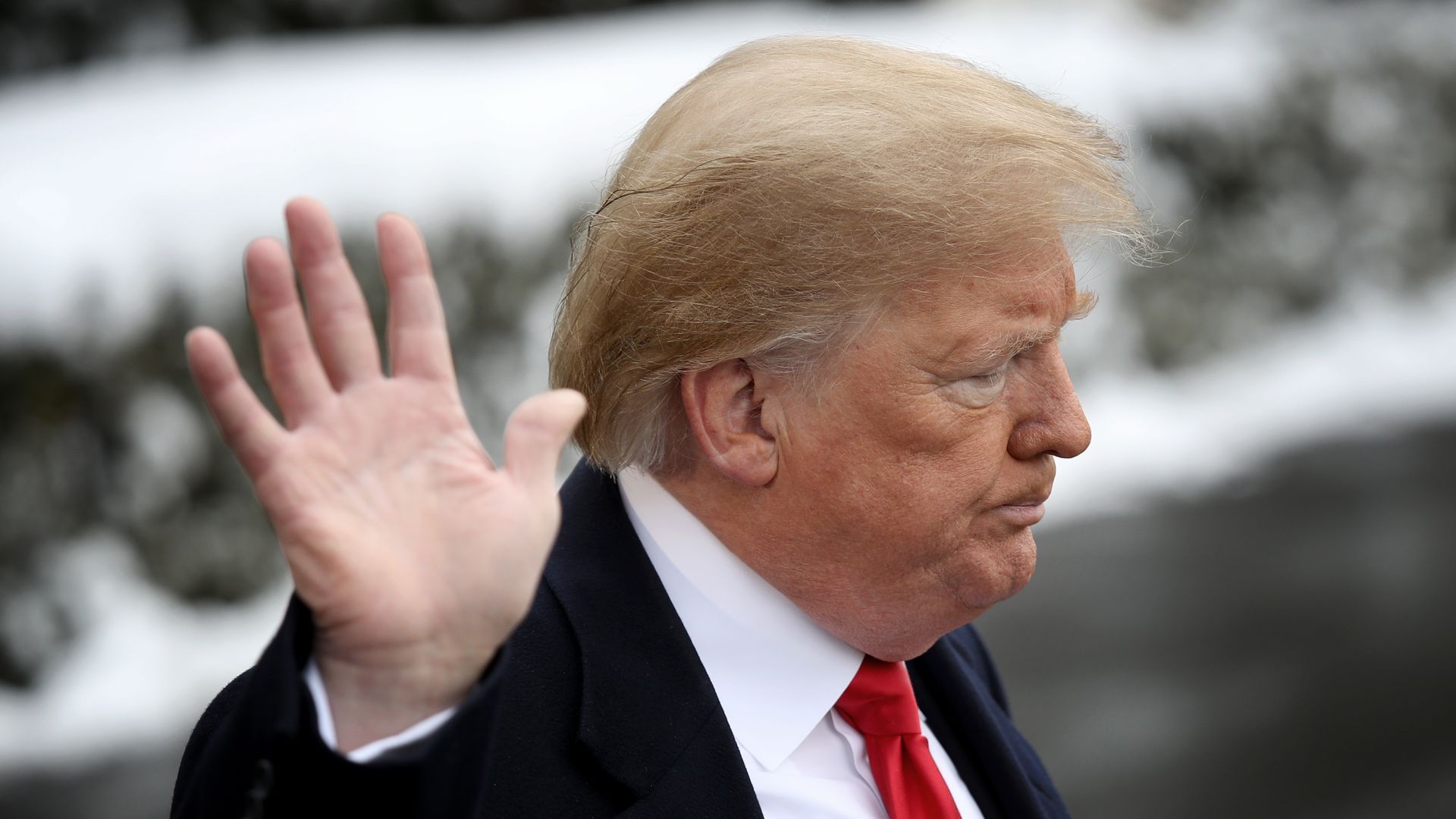
Why it matters: The apology comes days before Warren is expected to formally announce her decision to run for president in 2020, after having formed an exploratory committee in December. In an interview with the New York Times Thursday, President Trump said Warren has been "hurt very badly" by the DNA controversy, referring to it pejoratively as "the Pocahontas trap."
The U.S. has announced it will be withdrawing from Cold-War era Intermediate-Range Nuclear Forces Treaty with Russia that banned some nuclear and conventional ground-launched ballistic and cruise missiles, per the AP.
Driving the news: President Trump’s national security adviser John Bolton has long been warning a withdrawal was coming, and Russia and the U.S. just failed at another round of talks to work out differences — the U.S. says Russia has been deploying missiles that violate the deal for years. The U.S. will withdraw in six months unless Russia destroys "all of its violating missiles, launchers, and associated equipment," Trump said Friday.
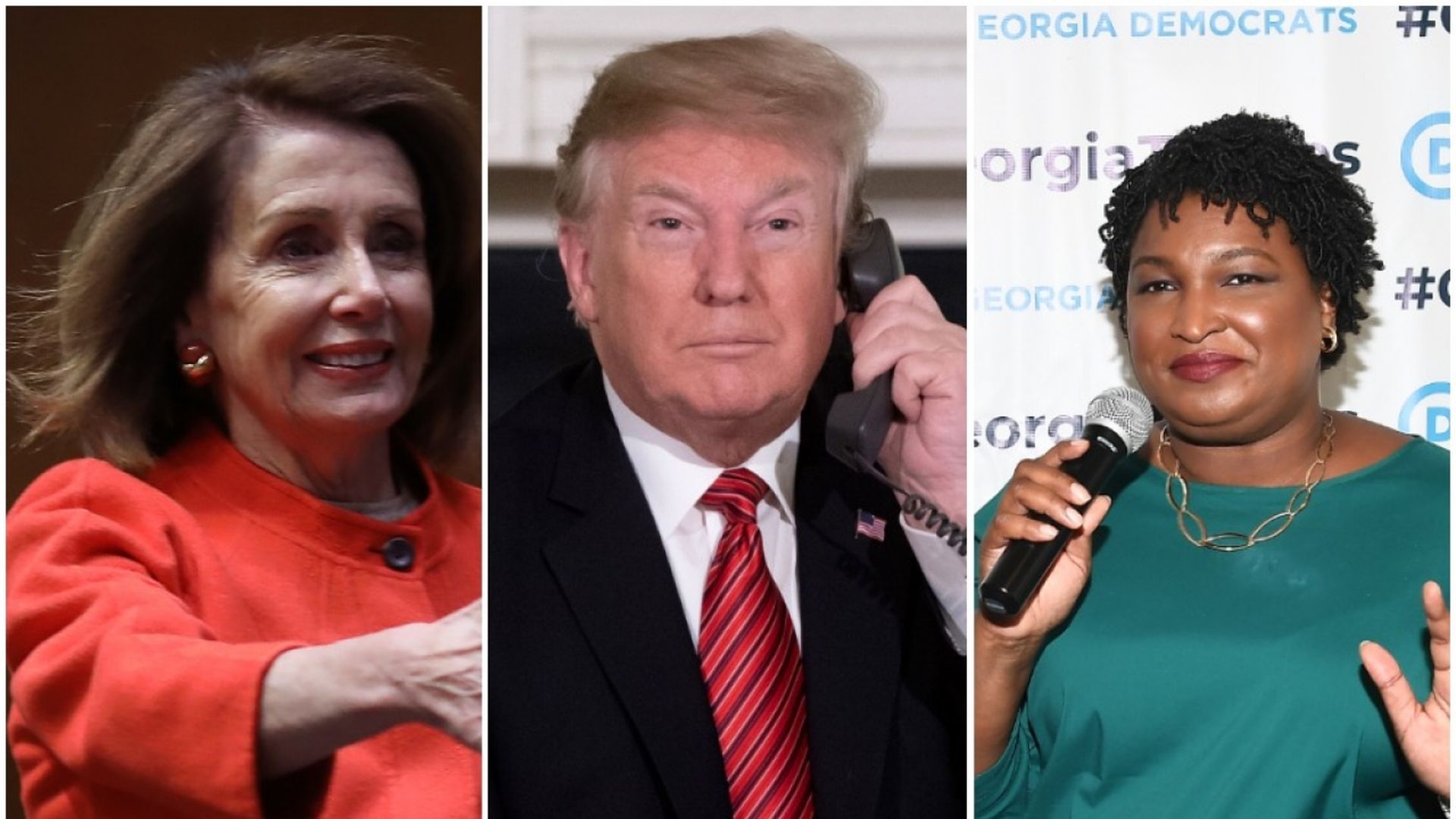
For President Trump's first State of the Union under divided government later this month, Democrats have invited female immigrants and former employees of his New Jersey golf club, as well as a black woman who ran a close race for governor of Georgia, Stacey Abrams, to deliver the Democrats' rebuttal.
The big picture:"[T]he striking visual is shaping up to be the new lawmakers who will be arrayed around the president and elected in the wake of Trump's inflammatory statements about women, immigrants, Muslims and more," AP Laurie Kellman writes.
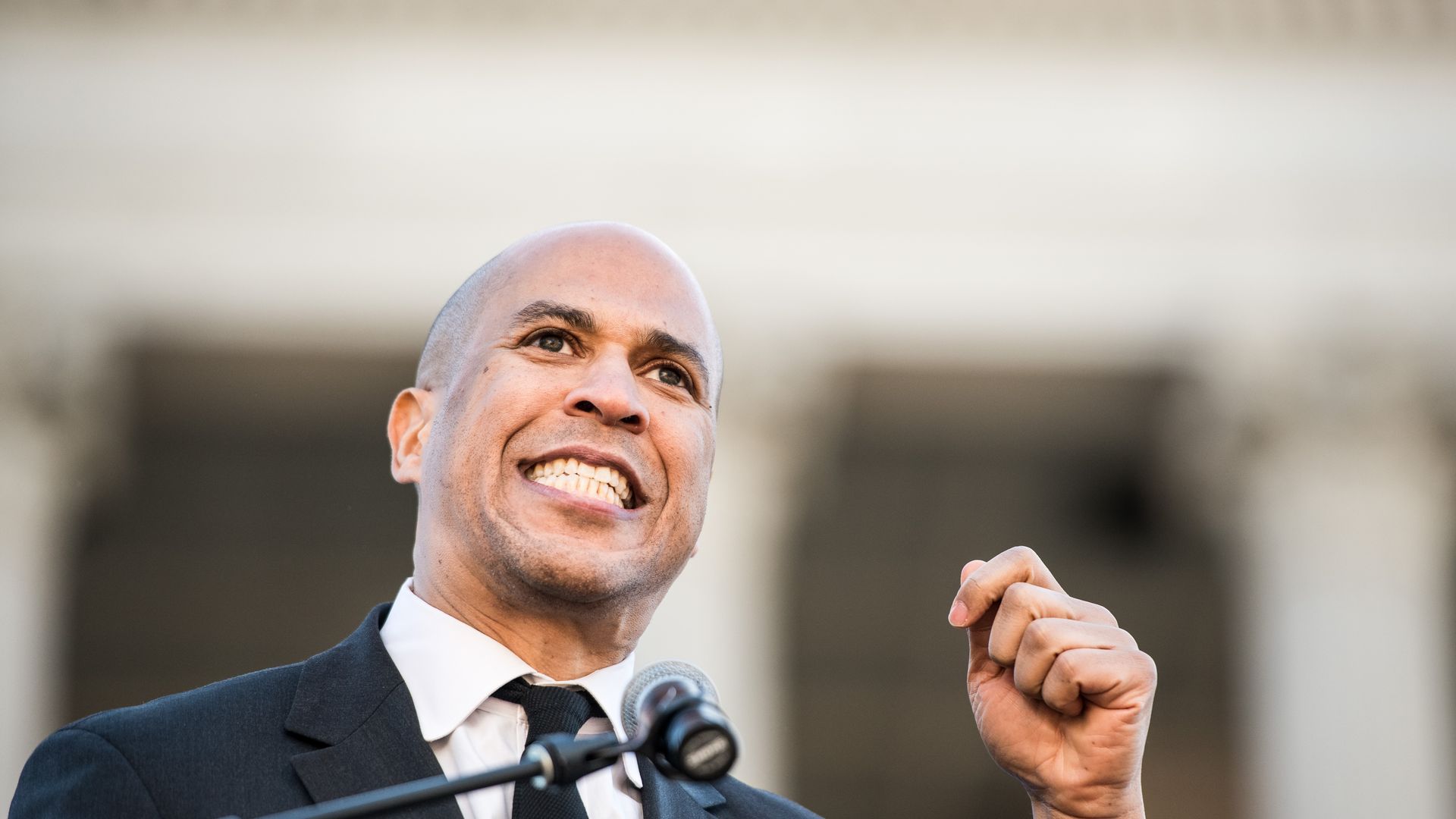
Sen. Cory Booker of New Jersey is entering the Democratic primaries for the 2020 presidential election.
The big picture: A not-small chunk of Senate Democrats are running or considering running for president, and Booker has been openly angling for a candidacy for a long time.
Over the past week, President Trump has asked friends and advisers how they think the shutdown has affected him politically and what he should be doing to recover his standing in Pennsylvania, Wisconsin and Michigan. Trump has also been polling these advisers on who they think will be the most formidable challenger to him in 2020.
Why it matters: Those three states delivered the presidency to Trump, but turned against him in the midterms. Several have told him that his biggest risk is a candidate like Joe Biden who they believe could sweep Trump out of the Rust Belt.
Over the first two years, President Trump could get away with largely extending his campaign bluster: Build a "big, beautiful wall" and get Mexico to pay for it, withdraw from foreign entanglements, deliver "incredible" healthcare, slash drug prices and fundamentally change the U.S.-China relationship.
Between the lines: Now he faces a new reality that's driven by Democrats in Congress and the need to deliver on his lofty promises.
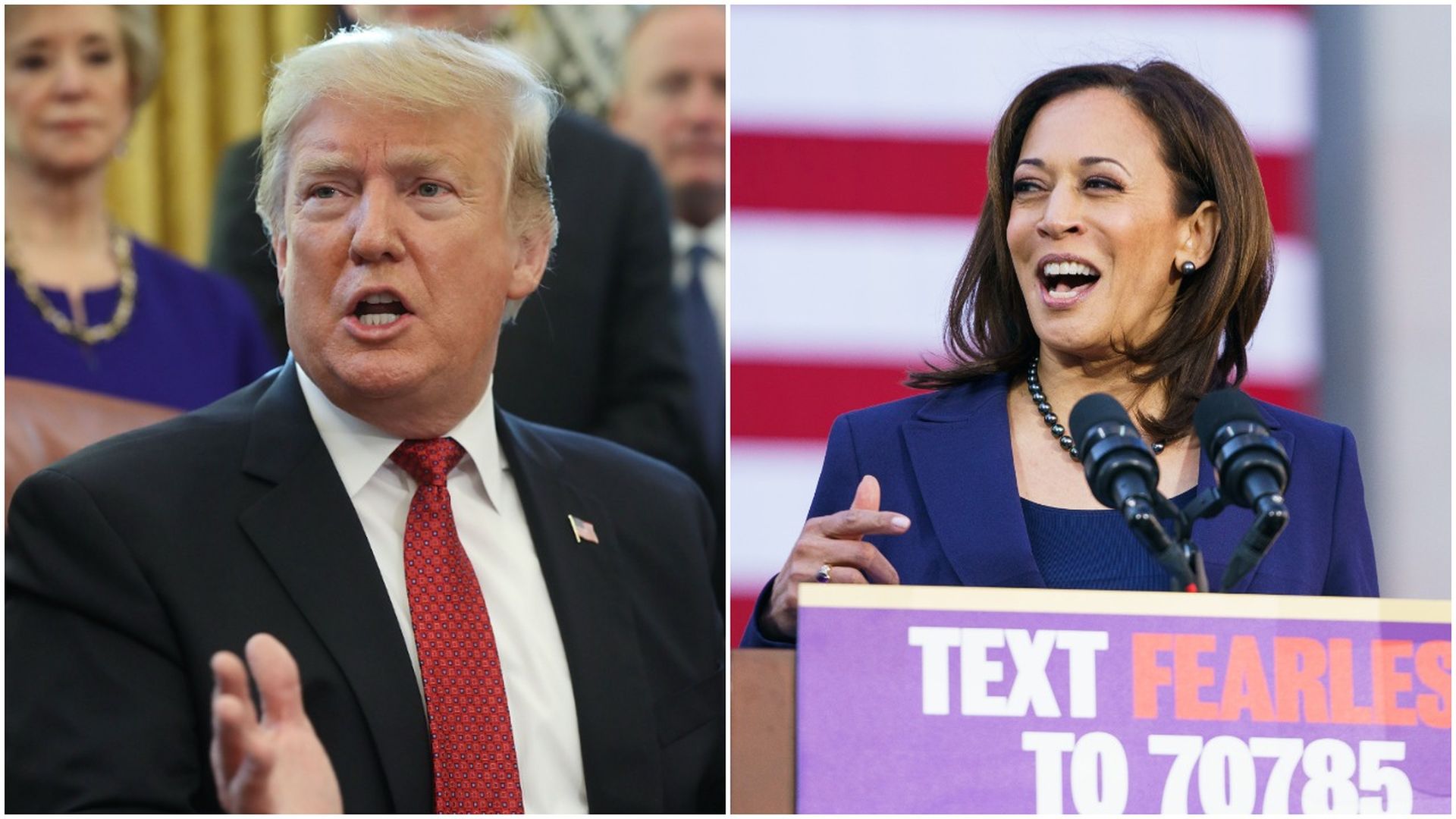
In a wide-ranging interview with the New York Times Thursday, President Trump said Sen. Kamala Harris has had the best "opening act" out of the Democrats who have signaled they will run for president in 2020.
The big picture: Trump said the Democratic party as a whole has “really drifted far left” and claimed Sen. Elizabeth Warren has been "hurt very badly with the Pocahontas trap," referring to her effort last year to prove she has Native American heritage. When asked about speculation that he may not run for re-election in 2020, Trump told the Times that he loves being president and that he doesn't see any viable Republican candidates who could challenge him in a primary.
President Trump told the New York Times in a wide-ranging interview that negotiations with Democratic lawmakers will have been "a waste of time" if House Speaker Nancy Pelosi doesn't provide funding for a border wall, and signaled that he has laid the groundwork for a national emergency if no deal is reached.
“I think Nancy Pelosi is hurting our country very badly by doing what’s she doing and, ultimately, I think I’ve set the table very nicely. ... I’ve set the table. I’ve set the stage for doing what I’m going to do."
Why it matters: There are two weeks until the Feb. 15 government shutdown deadline, and while the House and Senate have come together in a bipartisan conference to negotiate a border deal, both sides have drawn their red lines and don't seem to be budging. If Trump does move forward with an emergency declaration, it will likely trigger a legal challenge.
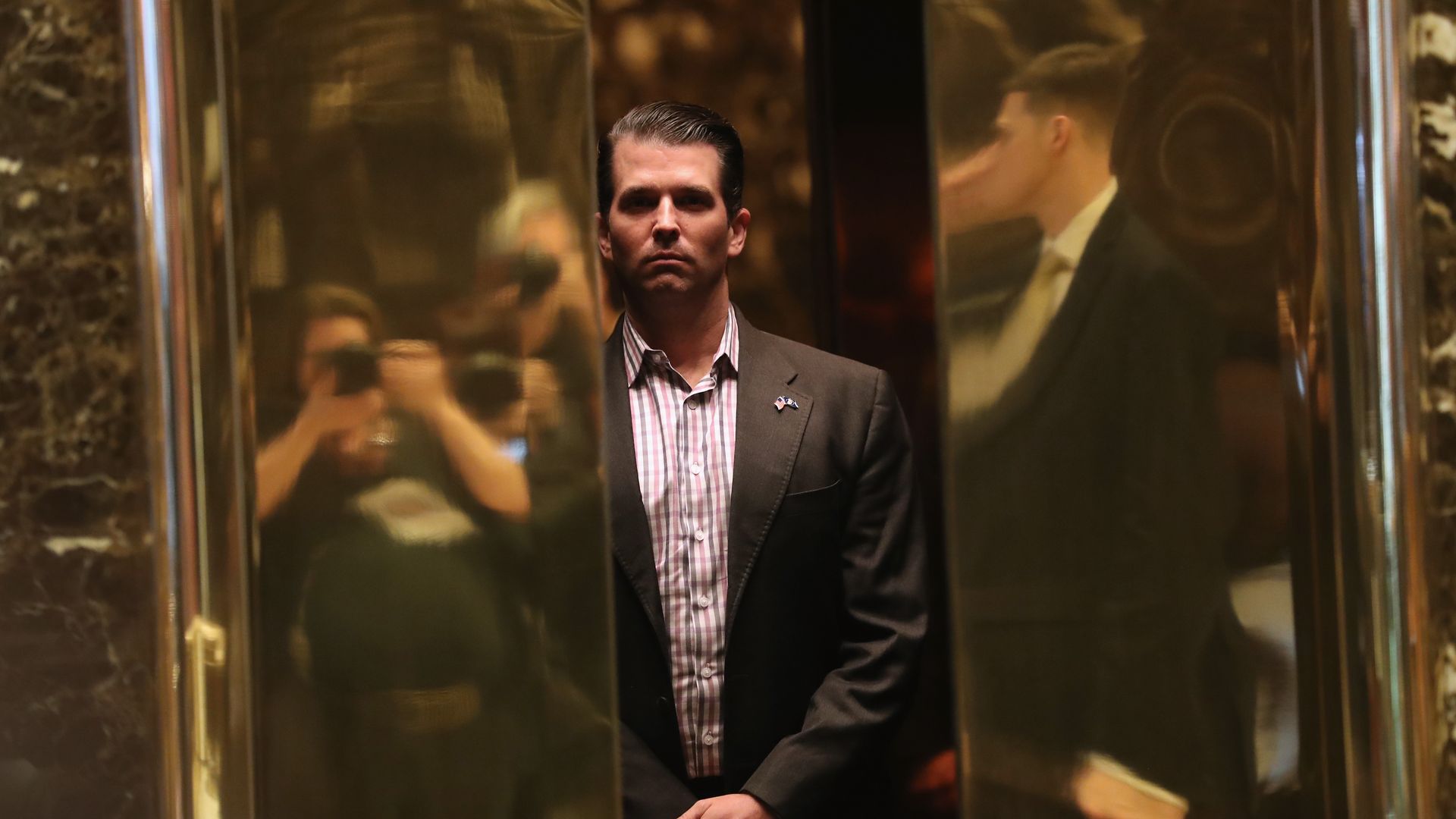
The Senate Intelligence Committee has obtained phone records showing that President Trump was not one of the blocked numbers his son Donald Trump Jr. called before and after the infamous June 2016 Trump Tower meeting, CNN first reported and ABC News later confirmed.
The big picture: Trump Jr. made phone calls to two blocked numbers the same day he spoke with Russian pop star Emin Agalarov, who helped set up a meeting three days later with a Kremlin-linked lawyer claiming to have dirt on Hillary Clinton. He made another phone call to a private number several hours after the meeting. There has long been speculation that the calls were to his father, and that then-candidate Trump had advanced knowledge of the meeting — an allegation he has denied.
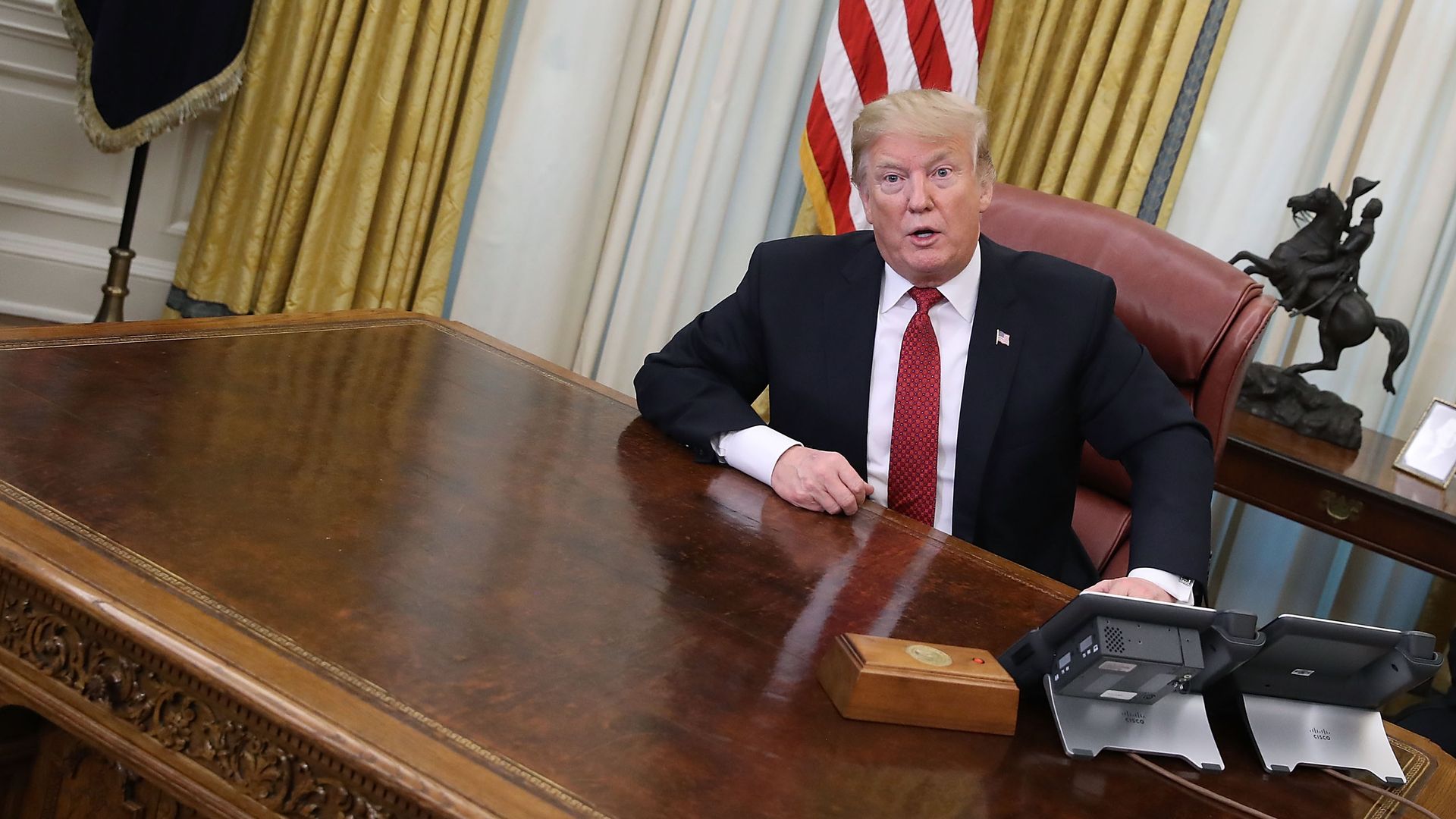
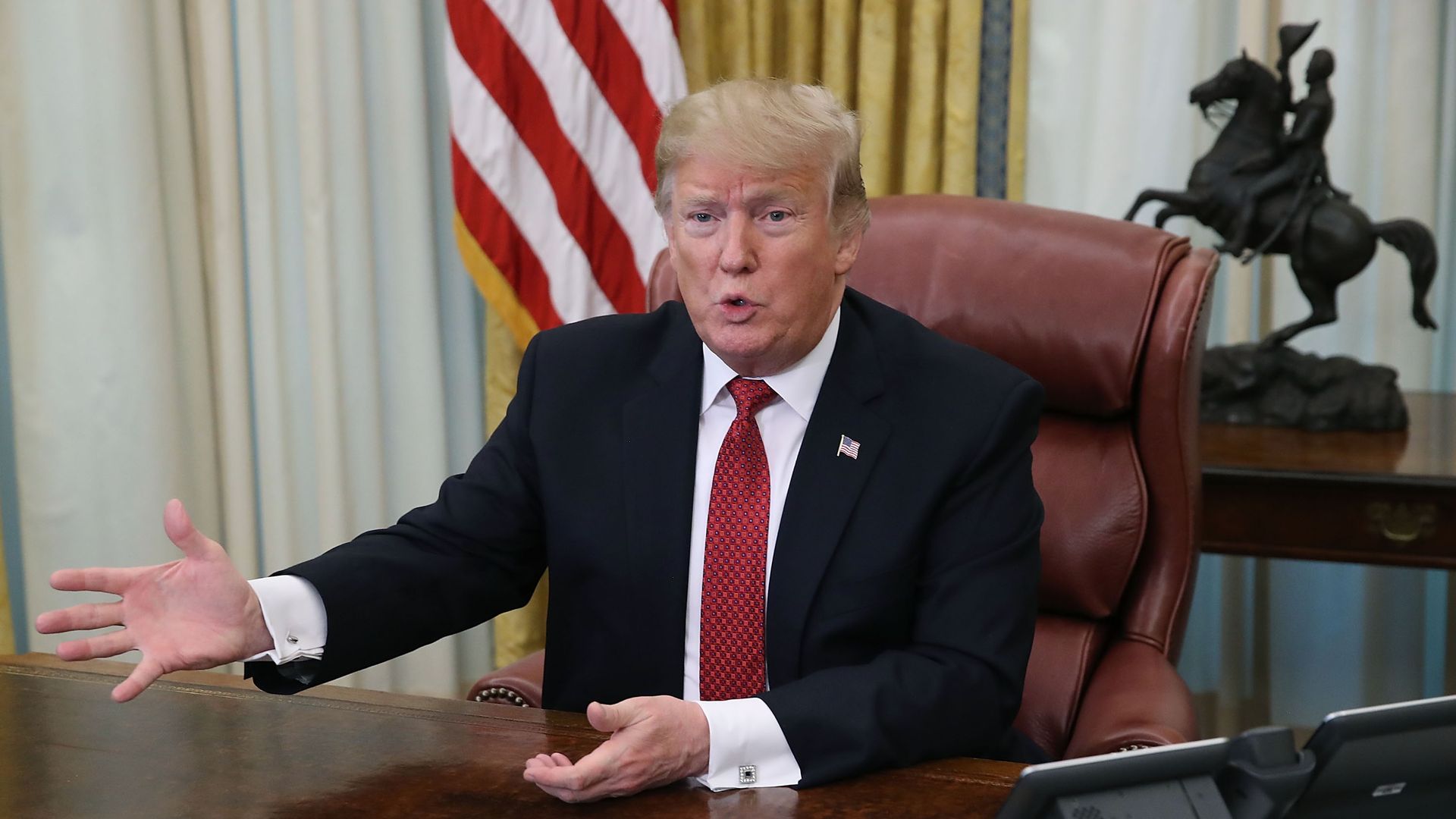
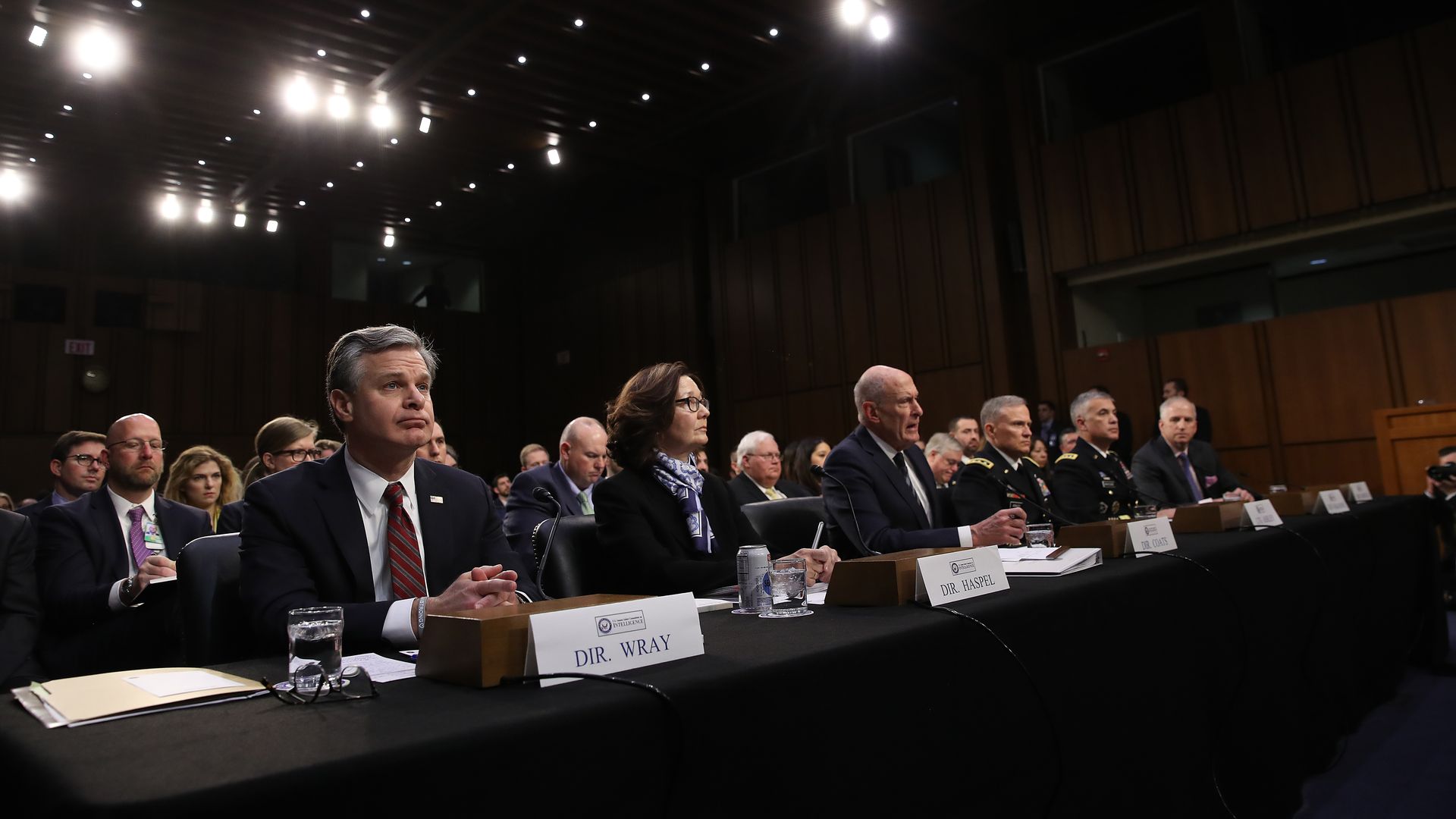
Asked in the Oval Office today if he trusts director of National Intelligence Dan Coats and CIA director Gina Haspel to give him good advice, President Trump said, “No, I disagree with certain things that they said,” adding, “time will prove me right.”
Driving the news: Coats, speaking for Haspel and four other intelligence chiefs arrayed on either side of him, said at a Senate hearing Tuesday that North Korea is unlikely to give up its nuclear weapons, ISIS is “intent on resurging,” Iran isn't currently pursuing a nuclear weapon and climate change is a national security threat.
After his intelligence officials contradicted President Trump multiple times in sworn, public testimony Tuesday before the Senate Intelligence Committee, Trump tweeted that their national security assessments were “wrong!” and that perhaps they “should go back to school.”
Why it matters: This is not the first time President Trump has cast doubt on the findings of the U.S. intelligence community, especially when they run counter to his interests or preconceived notions. Sen. Mark Warner (D-Va.), vice chair of the Senate Intelligence Committee, notes: "People risk their livesfor the intelligence he just tosses aside on Twitter."
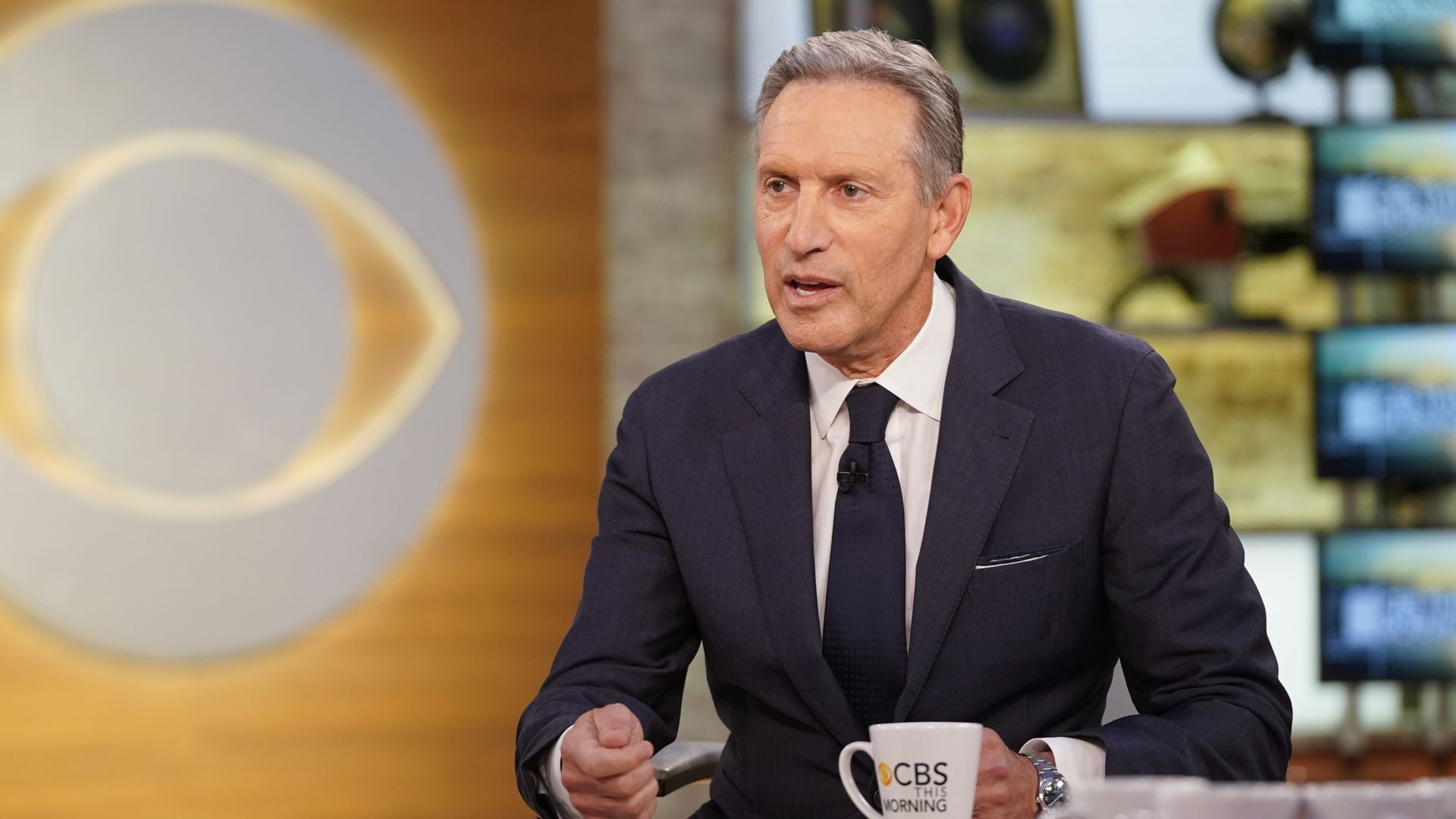
Priorities USA, a progressive group and the largest Democratic super PAC, is sending FOIA requests to nearly 70 different national and state agencies that either Howard Schultz or his corporate entities may have interacted with at any point between August 1987 and June 2018.
Why it matters: The group is gathering as much potential opposition research as they can on Schultz and his business in anticipation of his decision to possibly run for president as an independent. This is yet another example of liberals trying to push Schultz out of the 2020 race before he begins, in part because they view his candidacy as a "threat" that could be "a major step toward re-electing Donald Trump," Priorities USA communications director Josh Schwerin told Axios.
The Senate voted 68-23 Thursday to advance a measure opposing the withdrawal of U.S. troops from Syria and Afghanistan — an amendment added to a broader Middle East policy bill expected to easily pass the Senate next week.
Why it matters: In a rare show of defiance against Trump, a majority of Republican senators supported the measure, which undercuts the president's justification for withdrawing troops from Syria and possibly Afghanistan by declaring that the Islamic State, or ISIS, remains a serious threat in both countries. The vote comes more than a month after 56 senators approved a resolution to pull U.S. support from the Saudi-led coalition in the war in Yemen — another strong show of bipartisan opposition against Trump's isolationist foreign policy.
After the House-Senate Conference Committee met Wednesday to negotiate an immigration deal, House Democrats put forth a proposal that includes no funding for a physical barrier at the U.S./Mexico border.
Why it matters: Even though Democrats are offering hundreds of millions of dollars for things like border security technology and additional Customs and Border Protection (CBP) officers, Trump wants his wall and he's unlikely to approve anything without it — meaning we're either headed for another government shutdown on Feb. 15 or Trump will declare a national emergency to try to fund the border wall without Congress.
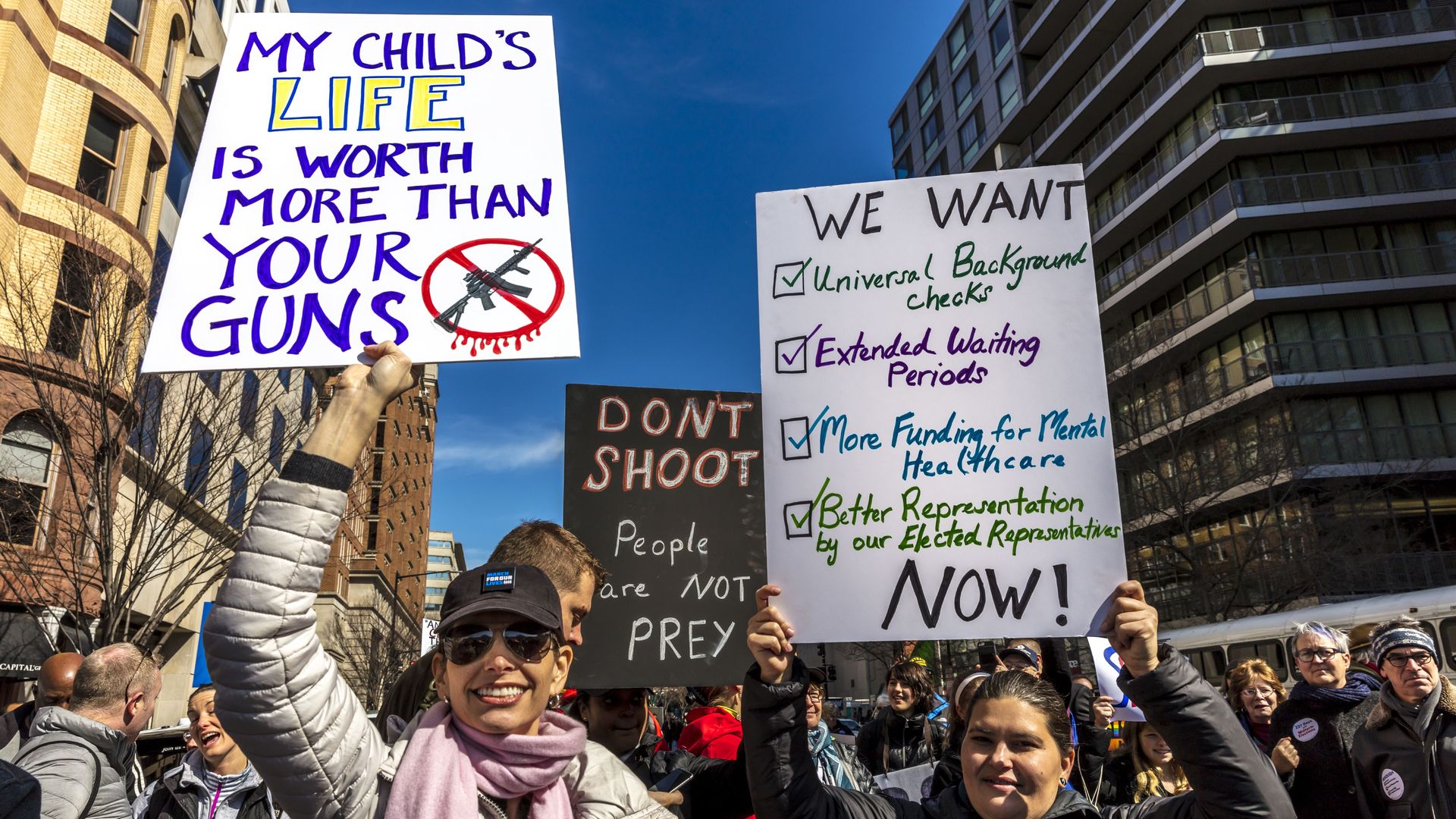
The House Judiciary Committee announced Wednesday that it will hold a hearing on gun violence prevention on Feb. 6, the first House hearing on the topic in eight years.
Why it matters: Gun control is a key issue for the House's new Democratic majority as its advocates poured a huge amount of cash into the 2018 midterm elections, ending the NRA's longstanding dominance in spending on gun politics. And that's translated to policy work, as earlier this month, a group of bipartisan House members introduced a bill that would require universal background checks for gun purchases. Rep. Mike Thompson (D-Calif.), the chair of the House Gun Violence Prevention Task Force, said the hearing announcement showed that Democrats were "answering the call of the American people."
The House on Wednesday failed to pass a symbolic resolution that condemned the use of government shutdowns as a negotiating tactic, with Republicans blocking the measure from gaining the two-thirds support necessary to pass.
Details: As Roll Call notes, a two-thirds majority was required because Democrats brought the resolution under suspension of the rules, which is usually used to pass non-controversial measures. Democrats amended the resolution to strip out language that referenced President Trump's role in the recent 35-day shutdown, but Republicans nonetheless rejected it as a "political stunt" and a "glorified press release."
The Department of Homeland Security posted a final rule on Wednesday that will further favor applicants of the H-1B high-skilled visa who have more than a Bachelor's degree and require them to pre-register electronically with U.S. Citizenship and Immigration Services before submitting their H-1B application.
Why it matters: The new system would make it statistically more likely for someone with a Master's degree from a U.S. university to receive an H-1B over those without their Master's or with one from a foreign university. The pre-registration system would ideally limit the paperwork USCIS has to go though, and will not be required until fiscal year 2020.