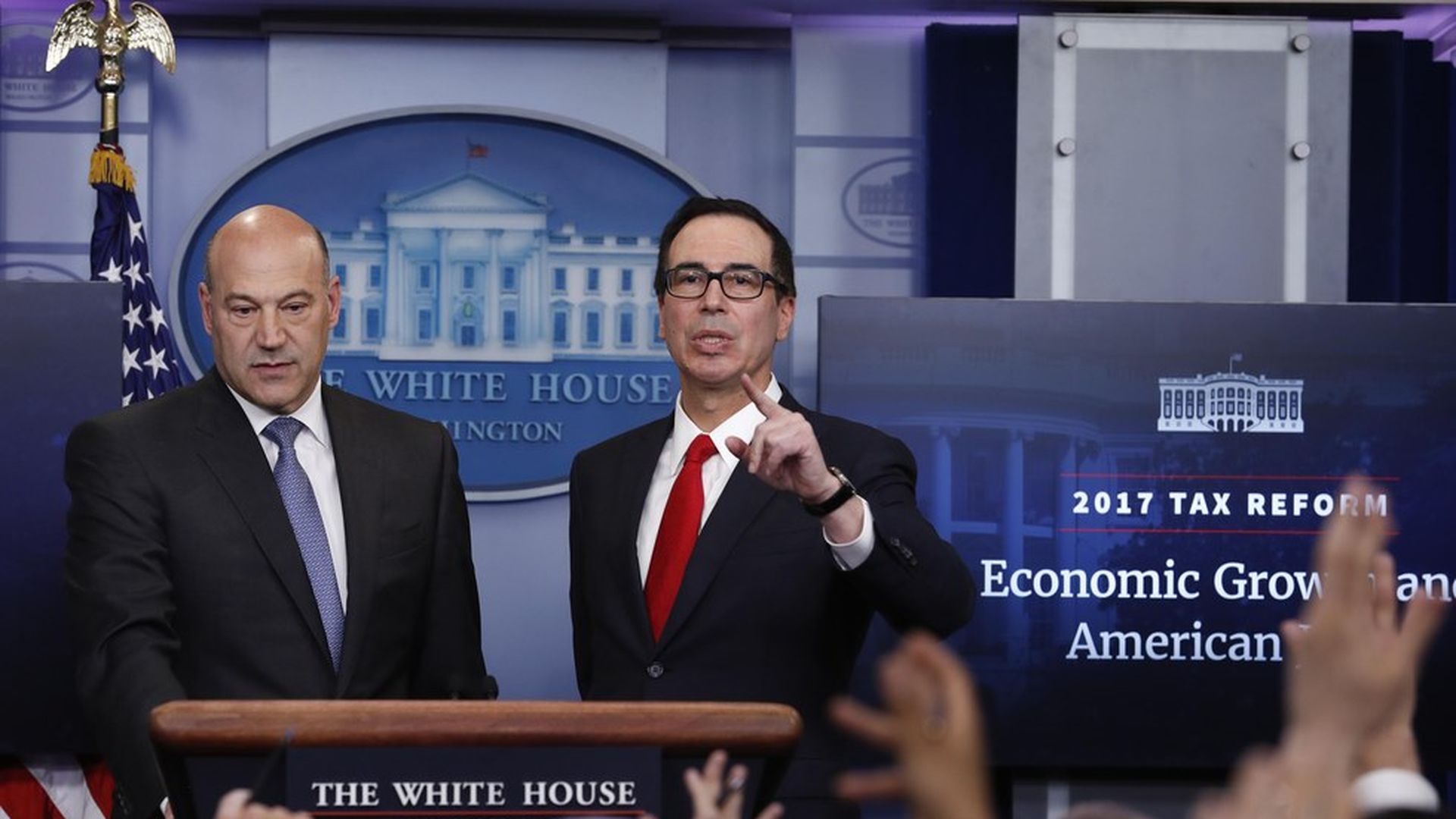
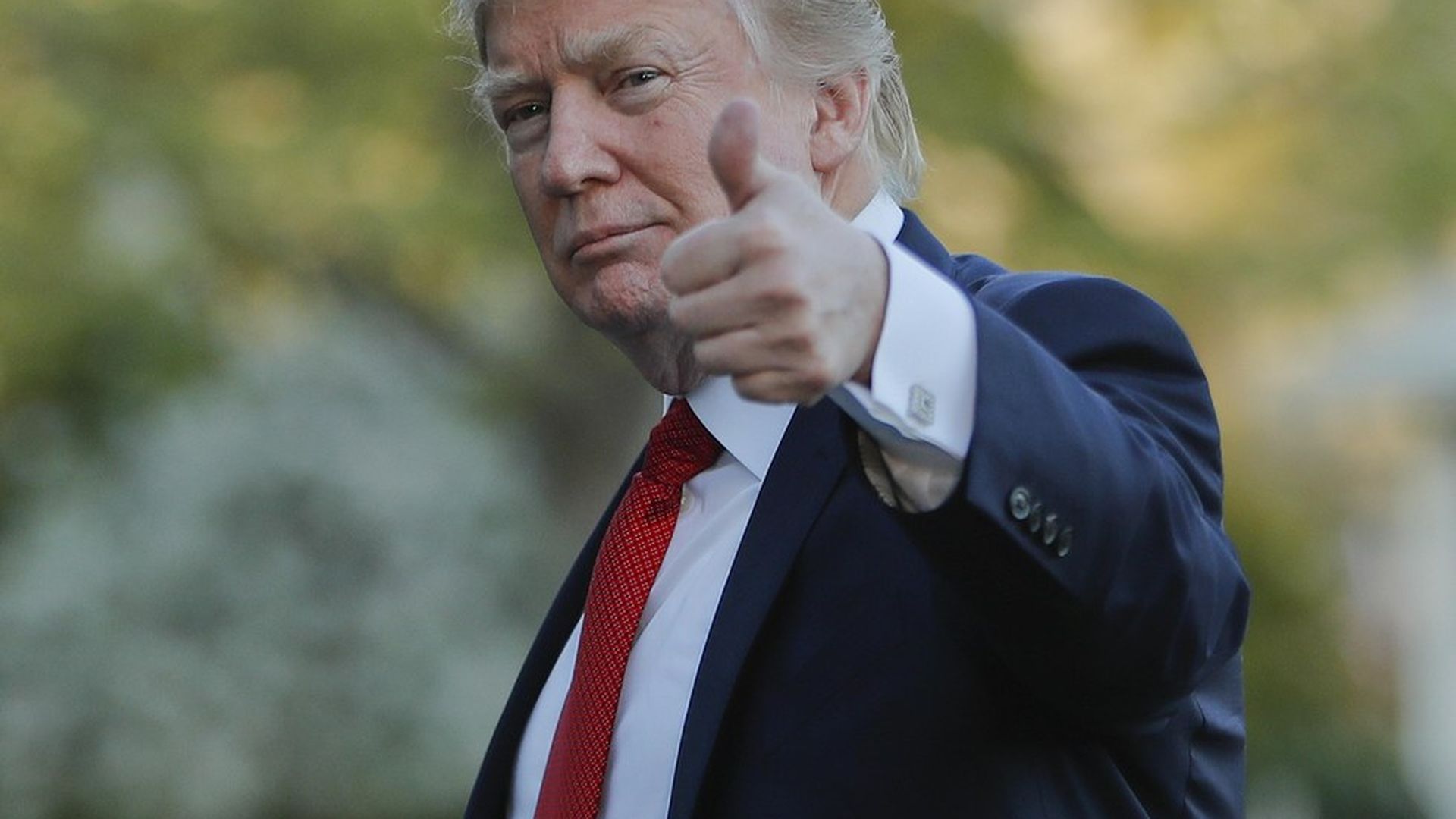
Treasury Secretary Steven Mnuchin and National Economic Director Gary Cohn unveiled Trump's new tax plan at the White House today. The plan cuts the top income tax rate from 39.6 to 35 percent, lowers the business rate to 15%, doubles the standard deduction, cuts the top capital gains rate and repeals the inheritance tax. The plan will also eliminate all individual tax deductions, except mortgage interest and charitable donations. Other takeaways:
Foreign Policy magazine got its hands on a 15-page State Department document that provides the most detail we've seen so far on President Trump's plans to gut America's foreign aid budget.
Why this matters: Trump is fundamentally reorienting American power. As Budget Director Mick Mulvaney has made clear, this administration believes in "hard power" more than "soft power." That means boosting the military at the expense of more subtle forms of influence through foreign aid and American missions overseas.
Reality check: Foreign Policy dramatically titles its story, "The End of Foreign Aid As We Know It" — and indeed that would be the case if this budget document ever became law. The reality is it won't, not even close. Republican Senator Lindsey Graham, a foreign policy hawk, has already declared it "dead on arrival."
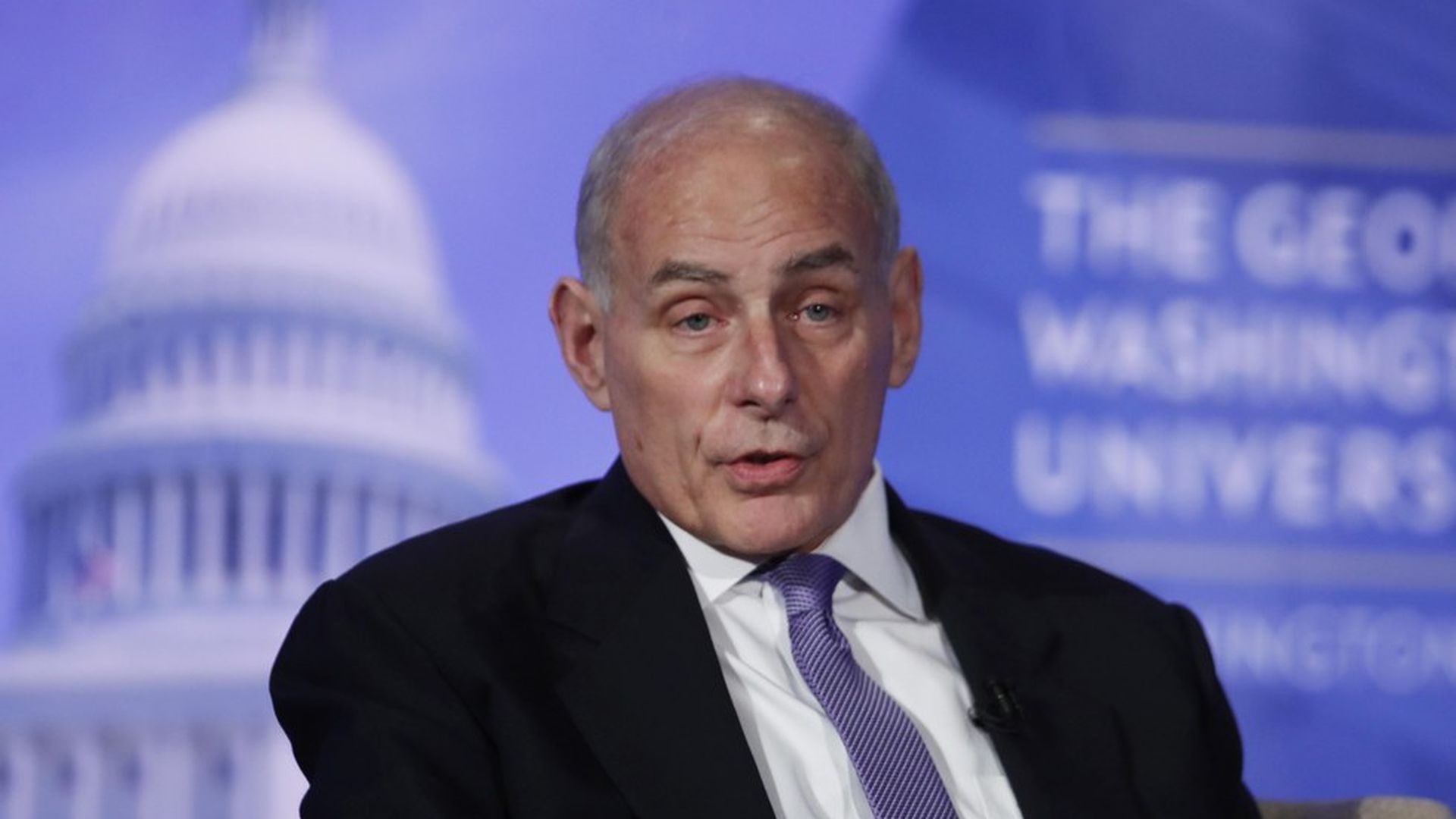
Homeland Security Secretary John Kelly addressed victims of illegal immigration crime at the opening of the Victims of Immigration Crime Engagement Office (VOICE) Wednesday. The office was initially announced in an executive order from Trump from Jan. 25.
The goalof VOICE is to help people navigate an overcomplicated system after their family members have been subjected to crime committed by illegal immigrants. "We can never fully heal these families, but we can give them a voice," Kelly said. The office will provide quarterly reports on "the effects of victimization by criminal aliens" in the U.S.
How it will work: Immigration and Customs Enforcement will support victims and their families in the aftermath of crimes by directing them to resources — like tracking the immigration custody status of the immigrant in question who committed a crime, or contacting an officer who can explain the immigration enforcement and removal process. As Kelly put it: "All they have to do is dial 1-855-48-VOICE That's 1-855-48-VOICE."
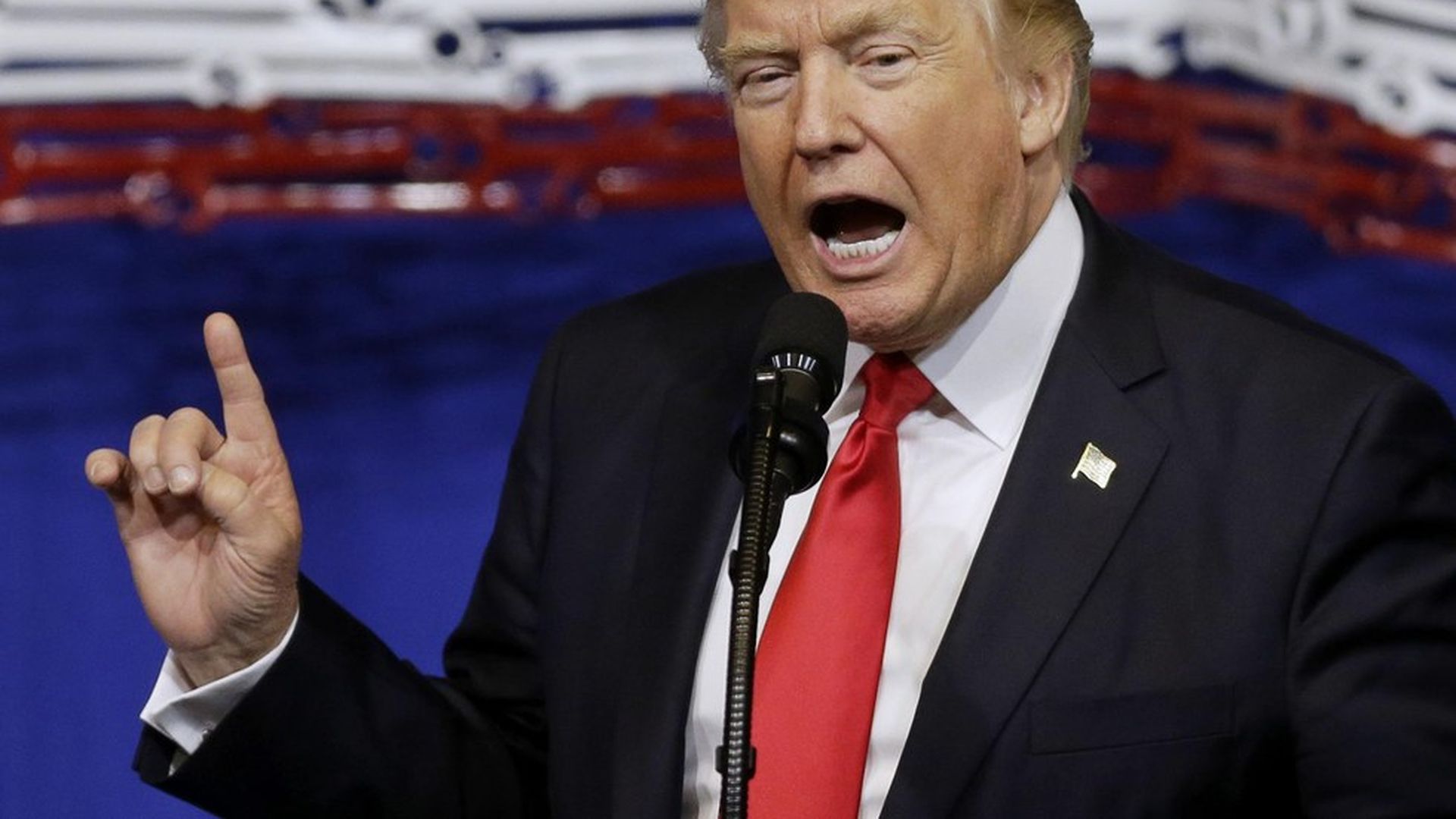
"Trump's trademark talk is full of rambling, aside-filled bursts of simple but definitive words, laden with self-congratulatory bravado and claims that have fact-checkers working overtime," AP's Matt Sedensky writes:
Keep it simple: "Word choice is typically simple — to Trump, things are terrible or incredible, best or worst. Asides are frequent. And repetition is rampant: When Trump wants to get a point across, he makes it again and again."
Method to the madness: "Trump has suggested there's a method to his word choice ... that the simple terms he often opts for can be more effective than the flowery eloquence listeners may be used to from presidents. 'I went to an Ivy League school. I'm very highly educated. I know words; I have the best words,' he said during the campaign."
Historian Kristen Kobes Du Mez: "I don't know that any president has ever used 'super-duper' in his rhetoric before."
The tax plan that President Trump will release today isn't super-specific or super-achievable. But it's a loud White House message to the Hill that the administration — after learning lessons on health reform — will now be less of a bystander.
A West Wing confidant said: "The White House is saying to Congress: You can expect us to do this on other major policy initiatives — health care; immigration; infrastructure; and the budget, particularly defense spending. We let you drive policy on health care, and you drove off a cliff."
President Trump blasted the Ninth Circuit in a tweetstorm this morning, stating that he'll take the ruling that blocked his sanctuary cities executive order to the Supreme Court if necessary:
"First the Ninth Circuit rules against the ban & now it hits again on sanctuary cities-both ridiculous rulings. See you in the Supreme Court! Out of our very big country, with many choices, does everyone notice that both the 'ban' case and now the 'sanctuary' case is brought in... the Ninth Circuit, which has a terrible record of being overturned (close to 80%). They used to call this 'judge shopping!' Messy system."
Fact check: Trump incorrectly called out the Ninth Circuit in his tweet; rather, it was a U.S. district court judge in San Francisco who ruled against Trump's executive order.
Flashback: Trump tweeted "SEE YOU IN COURT" back in February after a federal judge ruled to halt his first travel ban executive order.
Currently the U.S. has the third-highest corporate tax rate in the world, but if Trump succeeds in the tax cut, the U.S. will be among the 20 countries with the lowest corporate tax rate.
To understand where the U.S. democracy is at, ACLU boss Anthony Romero says all we have to do is look at a 14th century painting: Ambrogio Lorenzetti's The Allegory of Good and Bad Government.
Free speech for all: Romero notes that the ACLU isn't just arguing for free speech for those on the left, citing recent actions in support for conservative voices like Ann Coulter and Milo Yiannopoulos.
A scene from Lorenzetti's The Allegory of Good and Bad Government
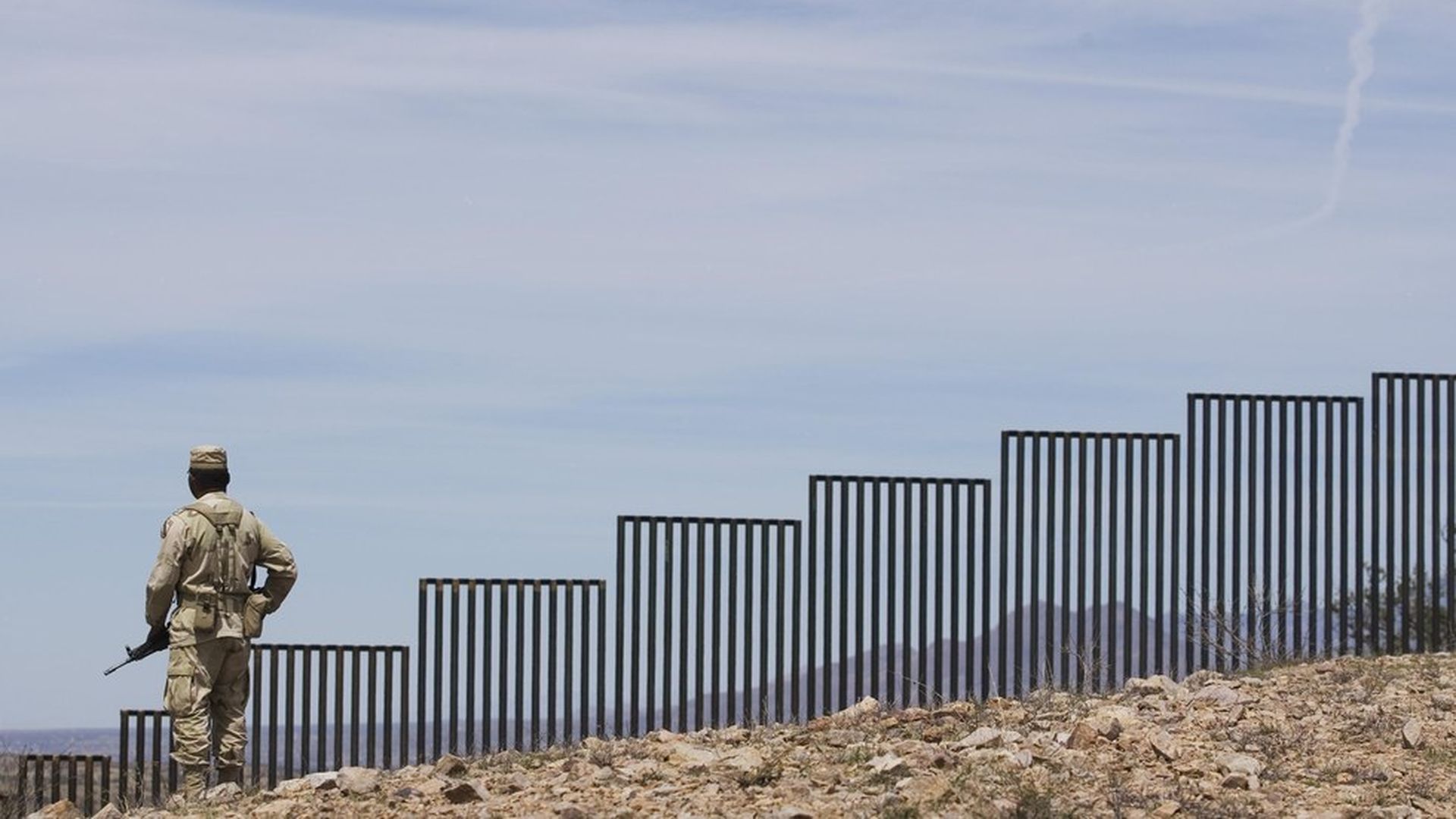
Republican leadership in Congress is prepared to pass a spending bill that doesn't include funding for the construction of Trump's border wall, per the Washington Post. The proposal does include additional money for border security and the military.
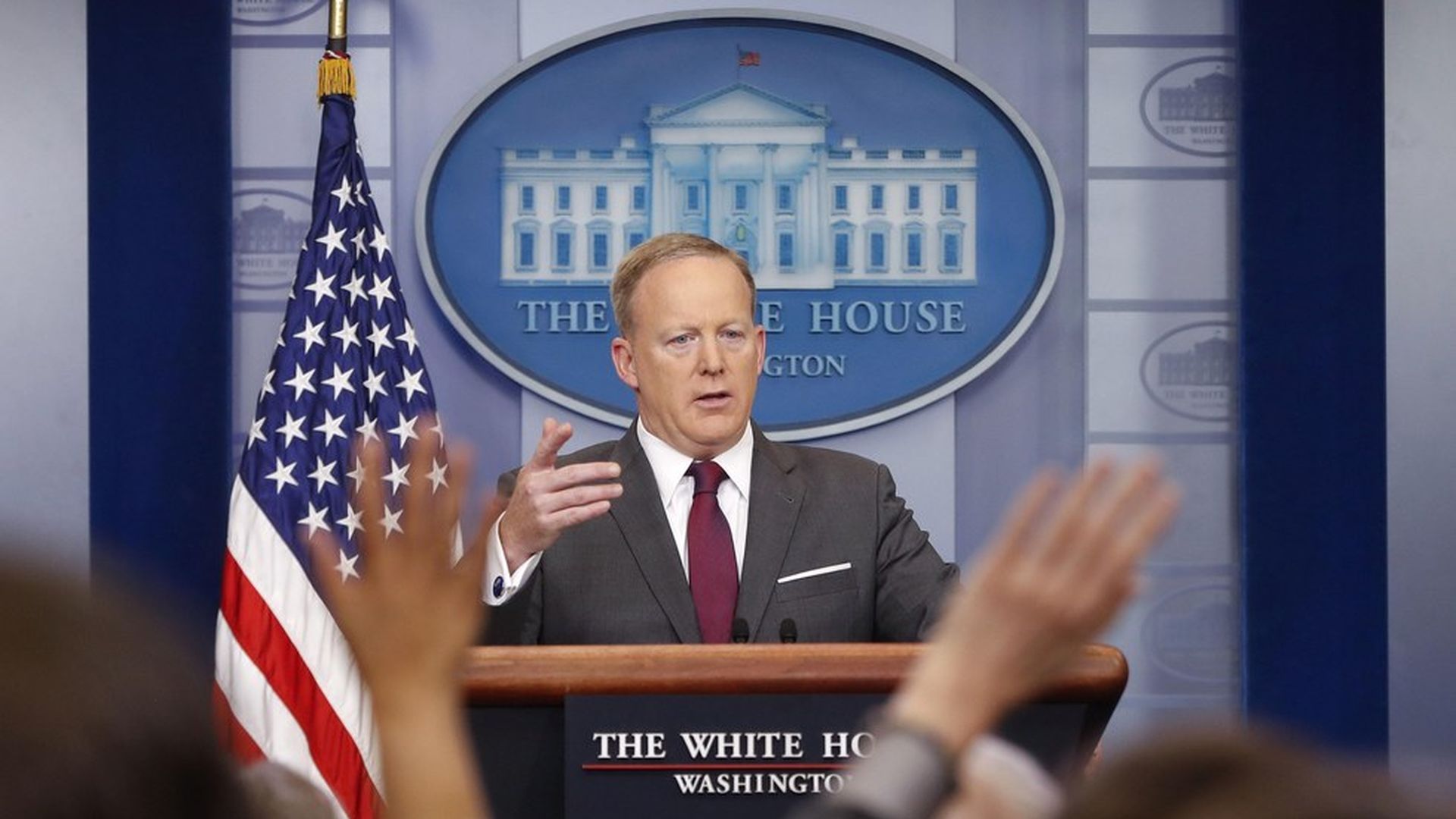
Change of tune: The White House had originally signaled that they wouldn't agree to a funding bill that didn't allocate money for the border wall. But Sean Spicer hinted during his Tuesday press briefing that Trump would be satisfied with border security funding for now if wall funding would be revisited in September.
Trump's take: Asked if the spending plan would include funding for the wall, Trump said, "the wall is going to get built folks," adding that it would be done in his first term.
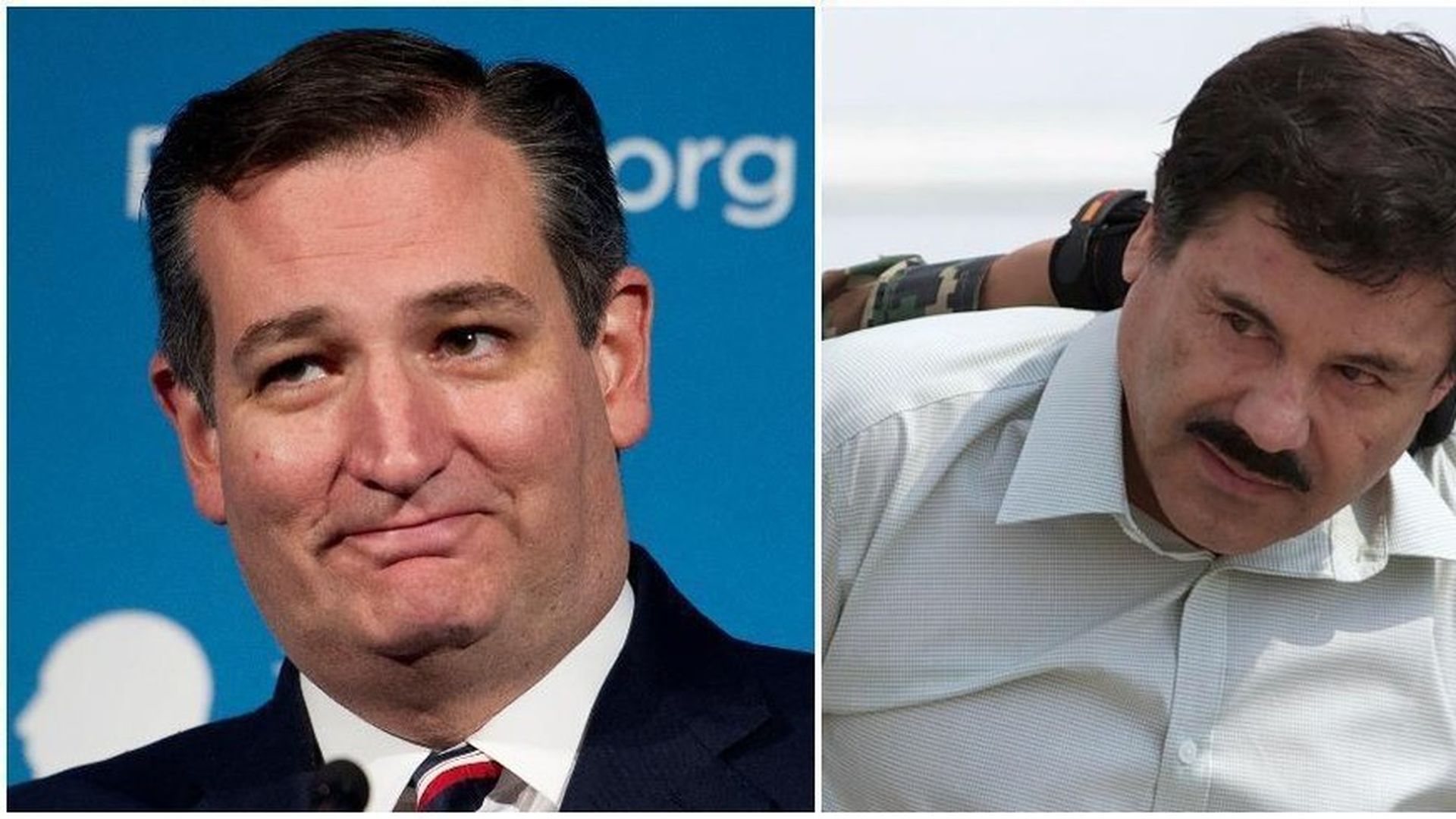
Senator Ted Cruz wants to use assets seized from drug lords such as El Chapo, the Mexican kingpin who was recently extradited to the U.S., to pay for border security and the border wall.
The idea: U.S. prosecutors are seeking $14 billion in drug profits and other assets from El Chapo. They also routinely seize the assets of other drug dealers and traffickers.
The Cruz quote: "Fourteen billion dollars will go a long way toward building a wall that will keep Americans safe and hinder the illegal flow of drugs, weapons, and individuals across our southern border."
The acronym's meaning: Ensuring Lawful Collection of Hidden Assets to Provide Order
Although Trump's approval rating has reached a historic low, his support among grassroots activists — and their view of how much he has accomplished in the first 100 days — is only getting better, according to a new survey.
The details: Mark Meckler, co-founder of Tea Party Patriots, Citizens for Self-Governance, and the Convention of States Project, surveyed 3,312 grassroots activists and leaders representing all 50 states between April 20-24.
What they're saying: Although Meckler tells Axios the activists "don't pay attention to arbitrary deadlines," 55% gave Trump an A and 32% a B when asked to grade how hard he has worked to fulfill his campaign promises in the first 100 days of his presidency. Furthermore, 34% surveyed gave Republican leaders a D when grading how well they worked with Trump to help him fulfill these promises — that increased from a mere 21% at the 50-day mark.
Why this matters: Meckler's findings reveal that these activists and leaders who are working at the grassroots level to create change feel "more frustration with Congress. ...Congress is seen as an impediment to Trump getting things done."
Tuesday's briefing centered around whether former national security adviser Michael Flynn broke the law by not disclosing past payments from Russia, which Spicer said was "a question for him and a law enforcement agency." He added that it was "outlandish" to expect the WH to have a log of all of Flynn's calls, or to turn over documents from the transition period. Other takeaways:
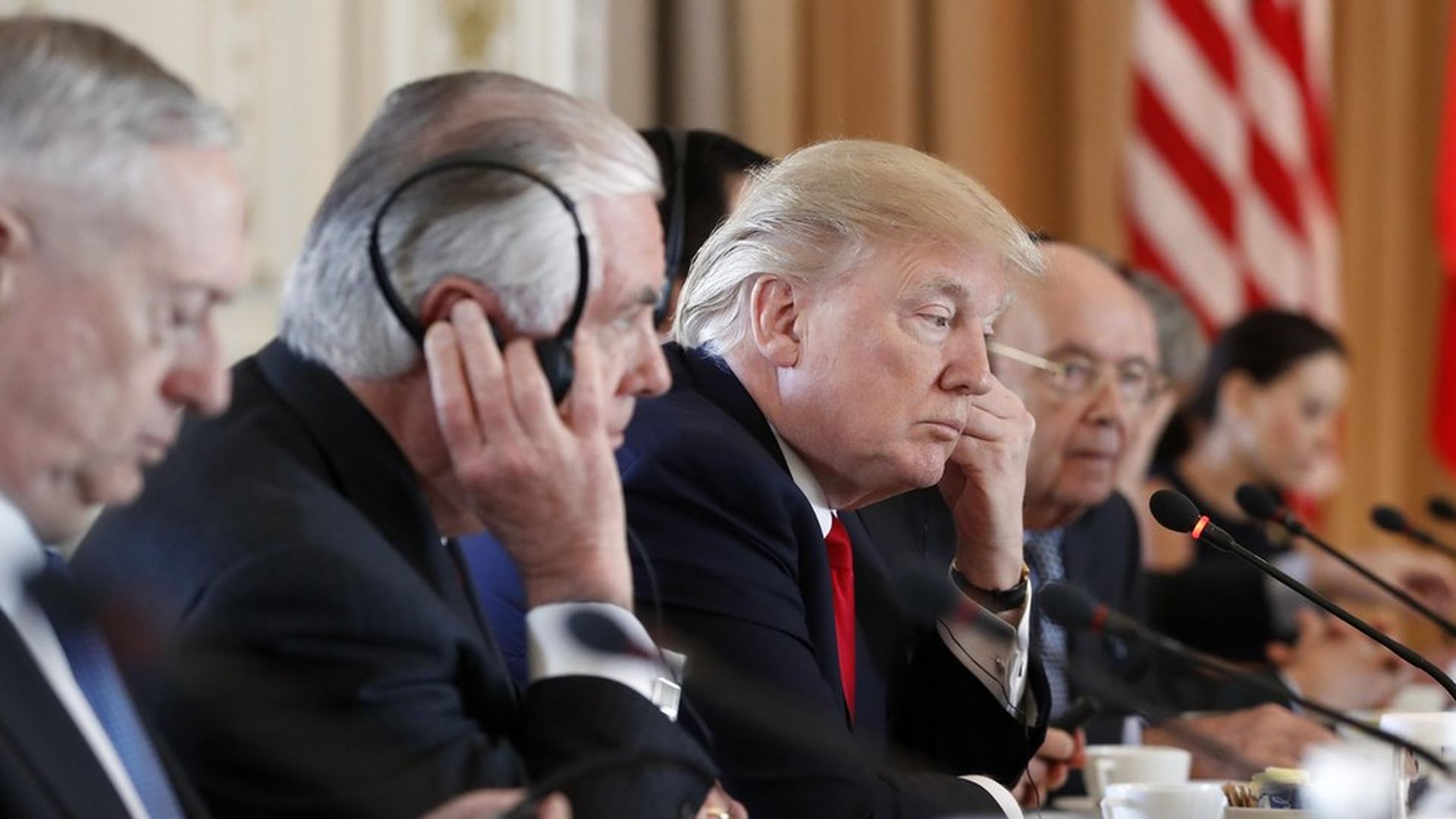
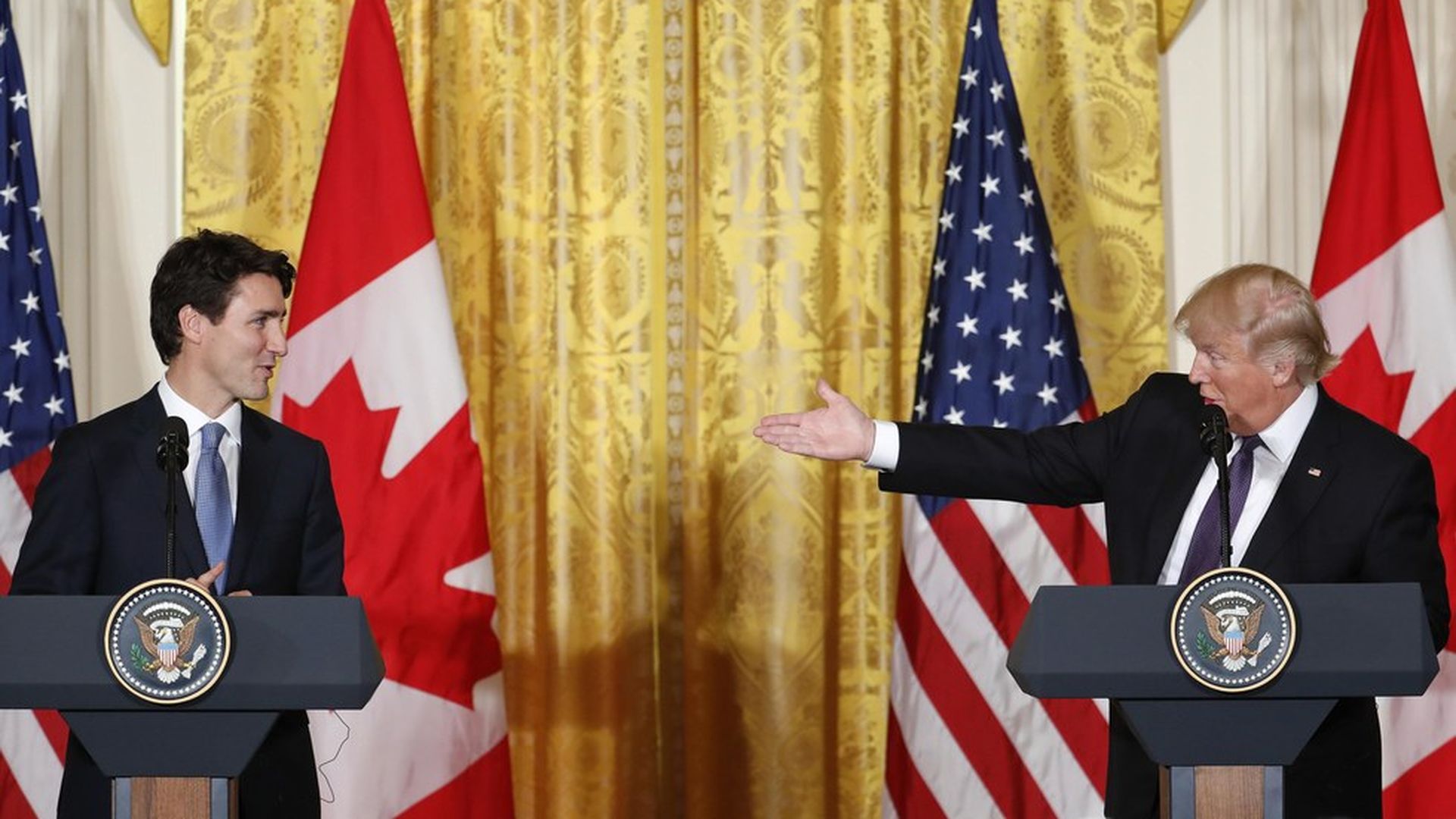
Spicer's guest du jour: Commerce secretary Wilbur Ross said that despite the new taxes on Canadian softwood lumber, the administration doesn't think there will be a trade war. As for the U.S. relationship with Canada, "They are a close ally... they're generally a good neighbor. That doesn't mean they don't have to play by the rules."
Funding for the wall: Spicer wouldn't say if Trump would risk a government shutdown to get funding, but seemed to signal a way out by saying Trump wanted some money for border security now, and more later this year.
Trump's first 100 days: Spicer said Trump has passed 28 pieces of legislation, created over 500k jobs, and made 68 calls with 38 different world leaders.
Meeting with Australian PM: Spicer said Trump will meet with Prime Minister Malcolm Turnbull aboard the USS Intrepid May 4.
Russian-linked hacking group, APT28 or Pawn Storm, is targeting the German elections with similar tactics used against Democrats in the U.S. and centrist frontrunner Emmanuel Macron in France, according to cyber security firm Trend Micro's report out Tuesday.
The German elections are slated to take place in September 2017.
The targets: German Chancellor Angela Merkel's political party in April and May of 2016, although no emails have been leaked, and a German think tank affiliated with Merkel's party in April 2017.
The idea behind this hack: to get those affiliated with the think tank to submit passwords on a lookalike site, then to target politicians with emails or messages from hackers posing as those who shared their passwords.
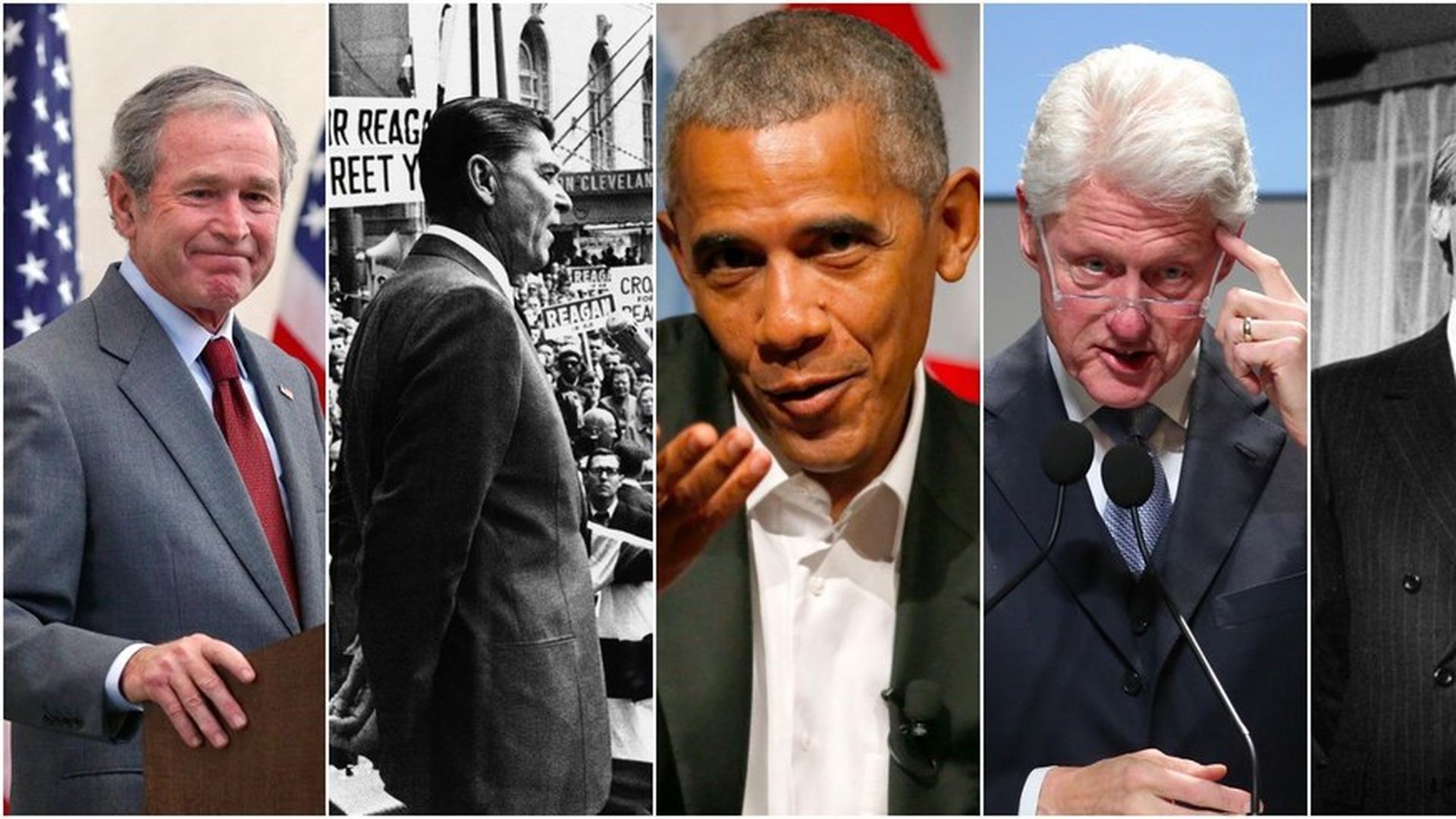
Barack Obama gave his first public speech since he left office yesterday. While this one might have been a freebie, Fox Business reported that he's already booked for a $400K gig in September — almost double Hillary Clinton's controversial speaking fee. Obama will talk about health care at a Wall Street conference put on by Cantor Fitzgerald LP.
But Obama certainly isn't the first POTUS to cash in on the presidency, and he hasn't set any record.
There is "no evidence" that Trump's former National Security Advisor Michael Flynn "complied with the law" regarding his payments from foreign lobbying for Russia and Turkey, the bipartisan heads of the House Oversight Committee said today.
As a former military officer, you simply cannot take money from Russia, Turkey or anybody else.—Committee Chair Jason Chaffetz
Another twist: The White House denied the committee's request for documents relating to Flynn's foreign contacts.
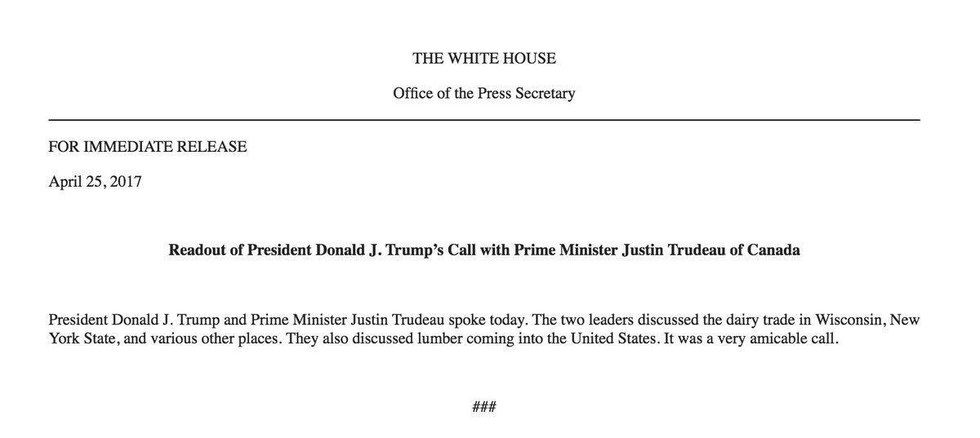
Days after pledging to "stand up for our dairy farmers" on the stump in Wisconsin, President Trump again lashed out against one of his new favorite trade topics — Canadian import tariffs — on Twitter this morning:
Canada's moo-tives: Canada has always had a high import tax on dairy products to prop up its domestic market, but Trump is mad because the country recently closed a loophole that allowed U.S. farmers to sell "ultrafiltered milk" used in cheese and yogurt production, without a tax — a market worth nearly $100 million to U.S. farmers, per The Globe and Mail.
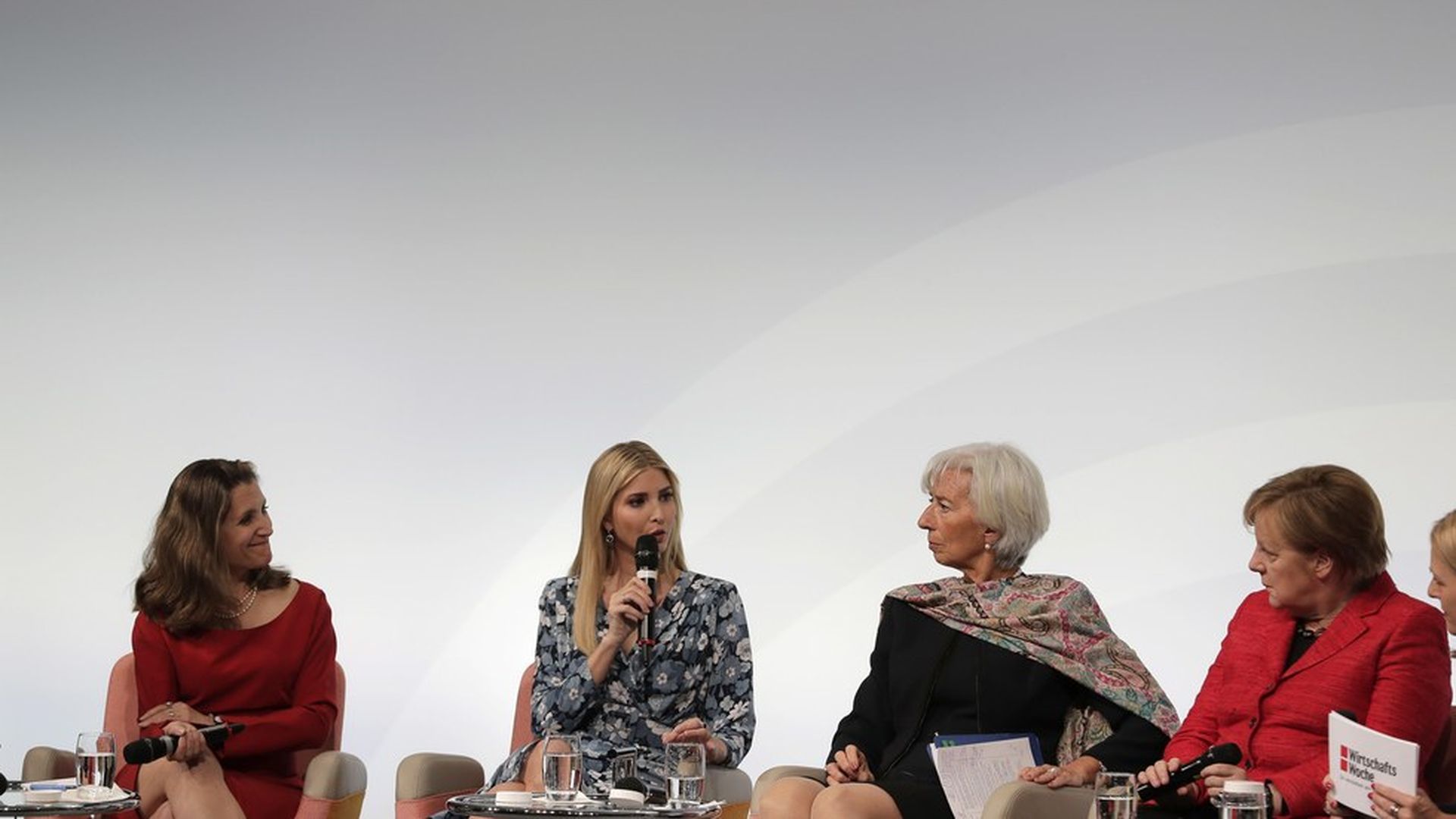
Ivanka Trump was jeered at and booed after saying that her father is a "tremendous champion of supporting families," while speaking on a panel of women leaders at the W20 summit in Berlin Tuesday.
Change of tune: Despite the crowd's audible disapproval of her comments about President Trump, the audience later applauded Ivanka for her points on empowering women.
Trump is marking the week leading up to Day 100 (Saturday) with a series of newsy directives and splashy events — this afternoon, he holds a "farmers' roundtable" in the Roosevelt Room — designed to show lawmakers that he can do plenty without them.
The big win for Steve Bannon: Trump made another in an increasingly aggressive series of moves on trade — this time, per the Wall Street Journal, "taking retaliatory action against Canada over a decades-old trade dispute, moving to impose a 20% tariff on softwood lumber."
Commerce Secretary Wilbur Ross said, in an unusually harsh statement aimed at an ally:
"It has been a bad week for U.S.-Canada trade relations. Last Monday, it became apparent that Canada intends to effectively cut off the last dairy products being exported from the United States. Today, ... the Department of Commerce determined a need to impose countervailing duties of roughly one billion dollars on Canadian softwood lumber exports to us. This is not our idea of a properly functioning Free Trade Agreement."
A majority of Republicans (68.7%) surveyed in Trump Country (Florida, Wisconsin, Ohio and Pennsylvania) think the president exaggerates or intentionally lies — but they don't care.
It's a sign of Trump's durability with his base, and an intriguing finding of a research project (3,491 likely midterm voters, interviewed by interactive robocall) by the Firehouse Strategies guys — GOP consultants Terry Sullivan, Alex Conant and Will Holley — and the big-data firm 0ptimus.
The firms gave Axios AM readers a first look at their results (full memo here):
"[E]ven more voters ... think ... Republican members of Congress [exaggerate or lie]. ... Yes, voters think Trump is dishonest, but he's not worse than other politicians."
"[M]ost Republican and independent voters say they won't punish Republicans in 2018 for failing to deliver."
"If Republican lawmakers face difficulties in midterm elections, it likely won't be for failing to pass big legislation."
"Nobody feels pressure from their base to compromise."
In a meeting with conservative media reporters Monday, Trump said he would be willing to let funds for the border wall wait for spending legislation in September instead of putting it in a must-pass spending bill this week, per the AP.
Why it matters: The fight over border-wall funding is the biggest hurdle to a government funding deal right now. If he does back off, a government shutdown would be easily averted at the end of this week.
Commerce Secretary Wilbur Ross will levy a tax on Canadian softwood lumber imports that averages out to about 20%, but could be as high as 24%, per Reuters. The announcement will heighten tensions over the longstanding trade dispute — Barack Obama and Canadian PM Justin Trudeau attempted to reach a solution but conversations faltered in 2016.
The winners: U.S. lumber producers. They say the imports are subsidized as Canada is getting lumber from government-owned land.
The losers: Canada. Softwood lumber is one of its biggest exports, and the U.S. takes in about 80% of its supply. As Ross put it: "It's a pretty big deal in terms of the Canadian relationship." It would also affect Americans if prices jump for softwood lumber, which is used to build most single-family homes.
Up next: The International Trade Commission will determine whether the U.S. industry has been unfairly hurt.