The CDC said in new guidelines Sunday that gatherings of 50 or more people should be postponed or canceled for the next eight weeks to curb the spread of the novel coronavirus.
What they're saying: "Large events and mass gatherings can contribute to the spread of COVID-19 in the United States via travelers who attend these events and introduce the virus to new communities," the CDC said in a statement. "Examples of large events and mass gatherings include conferences, festivals, parades, concerts, sporting events, weddings, and other types of assemblies."
It took a stock market crash — and a Fox News star's intervention — to finally snap President Trump's delusional and possibly disastrous fixation with treating the coronavirus like just another winter flu.
Why it matters: Because the government was so slow to distribute tests, Trump officials don't know how far the virus has spread in the U.S.
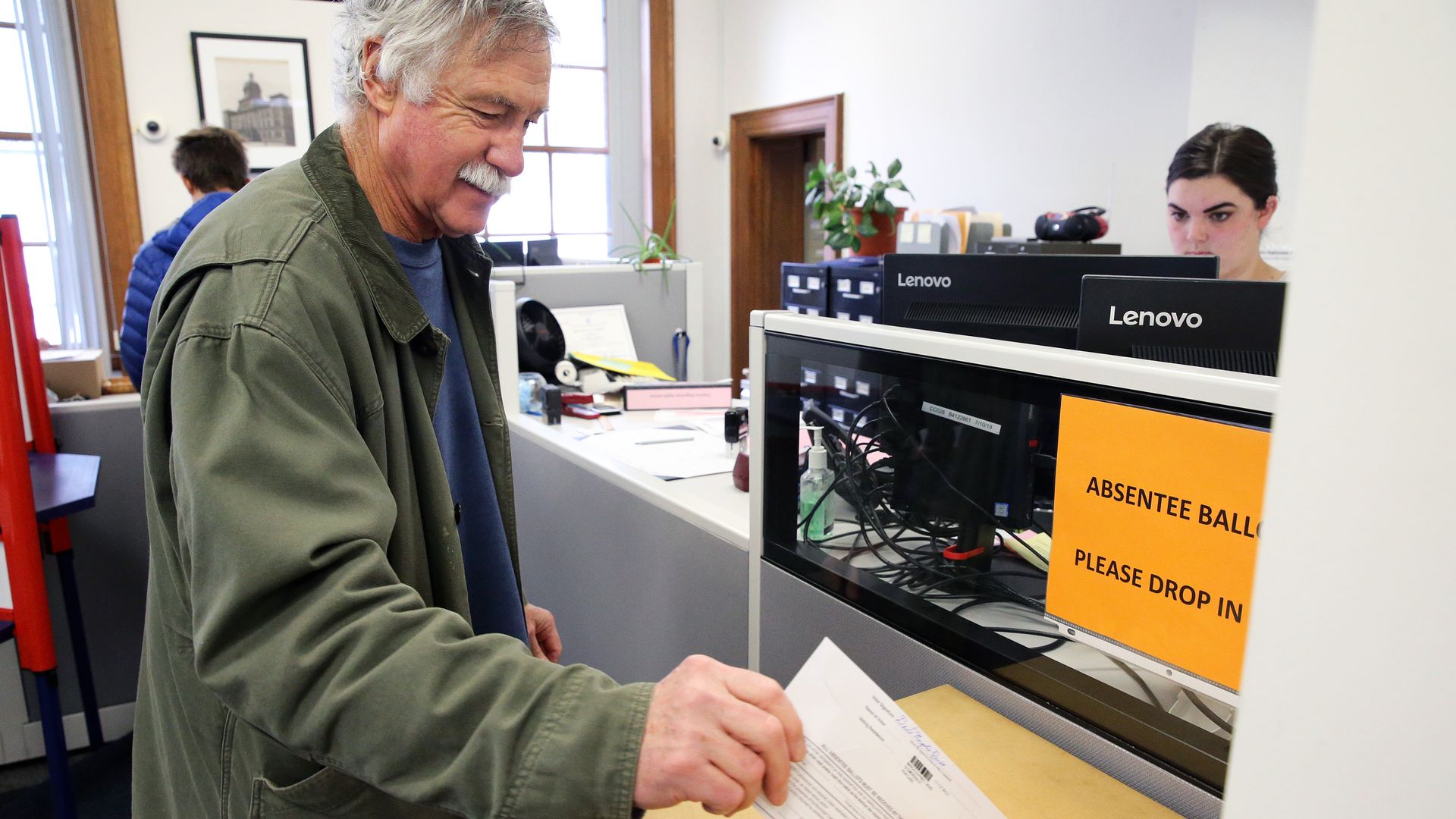
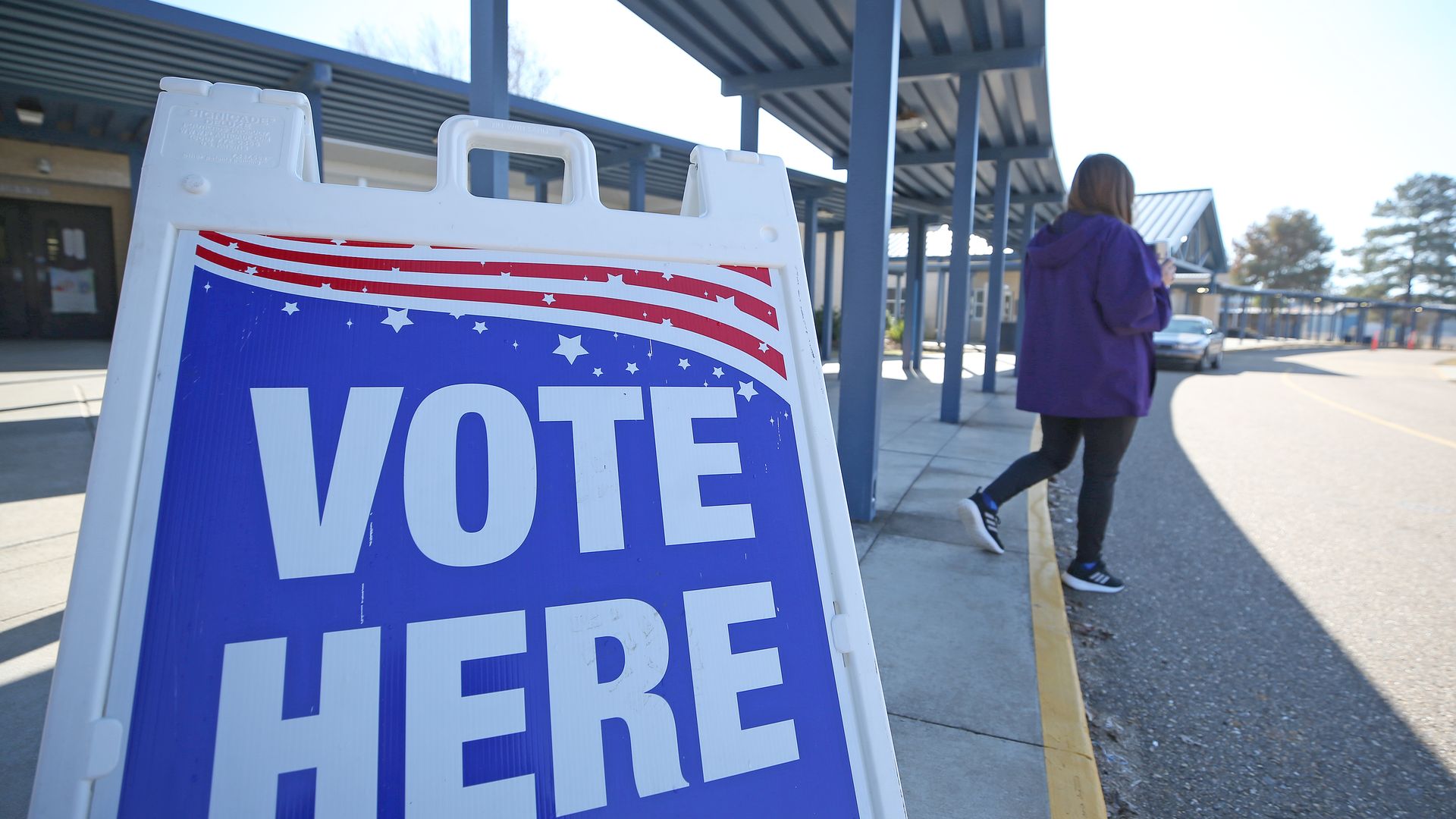
The coronavirus could make it harder for some U.S. voters to cast ballots this year, but that threat can be a catalyst for election changes that have previously met partisan resistance, elections law expert Trevor Potter said in an interview with "Axios on HBO."
Why it matters: Congress and state and local elections officials are looking for ways to protect voters in remaining primaries and even the general election.
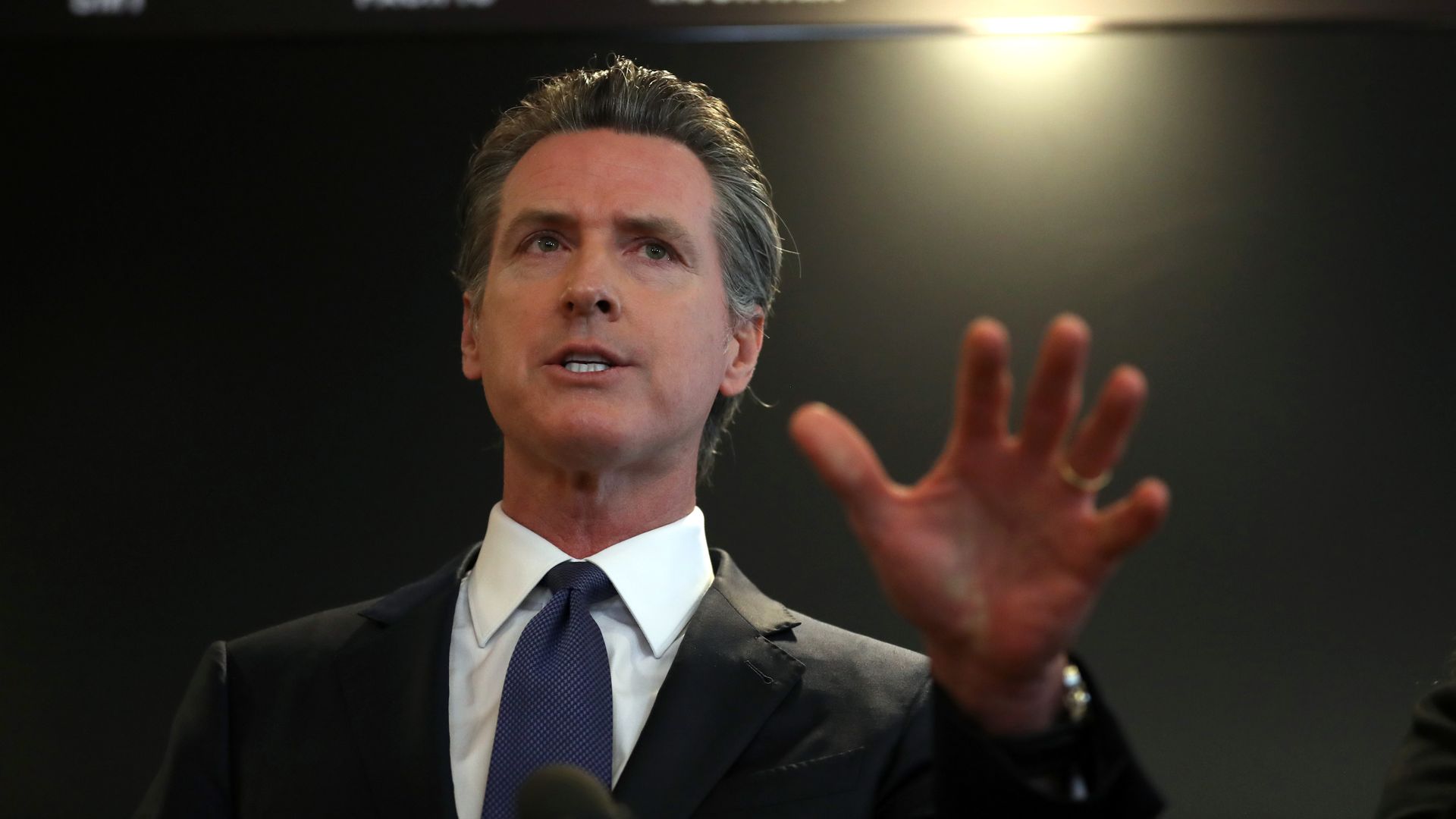
California Gov. Gavin Newson announced new guidelines on Sunday designed to combat the spread of the coronavirus, including a call for self-isolation among residents 65 and over and those with chronic conditions, as well as the closing of all bars, wineries and pubs.
Why it matters: California is the most populous state in the country, making it imperative for it to take drastic measures to slow down the spread of the virus.
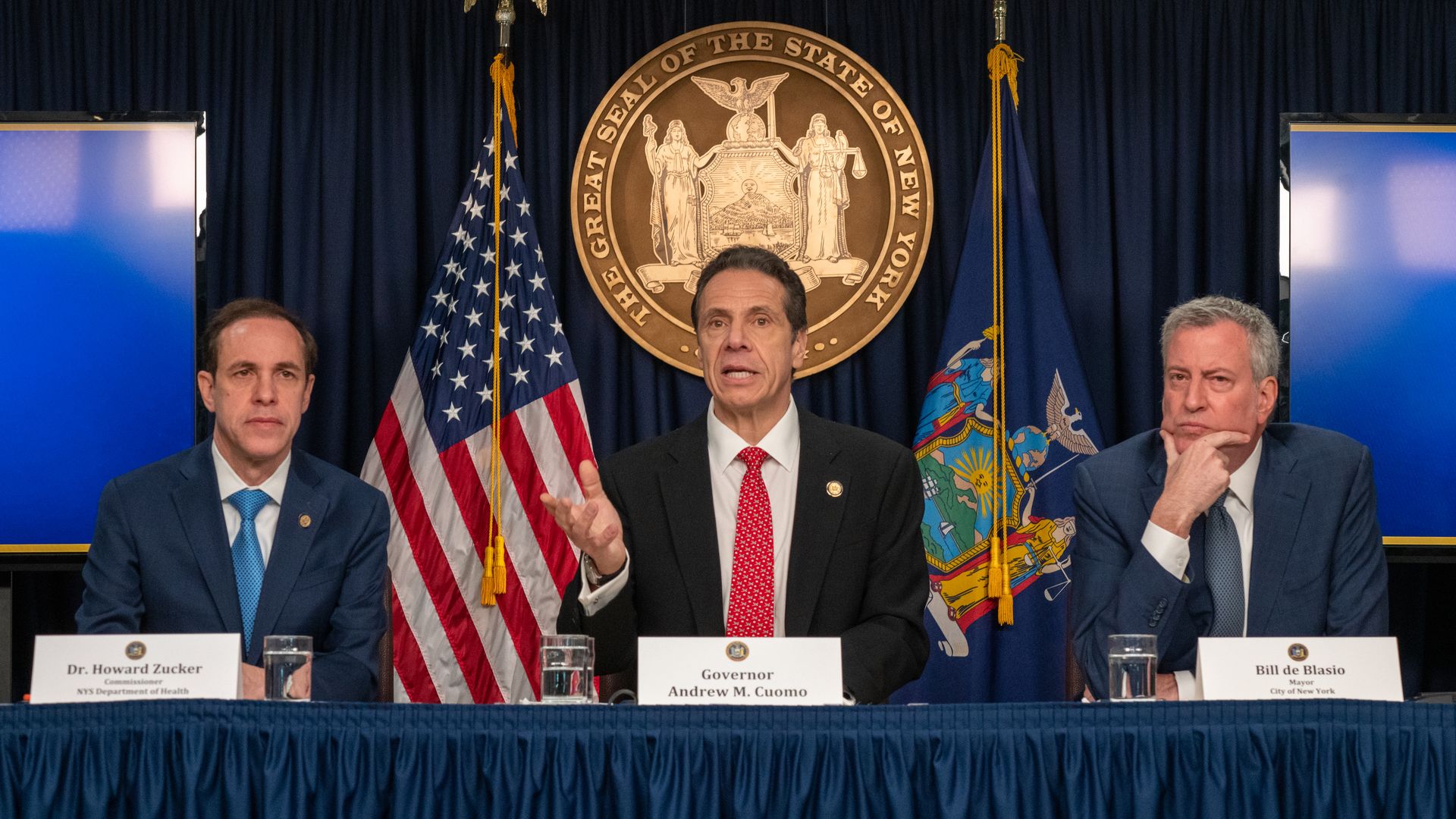
New York City will begin closing its nearly 1,900 public schools this week through April 20 in an effort to stop the spread of the coronavirus, Gov. Andrew Cuomo announced Sunday.
Why it matters: The drastic step will impact the daily lives of 1.1 million children, 75,000 teachers and over 1 million parents who make up the largest public school system in the country, per the New York Times.
At least 57,000 K-12 schools across the U.S. have closed or will close for up to weeks at a time due to the novel coronavirus, affecting at least 25 million students.
The big picture: As school systems face pressure to close, the Centers for Disease Control and Prevention's guidelines admit the closures could significantly pose their own risks and negatively affect the academic outcomes for students.
The Italian government reported 368 new deaths from the coronavirus on Sunday, the largest 24-hour increase since the country confirmed its first case, according to AP.
Why it matters: The surge of deaths comes despite extensive government measures to stem the rapidly spreading virus, including internal travel restrictions, bans on all public gatherings and sports, and closures of all retailers that do not sell "essential items."
Former FDA Commissioner Scott Gottlieb warned on CBS News' "Face the Nation" Sunday that if the coronavirus outbreak in New York City reaches the level it did in Wuhan, China, it would "overwhelm" the health care system.
Why it matters: New York State currently has the most reported coronavirus cases in the country. Gottlieb said he is concerned that the U.S. could have many "Wuhan-style" outbreaks because Americans are "more mobile," making it more difficult to confine the virus to one metropolitan area like China was able to.
There’s a lot of confusion and misinformation swirling around the virus, so here are quick just-the-facts answers to your most urgent concerns, based on current knowledge.
"For a while, life is not going to be how it used to be in the United States," Dr. Anthony Fauci, the director of the National Institute of Allergy and Infectious Diseases, said on CNN's "State of the Union" Sunday. "We have to just accept that if we want to do what's best for the American public."
Why it matters: Fauci pulled a "full Ginsburg" — appearing on all five major Sunday morning talk shows — in an effort to ensure that Americans understand the ramifications of the coronavirus pandemic if the public does not practice social distancing.
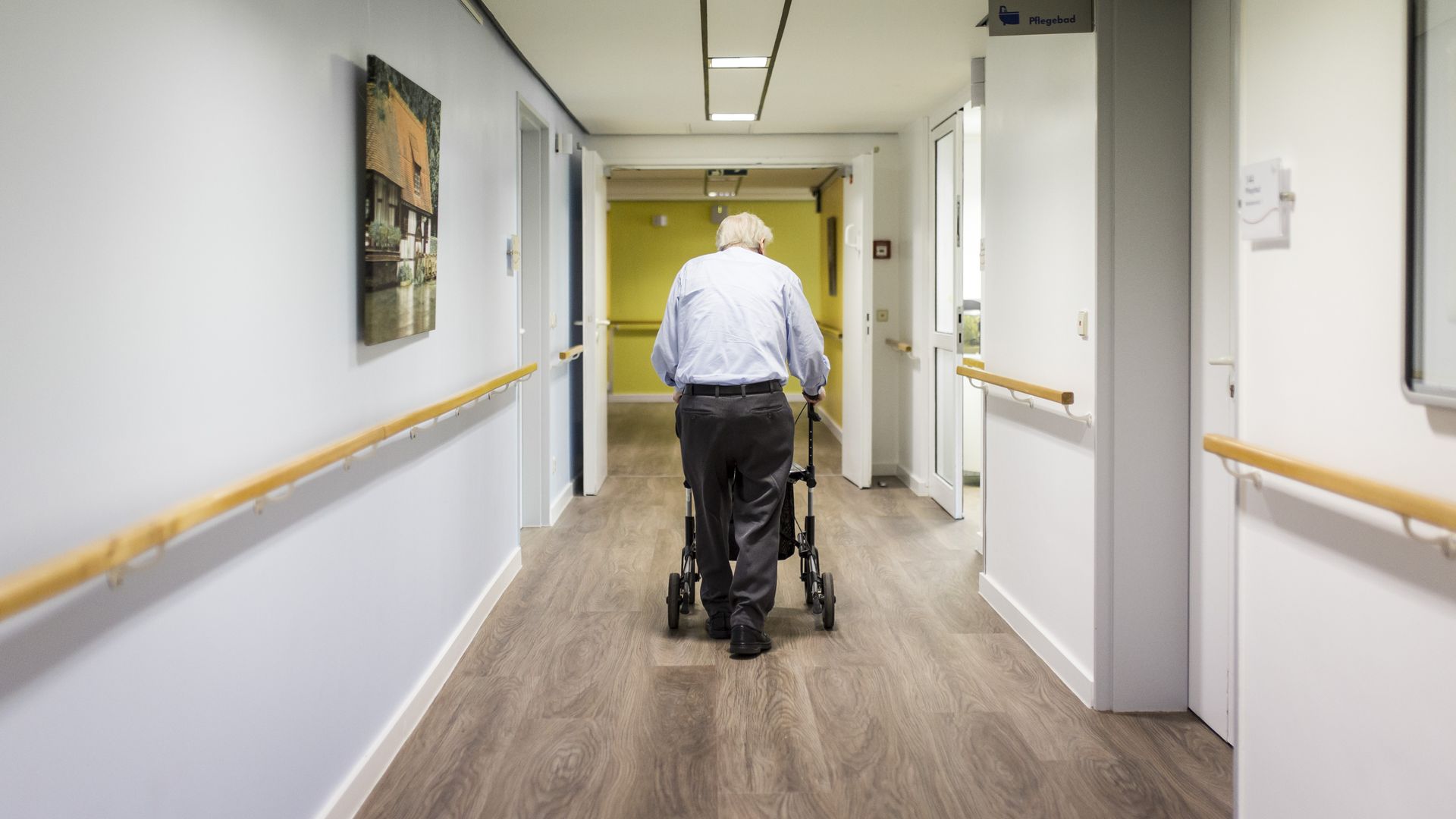
Nursing homes should not allow any visitors due to the escalating coronavirus outbreak, the Centers for Medicare and Medicaid Services said in a new memo. There's one exception: "compassionate care situations, such as an end-of-life situation."
Why it matters: Older adults are among the most at risk to die from COVID-19, and these measures are aimed to keep that population safer. But the lack of visitation could result in enhanced feelings of isolation for nursing home residents, so family members and friends should make sure to call or video chat whenever possible.
Ohio Gov. Mike DeWine said on CNN's "State of the Union" Sunday that it would not surprise him "at all" if schools in his state did not reopen this school year due to the coronavirus outbreak.
The big picture: DeWine on Thursday became the first governor in the country to announce that all public and private schools in his state would close for three weeks or more.
Chicago's O'Hare International Airport tweeted Saturday night that customs processing was "taking longer than usual" because of enhanced screening for the novel coronavirus for passengers coming from Europe.
Why it matters: The airport's admission and images circulated on social media of the hours-long wait after the Trump administration's travel restrictions came into effect midnight Friday. Illinois Gov. J.B Pritzker (D) said the lines were "unacceptable" and that President Trump and Vice President Mike Pence should act "immediately."
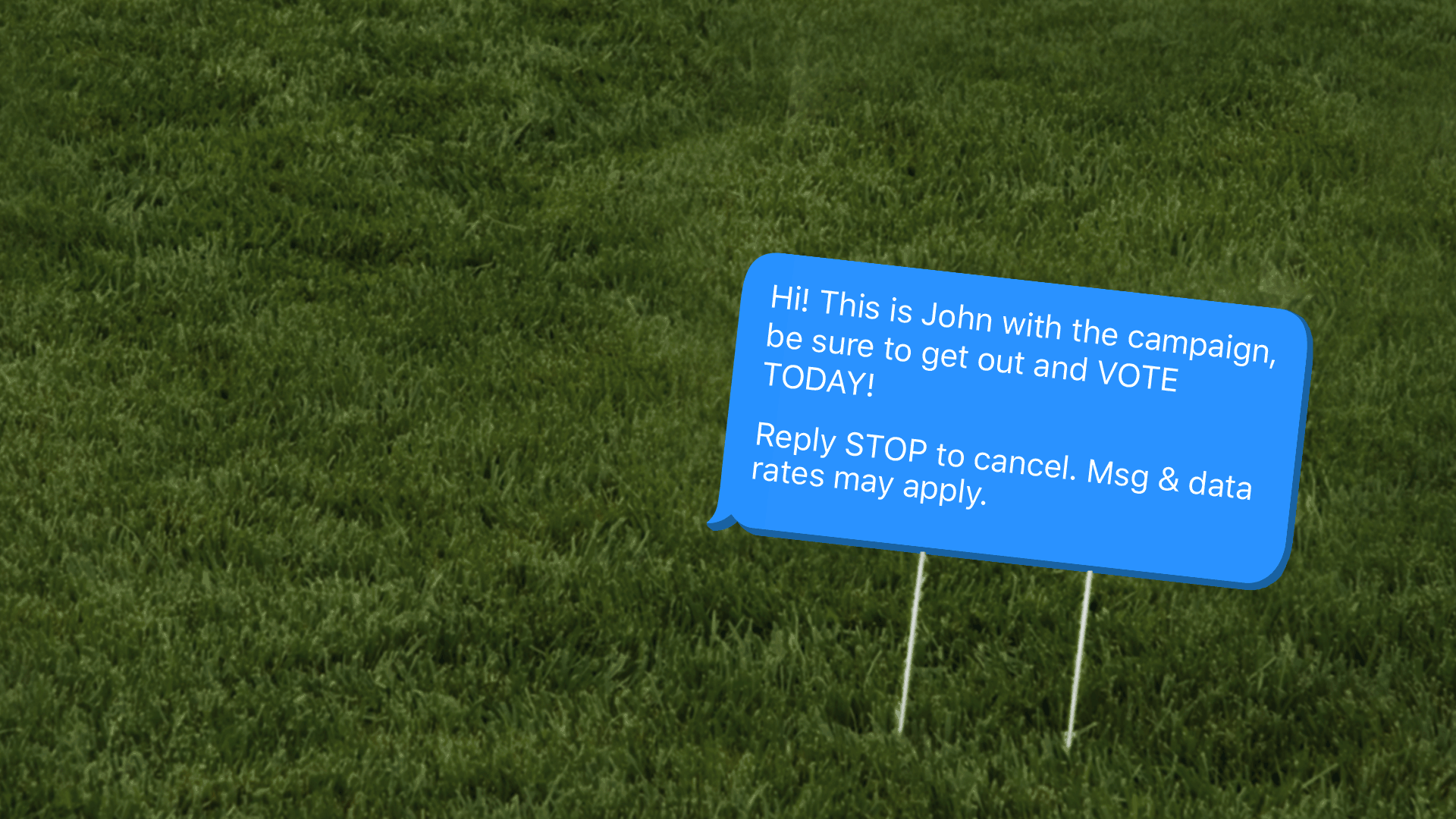
Peer-to-peer (P2P) texting is experiencing a massive uptick in political campaigns throughout the country now that in-person campaign activities and forms of voter outreach are being suspended to protect public health, P2P experts and campaigns tell Axios.
Why it matters: Campaign tactics like rallies, town halls, phone banking and canvassing are becoming harder to do as officials urge people to quarantine themselves and stay at home due to the coronavirus outbreak.
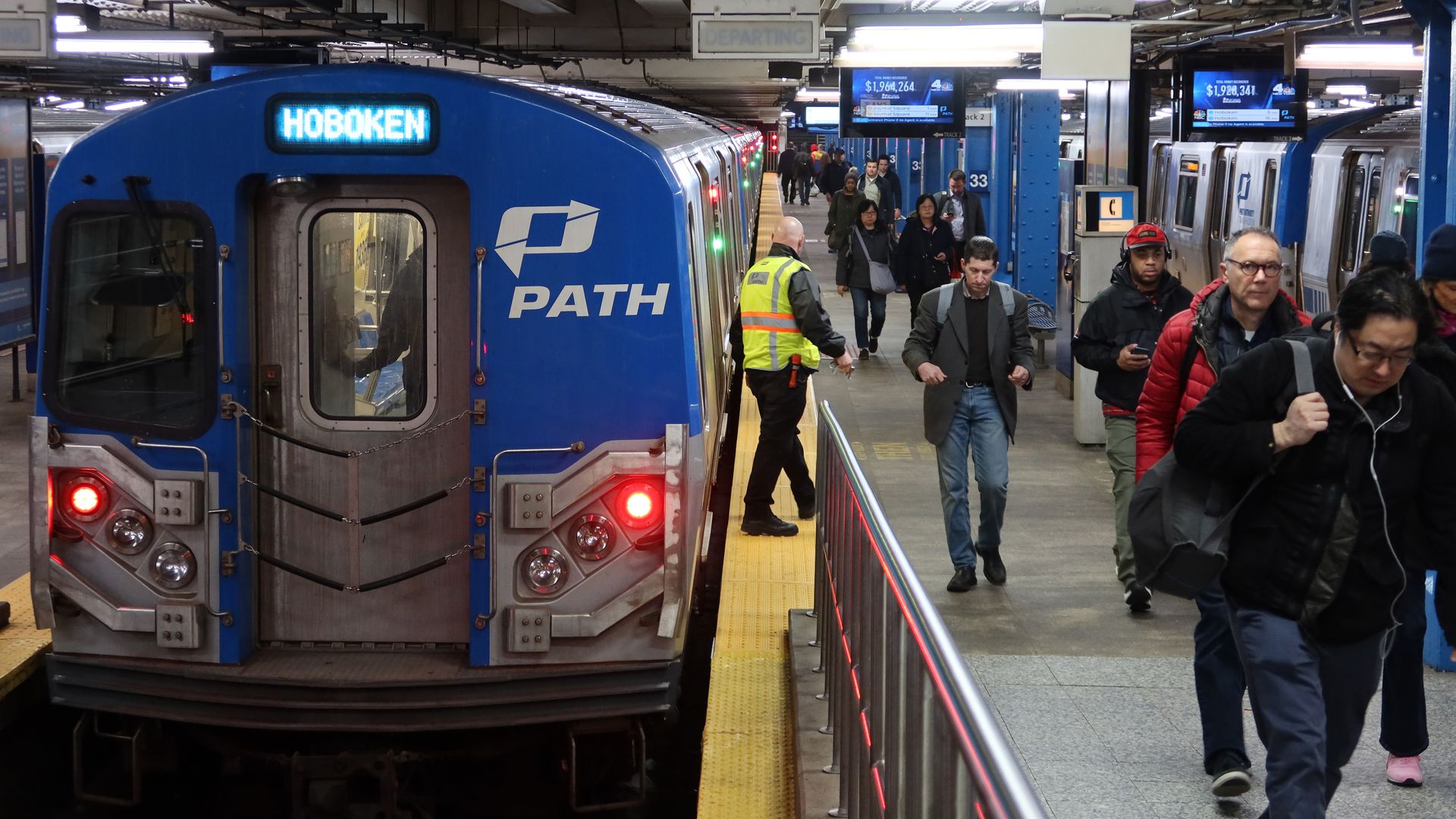
Why it matters: The curfew, which will go into effect Monday from 10pm to 5am, is the latest drastic measure as city, state and federal officials scramble to curb the spread of the virus — which has reached every state except West Virginia as case numbers neared the 3,000 mark Sunday morning.
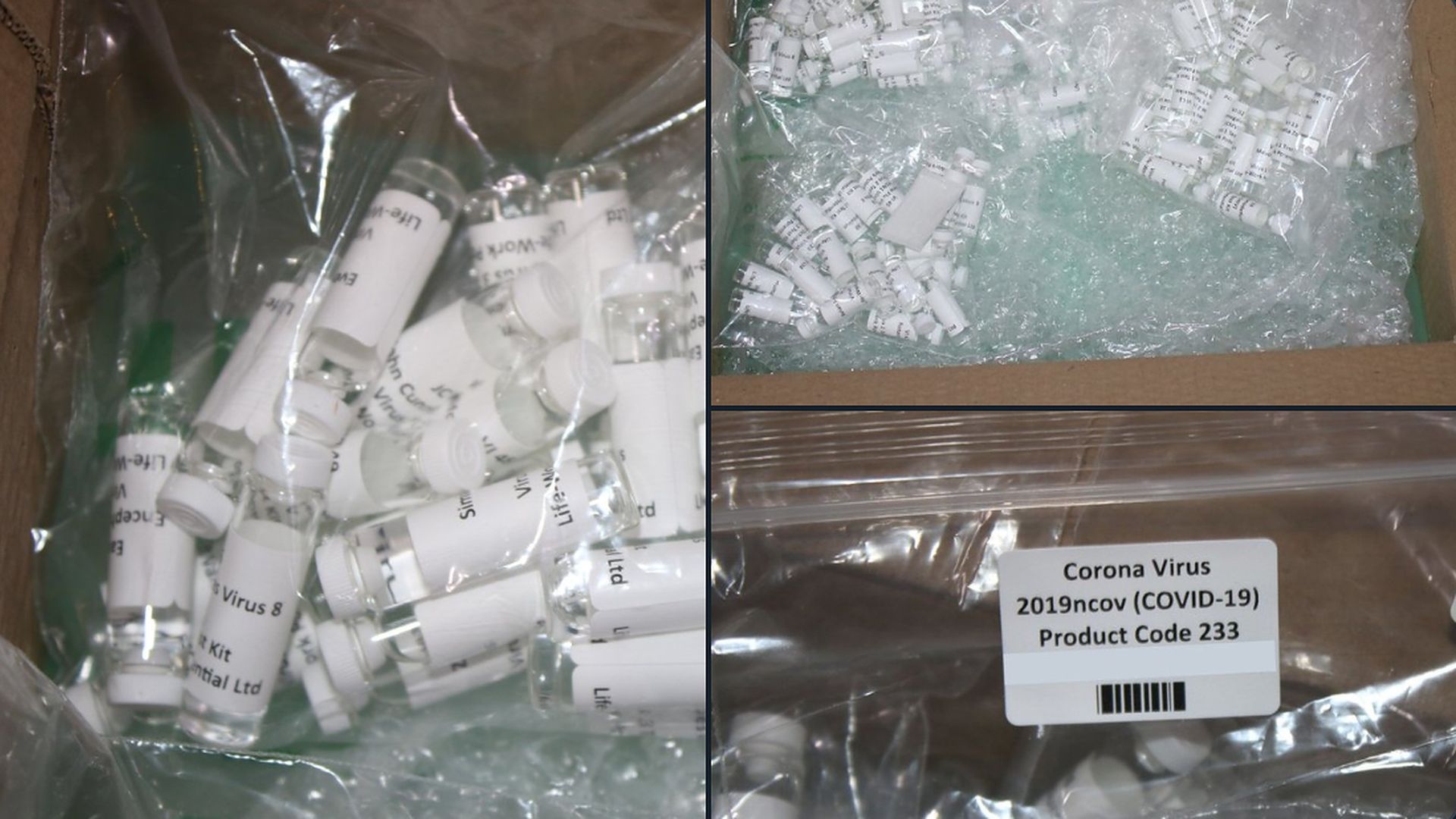
Customs and Border Protection officers at Los Angeles International Airport's mail facility have intercepted a package of suspected counterfeit test kits for the novel coronavirus that arrived from the United Kingdom, the CBP said in a statement Saturday.
The big picture: The CBP officers discovered six plastic bags containing various vials last Thursday while examining a parcel marked "Purified Water Vials" with a declared value of $196.81, the statement said. "A complete examination of the shipment, led to the finding of vials filled with a white liquid and labeled 'Corona Virus 2019nconv (COVID-19)' and 'Virus1 Test Kit,'" the CBP added. The shipment was turned over to the U.S. Food and Drug Administration for analysis.
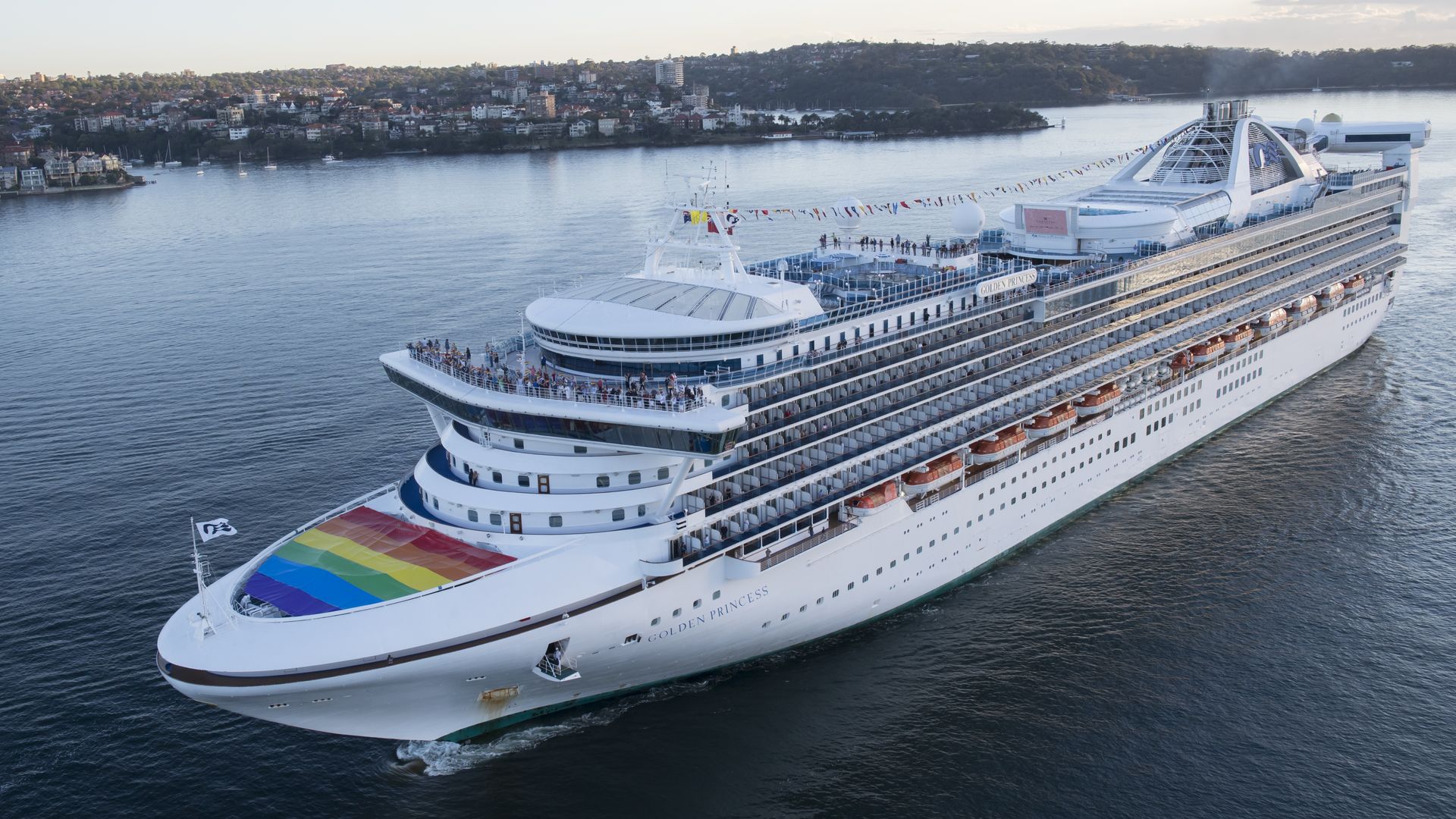
Passengers on another Princes Cruises ship have been prevented from disembarking over the novel coronavirus, this time off the South Island of Aotearoa New Zealand, Canterbury District Health Board (DHB) officials confirmed at a news conference Sunday.
The big picture: New Zealandhas introduced some of the world's toughest border restrictions to combat the virus.
President Trump said Friday that Google is building a website to help people determine whether they need a test for COVID-19 and that "Google has 1700 engineers working on this right now." But Google said Verily, the life sciences unit of its parent company Alphabet, is "in the early stages of development" on such a tool.
Update: Google said in an updated statement Saturday it is helping with a national site, but it stressed the testing triage site is being done by sister company Verily, and they are aiming to start testing soon in the San Francisco Bay Area.
Why it matters: Georgia is the second state to postpone primaries over the outbreak as officials scramble to contain the virus, which had infected more than 2,700 Americans by Saturday evening. On Friday, Louisiana moved its Democratic presidential primary from April 4 to June 20, citing concerns over the global pandemic.