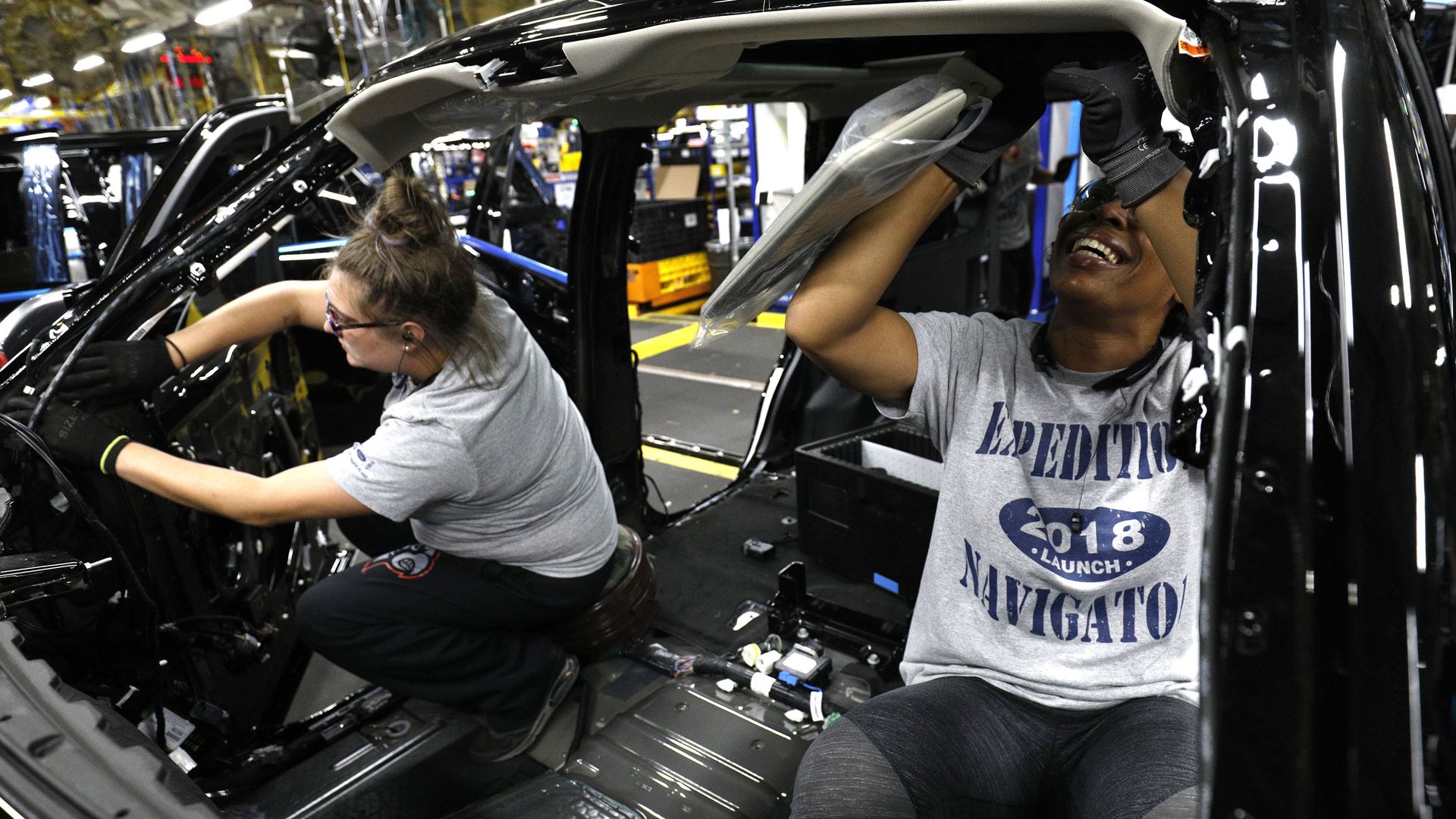
Pressure is building on automakers to halt U.S. production as hourly employees grow more anxious about their risk of exposure to the coronavirus.
Why it matters: Factory workers can't work from home, and on a vehicle assembly line, they work in close proximity, touching the same surfaces and sharing tools many times a day. Manufacturing workers in other industries face similar issues.
President Trump on Monday vowed to "backstop" airlines that have been hurt by the rapid plunge in air travel bookings amid the coronavirus outbreak, saying, "It's not their fault."
The big picture: U.S. airlines are in talks with the government on a variety of financial assistance measures, according to the Wall Street Journal, citing people briefed on the discussions.
As a result of the spreading coronavirus outbreak, Kaiser Permanente "will be postponing elective or non-urgent surgeries and procedures in all locations," the hospital and health insurance giant said today.
Why it matters: Kaiser is the largest health care organization thus far to delay these types of procedures, many of which are money-makers for hospitals. The widespread delays of nonurgent care indicate the system is bracing for a flood of patients who have contracted COVID-19.
The White House's coronavirus task force announced tougher guidelines on Monday to help slow the spread of the disease, including limiting social gatherings of more than 10 people.
Why it matters: The tougher guidelines, which will be in place for at least a 15-day period, come as the number of reported cases in the U.S. has surpassed 4,000. President Trump said the changes to everyday life as a result of the crisis could be the "new normal" in the U.S. until July or August.
Prisons and detention centers are environments that are uniquely susceptible to the spread of diseases. Dan digs into the challenges with Axios' Stef Kight.
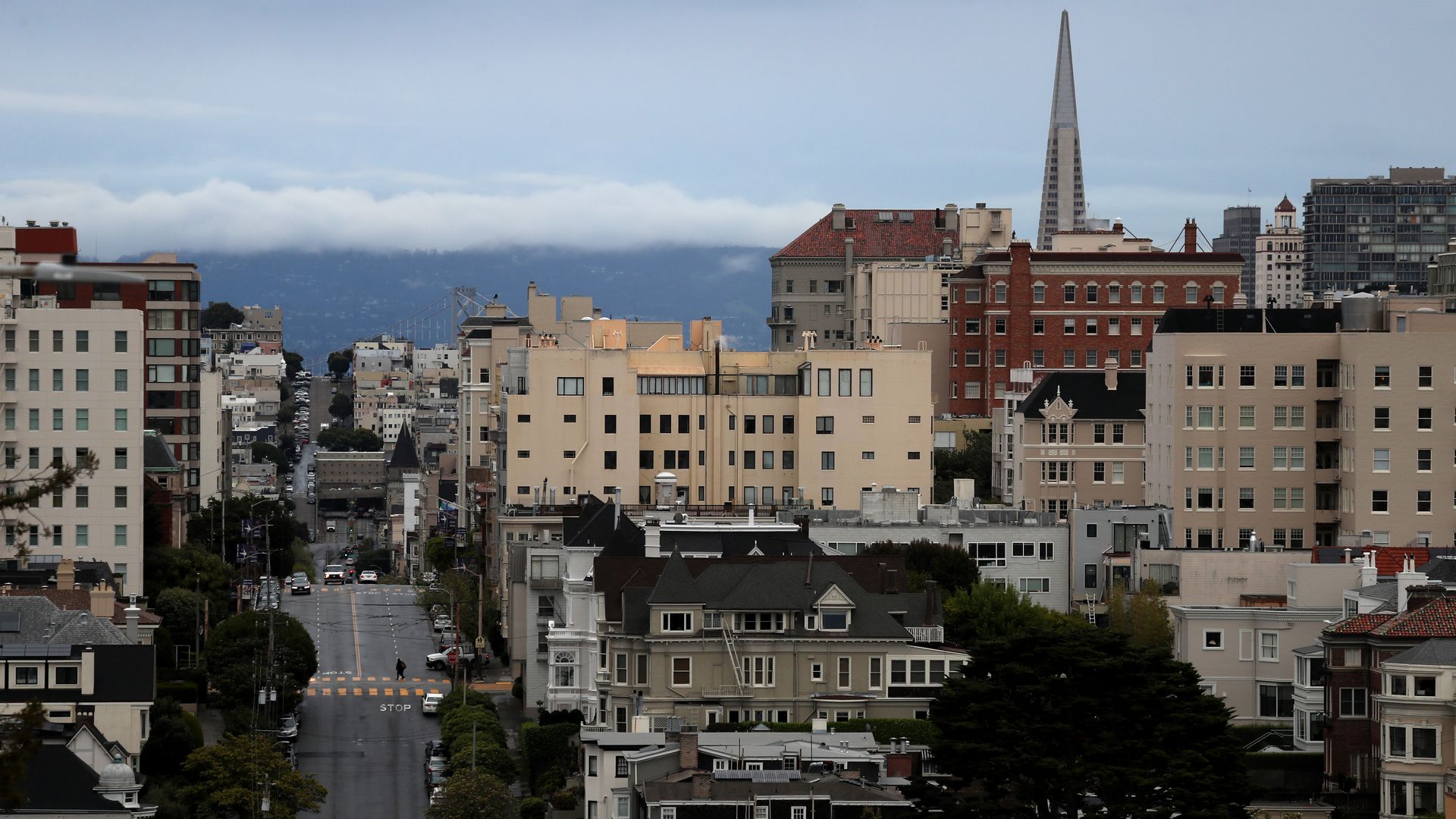
A "shelter in place" order is expected for six Bay Area counties in California on Monday, which will direct residents to stay in their homes as much as possible for three weeks to prevent further spread of the coronavirus, per the San Francisco Chronicle.
What we know: The order will begin at 12:01am PT Tuesday and go through at least April 7. The combined population of the six counties is 6.7 million. Not all Bay Area counties were included.
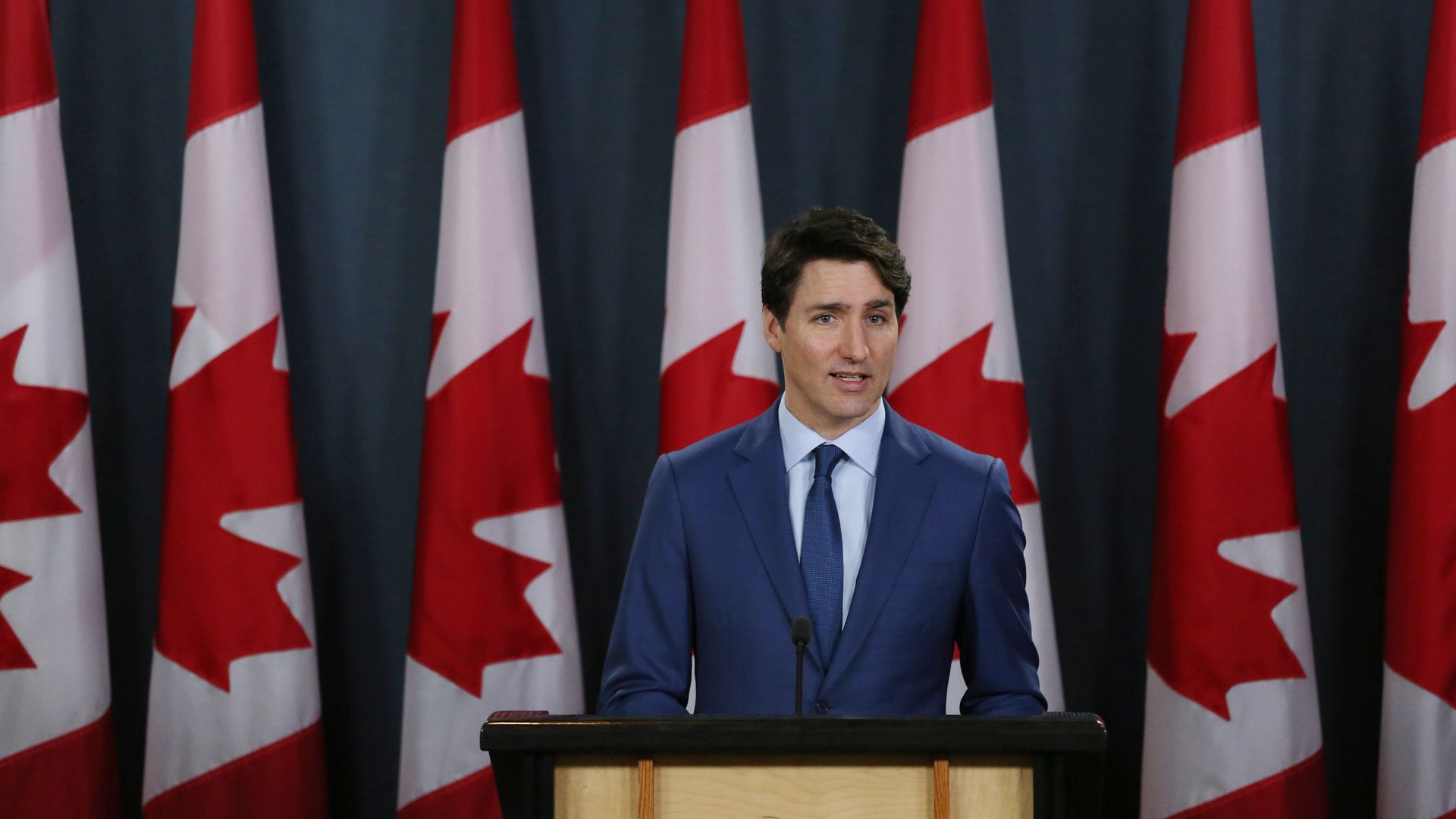
Canadian Prime Minister Justin Trudeau announced Monday that the country will close its borders to all foreign nationals, with exemptions for Canadian residents, U.S. citizens, diplomats and some other groups.
Why it matters: Trudeau is one of many global leaders who have taken the drastic step of closing their country's borders in an effort to stop the spread of the virus. The decision to exempt U.S. citizens will likely raise questions, especially considering that New York and Washington state — both of which border Canada — are the epicenters of the U.S. outbreak.
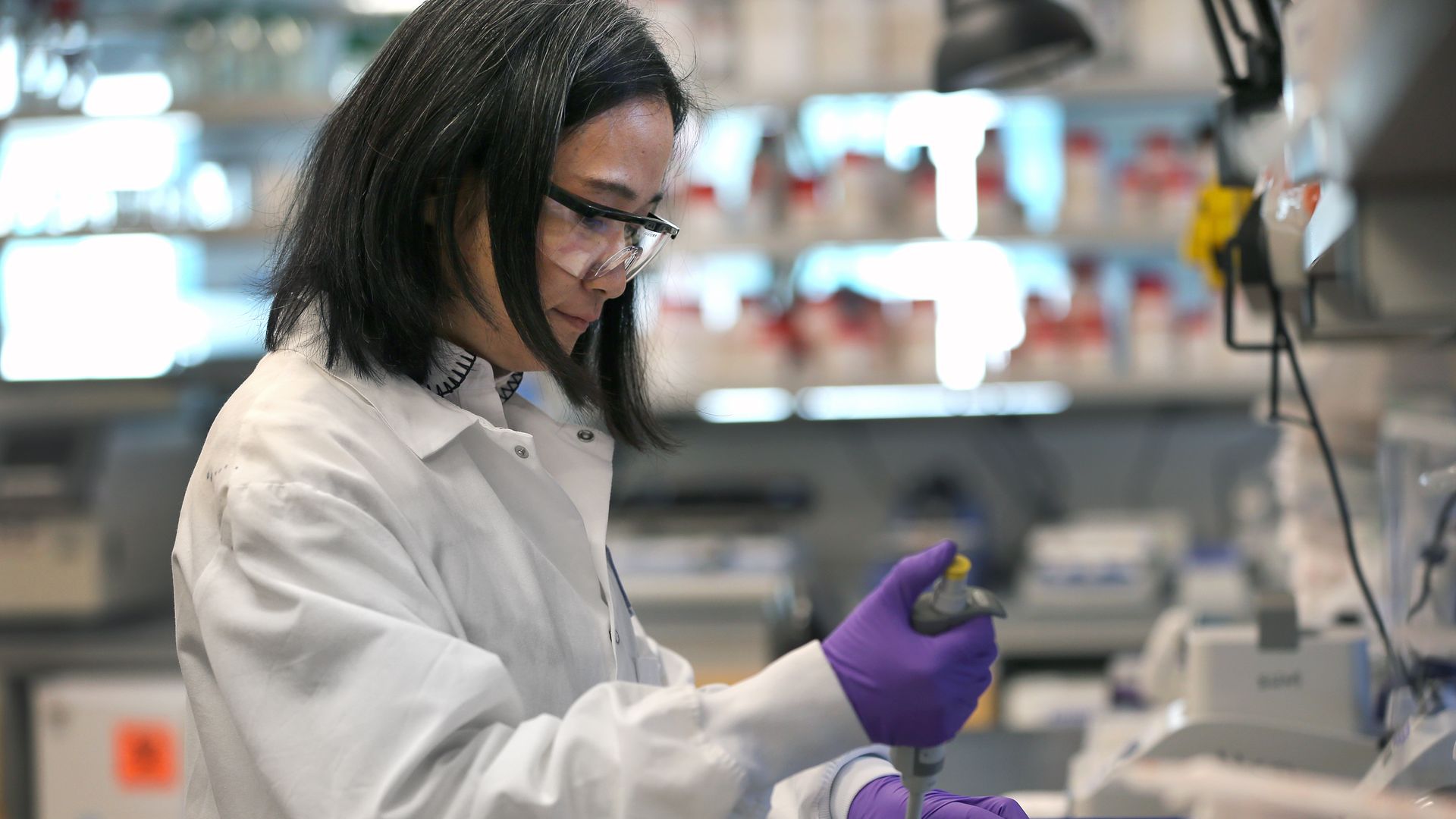
A healthy U.S. volunteer received the first dose of an experimental coronavirus vaccine, a potential defense against the virus if it becomes a long-term threat.
Where it stands: The trial will ultimately give 45 volunteers two doses about 28 days apart in order to test the vaccine's effectiveness in protecting the subjects against COVID-19. If successful, several more trials with larger subject groups will be needed to prove whether there are common side effects.
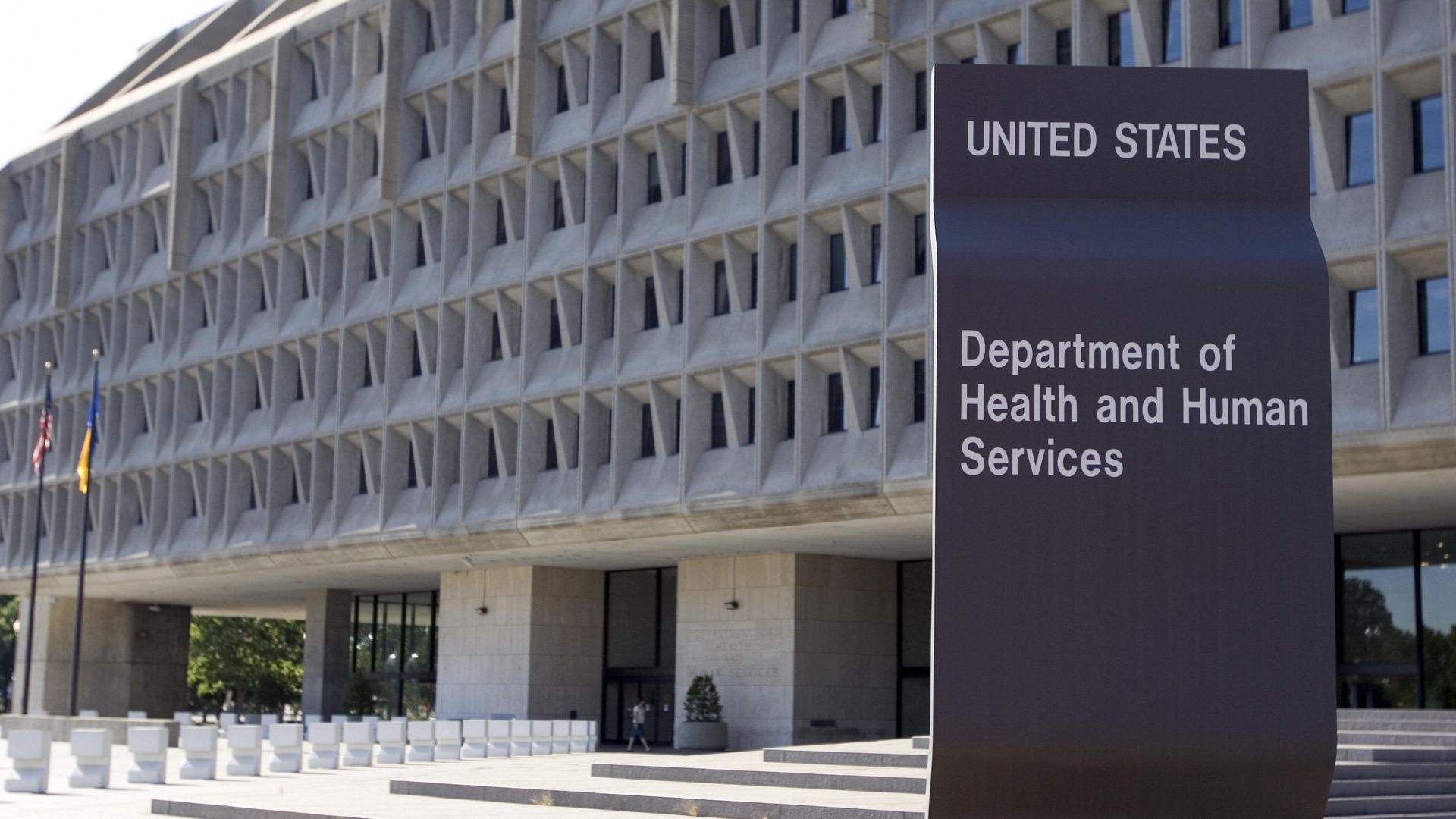
The Department of Health and Human Services, which has been at the forefront of the Trump administration's coronavirus response, was hit with a cyberattack over the weekend, Bloomberg News first reported and Axios has confirmed.
Why it matters: The attack comes in the midst of the Trump administration's efforts to slow the spread of the coronavirus, which has infected nearly 4,000 people in the U.S.
The NFL announced Monday that it will hold its 2020 draft next month as scheduled, but will cancel the planned public events in Las Vegas due to the coronavirus outbreak.
The big picture: The league said the selection process will still be televised, adding that it is exploring "innovative options" for conducting the draft in such a climate.
New York Gov. Andrew Cuomo said Monday that the state's coronavirus response won’t meet the capacity of the health care system.
Why it matters: Cuomo has criticized the federal government for not doing enough to confront the crisis, arguing that uniform, nationwide rules would be more effective than individual state mandates in slowing the influx of patients to hospitals.
Now that the Federal Reserve has fired its monetary policy bazooka — announcing Sunday the second emergency interest rate cut in as many weeks, this one taking rates effectively to zero — expect the drumbeat for fiscal stimulus to pick up, as more economists pound the table for government action.
What's happening: On Monday, Sen. Mitt Romney (R-Utah) joined a growing chorus of liberal and conservative economists are lining up behind a proposal published in the Wall Street Journal by Harvard professor Jason Furman, who chaired the Council of Economic Advisers (CEA) under President Obama, that calls for direct government payments of $1,000 to every American adult.
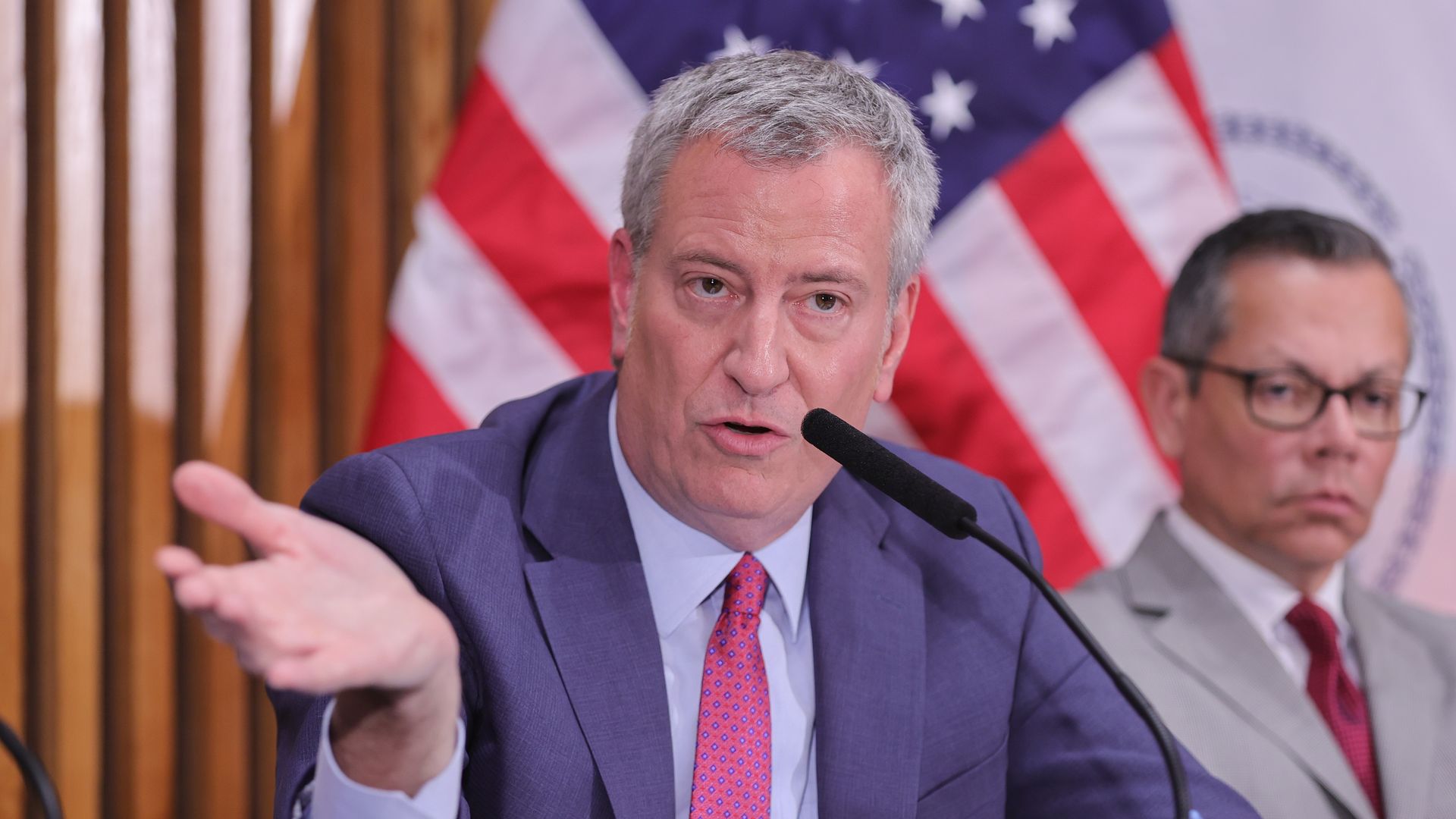
New York City Mayor Bill de Blasio visited his preferred Brooklyn gym on Monday as Gov. Andrew Cuomo announced that the state would enact a series of closures, including gyms, in response to the coronavirus outbreak, per CNN's Andrew Kaczynski.
Why it matters: De Blasio faced widespread criticism on social media for failing to set an example for citizens as public health experts urged Americans to "hunker down significantly more than we as a country are doing."
Last year we discussedtheemergence of CEOs becoming America's new politicians, stepping into the national leadership void on issues like climate change and immigration. Or, in some cases, being shoved into that void.
Driving the news: This role reversal has manifested itself over the past week, as so many of our elected officials dithered.
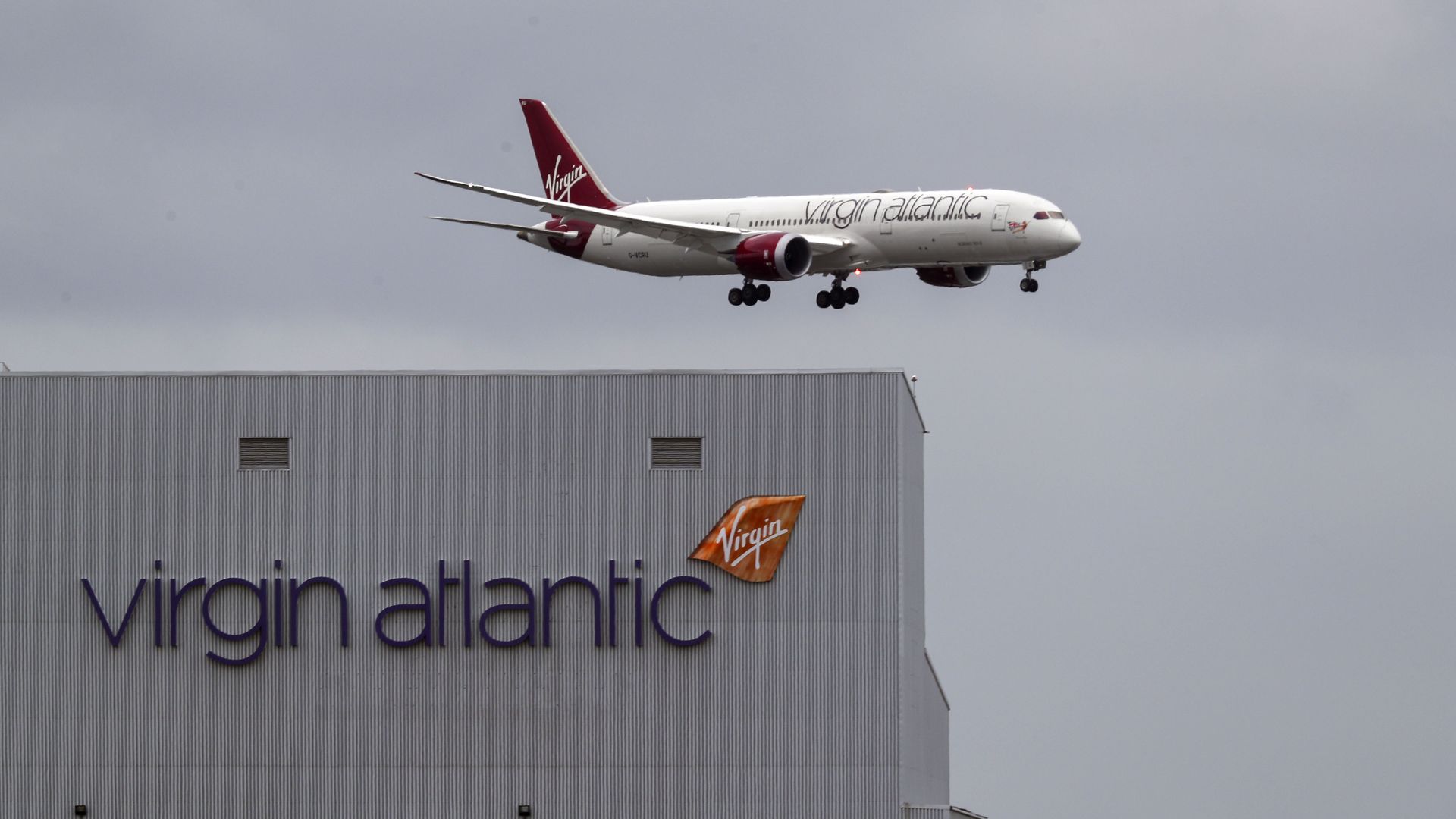
Virgin Atlantic announced Monday that it would ask staff to take eight weeks of unpaid leave as it faces shrinking demand and route reductions amid the ongoing coronavirus outbreak.
Why it matters: The spread of the novel coronavirus "has accelerated the sharp and continual drop in demand for flights across Virgin Atlantic’s network, meaning immediate and decisive action is needed," the airline said. It announced it will reduce flights per day by about 80% — including terminating its route between Newark and London Heathrow — and park about 75% of its fleet by March 26.
Companies from across the tech industry are trying to figure out not only how best to support their employees during the coronavirus crisis, but also how they can be a resource to their users.
Why it matters: There are a lot of unknowns about what the next few weeks and months hold, but there are some clear needs as the U.S. heads into uncharted territory.
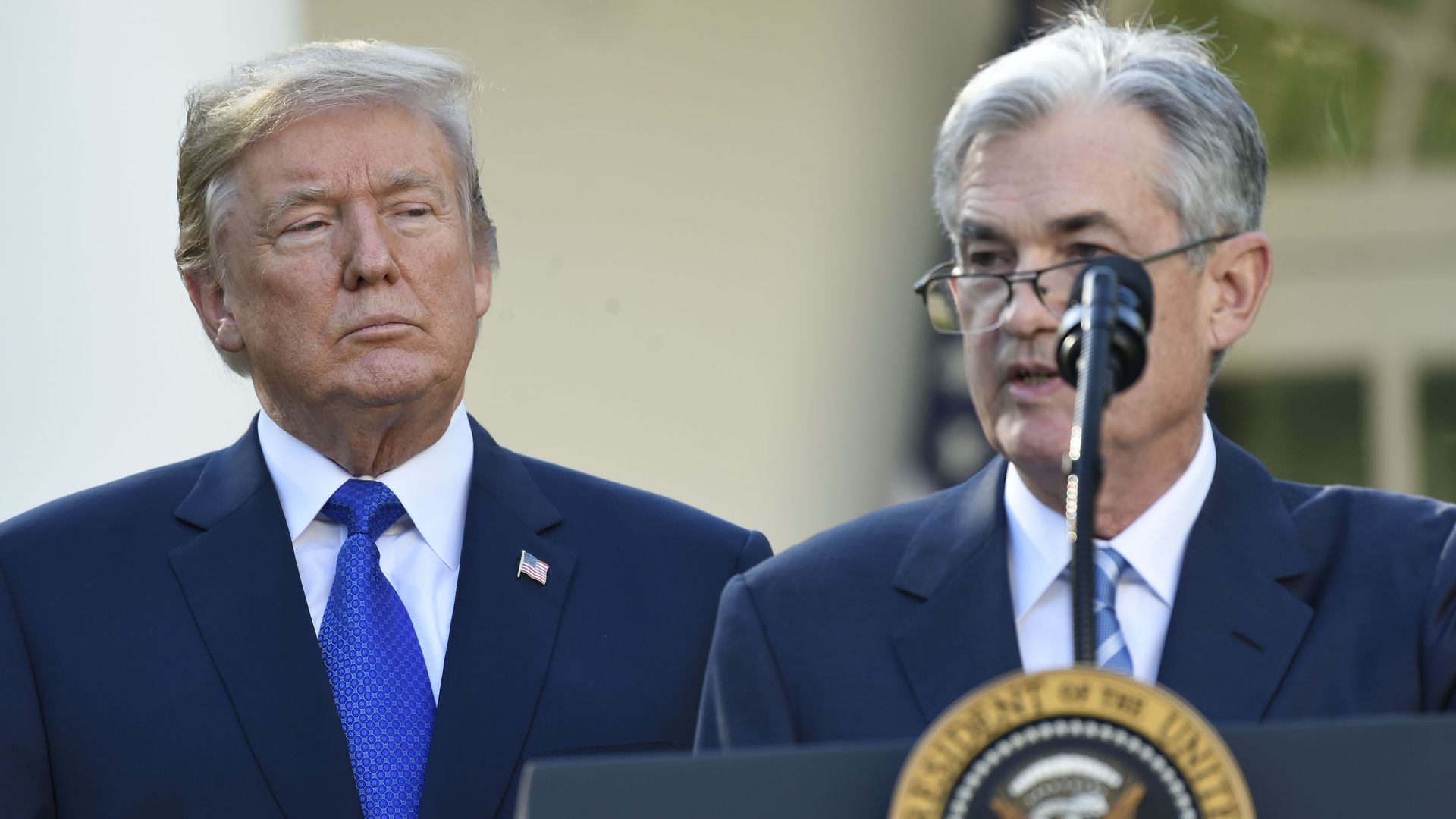
Despite earning praise from Trump, who said it made him "very happy” and that "people in the market should be very thrilled," the Federal Reserves's rate cut was followed by more bloodletting in Asian and European markets overnight Monday, as coronavirus panic continued to grip markets.
What happened: The Australian ASX index fell 9.7%, its largest fall on record; Hong Kong's Hang Seng dropped by 4%; and, benchmark indexes in India and the Philippines saw almost 8% losses. The European Stoxx 600 was down by more than 7%.
If the coronavirus outbreak in the U.S. gets really bad — if it stretches on longer than we anticipated, if huge numbers of people get sick, if the disruptions to daily life become even more severe — early flaws in the testing process will bear a lot of the blame.
The big picture: You probably know that there were some early problems with testing and that they’re getting better — which they are. But those early failures will help define the entire scope of this pandemic, and there’s not much we can do now to reverse the damage.
A new reality sets in today for many working parents: double duty as a remote employee and a home-school supervisor.
The big picture: As schools and offices both shut down because of the coronavirus outbreak, parents are trying to figure out how to do two full-time jobs at once. It'll be a struggle even for privileged households, and it could border on impossible for some working-class families.
Health insurance companies are not concerned yet that the new coronavirus is going to drive up their medical claims and spending.
The big picture: More people will need expensive hospitalizations to treat COVID-19, which has turned into a full-blown public health emergency. But insurers view the outbreak as an "extension of the flu season," according to a Wall Street bank that spoke with insurance executives last week.
New York City and Los Angeles both announced plans Sunday night to close all bars, restaurants and entertainment venues in an effort to curb the novel coronavirus spread.
The big picture: L.A. Mayor Eric Garcetti said restaurants "may sell food for takeout only," with the measures "effective at midnight tonight" L.A. time. New York City Mayor Bill de Blasio said only pick-up and delivery would be allowed from restaurants. NYC announced earlier it would begin closing its nearly 1,900 public schools this week through April 20 as it reported 329 coronavirus cases. Los Angeles County had reported 69 cases and one death by Sunday night.
Editor's note: This article has been updated to include measures in Los Angeles.
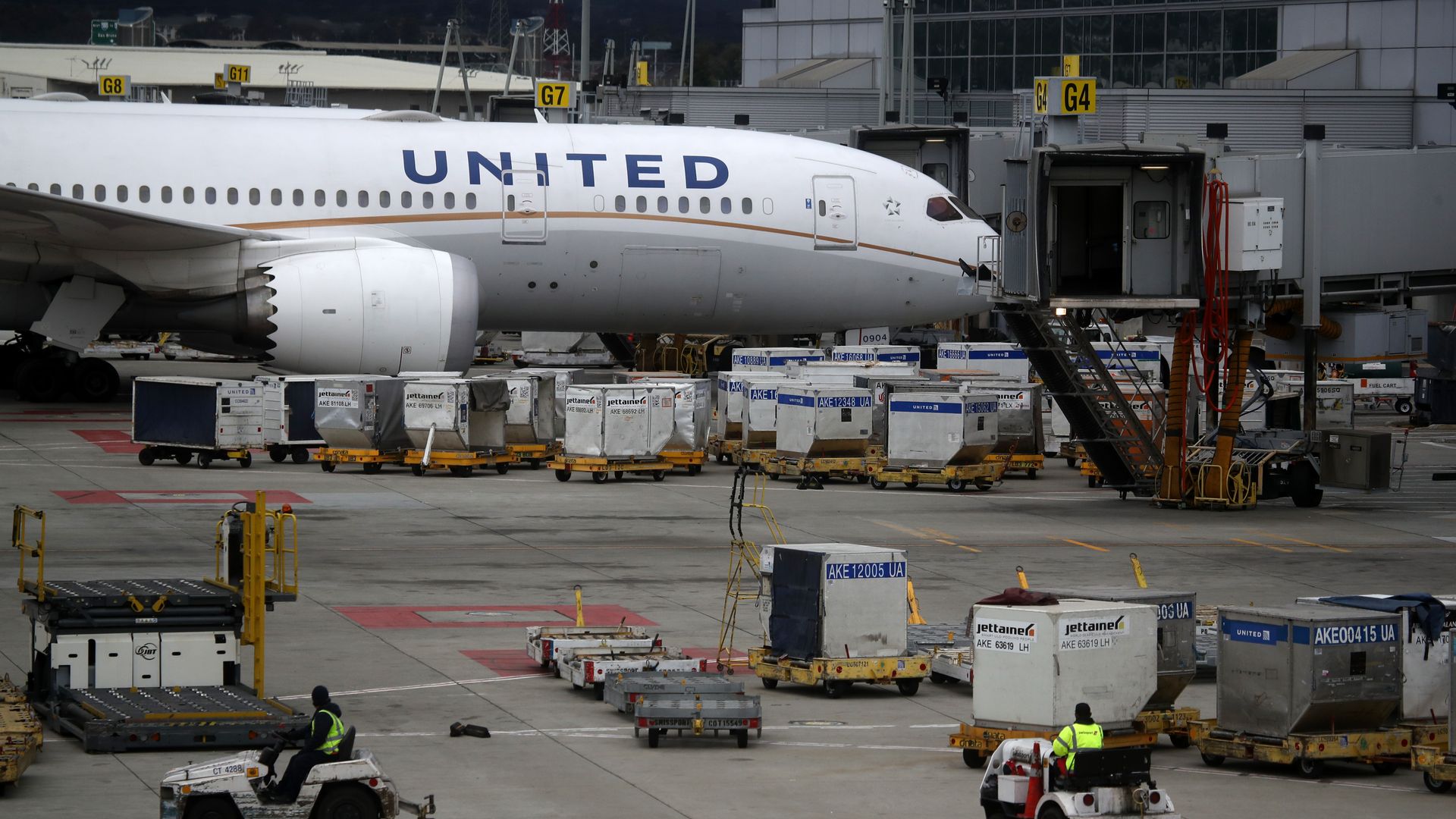
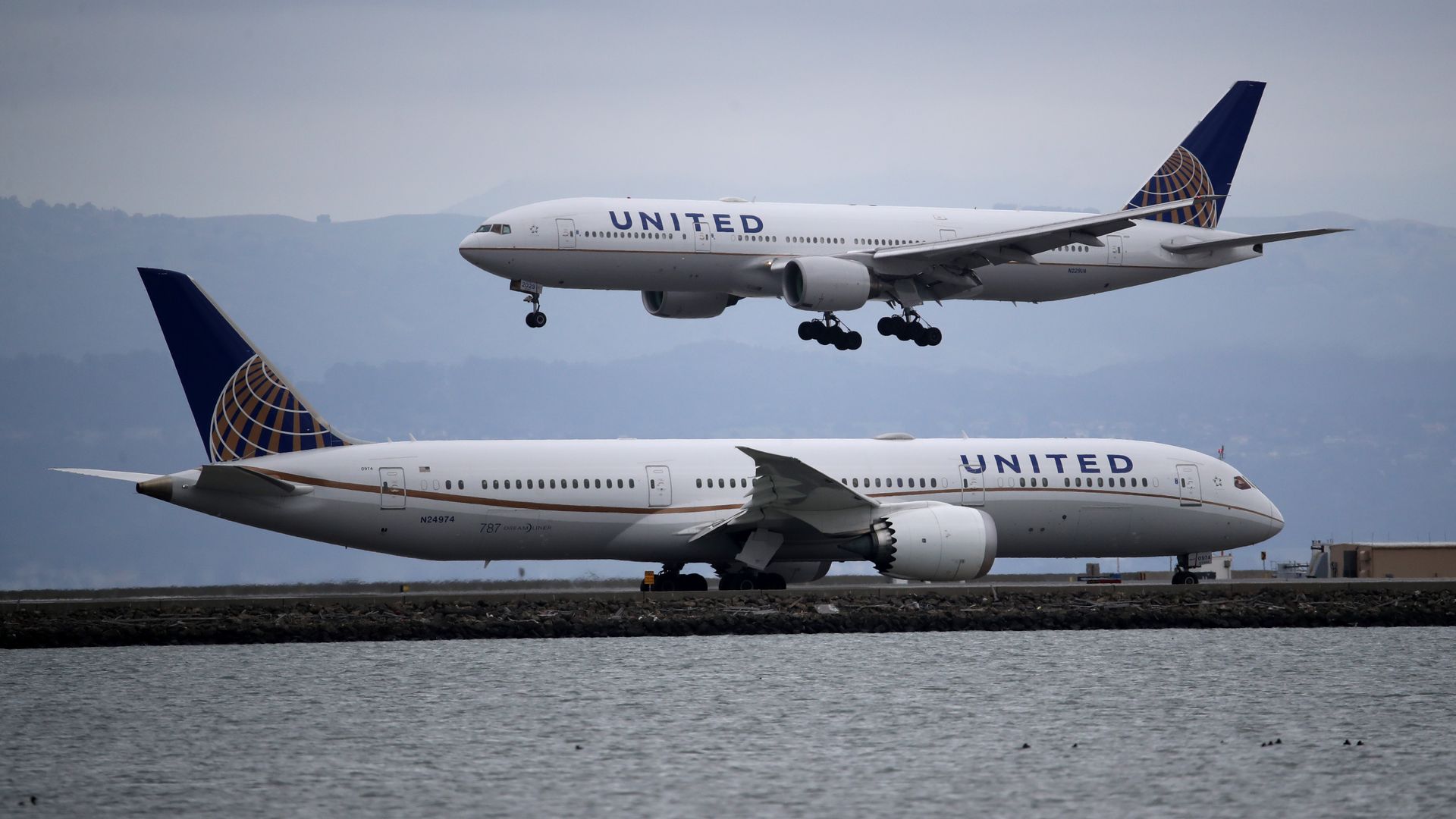
United Airlines said in a statement Sunday it will cut capacity by about 50% for April and May from Monday, as the airline sees a drop in demand because of the novel coronavirus outbreak.
The big picture: The announcement comes after Delta Airlines announced Friday it would reduce its flight capacity by 40% for the next four months over the outbreak. United said even with the cuts it announced, "we're expecting load factors to drop into the 20–30% range — and that's if things don't get worse."