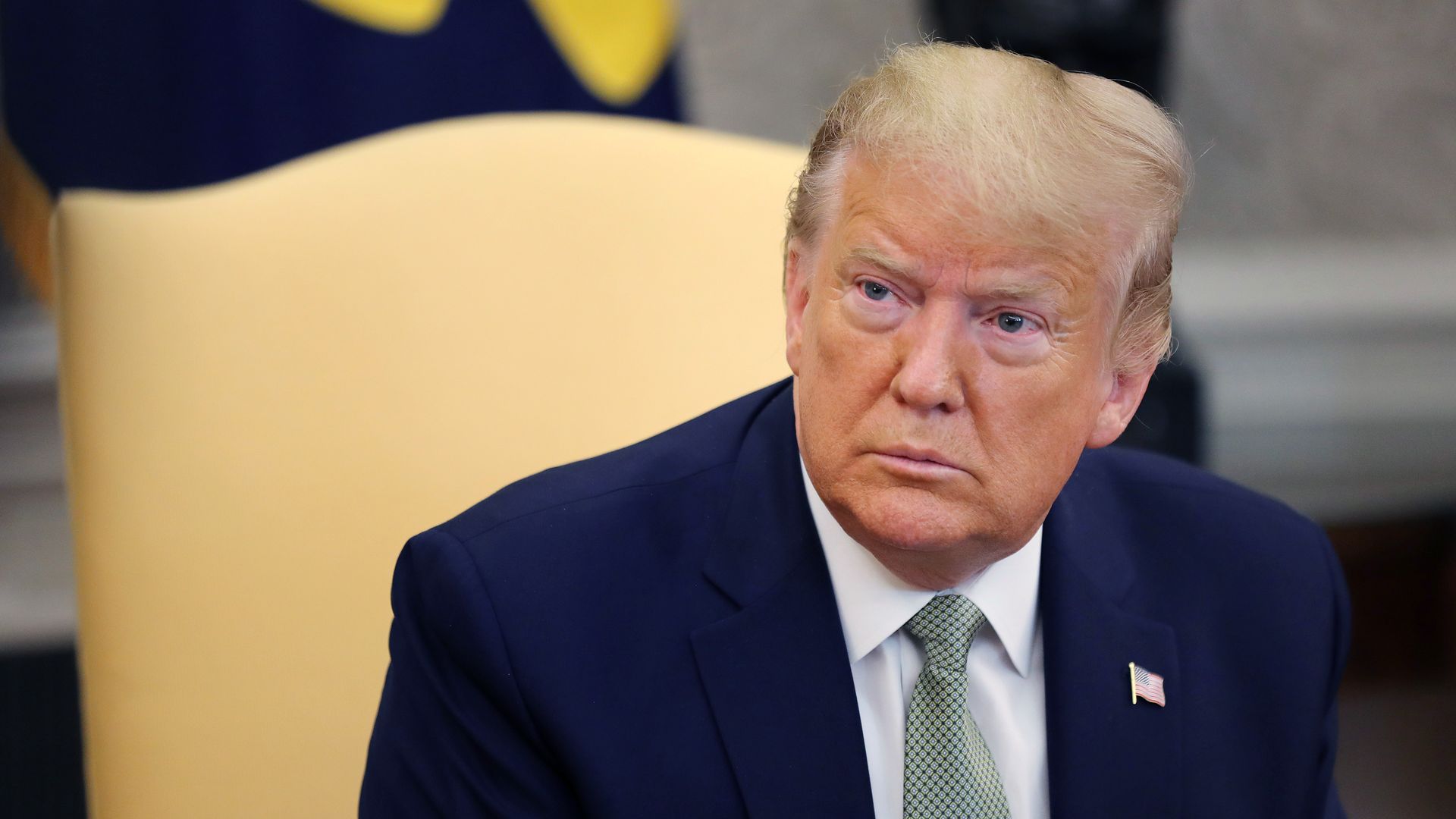
President Trump declared a national emergency on Friday over the coronavirus outbreak.
The state of play: This will allow the federal government to quickly free up billions in federal aid for local municipalities and states to use to combat the illness. Trump is facing mounting pressure from mayors and governors — as well as congressional Democrats — to respond quickly as the virus spreads.
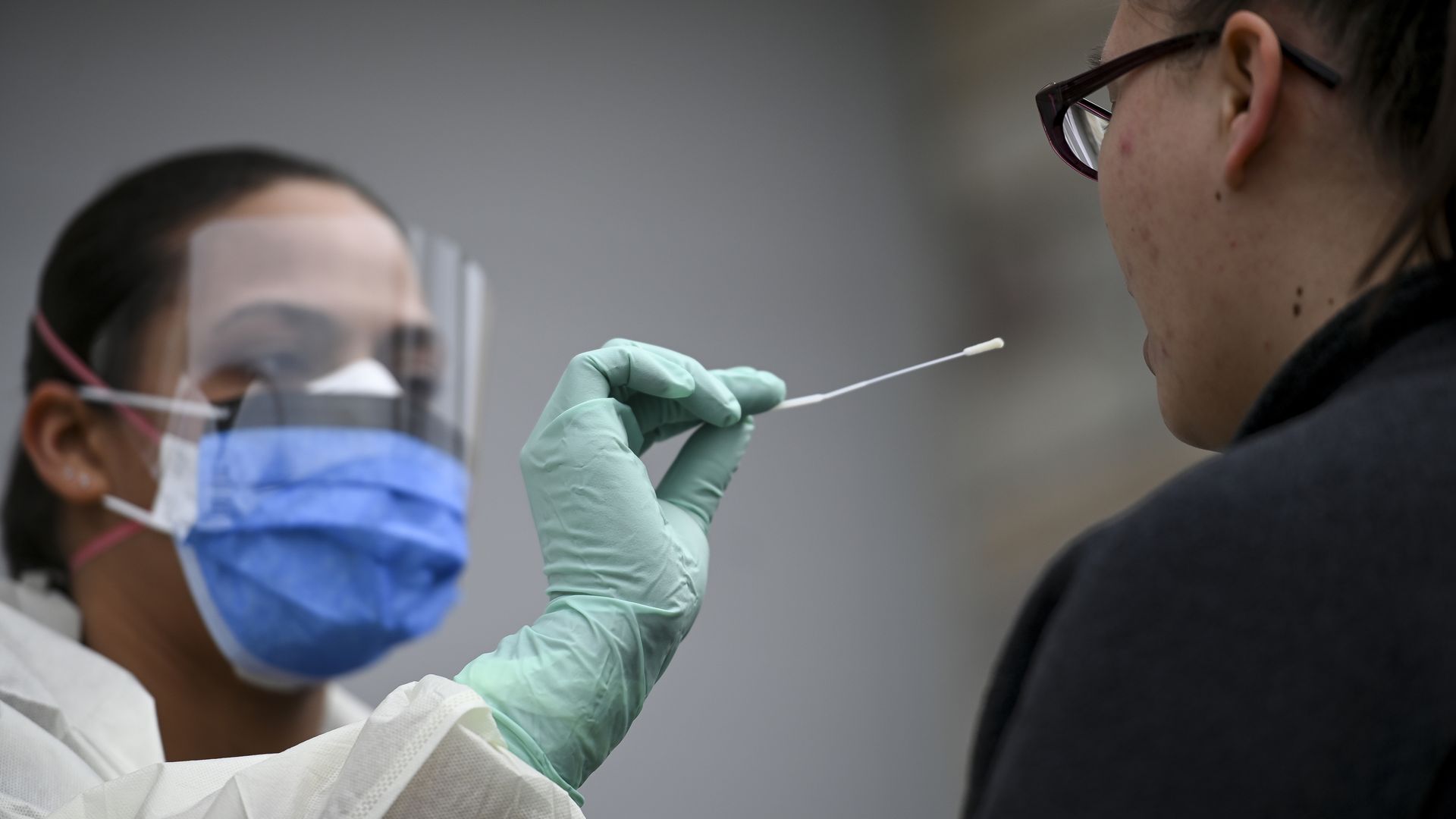
Some areas of the U.S. are facing a shortage of nasal swabs, an essential material to test people for the novel coronavirus.
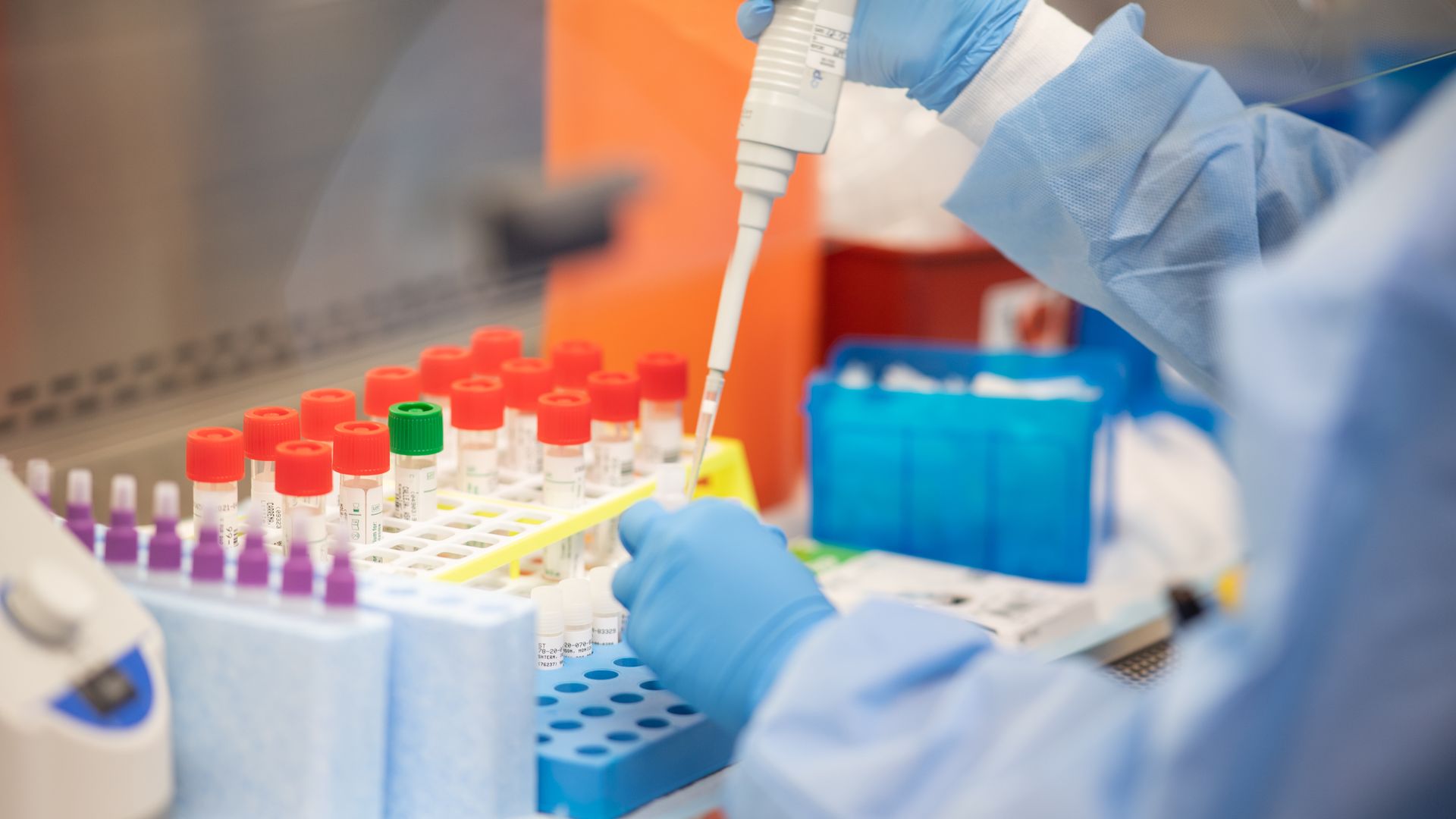
Why it matters: Coronavirus testing in the U.S. has been woefully lagging behind other countries — a criticism the Trump administration is trying to fix. Labs have been short on other materials like "RNA extraction" kits that are needed for testing.
Delta Airlines announced Friday it will reduce its flight capacity by 40% for the next four months due to the coronavirus outbreak, a dramatic increase from its original 15% reduction.
The big picture: It's a deeper cut to capacity than Delta instituted after the Sept. 11 attacks. The airline industry has had to curb flights as it grapples with lack of demand, as Americans are advised to avoid nonessential travel. Delta CEO Ed Bastian will also forgo his entire salary for the year.
The world is hunkering down and staying home, which is sending the travel industry — and the rest of the economy — into a tailspin.
Why it matters: A freedom we usually take for granted — the ability to go anywhere, anytime — is taking a back seat to public health concerns as officials try to slow the spread of the coronavirus. The interruption of travel has far-reaching economic consequences, especially for the 15.7 million Americans whose jobs depend on travel.
Medicare has released the prices of COVID-19 tests: $35.92 for the tests developed by the Centers for Disease Control and Prevention and $51.33 for all other commercial tests.
The bottom line: These are the prices that labs bill Medicare. Most health insurers have waived copays for coronavirus tests, meaning you won't have to pay anything upfront. If you receive bills for any amount, especially if they are higher than these prices, you should appeal.
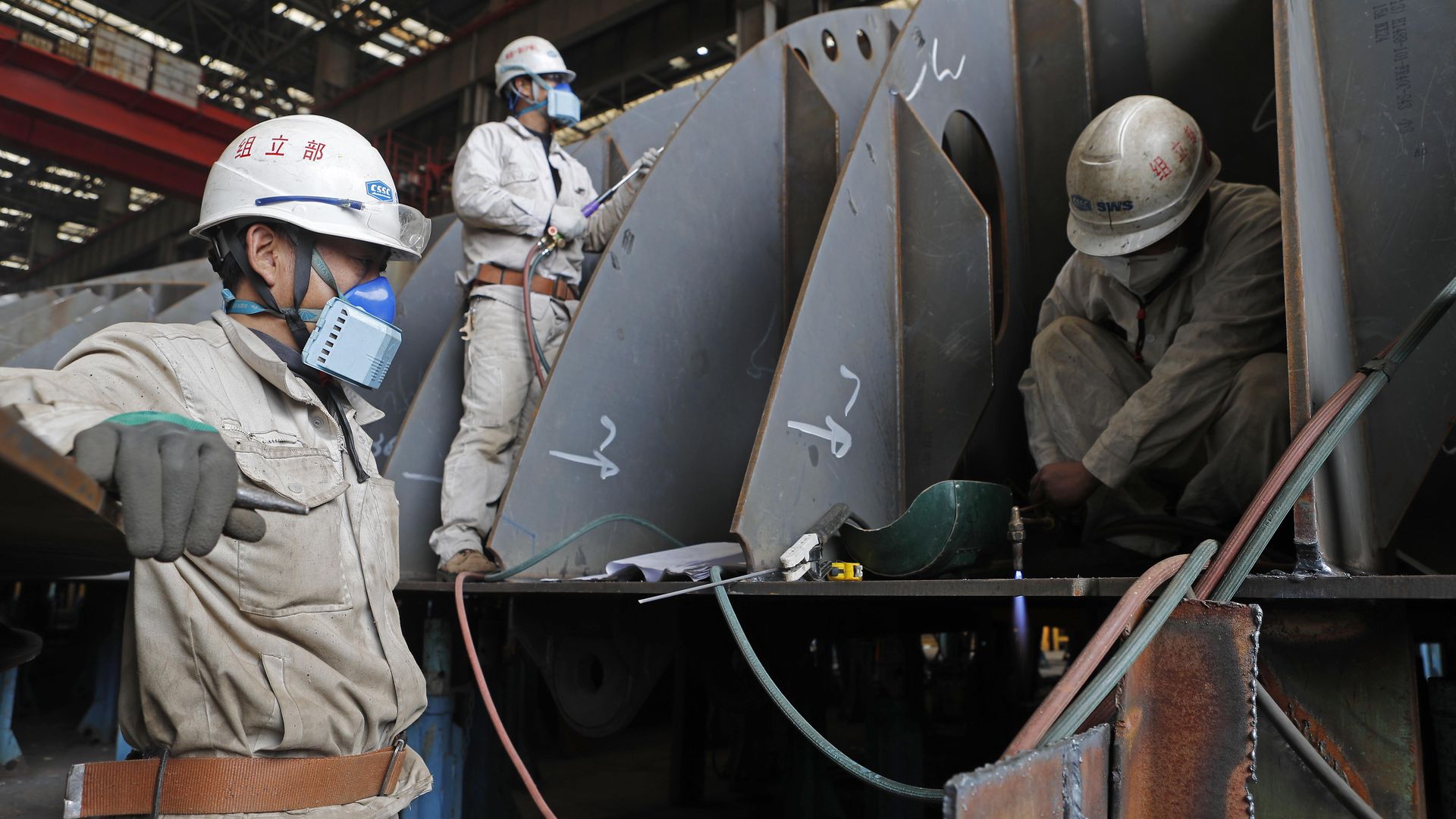
Nearly 40% of electronics manufacturers feel worse about the impact of COVID-19 on their business than they did a month ago, according to an updated survey being released later today by electronics industry trade group IPC.
Why it matters: Although the coronavirus outlook in China is improving, elsewhere the situation has deteriorated. Plus, most companies are now dealing with problems on both the demand and supply sides of their businesses.
The period of coronavirus complacency came to a dramatic end in the last 48 hours, as the stock market plunged, states issued grim warnings and schools closed their doors.
Driving the news: But it was the cancellation of sports — March Madness, in particular — that hit the hardest for some Americans, serving as a reality check as to just how serious this situation is.
A number of forecasts show global oil consumption dropping this year for the first time since the financial crisis over a decade ago as the coronavirus outbreak prevents travel and stymies other economic activity.
What they're saying: The firm Rystad Energy, in a note yesterday, says it now projects global oil demand to fall by 600,000 barrels per day year-over-year — the world uses roughly 99 million barrels of oil per day — compared to 2019 levels.
The effects of the coronavirus on renewable energy, electric vehicles and oil are all coming into sharper focus in recent days.
Why it matters: A report from research firm BloombergNEF provides a window onto the breadth of the virus' effects on a suite of energy technologies, not just use of oil.
Overseas stocks performed even worse than the U.S. on Thursday.
The state of play: Europe’s benchmark index fell 11.5%, its worst day in history; Brazil’s Bovespa dropped as much as 20%, extending this year’s loss to nearly 50% in dollar terms; Canada’s benchmark TSX index lost 12%, for its worst day since 1940.
The Fed has clearly gotten the message being sent from financial markets — "OMFG!!!" — and has acted accordingly.
The state of play: The U.S. central bank is responding to the coronavirus outbreak as if the country is in a crisis, first by declaring an emergency 50 basis point rate cut last week, and on Thursday by announcing $1.5 trillion in injections to the systemically important repo market, on top of already increased funding injections.
Tech platforms have gotten smarter about handling deliberate disinformation from bad actors, but the coronavirus' spread presents a different kind of misinformation threat: False information spread by people who are well-intentioned, but fearful and naive.
Why it matters: Facebook, Twitter and other platforms have faced strong pressure to harden themselves against "coordinated inauthentic behavior," but the pandemic will present them with a different sort of challenge — uncoordinated, ignorant behavior at a moment when bad information could lose lives.
As cases of the coronavirus multiply across the U.S., every office, school, restaurant and store shutdown is stress-testing the country’s ability to live life without leaving home.
Why it matters: The coronavirus is triggering a grand experiment: Remote work and remote learning have long been buzzwords, but the sudden switch to telecommuting en masse has the potential to accelerate shifts in how work is conducted and the way we think about it.
Health care hiring has surged over the past few years, but the influx of bodies won't necessarily alleviate an impending wave of coronavirus cases.
The big picture: Most new health care jobs are on the administrative side — not doctors, nurses or other clinical staff who are needed to help triage and care for patients.
The coronavirus outbreak in Italy has gotten so bad so quickly that some doctors are now forced to practice "catastrophe medicine" — determining which severely ill patients should, and should not, get care based on the resources available.
Between the lines: The U.S. is not at that point — but a week ago, neither was Italy. The rapid deterioration there underlines the importance of taking preventive measures seriously, and the need for political and health leaders to start thinking about hard ethical questions.
Some of the nation’s best academic laboratories wanted to begin developing their own coronavirus diagnostic tests early last month, but were blocked by federal rules about test development.
Why it matters: The U.S. is woefully behind in mass deployment of tests to detect coronavirus, determine its spread and isolate hot spots. Once given the go-ahead to develop tests under more relaxed terms, some of these labs were able to get tests up and running in a matter of days.
A man in his 70s with underlying health issues tested positive for the novel coronavirus after dying at a local hospital, the Kansas Department of Health and Environment (KDHE) said on Thursday.
What's happening: Kansas health officials confirmed three additional presumptive positive cases of COVID-19 in Johnson County, Kansas on Thursday. The three male patients, currently in isolation, tested positive after attending the same conference in Florida, health officials said.
Some hospital systems are temporarily pausing bills for any patients who receive care related to the new coronavirus.
Why it matters: Receiving costly medical bills could discourage people from seeking care even as the outbreak worsens. However, it's unclear what patients' financial obligations will look like once the pandemic simmers.