Sweetgreen appears well-positioned to ride new trends in the economy.
Why it matters: Restaurants have been among the slowest businesses to recover from the pandemic — battling financial hardship from closures and broken supply chains, then worker shortages, inflation and the fallout of remote work.
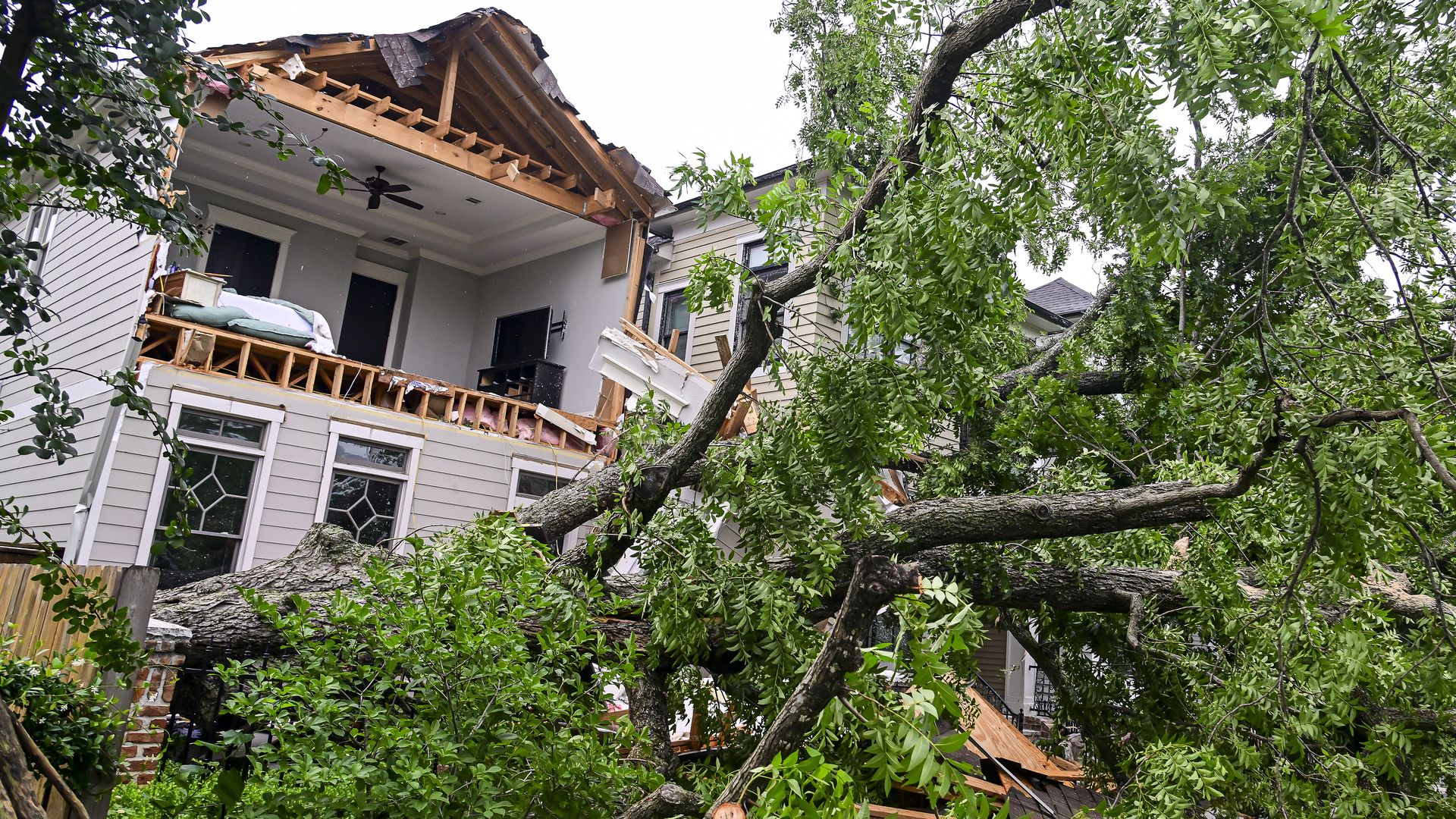
Houston's mayor said at least four people died in a severe windstorm that caused widespread damage Thursday, as the National Weather Service warned of "dangerous and life-threatening flash flooding" in eastern Texas and western Louisiana.
The big picture: The NWS' Storm Prediction Center had warned of possible tornadoes and issued a high risk (Level 4 of 4) of excessive rainfall for portions of western Louisiana and eastern Texas as widespread thunderstorms struck the already-saturated region.
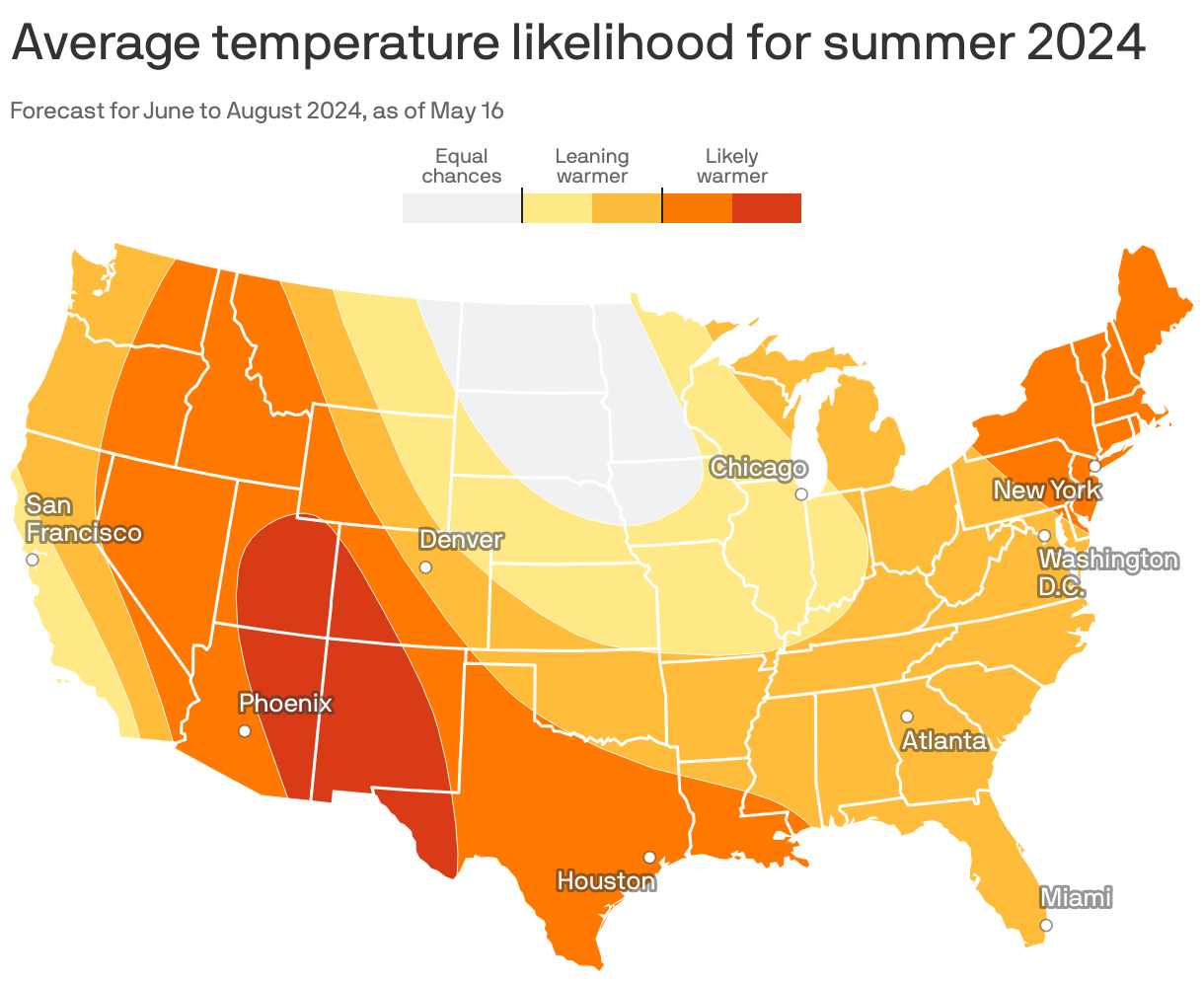
The continental U.S. could challenge its record for the hottest summer to date, according to the latest seasonal climate outlook released Thursday and other recent data. For millions along the Gulf Coast, the heat and humidity have already begun.
Why it matters: Heat is the top weather-related killer in the U.S. in a typical year. A combination of factors is coming together to make this summer particularly hazardous for the Lower 48 states.
The Biden administration is ending a key solar tariff exemption in a move long sought by domestic manufacturers.
Why it matters: It's another front in the ongoing solar trade wars that could bolster nascent efforts to make solar panels in the U.S. — and divide the industry.
Driving the news: Officialsthis morning said they're removing a tariff exemption for bifacial panels.
Those two-sided panels are the main technology used in large solar installations.
Biden had extended the exemption from the "section 201" levies in 2022, with support from renewables developers and trade groups. Manufacturers and some lawmakers had been lobbying to nix it.
🛫 CNX Resources and KeyState Energy hope to build a major hydrogen and sustainable aviation fuel plant on Pittsburgh International Airport property — but there's a big asterisk.
State of play: They announced a letter of intent to "advance" the $1.5 billion project but caution it depends on how the Treasury Department structures hydrogen tax credits in the 2022 climate law.
Why it matters: It underscores the high stakes of Treasury's looming decisions. Axios Pro's Jael Holzman recently reported that Fortescue's projects are in doubt, absent changes in renewables provisions in Treasury's draft plan.
Why it matters: Wood Mackenzie has taken a stab at putting numbers around the election outcomes.
The big picture: Their "base case" sees $7.7 trillion in capital investment from 2023-2050, a tally that includes fossil fuels and low-carbon sources alike.
But power changing hands informs a "delayed transition" that sees $1 trillion less on the low-carbon side — even though an outright repeal of the 2022 climate law is highly unlikely.
How it works: Trump policy changes would directly and indirectly deter some climate-friendly energy investments.
Data: Columbia Center on Global Energy Policy; Chart: Rahul Mukherjee/Axios
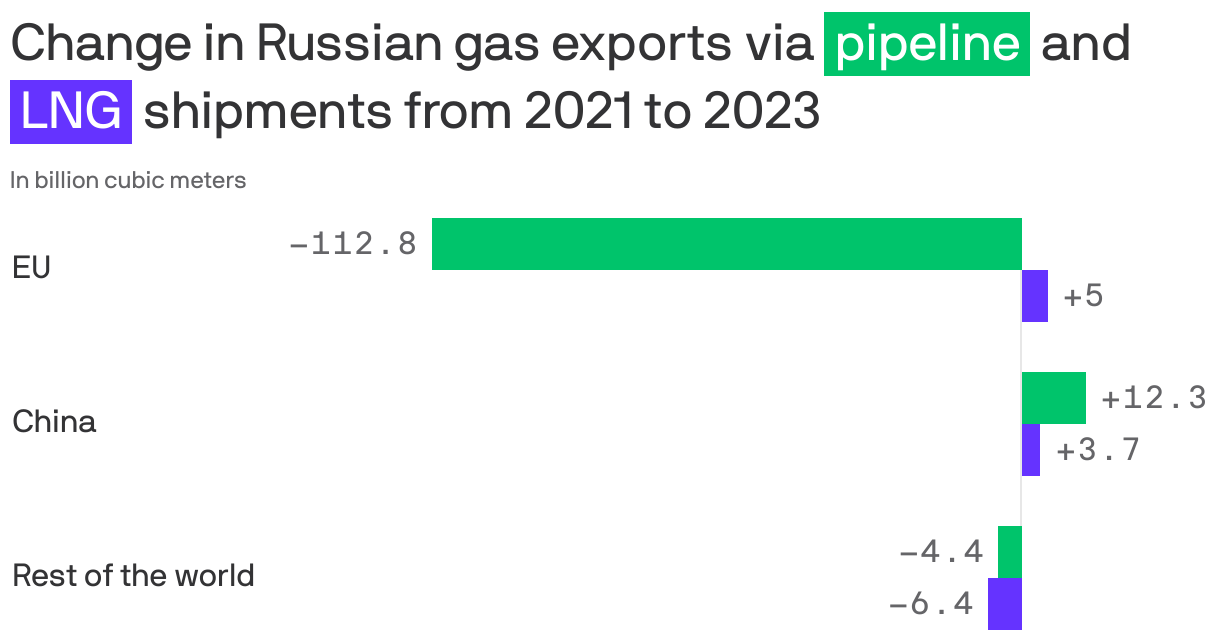
All eyes are turned eastward as Russia tries to convince China to back the long-proposed Power of Siberia 2 gas pipeline.
Why it matters: AsRussian President Vladimir Putin meets with Chinese leader Xi Jinping during a two-day state visit, the market and geopolitical stakes are huge — especially following the massive decline in Russian gas flows to Europe since the invasion of Ukraine.
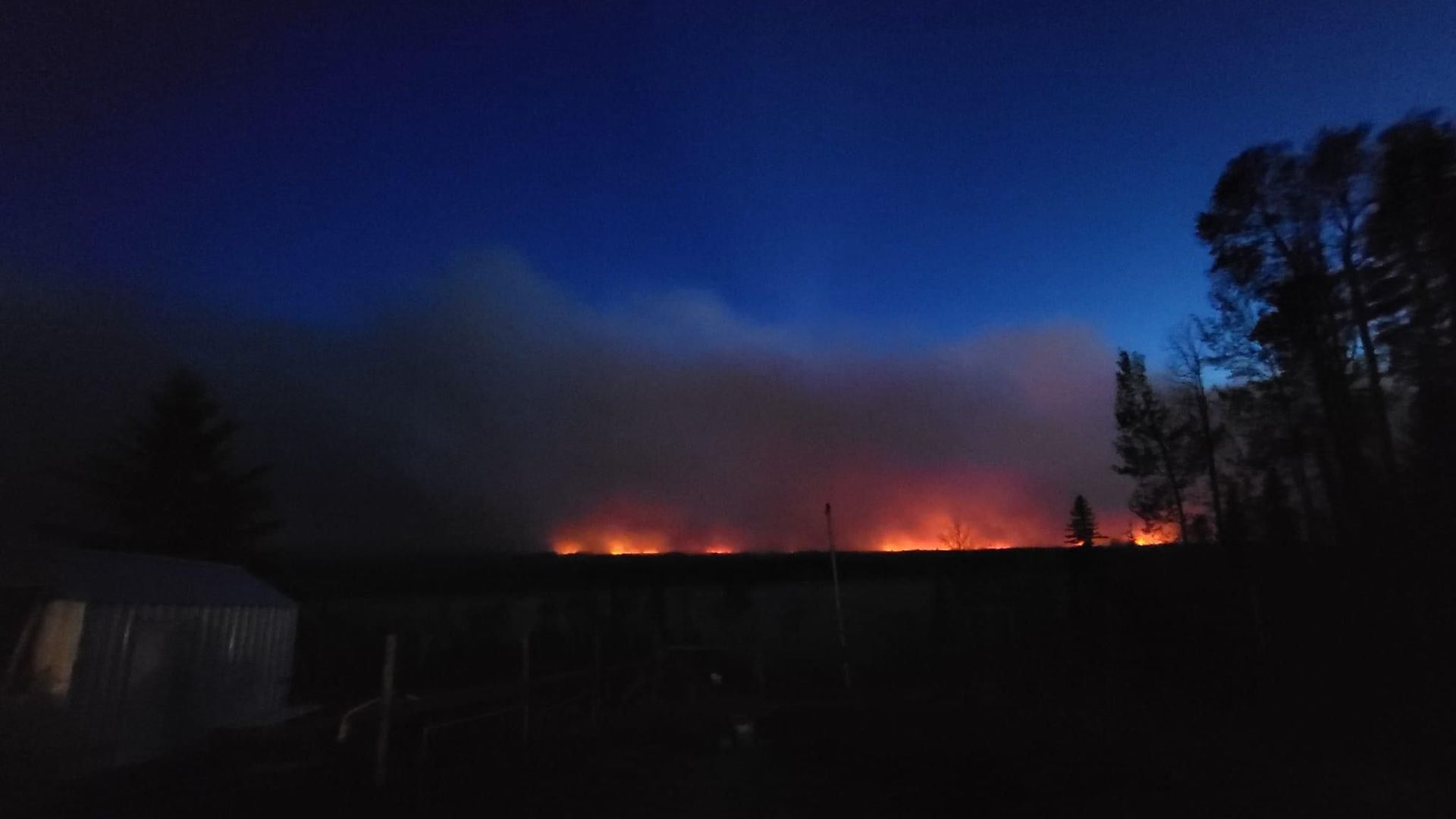
Smoldering combustion beneath northwest Canada's boreal forests has emerged onto the dry surface, re-igniting into fast-moving flames amid unusually warm, dry and windy conditions.
Why it matters: The fires that have emerged this month are a threat to homes and businesses and show how a wildfire season worsened by climate change can defy a clear end date.
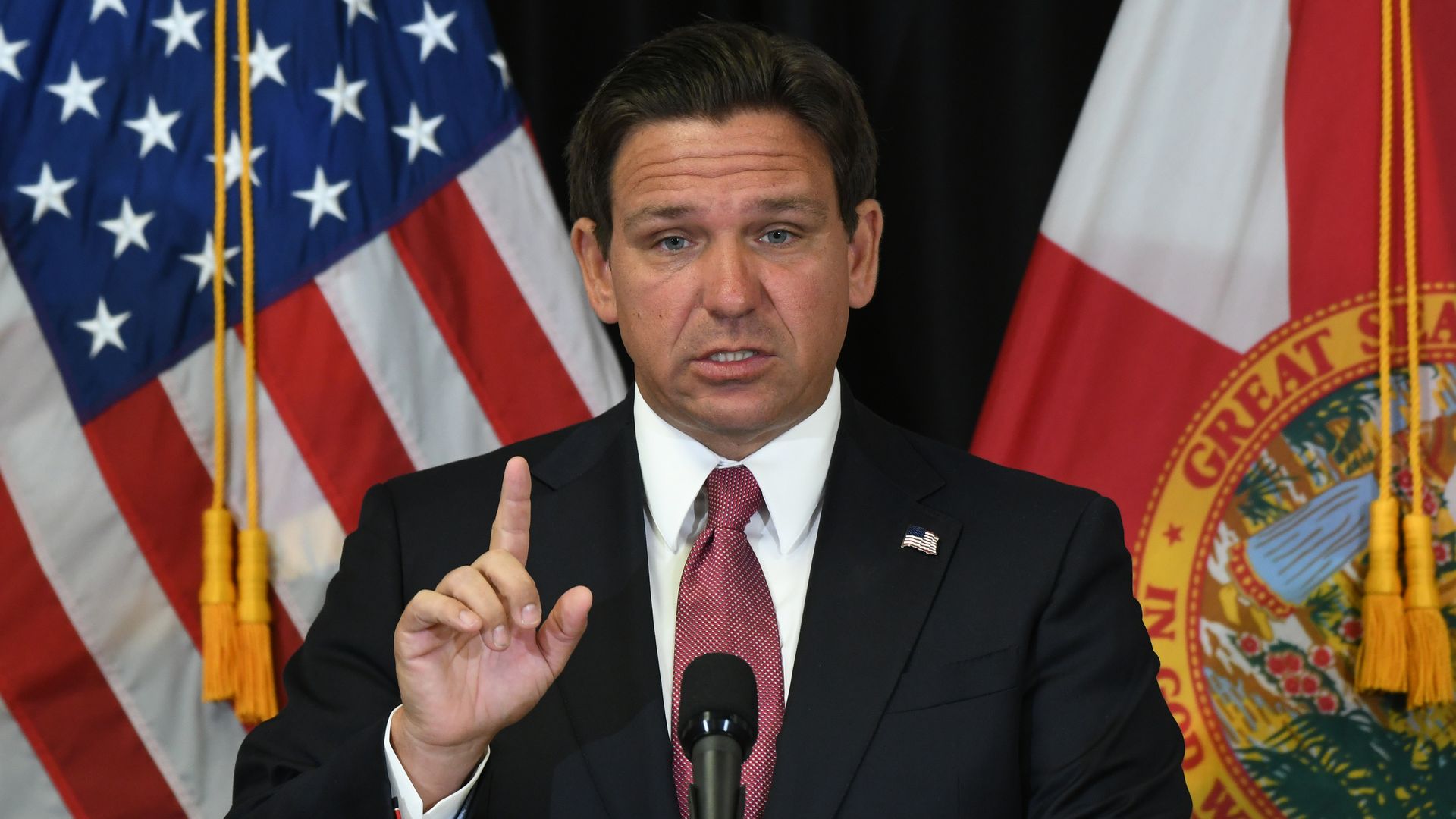
Florida Gov. Ron DeSantis (R) declared on X Wednesday that a bill he signed that removes climate change as a priority in state energy policy would restore "sanity" and reject "the agenda of the radical green zealots."
Why it matters: The bill that would also ban offshore wind turbines and bolster natural gas expansion after taking effect on July 1 comes as climate change's effects are already impacting Florida — notably a dangerous heat wave threatening the state's south this week that's already broken temperature records.




/2024/05/15/1715815002521.gif?w=3840)