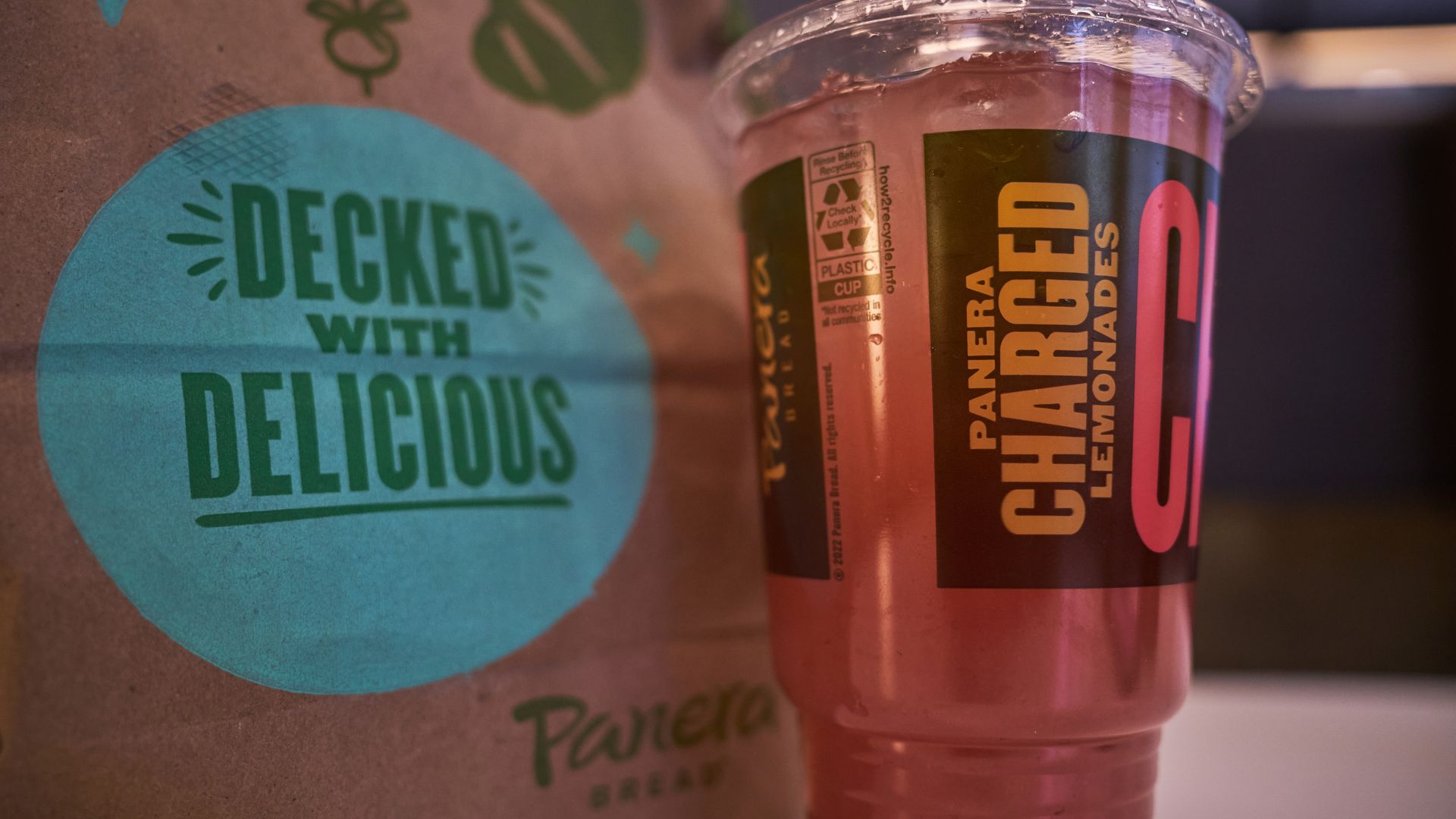
Panera Bread is dropping its heavily caffeinated Charged Lemonades that have been the subject of lawsuits alleging the drinks can cause health issues, Bloomberg reports.
Why it matters: Energy drinks have been growing in popularity despite the health risks.
Robinhood is jumping into the fray against the crypto industry's very own Sheriff of Nottingham.
Why it matters: The trading app arguably has less at stake than some others already caught in the SEC's crypto crackdown, but Robinhood Monday joined their publicized quest to prove the regulator wrong.
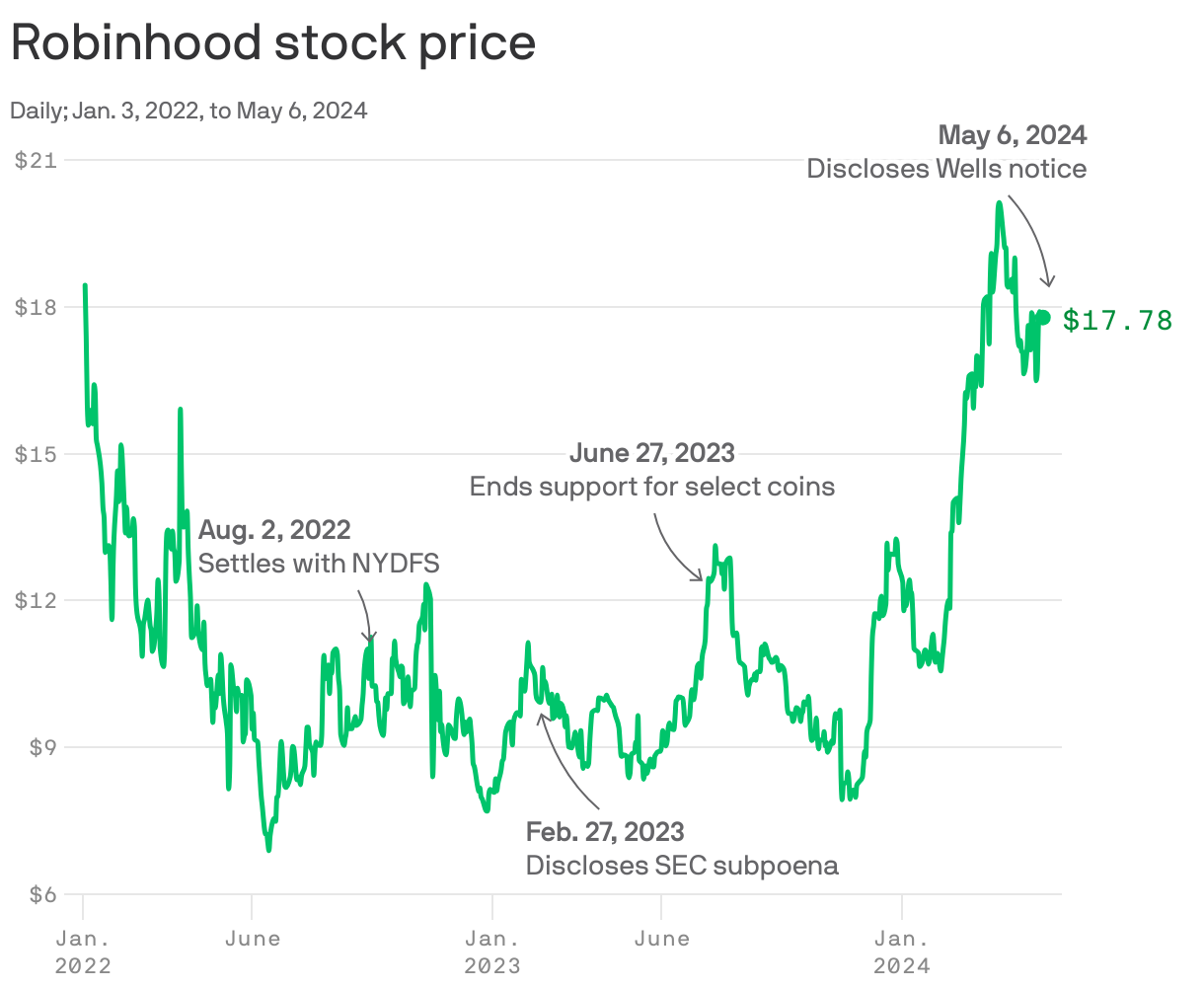
Robinhood used to be a meme stock, but it hasn't seen a moon since its IPO year.
💭 Our thought bubble: Attention from a regulatory battle might help.
Fun fact: Coinbase's shares (COIN) has gained 286% since the SEC's lawsuit landed on June 6, and bitcoin was up just 146% over that time.
Bitwise Asset Management's Matt Hougan said yesterday Coinbase was seeing the added benefit of a "hostile regulatory environment" as an "artificial moat" for its business.
The people the cards represent get a cut of trades of their cards.
Flashback: We've seen this before — several times.
In 2018, there was Crypto All Stars. This NFT game had an innovative feature: what was called the snatch mechanic. Anyone could take anyone else's NFT if they were willing to pay more for it than the last person paid.
It has been three long years since inflation first ripped upward. But the inflation data in 2024 is, in important ways, being driven by that initial series of economic disruptions that took place in 2021 and 2022.
Why it matters: In one sense, this is good news — it implies that once these lag effects have worked through the system, inflation should settle lower without much additional economic pain.
Donor-advised funds (DAFs) are tax-efficient ways to empower individuals to give money to causes they support — and they're charities in their own right that are responsible for all the donations they make.
Why it matters: That tension is causing real problems — including a new securities fraud accusation against Goldman Sachs. (Goldman denies any instance of securities fraud. More on that below.)
Collectively, DAFs boast assets of more than $200 billion and make more than $50 billion per year in grants. That's a lot of money to be sitting in a legal and conceptual gray area.
Why it matters: If DAFs aren't considered legitimate charities in their own right, then donors couldn't get the all-important upfront tax deduction for donating to them.
Bitcoin is more accessible than ever with the January launch of spot ETFs, but before some investment pros can even talk about those flashy new tools, they have to do their homework... and maybe even pass a test.
Why it matters: Waning enthusiasm around the bitcoin ETFs expressed by recent outflows threatens to fade the Year of Bitcoin — but that could change given the effort underway.
📺 Embattled ABC News president Kim Godwin has stepped down. (Axios)
✈️ The FAA has opened a new investigation into Boeing after the company disclosed that its workers may have skipped some inspections on 787 Dreamliners. (WSJ)
Event season is in full bloom, and guests are arriving at tonight's Met Gala as we hit send on this newsletter.
Fashion's biggest night is a benefit (or "an A.T.M.") for the Metropolitan Museum of Art in New York. Attended by about 400 stars, the event always falls on the first Monday in May.
Tickets reportedly sold for $75,000 each, $25,000 more than 2023, the NYT reports.
The intrigue: TikTok is a lead sponsor this year, even as it faces a national ban.
Nathalie du Preez, who worked with and is friends with CEO Shou Chew, an honorary gala chair, told the NYT that the partnership makes sense "in terms of making friends in the U.S."
The Federal Aviation Administration (FAA) has opened a new investigation into Boeing after the company disclosed to employees that it may not have completed required inspections on certain 787 Dreamliner airplanes.
Why it matters: The new investigation comes on top of several other federal probes of Boeing after a mid-air blowout with one of its 737 MAX 9 jets during an Alaska Airlines flight earlier this year reignited safety concerns.
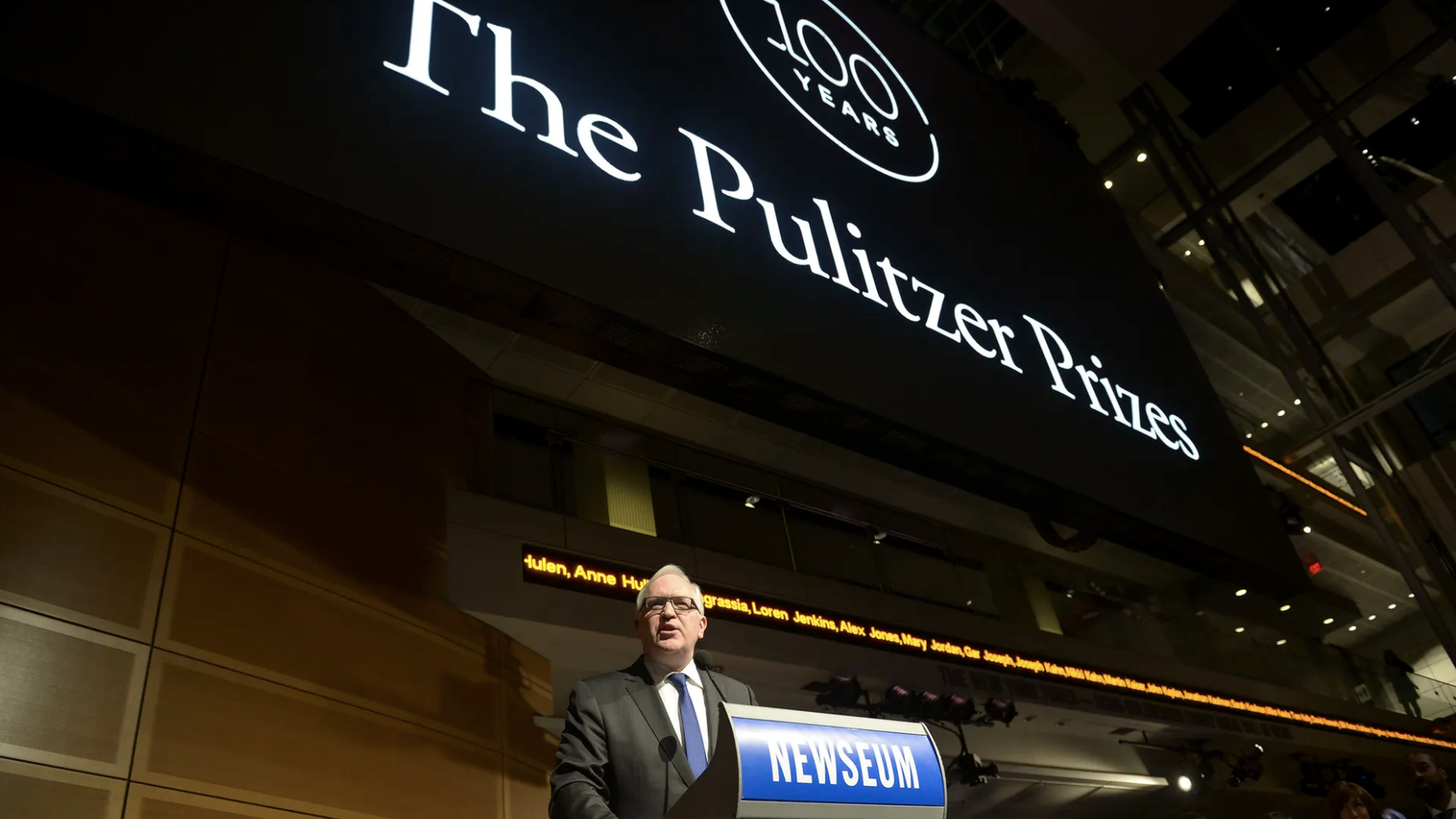
The 2024 Pulitzer Prize winners were announced Monday, with two awards and a special citation going to outlets and journalists for their coverage of the ongoing war between Israel and Hamas.
Why it matters: This year's prizes reaffirmed the risks journalists take to uncover the truth in areas of conflict and distress.
Chad Koehn, chief of registered investment adviser United Capital Management, described the picture that usually hangs behind him during his Zoom meetings — a burning $100 bill.
"Bitcoin is still a dangerous topic even today," he says, adding that it's easy to "get stereotyped," and that he's not a maxi in the same breath.
Catch up quick: Koehn's Salina, Kansas-based firm got attention last month for its just-under 5% holding of Fidelity Wise Origin Bitcoin Fund (FBTC), but he tells Axios in an interview that it was a bit of a misunderstanding.
UCM was already in crypto — it was just moving assets to FBTC from an existing bitcoin position in a different ETF.
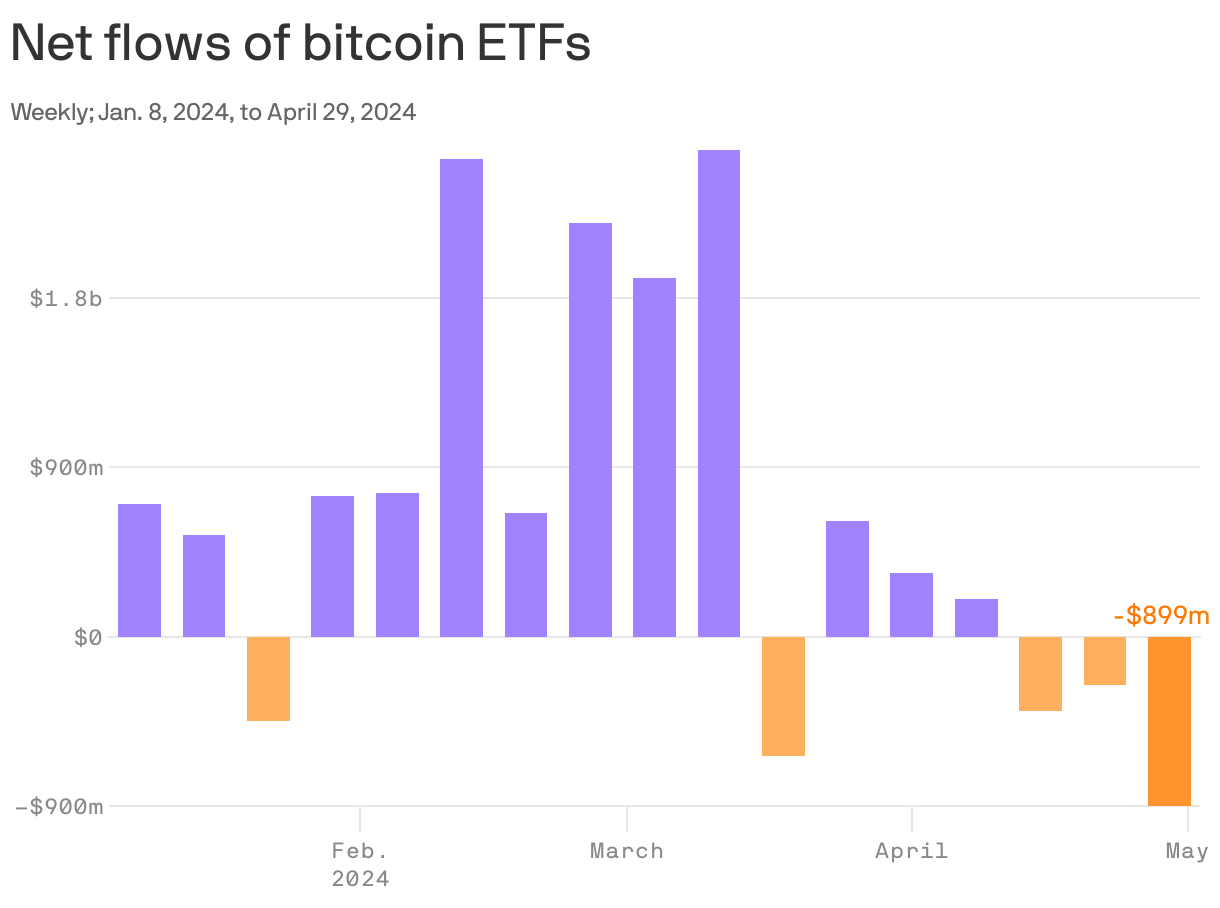
Bitcoin ETFs hit the skids last month as the price of the world's largest digital asset did the herky-jerky.
What's happening: Flows turned negative — last week, the group saw $899 million of outflows, according to Hildebert Moulié's Dune dashboard.
Of note: There is a gray, er, silver lining in that cloud.
Grayscale Investments' GBTC recently broke its streak of outflows.
It remains the largest bitcoin ETF with BlackRock's iShares Bitcoin Trust (IBIT) closing in, but still second to GBTC in terms of assets under management.
At this point, when a founder dismisses concerns about their project with the lingo "FUD" (fear, uncertainty and doubt), that's a bad sign, not a good sign.
A man associated with a project that, not so long ago, was fond of throwing around "FUD" to dismiss concerns, has been arrested in the Netherlands.
Between the lines: ZKasino, a purported gambling platform, had moved $33 million of users' funds onto Lido, a staking service, with a long lockup.
ZKasino billed itself as a new kind of gaming app that used zero-knowledge proofs and EigenLayer technology.
Looking at its underlying code, though, the team at Rekt News reports that neither of those things were true.