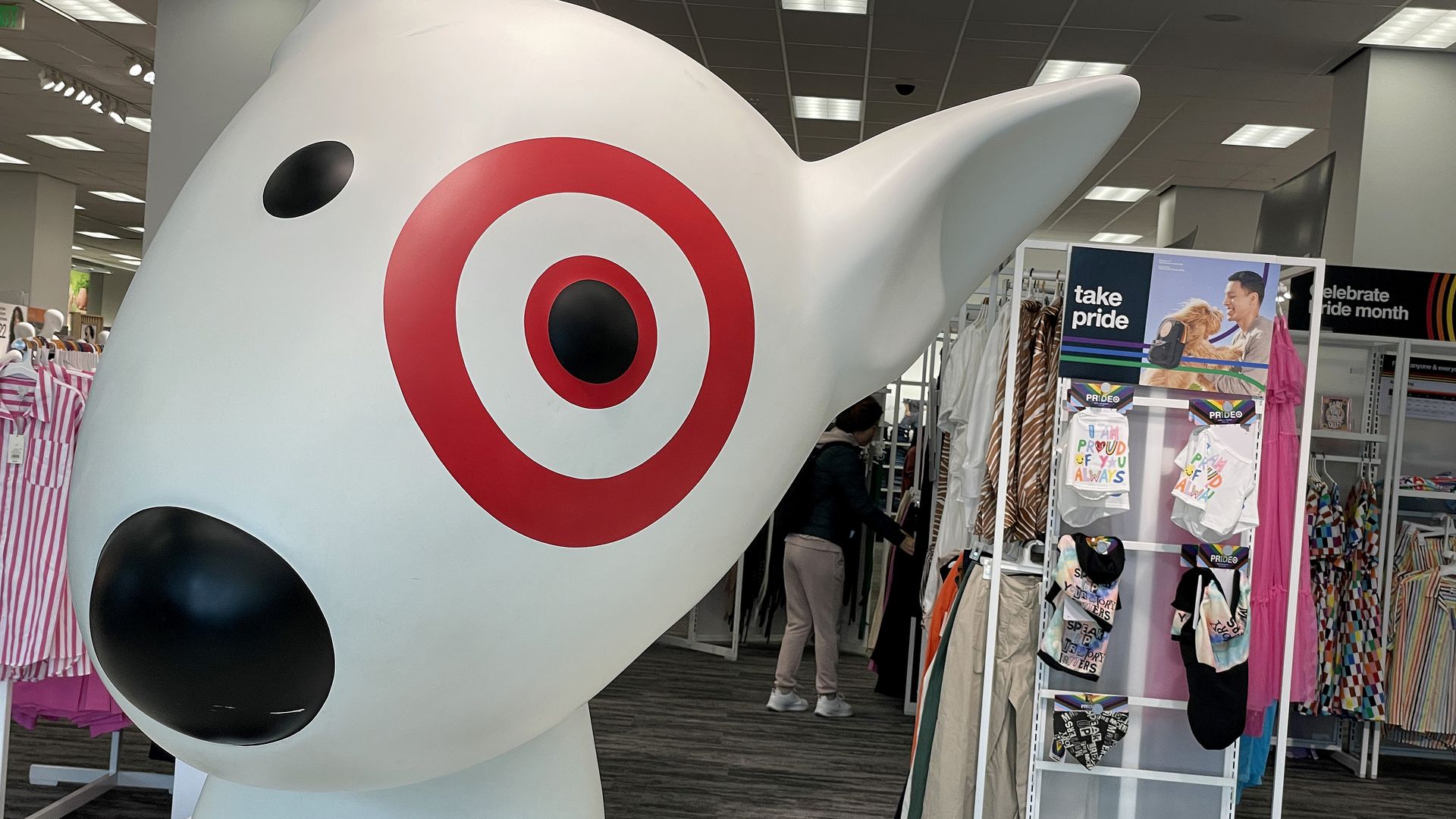
Target will sell its Pride Month collection in fewer stores after last year's right-wing backlash over LGBTQ+-themed products.
Why it matters: After years of supporting Pride events without issue, Target and other companies, including Bud Light, were hit by customer boycotts that affected sales.
Kia and Hyundai models were by far the most stolen cars in 2023, according to a new report released Thursday by the National Insurance Crime Bureau (NICB).
Why it matters: Thefts have plagued certain Kia and Hyundai models in recent years because of security vulnerabilities and social media trends.
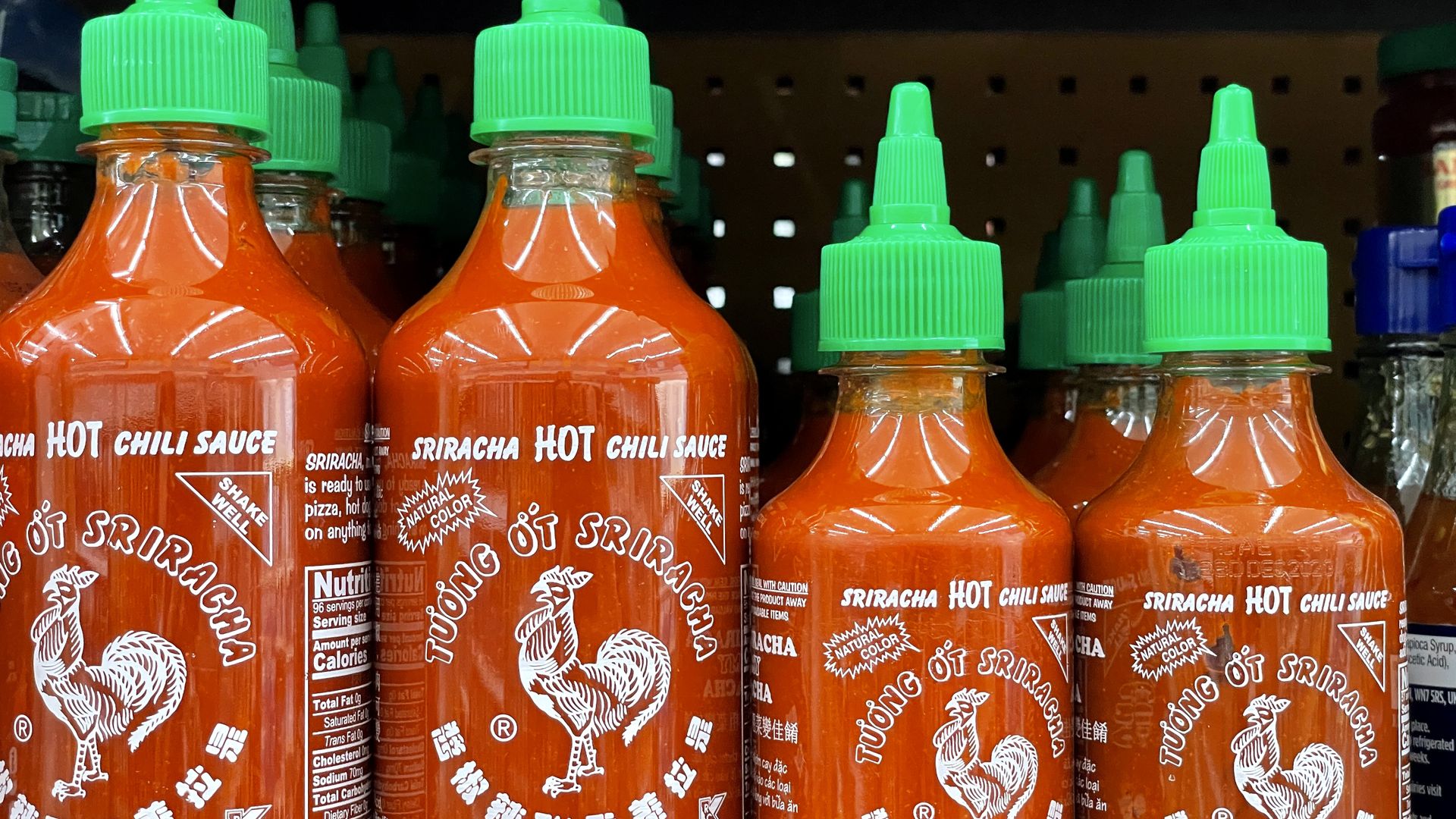
Another sriracha shortage could be coming to a supermarket near you after Huy Fong Foods halted production of its popular spicy red sauce for several months.
Why it matters: The California-based company said in a letter to wholesale suppliers that it has halted production until after Labor Day because its red jalapeño peppers are too green, USA Today reported.
Former President Trump had a gathering at Mar-a-Lago for supporters who bought in heavily to his NFT cards.
Ryan Selkis, founder of data firm Messari, who has been heavily involved in lobbying to defend the crypto industry, got invited to speak at the dinner.
Selkis blasted the administrative state and extolled crypto's potential to defend dollar dominance. Then Trump touted his NFTs.
What they're saying: "I wanna say the crypto thing has really been amazing what's happened in the last short period of time," Trump says in the video.
There are thousands of blockchains, and many of them barely register activity or hope of ever mattering for anything but speculation.
Why it matters: A recent report has sparked a discussion around $1 billion+ "zombie" chains, but there's really no decisive way to tell which blockchains should be considered the living dead, and just ignored.
The big picture: If that were to change, even just a little bit, it would be awfully expensive, warns a new paper from a former Biden White House economist.
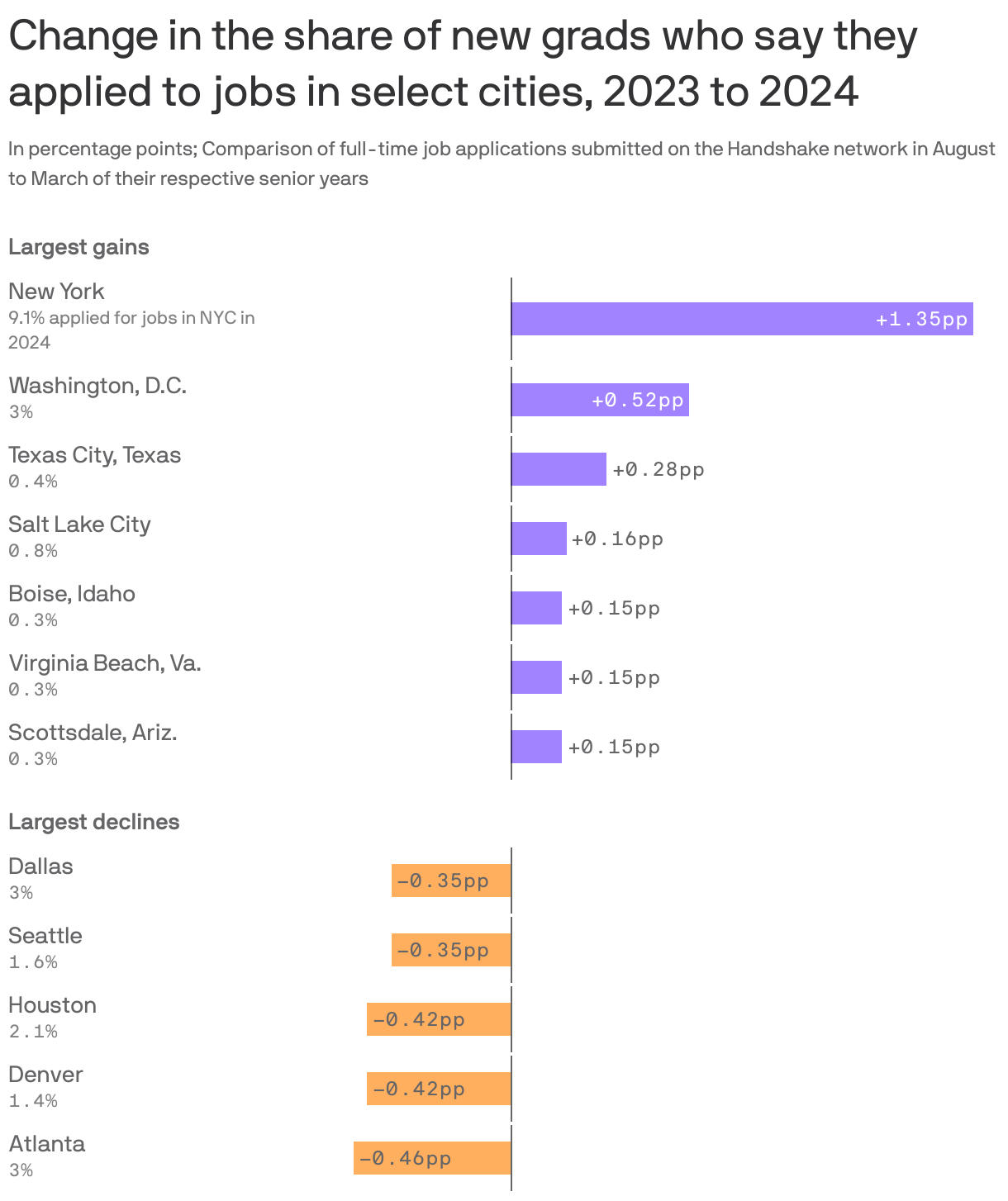
More of this year's graduating college seniors are seeking the security of a government job, and fewer are applying to risky-seeming tech jobs, per Handshake, the campus recruitment website.
Why it matters: The class of 2024 — which Axios has dubbed "the bummer generation" because of how COVID-19 warped the seminal events of their young lives — just wants stability and a comfortable income, thank you.
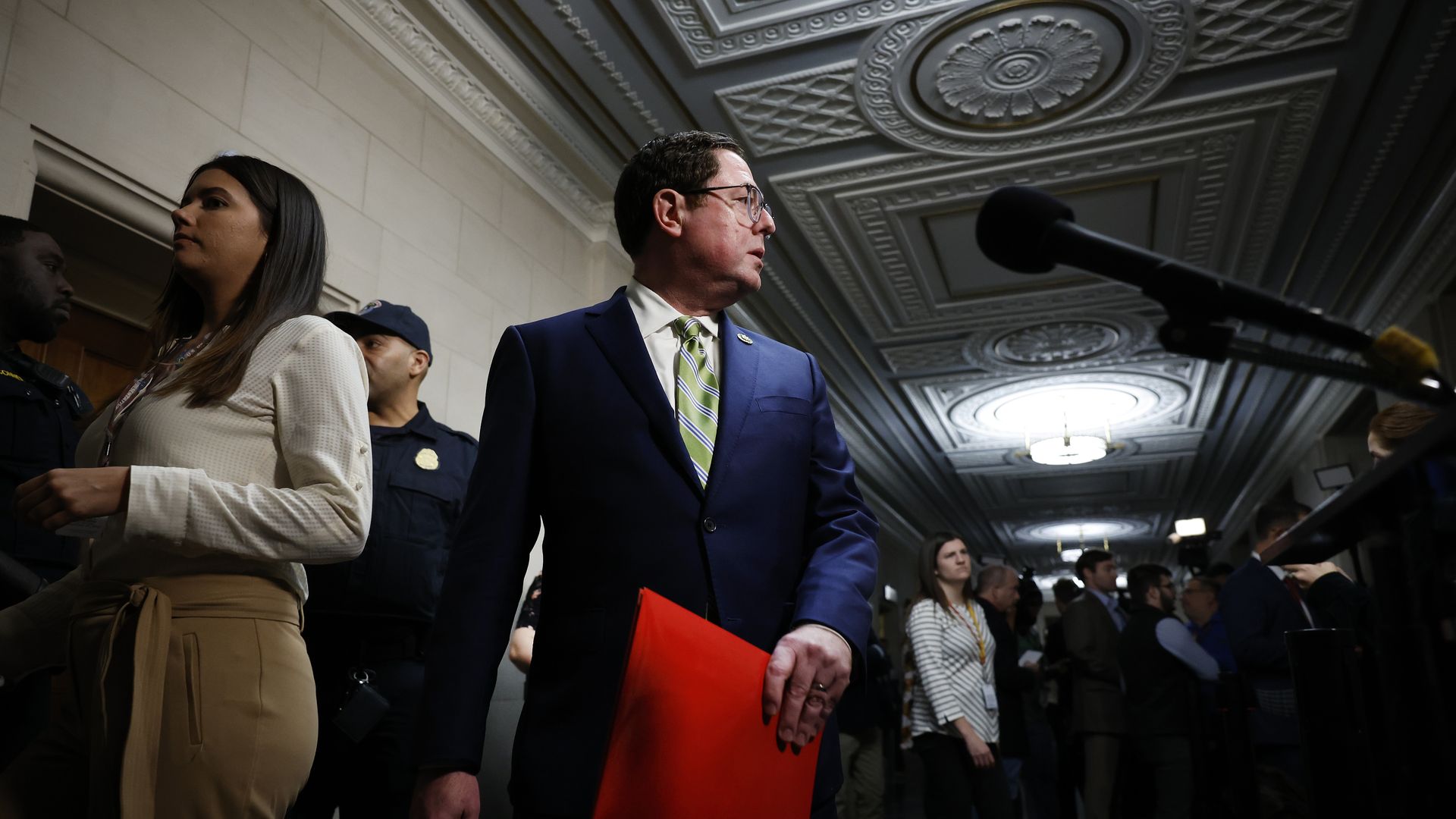
House lawmakers voted Wednesday evening to overturn a Securities and Exchange Commission staff bulletin related to digital asset custody accounting, with 21 Democrats voting "yea."
Why it matters: SAB 121 has become something of a lightning rod, uniting crypto shops and major banks against the SEC.
Shopify, the e-commerce logistics company, shocked investors today with its sales forecast.
By the numbers: While sales growth reached 23% in the first quarter, Shopify says it expects its Q2 growth rate to fall to the high teens.
The stock plummeted more than 21% earlier in the day and closed down 18.6%.
💭 Hope's thought bubble: As consumers continue to battle inflation and budget for events and travel, Shopify's double-digit growth rate — in its 18th year of operation — speaks to how strong demand for goods continues to be.
And the sell-off, especially in the context of the company's near 50% margins, shows how sensitive and unforgiving financial models are to changing winds.
An online survey commissioned by Digital Currency Group and conducted by the Harris Poll found that a slice of registered voters in swing states think crypto is important.
Behind the scenes: Some 40% of the 1,201 survey respondents in Michigan, Ohio, Montana, Pennsylvania, Nevada and Arizona said they wish political candidates talked more about digital currency.
Zoom in: Nearly half, or 48%, said they do not trust candidates who interfere with crypto.
30% said they would be more likely to support a crypto-friendly candidate.
A majority, or 74%, said they never owned crypto.
Almost half of those who say they owned crypto said they profited.
One year ago this month,the Federal Reserve pushed its target interest rate above 5% — a step that seemed sure to cause ripples across the corporate landscape and the global economy. To a surprising degree, though, the world has taken the onset of 5% rates in stride.
Why it matters: After more than a decade of cheap money, the U.S. economy has adjusted to the new era of high borrowing costs — with more business leaders accepting that it could be the new normal.
Axios editor Dan Primack spent a day this week among the masters of the universe at the annual Milken Global Conference in Los Angeles and walked away with one overriding thought: Most everyone was quite satisfied with the current state of affairs.
The big picture: Yes, there were mentions of Israel/Gaza, Ukraine/Russia, climate change, national debt, and the growing toxicity of domestic politics.
Auction prices are the most transparent and reliable way to find out the value of an artist's work. But as Katya Kazakina reports for Artnet, they can also be highly misleading.
Why it matters: In general, auction prices tend to overstate the strength of the art market, thanks to survivorship bias — how auction houses gravitate toward the hottest artists. Sometimes, however, the bias can lean the other way.
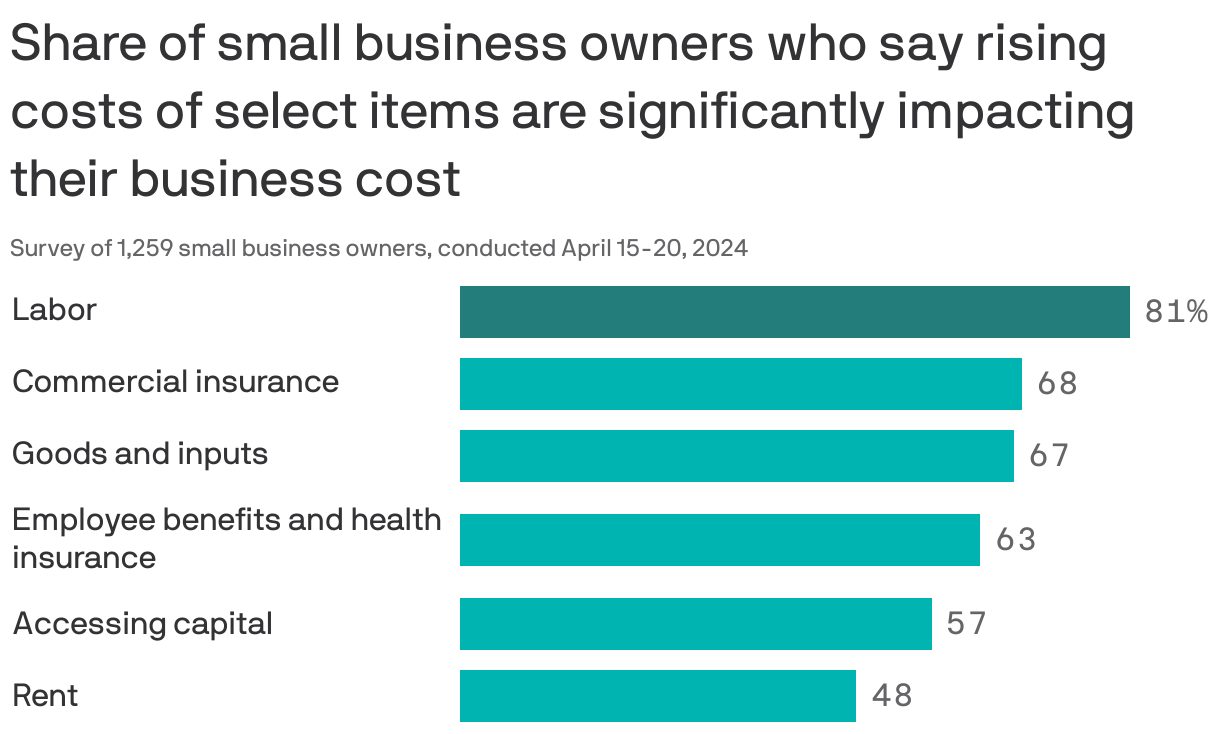
Data: Goldman Sachs 10,000 Small Businesses Voices; Chart: Axios Visuals
Small business owners are as preoccupied with stubborn inflation and economic uncertainty as the general public, yet many still embrace entrepreneurship — warts and all.
Why it matters: A slowing economy and stubbornly high prices have exposed a growing divide between Wall Street and Main Street.