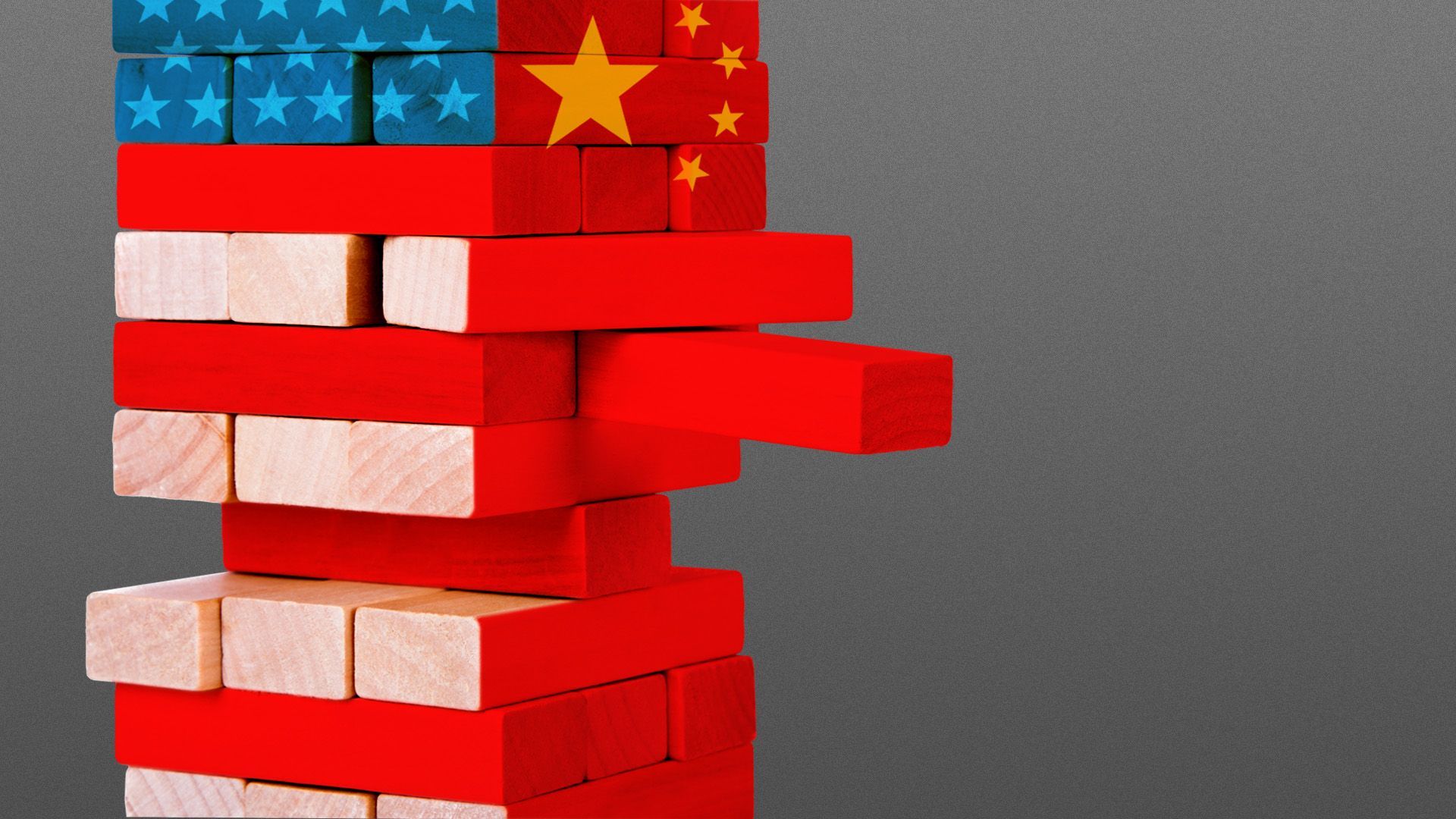
Widening geopolitical divides are disrupting global trade flows, creating spillover effects that are dividing the world's economies into competing blocs, a top International Monetary Fund official warned this week.
Driving the news: At a speech at Stanford University on Tuesday, IMF First Deputy Managing Director Gita Gopinath said that global economic ties are shifting in ways that have not been seen since the Cold War's conclusion.
Regardless of your relationship to the Mother's Day holiday, I think we can all appreciate working mothers.
The big picture: As our Markets colleague Emily Peck has reported, more mothers are working than ever before.
And the percentage of women who recently gave birth and remained part of the workforce reached a decade-plus high-water mark last year, new census data shows, per Axios' Alex Fitzpatrick and Kavya Beheraj.
What they're saying: "In our society ... it takes so little to be considered a great dad and it also takes so little to be considered a sh---y mom," Ali Wong joked in her first Netflix standup special where she was seven months pregnant.
"[My husband's] the hero for playing Candy Crush while I get my blood drawn. Meanwhile, if I do mushrooms seven months pregnant, I'm a bad mommy!"
The business of making people laugh has been booming over the last decade — closing in on $1 billion in ticket sales for live comedy shows last year, Pollstar data shows, per Bloomberg.
Why it matters: That an industry around comedy is emerging means careers in comedy are more attainable than before.
AI's demand for computing power is expected to consume ever-growing amounts of electricity, with new servers coming online over the next three years alone set to eat up more power than a small country.
The big picture: Bitcoin miners have already had to get creative about finding sources of energy and using it efficiently. We already told you about demand response.
But we spoke to three different bitcoin miners, Riot, Terawulf and Iren, whose staff illuminated some other lessons Bitcoiners have learned that could serve AI.
Geographical flexibility
The big companies of tech are accustomed to acting like 800-lb. gorillas (they sit down wherever they want to). Terawulf's Nazar Khan, chief operating officer and a co-founder, told Axios that that is increasingly not going to be an option.
Speaking of energy, it looks like the power demanded by the Bitcoin network has dropped a bit.
The big picture: The Bitcoin halving on April 20 dropped the revenue for miners in half all at once.
This typically leads to an immediate wind down in operations for some of the oldest bitcoin mining machines, because they are no longer worth running.
Bitcoin difficulty is a measure of how hard Bitcoin makes it to win a block. It is indirectly a measure of how much machine power is securing the network.
As the artificial intelligence community hunts for solutions to meet its ever-growing energy needs, there are lessons to be learned from a controversial sub-category of the data-center market: Bitcoin miners.
The big picture: But we stand by this language, which is accurate both relative to the long arc of financial history and in the context of contemporary debt levels and asset prices.
When FTX went bankrupt in November 2022, the world thought that more than $10 billion had disappeared forever. Now, it has reappeared.
Why it matters: About 40% of the recovered money isn't going to the victims, but to investors who were willing to take a bet on a solid recovery by buying their claims from the original creditors in the secondary market.
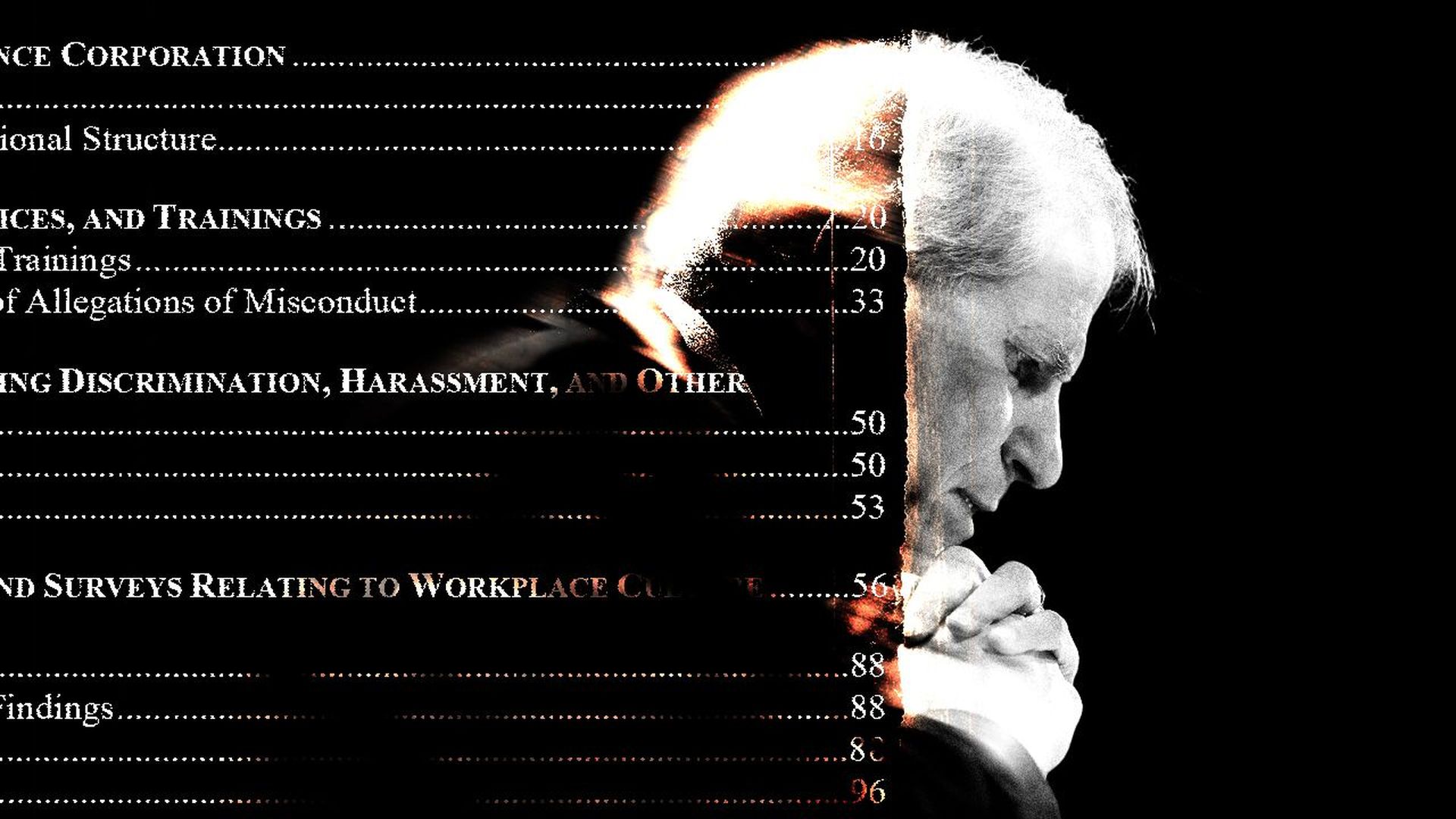
A harsh grilling awaits FDIC chair Martin Gruenberg on Capitol Hill next week when lawmakers are expected to question him over a bombshell 234-page investigation that found a longstanding toxic culture at the agency.
Why it matters: Gruenberg's fate hangs in the balance — along with the prospects for the Biden administration's financial regulatory agenda.