Regardless of your relationship to the Mother's Day holiday, I think we can all appreciate working mothers.
The big picture: As our Markets colleague Emily Peck has reported, more mothers are working than ever before.
And the percentage of women who recently gave birth and remained part of the workforce reached a decade-plus high-water mark last year, new census data shows, per Axios' Alex Fitzpatrick and Kavya Beheraj.
What they're saying: "In our society ... it takes so little to be considered a great dad and it also takes so little to be considered a sh---y mom," Ali Wong joked in her first Netflix standup special where she was seven months pregnant.
"[My husband's] the hero for playing Candy Crush while I get my blood drawn. Meanwhile, if I do mushrooms seven months pregnant, I'm a bad mommy!"
The business of making people laugh has been booming over the last decade — closing in on $1 billion in ticket sales for live comedy shows last year, Pollstar data shows, per Bloomberg.
Why it matters: That an industry around comedy is emerging means careers in comedy are more attainable than before.
AI's demand for computing power is expected to consume ever-growing amounts of electricity, with new servers coming online over the next three years alone set to eat up more power than a small country.
The big picture: Bitcoin miners have already had to get creative about finding sources of energy and using it efficiently. We already told you about demand response.
But we spoke to three different bitcoin miners, Riot, Terawulf and Iren, whose staff illuminated some other lessons Bitcoiners have learned that could serve AI.
Geographical flexibility
The big companies of tech are accustomed to acting like 800-lb. gorillas (they sit down wherever they want to). Terawulf's Nazar Khan, chief operating officer and a co-founder, told Axios that that is increasingly not going to be an option.
Speaking of energy, it looks like the power demanded by the Bitcoin network has dropped a bit.
The big picture: The Bitcoin halving on April 20 dropped the revenue for miners in half all at once.
This typically leads to an immediate wind down in operations for some of the oldest bitcoin mining machines, because they are no longer worth running.
Bitcoin difficulty is a measure of how hard Bitcoin makes it to win a block. It is indirectly a measure of how much machine power is securing the network.

As the artificial intelligence community hunts for solutions to meet its ever-growing energy needs, there are lessons to be learned from a controversial sub-category of the data-center market: Bitcoin miners.
The big picture: But we stand by this language, which is accurate both relative to the long arc of financial history and in the context of contemporary debt levels and asset prices.
When FTX went bankrupt in November 2022, the world thought that more than $10 billion had disappeared forever. Now, it has reappeared.
Why it matters: About 40% of the recovered money isn't going to the victims, but to investors who were willing to take a bet on a solid recovery by buying their claims from the original creditors in the secondary market.
A harsh grilling awaits FDIC chair Martin Gruenberg on Capitol Hill next week when lawmakers are expected to question him over a bombshell 234-page investigation that found a longstanding toxic culture at the agency.
Why it matters: Gruenberg's fate hangs in the balance — along with the prospects for the Biden administration's financial regulatory agenda.
Target will sell its Pride Month collection in fewer stores after last year's right-wing backlash over LGBTQ+-themed products.
Why it matters: After years of supporting Pride events without issue, Target and other companies, including Bud Light, were hit by customer boycotts that affected sales.
Kia and Hyundai models were by far the most stolen cars in 2023, according to a new report released Thursday by the National Insurance Crime Bureau (NICB).
Why it matters: Thefts have plagued certain Kia and Hyundai models in recent years because of security vulnerabilities and social media trends.
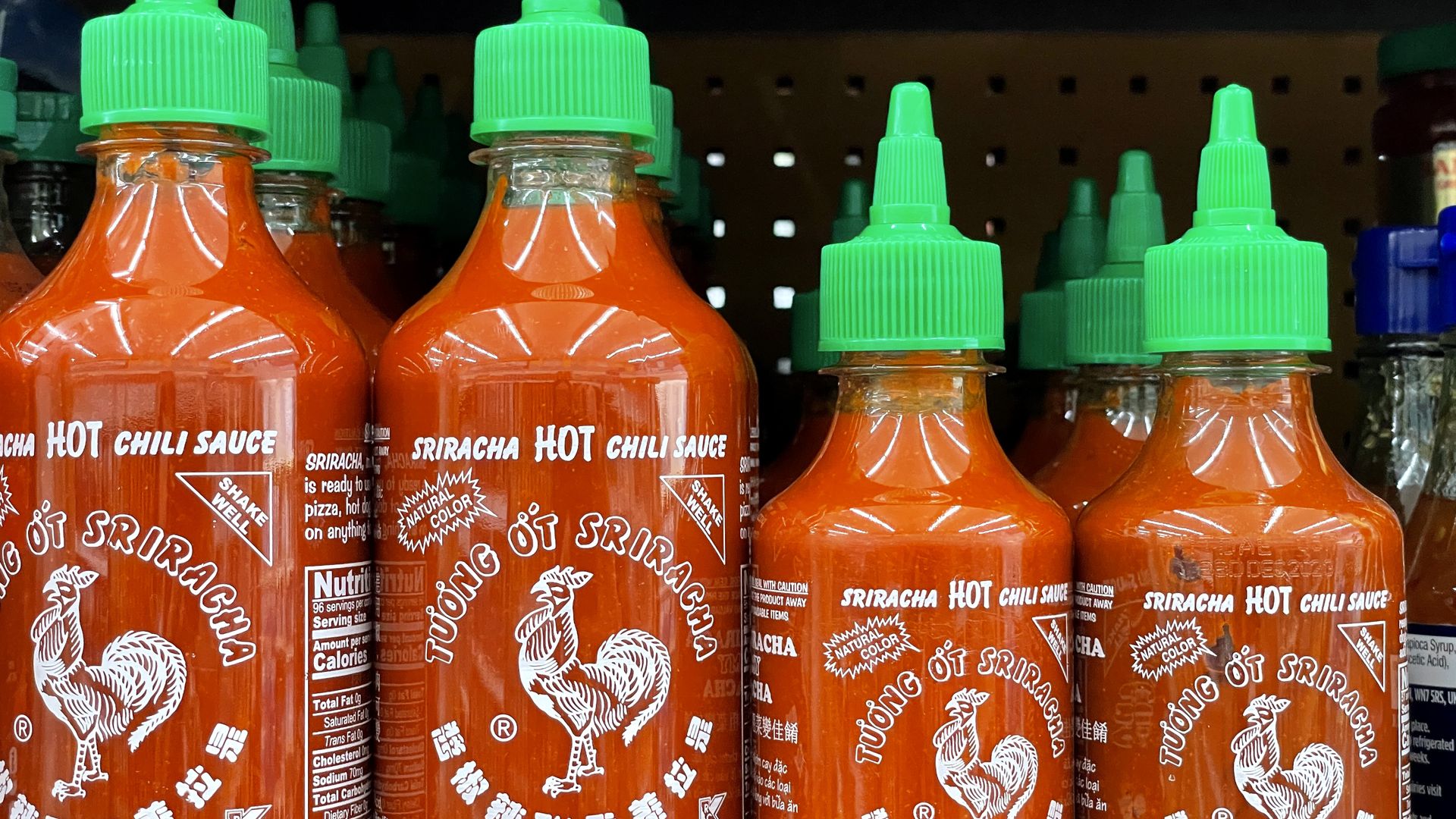
Another sriracha shortage could be coming to a supermarket near you after Huy Fong Foods halted production of its popular spicy red sauce for several months.
Why it matters: The California-based company said in a letter to wholesale suppliers that it has halted production until after Labor Day because its red jalapeño peppers are too green, USA Today reported.
Former President Trump had a gathering at Mar-a-Lago for supporters who bought in heavily to his NFT cards.
Ryan Selkis, founder of data firm Messari, who has been heavily involved in lobbying to defend the crypto industry, got invited to speak at the dinner.
Selkis blasted the administrative state and extolled crypto's potential to defend dollar dominance. Then Trump touted his NFTs.
What they're saying: "I wanna say the crypto thing has really been amazing what's happened in the last short period of time," Trump says in the video.
There are thousands of blockchains, and many of them barely register activity or hope of ever mattering for anything but speculation.
Why it matters: A recent report has sparked a discussion around $1 billion+ "zombie" chains, but there's really no decisive way to tell which blockchains should be considered the living dead, and just ignored.
The big picture: If that were to change, even just a little bit, it would be awfully expensive, warns a new paper from a former Biden White House economist.
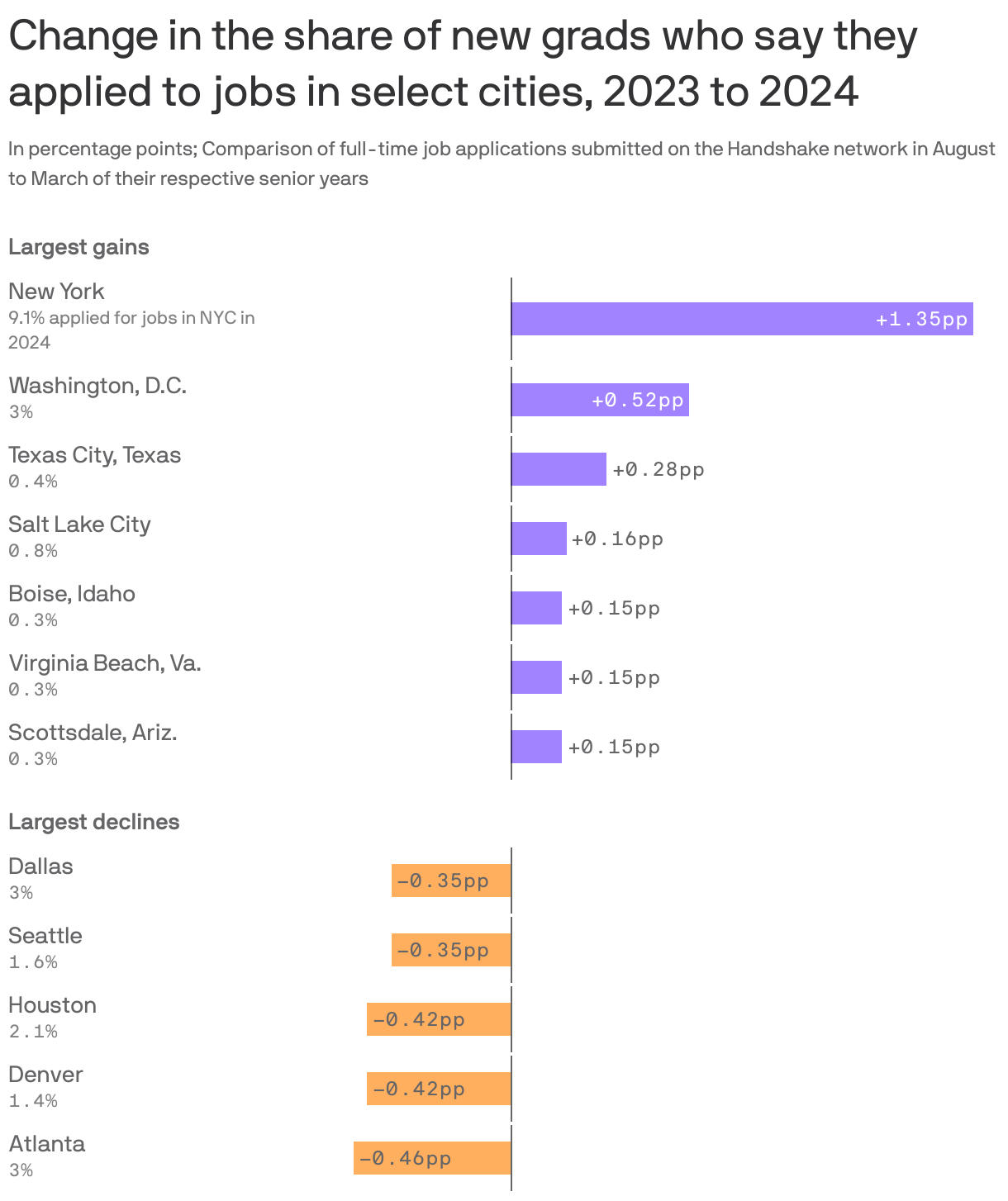
More of this year's graduating college seniors are seeking the security of a government job, and fewer are applying to risky-seeming tech jobs, per Handshake, the campus recruitment website.
Why it matters: The class of 2024 — which Axios has dubbed "the bummer generation" because of how COVID-19 warped the seminal events of their young lives — just wants stability and a comfortable income, thank you.