Huy Fong halts sriracha production, sparking shortage fears

Add Axios as your preferred source to
see more of our stories on Google.
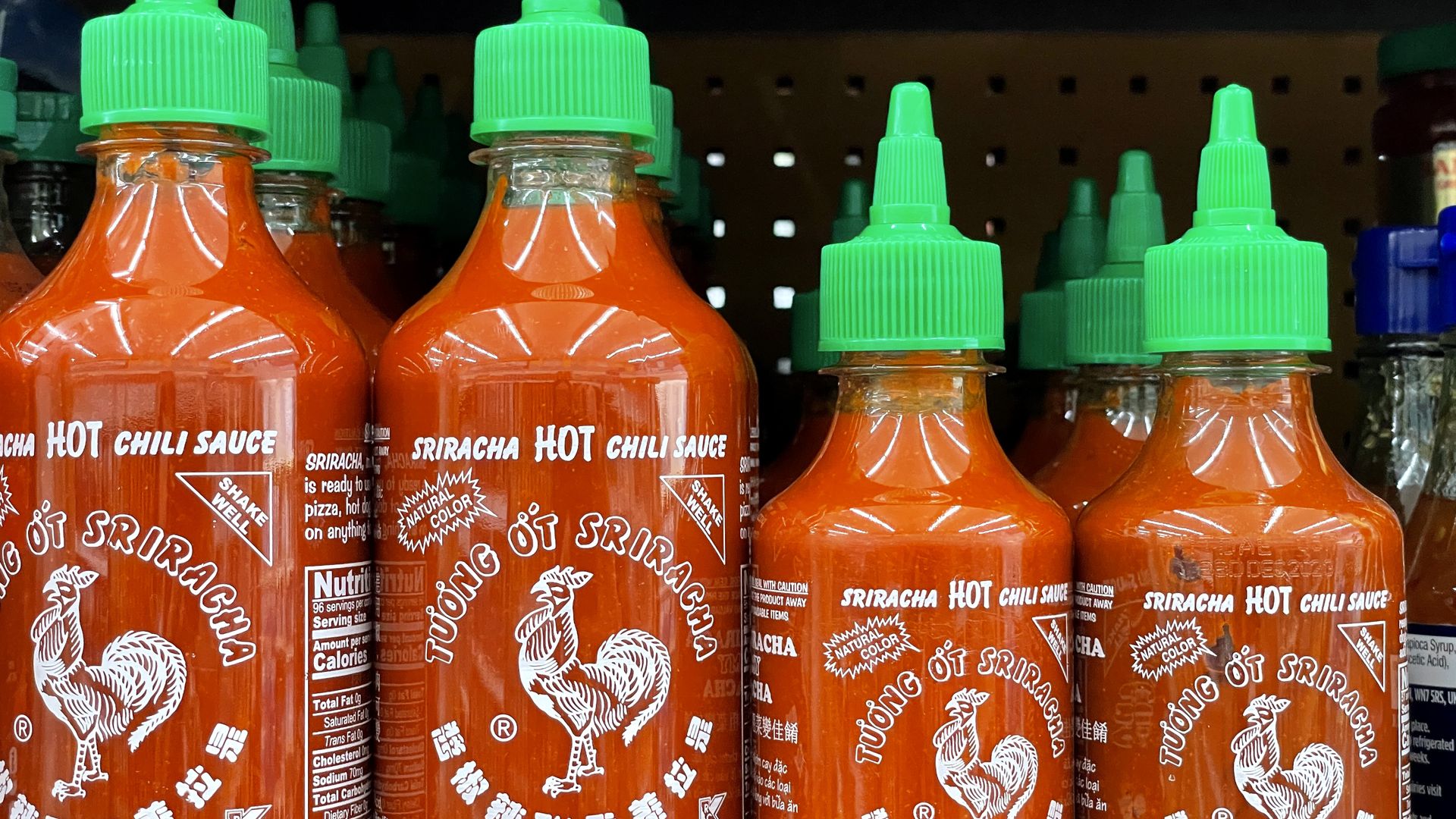
Expect Huy Fong Sriracha sauce to be in short supply. Photo: Justin Sullivan/Getty Images
Another sriracha shortage could be coming to a supermarket near you after Huy Fong Foods halted production of its popular spicy red sauce for several months.
Why it matters: The California-based company said in a letter to wholesale suppliers that it has halted production until after Labor Day because its red jalapeño peppers are too green, USA Today reported.
- "After reevaluating our supply of chili, we have determined that it is too green to proceed with production as it is affecting the color of the product," the letter said.
- Huy Fong told Axios Thursday that it had no comment.
Zoom in: Huy Fong Foods' chili garlic sauce and Sambal Oelek are also affected, USA Today reports.
- The company's letter also notes that all orders that had been scheduled beginning on May 6 will be canceled and the status changed to pending.
Flashback: Huy Fong Foods has had several shortages in recent years.
- In July 2020, the company told customers it was experiencing a shortage of chili pepper inventory.
- It warned of shortages in 2022 and 2023, blaming it on drought and weather conditions.
State of play: Other sriracha makers are flush with red jalapeños and have not reported any chile pepper production issues, Stephanie Walker, co-director of New Mexico State University's Chile Pepper Institute, told USA Today.
- Walker, a professor and extension vegetable specialist has heard Huy Fong has "tried to enlist new growers so they would have a reliable stream of jalapeños and it sounds like they haven't been entirely successful yet."
Between the lines: A severe drought in Mexico, a major exporter of peppers, could be one reason for the production pause.
- Huy Fong got its peppers from Underwood Ranches in California for nearly three decades until a 2016 falling out.
- The "success of this particular sauce comes from a jalapeño that can only be produced in California or Mexico," Guillermo Murray-Tortarolo, a climate scientist at the National Autonomous University of Mexico, told the Washington Post.
More from Axios:
