Fed holds interest rates steady, citing stalled progress on inflation


Add Axios as your preferred source to
see more of our stories on Google.
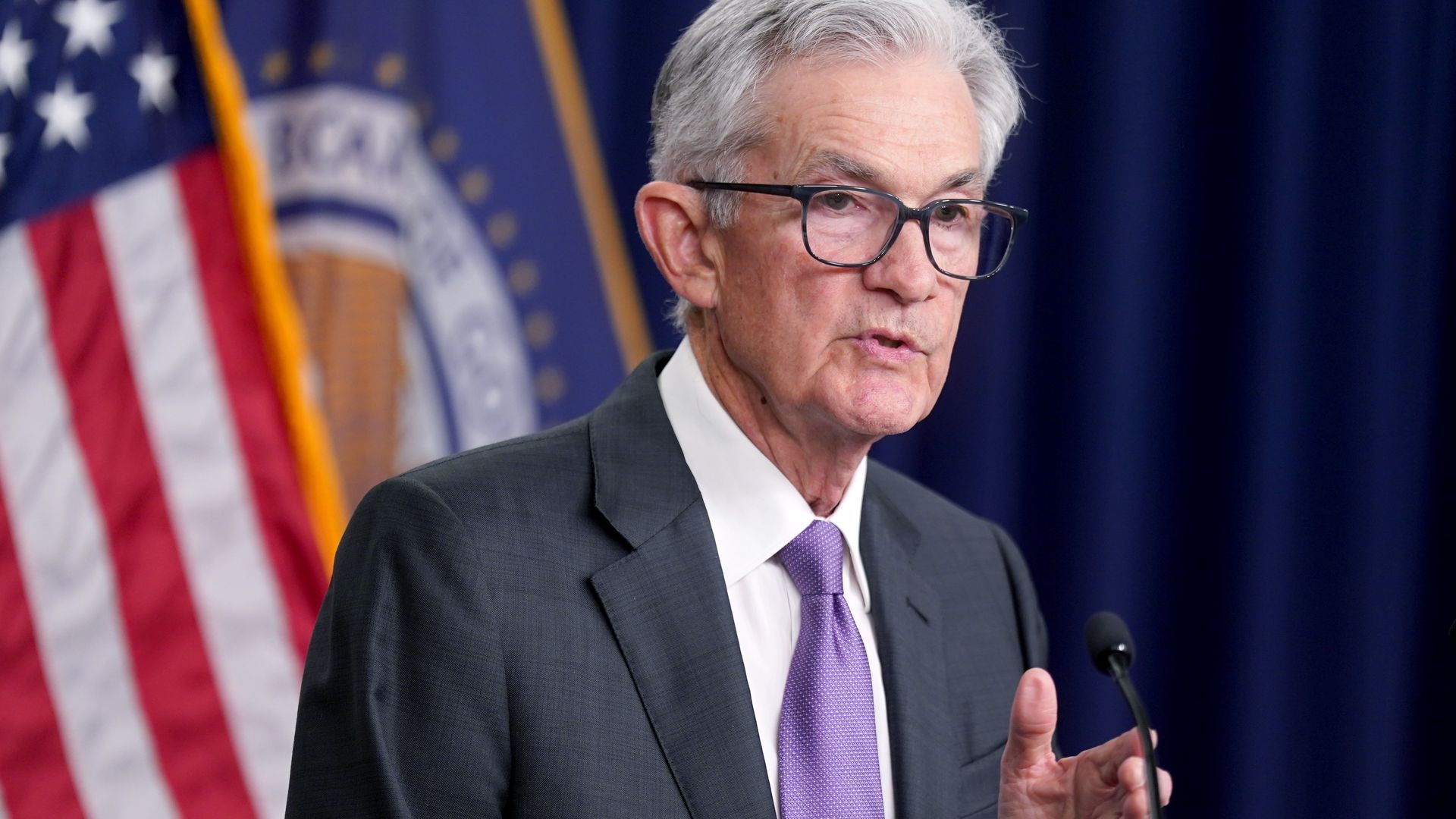
Federal Reserve Chairman Jerome Powell speaks during a press conference in March. Photo: Mandel Ngan/AFP via Getty Images
The Federal Reserve held interest rates steady on Wednesday for the sixth straight time and acknowledged a "lack of further progress" on cooling inflation.
Why it matters: The latest economic data show prices are still rising too quickly, complicating the Fed's projections of lower interest rates this year.
Driving the news: The Federal Open Market Committee, the monetary policy-setting body of the central bank, kept its target interest rate in a range between 5.25% and 5.5%—where it has been since last July.
- In comments at his news conference, chair Jerome Powell confirmed that recent inflation data mean the Fed won't cut interest rates as soon as it had previously signaled.
What they're saying: "So far this year the data have not given us that greater confidence" inflation is heading down to 2%, he said. "It is likely that gaining that greater confidence will take longer than previously expected.
- He added, however, that, the Fed is also "prepared to respond to an unexpected weakening in the labor market," which suggests bad news in the job market could also trigger rate cuts.
- He also poured cold water on the notion that the Fed's next move will be to raise rates, saying: "I think it's unlikely that the next policy rate move will be a hike."
The Fed's key policy statement said that inflation had cooled over the past year, though it remains high.
- But, notably, officials added a new sentence that said: "In recent months, there has been a lack of further progress toward the Committee's 2% objective."
- "We remain highly attentive to inflation risks," Powell said.
The big picture: Price pressures cooled notably in 2023. But key indicators so far this year have shown that progress has all but stalled out.
- Meanwhile, the labor market has stayed hot, and the Fed said in its statement that job gains "have remained strong."
- The unemployment rate has stayed below 4% for more than two years, the longest stretch in a half-century.
State of play: Fed officials have suggested in recent weeks that signs of sticky inflation mean the central bank might have to hold interest rates at a higher level for longer than previously anticipated—unless the job market cools.
- One month ago, the CME FedWatch tool showed strong odds of two rate cuts this year. Those odds have dropped to an estimated 40% chance of one rate cut before the end of the year.
- Financial markets, too, have braced for higher rates: The yield on the 2-year Treasury note—which is most sensitive to anticipated Fed moves—topped 5% for the first time since last fall.
The Fed also announced that it would slow the run-off of its multitrillion-dollar balance sheet—a process, known as quantitative tightening, that has been underway for nearly two years.
- Beginning next month, the Fed said it would shrink the pace of decline of its Treasury securities by more than half, from $60 billion to $25 billion.
- The rolloff of mortgage-backed securities will remain unchanged.
Editor's note: This story was updated with comments from Fed Chair Jerome Powell.
