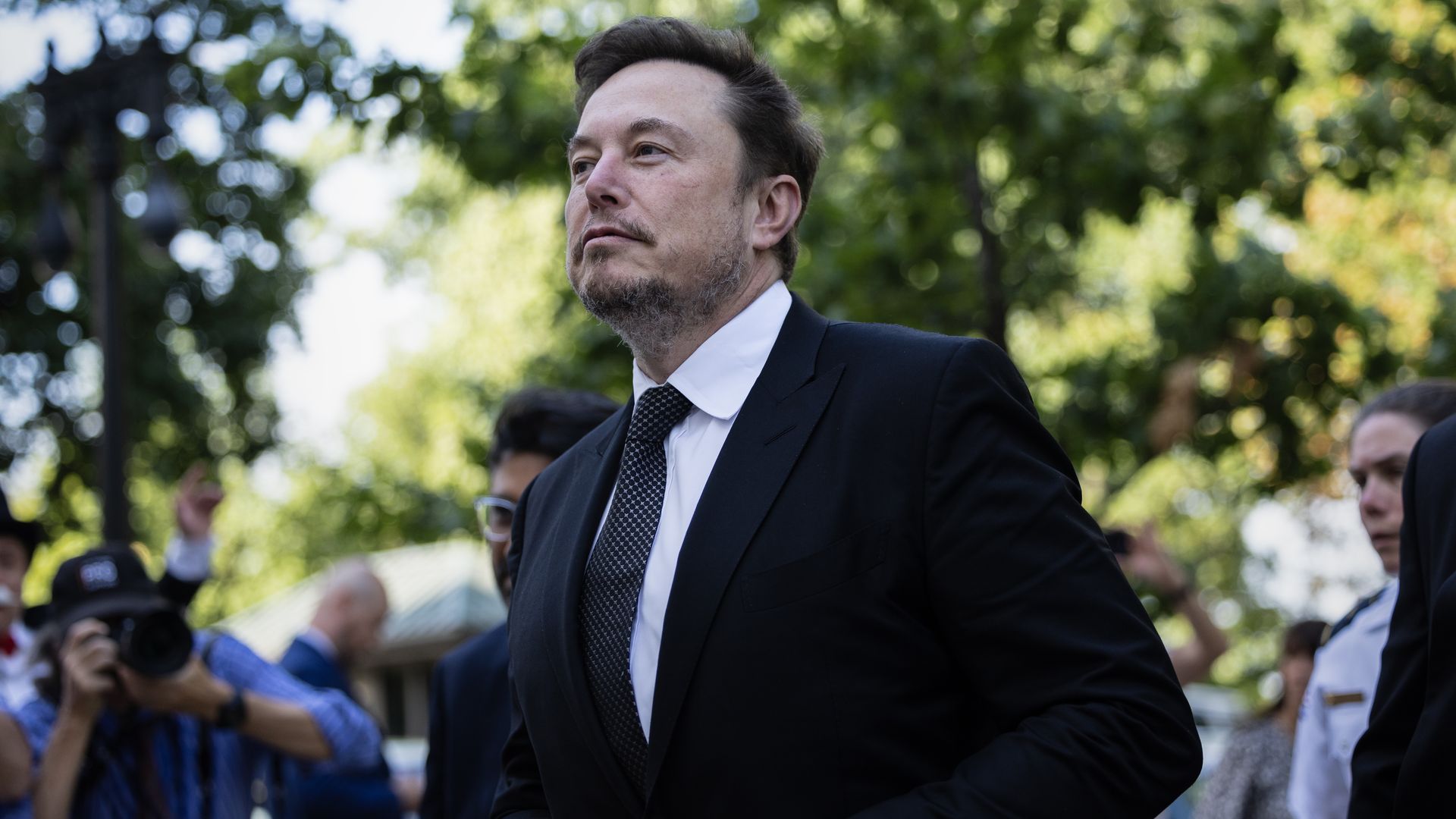
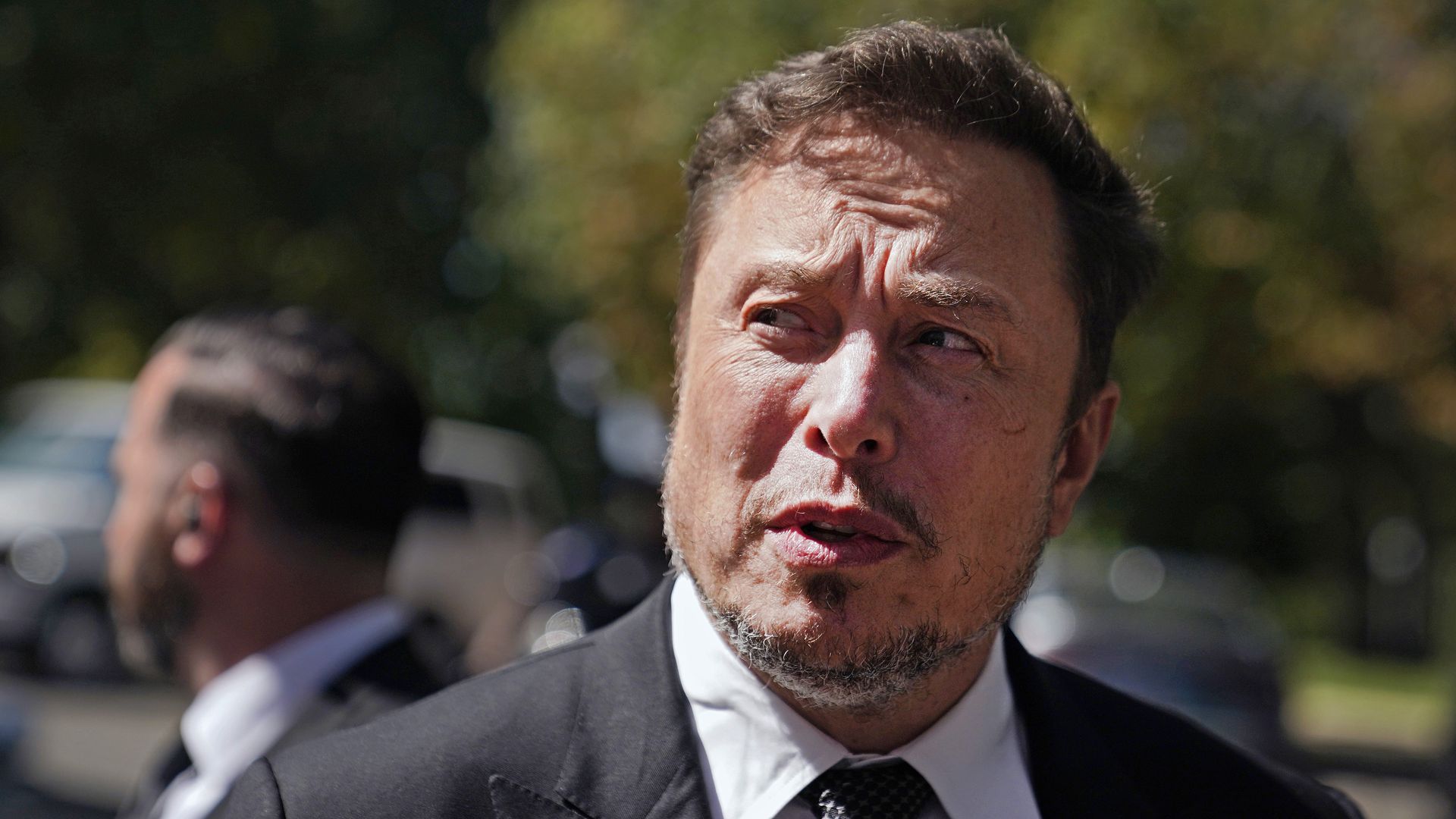
Why it matters: The SEC said in a filing on Thursday that Musk and the agency both agreed that he would sit for testimony in September 2023 but he failed to appear.
For the last year, there has been a bit of a mystery: How is it that the Fed could raise interest rates as rapidly as it has yet cause so little damage to the economy? One answer is that medium- and longer-term rates haven't risen nearly as much as the short-term rate controlled by the Fed.
Why it matters: That has changed in recent weeks, with longer-term rates rising abruptly — which, in turn, could mean that higher interest costs start to bite across more corners of the economy than they have to date.
Sam Bankman-Fried knew that billions of dollars in customer funds were owed to FTX by its sister trading firm months before the crypto exchange collapsed in November, a witness in his criminal trial testified Thursday.
Driving the news: Adam Yedidia, a former FTX developer who went to MIT with Bankman-Fried, told the court that he confronted SBF shortly after patching an error in the company's software code in June 2022.
Hollywood writers with disabilities say the deal to end the 148-day writers' strike could help address specific issues that impact them the most.
The big picture: Roughly 20% of Americans live with a disability, yet less than 1% of Hollywood writers are disabled, according to the Inevitable Foundation, a nonprofit organization that advocates and provides fellowships for writers with disabilities.
AI is transforming job hunting and skill development — threatening to relegate four-year college degrees to the category of merely nice-to-have on your CV.
The big picture: In AI-driven workplaces, employers will need to treat up-skilling investments as a "critical priority" rather than a perk, per a pitch LinkedIn executives made to 2,000 of the nation's top recruiters this week in New York City.
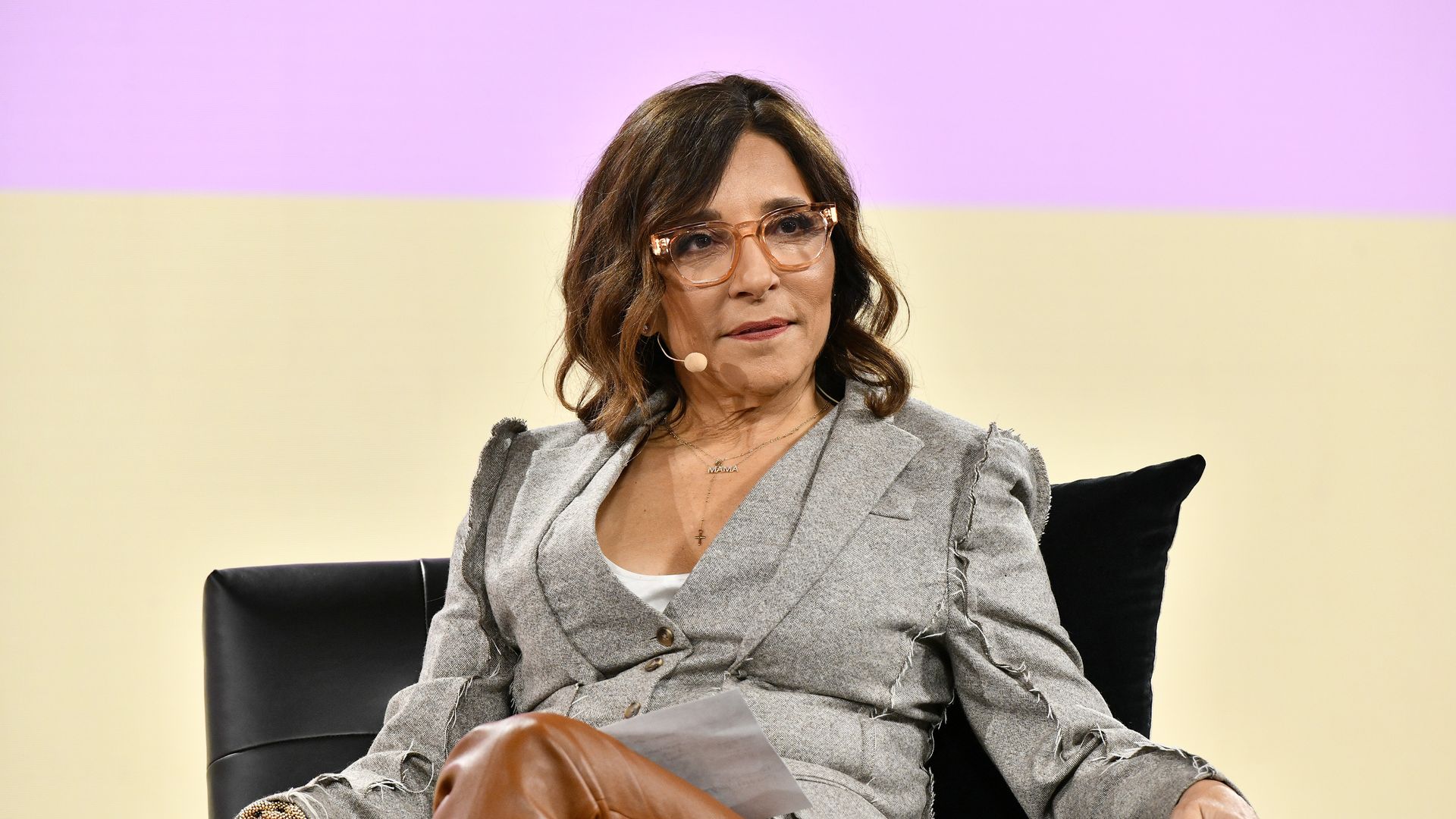
Communication professionals are in a tizzy gaming out how they would've responded if they were flacking for X CEO Linda Yaccarino after her flubbed interview at last week's Code Conference.
Why it matters: Her showing is an example of what not to do when caught by surprise and publicly baited with a last-minute addition to the agenda.
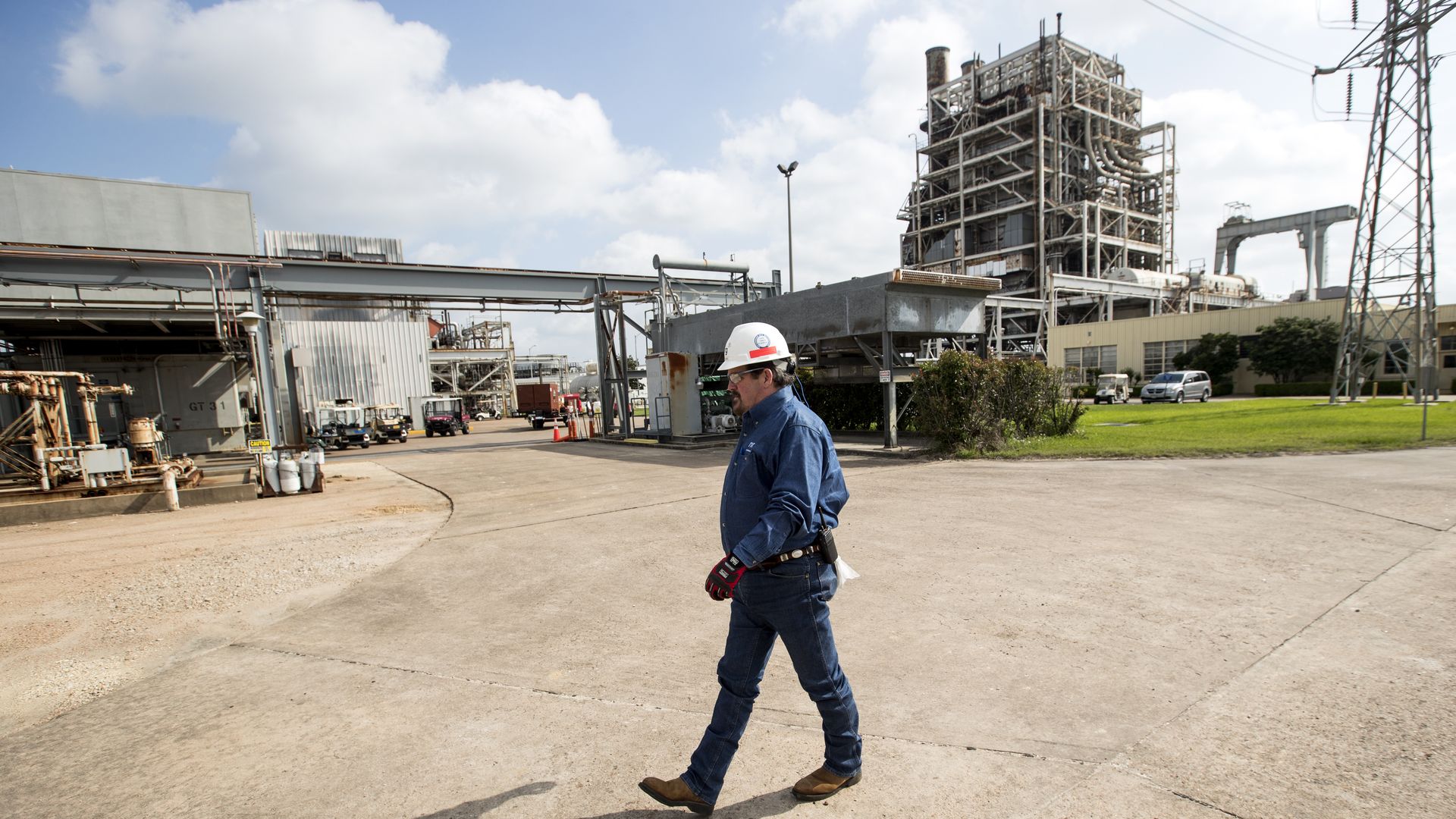
Elliott Management's campaign to fire the CEO of NRG Energy has implications beyond the future direction of the $8.6 billion electric utility.
Why it matters: As the Federal Energy Regulatory Commission (FERC) weighs whether to let Elliott boost its investment in the utility to 20%, the U.S. SEC has its eyes on how the hedge fund and its peers build that kind of stake in the first place.
For all the talk about quiet quitting or lazy girl jobs, workers — particularly women — are more likely to want a promotion now than they were before the pandemic, according to a closely watched study out Thursday morning.
Why it matters: More flexible work arrangements unleashed women's ambitions, specifically around promotions, to a surprising degree.
Post-pandemic travelers prioritize a good night's sleep, healthy lifestyle amenities, and "smart" rooms with lots of technology — and they're combining business with pleasure in a trend known as "bleisure," Hilton says in a new report.
Why it matters: As hotel chains continue to recover from COVID-19 lockdowns, they're trying to take maximum advantage of the ongoing "revenge travel" trend with updates that suit modern tastes.
X began removing news links and headlines from posts in a major overhaul of the platform formerly known as Twitter.
Driving the news: Elon Musk said in August the changes were "coming from me directly" and they would "greatly improve" the aesthetics of the site. Users now click on images to access news reports posted to X.
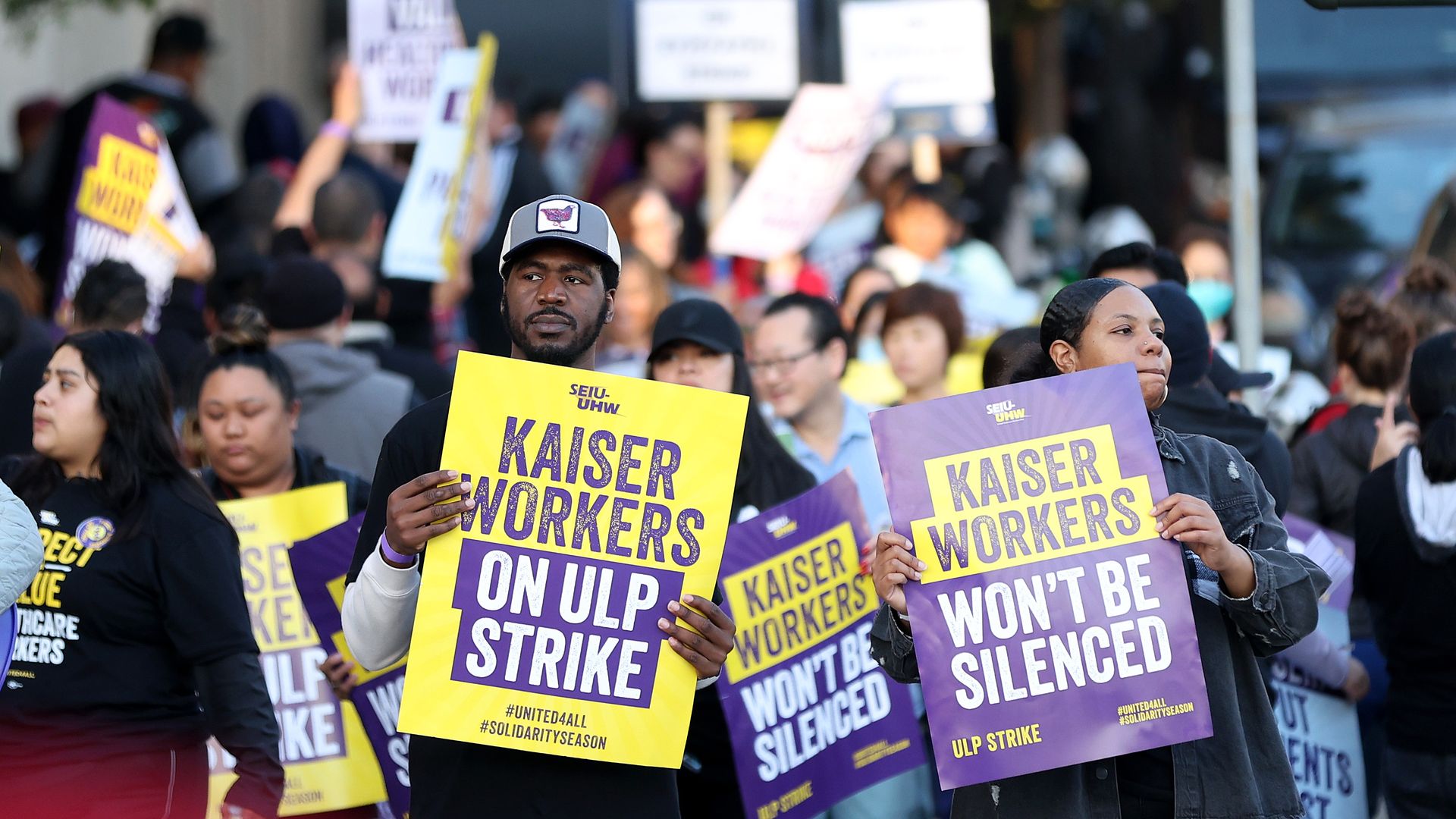
Kaiser Permanente workers at hospitals and medical office buildings around the country began a strike on Wednesday morning.
Why it matters: The work stoppage covers an estimated 75,000 employees at the nation's biggest nonprofit health care system. It is expected to be the largest health care strike in U.S. history, according to a coalition of unions leading it.
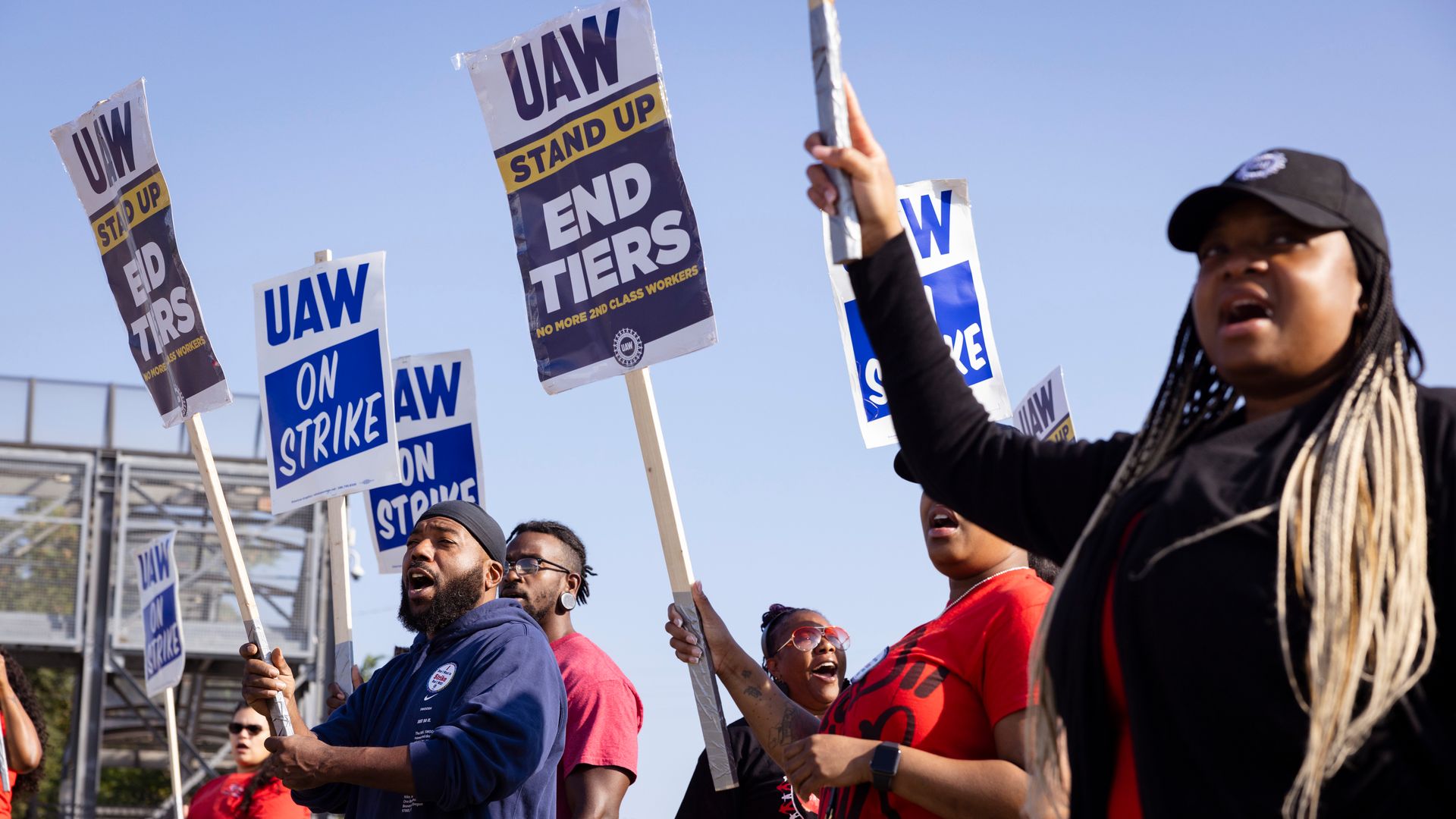
As the historic United Auto Workers strike against the Detroit Three automakers nears a third week, thousands of workers have been laid off and the vehicle giants are starting to count losses.
The big picture: The strike that started on Sept. 15 resulted in $3.95 billion in economic losses in its first two weeks, per a report from consulting firm Anderson Economic Group.



/2023/10/05/1696523074051.gif?w=3840)