Why women are more ambitious at work now than before the pandemic

Add Axios as your preferred source to
see more of our stories on Google.

Illustration: Sarah Grillo/Axios
For all the talk about quiet quitting or lazy girl jobs, workers — particularly women — are more likely to want a promotion now than they were before the pandemic, according to a closely watched study out Thursday morning.
Why it matters: More flexible work arrangements unleashed women's ambitions, specifically around promotions, to a surprising degree.
- Flexibility allows people to be "both fully in it at work and fully committed to things they want to achieve outside of work," says Rachel Thomas, the co-founder and CEO of LeanIn.org, the women's advocacy group founded by Sheryl Sandberg.
How they did it: LeanIn conducted the study with McKinsey & Co. It includes a survey of about 27,000 employees at 33 companies and staff demographic data from 276 companies in the U.S. and Canada.
By the numbers: 81% of women said they were interested in getting promoted, up 5 points from last year and a 10-point increase from 2019.
- Men's ambitions also jumped — 82% said they wanted a promotion, compared to 74% in 2019.
- Meanwhile, one in five women said flexibility has helped them stay in their jobs and avoid reducing their work hours.
- There wasn't a difference in ambition between those who come to the office and those who don't: 80% of those who work remotely said they were interested in a promotion, compared to 79% who work on-site.
Zoom out: The rise of remote work has shaken up the work world, especially for women — who are working at record levels.
- The overwhelming majority of women and men surveyed said that working remotely or on a hybrid schedule made it easier to balance work and life. And that the arrangement made them more efficient and productive.
- Yes, but: Their managers might disagree.
Meanwhile, these remote work effects are looking more and more long term, as efforts to get more workers back to the office this year post-Labor Day haven't borne much fruit.
- Office occupancy is still hovering at about 50% compared to pre-pandemic levels, according to Kastle's office swipe data.
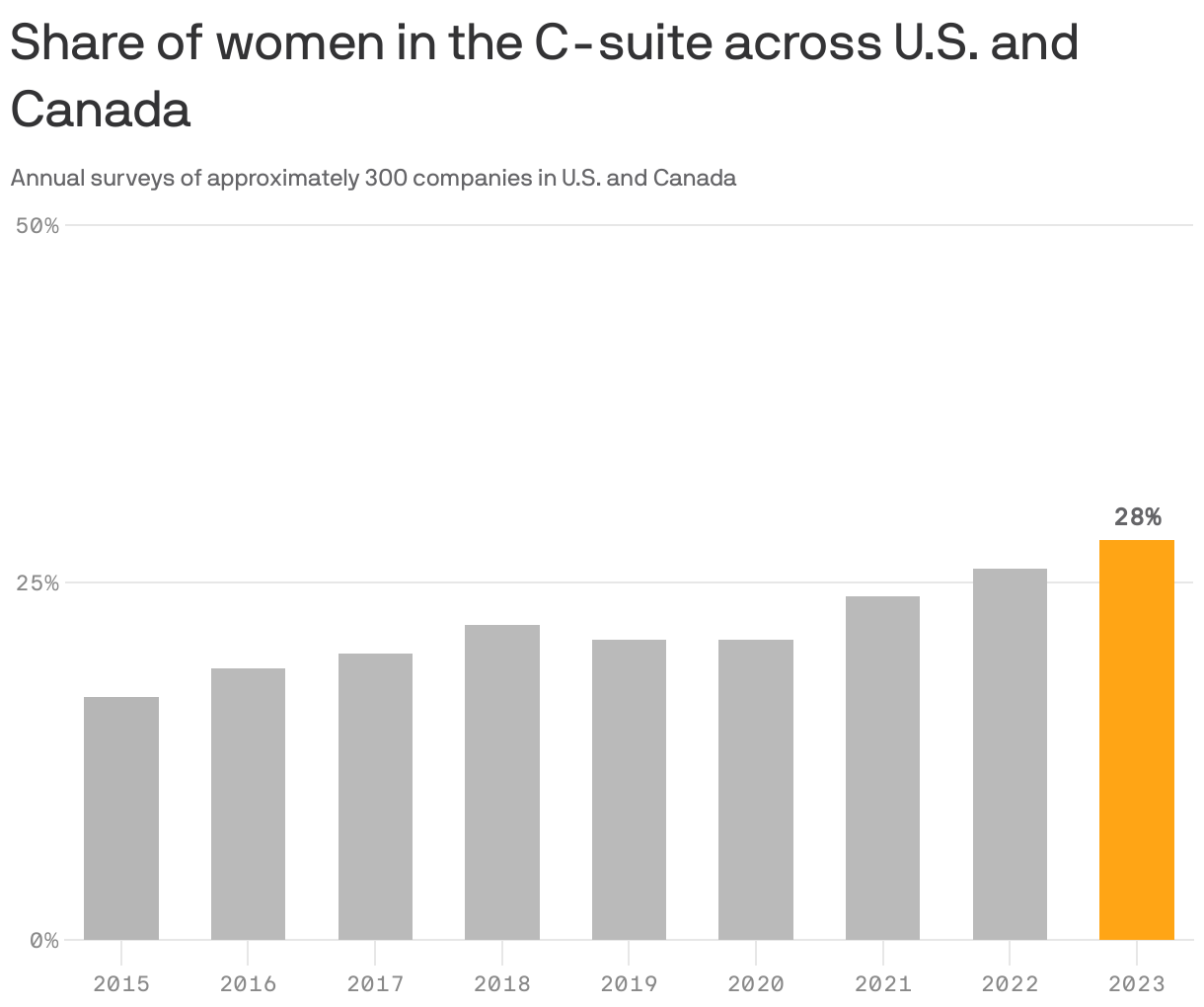
The big picture: LeanIn launched this report back in 2015 with the goal of advancing women in the workplace. There's been progress since then, but it's been fairly slow.
- The share of C-suite leaders who are women rose to 28% this year, according to the research.
- Back in 2015, women only held 17% of those roles.
