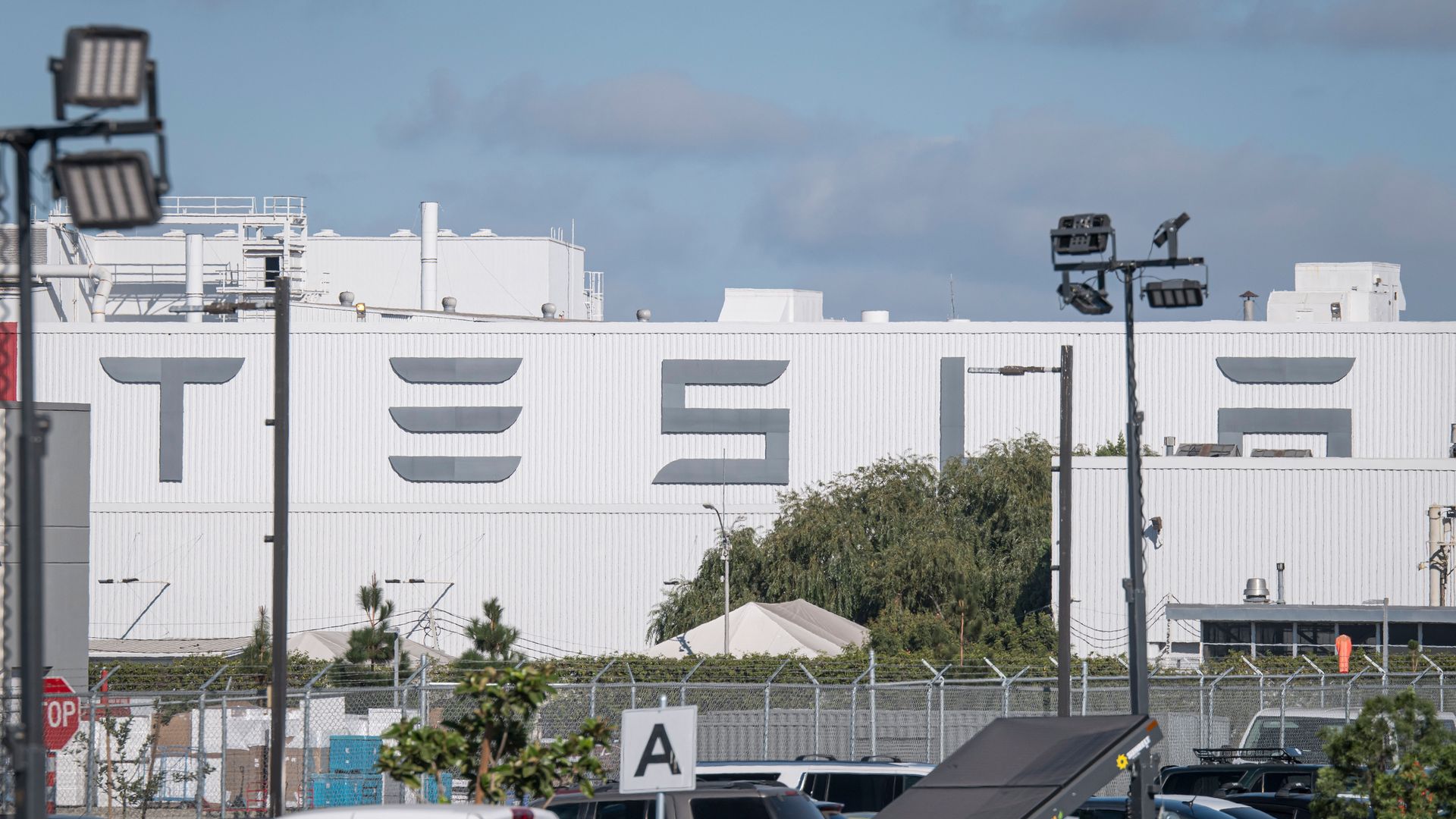
A federal jury on Monday ordered Tesla to pay $137 million in damages to a Black former employee who accused the company of ignoring racist abuse he endured from other workers, the New York Times reports.
Why it matters: This verdict ends a process that began for Owen Diaz in 2015 and forces Tesla to recognize its role in creating a hostile work environment.
Latinos in the U.S. are more affected than other groups by scammers pretending to be utility companies or young family members in danger, with 2 in 5 Latino adults saying they've been victims of a scam in the past year, according to an AARP poll.
By the numbers: 23% of Latino adults in the U.S. say they are very concerned about falling prey to identity theft, compared to 17% of white non-Hispanics and 20% of Black non-Hispanics.
Ozy Media is being sued by one of its investors for fraud after a whirlwind week in which the digital media company announced both that it was shutting down and then opening back up.
Driving the news: Lifeline Legacy Holdings, a Beverly Hills-based group, claims that Ozy misrepresented its business performance and interest from other investors, according to a lawsuit filed yesterday in California.
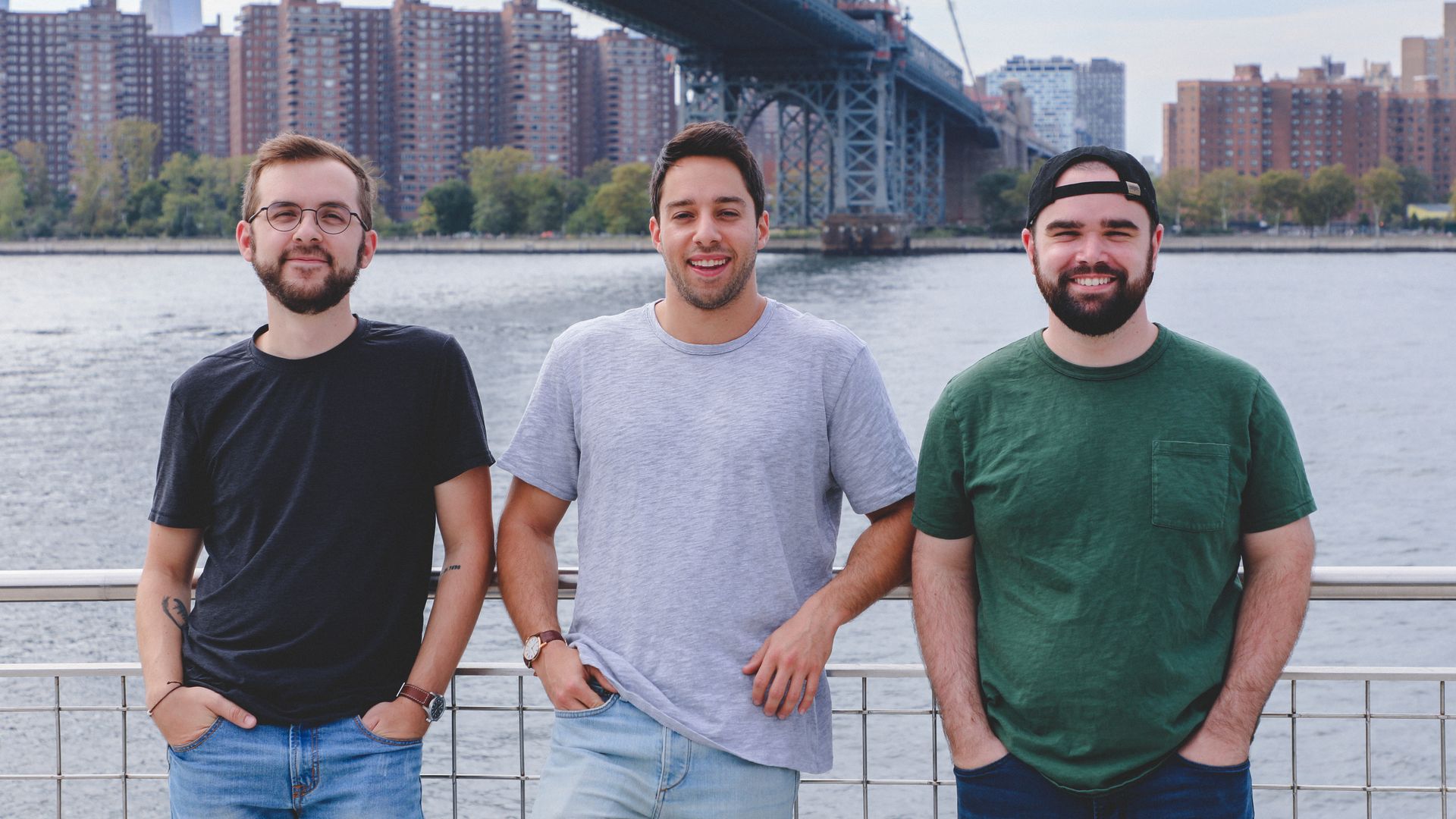
A group of former Morning Brew employees says they've raised a seed round to launch a new newsletter platform called beehiiv.
Why it matters: The group enters a crowded field. Facebook and Twitter have already launched their Substack rivals. Google is reportedly experimenting with newsletters as well.
Masterworks.io, a fractional investment platform for fine art, raised $110 million in Series A funding at a pre-money valuation north of $1 billion led by Left Lane Capital.
Why it matters: This is the first large-scale effort to securitize the art market, including works by Picasso and Banksy, with CEO Scott Lynn telling Axios that Masterworks expects to buy nearly $400 million of art this year and closer to $1 billion in 2022.
Terry McAuliffe says that he lost money on his investments with The Carlyle Group, whose former co-president is challenging McAuliffe to become Virginia's next governor. It doesn't make much sense, based on publicly available information.
The big picture: Virginia's gubernatorial race has tightened, despite the state's developing reputation as a blue bastion.
The latest blockbuster investigation from The International Consortium of Investigative Journalists (ICIJ) shows that when reporters agree to work together and not to out-scoop one another, the impact of their work can be explosive.
Why it matters: "It really in some ways is set up to subvert the traditional kind of foreign reporting that has dominated international journalism, where a western reporter parachutes into a country and comes back to write a story," says Michael Hudson, senior editor at the International Consortium of Investigative Journalists (ICIJ).
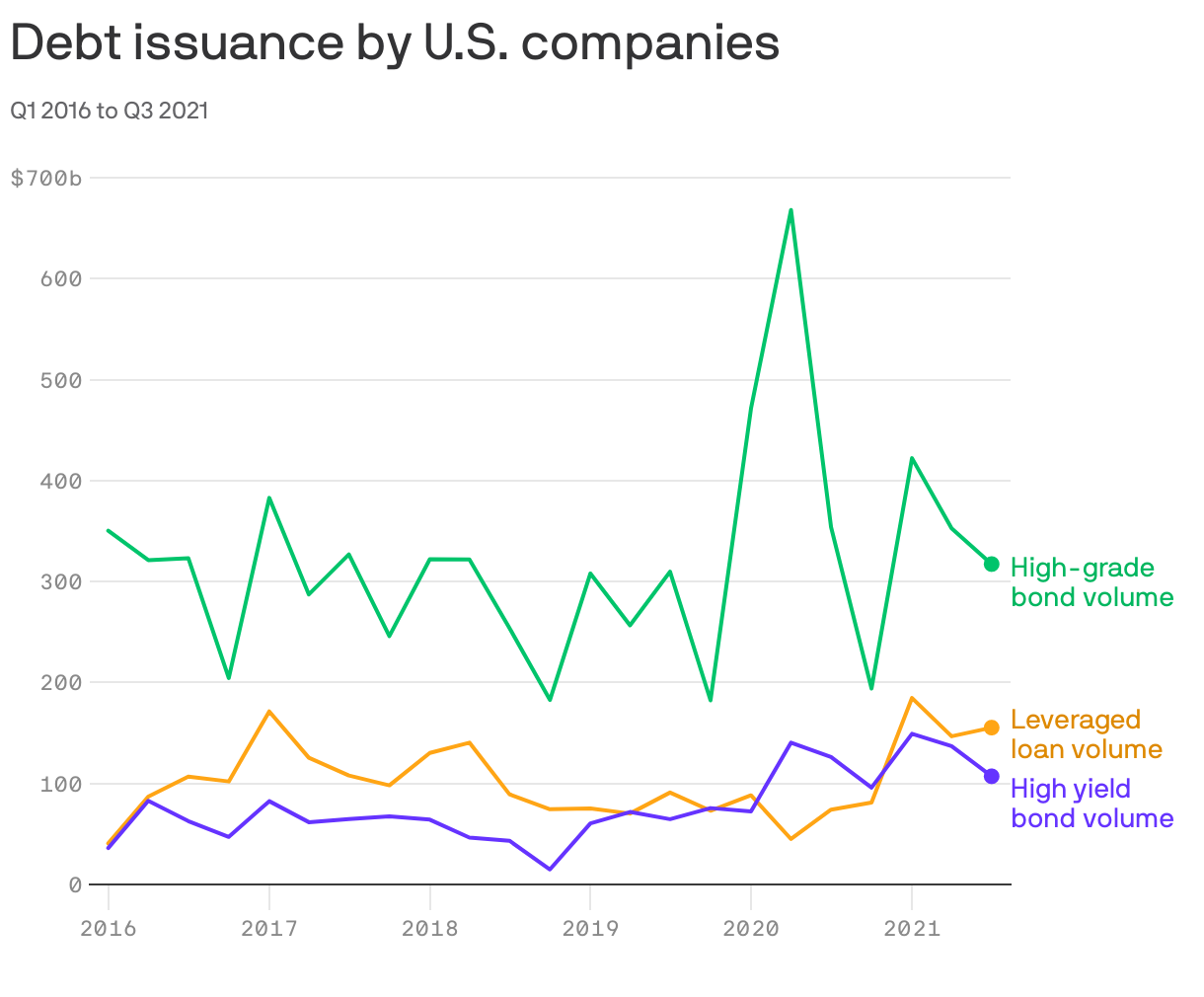
Data: LCD, an offering of S&P Global Market Intelligence; Chart: Kavya Beheraj/Axios
U.S. companies are still binging on debt, as interest rates remain near record lows.
Driving the news: With the third quarter now in the books, we can see that the dollar amount of year-to-date leveraged loans and high yield bond sales are unmatched in recent history. This debt is the type issued by companies with lower credit ratings.
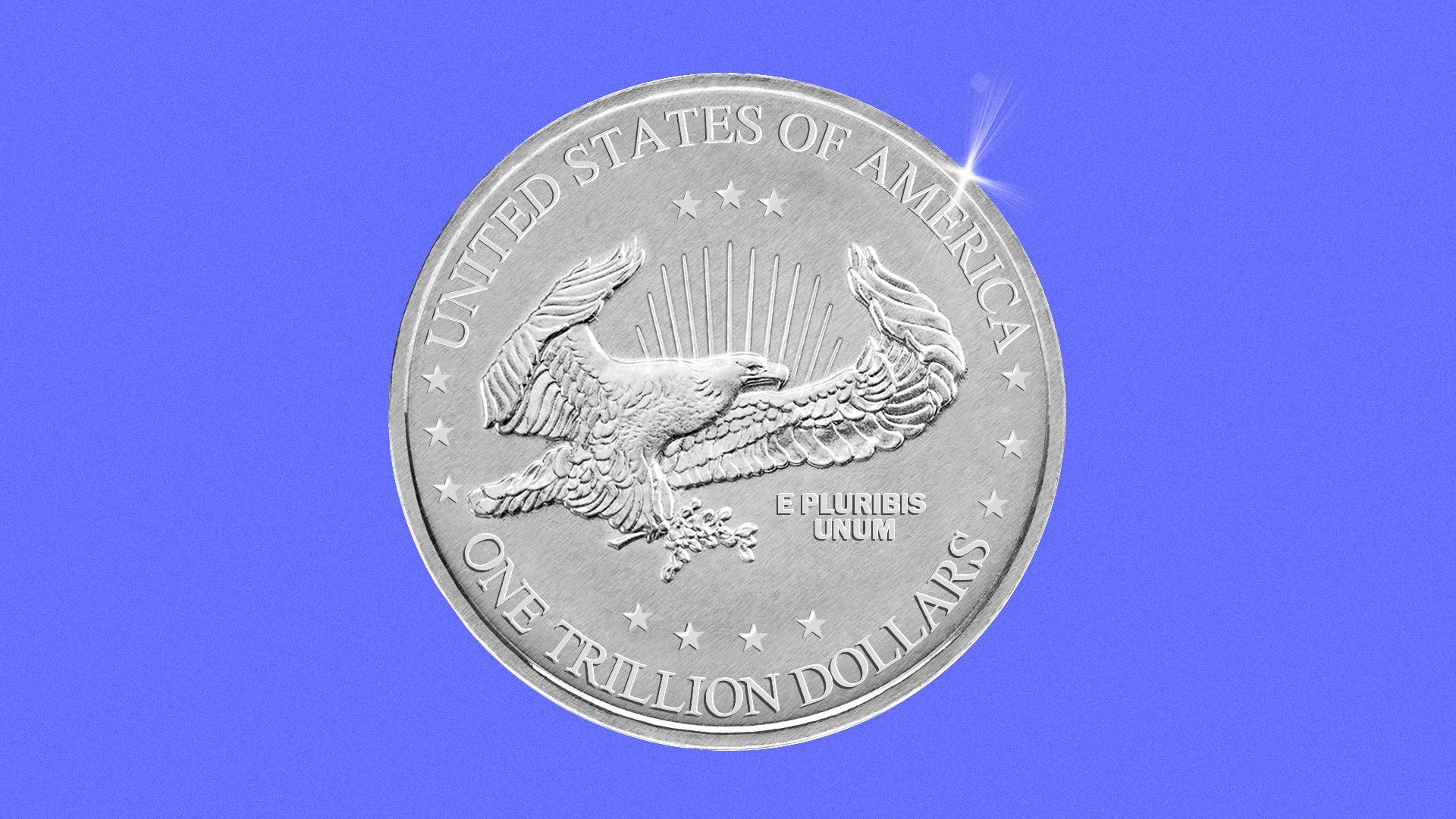
A trillion-dollar platinum coin could be minted "within hours of the Treasury Secretary's decision to do so," Philip Diehl, former director of the United States Mint, tells Axios.
Why it matters: Congressional solutions to the debt-ceiling problem could take weeks to implement, especially if the reconciliation process is used — and time is running out. In case of emergency, a trillion-dollar coin could be deployed to bridge any gap between the money running out and the debt ceiling being raised.
Two recent fake news releases show how easily cryptocurrency markets can be manipulated, adding to the perception that the growing industry is a new Wild West.
Catch up quick: The price of litecoin shot up about 30% after a fake press release last month purporting to be issued by Walmart said the retailer would accept litecoin as online payment and cited Litecoin's creator.
Tension is escalating in Hollywood as the entertainment industry scrambles to adjust to its new streaming reality.
Why it matters: An increasing number of intra-industry spats could threaten production at a time when consumers are looking for more content choices than ever before.
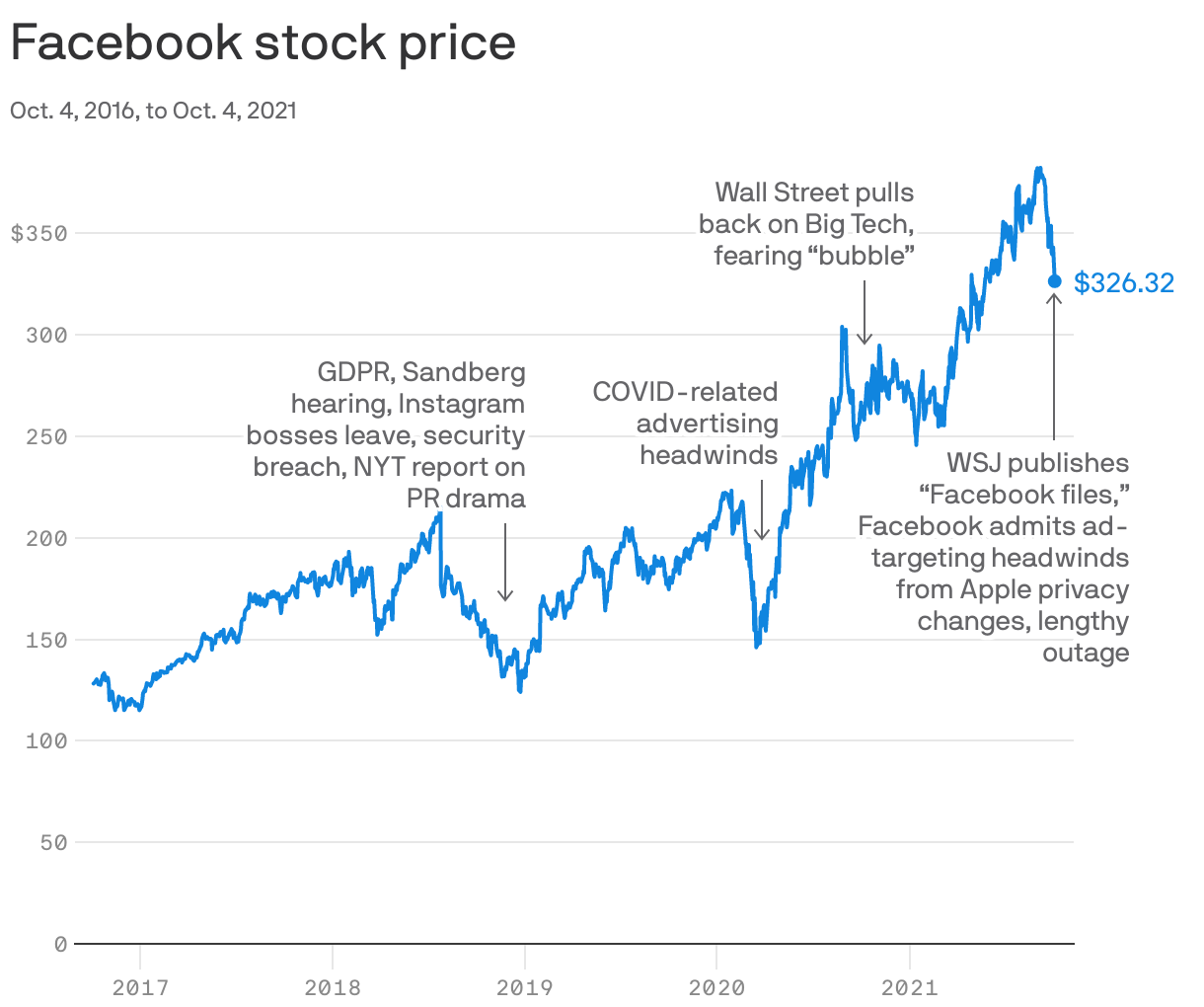
Facebook's latest string of controversies is beginning to seriously weigh on its stock performance — a clear indication of the tech giant's vulnerability to long-term business headwinds, even if its ads business continues to grow for now.
The big picture: In the past, investors have mostly shrugged at blows to Facebook's reputation, including Capitol Hill hearings and leaks, and instead have focused on ad and user growth as metrics for success.
Energy prices are climbing around the world amid a perfect storm of extreme weather, rising power demand, and supply constraints. It’s roiling markets overseas, with China and India facing electricity crises while a dozen power companies in the U.K. have gone belly-up.
Driving the news: Oil prices jumped again Monday after OPEC decided not to boost production beyond the modest increase that it had previously outlined.
Nobody really knows what the future of urban transportation looks like, but chances are it will involve an electric skateboard.
Why it matters: Automakers like Citroën are imagining a futurebased on the same basic foundation: A "skateboard" chassis consisting of a flat battery pack and four wheels. What goes on top of the skateboard is open to interpretation — everything from robotaxis to delivery vans and more.
The antiviral pill that showed promising results against severe COVID-19 was originally developed at Emory University with $35 million of taxpayer grants.
Why it matters: The federal government consequently owns rights to some of the molnupiravir's patents, which could factor into future purchasing agreements with Merck, which sells the drug.
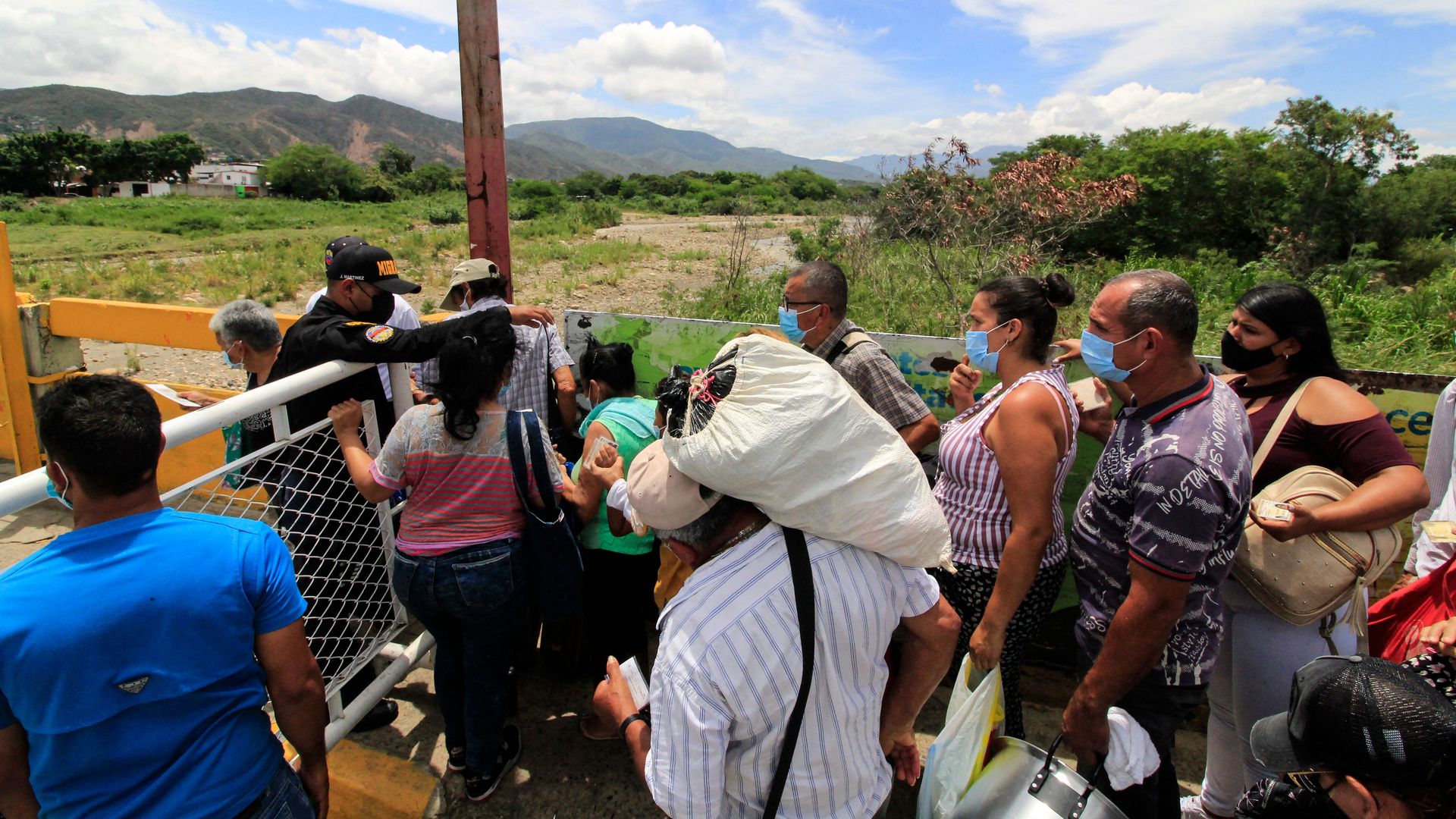
Venezuelan officials were preparing to reopen the country's border with Colombia on Tuesday, nearly three years after it closed amid a diplomatic struggle between the two nations.
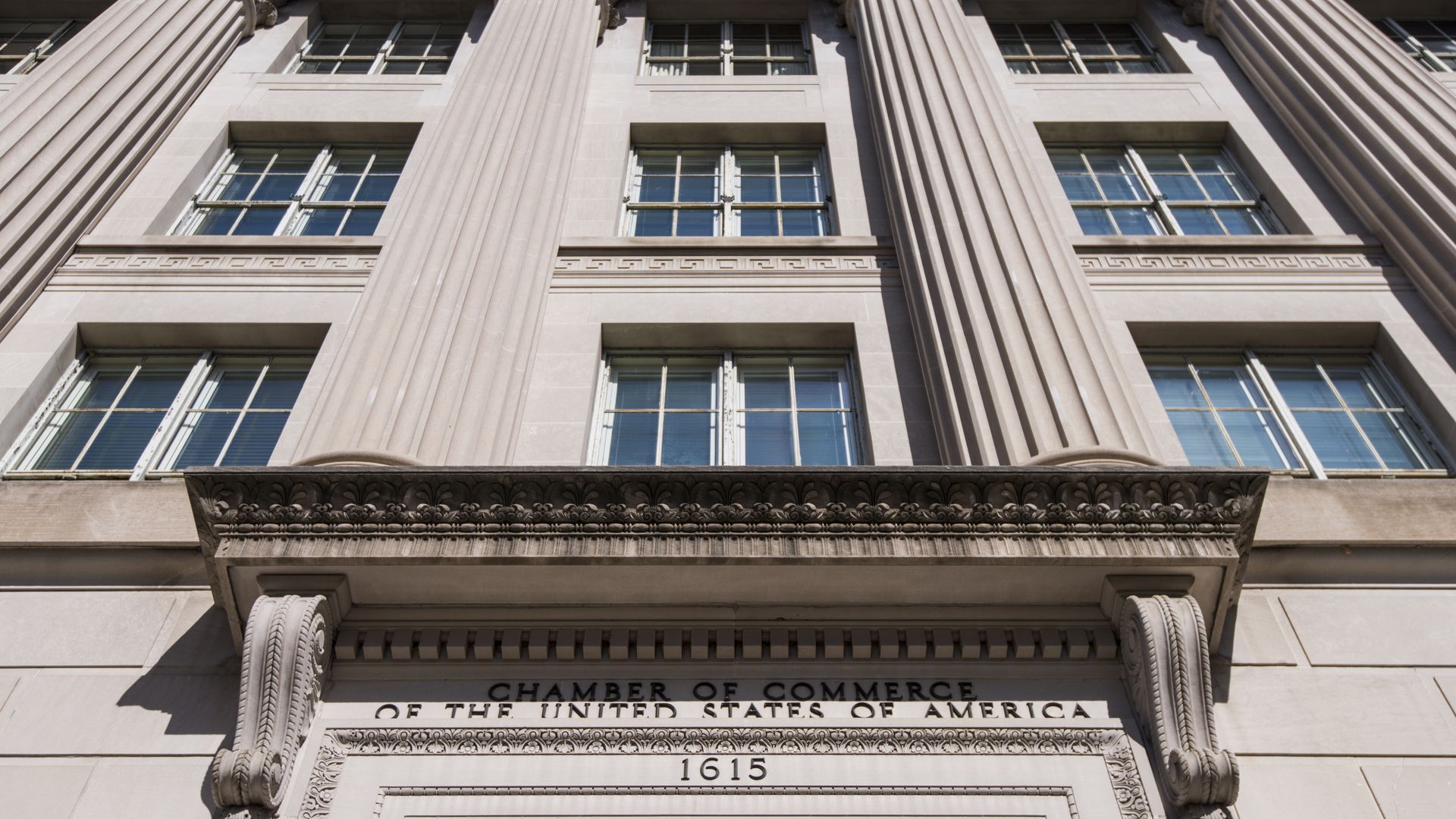
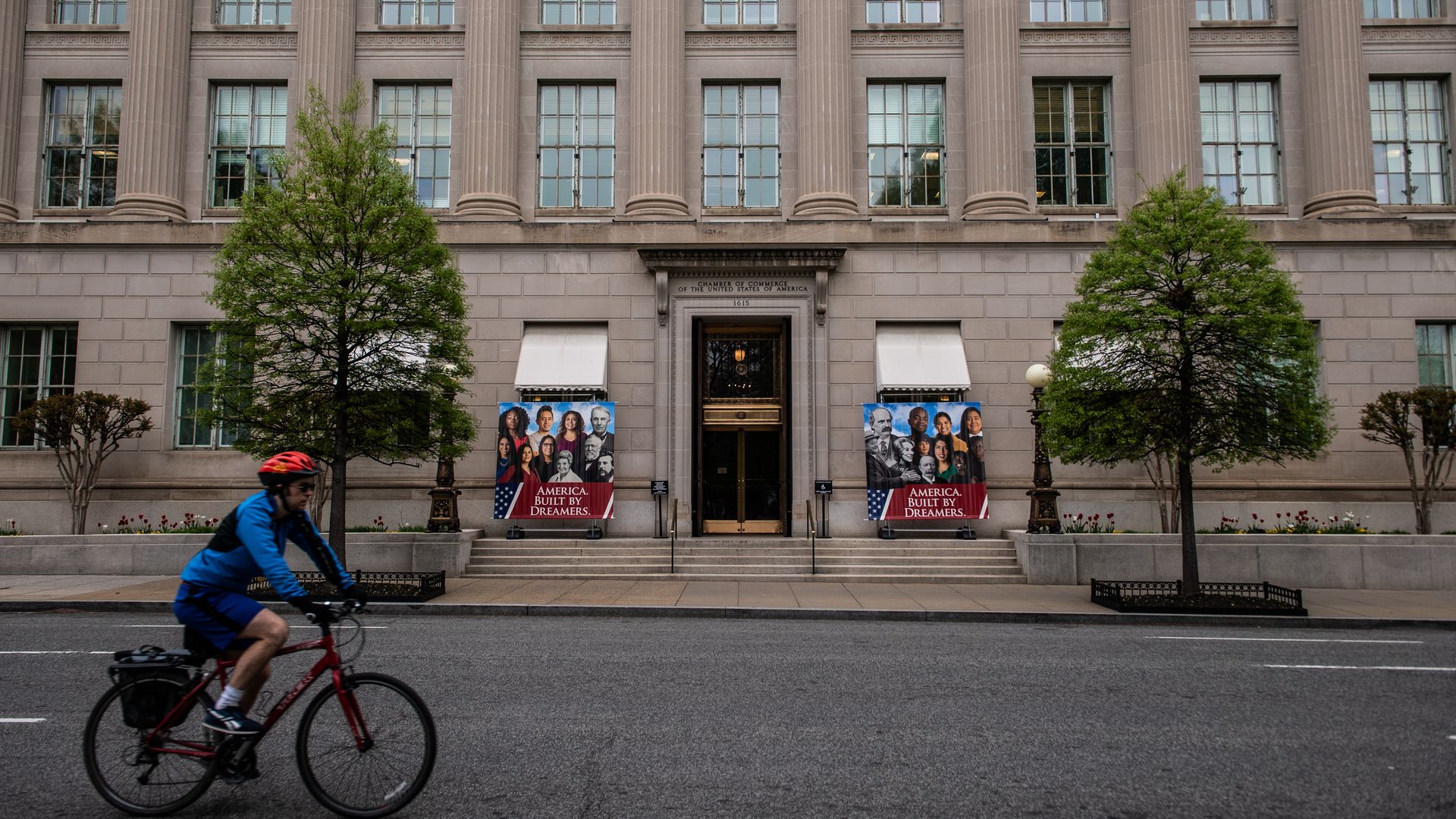
The U.S. Chamber of Commerce issued a statement late Monday clarifying its support for the Senate-passed $1.2 trillion infrastructure bill if passed independently. But it rejected President Biden linking it to his broader, $3.5 trillion reconciliation package.
Driving the news: The statement came shortly after the Chamber told Axios it opposed passage of the bipartisan infrastructure bill, given Biden linked the measure to his reconciliation proposal during his meeting with House Democrats on Friday.
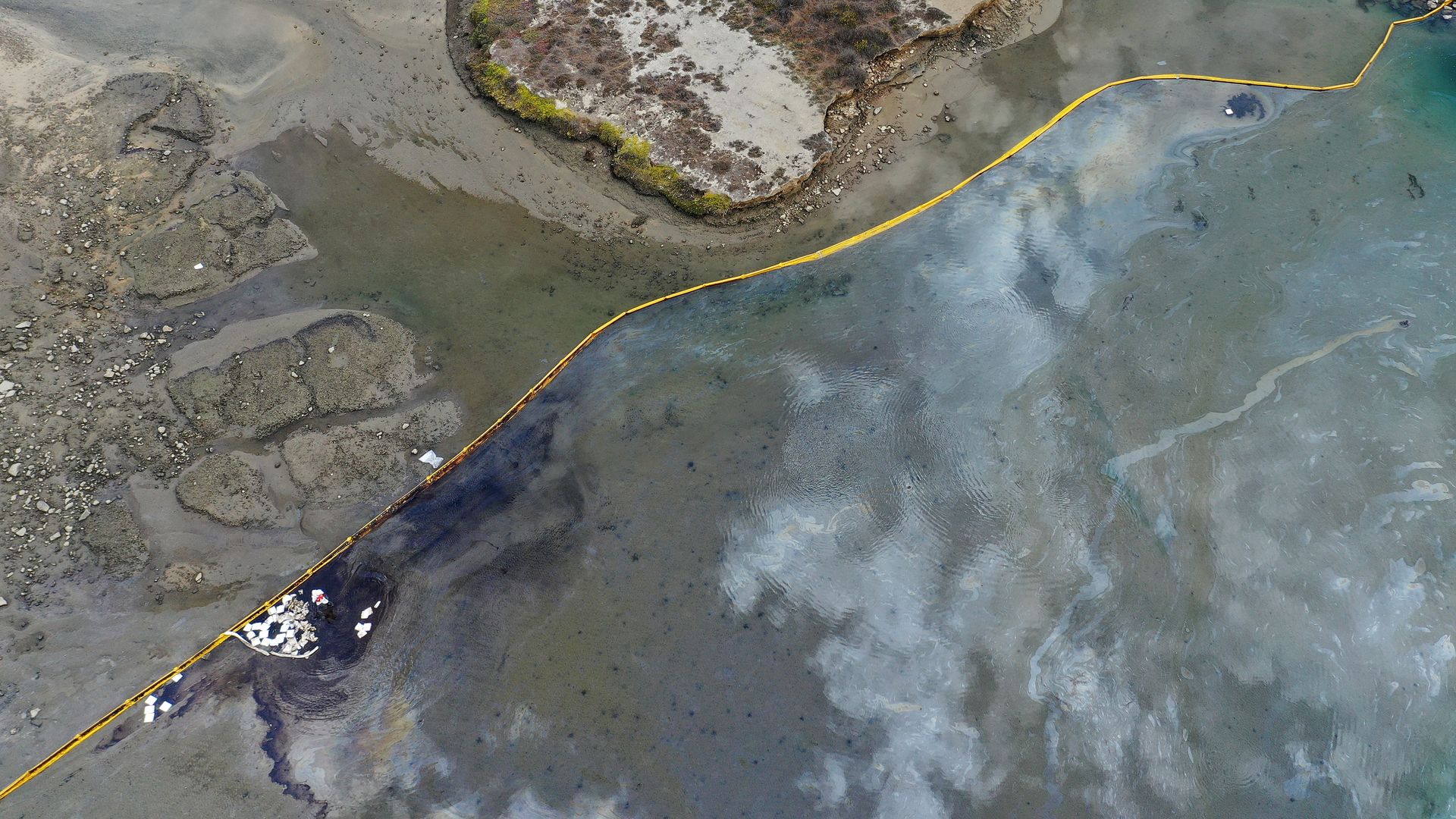
Authorities are working to contain one of the largest oil spills in California's recent history that has devastated wildlife and contaminated several popular beaches.
The big picture: The spill was detected Saturday and was estimated to be about 13 square miles in size. Some 126,000 gallons of crude oil has spilled into the waters, per the Coast Guard. The full scope of the environmental impacts remain unknown.
The U.S. Chamber of Commerce is withdrawing its support of the Senate-passed $1.2 trillion bipartisan infrastructure bill just hours after Punchbowl News reported House Republicans were booting it from its strategy calls, Axios has learned.
Why it matters: The Chamber's chief policy officer, Neil Bradley, announced the policy shift in a letter to its Board of Directors on Monday. The pretense for his decision: President Biden formally linking the "hard" infrastructure bill with the $3.5 trillion budget reconciliation package during a meeting with House Democrats on Friday.
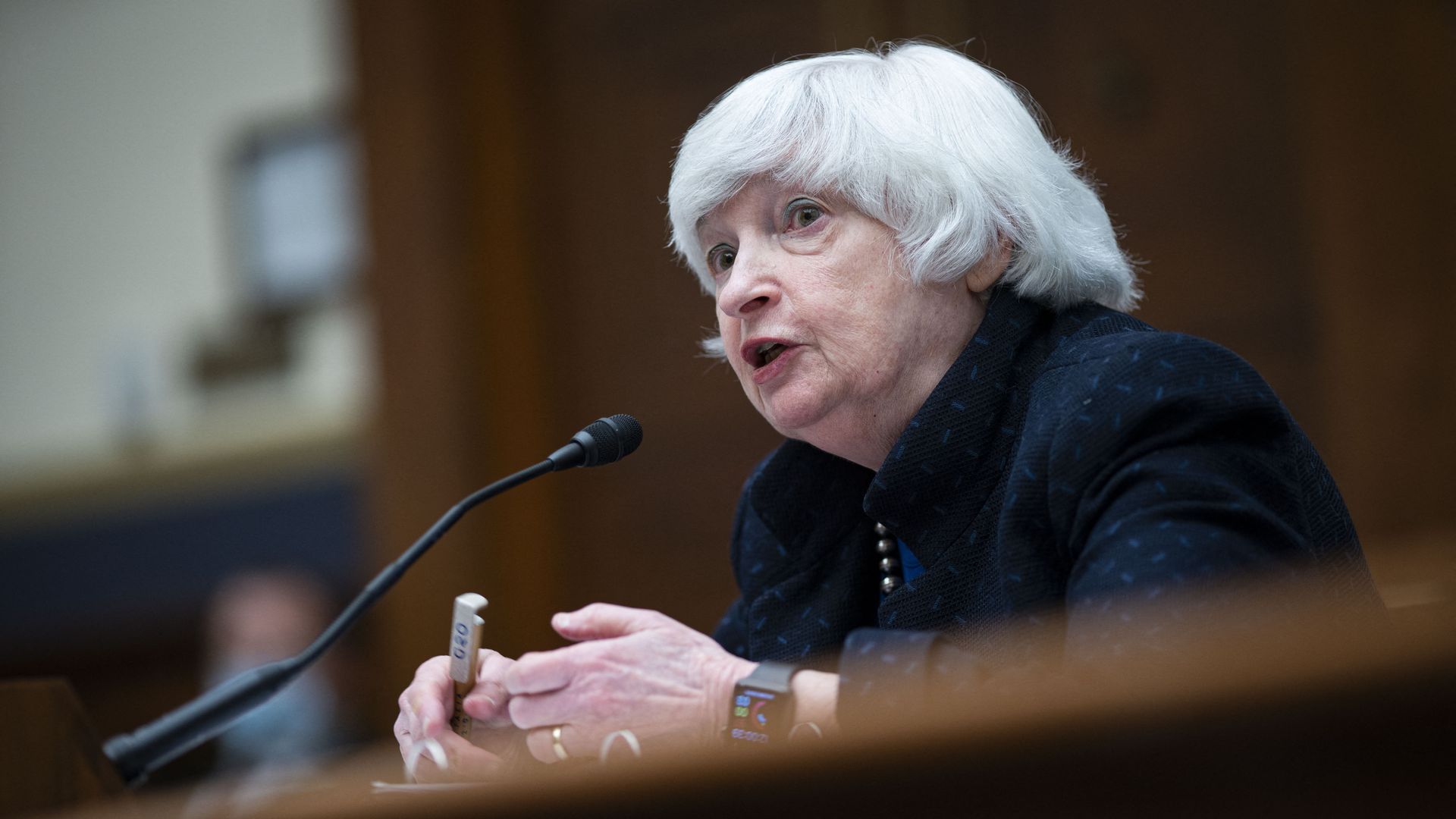
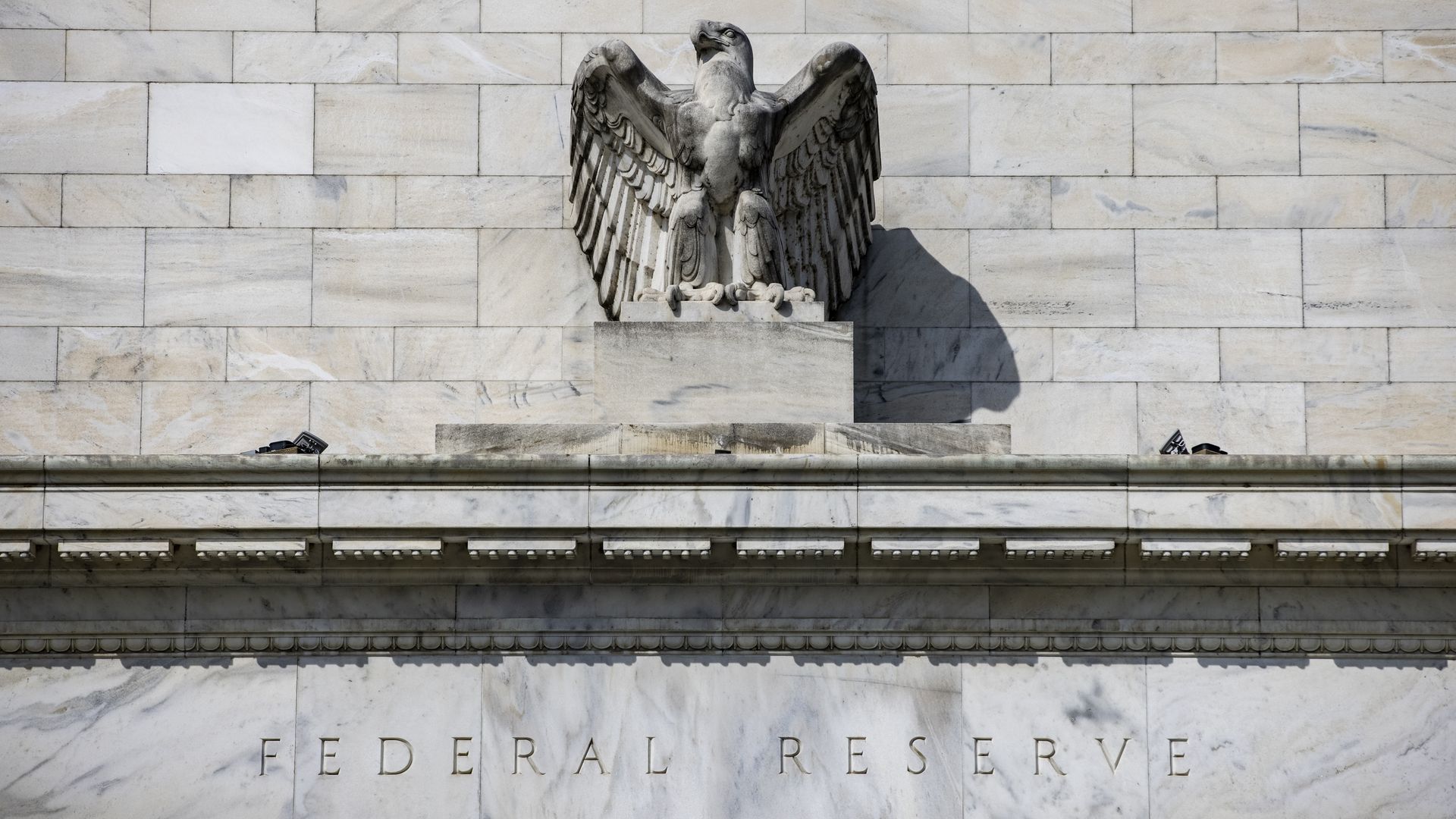
A government watchdog will review whether the financial market trading activity of two top economic officials at the Fed violated the central bank’s rules or the law, a Fed spokesperson said on Monday.
Why it matters: It’s the latest fallout from a rare public scandal at one of the world’s most influential economic bodies — one that's led to rapid resignations, raised questions about conflicts of interest and drawn ire from lawmakers.