Congress is mulling a number of proposals aimed at investing in technology and traditional scientific research and development that could make huge strides on racial diversity in science.
Why it matters: The proposals come as science institutions face pressure to hire and cultivate more teachers of color, diversify research fields and ensure that there is greater diversity in the STEM workforce overall.
The representation gap in STEM jobs is largest among Hispanic workers, according to data from Pew Research Center, and that could consign them to lower paying jobs.
The big picture: STEM occupations, which tend to be higher-paying, are projected to grow in the next decade, especially in computer science and information security. Black and Hispanic people, especially women, may not benefit from that job growth because, as the Pew authors write, education trends "appear unlikely to substantially narrow these gaps."
Chanda Prescod-Weinstein, a theoretical physicist at the University of New Hampshire, is one of about 100 Black American women physicists, but she nearly left the field in her first semester in college. She isn't the only scientist of color who thought of giving up before her career began.
Why it matters: Scientists and institutions have stepped up efforts in the year since George Floyd's murder to redress the underrepresentation of people like Prescod-Weinstein and other scientists of color among their ranks. That marginalization affects not only who pursues science as a career but the problems scientists address.
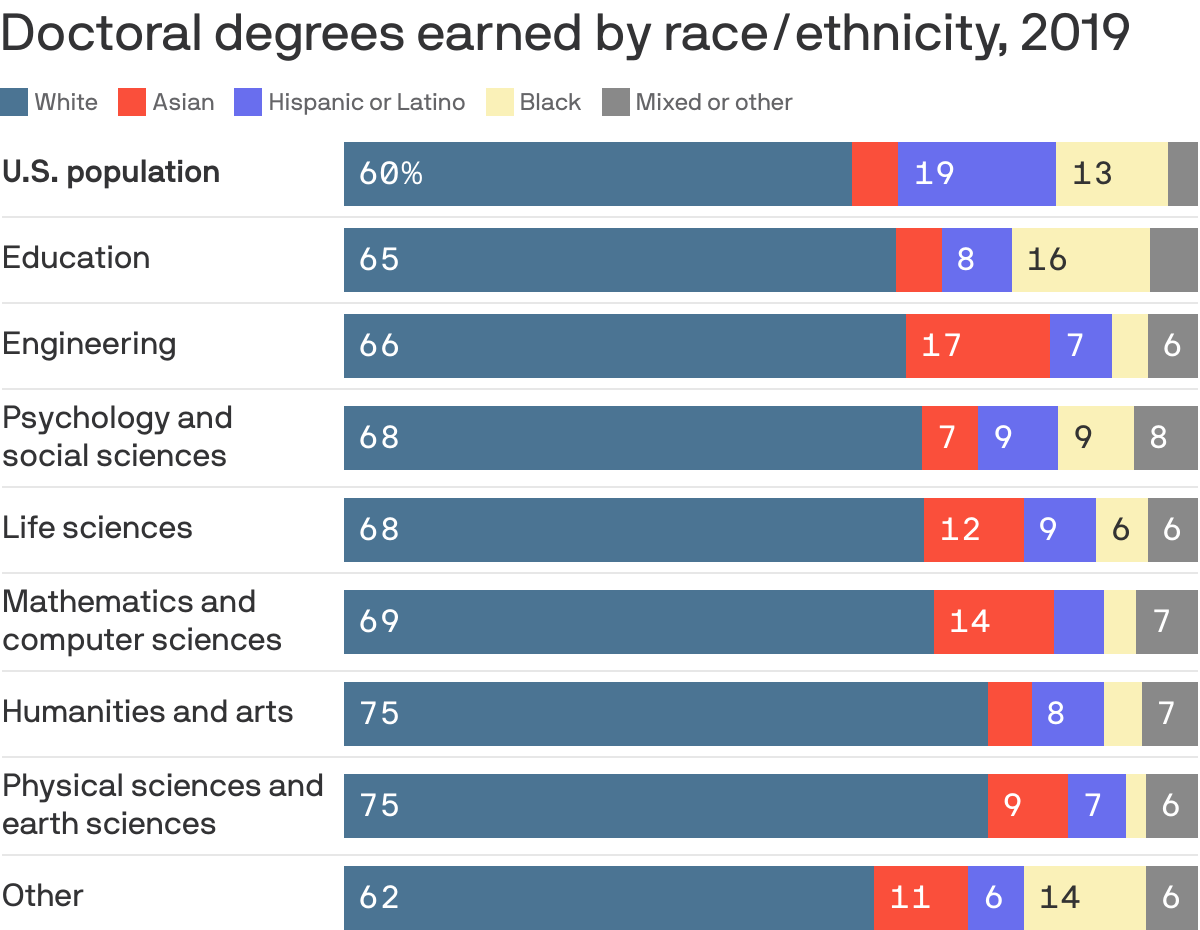
Data: NSF Survey of Earned Doctorates, U.S. Census Bureau; Chart: Connor Rothschild/Axios
Students from underrepresented communities are earning more Ph.D.s, yet doctoral degrees in science and engineering are still overwhelmingly conferred on white students, according to an analysis from the National Science Foundation.
Why it matters: Today's doctoral candidates are tomorrow's teachers, mentors and researchers who can help the next generation of students see themselves as scientists and guide the areas they explore.
By the numbers: In 2019, nearly 70% of doctorate recipients who were U.S. citizens or permanent residents were white.
10% were Asian, 8% were Latino, 7% were Black and 3% identified as more than one race.
Blacks, Latinos and Native Americans earned about 5,500 doctorates in 2019, a 6.7% jump from 2018.
Black, Latino and Native American students are least likely to have a parent with a bachelor's degree or higher, and often enter programs with an immense lack of diversity — two major factors that block the pipeline to higher education.
About 75% of doctorate recipients who were Asian or white came from families with at least one parent with some type of degree in higher education, compared with between 49% and 59% of doctorate recipients who were Black, Latino or Native American.
“Trust the science” are this year’s buzzwords. But from astronomy to zoology, systemic racism keeps people of color from practicing science or from benefiting from its findings.
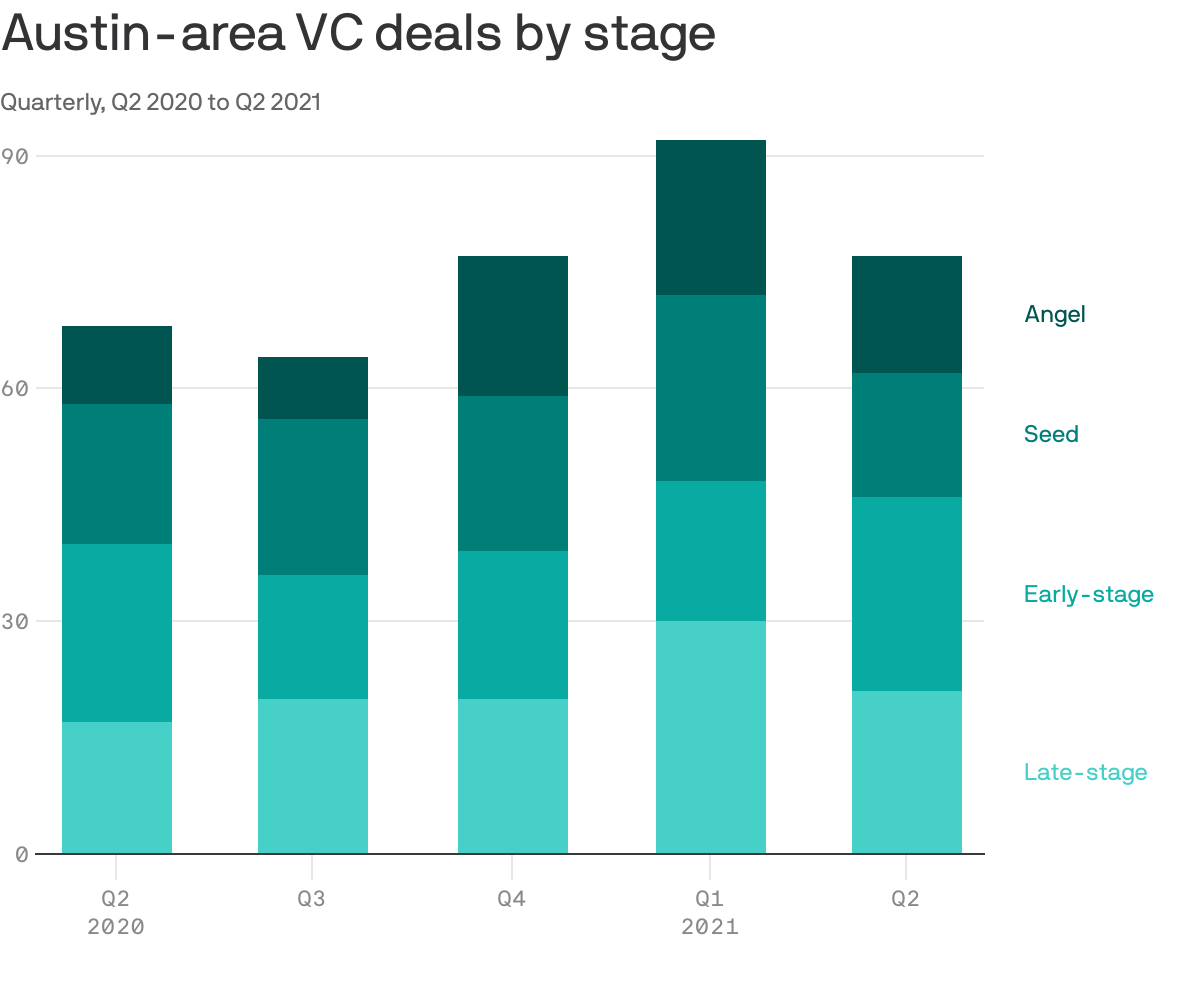
Austin has been one of the top beneficiaries of the pandemic-era reshuffling of tech entrepreneurs, investors and workers.
“From an Austin perspective, I’d characterize it as ‘it’s never been better,’” Next Coast Ventures managing director Mike Smerklo tells Axios of the local startup scene’s growth over the past year, adding that his firm is busier than ever.
Startup funding activity in Miami increased during the pandemic, but it has been largely concentrated at the earliest stages — signaling that the city is still a young hub whose primary growth comes from adding brand new companies to its ecosystem.
Why it matters: Despite a lot of noise from certain Silicon Valley techies and investors who left the area for cities like Miami, new data suggests the exodus was more temporary as some are now quietly returning to the Bay Area.
The Olympics haven't made financial sense in decades. Host cities spend billions preparing for the games, inevitably suffering massive cost overruns and going deep into debt, with a lasting legacy of little more than a group of buildings ill-suited to any other use.
Why it matters: This year, the games' physical location is more of a liability and less of an asset than ever. The Tokyo competition risks spreading COVID-19 in a country with a very low vaccination rate, while bringing no glory (or tourists) to a city that has banned spectators from all events.
Bank branches were once a staple of neighborhoods across America. Now they are closing by the thousands.
Why it matters: Like the transformation of brick-and-mortar retail, bank branches are trying to evolve from places to buy stuff into places to have an experience.
CBS Evening News executive producer Jay Shaylor is exiting amid reorganization of the show's management, sources tell Axios.
Why it matters: It's the second major leadership shakeup at the show in the last few years. The program has struggled for years to compete for ratings with evening news at ABC and NBC.
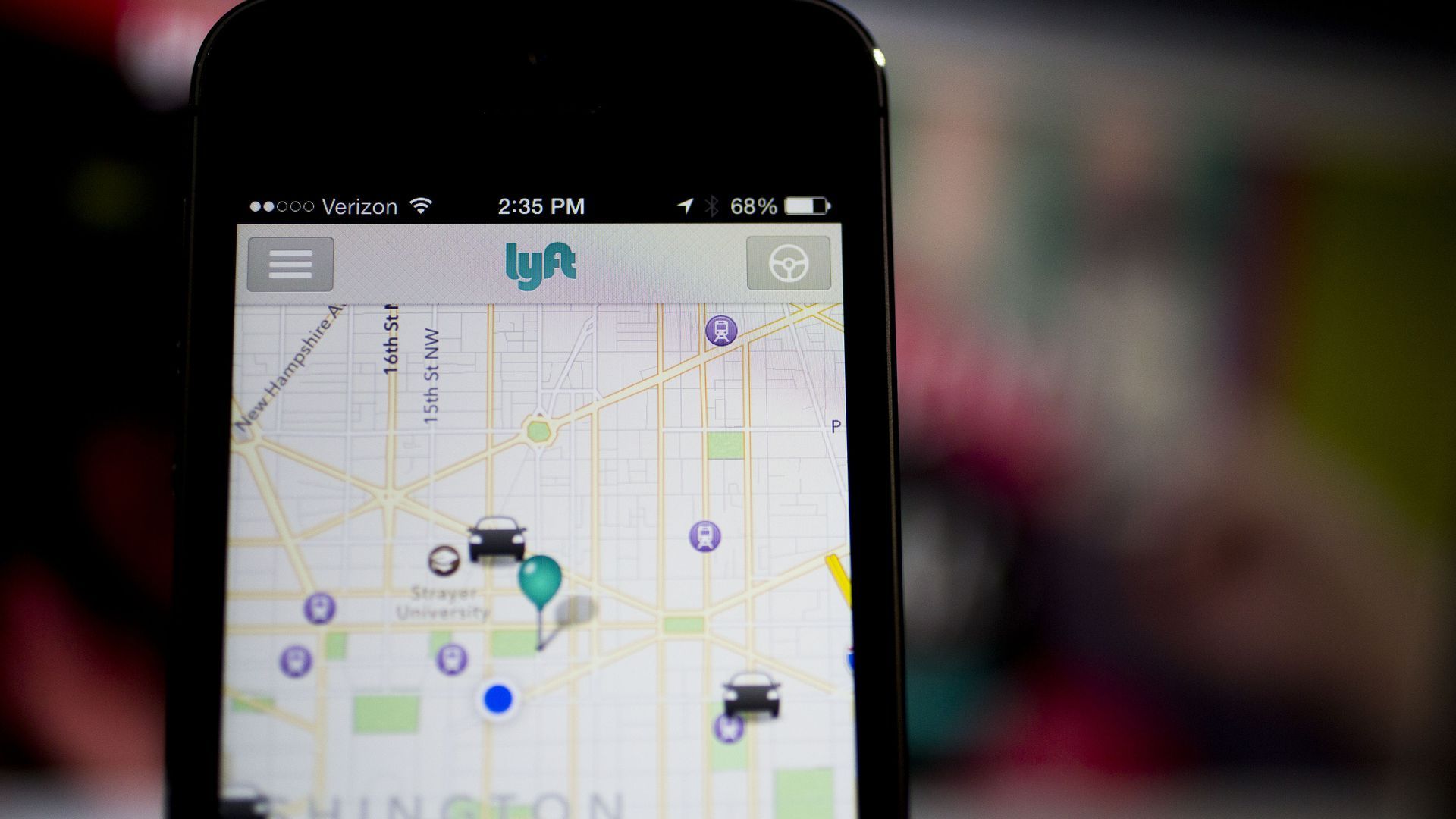
One of the first things to go when the pandemic struck U.S. cities is back: carpooling.
Driving the news: Lyft is bringing back shared rides in Philadelphia, Chicago and Denver on Monday, with plans to keep adding cities over the coming months.
Investment firm General Atlantic is raising $4 billion for a growth equity fund focused on climate technologies, Axios has learned.
Why it matters: Massive flooding in Germany. Wildfires in Canada, with smoke reaching Greenland. Droughts causing massive amounts of animal death. Another heat dome forming. Hottest June on record in the U.S. And on and on and on.
The way Fed chairJerome Powell is talking about inflation seems to be evolving.
Why it matters: The Fed has been employing a very stimulative monetary policy, which is helping boost job growth. But inflation has been running above its target.
Autonomous trucking is a hot commodity as investors once dazzled by self-driving cars are now pouring truckloads of money into automated logistics.
The big picture: It's still not clear when robotaxis might be ready for large-scale deployment. Meanwhile, the explosion of e-commerce since the pandemic has created an increased demand for shipping.
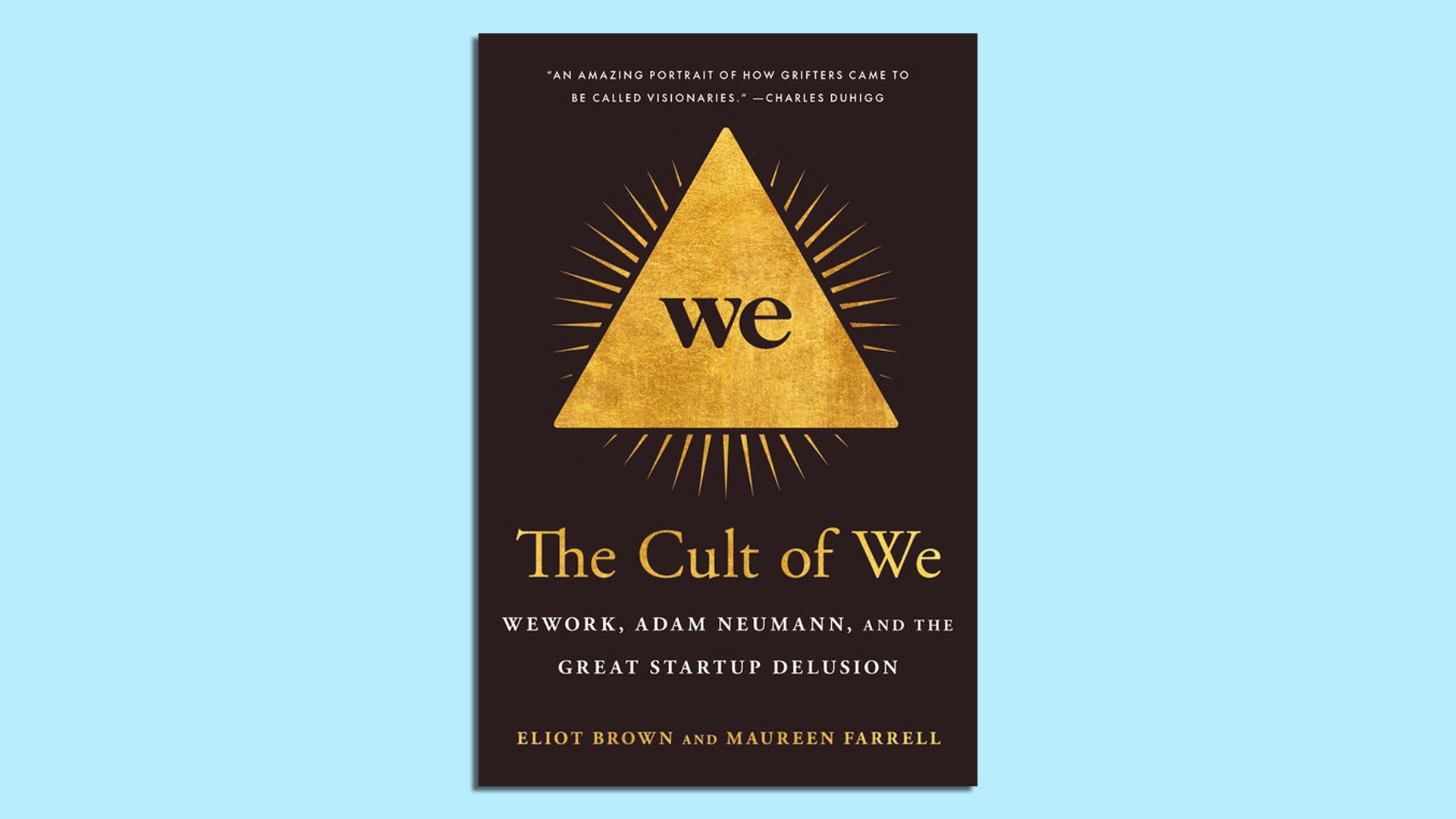
WeWork founder and former CEO Adam Neumann threatened to walk away from a multi-billion dollar investment because of a request that he viewed as antisemitic, according to an exclusive excerpt from an upcoming book called "The Cult of We" by Wall Street Journal reporters Eliot Brown and Maureen Farrell.
Setting the scene: Neumann, who was born in Israel and is Jewish, was in Tokyo in early 2017 to finalize a giant investment from SoftBank, which planned to mostly use money from a $100 billion fund whose largest investor was the government of Saudi Arabia.
Cash is getting a bad reputation. It was already on the ropes but the pandemic accelerated a decline that's been underway.
Why it matters: Consumers used less cash in 2020. That along with a trend toward digital transactions in the smaller-dollar realm — the last stronghold of the legal cash economy — implies the cash in circulation is largely being used for under-the-table or illicit activities.
Ransomware may be the threat everyone is talking about right now, but businesses also face another growing risk: becoming a disinformation campaign's direct target or collateral damage.
Why it matters: Ransomware's damage is immediate and unavoidable, but the attack takes skill and planning, while disinformation attacks are often cheaper to launch and harder to protect against.
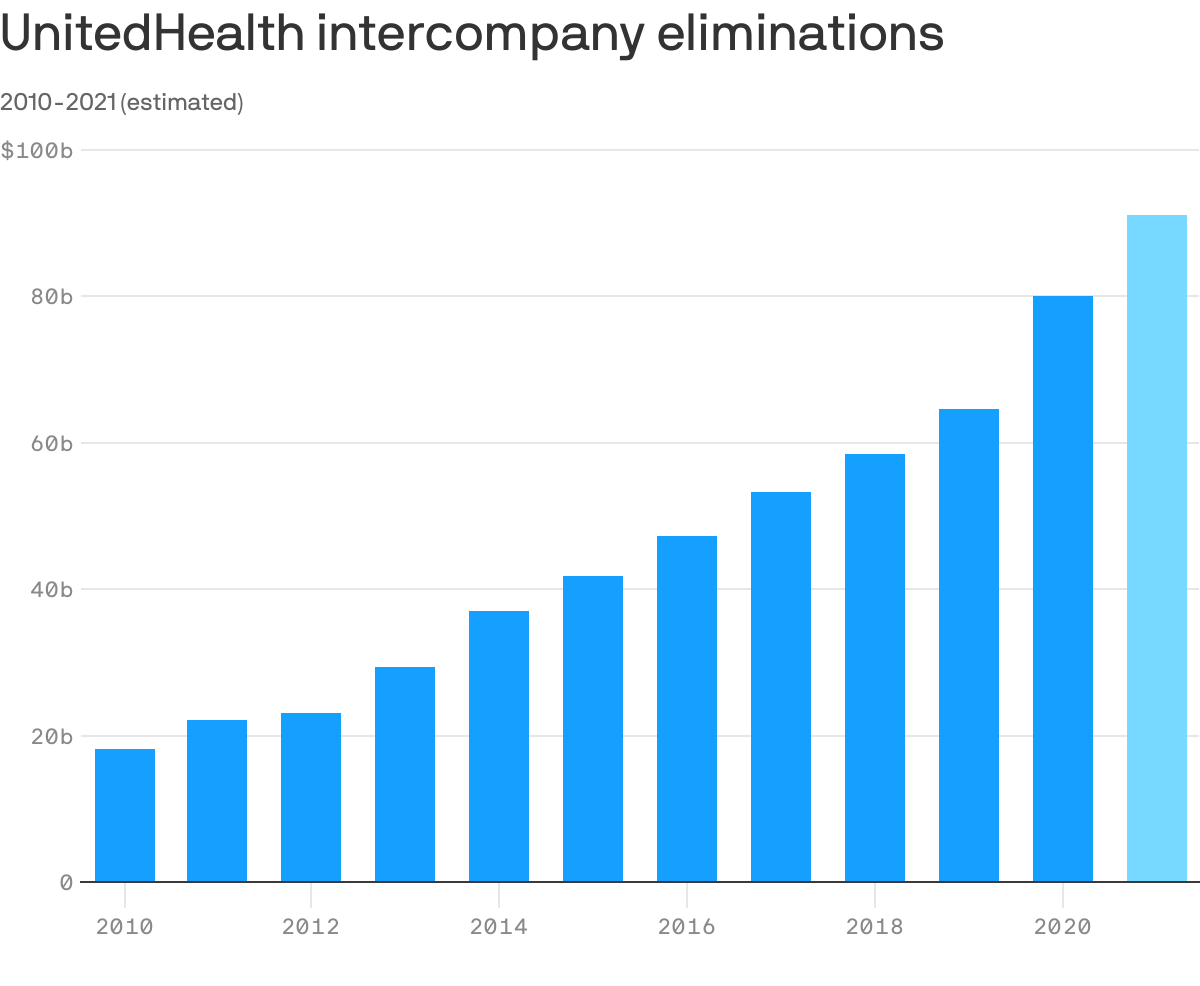
UnitedHealth Group isn't just making more money because people deferred care throughout the coronavirus pandemic. It's making more money because it's owning a bigger piece of the health care system.
The bottom line: Insurers keep more of the premiums they collect when they also own the medical providers that are paid those premium dollars. And no insurer has expanded as aggressively into care delivery over the years as UnitedHealth.