A Wisconsin jury this week awarded a woman with Down Syndrome $125 million in punitive damages in her suit against Walmart for wrongful termination, the New York Times reports.
State of play: Marlo Spaeth began working at Walmart as a sales associate in 1999. In November 2014, after Walmart altered her shift schedule, Spaeth repeatedly asked the company to return her normal work hours, per the Times.
Congress is mulling a number of proposals aimed at investing in technology and traditional scientific research and development that could make huge strides on racial diversity in science.
Why it matters: The proposals come as science institutions face pressure to hire and cultivate more teachers of color, diversify research fields and ensure that there is greater diversity in the STEM workforce overall.
The representation gap in STEM jobs is largest among Hispanic workers, according to data from Pew Research Center, and that could consign them to lower paying jobs.
The big picture: STEM occupations, which tend to be higher-paying, are projected to grow in the next decade, especially in computer science and information security. Black and Hispanic people, especially women, may not benefit from that job growth because, as the Pew authors write, education trends "appear unlikely to substantially narrow these gaps."
Chanda Prescod-Weinstein, a theoretical physicist at the University of New Hampshire, is one of about 100 Black American women physicists, but she nearly left the field in her first semester in college. She isn't the only scientist of color who thought of giving up before her career began.
Why it matters: Scientists and institutions have stepped up efforts in the year since George Floyd's murder to redress the underrepresentation of people like Prescod-Weinstein and other scientists of color among their ranks. That marginalization affects not only who pursues science as a career but the problems scientists address.
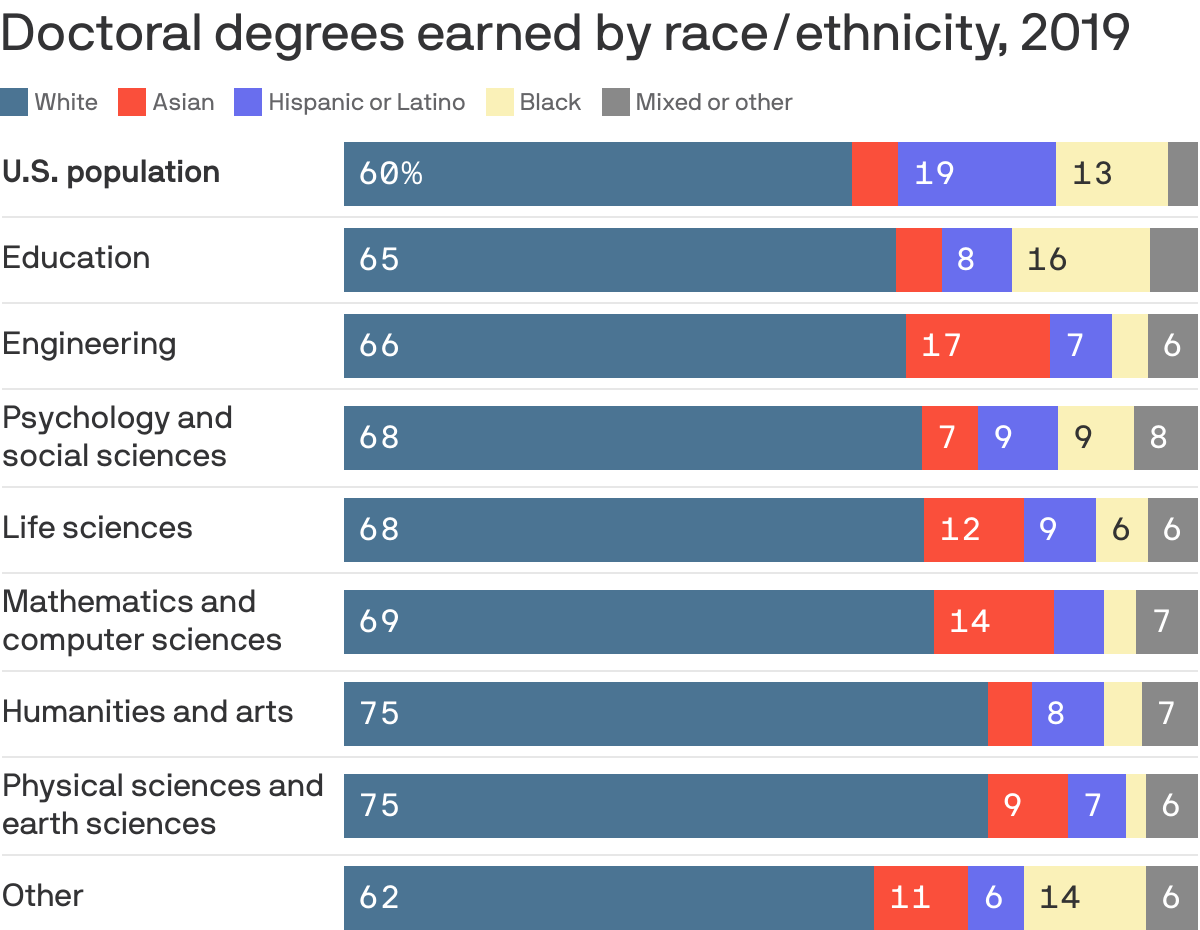
Data: NSF Survey of Earned Doctorates, U.S. Census Bureau; Chart: Connor Rothschild/Axios
Students from underrepresented communities are earning more Ph.D.s, yet doctoral degrees in science and engineering are still overwhelmingly conferred on white students, according to an analysis from the National Science Foundation.
Why it matters: Today's doctoral candidates are tomorrow's teachers, mentors and researchers who can help the next generation of students see themselves as scientists and guide the areas they explore.
By the numbers: In 2019, nearly 70% of doctorate recipients who were U.S. citizens or permanent residents were white.
10% were Asian, 8% were Latino, 7% were Black and 3% identified as more than one race.
Blacks, Latinos and Native Americans earned about 5,500 doctorates in 2019, a 6.7% jump from 2018.
Black, Latino and Native American students are least likely to have a parent with a bachelor's degree or higher, and often enter programs with an immense lack of diversity — two major factors that block the pipeline to higher education.
About 75% of doctorate recipients who were Asian or white came from families with at least one parent with some type of degree in higher education, compared with between 49% and 59% of doctorate recipients who were Black, Latino or Native American.
“Trust the science” are this year’s buzzwords. But from astronomy to zoology, systemic racism keeps people of color from practicing science or from benefiting from its findings.
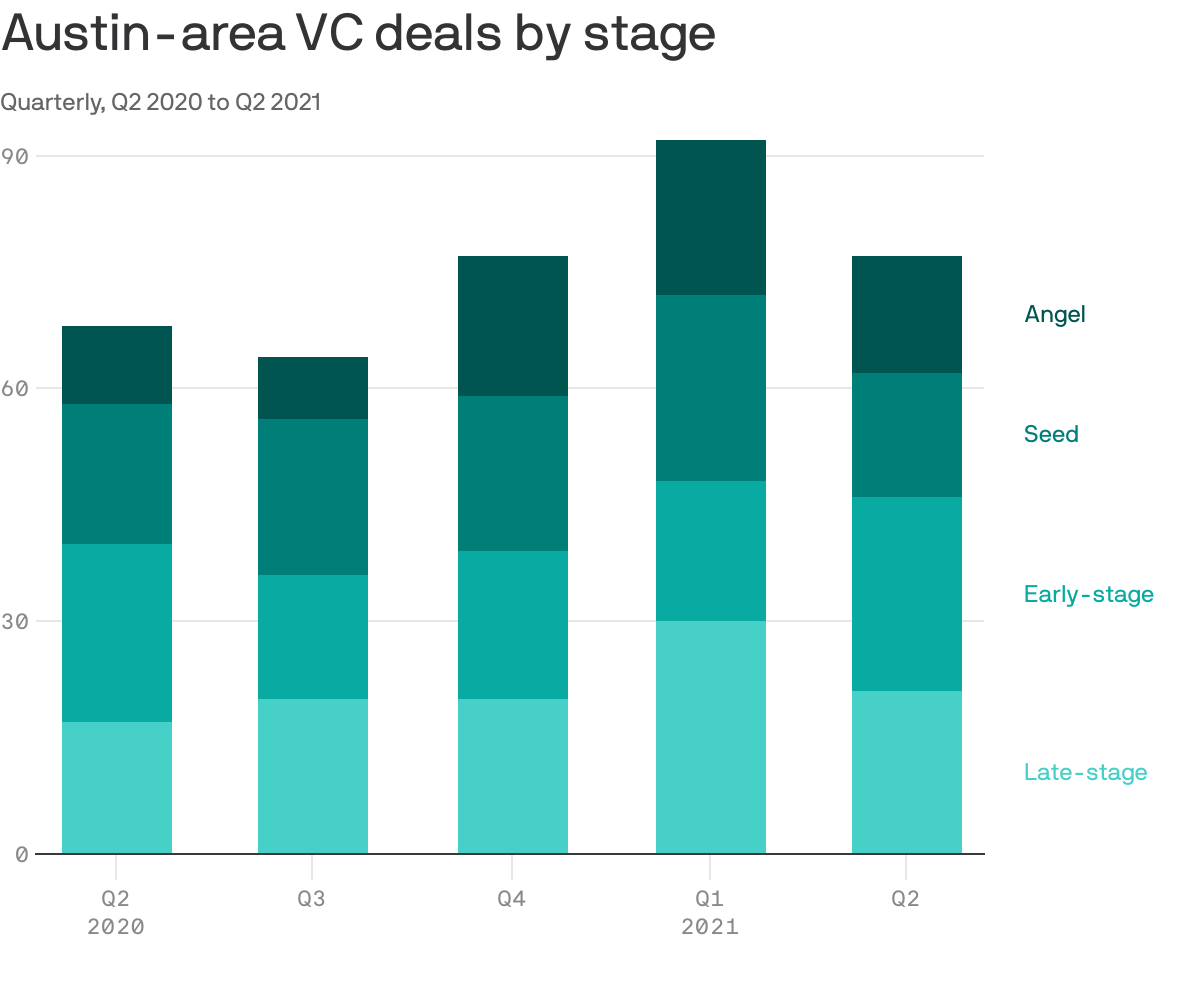
Austin has been one of the top beneficiaries of the pandemic-era reshuffling of tech entrepreneurs, investors and workers.
“From an Austin perspective, I’d characterize it as ‘it’s never been better,’” Next Coast Ventures managing director Mike Smerklo tells Axios of the local startup scene’s growth over the past year, adding that his firm is busier than ever.
Startup funding activity in Miami increased during the pandemic, but it has been largely concentrated at the earliest stages — signaling that the city is still a young hub whose primary growth comes from adding brand new companies to its ecosystem.
Why it matters: Despite a lot of noise from certain Silicon Valley techies and investors who left the area for cities like Miami, new data suggests the exodus was more temporary as some are now quietly returning to the Bay Area.
The Olympics haven't made financial sense in decades. Host cities spend billions preparing for the games, inevitably suffering massive cost overruns and going deep into debt, with a lasting legacy of little more than a group of buildings ill-suited to any other use.
Why it matters: This year, the games' physical location is more of a liability and less of an asset than ever. The Tokyo competition risks spreading COVID-19 in a country with a very low vaccination rate, while bringing no glory (or tourists) to a city that has banned spectators from all events.