Many House Republicans say Hamas' attack on Israel has added urgency to the need to agree on a new speaker, echoing the Biden administration's concern that not having a leader could affect their ability to approve aid to Israel.
Why it matters: Several lawmakers want the U.S. to move quickly with some combination of sanctions, aid and resolutions supporting Israel — but say Republicans will have to get beyond their divisions and deal with the ambiguity over the extent of the temporary speaker's powers.
"I think it certainly puts pressure on the conference to resolve this," Rep. Mike Lawler (R-N.Y.) said. "The challenge is there are serious divisions within the conference" over former Speaker Kevin McCarthy's ouster, "and a lot of anger about what happened."
Driving the news: Lawmakers have been working on bipartisan measures to show support for Israel, but the chief concern for many is that if the selection of a speaker drags on beyond a scheduled vote Wednesday, the U.S. response to Israel's crisis will be delayed.
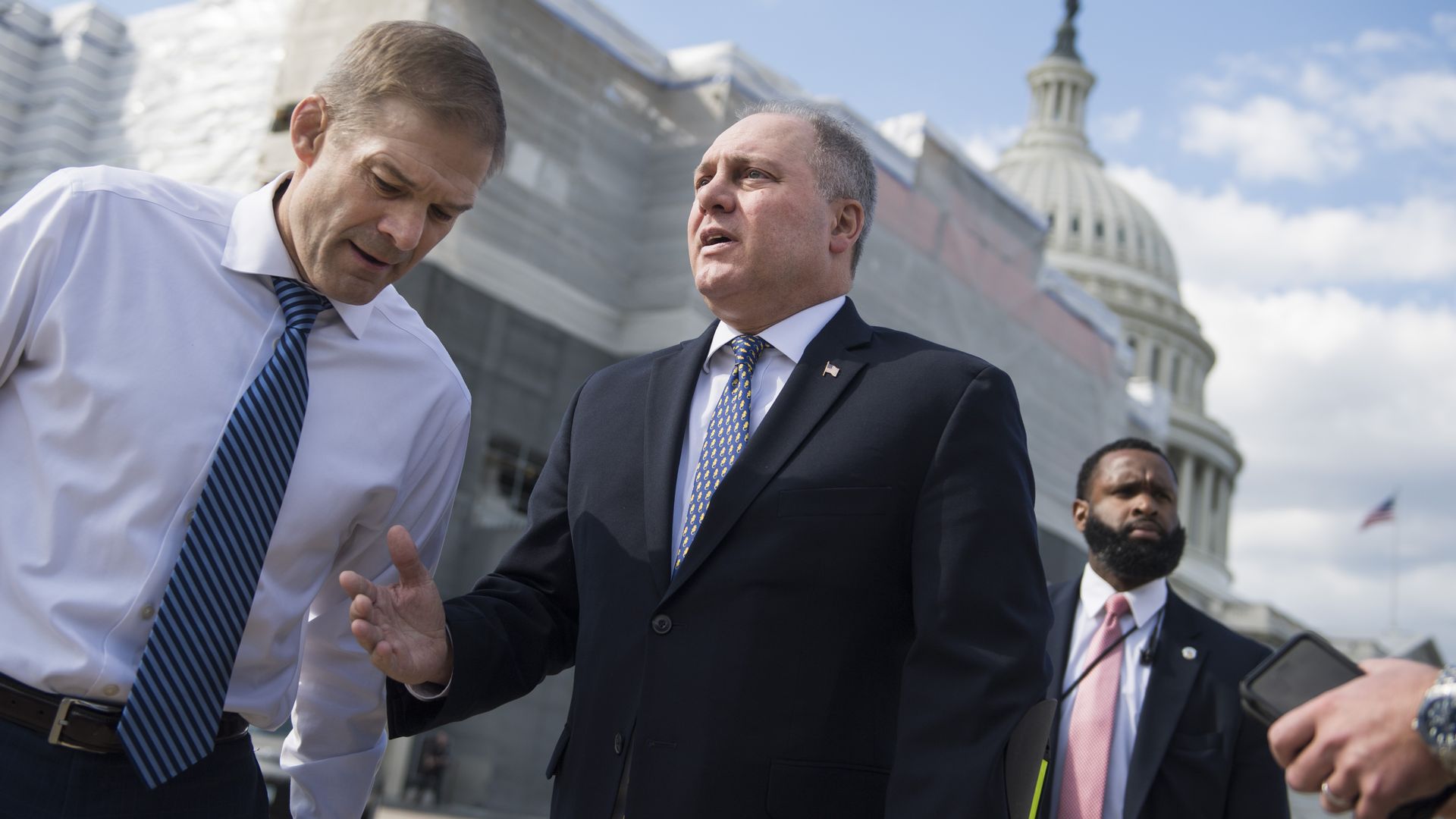
GOP sources have noted that both contenders for speaker — House Majority Leader Steve Scalise (R-La.) and Judiciary Committee chair Jim Jordan (R-Ohio) — are short of the 218 votes needed to be elected.
Some members fear the speaker issue may not be resolved by the end of the week.
The situation has raised questions over whether Speaker Pro Tempore Patrick McHenry (R-N.C.) can receive intelligence briefings.
Beyond Israel, there's another huge issue the House isn't working on: The prospect, once again, of a government shutdown in mid-November if the House GOP can't come to a consensus on a spending plan to continue funding the federal government.
What they're saying: "If the government was shut down, it could be very bad because [President] Biden can provide some level of support to Israel without Congress," one senior GOP lawmaker said. "But in a shutdown? Not as simple."
"Moves up [the] timeline," to elect a speaker, another lawmaker said. "People won't tolerate 15 rounds while Hamas [is] firing rockets into Israel," a reference to the 15 votes it took to elect McCarthy (R-Calif.) speaker in January.
"I wish [it would accelerate a vote] — they did this without a plan," Rep. Max Miller (R-Ohio) told Axios, referring to the far-right Republicans who forced McCarthy's ouster. "Our country is a mess and anyone who thought this was a good idea is a few cards short of a full deck."
Worth noting: One GOP lawmaker told Axios that some members of the moderate Republican Main Street Caucus were calling to reinstate McCarthy in the wake of Hamas' attack. But other members doubted that possibility.
At least two members of Congress were able to depart Israel unharmed after being present for Hamas' incursions into the country this weekend.
Why it matters: The presence of multiple high-level American political figures in the country underscores how the surprise attacks — which have escalated into a full-scale war — caught both Israel and the U.S. off guard.
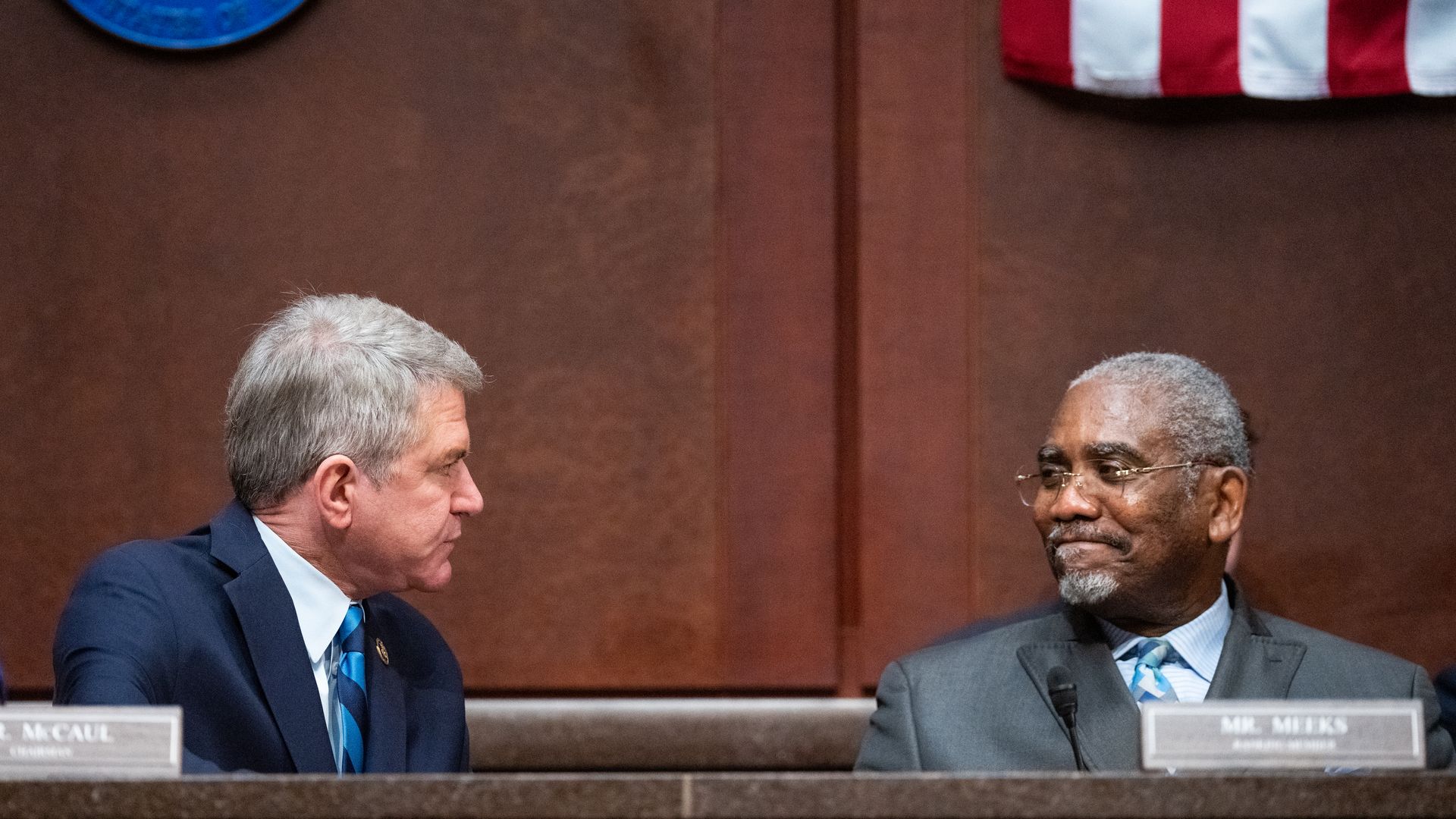
The chair and ranking member of the House Foreign Affairs Committee, are preparing a bipartisan resolution affirming U.S. support for Israel and condemning Hamas' attacks on the country, Axios has learned.
Why it matters: Chair Michael McCaul (R-Texas) said in a statement he expects the measure "to be one of the first, if not the first items considered on the floor once we elect a new Speaker."
Rep. Matt Gaetz (R-Fl.) said Sunday it was "absolutely" worth potentially losing his job over his move to oust Rep. Kevin McCarthy (R-Calif.) as House speaker.
Why it matters: Gaetz's motion to vacate prompted a historic vote that drove McCarthy out as Speaker of the House, and opened up the race for a new leader.
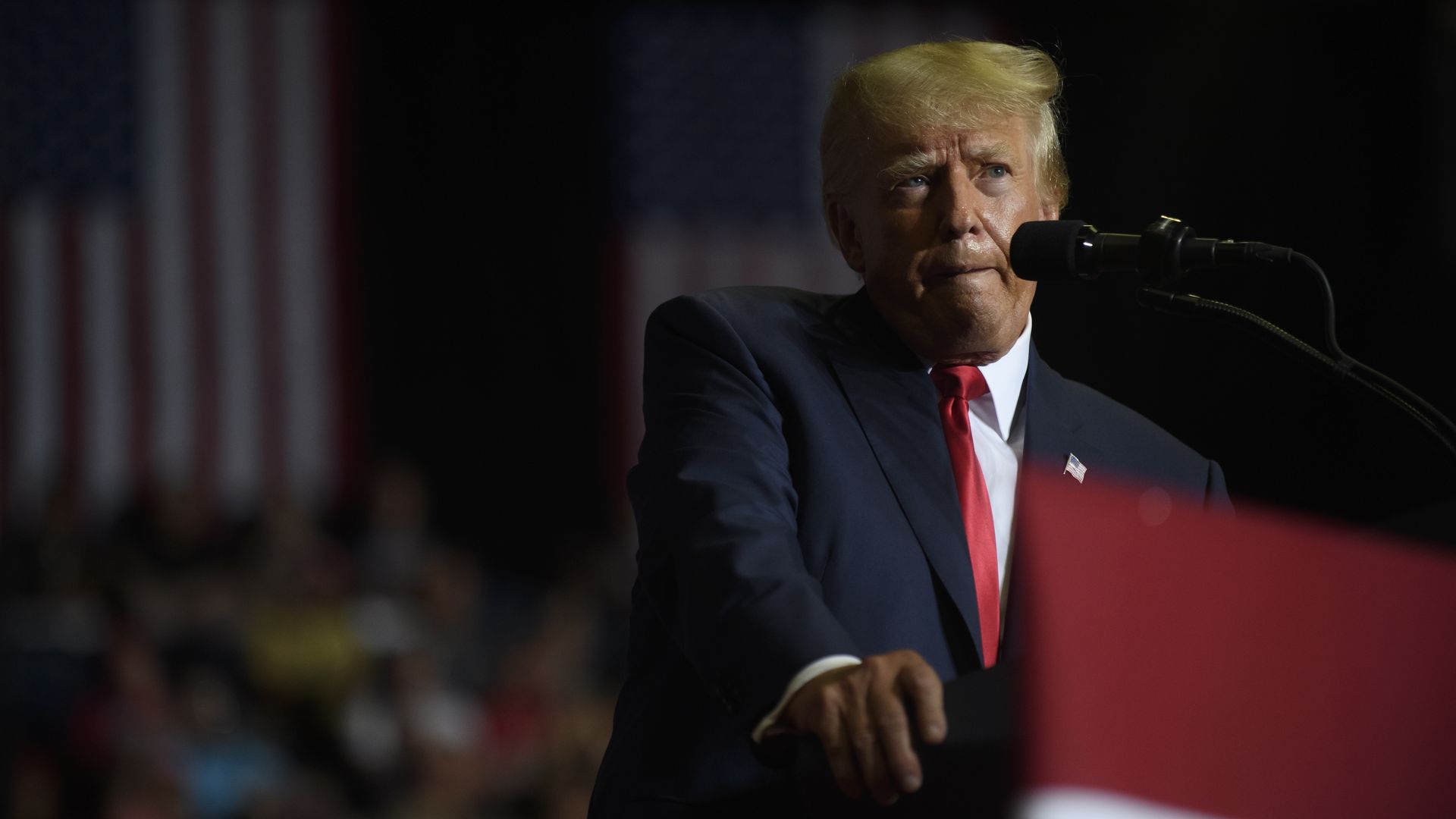
Rep. Ken Buck (R-Colo.) dismissed the idea of former President Trump being the next House speaker Sunday.
Driving the news: Trump, the 2024 GOP presidential frontrunner, inserted himself into the House speaker succession battle after Rep. Kevin McCarthy (R-Calif.) was ousted in a historic vote this past week.
A bipartisan pair of House members is preparing a resolution condemning the recent attack on Israel and declaring that the U.S. "stands ready for urgent requests for additional assistance," Axios has learned.
Why it matters: Many in Washington and beyond are concerned that the lack of a House speaker could hamstring the nation's ability to respond to the grueling incursion by providing additional aid to Israel.
The Biden administration is planning to announce military aid for Israel's war against Hamas in Gaza but is concerned that the chaos among House Republicans could hamper approval of more aid, a senior U.S. official told reporters Saturday.
Why it matters: Israel is expected to go on a massive counter-offensive in Gaza that could take several weeks and likely will need additional U.S. military assistance — especially if the war expands to other arenas, such as Lebanon.
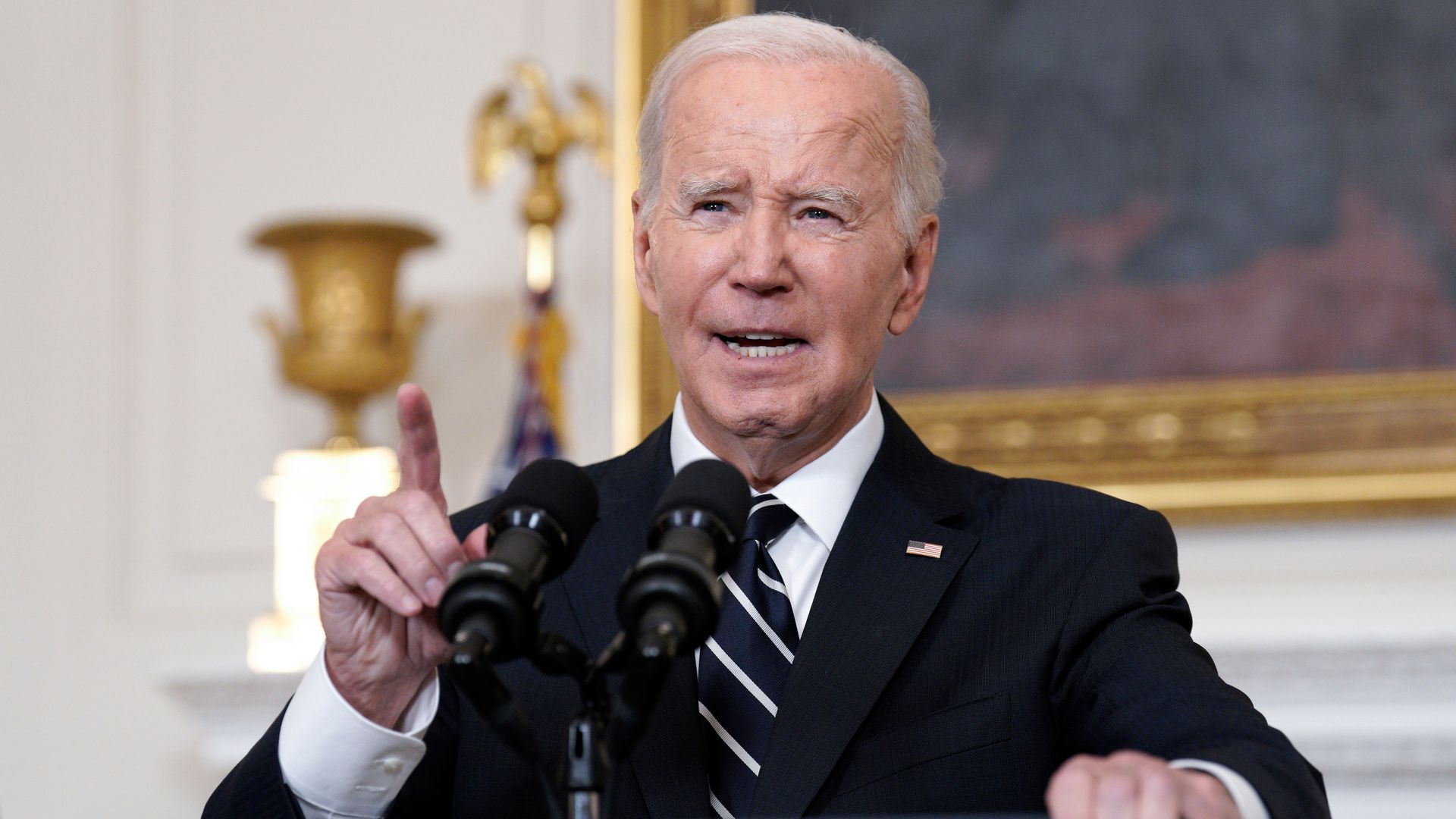
President Biden in a statement on Saturday warned "against any other party hostile to Israel seeking advantage" of the situation in Israel and Gaza after Hamas launched a surprise invasion of Israeli territory.
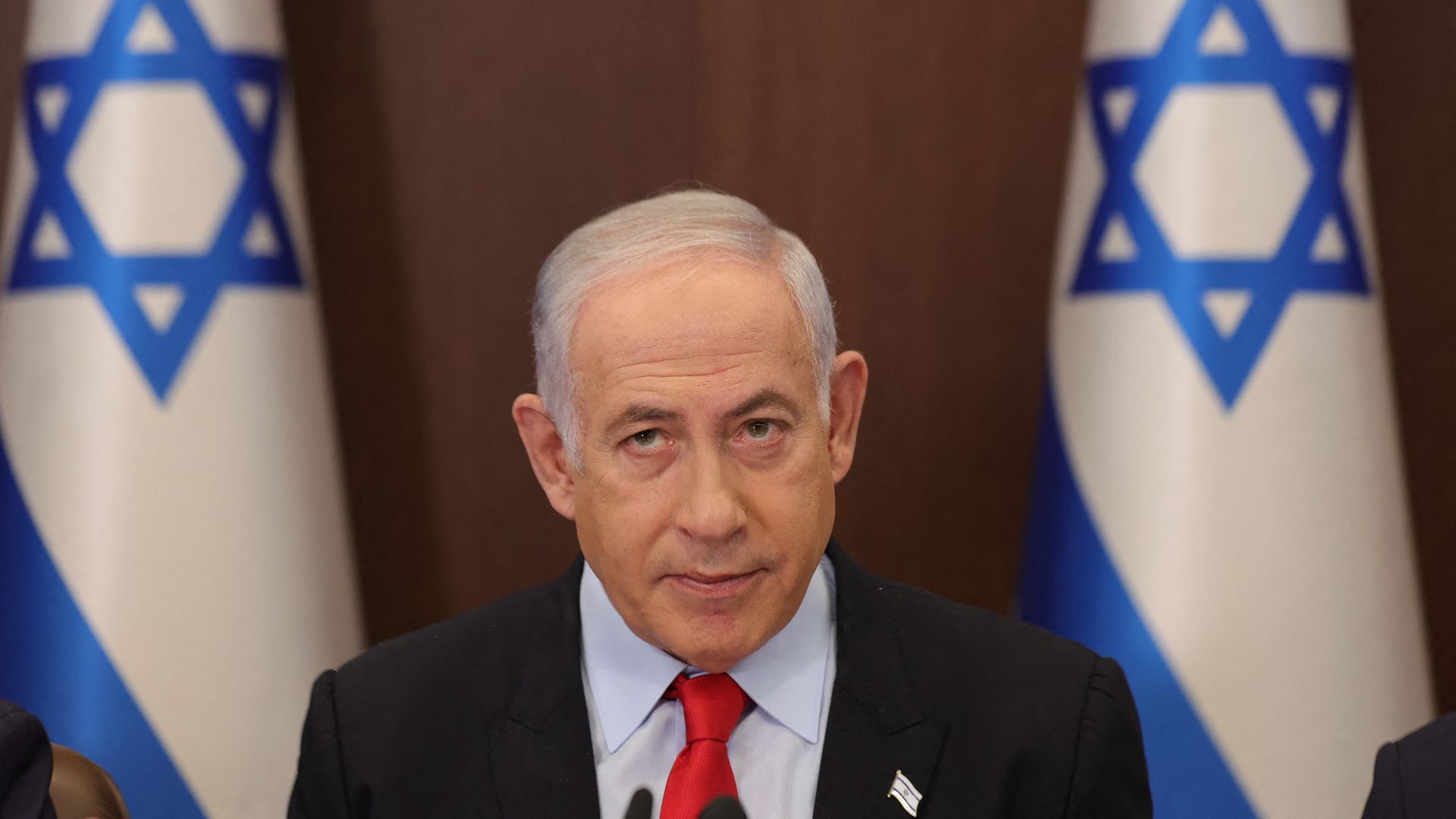
Why it matters: Biden's statement after his call with Israeli Prime Minister Benjamin Netanyahu underscores the concern in the White House and in Israel about the possibility of the war broadening to other fronts.
Why it matters: Trump's backing may be counterproductive in swaying moderates — and the GOP conference vote to pick a speaker nominee is secret ballot, taking the loyalty test out of the equation.
Why it matters: Indian Americans have a long history in the U.S. but their population was relatively small until the 1960s when a change in immigration policy helped lead to a migration boom of Indian tech workers. Over the generations, other family members also moved to the U.S.