Mary Elizabeth Taylor, the first black woman to serve as assistant secretary of state for legislative affairs, resigned from the State Department on Thursday in apparent protest of President Trump's response to weeks of nationwide unrest over the killing of George Floyd, the Washington Post reports.
What she's saying: “Moments of upheaval can change you, shift the trajectory of your life, and mold your character. The President’s comments and actions surrounding racial injustice and Black Americans cut sharply against my core values and convictions,” Taylor wrote in a resignation letter obtained by the Post.
The big picture: The Trump administration has revoked or rolled back 66 environmental regulations, per a New York Times analysis. Eight of the regulation reversals have taken place since late April, during the coronavirus pandemic.
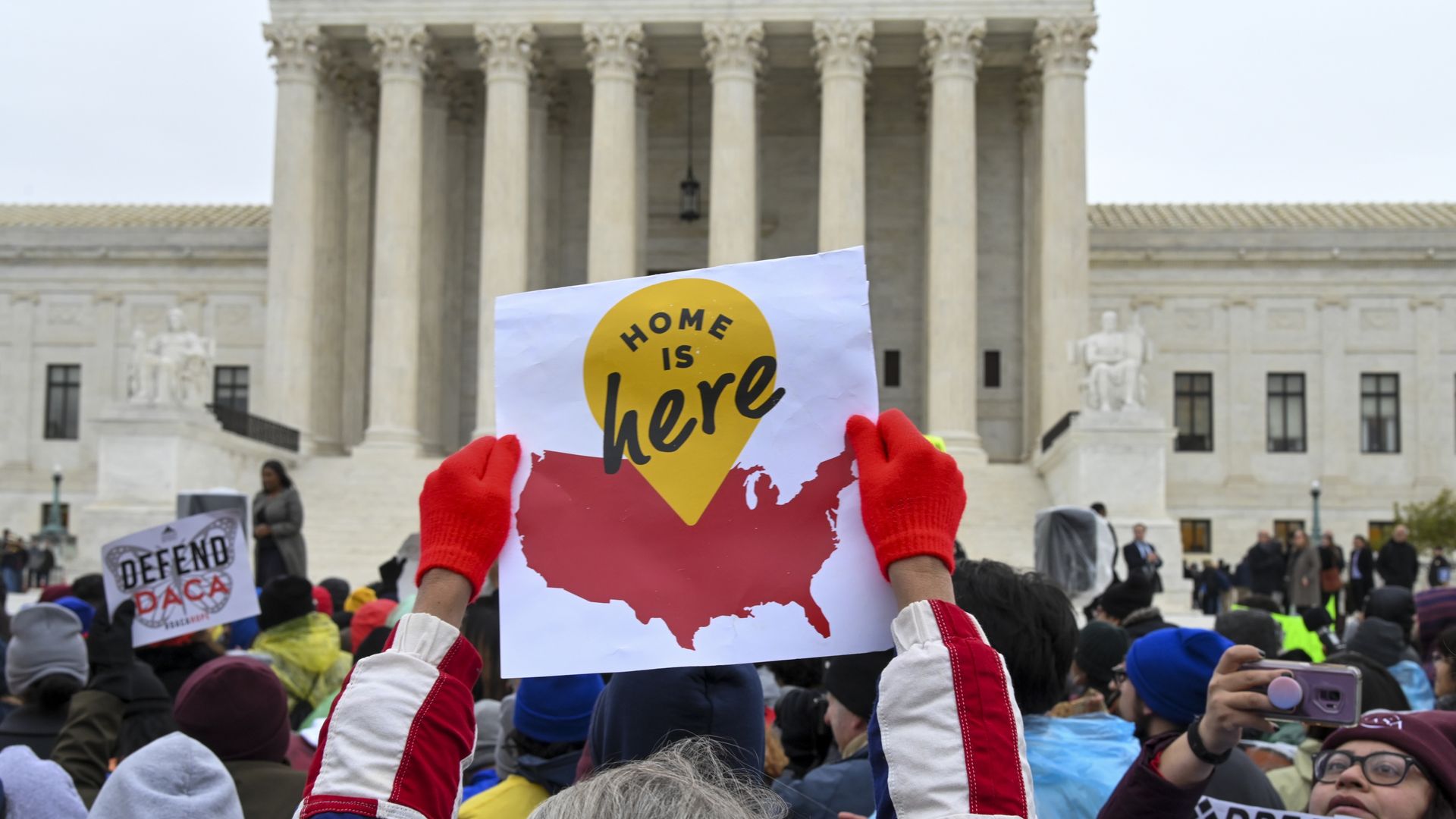
The Supreme Court today ruled to keep DACA the law of the land, at least for now. This means that more than 600,000 unauthorized immigrants will remain protected from deportation and eligible to work.
We focus on what comes next in today's episode of Axios Re:Cap, speaking with Jeff Davidson, an attorney with Covington & Burling who argued for DACA in front of the 9th Circuit Court of Appeals.
The fourth senior official to handle the Russia portfolio at the White House in three years is leaving his position, creating the potential for more uncertainty months before the U.S. election.
Driving the news: Tom Williams, who had been serving as the acting senior director for European and Russian Affairs at the National Security Council, will be returning to the Pentagon, according to national security adviser Robert O'Brien.
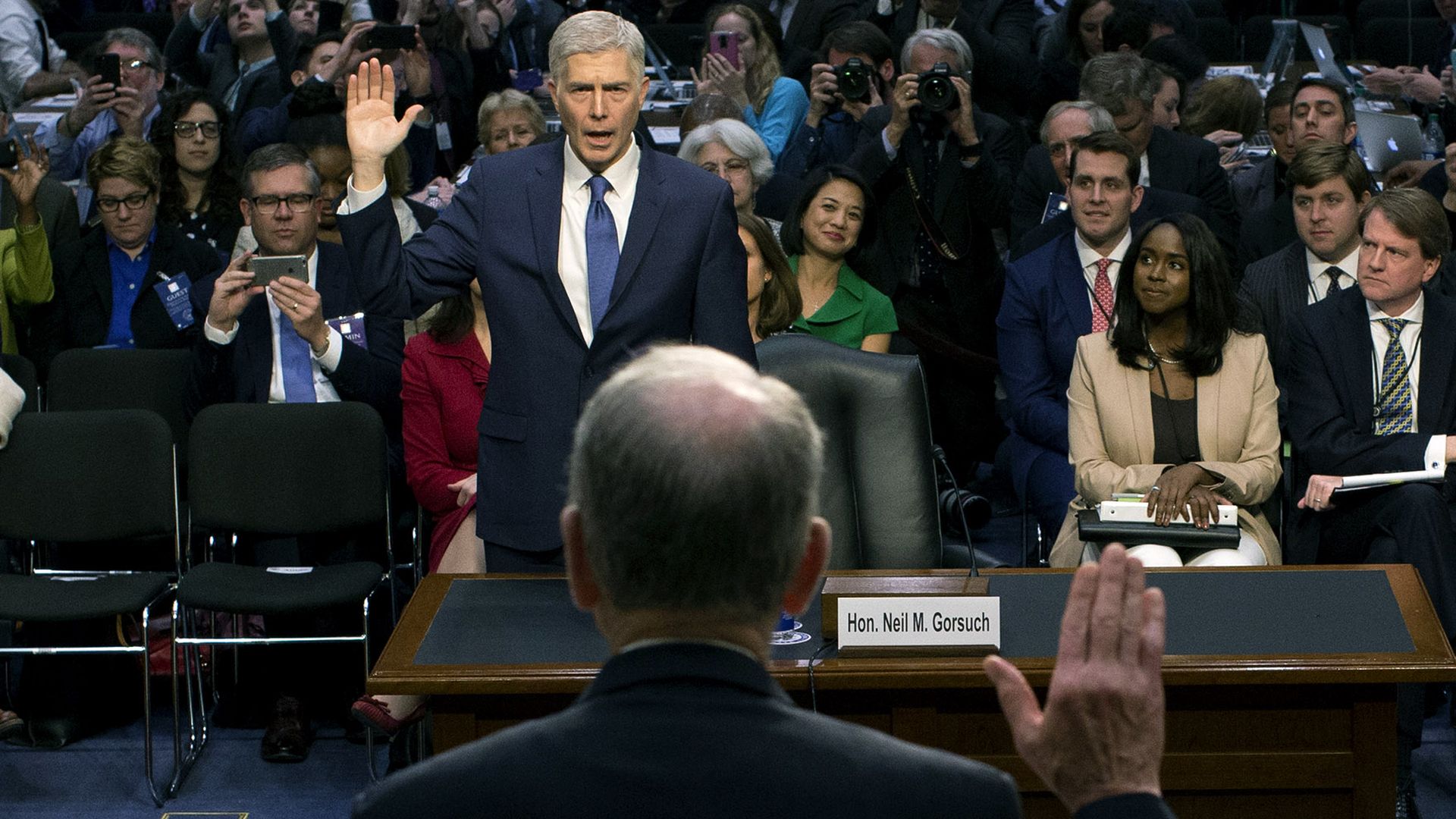
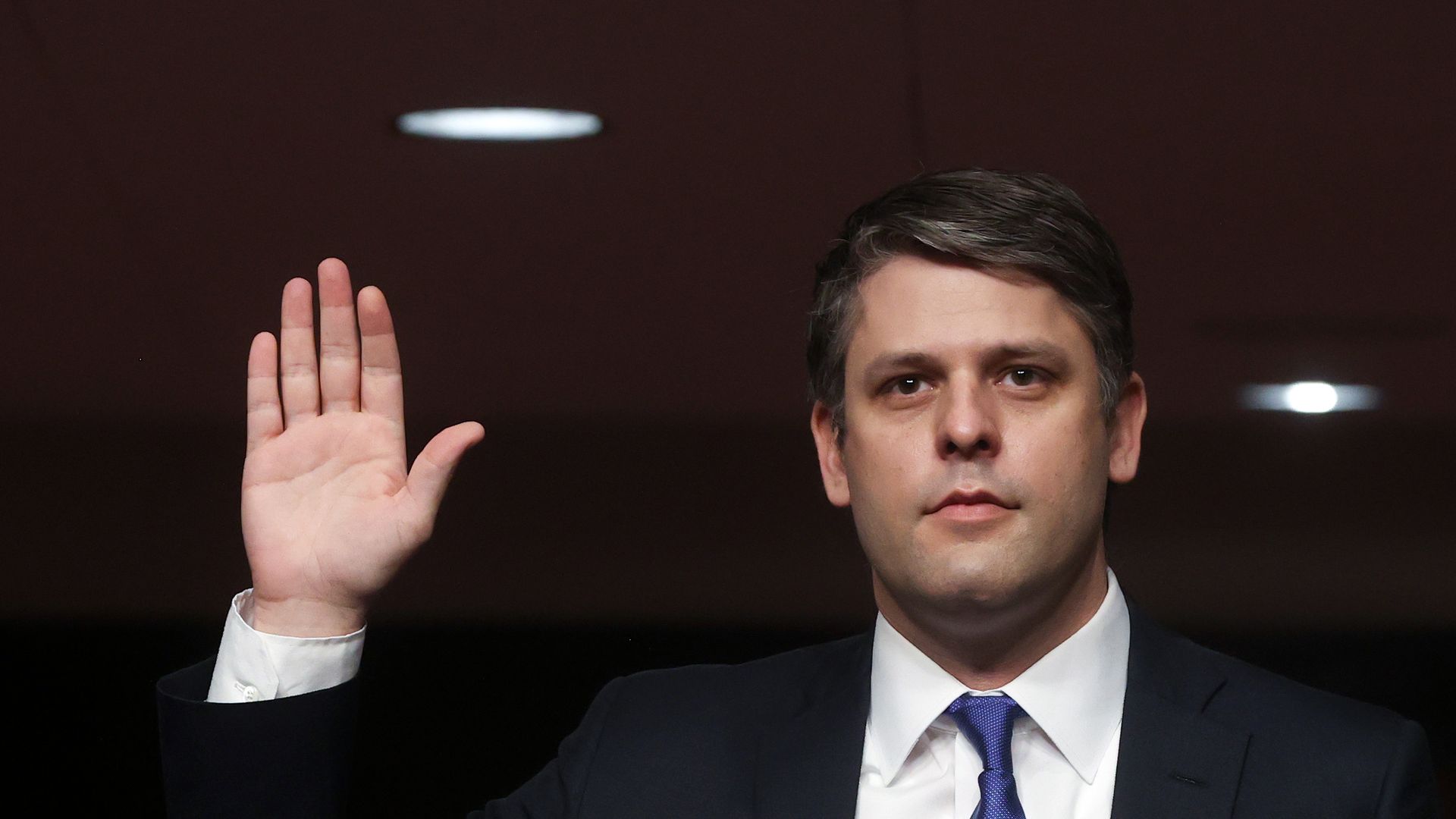
The Senate on Thursday confirmed the nomination of 38-year-old Kentucky district court judge Justin Walker to serve on the U.S. Court of Appeals in Washington, D.C., CNN reports.
Why it matters: Walker's appointment to one of the most powerful courts in the country illustrates how President Trump has reshaped the federal judiciary during his first term. Walker's appointment is the 199 to the federal bench since Trump took office.
74% of Americans say the country is heading in the wrong direction, including 63% of Republicans — up from 42% in May, according to a new poll by the AP-NORC Center for Public Affairs Research.
Why it matters: President Trump generally enjoys strong approval ratings within the Republican Party, but the state of the country may be eroding some of that support.
Sen. Roy Blunt (R-Mo.) on Thursday blocked an attempt by Sen. Cory Booker (D-N.J.) to pass a bill via unanimous consent that would require the removal of Confederate statues from the U.S. Capitol's National Statuary Hall collection, stating: "I'd certainly like to have some time to decide if we should have a hearing on this."
Why it matters: There are at least 11 statues of Confederate leaders and generals currently inside the collection. House Speaker Nancy Pelosi has asked Joint Committee on the Library to remove the statues, claiming they "pay homage to hate, not heritage."
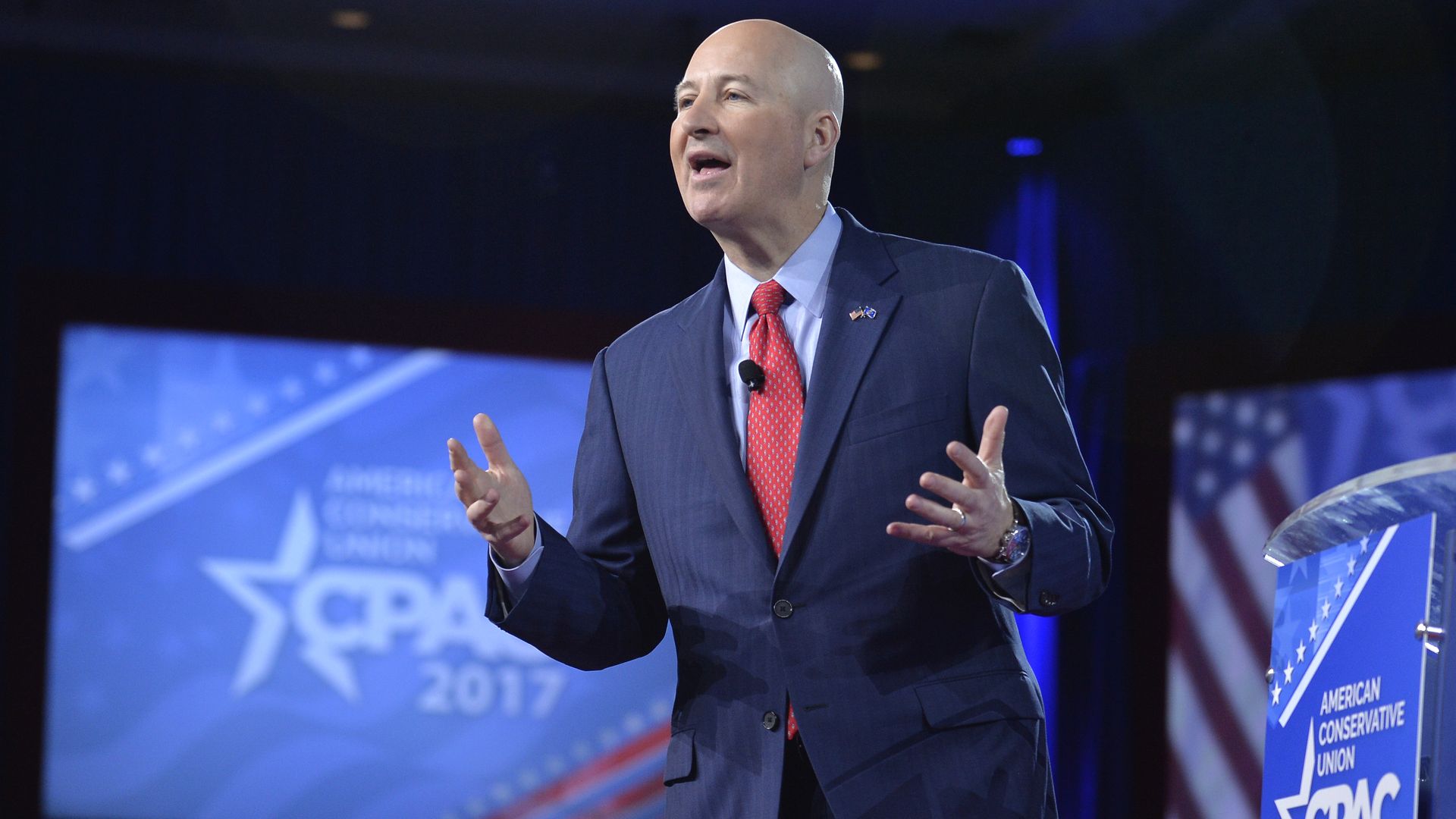
Nebraska Gov. Pete Ricketts told county governments they will not receive federal coronavirus relief funds if they require people to wear masks while inside state courthouses and other local government offices, the Omaha World-Herald reports.
Why it matters: Local officials in Lincoln, the state’s second-largest city, were preparing to require people to wear a mask when entering government buildings, but scrapped the drafted rules because of the CARES Act money at stake.
Economics is rarely aligned with morality. That's one lesson from the looting example I wrote about last week: Looting is harmful to society, and is criminalized for good reason, even though it can have positive economic consequences.
Why it matters: The disconnect between economic and moral imperatives lies at the heart of the biggest issues facing America today, from the rising appeal of socialism to the question of how to deal with the coronavirus outbreak.
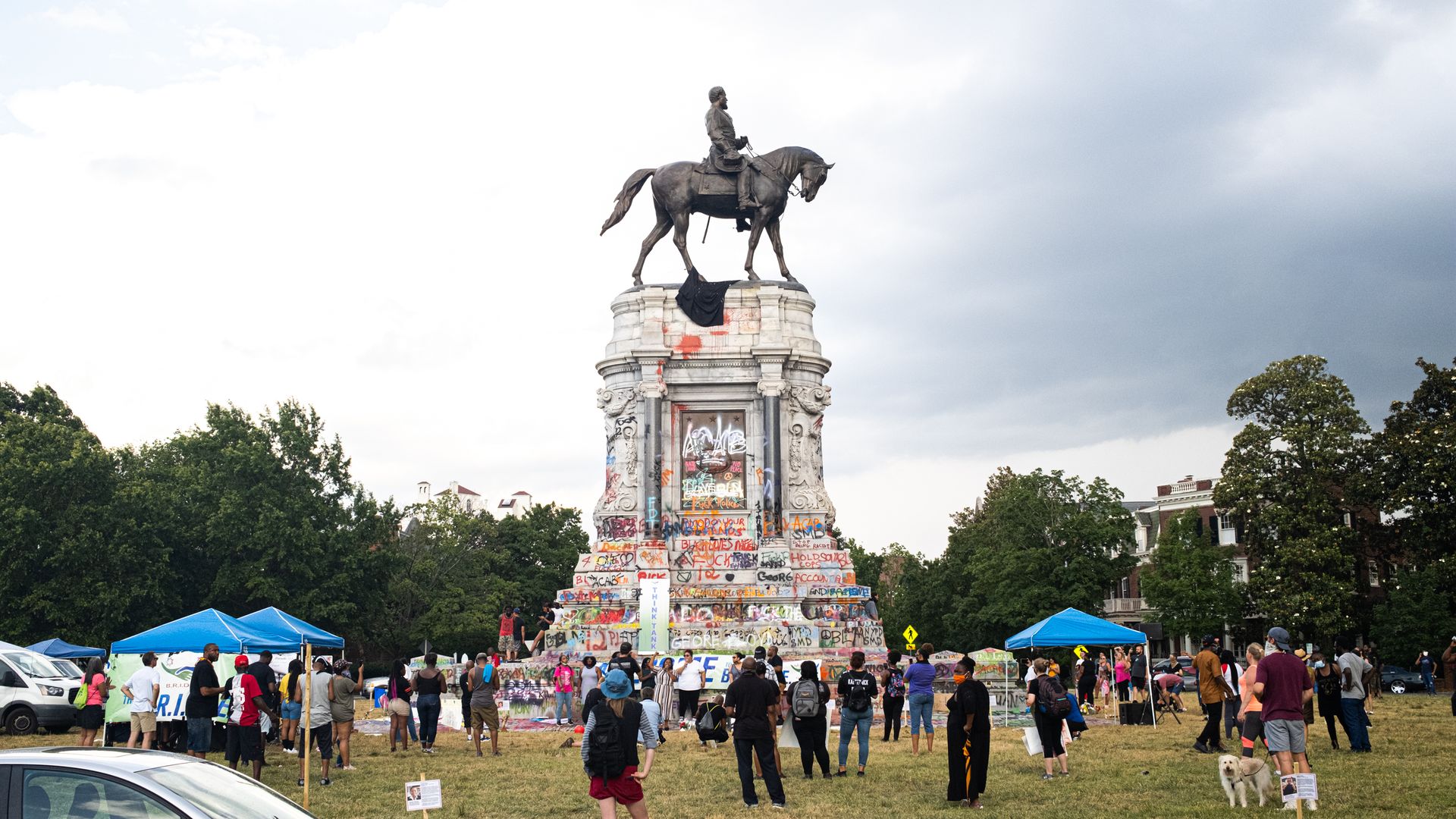
A circuit court judge in Richmond on Thursday extended an injunction barring the state of Virginia from removing a statue of Confederate Gen. Robert E. Lee from the city's historic Monument Avenue, the Richmond Times-Dispatch reports.
The big picture: The statue is the "property of the people," Circuit Court Judge Bradley Cavedo said at a hearing Thursday. Cavedo initially issued a 10-day injunction on June 8, days after Gov. Ralph Northam ordered the statue be removed "as soon as possible," and will hold another hearing on July 23.
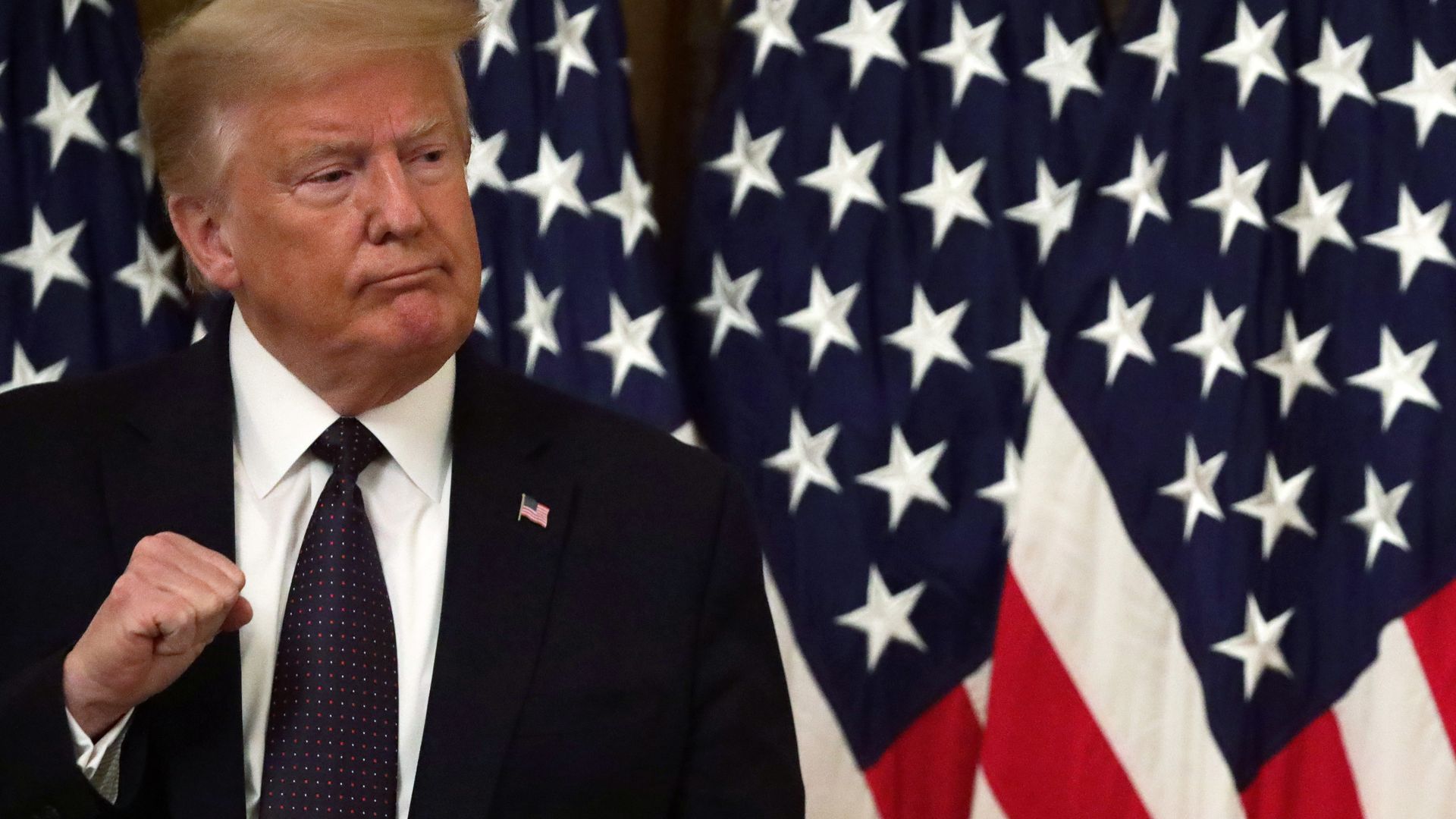
President Trump said in an interview with the Wall Street Journal published Thursday that he personally thinks testing for the coronavirus is "overrated," arguing that it has led to an increase in confirmed cases in the U.S. that "makes us look bad."
Why it matters: The ability to test and isolate patients who have tested positive for the coronavirus is viewed by health experts as critical to being able to safely reopen the economy.
President Trump took credit for popularizing Juneteenth, the commemoration of the end of slavery in the U.S., in a wide-ranging interview with the Wall Street Journal Thursday, saying: "I did something good: I made Juneteenth very famous."
Driving the news: The president claimed that "nobody had ever heard" of the June 19 celebration before he planned a rally in Tulsa on that day. His campaign ultimately changed the date of the rally to June 20 after receiving pushback from African American leaders around the country.
House Speaker Nancy Pelosi ordered that the chamber's clerk remove portraits of former House speakers who served the Confederacy from display in the Capitol in a letter sent Thursday.
The big picture: Pelosi wrote that the portraits should be removed "to appropriately observe Juneteenth," the day that commemorates the end of slavery in the U.S.
In a Thursday decision, the Supreme Court ruled 5-4 that the Trump administration violated federal law when it ended the Obama-era Deferred Action for Childhood Arrivals program (DACA) — upholding protections from deportation for roughly 649,000 unauthorized immigrants in the U.S.
Why it matters: It's an unexpected victory for immigration activists. In the opinion, Chief Justice John Roberts, who sided with the liberal justices, wrote that the Department of Homeland Security's (DHS) decision to rescind DACA in the fall of 2017 was "arbitrary and capricious."
Governments can create millions of jobs and put carbon emissions into a "structural decline" with a three-year, $3 trillion push to stitch climate-friendly energy into pandemic response packages, the International Energy Agency said Thursday.
Why it matters: The analysis, crafted with the International Monetary Fund, is an effort put analytical weight behind the push for "green" economic recovery measures.
Lyft's newly announced plan to go 100% electric by 2030 blends ambition on climate with an admission that making good relies on variables it can perhaps influence but can't control.
Why it matters: The ride-hailing giant is admirably open about something that can get lost in the avalanche of big pledges over the last two years. They need policy changes to make it work.
San Francisco’s board of supervisors has proposed November ballot measures that would tax companies that grant stock to their employees and those who pay top execs more than 100 times their median salary.
Why it matters: If passed, the measures, which aim to raise money for the cash-strapped city, could add to the growing acrimony between San Francisco and its tech-focused companies.
A new Justice Department proposal Wednesday accelerates a headlong charge in Washington to rewrite a law that protects online services from being sued over user-created content.
Why it matters: If Congress approves any of the bills in play, every dispute over content moderation on platforms like Facebook, Google and Twitter could turn into a court case — while the government could find itself with a big new job deciding whether companies like Facebook and Twitter are acting neutrally and "in good faith."
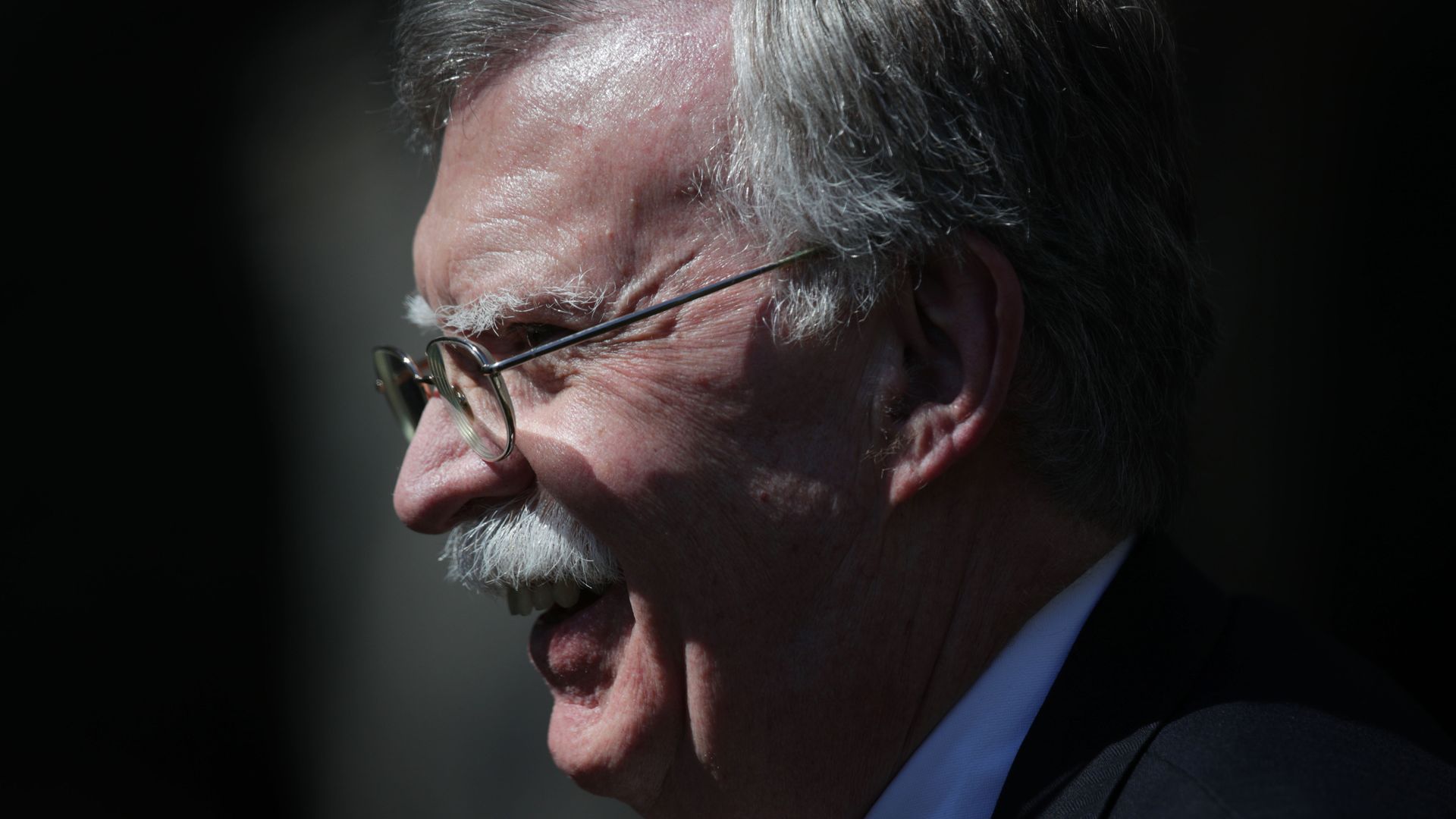
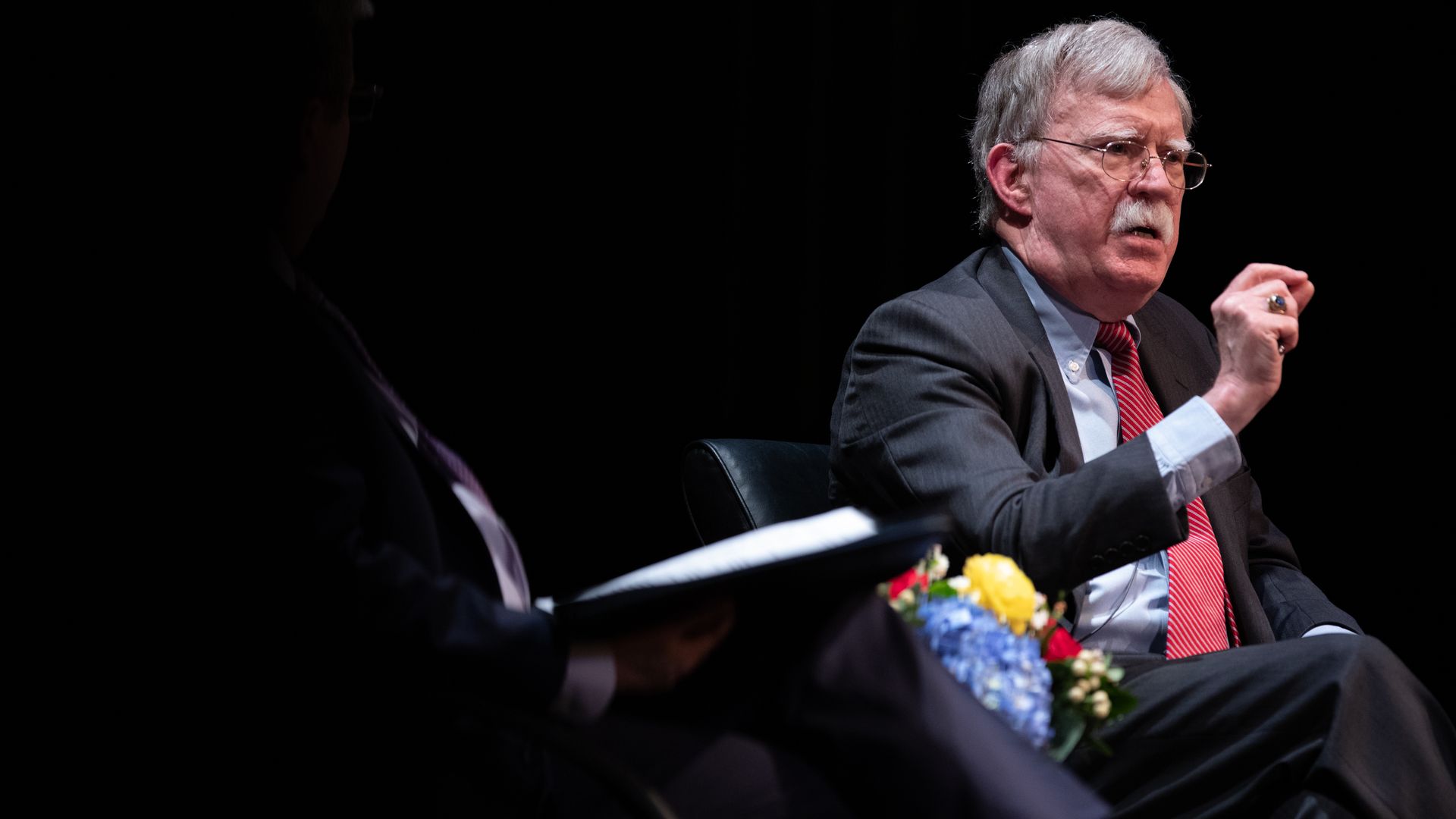
John Bolton's brutal memoir about his 17 months in the White House portrays President Trump as an easy mark for dictators and others who know how easily he falls for flattery.
Why it matters: There has never been — and may never be — another book like this. Trump's national security adviser took hyper-detailed, real-time notes, and is sharing them with the world just nine months after leaving.
President Trump's campaign plans to turn this weekend's Tulsa rally into a massive pro-Trump festival complete with musical acts, and it's flying in high-profile backers and camera crews to show the world the fervency of his supporters.
Details: Organizers are leasing a jet to fly in surrogates the night before and multiple film crews are being brought in to record the event, people familiar with the plans tell Axios. Watch for these scenes to be quickly converted into TV ads.
The concept of community policing, or a framework for forging stronger relationships between police departments and the communities they serve, is seeing renewed interest in cities as a way to rebuild trust and repair racial rifts.
Why it matters: A national shift back to true community policing would reshape how officers spend their time and resources, with a much greater priority on solving everyday problems in neighborhoods before they develop into the need to make arrests and issue tickets.
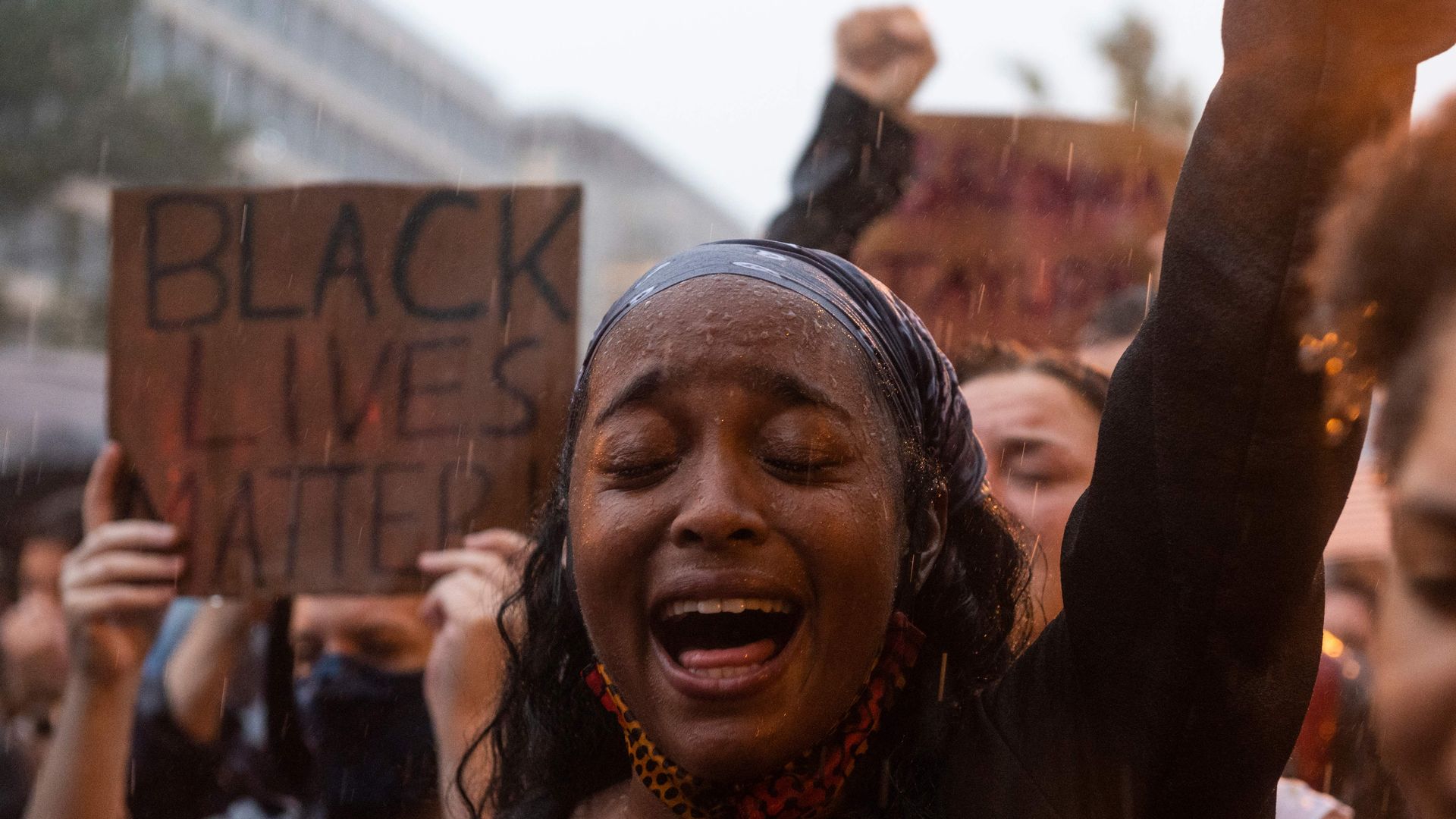
Cities and states have spent millions of dollars on police overtime over the past few weeks during the Black Lives Matter protests.
Why it matters: Government budgets already were under severe strain from coronavirus shutdowns, due to steep tax revenue declines, and these extra expenses could make it even more difficult to meet obligations.
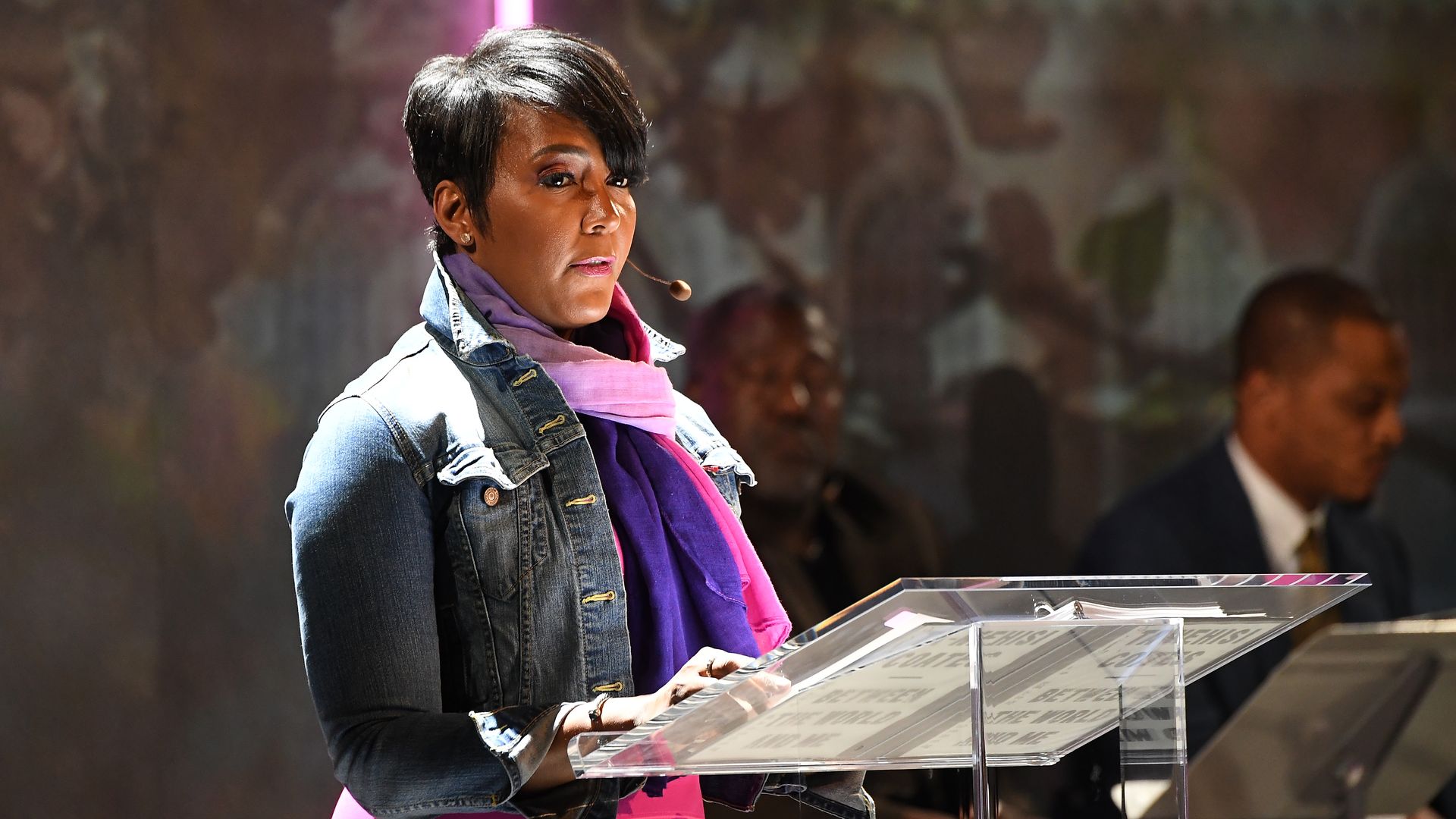
Atlanta Mayor Keisha Lance Bottoms told CNN Wednesday evening police morale "is down tenfold" in the city following protests against police brutality that escalated with the fatal shooting by a white officer of Rayshard Brooks.
The big picture: She appeared on "Cuomo Prime Time" following reports that police officers had walked off the job amid tensions. The Atlanta Police Department said this was "inaccurate," but there was "a higher than usual number of call outs with the incoming shift." Bottoms told CNN, "Our streets won't be any less safe because of the number of officers who called out." She didn't specify how many had called out sick.
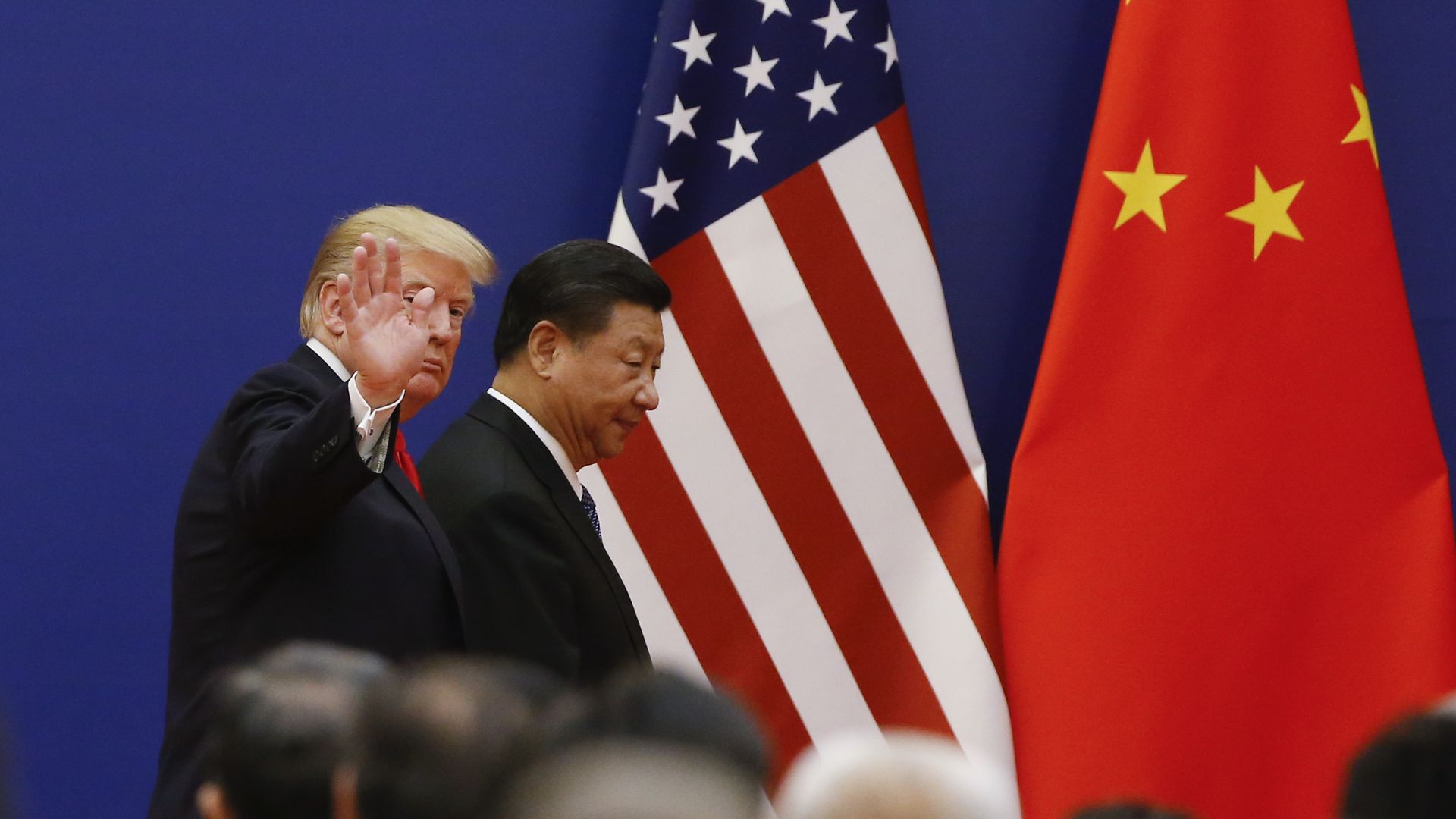
President Trump allegedly told Chinese President Xi Jinping in June 2019 to continue building camps used to detain 1 million–2 million Uighur Muslims, according to an excerpt published in the Wall Street Journal from former national security adviser John Bolton's book. Trump denied the claims in an interview with the WSJ later Wednesday.
Why it matters: China's internment camps have used mass surveillance, arbitrary detentions, brainwashing and even torture on the persecuted minority group living in the Xinjiang region, as exposed by journalists, NGOs and former detainees.
Democrats expressed concern after Michael Pack, the new Trump-appointed CEO of the U.S. Agency for Global Media, dismissed the heads of at least three news outlets he oversees and disbanded boards to install allies Wednesday, per AP.
Driving the news: Pack fired Bay Fang, head of Radio Free Asia, Jamie Fly, who headed Radio Liberty/Radio Free Europe, and Alberto Fernandez, who was the head of the Middle East Broadcasting Network, Alberto Fernandez, according to AP.
Universal preschool would help close the math and reading gaps between white and black children who are approaching kindergarten, an analysis from the National Institute for Early Education Research shows.
The big picture: Schools with high quality learning programs have resources to ensure a child is on track in age-appropriate learning activities. These programs have systemically left black children behind due to high tuition and waiting lists.
Democrats on the House Judiciary Committee advanced on Wednesday night legislation on reforming policing practices in response to protests sparked by the death in police custody of George Floyd.
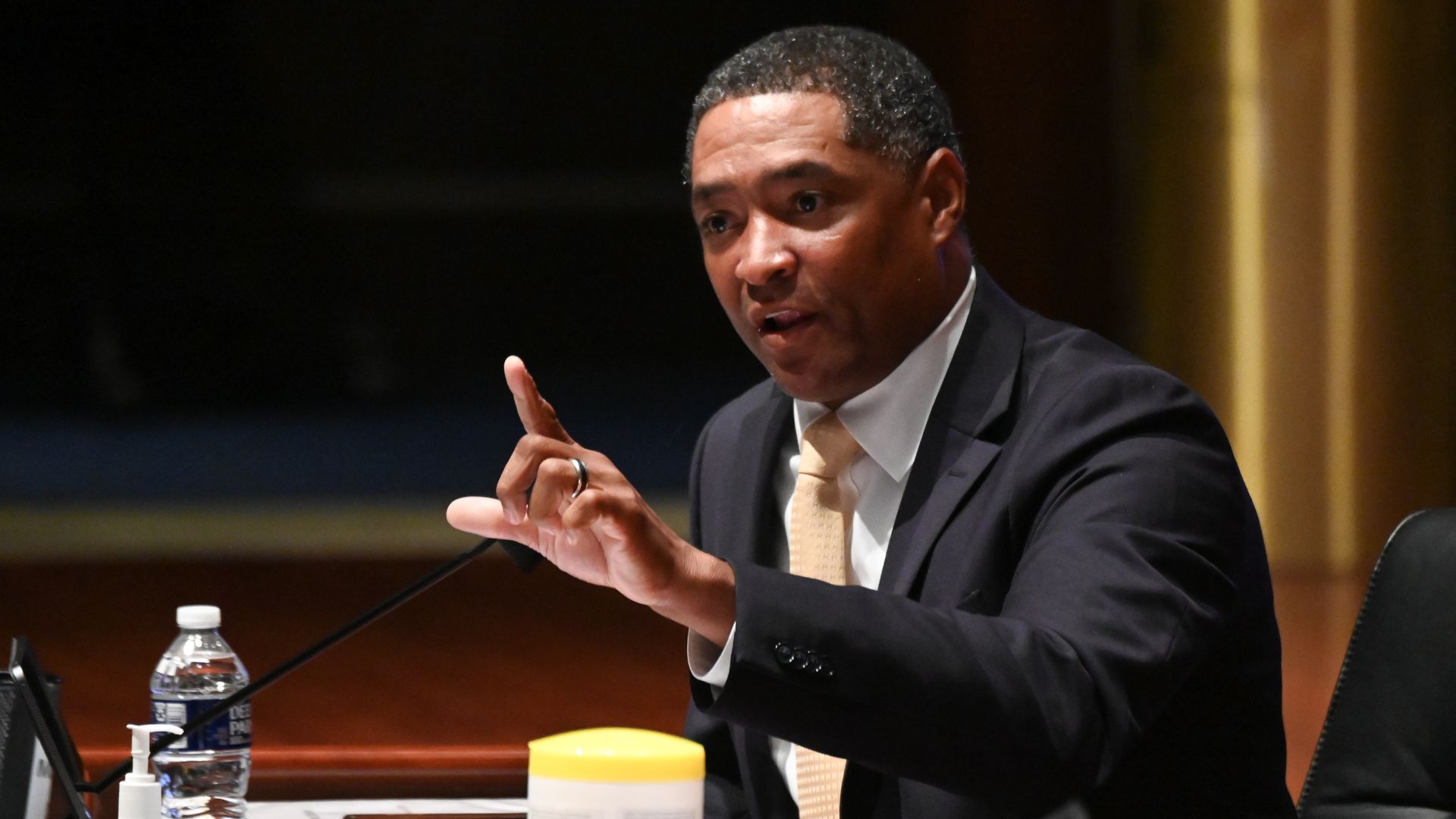
The big picture: Per Axios' Alayna Treene, the bill which passed 24-14 along party lines, would be the biggest overhaul of federal policing laws in decades. But it's unlikely to pass as it stands in the Senate, where Republicans have drafted their own bill. Before the vote, there was a tense exchange between Reps. Matt Gaetz (R-Fla.) and Cedric Richmond (D-La.) after the Democrat expressed frustration at Republicans' proposed amendments.
Editor's note: This article has been updated with new details throughout.
Cities and counties across the U.S. have declared racism a public health crisis or have drafts awaiting votes and final decisions.
Why it matters: The trend follows almost three weeks of protests sparked by the police killing of George Floyd, as nationwide protesters demand action from their elected officials.
The Justice Department applied for an emergency temporary restraining order against former national security adviser John Bolton on Wednesday, in an attempt to block the publication of his tell-all book and what the agency identifies as classified information.
Police are investigating after the statue of tennis great Arthur Ashe in Richmond, Virginia, was vandalized with the words "white lives matter" in spray-paint, per WTVR.
The big picture: The statue of the only black man to win the Wimbledon, the U.S. Open and the Australian Open is located on the state capital's Memorial Avenue, which has become a flash-point for Black Lives Protests in the city as it features monuments to Confederate-era leaders. On Tuesday, the city's police chief resigned following criticism of officers' use of chemical irritants and rubber bullets during peaceful protests in the city, ABC News notes.








/2020/06/18/1592486088362.gif?w=3840)