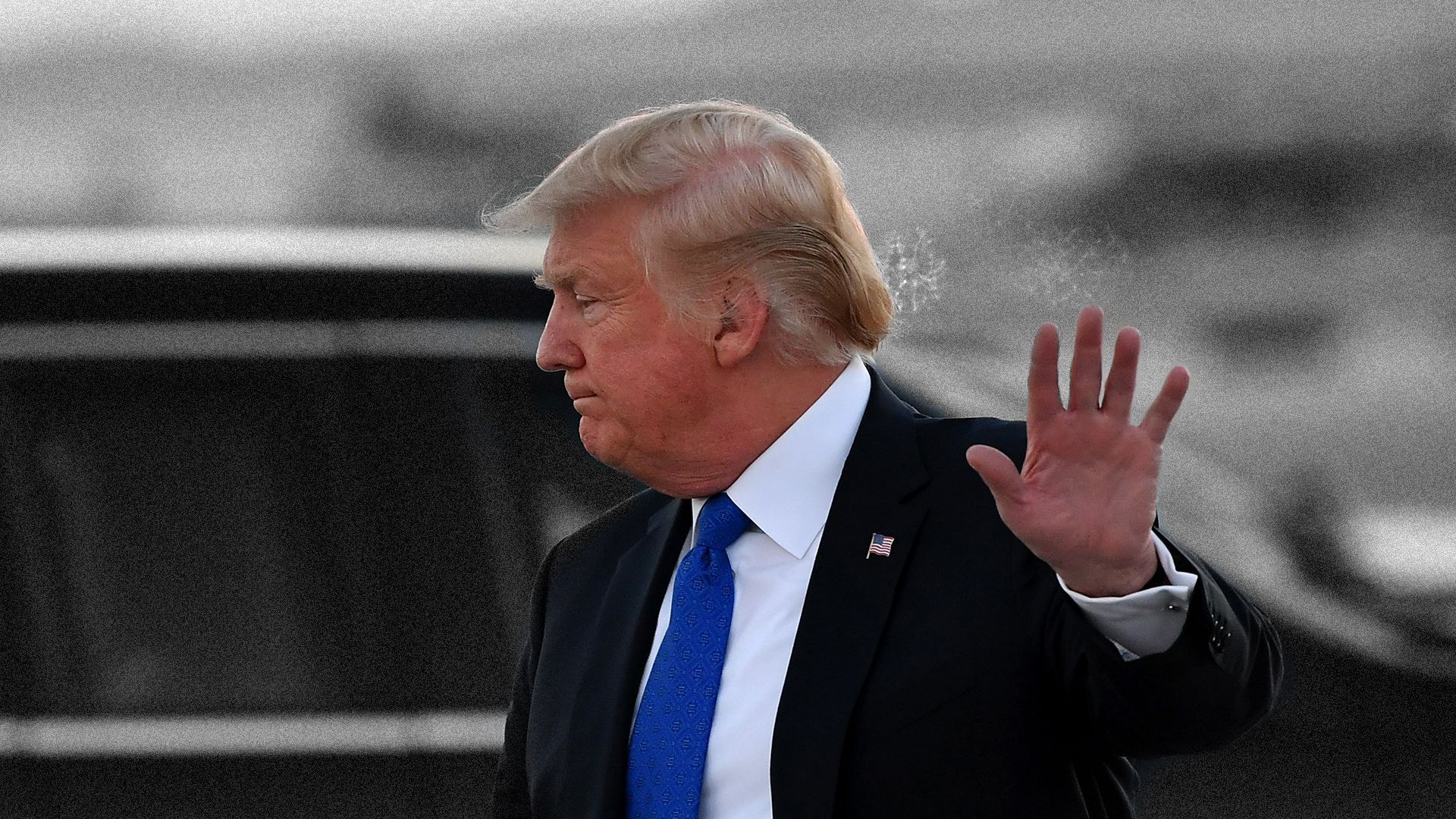
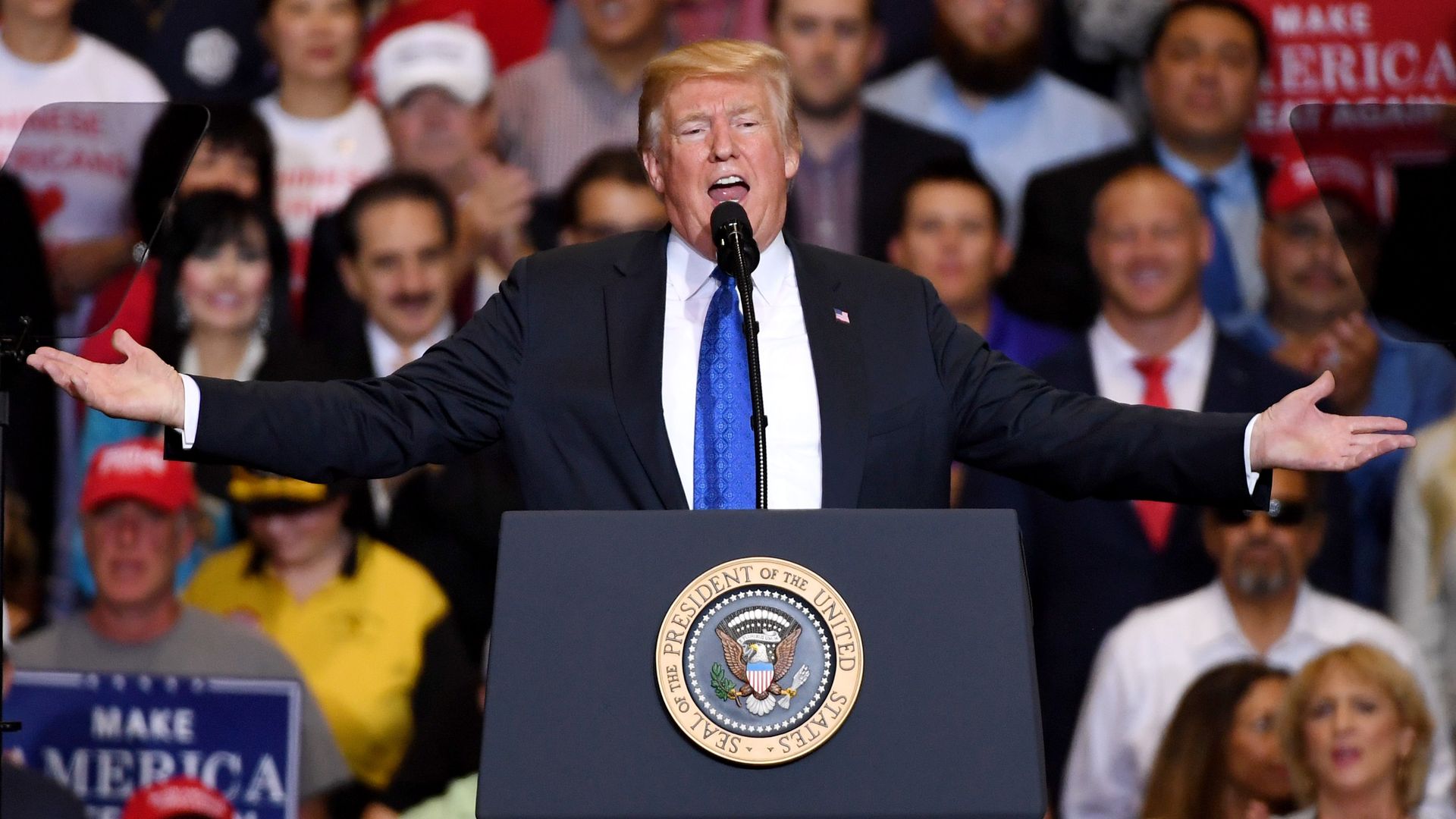
A trio of major updates have punctuated an otherwise quiet week for President Trump, setting up major fall drama in D.C.
The big picture Senators weighing the Brett Kavanaugh confirmation now know exactly where Trump stands, and notwithstanding a firm denial, Trumpworld has found a new rallying cry to axe Deputy AG Rod Rosenstein.
Last year, following the firing of James Comey, Deputy Attorney General Rod Rosenstein discussed rallying cabinet members to remove Trump from office — by invoking the 25th Amendment — and suggested he secretly record the president in the White House in an effort to "expose the chaos consuming the administration," New York Times' Adam Goldman and Michael S. Schmidt report.
Between the lines: It is not clear how serious Rosenstein was about his plans. The idea to wear a wire when interviewing potential FBI directors with President Trump was never acted upon, according to the Times. Rosentstein reportedly told former deputy FBI director Andrew McCabe that he believed he could get Attorney General Jeff Sessions and then-Homeland Security Secretary John Kelly on board in an effort to remove Trump from the presidency.
Many cybersecurity experts and lawmakers from both sides of the aisle are applauding Trump's new national cyber strategy, which takes on a more offensive tone than previous guiding directives.
Between the lines: Many are also quick to point out it doesn't specify new details that go beyond the guidance of previous administrations.
Secretary of State Mike Pompeo opened up about the possibility of a second meeting between President Trump and North Korean leader Kim Jong-un in an interview with MSNBC's Andrea Mitchell, but added that there is still work to be done to make sure "conditions are right."
Why it matters: Kim has said he'd like another meeting with Trump to speed up the denuclearization process. And while Pompeo told Mitchell that he'd like for a second Trump-Kim summit to take place, it's "ultimately up to the President" whether that will happen.
President Trump said on Twitter Friday that he's asked the Justice Department's inspector general to review documents relating to the Russia investigation and the U.S. government's surveillance activities during his campaign.
Why it matters: This is a step back from Trump's previous demands that the DOJ declassify these documents and text messages — unredacted — with a hope that the declassification would discredit the Mueller investigation by revealing it was illegitimate to begin with. However, Trump said Friday that key allies have since asked him to refrain from releasing them, likely given the sensitive information they contain. Trump said that IG will review these documents on "an expedited basis," and that he "can always declassify if it proves necessary."
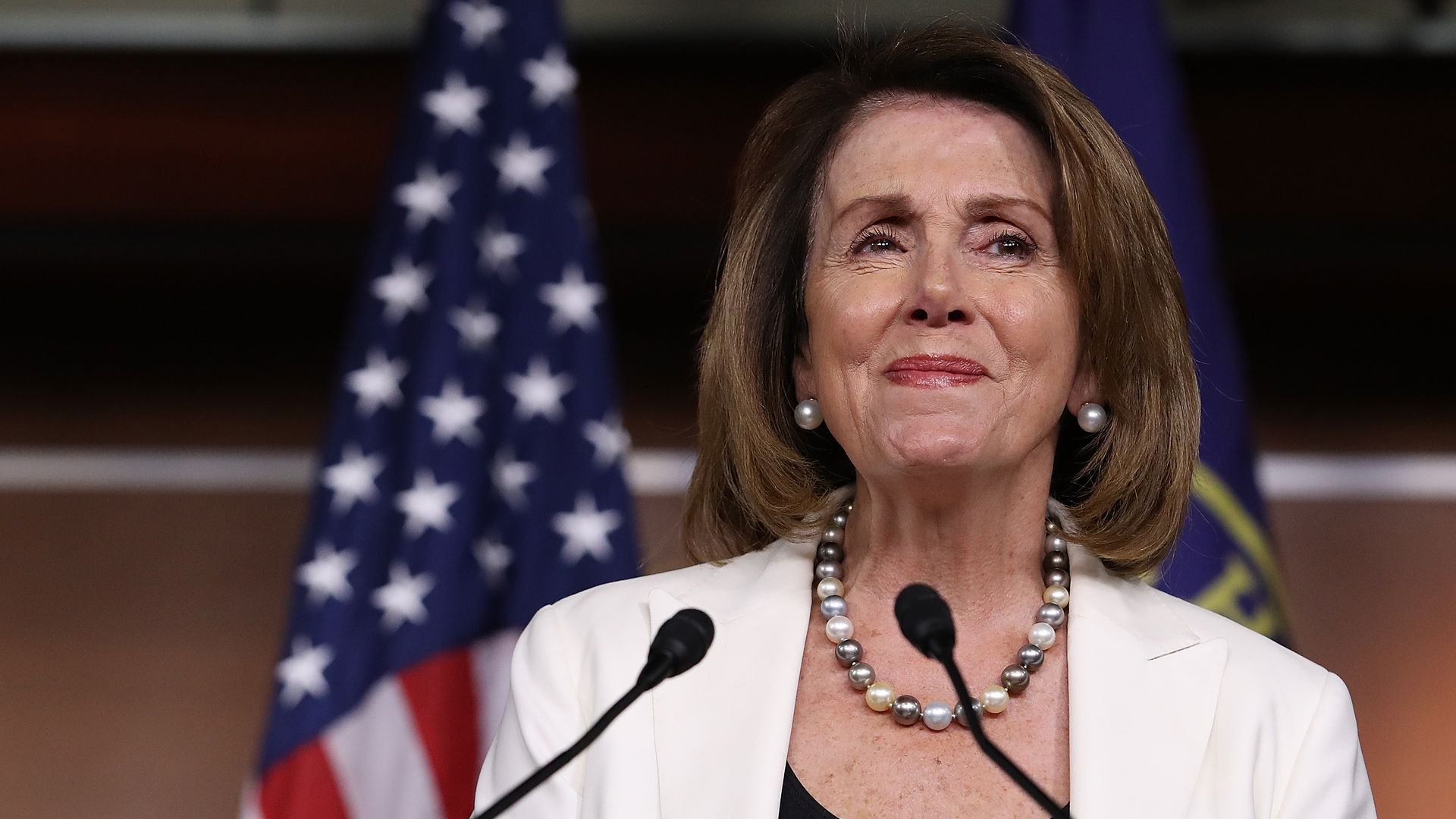
In a generic poll conducted by Public Opinion Strategies for the Republican National Committee, Americans were more likely to say they would support a candidate backed by Nancy Pelosi (50%) than a candidate backed by Donald Trump (45%), according to Bloomberg, which obtained a copy of the poll.
The big picture: Pelosi, who would likely become House Speaker if Democrats take control of the House in November, has become a polarizing figure, even within the Democratic party. Republicans have made her a primary target in their midterm campaigns, and Trump's tweet tirades are often directed toward her. The poll also found that criticizing Pelosi — and Hillary Clinton — often works in riling up the GOP base, and could help the GOP win over some independent women and Hispanic men, per Bloomberg.
Two recent polls show that there more Americans oppose Brett Kavanaugh being confirmed to the Supreme Court than those who support his confirmation — the first time in the history of these polls that there has been that much opposition to a Supreme Court nominee.
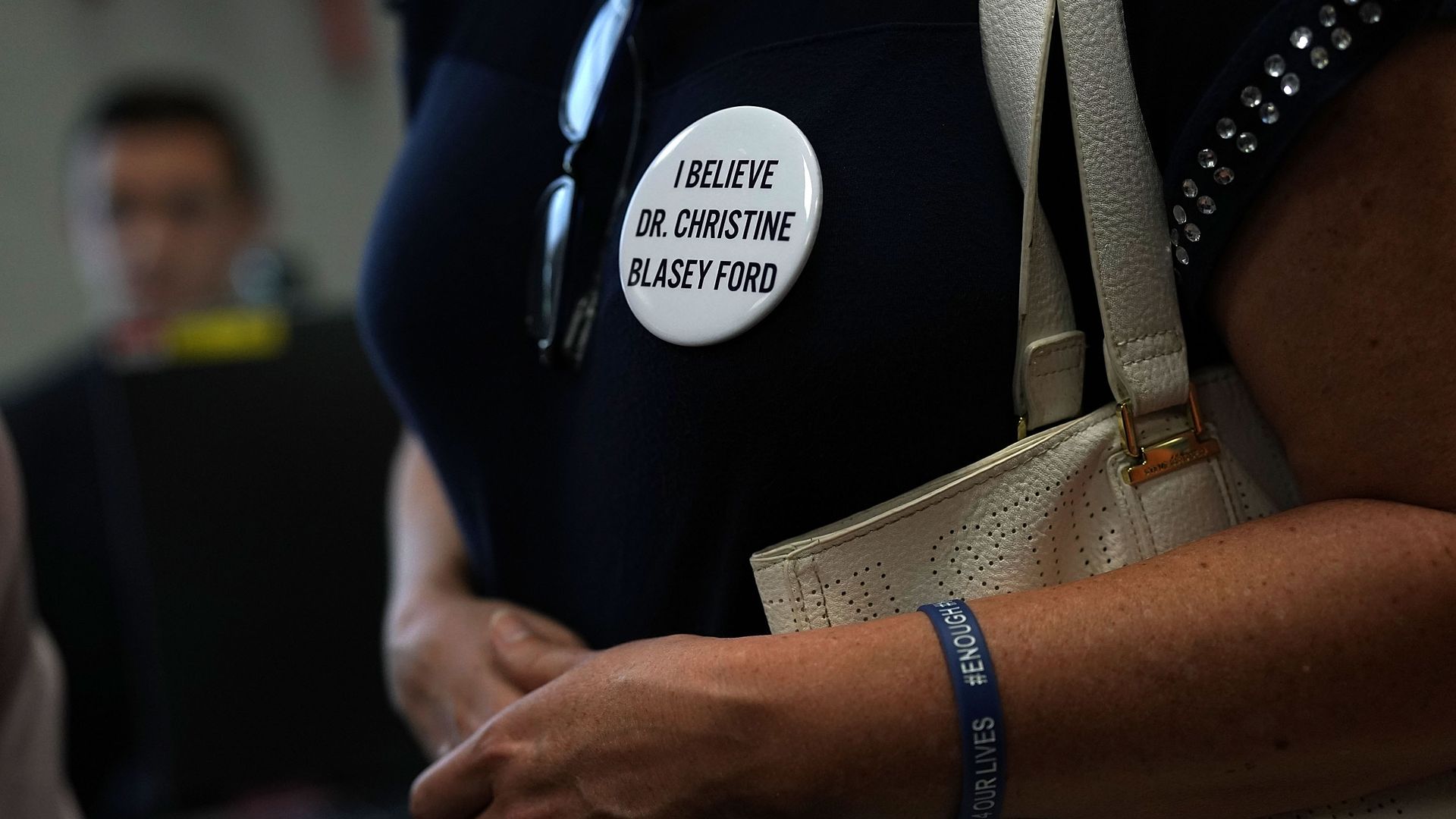
Why it matters: Kavanaugh's popularity has taken a hit follow Dr. Christine Blasey Ford's allegation that he sexually assaulted her when they were in high school. However, a plurality of the respondents still expect Kavanaugh to be confirmed. This could add to the already bad political environment for Republicans, but the bottom line is that if Kavanaugh is confirmed — no matter how unpopular — he'll be there making laws long after these immediate political storms are blow over.
The Republican Party is suffering an identity crisis that poses acute short- and long-term risks: President Trump, with 38% approval in Gallup, is giving the party a constricted appeal, with the danger of continuing high-profile defections.
Why it matters: In a 50-50 nation, marginal defections can incapacitate a party.
A source who has been talking to President Trump throughout the Kavanaugh crisis told Axios that “you have no idea” how hard it has been to keep him from attacking his Supreme Court nominee's accuser.
A White House official said yesterday: “Hopefully he can keep it together until Monday. That’s only, like, another 48 hours right?” It didn't last that long: this morning, a few hours after this story posted, the president cast doubt on Ford's allegation on Twitter.
Around a century ago, amid a massive surge of immigrants, Americans — themselves virtually all of foreign blood — pushed back in what turned into a more than four-decade-long uprising against newcomers.
Now, the U.S. immigrant population is nearing the same proportions, and again Americans are revolting.
Why it matters: The new wave of migration is, along with automation, one of the primary drivers behind the anti-establishment uprising roiling both the U.S. and Europe, experts say.
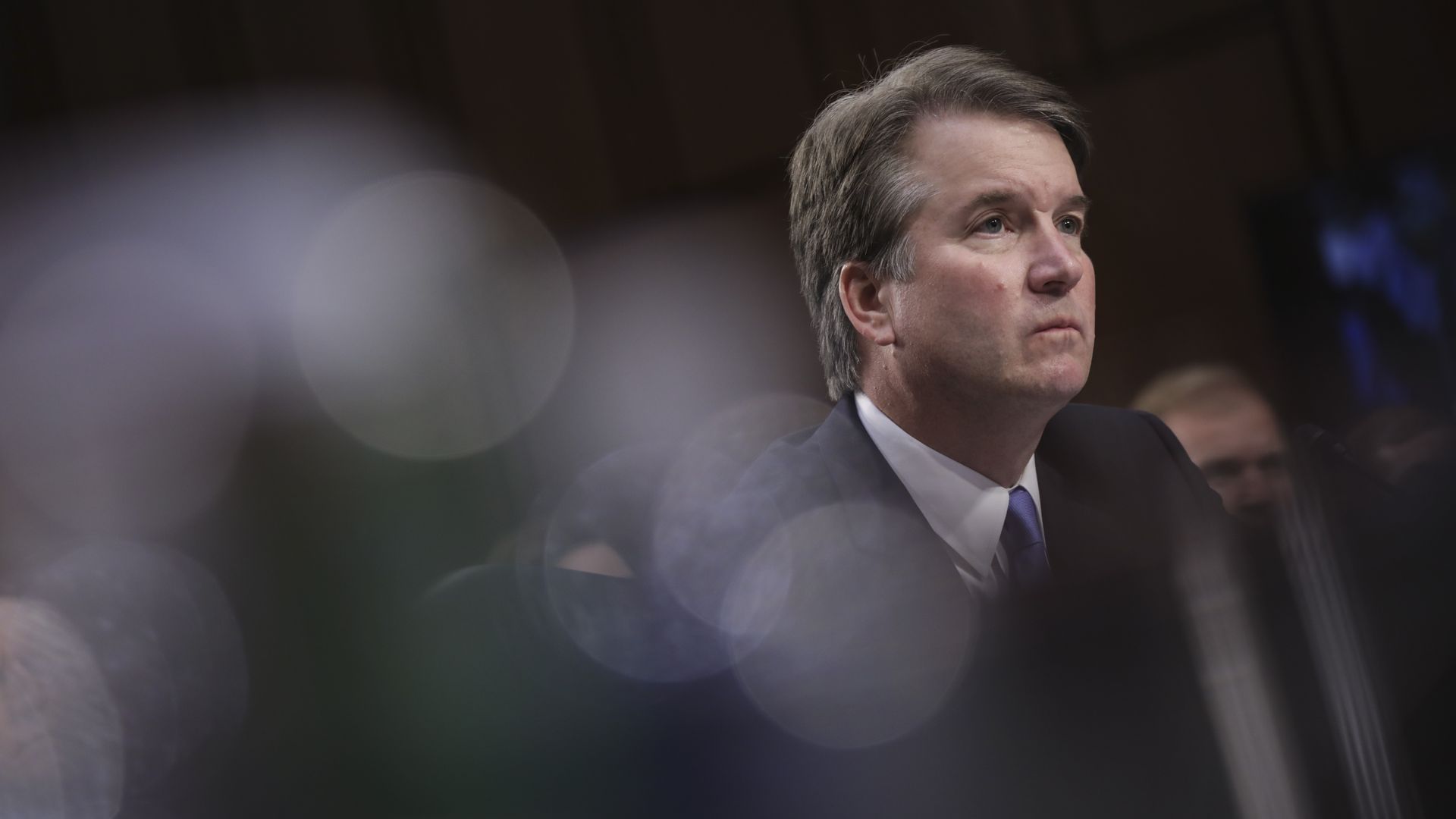
Supreme Court nominee Brett Kavanaugh said Thursday that he still plans to testify in front of the Senate Judiciary Committee on Monday, despite uncertainty over whether Christine Blasey Ford, who has accused Kavanaugh of sexually assaulting her in high school, will testify as well, reports ABC.
Why it matters: Both Kavanaugh and Ford were initially expected to testify publicly on Monday. However, Ford has been hesitant to agree to a hearing following backlash over her accusation. Ford's lawyer most recently said she would be willing to testify, but only if the committee ensures her safety.
Between July and September of this year, U.S. Immigration and Customs Enforcement arrested 41 people who had come forward as potential sponsors of undocumented migrant children. 70% of those arrests were due to the sponsors — who are often the child's family members — being in the U.S. illegally, CNN's Tal Kopan reports.
Why it matters: Health and Human Services recently instituted stricter vetting procedures including background checks and finger printing for all potential immigrant child sponsors. Immigration advocates have feared that this information would be used by the Trump administration to round up more undocumented immigrants in the U.S.
President Trump has signed off on a long-awaited national cyber strategy that aims to guide how the administration handles offensive and defensive cybersecurity and cyberthreats, Trump’s National Security adviser, John Bolton, told reporters in a briefing Thursday.
Why it matters: In the absence of an overarching cybersecurity doctrine, government agencies have been limited in how they can legitimately deter foreign adversaries and respond to cyberattacks — even as the attacks are escalating exponentially.
Christine Blasey Ford, the woman accusing Supreme Court nominee Brett Kavanaugh of sexually assaulting her in high school, says she "would be prepared to testify next week" before the Senate Judiciary Committee on the grounds that senators offer "terms that are fair and which ensure her safety," the New York Times reports, citing an email her lawyer sent to staff members.
The details: The email — sent by Ford's lawyers and addressed to top Republican and Democratic aides on the committee — explains that the timeframe for Monday's hearing "is not possible and the Committee’s insistence that it occur then is arbitrary in any event," per the Times. The email states that Ford also requests that "a full investigation" is conducted prior to her testimony.
The progressive group Swing Left added six new GOP-held districts to their list of targeted races where they're channeling the energy of their 500,000 volunteers to try to help Democrats take back the House — they're now targeting a total of 84 races.
Why it matters: Although all of the districts are favorable to Republicans, per Cook Political Report ratings, Swing Left co-founder Ethan Todras-Whitehill says they're seeing a surge of grassroots activists in these areas who "can move the needle to secure critical wins."
Attorney General Jeff Sessions has referred another immigration case to himself for review, and his decision could keep all asylum-seekers caught crossing the border illegally in mandatory detention — even if they've passed their "credible fear" interview.
Why it matters: If Sessions decides that asylum-seekers who establish credible fear do not have a right to a bond hearing, "it will mean tens of thousands of border crossers will now be subject to mandatory detention, which means ICE will need significant new funding in order to house people," immigration lawyer at Holland & Knight and former DOJ attorney Leon Fresco tells Axios.
Riding a surge of enthusiasm in opposition to President Trump, more Democrats turned out in the primaries for House elections than Republicans this year — the first time that has happened since 2008.
Why it matters: 2008 was the last time Democrats won a majority in the House. They lost it in 2010, when Republican primary turnout skyrocketed and Democratic turnout plummeted — the reverse of what's happening now.
On Wednesday, Attorney General Jeff Sessions imposed new limits on immigration judges' authority to dismiss deportation cases — the latest effort by the Trump administration to obtain more control over the removal of unauthorized immigrants from the country, reports Reuters.
The details: Under the new rule, judges can terminate deportation proceedings if the government fails to meet its burden of proof, requests a dismissal, or "to allow an immigrant time for a final hearing on a pending petition for naturalization when the matter involves 'exceptionally appealing or humanitarian factors,'" per Reuters. Because the U.S. immigration courts are administrative courts within the Justice Department and lack judicial independence, the attorney general has the ability to rewrite opinions issued by the Board of Immigration Appeals. Reuters notes that Sessions has been been "unusually active in this practice compared to his predecessors."
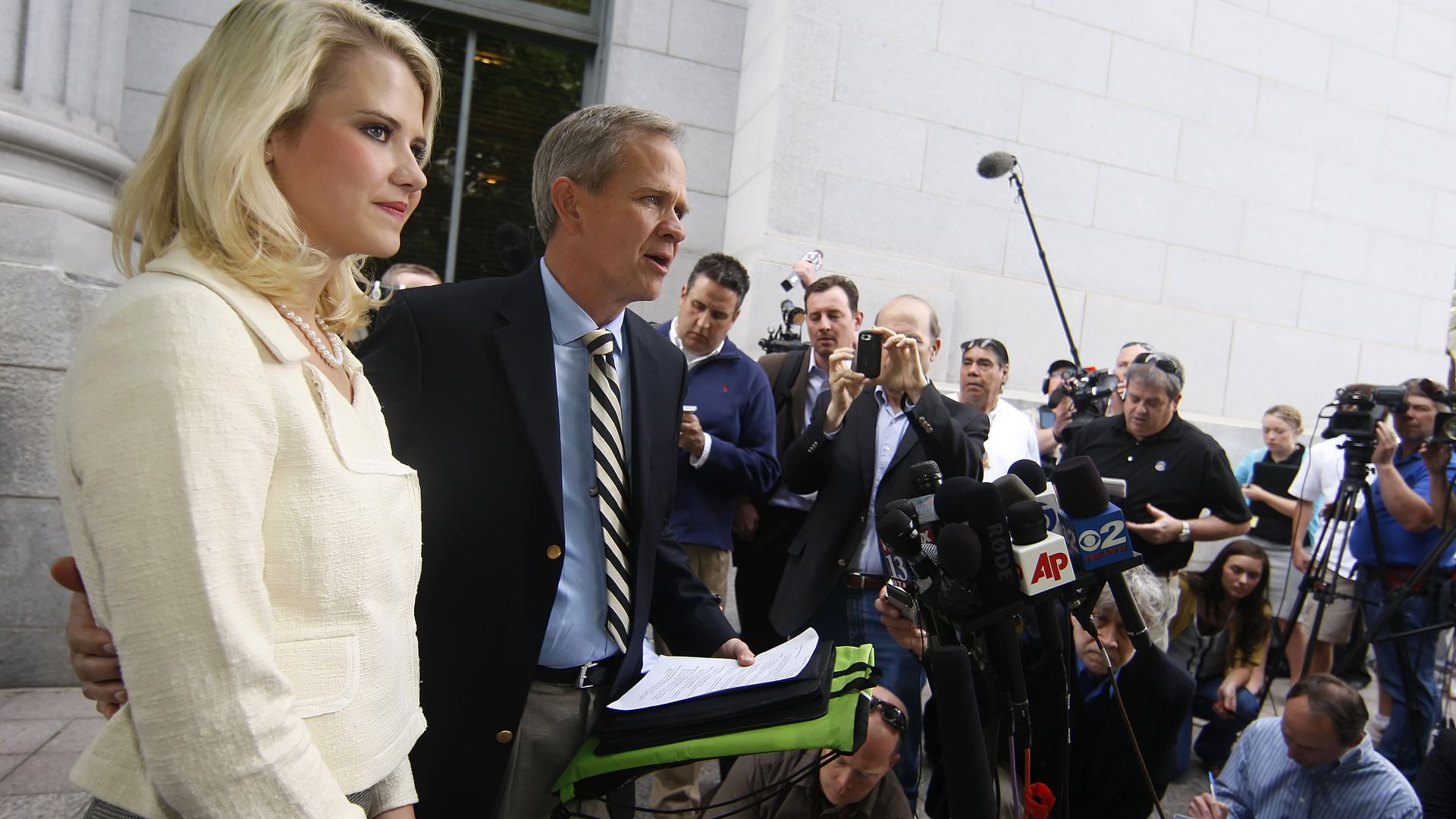
Wanda Barzee, who participated in the 2002 kidnapping of Elizabeth Smart, was released from a Utah prison Wednesday after spending 15 years behind bars.
Upon the release, Smart responded to the news saying, "The past few weeks have been an absolute roller coaster. I appreciate everyone’s comments of love and support and outrage. I’ve spent the last 15 years trying to move on with my life. I’m going to continue doing that. I’m not going to have this woman stop me from living my life."











/2018/09/20/1537471573244.gif?w=3840)