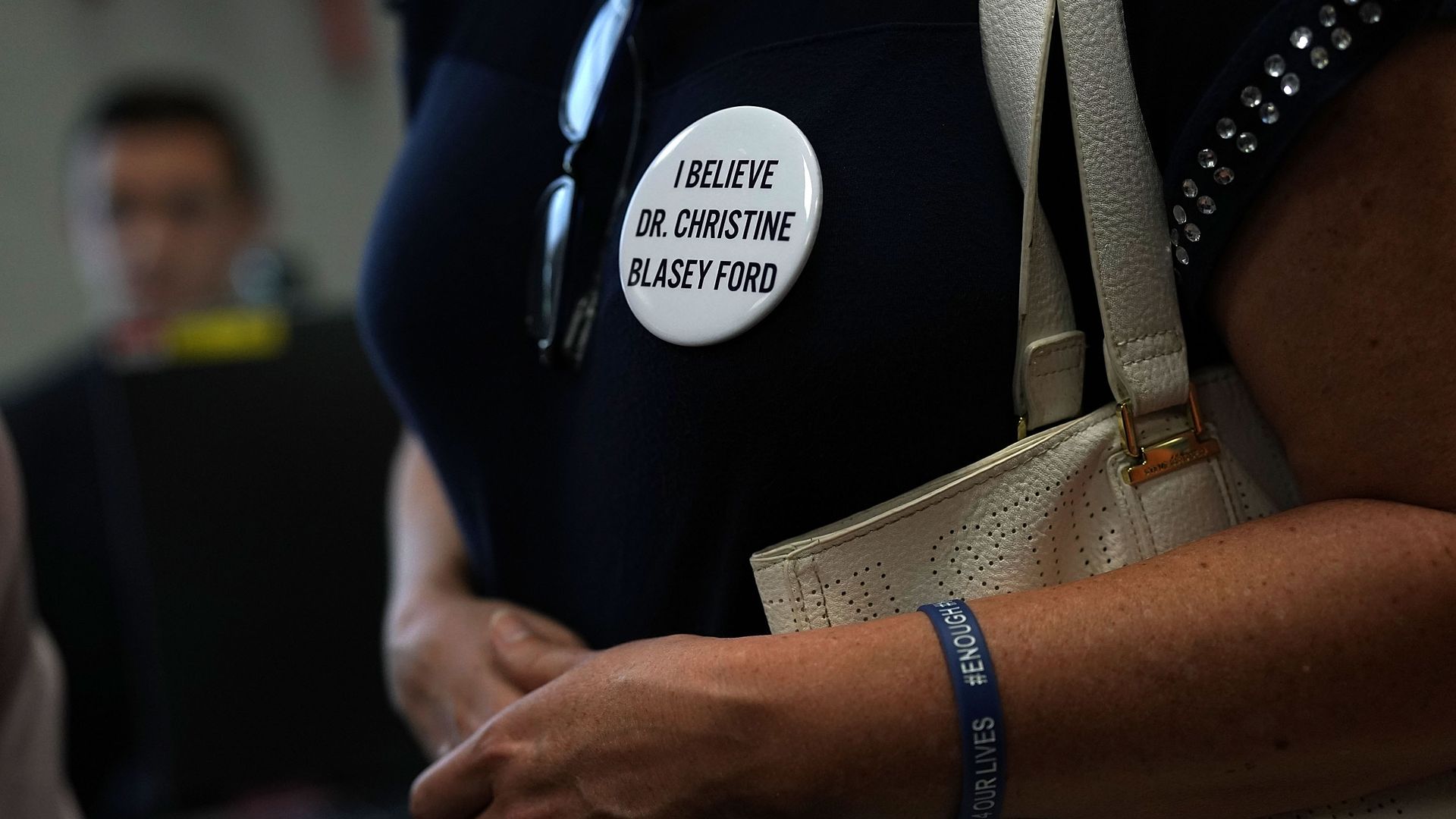
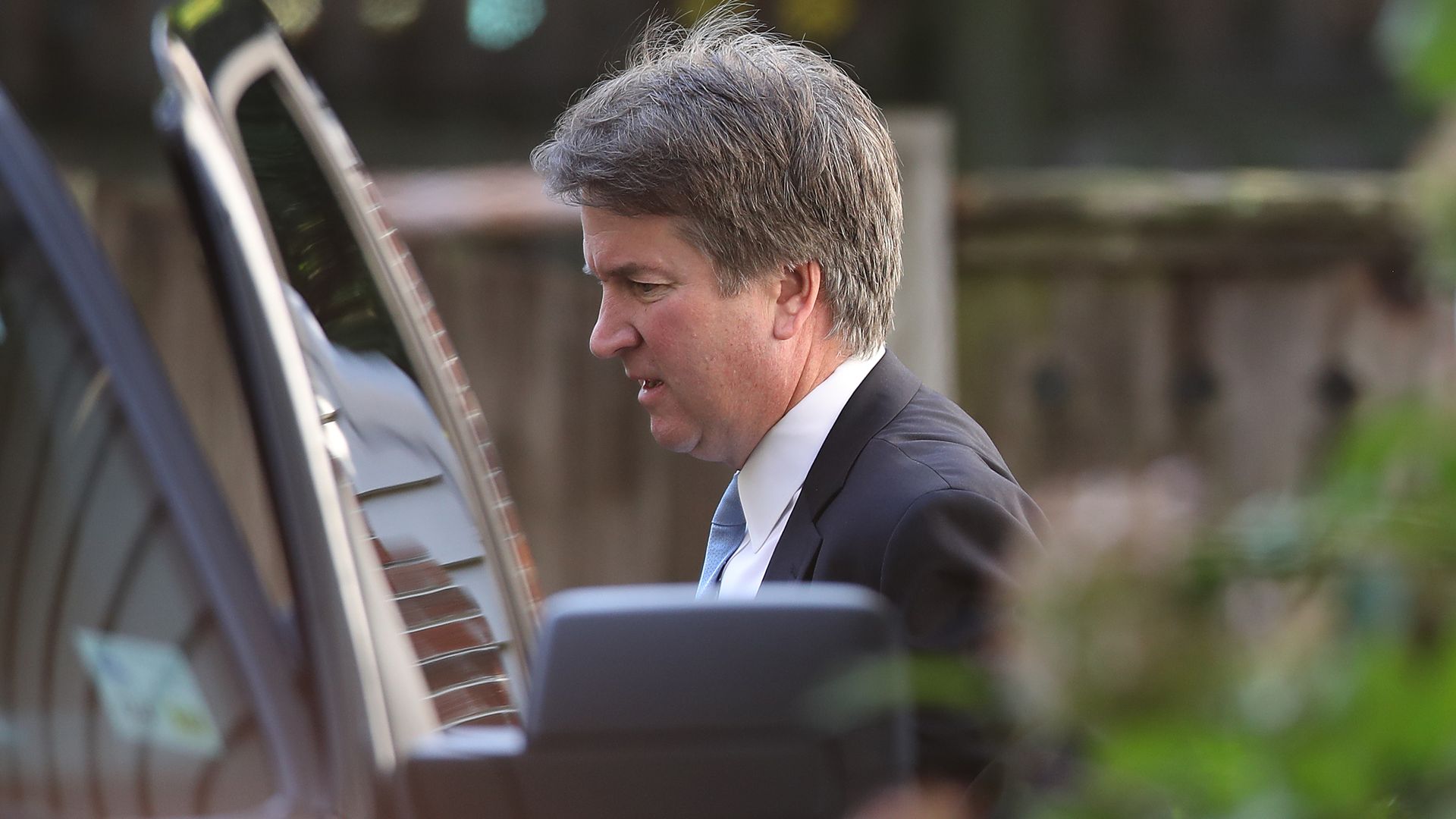
Christine Blasey Ford, who has accused Supreme Court nominee Brett Kavanaugh of sexually assaulting her in high school, has accepted the Senate Judiciary Committee's offer to testify this week, Ford's lawyer said in an emailed statement Saturday, but added that there are still details that need to be worked out.
"Dr. Ford accepts the Committee's request to provide her first-hand knowledge of Brett Kavanaugh's sexual misconduct next week. Although many aspects of the proposal you provided via email, on September 21, 2018, at 2:33 pm, are fundamentally inconsistent with the Committee’s promise of a fair, impartial investigation into her allegations, and we are disappointed with the leaks and the bullying that have tainted the process, we are hopeful that we can reach agreement on details. Can we set up a time for later this afternoon to continue our negotiations?"
— Email from Ford's lawyer, Debra Katz, to the Senate Judiciary Committee staff
Garrett Ventry, a press adviser for the Senate Judiciary Committee, resigned Saturday after NBC News confronted him with questions about a previous allegation of sexual harassment.
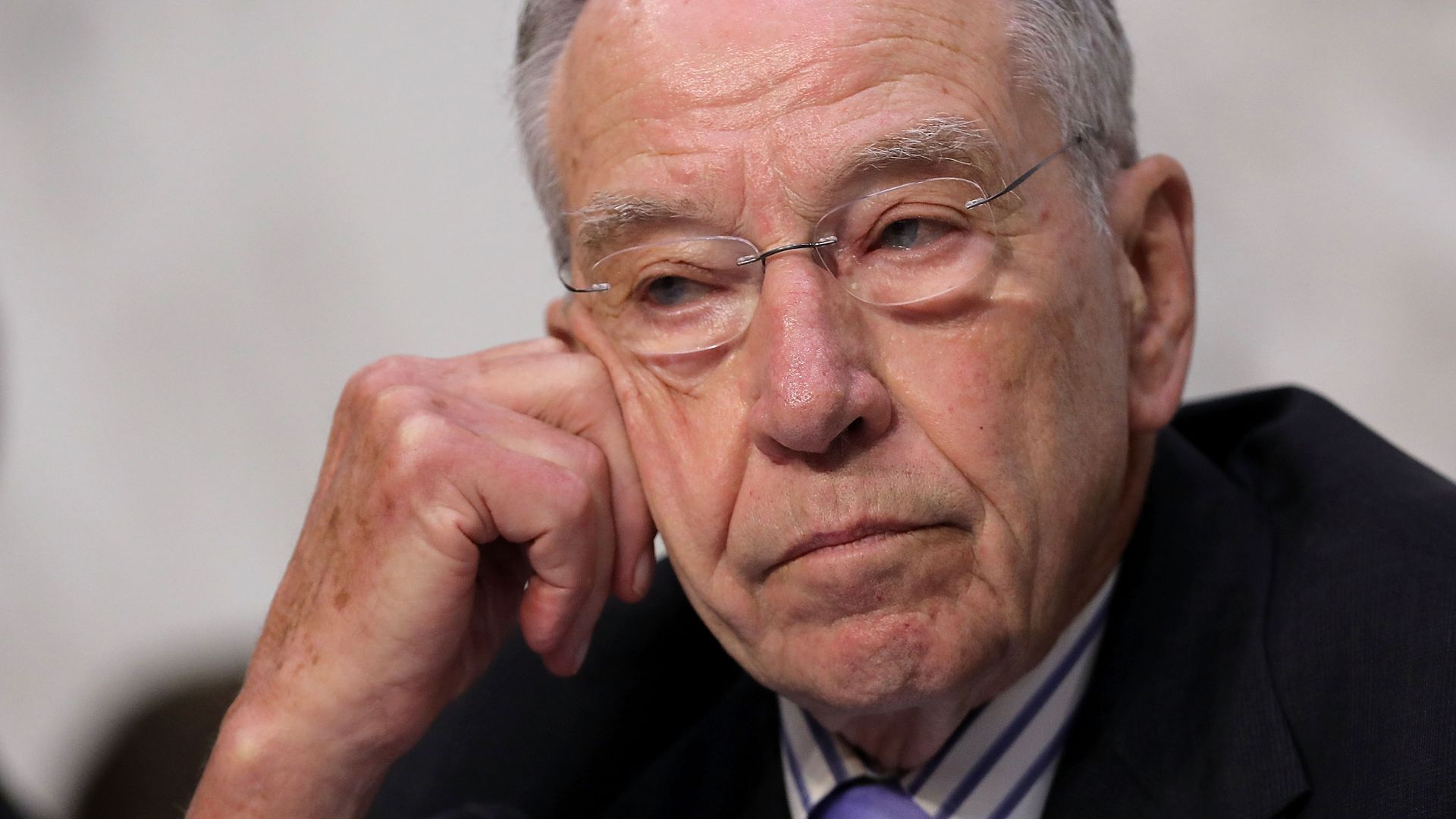
The big picture: Ventry, who denied any past "allegations of misconduct" to NBC News, was a communications aide to Committee Chair Sen. Chuck Grassley (R-Iowa) and had been a coordinator for the committee's messaging involving Christine Blasey Ford's allegation that Supreme Court nominee Brett Kavanaugh sexually assaulted her at a high school party in 1982.
With midterms on the horizon and Republicans struggling to make gains with voters despite a robust economy, the GOP is now trying to turn voters against their opposition by painting them as dangerous, reports the LA Times.
Why it matters: Republicans are spending millions of dollars on this effort, but Democrats remain optimistic ahead of the midterms.
We’re starting to see the worst collateral damage of President Trump's war with his own Justice Department. The rift has dominated (even defined) his presidency. And it looks like it’s getting worse.
A former administration official told Axios: “It’s a 'Deep State' he created. Whether it existed before or not, it does now.”
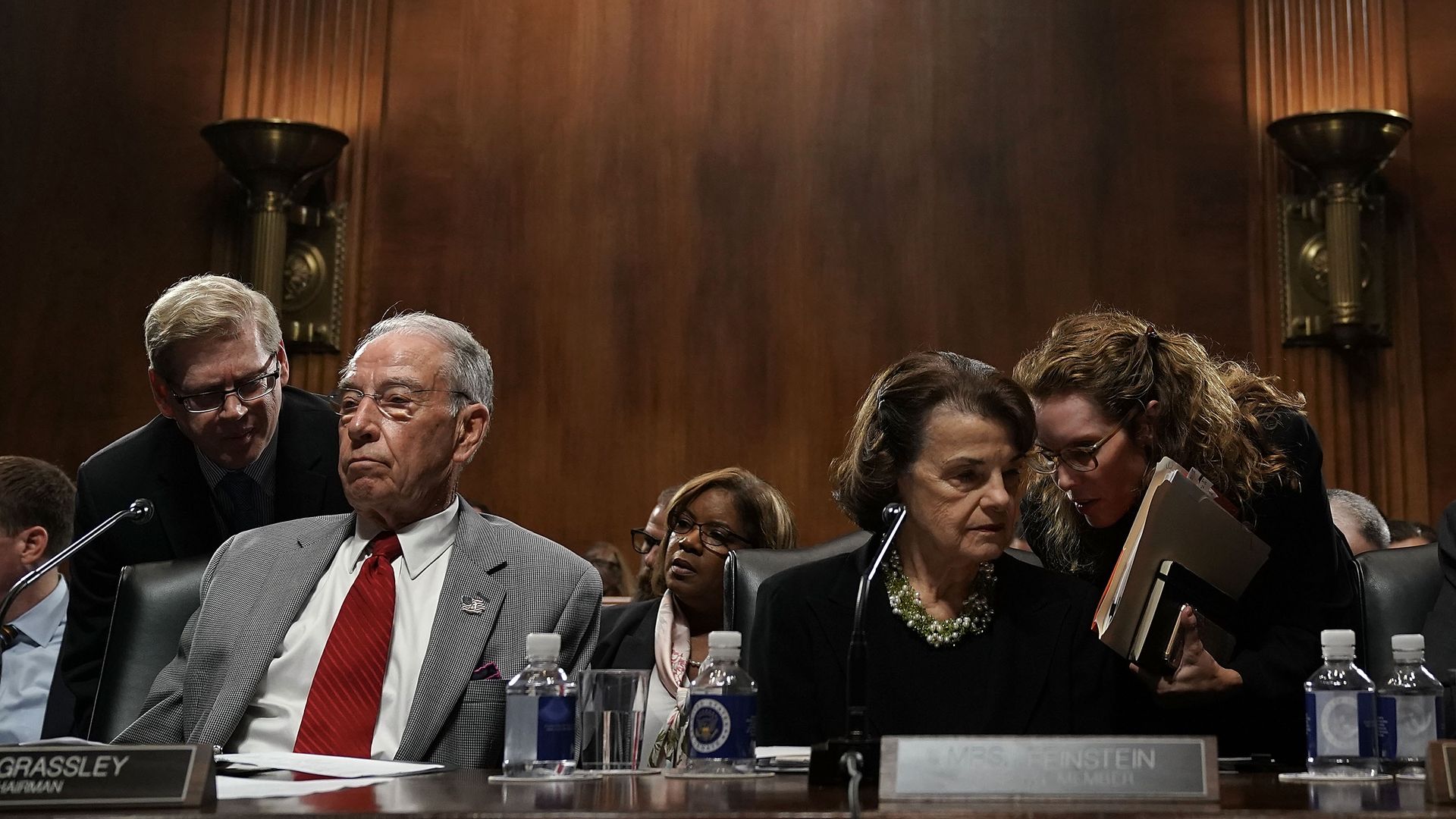
In a late Friday night tweet, Senate Judiciary Committee Chairman Chuck Grassley extended the deadline originally given to Christine Blasey Ford, the woman who has accused Brett Kavanaugh of sexually assaulting her in high school, to testify before the committee.
"Judge Kavanaugh I just granted another extension to Dr Ford to decide if she wants to proceed w the statement she made last week to testify to the senate She shld decide so we can move on I want to hear her. I hope u understand. It’s not my normal approach to b indecisive."
A trio of major updates have punctuated an otherwise quiet week for President Trump, setting up major fall drama in D.C.
The big picture Senators weighing the Brett Kavanaugh confirmation now know exactly where Trump stands, and notwithstanding a firm denial, Trumpworld has found a new rallying cry to axe Deputy AG Rod Rosenstein.
Last year, following the firing of James Comey, Deputy Attorney General Rod Rosenstein discussed rallying cabinet members to remove Trump from office — by invoking the 25th Amendment — and suggested he secretly record the president in the White House in an effort to "expose the chaos consuming the administration," New York Times' Adam Goldman and Michael S. Schmidt report.
Between the lines: It is not clear how serious Rosenstein was about his plans. The idea to wear a wire when interviewing potential FBI directors with President Trump was never acted upon, according to the Times. Rosentstein reportedly told former deputy FBI director Andrew McCabe that he believed he could get Attorney General Jeff Sessions and then-Homeland Security Secretary John Kelly on board in an effort to remove Trump from the presidency.
Many cybersecurity experts and lawmakers from both sides of the aisle are applauding Trump's new national cyber strategy, which takes on a more offensive tone than previous guiding directives.
Between the lines: Many are also quick to point out it doesn't specify new details that go beyond the guidance of previous administrations.
Secretary of State Mike Pompeo opened up about the possibility of a second meeting between President Trump and North Korean leader Kim Jong-un in an interview with MSNBC's Andrea Mitchell, but added that there is still work to be done to make sure "conditions are right."
Why it matters: Kim has said he'd like another meeting with Trump to speed up the denuclearization process. And while Pompeo told Mitchell that he'd like for a second Trump-Kim summit to take place, it's "ultimately up to the President" whether that will happen.
President Trump said on Twitter Friday that he's asked the Justice Department's inspector general to review documents relating to the Russia investigation and the U.S. government's surveillance activities during his campaign.
Why it matters: This is a step back from Trump's previous demands that the DOJ declassify these documents and text messages — unredacted — with a hope that the declassification would discredit the Mueller investigation by revealing it was illegitimate to begin with. However, Trump said Friday that key allies have since asked him to refrain from releasing them, likely given the sensitive information they contain. Trump said that IG will review these documents on "an expedited basis," and that he "can always declassify if it proves necessary."
In a generic poll conducted by Public Opinion Strategies for the Republican National Committee, Americans were more likely to say they would support a candidate backed by Nancy Pelosi (50%) than a candidate backed by Donald Trump (45%), according to Bloomberg, which obtained a copy of the poll.
The big picture: Pelosi, who would likely become House Speaker if Democrats take control of the House in November, has become a polarizing figure, even within the Democratic party. Republicans have made her a primary target in their midterm campaigns, and Trump's tweet tirades are often directed toward her. The poll also found that criticizing Pelosi — and Hillary Clinton — often works in riling up the GOP base, and could help the GOP win over some independent women and Hispanic men, per Bloomberg.
Two recent polls show that there more Americans oppose Brett Kavanaugh being confirmed to the Supreme Court than those who support his confirmation — the first time in the history of these polls that there has been that much opposition to a Supreme Court nominee.
Why it matters: Kavanaugh's popularity has taken a hit follow Dr. Christine Blasey Ford's allegation that he sexually assaulted her when they were in high school. However, a plurality of the respondents still expect Kavanaugh to be confirmed. This could add to the already bad political environment for Republicans, but the bottom line is that if Kavanaugh is confirmed — no matter how unpopular — he'll be there making laws long after these immediate political storms are blow over.
The Republican Party is suffering an identity crisis that poses acute short- and long-term risks: President Trump, with 38% approval in Gallup, is giving the party a constricted appeal, with the danger of continuing high-profile defections.
Why it matters: In a 50-50 nation, marginal defections can incapacitate a party.
A source who has been talking to President Trump throughout the Kavanaugh crisis told Axios that “you have no idea” how hard it has been to keep him from attacking his Supreme Court nominee's accuser.
A White House official said yesterday: “Hopefully he can keep it together until Monday. That’s only, like, another 48 hours right?” It didn't last that long: this morning, a few hours after this story posted, the president cast doubt on Ford's allegation on Twitter.



/2018/09/22/1537621909358.gif?w=3840)