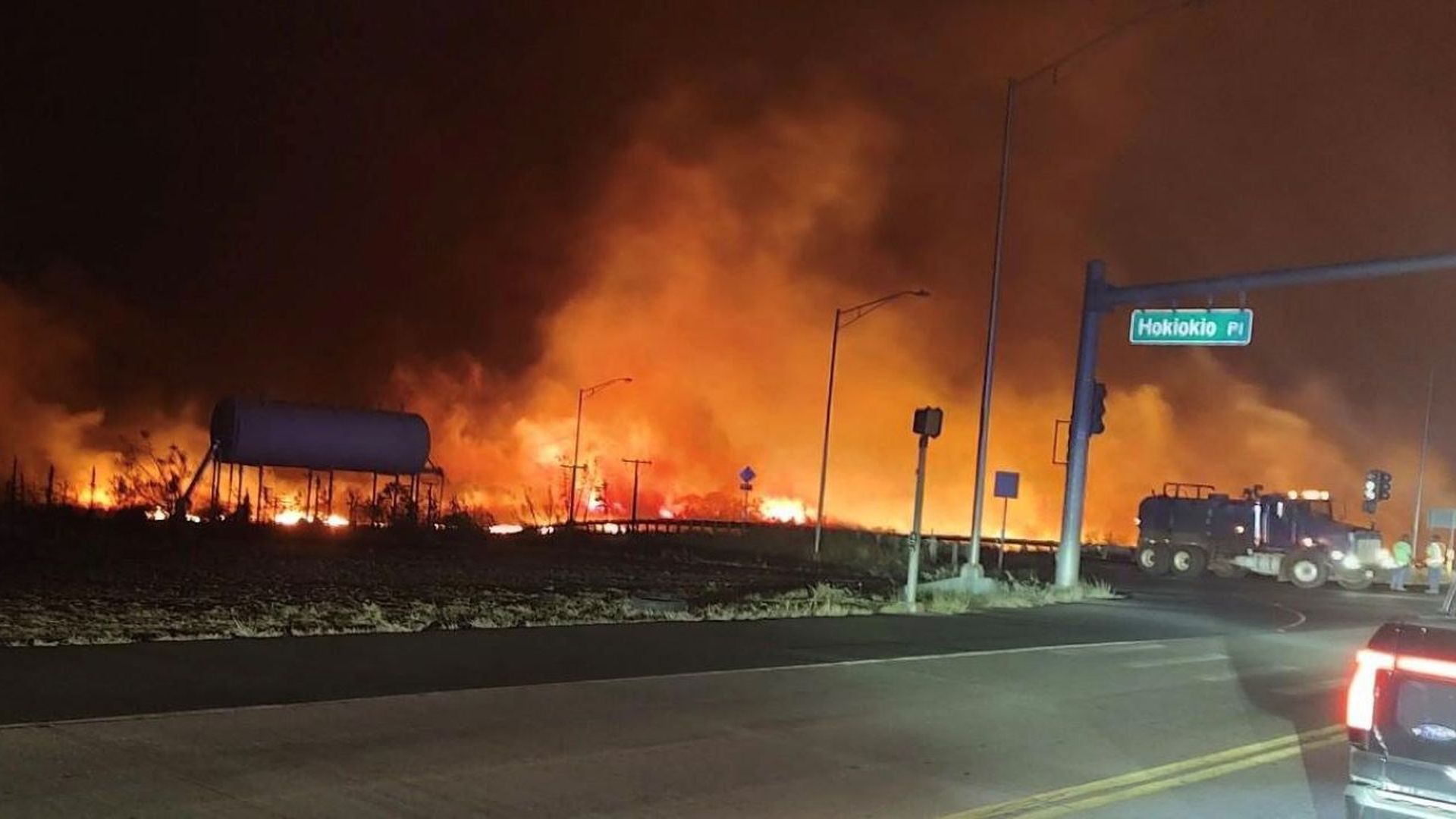
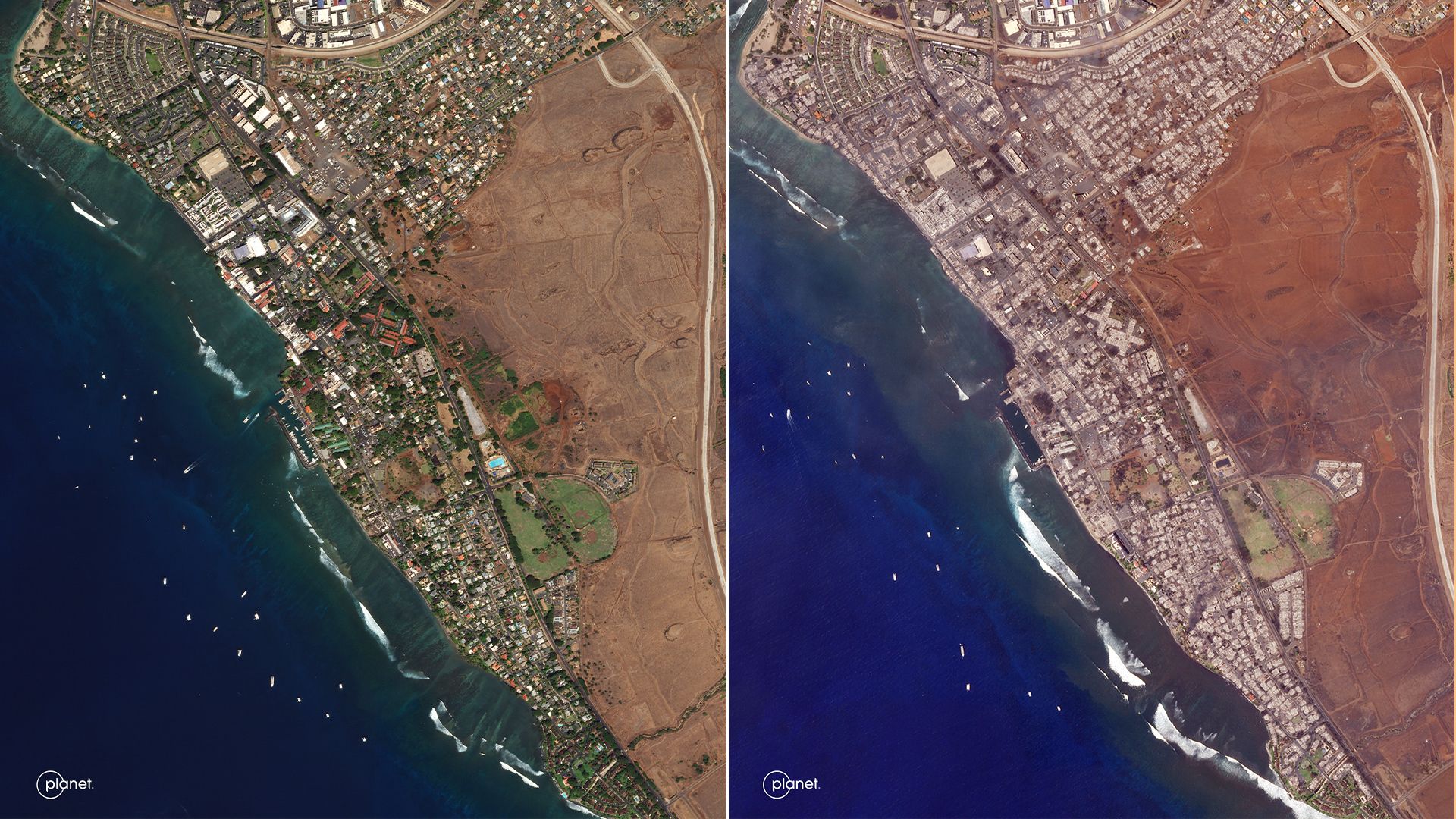
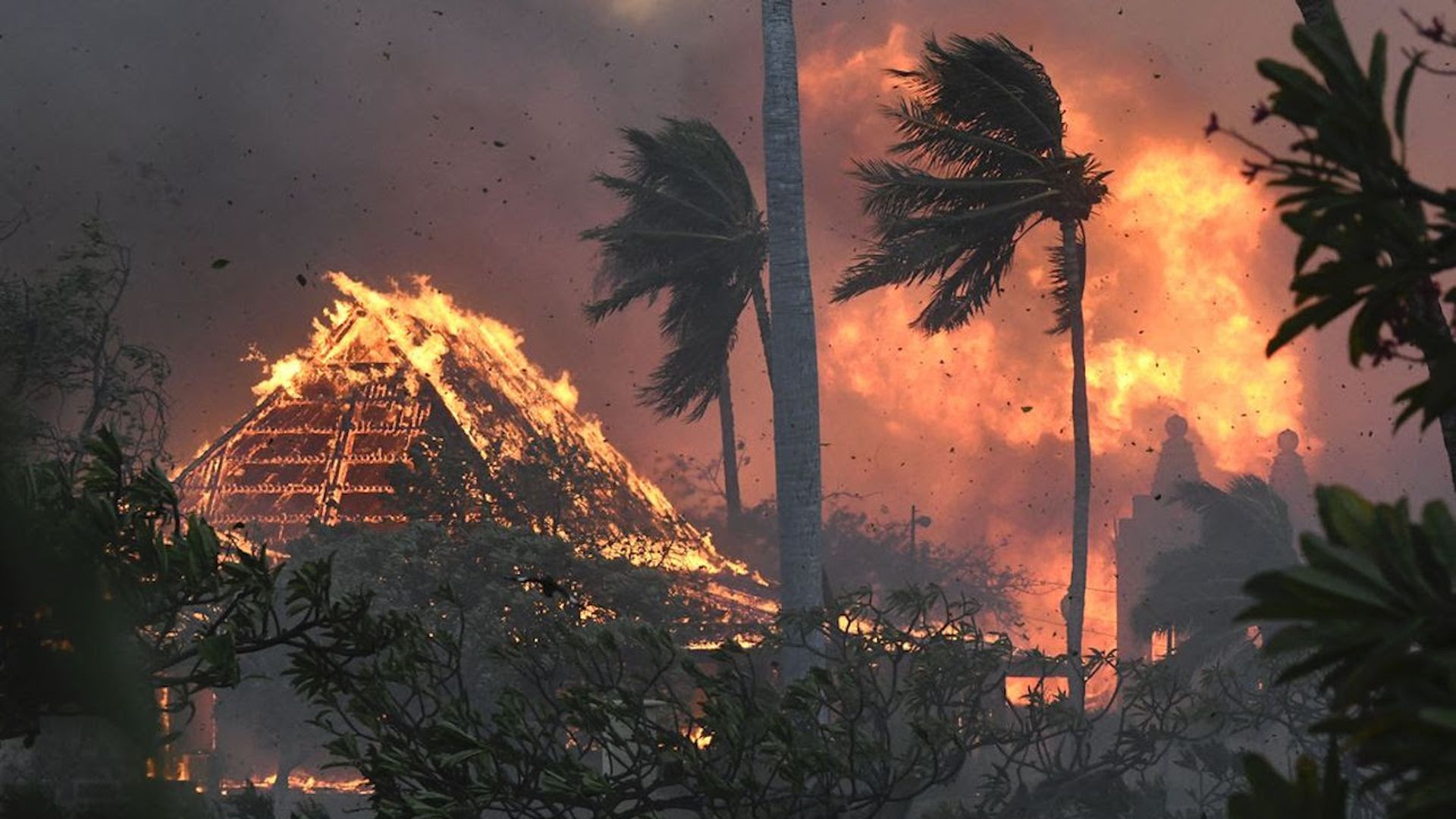
Wildfires in Hawai'i have killed at least 67 people, wounded dozens of others displaced hundreds of families and destroyed an estimated 1,700 buildings.
The big picture: The death toll exceeded the 61 confirmed deaths from a tsunami in 1960 — considered to be one of the deadliest natural disasters in state history.
The United Arab Emirates official heading the next U.N. climate summit said he'll convene a "high level dialogue" next week to "drive progress" on a new finance framework.
Why it matters: Sultan al-Jaber's announcement is a recognition that global finance for stemming emissions and building resilience is far short of what's needed.
Hydrogen-powered semi-trucks are finally coming to market, alongside new efforts to boost hydrogen fuel.
Why it matters: Zero-emissions trucks — powered by electric batteries or hydrogen fuel cells — could help fight climate change and improve health outcomes for millions of people.
What started nearly two decades ago as a protest of society's dependence on oil has grown into one of Portland's largest cultural events, with nude cyclists taking over city streets en masse.
Why it matters: While the World Naked Bike Ride is quintessentially Portland, we're not the only city that hosts it. Since 2004, cities across the globe have participated as a way to promote cycling as a mode of transportation, as well as body positivity.
Leaders from the eight nations that share the Amazon rainforest promised in a joint statement this week to work towards "deforestation zero," but they did not commit to a roadmap for achieving it.
Driving the news: The leaders of Brazil, Bolivia, Colombia, Ecuador, Guyana, Peru, Suriname and Venezuela met this week to discuss Amazonian conservation — the first such meeting since 2009.
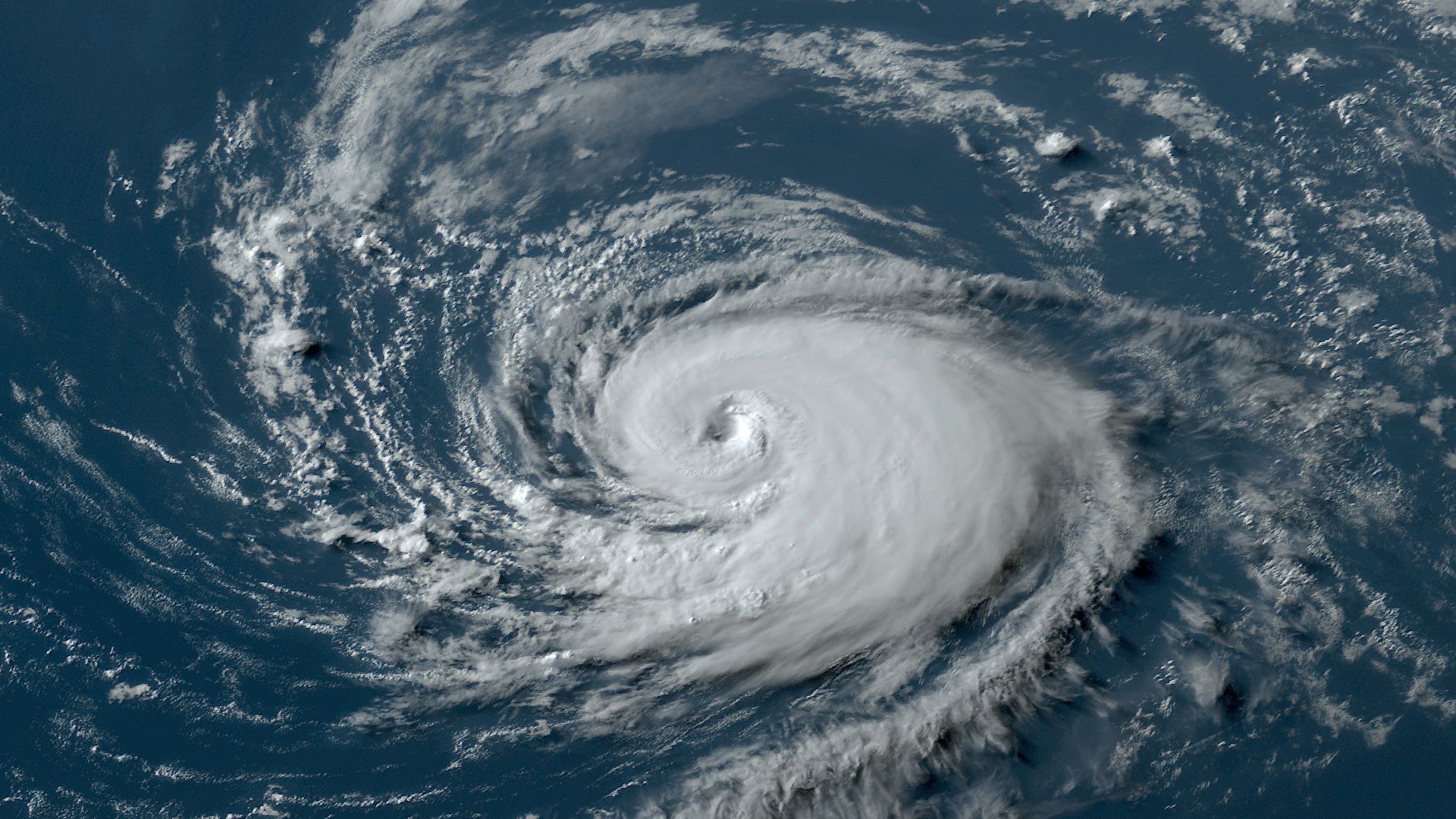
The ongoing 2023 Atlantic hurricane season may be more active than initially thought, the National Oceanic and Atmospheric Administration (NOAA) said in an updated hurricane season outlook released Thursday.
Why it matters: There have been four named storms so far this season, but historically, 90% of hurricane season's activity has occurred after Aug. 1.
President Biden offered an inadvertent window into how far the White House likely will and won't go with climate policy.
Catch up fast: When asked by The Weather Channel in an interview that aired Wednesday if he would declare a "national emergency" on climate, Biden said he'd "already done that."
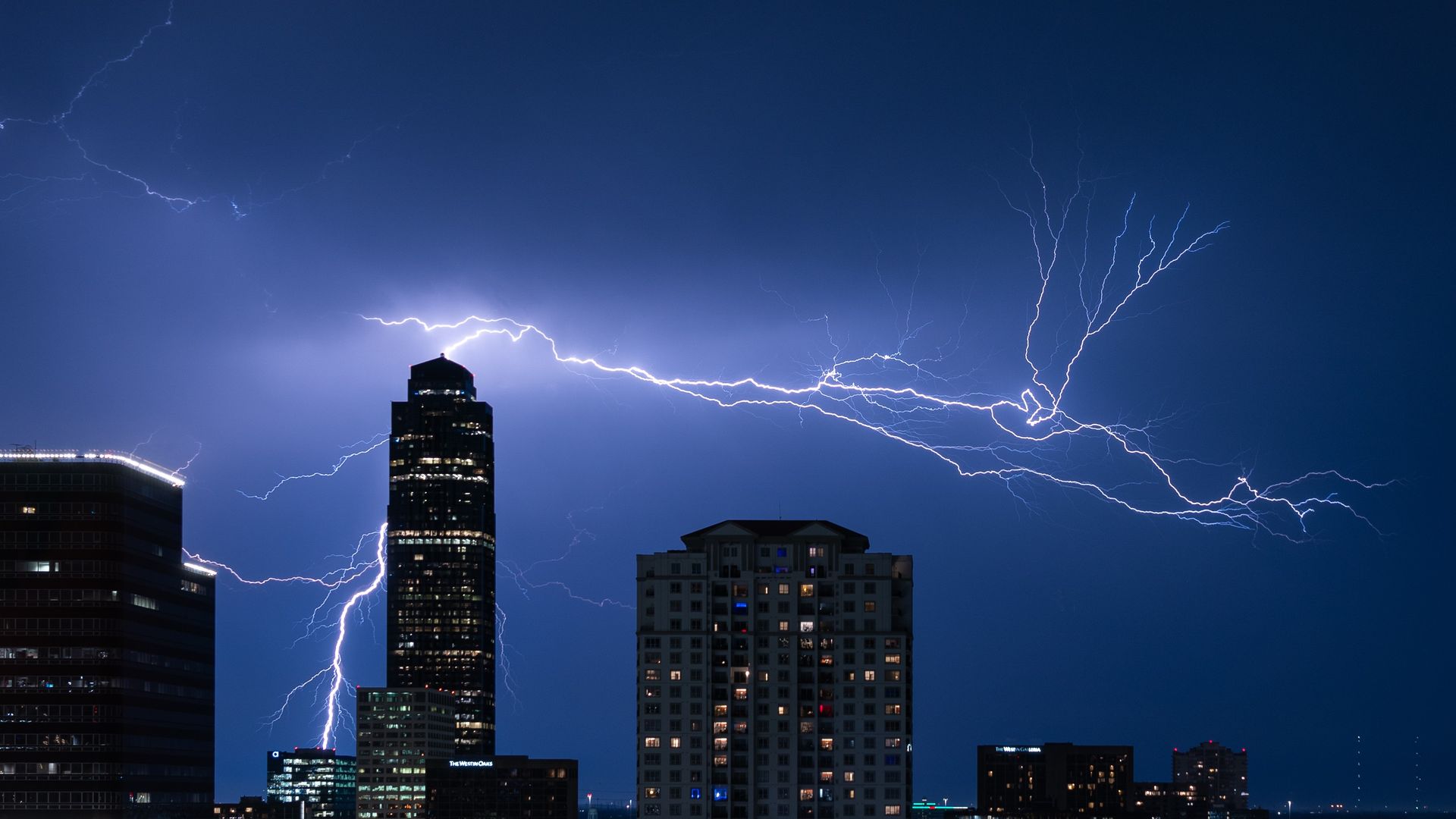
Severe storms that swept much of the U.S. in the first half of this year resulted in $34 billion in insured losses — the "highest ever" recorded in a six-month period.
The big picture: That's according to a report out Wednesday from Swiss Re Group, which estimated global insured losses from natural catastrophes at $50 billion — the second highest since 2011. "The effects of climate change are evident in increasingly extreme weather events," the report notes.













/2023/08/10/1691634225646.gif?w=3840)