Twinkies seem to never go old and, in business terms, they never die either.
Driving the news: Hostess — which makes Twinkies, Ho Hos, Ding Dongs, Zingers and other treats — has agreed to sell itself for about $5.6 billion to J.M. Smucker.
For publicly-traded companies, the risk of holding crypto on their balance sheets was that they could only realize losses on them — but that's no longer the case.
Driving the news: The Financial Accounting Standards Board, which sets accounting standards for U.S. public and private companies, voted this past Wednesday to set a new rule on cryptocurrency accounting and disclosure that requires businesses to recognize losses and gains, immediately.
Why it matters: Bitcoin won't be a drag on balance sheets — welcome news for the 40-odd publicly traded companies holding $5.7 billion worth of them, per BitcoinTreasuries.net.
Businesses treated them as intangibles, which for companies like MicroStrategy meant valuing its bitcoin holdings at the lowest price for the given reporting period — resulting in huge losses on coins bought during better times.
Under this accounting treatment, gains on bitcoin were only reported when sold.
Details: The FASB is set to formally announce the new standard before the year's end, and the new rule is expected to go into effect for the 2025 calendar year.
Companies have the option to adopt it earlier.
Quick take: Bitcoin won't just go down on balance sheets anymore.
A new monetary policy metaphor from Dallas Fed president Lorie Logan helps explain where things stand for the central bank — and the outlook for U.S. interest rates — heading into the end of the year.
Why it matters: The inflation fire has been mostly doused. The question now is how much more water — if any — the Fed needs to pour on the remaining embers to ensure no additional flare-up.
Walgreens settled a class action lawsuit on Sept. 6 with Theranos customers for $44 million, per court documents.
Why it matters: Walgreens patients in Arizona and California who received fraudulent blood tests will be refunded for products that did not work, following prison sentences for the company's executives.
"Cryptoization" is a word used by the International Monetary Fund and the Financial Stability Board to describe a theoretical process in which citizens of some country begin to prefer cryptocurrency over the sovereign's money.
Driving the news: The word appears in a new report, jointly issued by the two international bodies, aimed at synthesizing global regulation of the crypto industry.
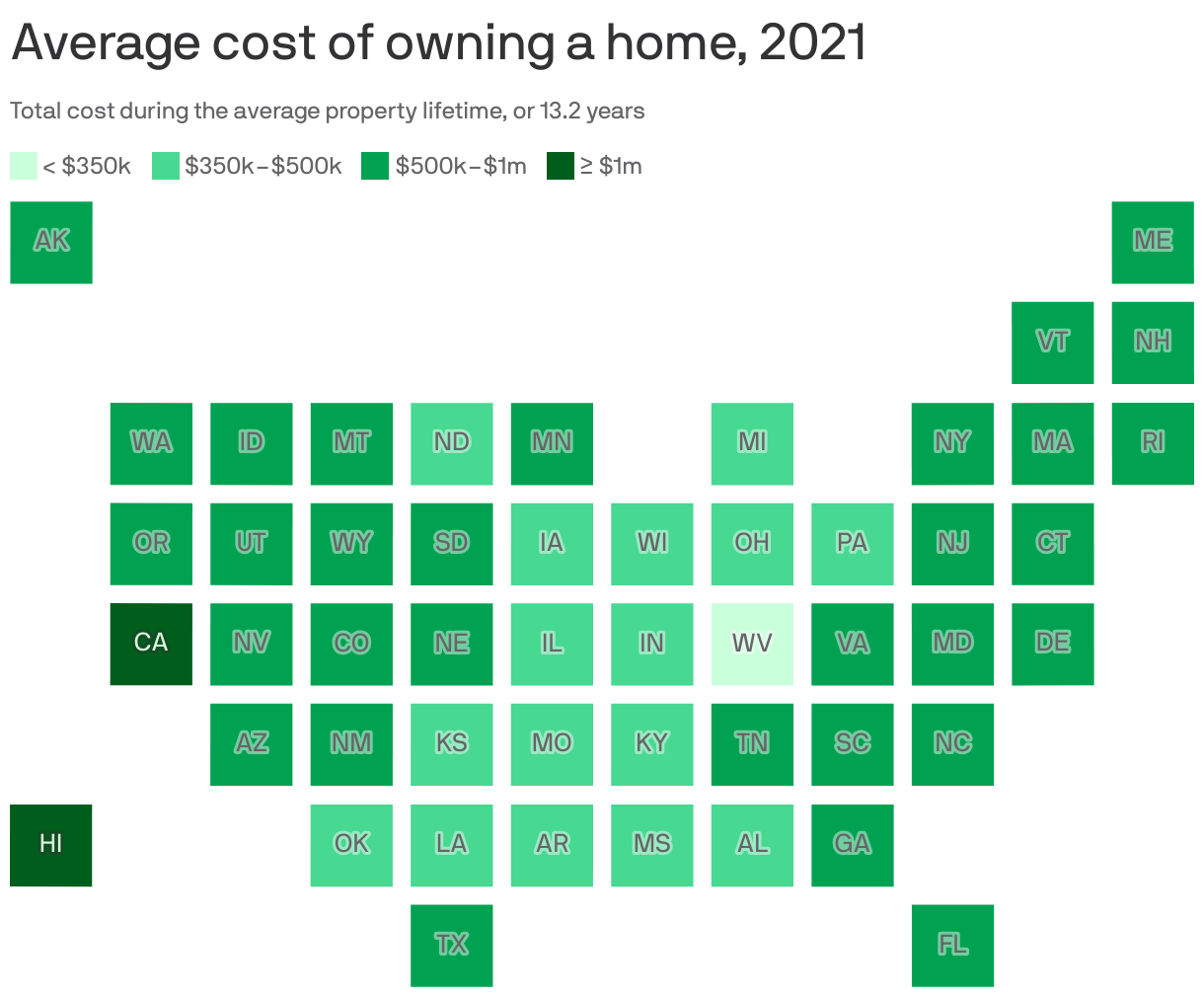
The price of owning a home goes far beyond the initial payment after signing the contract.
Why it matters: As home prices continue to rise, and mortgage rates have reached a 22-year high, the total cost of homeownership in some areas of the U.S. reveals eye-popping figures in a new report.
Disney and Charter announced a last-minute distribution deal Monday to avert a blackout of "Monday Night Football" on ESPN for nearly 15 million Charter Spectrum customers.
Why it matters: If the dispute wasn't resolved, it would have marked the beginning of the unwinding of the decades-old cable bundle that for years has kept floundering networks from sinking.
In 2019, former Facebook engineers Xiaoyin Qu and Xuan Jiang launched an event management software startup called Run The World, which would go on to raise more than $15 million from investors like Andreessen Horowitz.
Why it matters: Now the company is cooked, and all three parties are embroiled in an ugly legal fight that includes allegations of fraud and discrimination.
Gary Gensler has proved to be the most active and interventionist SEC chair in living memory. That's not saying very much.
Why it matters: The fate of Gensler's attempt to force transparency onto private-equity funds shows that the chairman's rulemaking power is easy to exaggerate.
The IPO window is finally open, but companies are proceeding through it cautiously.
Driving the news: Grocery delivery company Instacart and marketing automation software provider Klaviyo both launched their IPO roadshows on Monday, but are expecting to be valued below their most recent venture capital rounds.
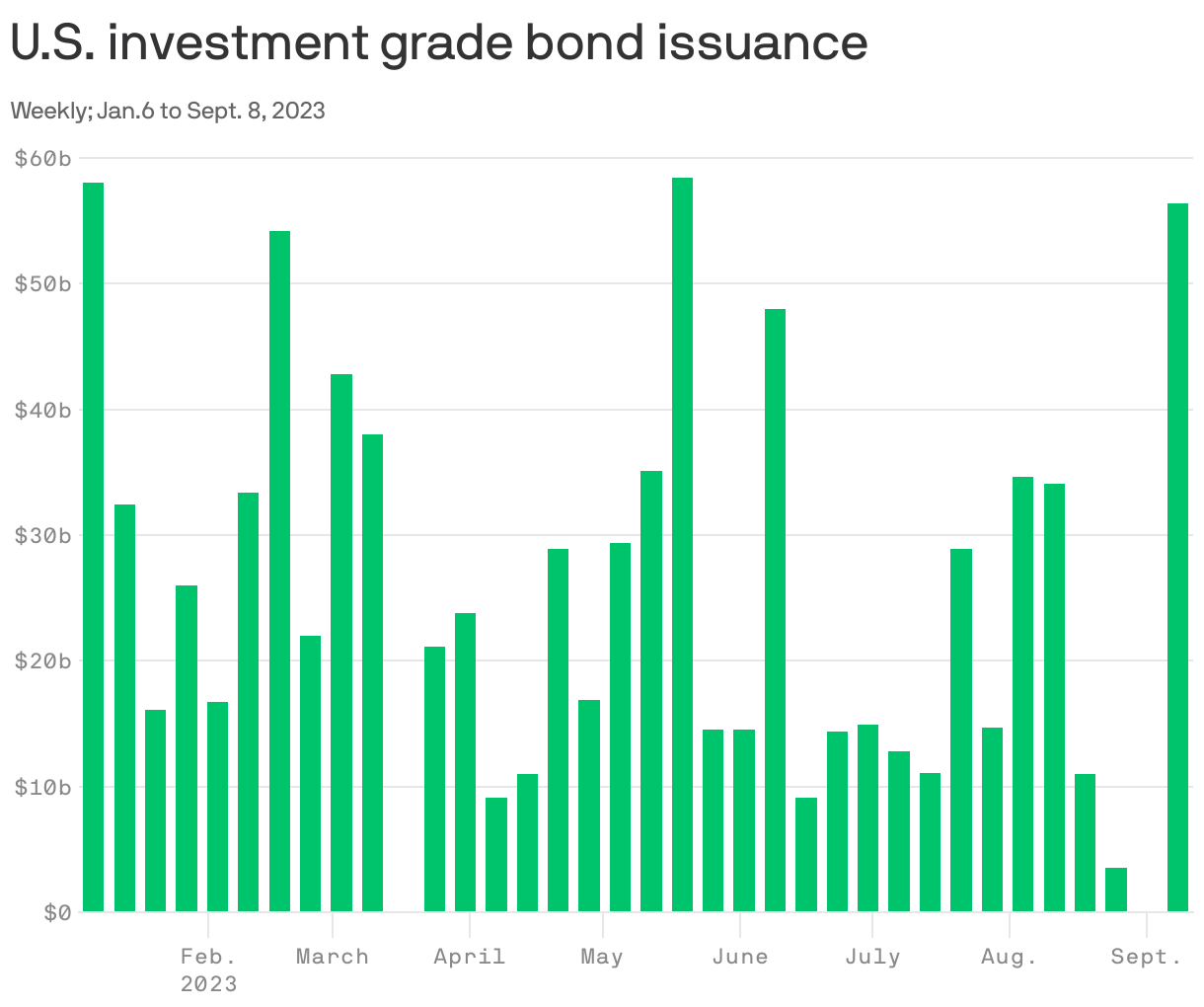
Summer's overand you know what that means: It's time to issue some bonds! (Oh ... is that not what you thought it meant?)
The big picture: After the normal August slowdown in markets and the long Labor Day weekend, big U.S. companies kicked off September licking their borrowing chops.