Why it matters: Its success has boosted the fame of its star, Amber Midthunder, who has now become one of the first Indigenous women to lead a major studio film.
Americans are still pretty obsessed with sprucing up their homes, even with prices rising, a cooling housing market and the return of more options for weekend activities.
Driving the news: Home Depot and Lowe's executives on their respective earnings calls this week said that shoppers continued to spend on building materials, plumbing, paint and high-end mowers and appliances during the second quarter.
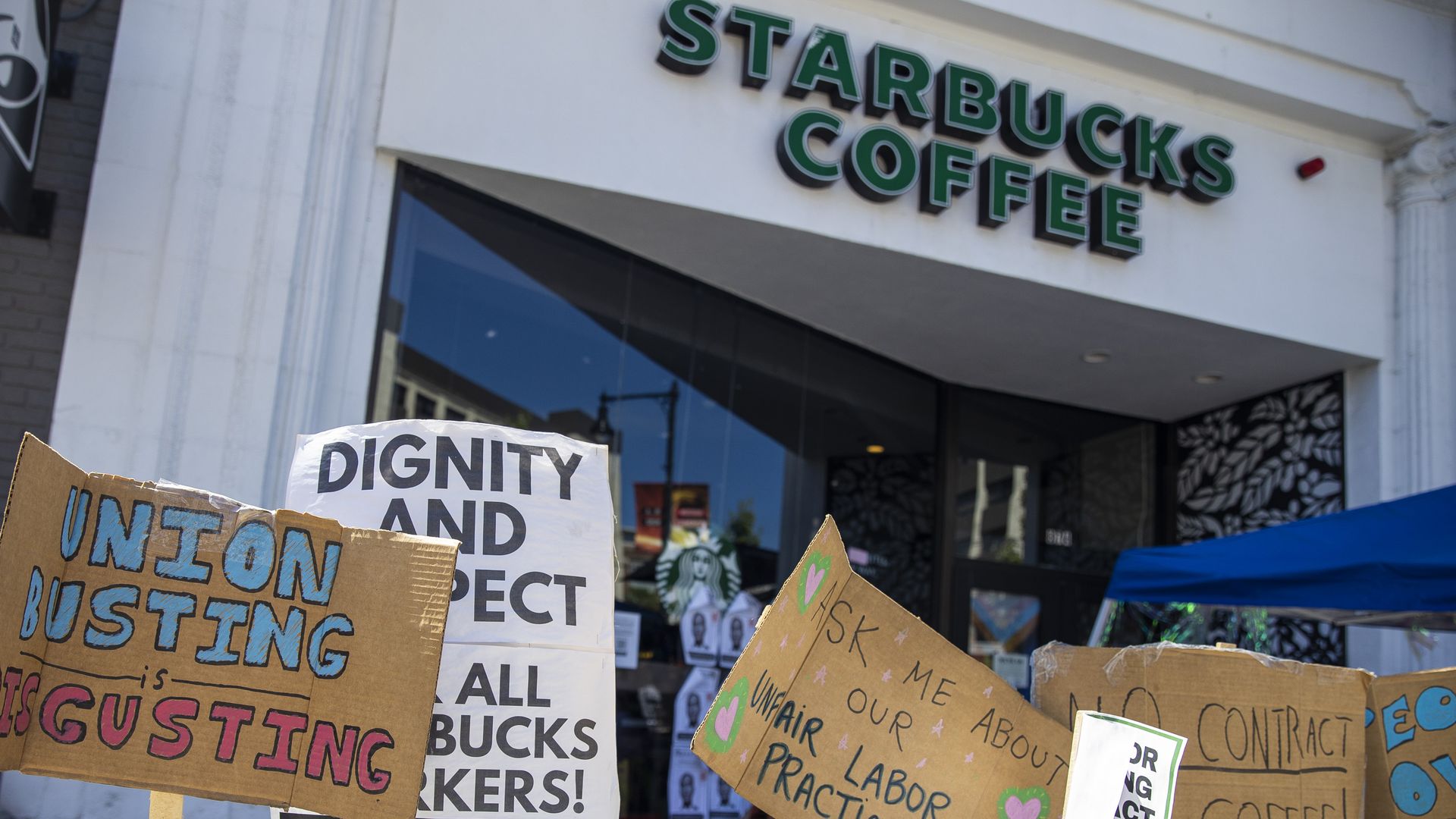
A federal judge Thursday ordered Starbucks to reinstate seven baristas in Memphis who were fired earlier this year after speaking with local media about their union campaign.
CME Group said on Thursday that it is planning to roll out a new financial product just in time for Ethereum 2.0. The derivatives marketplace operator will launch options on ether (ETH) futures on Sept. 12, pending regulatory go-ahead.
What's happening: CME Group is stepping up its presence in crypto derivatives trading with the new offering in anticipation of what stands to be a major market-moving event — Ethereum's long-awaited move to proof-of-stake.
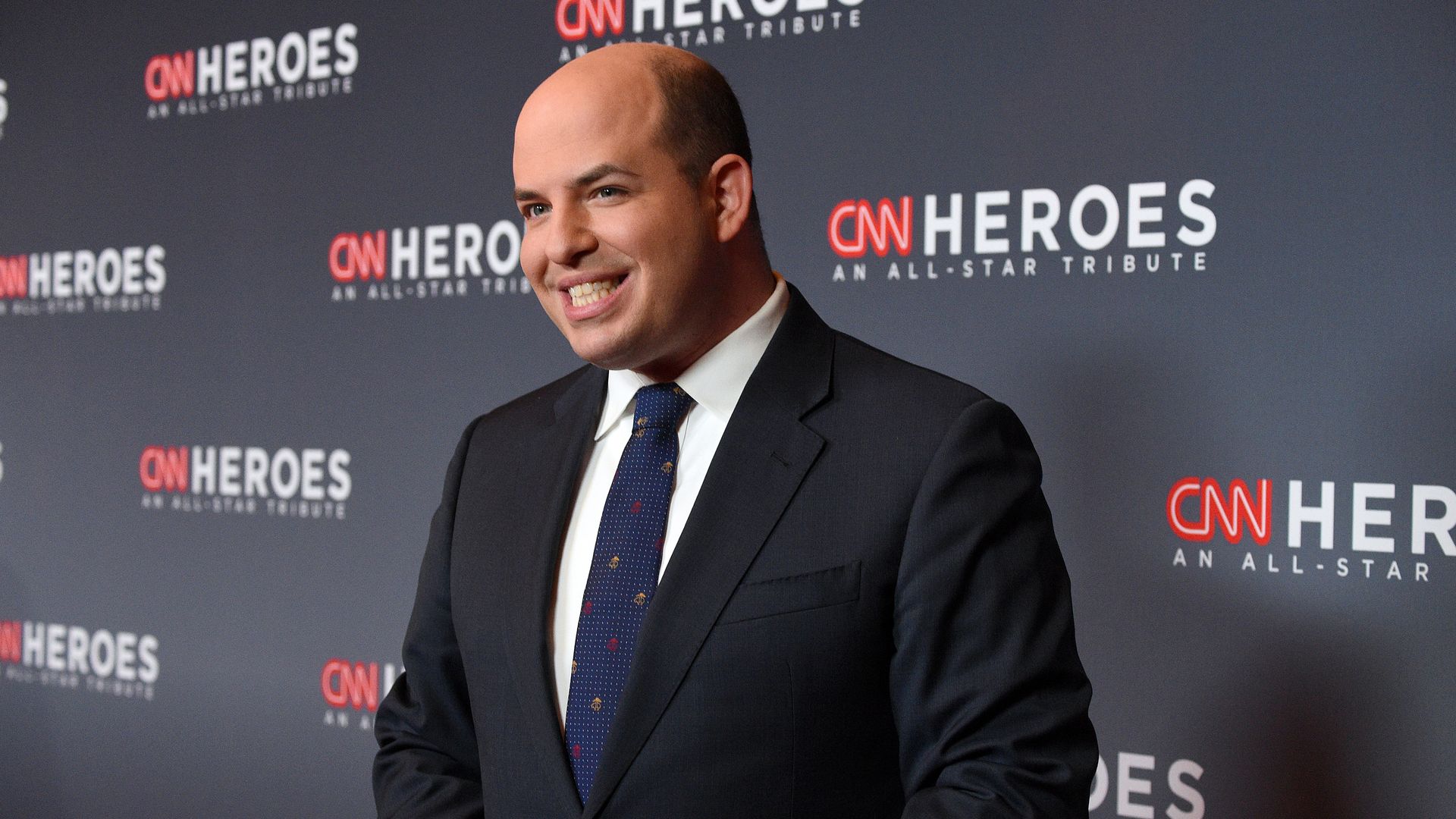
Brian Stelter, the host of CNN's longtime media analysis show, "Reliable Sources" is leaving the network, sources told Axios. His last show will be Sunday, Aug. 21. After that, CNN will cancel the program.
Why it matters: Reliable Sources is one of CNN's longest-running programs. The show debuted in 1993, just at the beginning of the cable news era.
With the rise of the internet since the mid 90s, private money has become much more important than government issued money: that is, real cash. If central banks issued digital currencies (CBDCs), however, cash would go online.
Driving the news: The European Central Bank released a new working paper on CBDCs on August 16, that spelled out some of the ways that the world could change if central banks started offering internet native cash.
As the Ethereum blockchain moves closer to its switch to a proof-of-stake validation model, crypto exchange operators are charting their own parallel paths in anticipation.
Why it matters: The Merge, as the event is called, is due in roughly a month's time, and will have ripple effects across crypto. One is that it stands to be lucrative for exchanges that offer associated services.
Public relations isn't what it used to be, with social media, nontraditional publications and the influencer movement upending the traditional platforms of print, TV and radio.
Why it matters: An effective PR campaign sits at the intersection of strategy and creativity, with earned, paid and owned media working hand in hand to meet audiences where they are.
As public relations evolve, so do the tools we use.
Why it matters: Artificial intelligence (AI) is changing the public relations game — and saving time — by examining crisis statements, pitches and press releases for specific keywords to better predict how they will land.
Summer isn't over yet but pumpkin spice season is off to an earlier-than-ever start.
The big picture: Despite this year's record heat and the weeks left of summer, the arrival of pumpkin spice signals the unofficial start of fall for some.
It also kicks off the annual debate over whether it’s too soon for fall flavors and if "pumpkin everything" fanfare has gone too far.
CBS and NBC join Fox in landing Big Ten media rights that will pay the soon-to-be-expanded college sports conference more than $1 billion annually, two sources familiar with the deals told Axios.
Why it matters: The Big Ten, which is adding UCLA and USC starting with the 2024 school year, becomes the first conference to eclipse the $1 billion mark for its annual media rights pay.
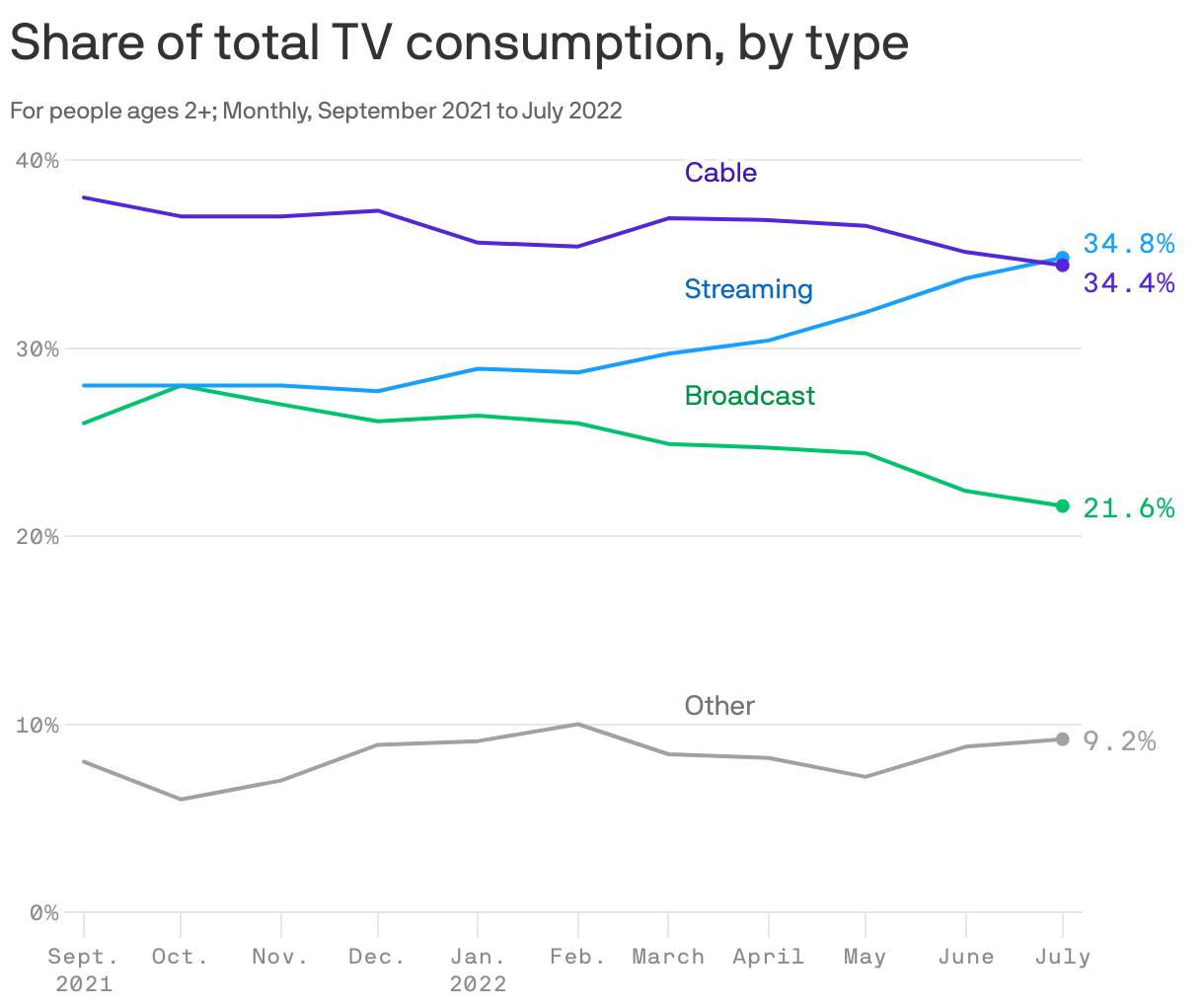
Streaming has officially topped cable as the most popular method by which Americans consume television content, according to new data from Nielsen.
Why it matters: Just as cable's victory over broadcast ushered in waves of change to U.S. media, streaming's rise will continue to bring new businesses and cultural forces to the fore.
Grain prices keep dropping, even though more than half of the Lower 48 states remain in a drought. That's good news for inflation.
Why it matters: If sustained, the decline in wheat, corn and soybean prices could ease the rise in food costs and help policymakers knock inflation down a bit.
Extreme weather worsened by climate change is a hidden cause of inflation, threatening to push up already high prices of everything from food and clothing to electronics.
Why it matters: Heavy rainfall, flooding, heat waves and droughts erode agriculture, infrastructure and workers' ability to stay on the job — all of which lead to supply-chain breakdowns and worker shortages.
Here’s a twist on the post-COVID, work-from-anywhere phenomenon: There’s a rising "get-paid-don’t-work" movement on social media.
Why it matters: With employers grappling with people working from home and a tight talent market, they now face what the Wall Street Journal calls “quiet quitting.”
What's happening: This is a rebellion against the "rise and grind" ethos.
The rising approach is to work to live, instead of live to work. Don't leave your job — but focus on fun, fulfilling activities outside of work while staying on the payroll.
This is far easier when you're working remotely, and there's no pressure to show your face at the office from 9 to 5 — or longer.
Some workers are even using the extra time to get multiple jobs, realizing that remote work means they can be mediocre at two jobs instead of good at one, the Journal reports.
The big picture: This "quiet quitting" trend — which is playing out among younger workers on Instagram and TikTok — is starkly visible in Gallup's latest polling on worker engagement.
Just 31% of workers born after 1989 — Gen Z and younger millennials — say they're "engaged" at work.
And they're far less likely than their older counterparts to feel their work has a purpose.
Our thought bubble: We're seeing the effects of longer-term distributed work on the next generation of employees. Younger workers are craving mentorship and camaraderie they're not getting from the new world of work — so they're disengaging.
Reality check: Don't glorify the grind. Boosting engagement among younger workers doesn't equate to eroding their work-life balance and demanding more online hours. That'll turn the quiet quitters into real quitters.
If CEOs and managers take away flexibility, workers will bolt.
Instead, leaders need to communicate better why their mission matters, check in with employees, and figure out how to export company culture via Zoom.
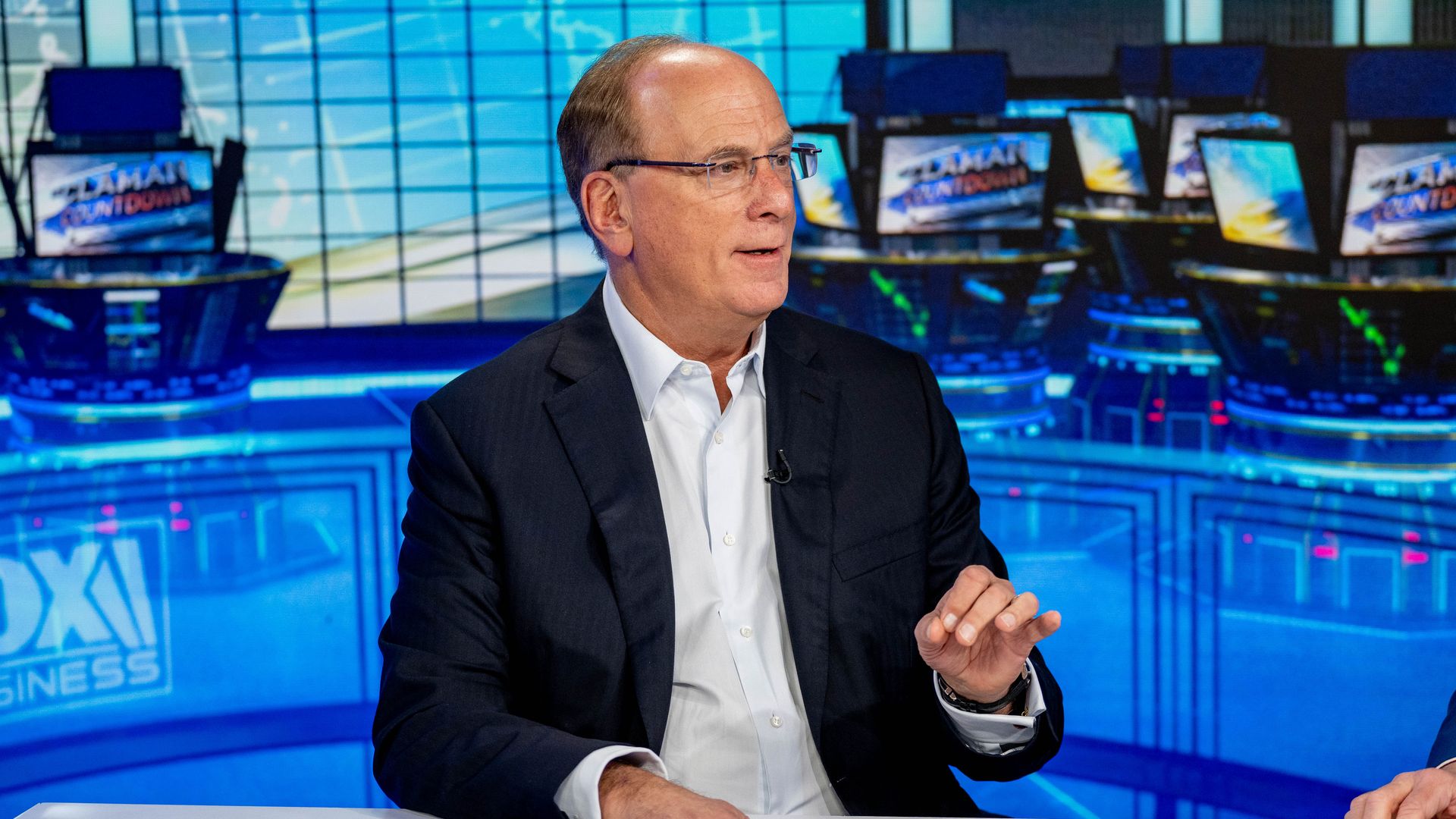
A conservative group known for targeting "woke capitalism" has launched a multimillion-dollar campaign attacking BlackRock and its CEO Larry Fink for "weaponizing" retirement funds with its push for more ESG investments, which promote environmental, social and governance responsibility.
Why it matters: The campaign by Consumers' Research aligns with the posture of a growing faction of the GOP. House Republicans plan to make an assault on ESG a central part of their legislative and investigative agenda if they take back the majority in November's midterms.
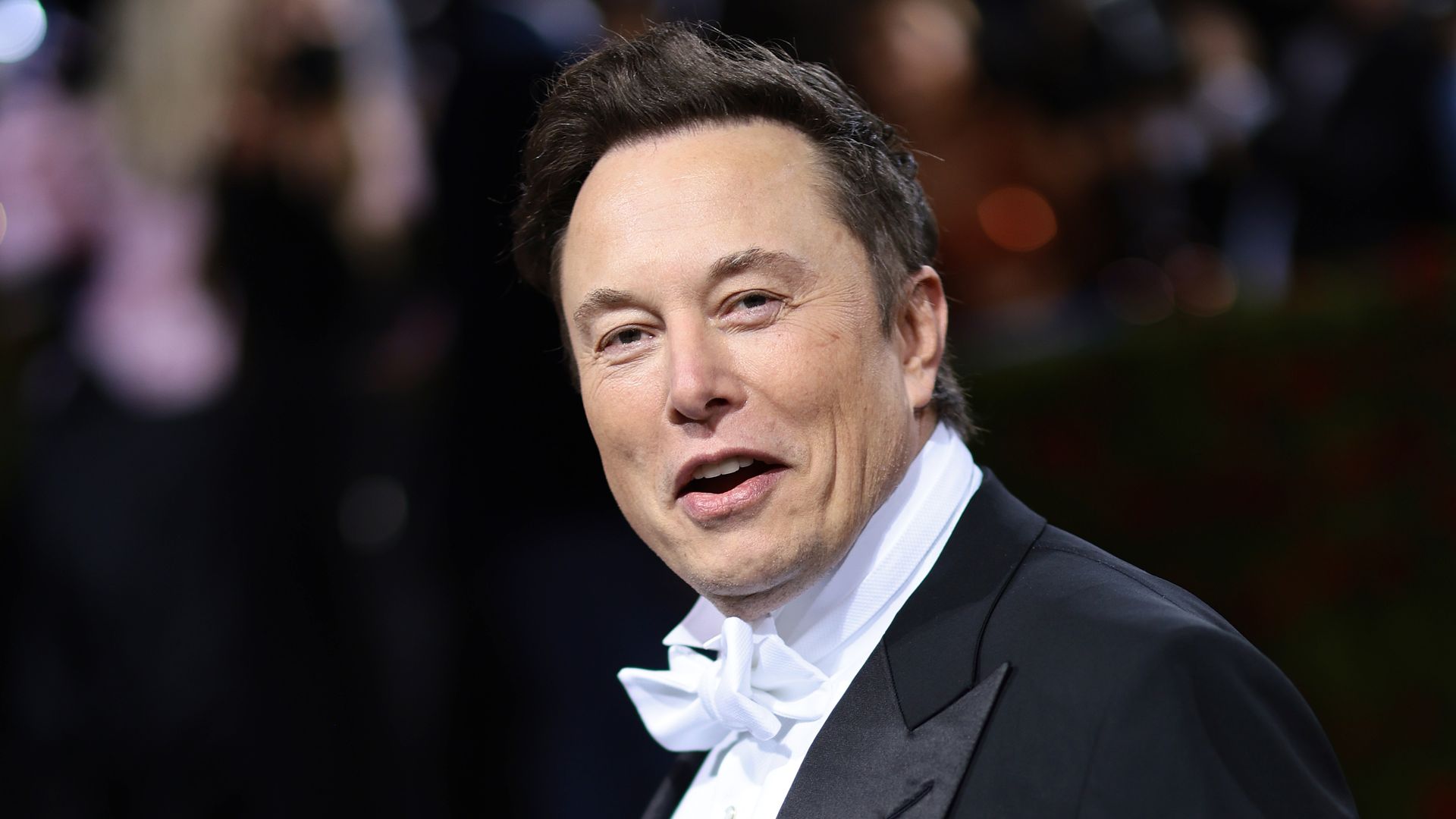
Elon Musk told GOP congressional leaders and big-dollar donors on Tuesday that Republicans need to present a more compassionate front to voters and appeal to immigrants like himself, Axios has learned.
Why it matters: While Musk has been publicly flirting with the Republican Party all year, his attendance at an exclusive GOP retreat in Wyoming marks a new level of involvement in helping the party define its agenda and prepare for its potential takeover of the House.










/2022/08/18/1660822616336.gif?w=3840)