Inflation has inspired a lot of hemming and hawing in shopping malls and grocery stores, but it barely dents the "excitement" for Halloween, Home Depot CEO Ted Decker quipped this morning on an earnings call.
Why it matters: Halloween means big business for retailers. Americans last year were expected to spend $3.17 billion on decorations, near pre-pandemic levels. And the early returns for 2022 show more of the same.
Digital World Acquisition Group (DWAC), the blank check company that plans to merge with the parent company of former president Donald Trump's social media app Truth Social and take it public, has requested an extension from the SEC to file its second-quarter earnings results.
Why it matters: The success of Truth Social and its parent Trump Media and Technology Group (TMTG) rides on the financial health of its parent company and its SPAC.
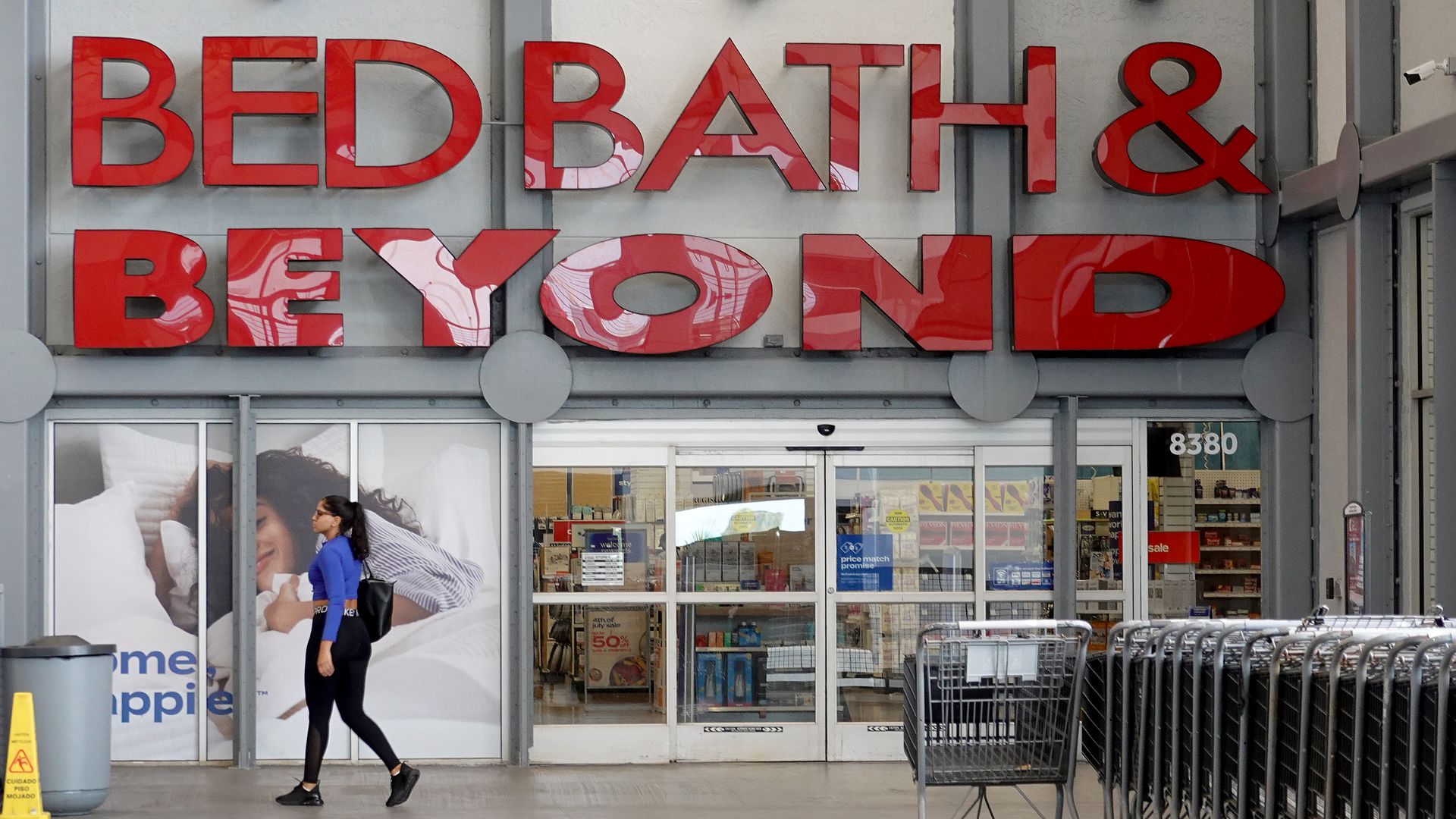
Bed Bath & Beyond shares skyrocketed Tuesday in another dizzying rally for the meme stock.
What’s happening: Retail traders — many of them sharing their enthusiasm for Bed Bath on Reddit's WallStreetBets forum — drove the shares up as much as 79% shortly before noon.
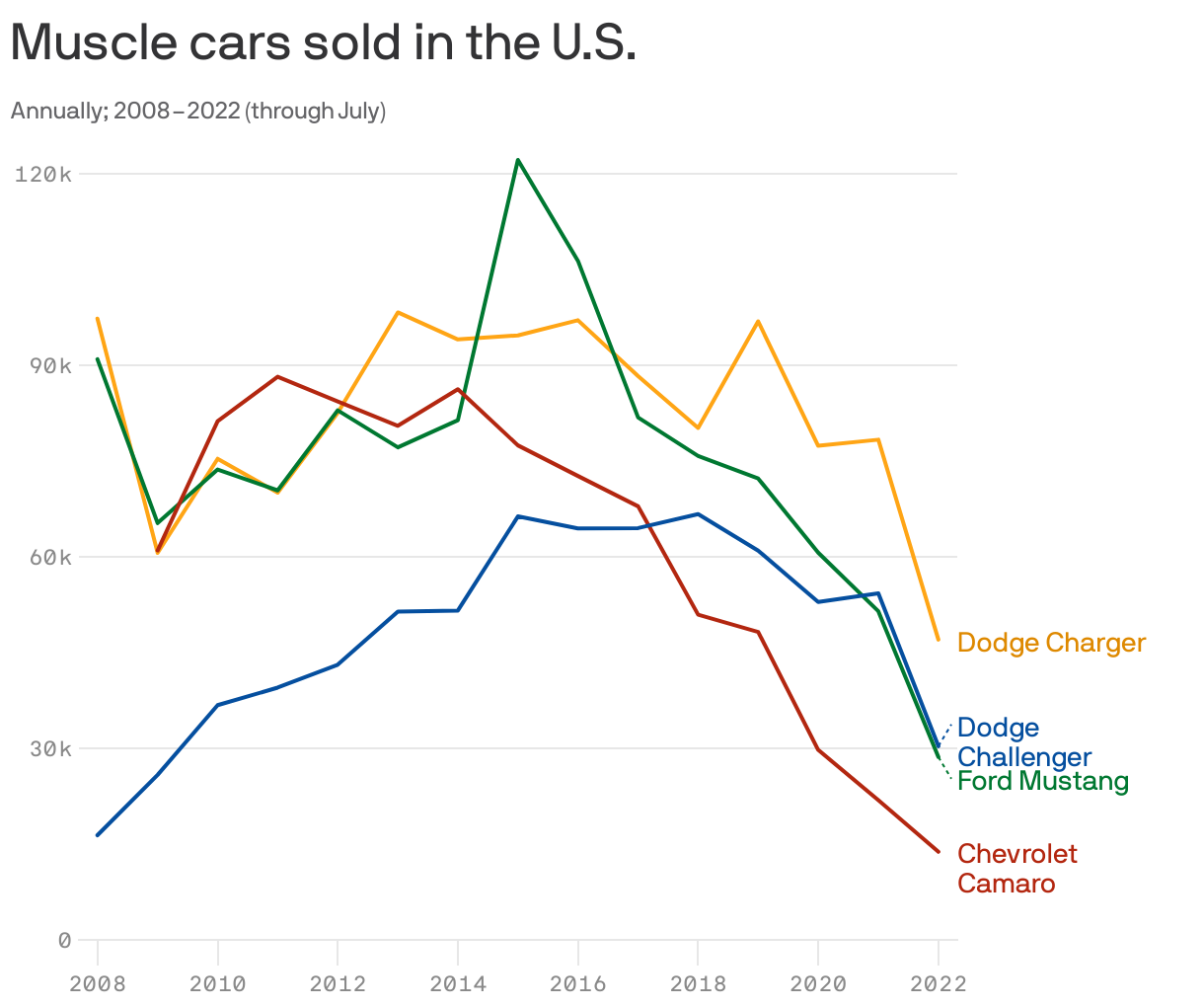
Driving the news: Stellantis — the automaker formerly known as Fiat Chrysler, which owns the Dodge, Jeep and Ram brands — announced it will discontinue the gas-powered Dodge Challenger and Dodge Charger muscle cars.
The world’s largest hotel chain says leisure travelers are shaking off the pandemic despite the latest COVID-19 subvariant making its way through the population.
Why it matters: There are several factors that could crimp travel demand — rising prices, economic fears — but COVID no longer seems to be one of them.
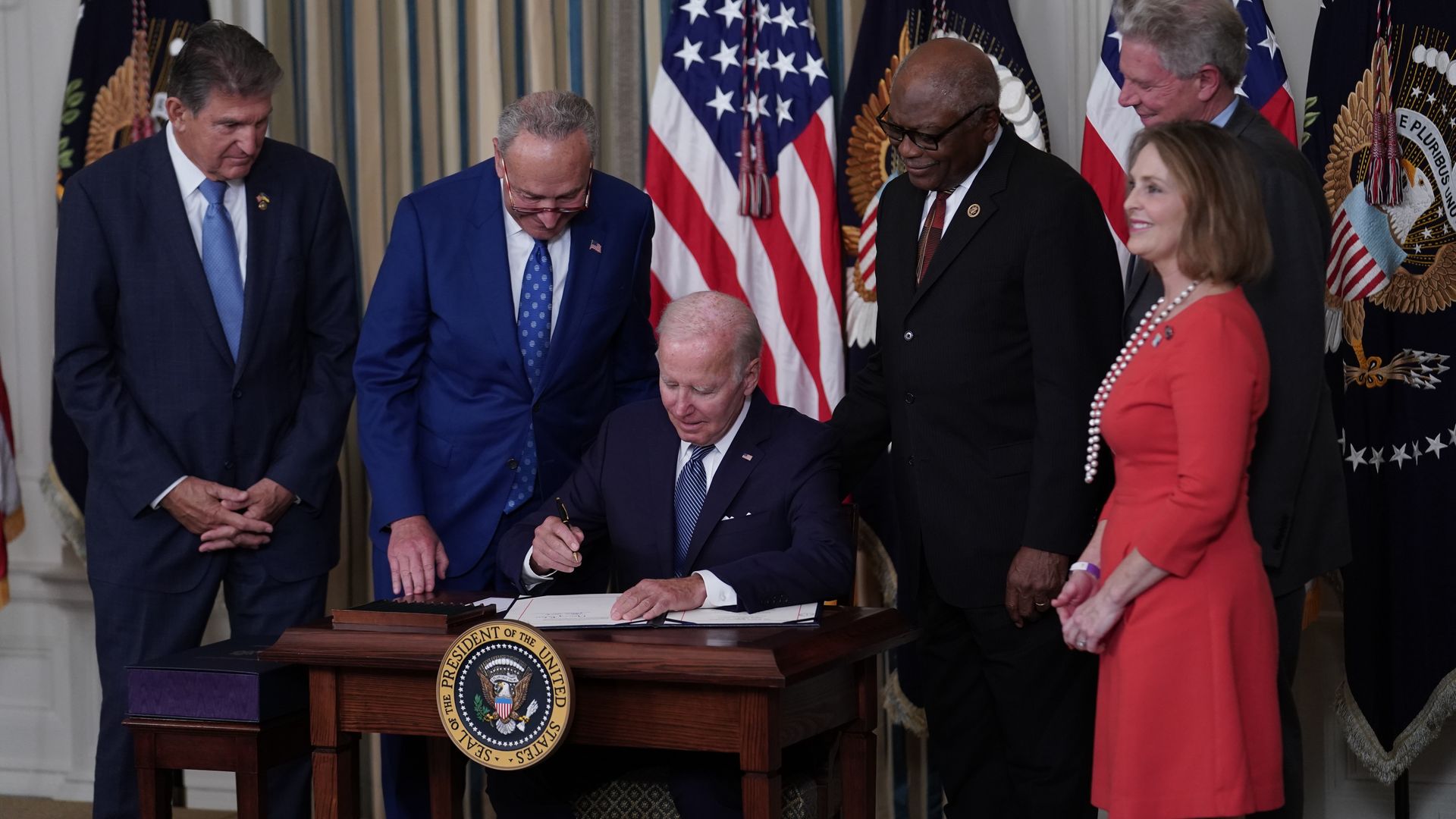
Why it matters: The package, known as the Inflation Reduction Act, includes provisions that increase taxes on large corporations, address climate change and lower prescription drug costs. Biden has emphasized that the bill will help lower the deficit and drive down inflation, though economic models suggest it will affect overall inflation only a little.
Meta on Tuesday said it would no longer permit any edits to political, social or electoral ads that have been previously approved to run within the week leading up to the U.S. midterms.
Why it matters: It's part of a greater set of precautions the company is taking to limit misinformation spreading around the election, especially as it pertains to voting integrity.
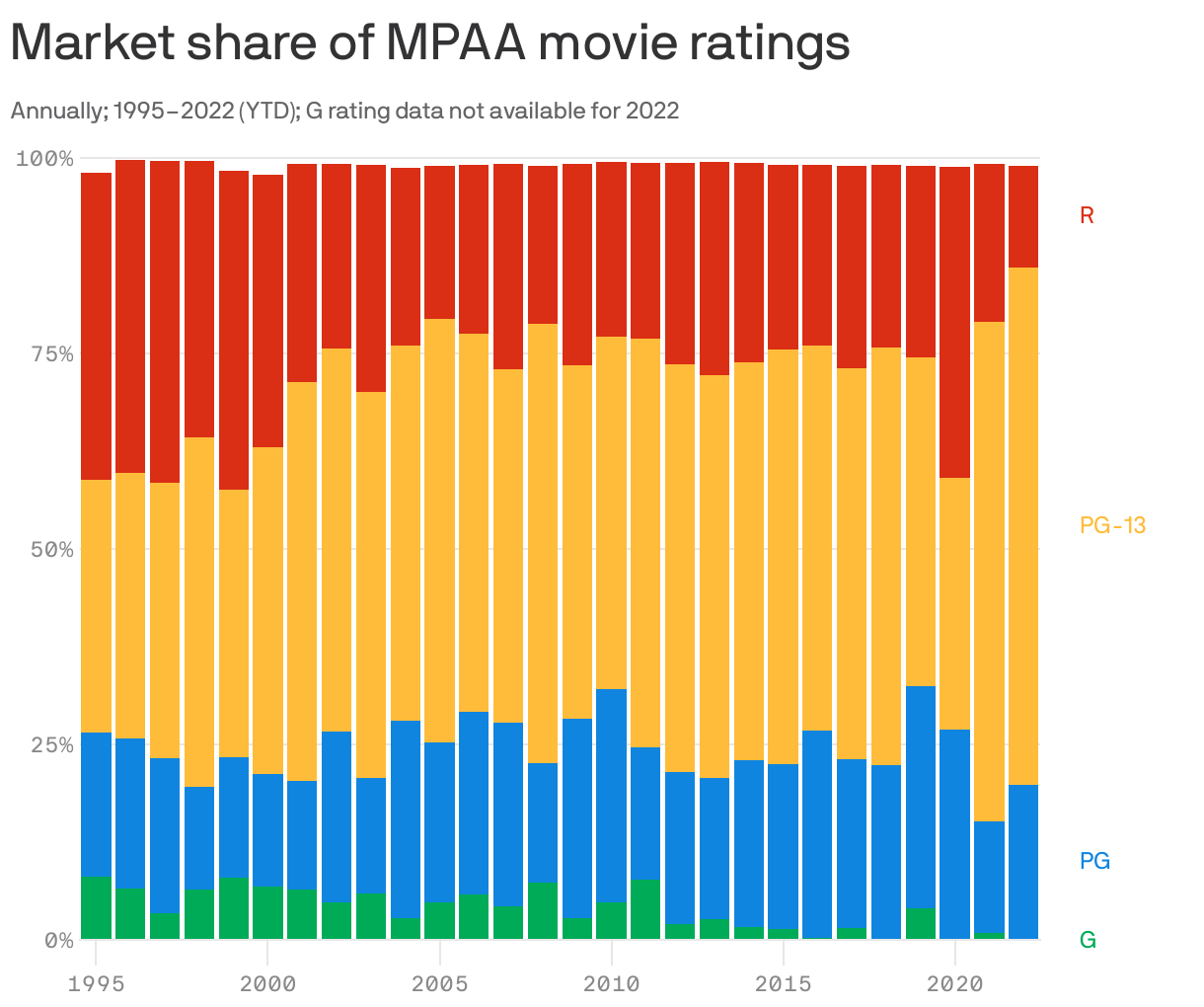
Note: G rating data not available in 2022; Data: The Numbers; Chart: Axios Visuals
So far in 2022, the percentage of box office revenue that has gone toward R-rated films is the lowest it's been in over 25 years.
Why it matters: R-rated films across genres like drama and romance are increasingly being pushed to at-home streaming, while more family-friendly action and adventure franchises continue to dominate theaters.
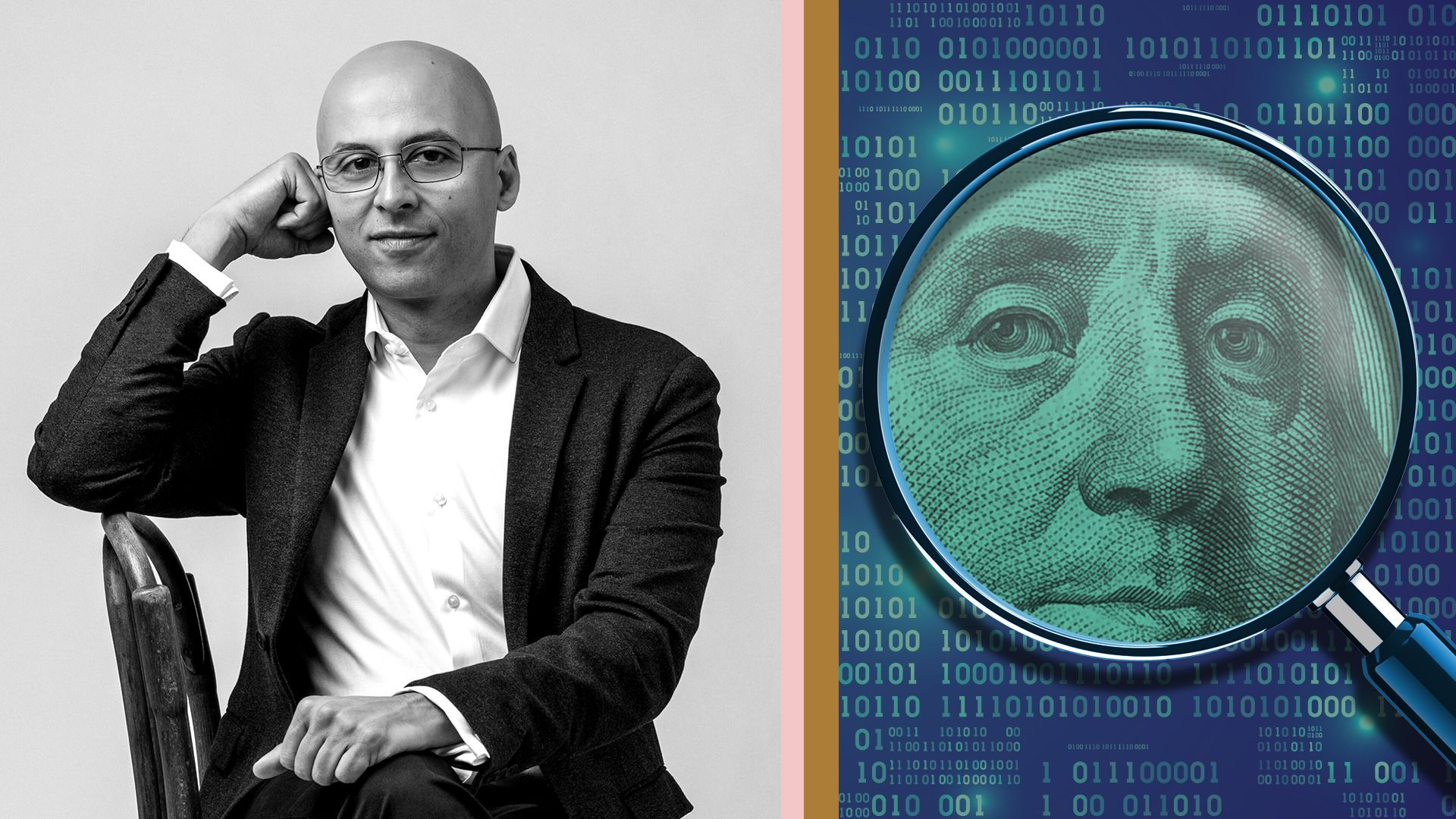
A business professor, Omid Malekan, made donations to Planned Parenthood and Russians secretly aiding Ukrainian refugees. He made them using Tornado Cash, the recently sanctioned privacy application for blockchain transactions, to protest the U.S. Treasury.
Why it matters: The right to transact freely is personal to Malekan. "I am originally Iranian. One of the reasons my family immigrated to America was because of the kinds of rights here that you don't get many other places," he said.
Morning Brew, the business media company that caters to millennials, has launched a creator program that allows independent personalities to work for the company full time while maintaining separate and distinct products and brands.
Why it matters: The program will help Morning Brew expand into niche areas, like personal finance, entrepreneurship and productivity, said Austin Rief, CEO of Morning Brew. It will also help the company continue to expand into business verticals outside of newsletters.
Condé Nast is expecting this year to exceed the nearly $2 billion in total revenue it saw in 2021 thanks to continued growth in its advertising business, a source familiar with the figures told Axios.
Why it matters: Most digital publishers are forecasting advertising growth slowdowns in response to macroeconomic factors impacting the economy, like inflation and supply chain issues.
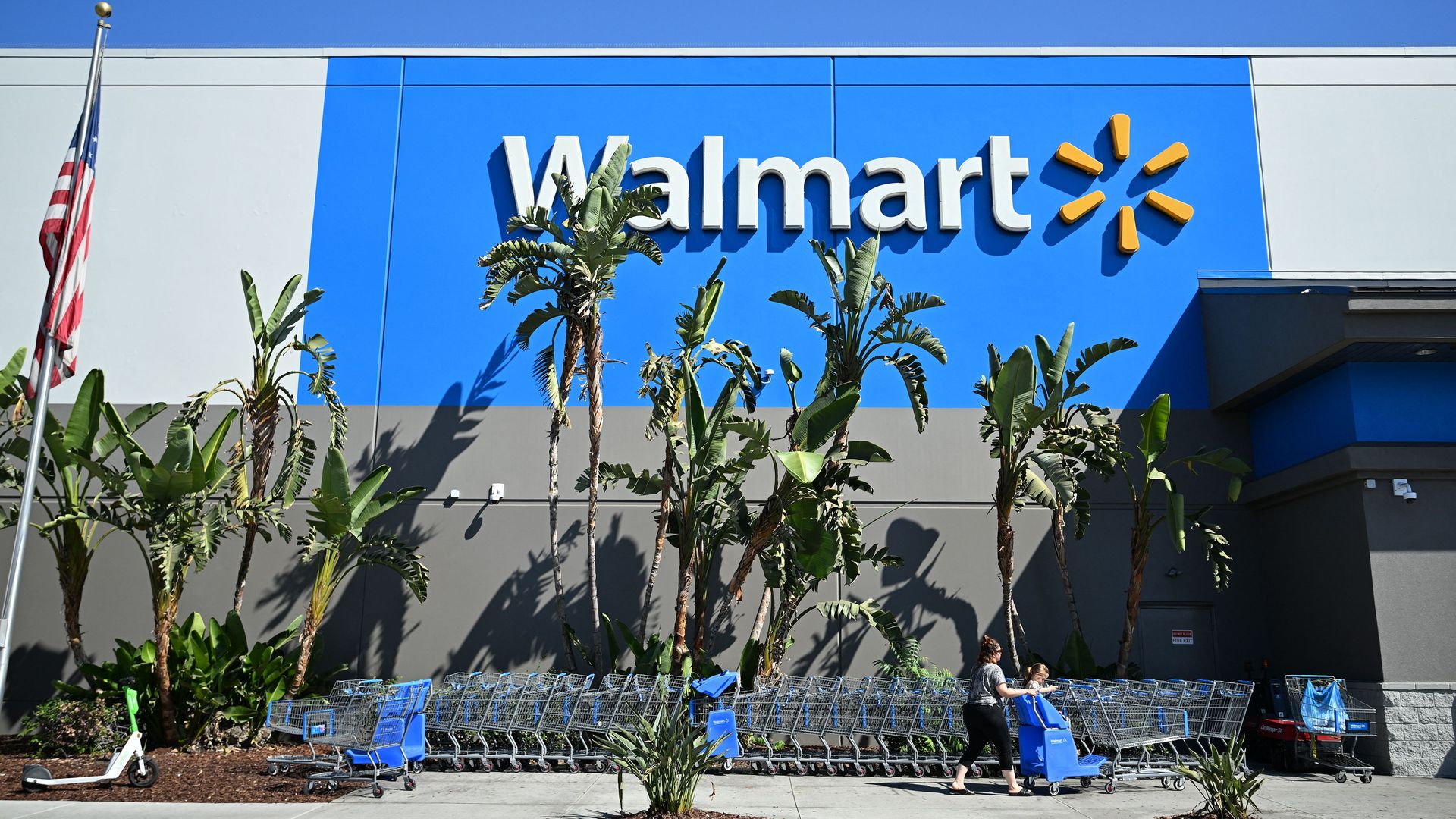
Walmart rang up more customers with higher household income during the second quarter as high inflation reshapes consumer behavior.
Driving the news: CFO John David Rainey told CNBC ahead of the company's earnings report this morning that a vast majority (about 75%) of Walmart's market share in grocery in the second quarter came from shoppers with $100,000 or more in annual household income.
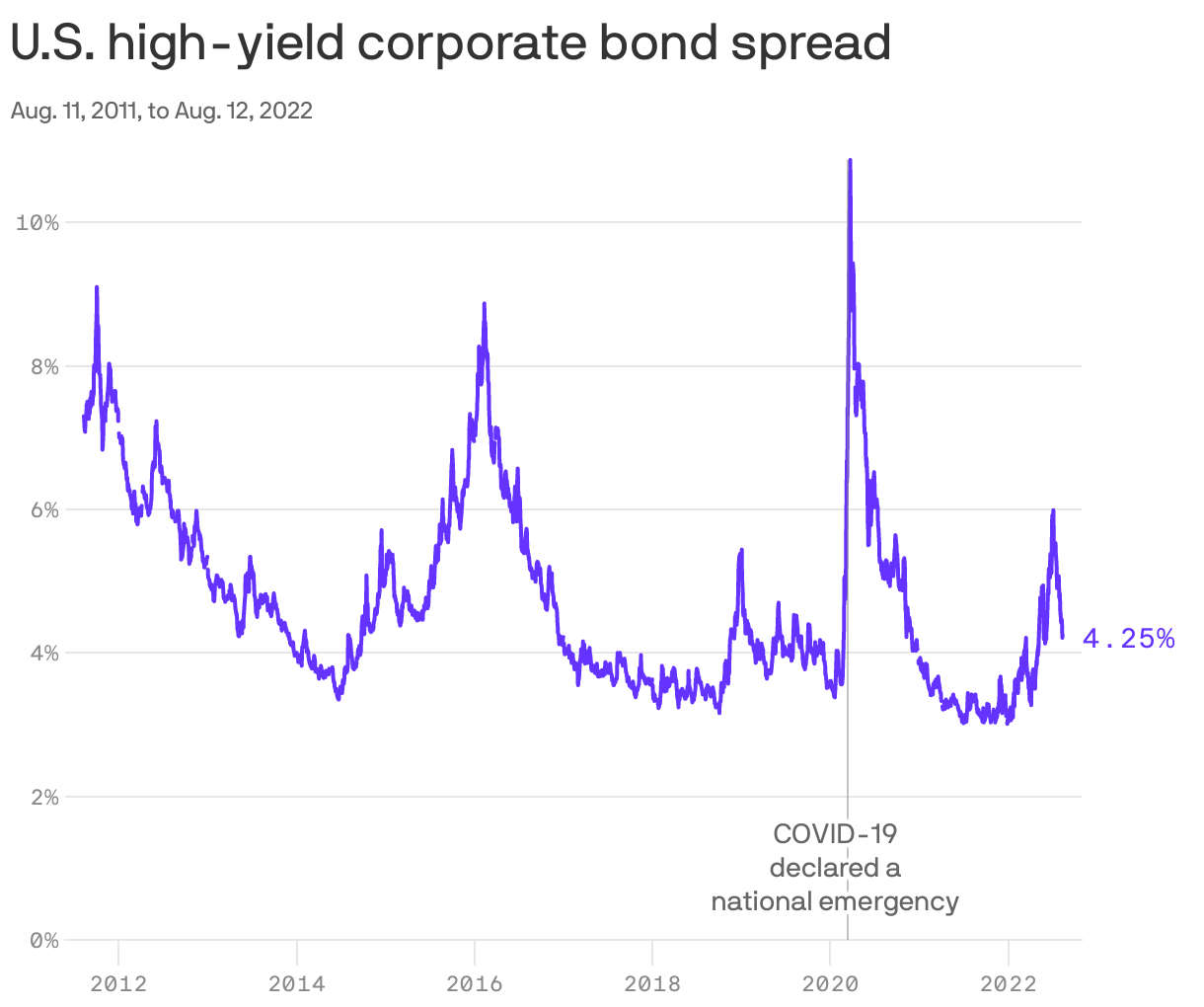
Investors are pouring back into the U.S. high-yield market, a signal that they're dialing back recession jitters — for now.
Why it matters: For a minute, things got dicey: Borrowing costs for U.S. companies with lower credit ratings shot up to levels suggesting possible recession concerns or that a sharp rise in defaults could be in the offing.
China is slowing fast, and the government is taking only modest steps to try to keep the earth's second-largest economy from outright contraction.
Why it matters: While it lags behind the U.S. in size, China's economy has been the largest source of growth for global GDP for much of the last two-plus decades — meaning it's a global engine of corporate profitability, investment activity, and demand for commodities.
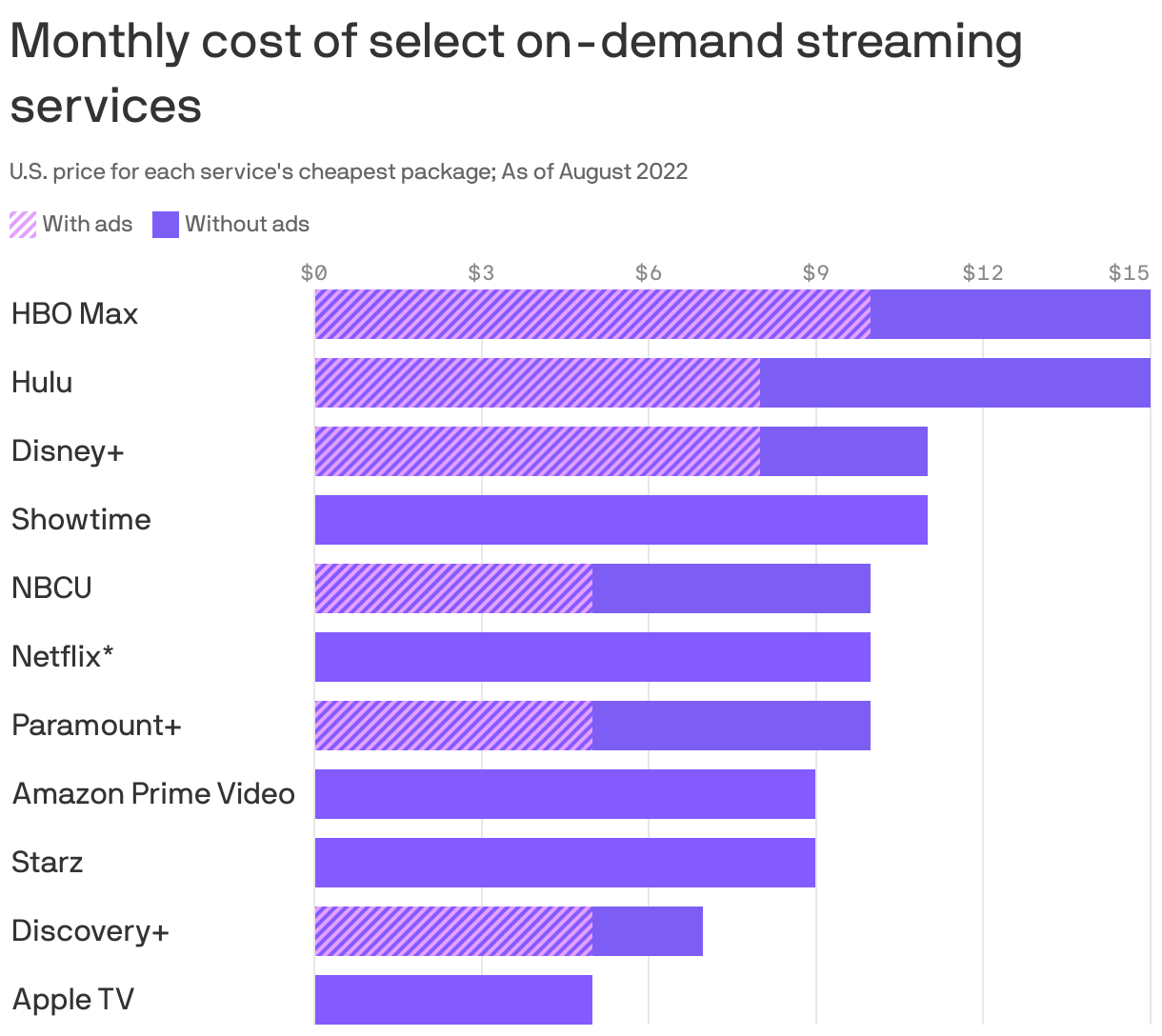
Data: Axios research; Chart: Danielle Alberti/Axios (NOTE: Netflix plans to launch an ad-supported tier in early 2023.)
Facing saturation in the U.S., most major streamers are launching cheaper ad-supported streaming tiers, and are beginning to bundle their offerings — often the cheaper plans — with other subscriptions to attract more users.
Why it matters: The streaming era was supposed to give consumers more choice, but streaming options increasingly resemble the bloated cable bundles they sought to replace.
Lyft is adding a new fleet of electric, autonomous vehicles (AVs) to its ride-hailing network in Las Vegas, bringing it one step closer to offering a full robotaxi service.
Why it matters: It's the latest milestone in the partnership between Lyft and Motional, one of a half-dozen leading autonomous tech companies.
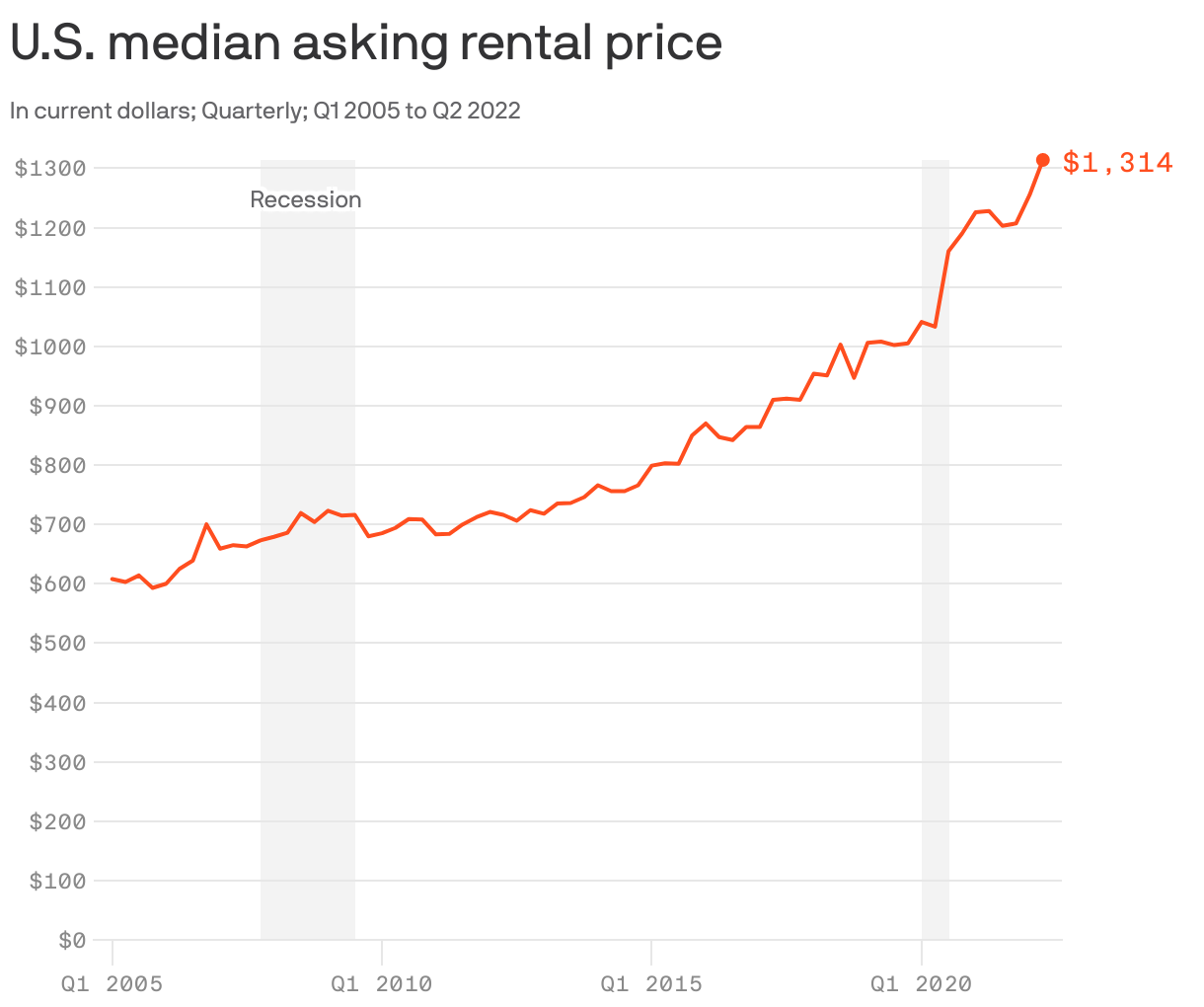
Until recently, soaring rent prices were mainly a Big City problem. Now, rents are an everywhere problem.
Why it matters: Skyrocketing rents, coming at the same time housing prices are at historic highs, make it hard for people to afford to live. At the lower end of the income spectrum, higher rents put more people at risk for homelessness.
Led by an A-list of C-suite executives, a new nonprofit is developing a playbook to guide companies in supporting employees' mental health, plus a free online clearinghouse for anyone seeking help.
Why it matters: Recognizing that burnout from the pandemic has even reached the corner office, Project Healthy Minds is trying to reduce the stigma of mental illness by getting CEOs to talk openly about their struggles — and to enact meaningful policies.
Flow — the brand-new company from WeWork founder Adam Neumann that's meant to upend the residential experience — has designs on some of America's most competitive real estate markets.
Why it matters: In its early days,Flow has already acquired thousands of residential units in Atlanta, Nashville and Miami — cities where residents are already having a tough time finding a reasonably-priced place to rent or own. Markets in those locations have been roiled by corporate investment.
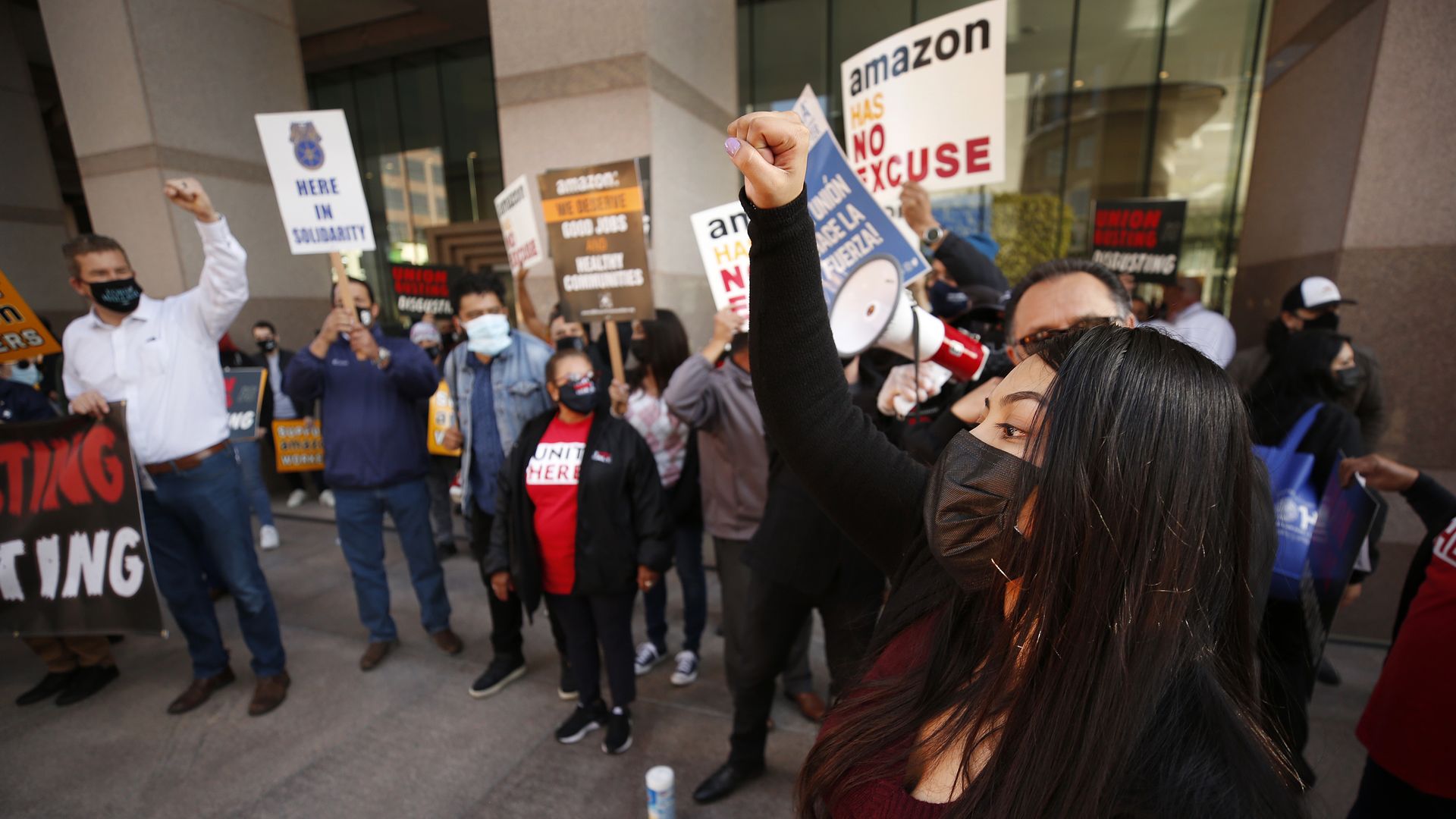
Workers at Amazon's San Bernardino air hub in Southern California walked off the job Monday in protest for better wages and working conditions.
Why it matters: More than 150 people participated in the walkout as part of the first coordinated labor action in Amazon’s growing air cargo network, according to the Washington Post.

/2022/08/16/1660675631819.gif?w=3840)






















/2022/08/16/1660613267639.gif?w=3840)