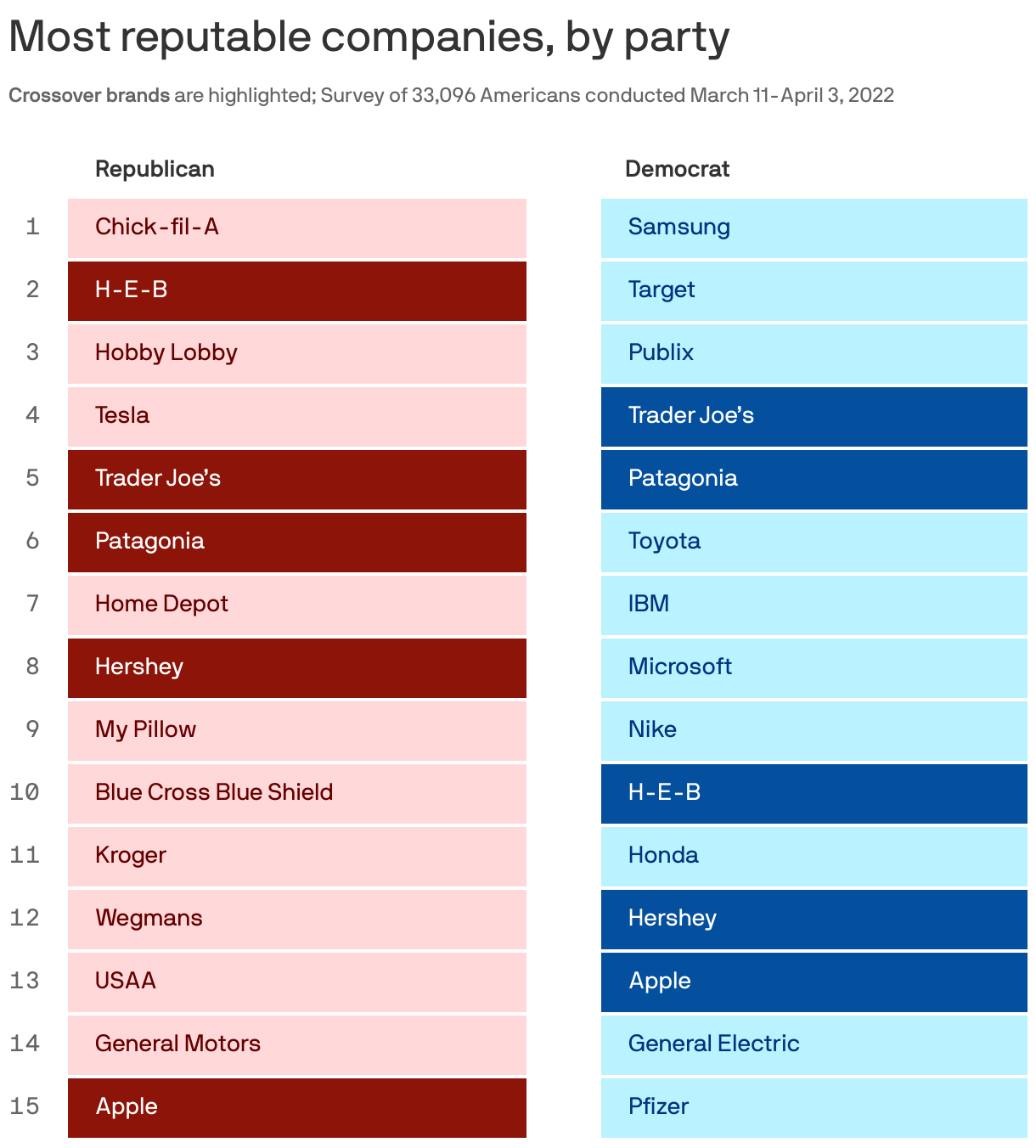
New data shows sentiment among consumers about certain companies can vary drastically depending on their political affiliation, but there are some brands that are able to cut through the partisan divide, according to this year's Axios Harris Poll 100.
Why it matters: Grocery brands like Trader Joe's, Wegmans and H-E-B are some of the most reputable companies in America across the political spectrum, in large part because they have focused on serving local communities and have avoided taking very public political positions.
Costco Wholesale membership fees and the price of its popular $1.50 hot dog combo are not increasing — for now.
Why it matters: As consumers deal with record-high inflation, Costco officials said Thursday that it’s “not the right time” to raise annual membership fees or charge more for the hot dog-soda combo, which has cost $1.50 since it was introduced in the mid-1980s.
While we're saving the planet,can we save nature too? That's the plea from a group of executives from 16 countries that collectively manage over $18 trillion in assets.
Why it matters: Saving the planet involves more than just reducing carbon emissions — it also means protecting nature. A plunge in biodiversity isn't just morally unacceptable when species go extinct; it also threatens corporate profits and future growth.
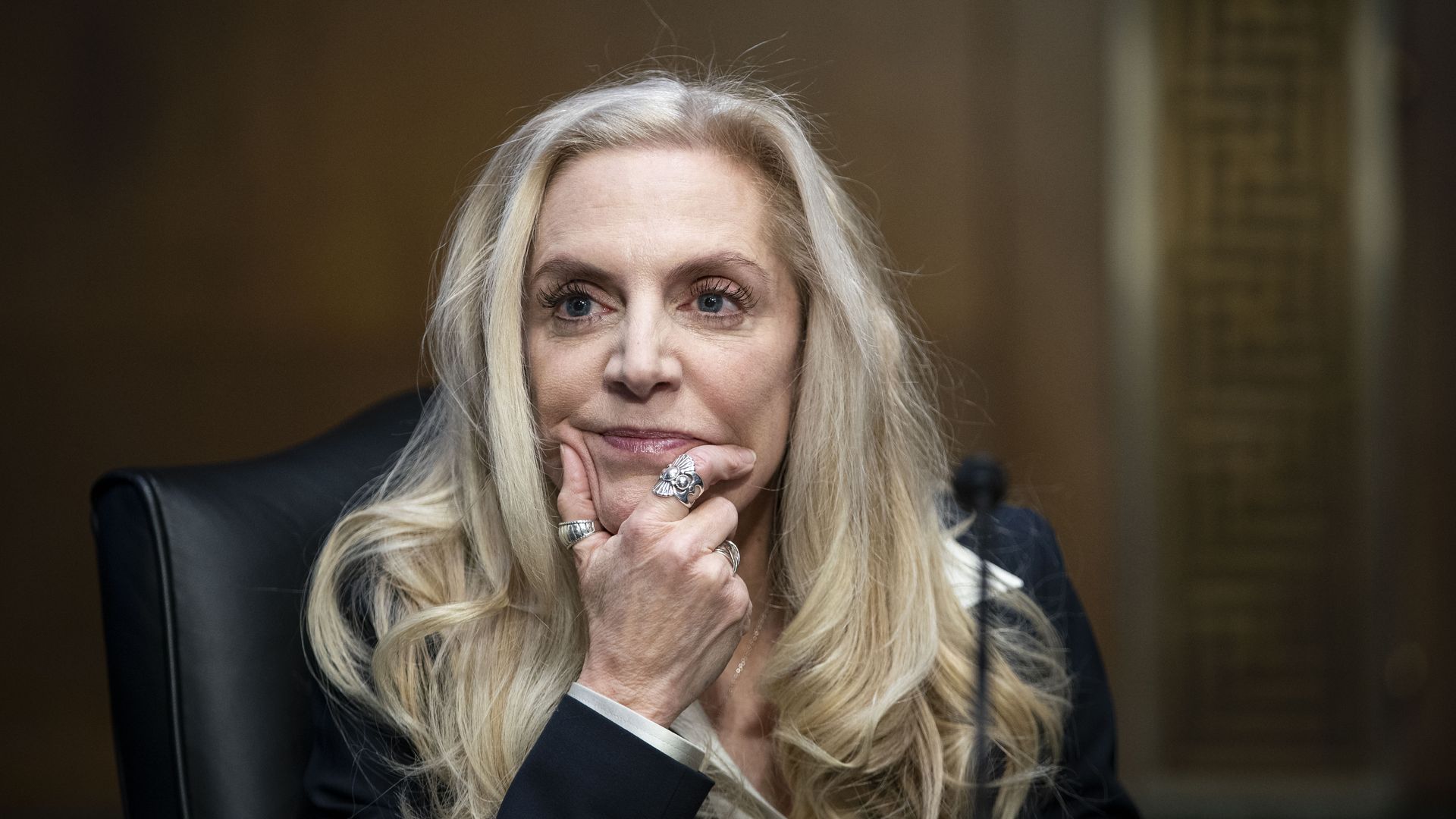
A top Federal Reserve official gave a stark warning to House lawmakers on Thursday: Move too slow in issuing a central bank digital currency and the dollar's global dominance could eventually be in jeopardy.
Why it matters: The U.S. so far remains largely on the sidelines amid a global race for countries to roll out their own digital cash, which could reshape the way millions of people use money.
There is a weird disconnect out there in venture capital land, particularly in crypto. Gigantic funds get announced every week, and yet startups are being told to look for ways to extend their runways and tighten belts.
Why it matters: Money in crypto VC funds is like a runway for the whole industry.
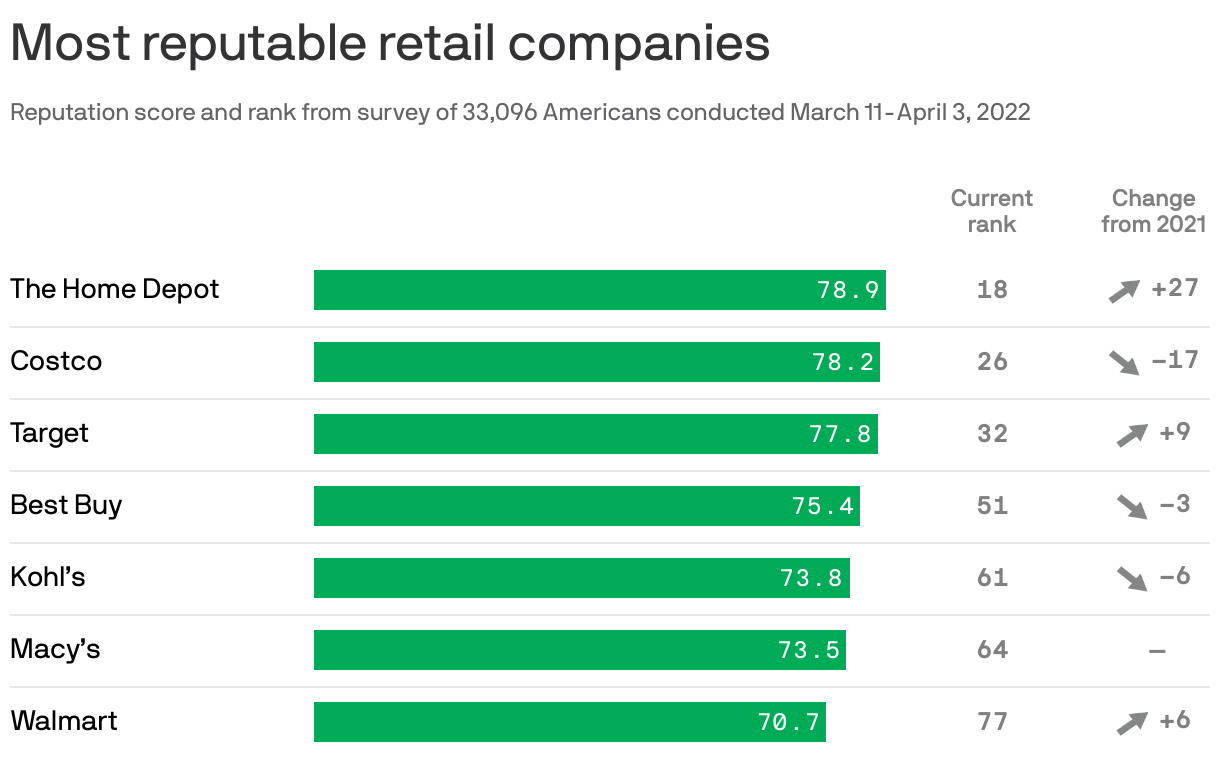
Big box retailers like Walmart, Target and Best Buy saw major reputational gains last year as COVID lockdowns receded, according to new rankings from the annual Axios/Harris 100 poll.
Why it matters: Consumer frustration around supply chain issues and inflation has fallen on delivery and e-commerce companies, whereas retailers are seen as trustworthy brands.
Disney+'s "Obi-Wan Kenobi" and the latest season of Netflix's "Stranger Things" will both premiere this weekend, setting up a major clash between the two streaming services.
Why it matters: Both Netflix and Disney are releasing their biggest properties at the same time in what can be seen as a direct head-to-head between the two competitors.
Carl Icahn officially lost his proxy fight with McDonald’s over its suppliers’ treatment of pigs on Thursday. All 12 director candidates that the company nominated were re-elected. Icahn's were trounced.
Why it matters: While he lost the battle, he hasn’t quite lost the war. Icahn raised awareness of how the pork industry puts pregnant pigs into gestation crates for weeks’ at a time in order to serve restaurant companies.
A global helium shortage could burst plans for celebratory graduation balloons and birthday party decorations.
Why it matters: Dollar Tree officials said Thursday they were “once again” experiencing a helium shortage and that it could negatively affect balloon sales.
One-click checkout company Bolt Financial yesterday laid off one-third of its workforce, just months after raising $355 million in VC funding at nearly an $11 billion valuation.
Why it matters: For some, the financial ramifications go well beyond the loss of future salary.
Saudi Aramco has approached Valvoline about buying its lubricants business, as first reported by The Wall Street Journal. The unit generates around 60% of revenue for Valvoline, which has a $6 billion market cap.
Why it matters: This is the latest example of the world's most valuable oil company, which doubles as a geopolitical power, seeking to diversify. And, were a deal struck, it would enable Valvoline to achieve its announced goal of separating its products business from its retail services business.
Planet FWD, a startup helping consumer product companies assess and reduce their carbon emissions, has raised $10 million in Series A funding led by Acre Venture Partners and Congruent Ventures.
Why it matters: As the urgency for mitigating climate change grows, companies are increasingly coming under the scrutiny of consumers and regulators for their contributions to greenhouse gas emissions.
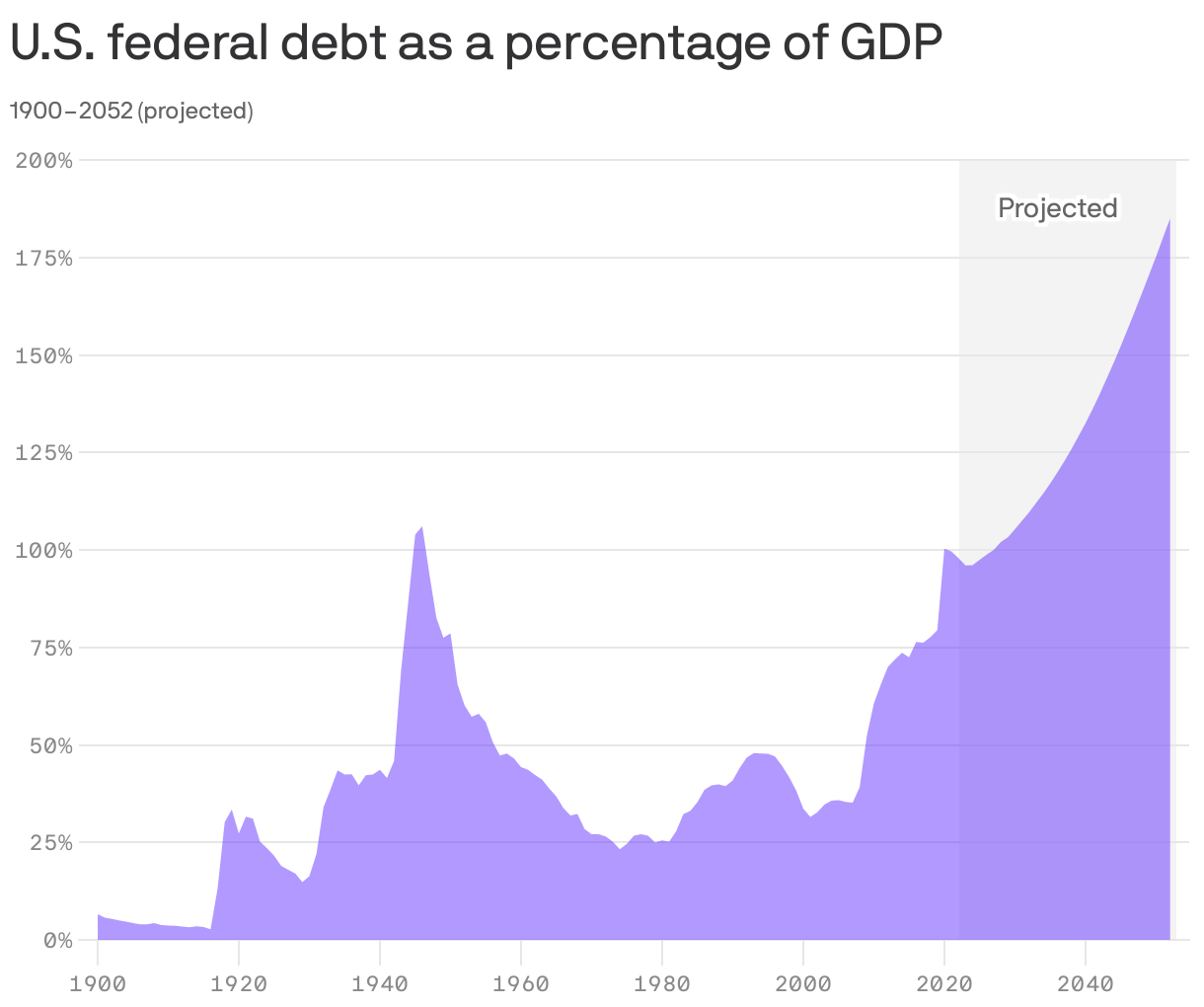
Fresh projections from the Congressional Budget Office show that higher interest rates could put pressure not seen in years on lawmakers' spending plans.
Why it matters: As interest rates go up amid the Fed's aggressive campaign to tamp down inflation, the cost of federal interest payments is expected to rise substantially — giving more fuel to those who want to pull back on spending.
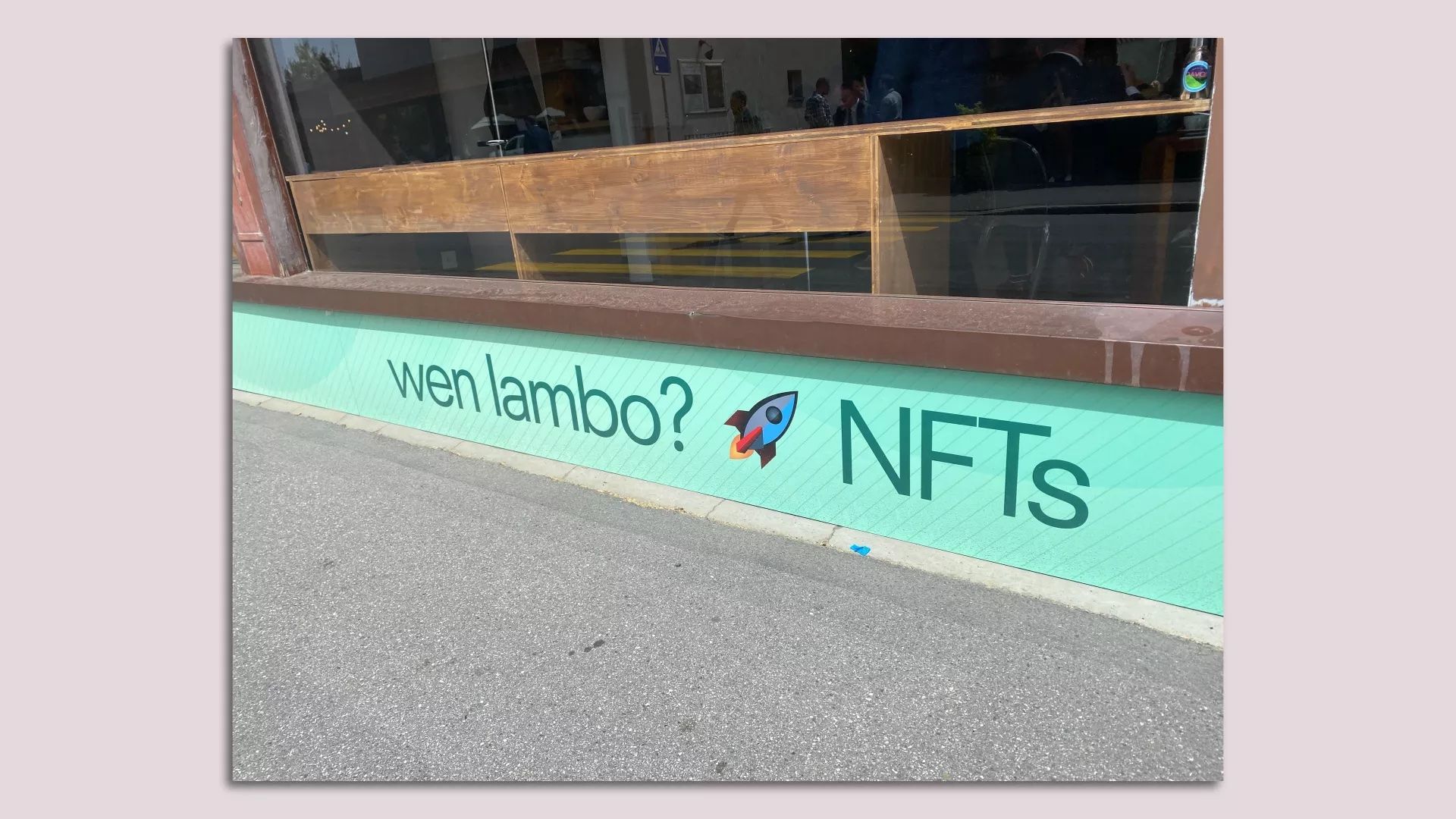
One constant at Davos is that the whole town becomes draped in prominent advertising from companies and countries keen to get the attention of the world's most powerful individuals, if only for a few precious seconds.
Driving the news: Invariably, the ads reflect constituencies that feel excluded from the official program. This year, that would be crypto.
Broadcom on Thursday announced an agreement to buy cloud computing giant VMware, controlled by Michael Dell, for approximately $61 billion.
Why it matters: This would be the year's second-largest tech merger, just behind Microsoft's deal for Activision Blizzard, and helps Broadcom continue to diversify beyond its semiconductor roots.
Inflation and surging gas prices have started to change the behavior of Americans whose earnings put them on the lower level of the country's income divide.
Why it matters: U.S. economic growth hinges on consumer spending. So, signs of strain among lower-income Americans could complicate the Federal Reserve's efforts to softly slow the economy with higher interest rates.
Just 12% of Americans think companies should be operating in Russia as normal, while nearly one third (31%) say multinational firms should never do business in Russia again, according to new data from the annual Axios Harris Poll 100.
The big picture: The vast majority of Americans think companies should place some limitations on their operations in countries with authoritarian regimes, according to the poll.
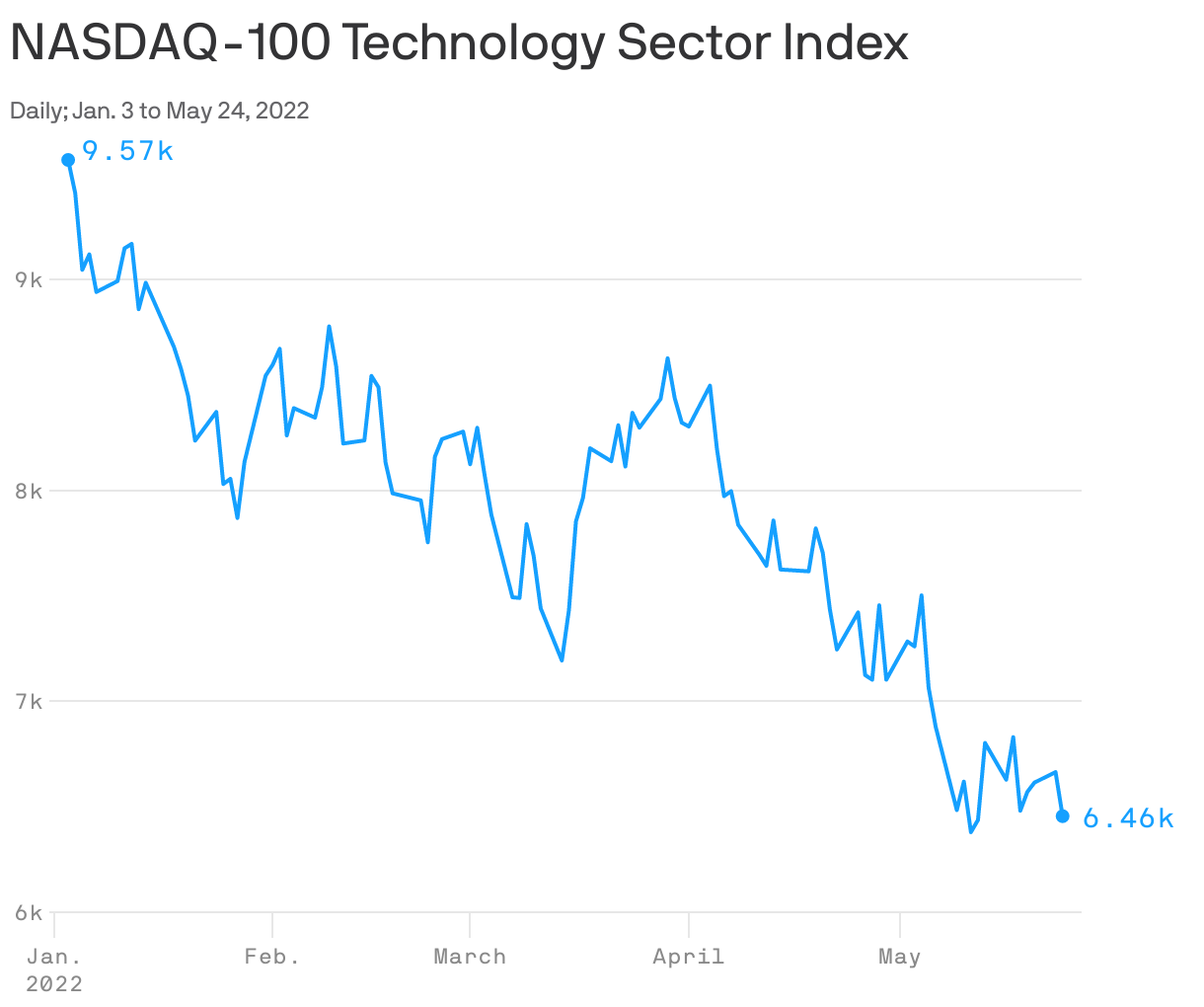
The tech market's long ride up made average investors feel a whole lot wealthier. Its recent slump has exaggerated their sense of loss.
Why it matters: The past decade's phenomenal on-paper gains caused a lot of people to forget just how volatile tech stocks are — and how fleeting stock-based wealth can be.
High levels of corporate concentration — where just a few companies make up an entire industry — contribute to inflation, finds a new paper from economists at the Federal Reserve Bank of Boston.
Why it matters: There's currently a raging debate over what exactly is causing record inflation in the U.S. This paper, coming from a less partisan source than, say, the White House, boosts the arguments of Democratic lawmakers and progressive economists who say companies are taking advantage of this moment to push prices up.
Robot vending machines may be coming soon to a mall, airport, theme park, grocery store or sports arena near you.
Why it matters: While mobile robots may eventually help solve the last-mile home delivery problem, they may first prove their worth as cute onsite sales representatives — earning incremental revenue for companies that deploy them while warming the public to the idea of robotic assistants.
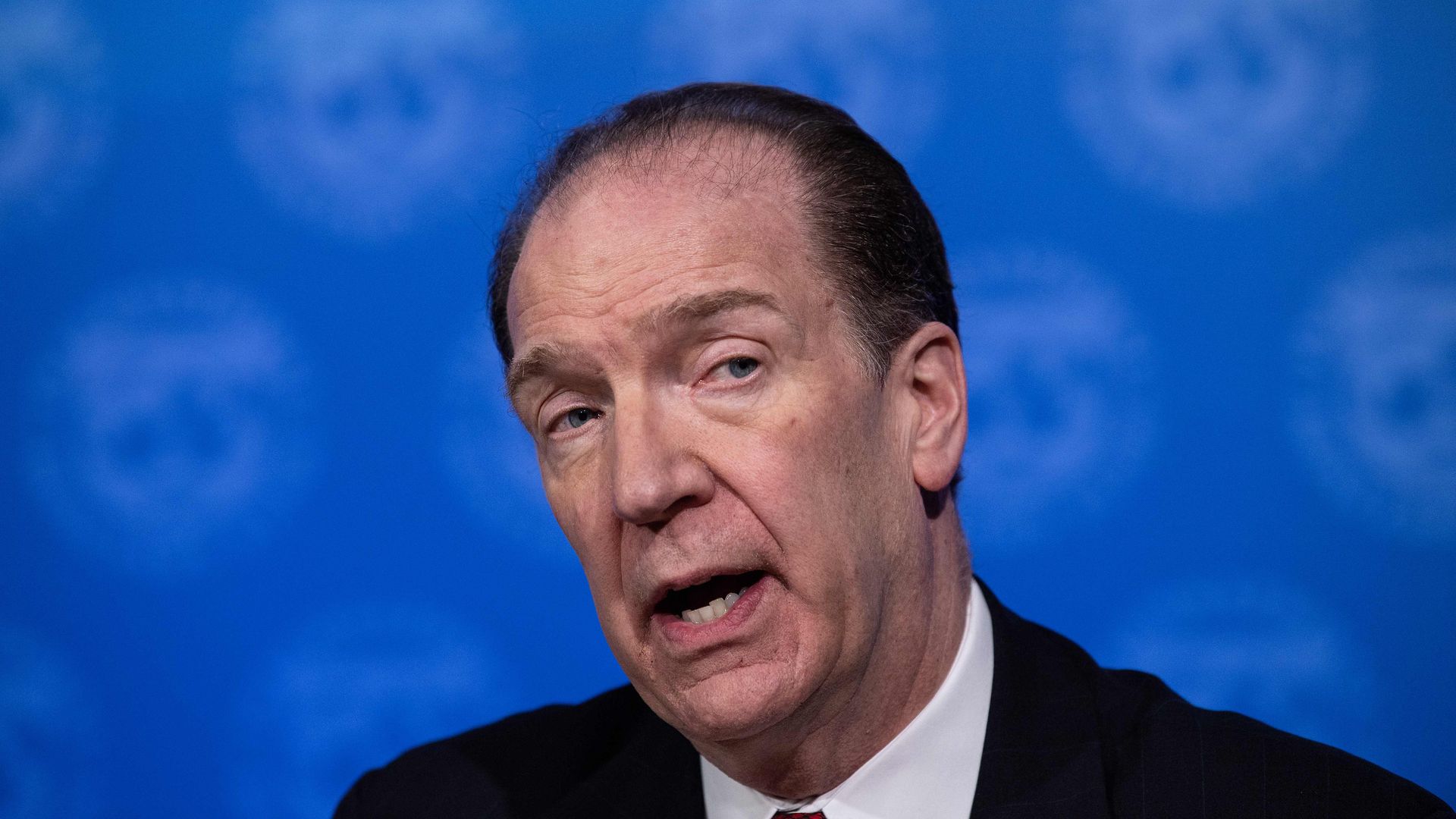
The World Bank is warning the Russian military invasion of Ukraine may cause a global recession as food and energy prices rise, per multiple reports.
What he's saying: "As we look at the global GDP ... it's hard right now to see how we avoid a recession," World Bank president David Malpass said at a U.S. Chamber of Commerce event, according to Sky News. "The idea of energy prices doubling is enough to trigger a recession by itself."














/2022/05/26/1653574705706.gif?w=3840)