A federal grand jury on Thursday indicted a former top Boeing pilot who is accused of deceiving the Federal Aviation Administration when the company sought the regulator’s approval for its 737 MAX plane.
Why it matters: A malfunction with the jet's flight control software, known as Maneuvering Characteristics Augmentation System (MCAS), had a hand to play in two crashes that killed 346 people.
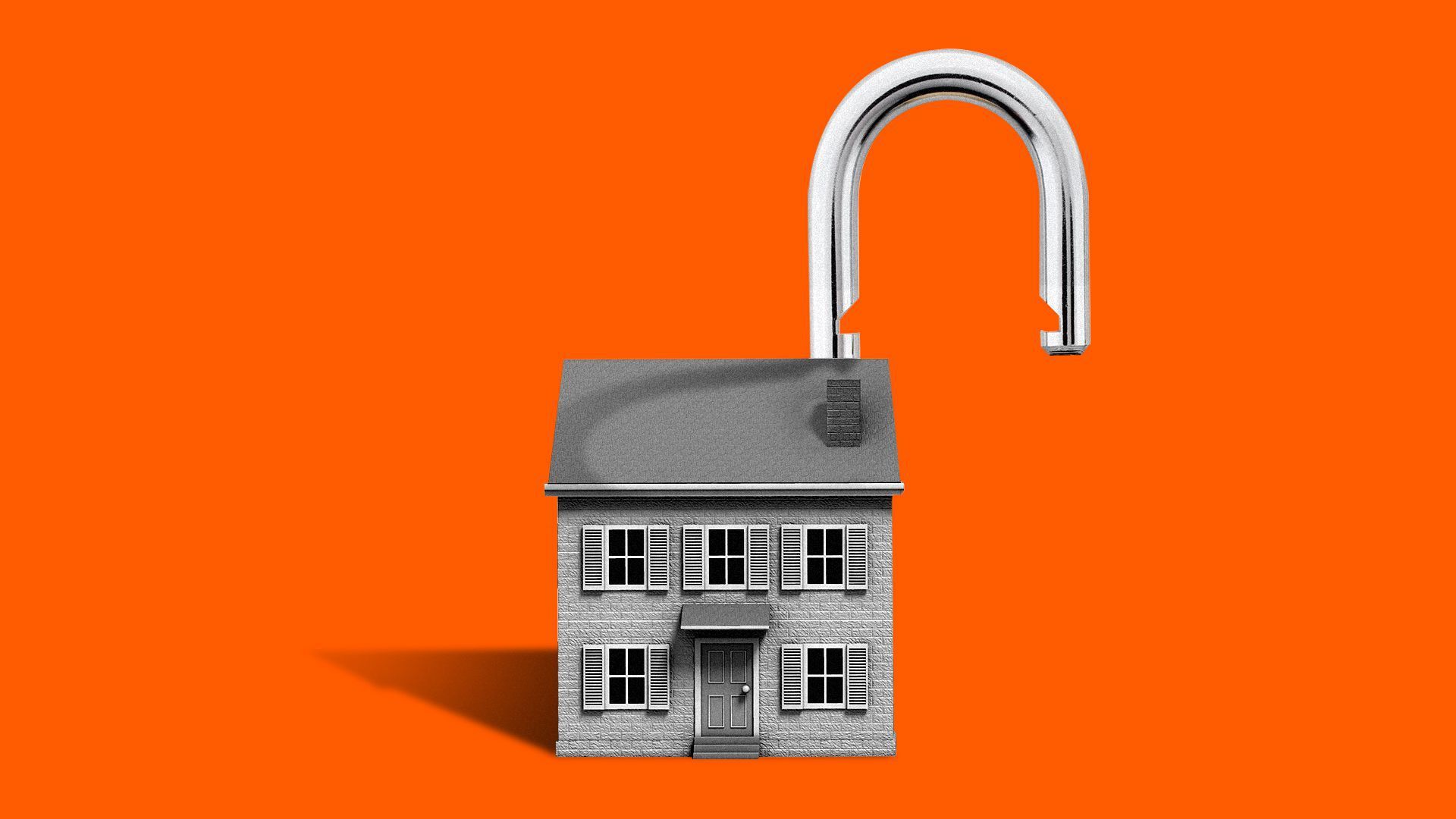
Why it matters: Fears that evictions would skyrocket after the Supreme Court blocked President Biden's COVID moratorium in August have not come to pass — yet.
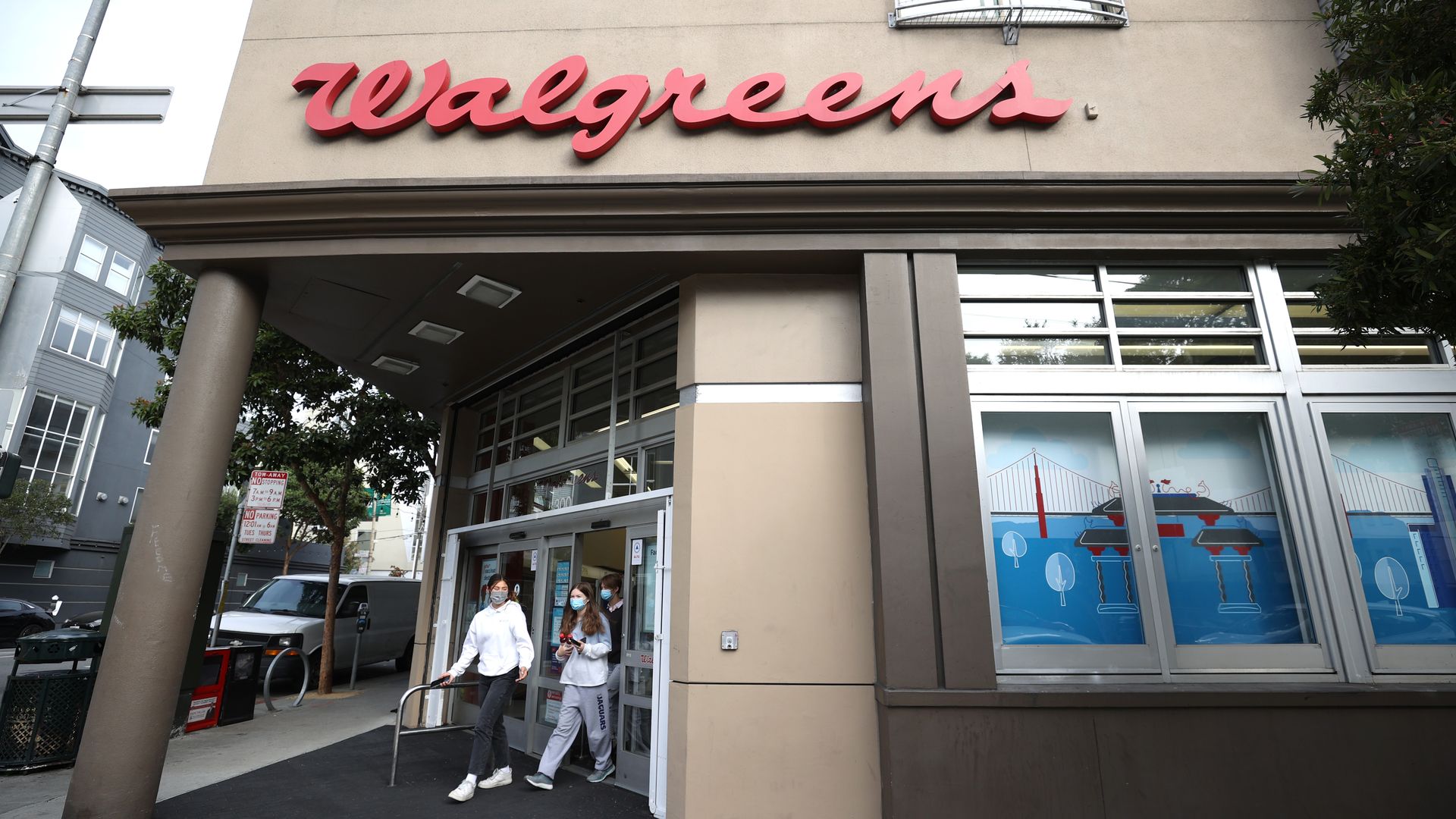
Walgreens Boots Alliance acquired majority stakes in two companies, VillageMD and CareCentrix, as part of the pharmacy chain's plan to provide more care inside its stores and people's homes.
The bottom line: These deals will move the company "away from retail and just dispensing pharmaceuticals," Walgreens CEO Roz Brewer told CNBC.
Websites and apps more popular with Latinos in the U.S. than other groups make them more susceptible both to exposure to misinformation and to sharing it, according to a Nielsen report.
What’s happening: 28% of the content Latinos see on news websites they most frequently visit was flagged as biased, conspiracy-based or pseudoscientific.
In a recent speech, Atlanta Fed president Raphael Bostic brought out the swear jar he keeps in his office. Except this jar is a swear jar with a difference: Staffers (and, of course, Bostic himself) have to put a dollar in every time they use the dreaded word "transitory."
Why it matters: As White House press secretary Jen Psaki says, no one really knows what the t-word word means.
The federal minimum wage is now just 28% of average hourly earnings. That's just half its level in 1968, when the ratio was 54%.
Why it matters: The federal minimum is so low — well below the living wage in all states — that it has at this point lost most of its power as an anchoring mechanism.
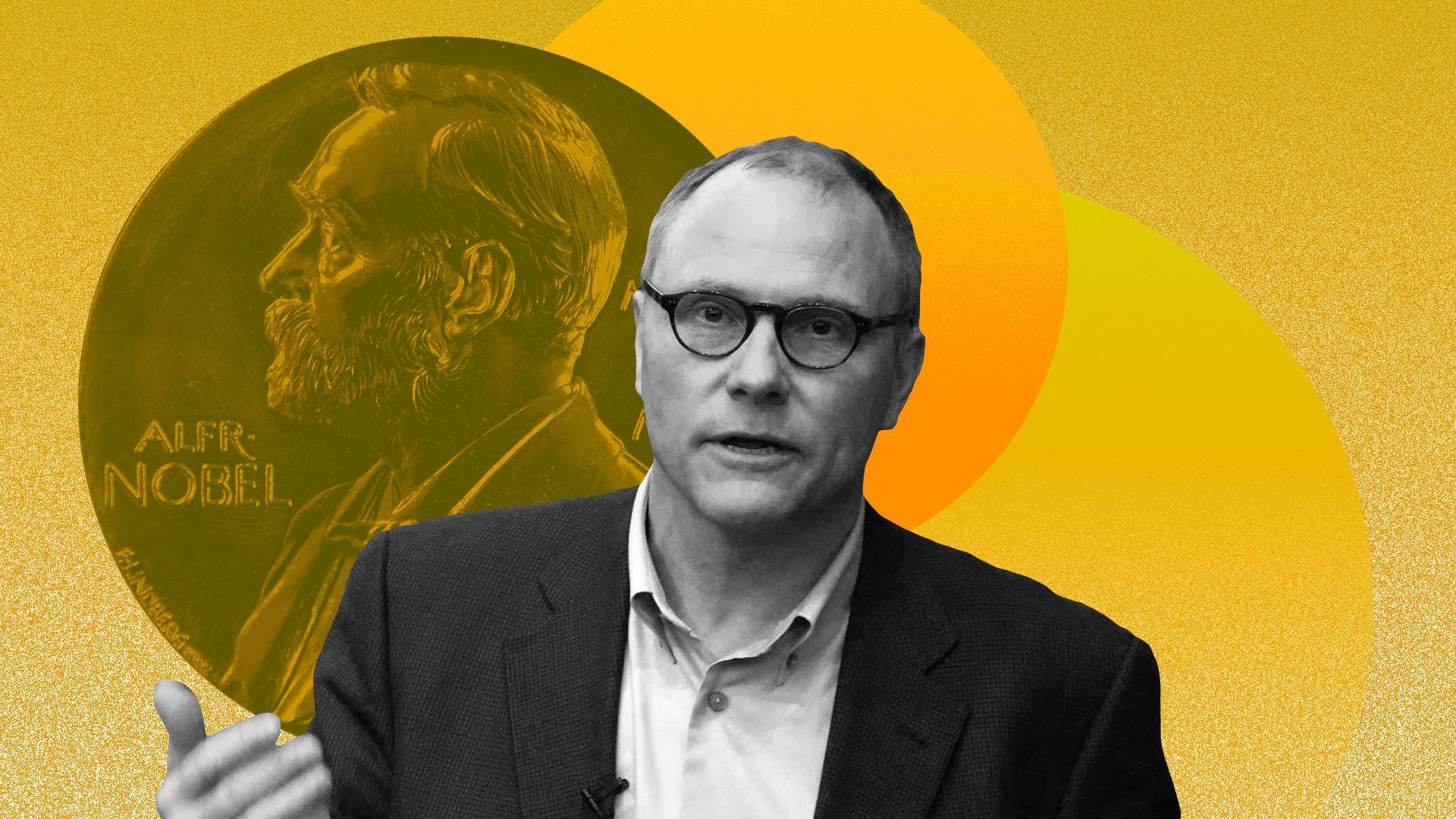
David Card, Joshua Angrist and Guido Imbens won the economics Nobel this week, not so much for what they discovered but for how they discovered it.
Why it matters: While fellow laureates Esther Duflo, Abhijit Banerjee, and Michael Kremer are famous for designing experiments to quantify the effects of economic interventions, this year's winners try to find natural experiments that shed light on whether economic theory is actually true.
Mindbody, a B2B discovery and booking engine for boutique fitness providers, agreed to buy ClassPass, a monthly subscription service for fitness classes.
Why it matters: Because this is one of those mergers that just made too much sense not to happen. Mindbody helps users discover local fitness options, but didn't offer the sorts of multi-vendor bundles that are ClassPass' bread and butter (or kale and virgin olive oil, in this context).
A new red flag showed up in Wednesday’s Consumer Price Index: The amount that Americans pay for shelter rose sharply in September.
Why it matters: Rent is a big-ticket item — it’s the single largest monthly expense for many people. And when rent rises, it tends to be somewhat sticky.
The SpringHill Company, a content production group co-founded by LeBron James and Maverick Carter, announced on Thursday that it sold a "significant minority stake" to an investor group at a $725 million valuation.
The big picture: Streaming has introduced a wave of consolidation in Hollywood, as studios look to beef up their production capabilities to meet growing content demands.
Technology can be a big seller in new cars, but it turns out that many digital features go unused — assuming owners even know their car has them.
Why it matters: High-tech features are driving up vehicle prices. But if consumers don't use them — or are frustrated because the stuff doesn't work properly — then both automakers and car buyers are wasting their money.
Driving the news: For more than 1 in 3 advanced technologies, most owners didn't even use the feature during the first three months of ownership, a J.D. Power tech study found.
Usually, owners say it's because they don't need the feature, but sometimes it's because they don't know about it or find it difficult to use.
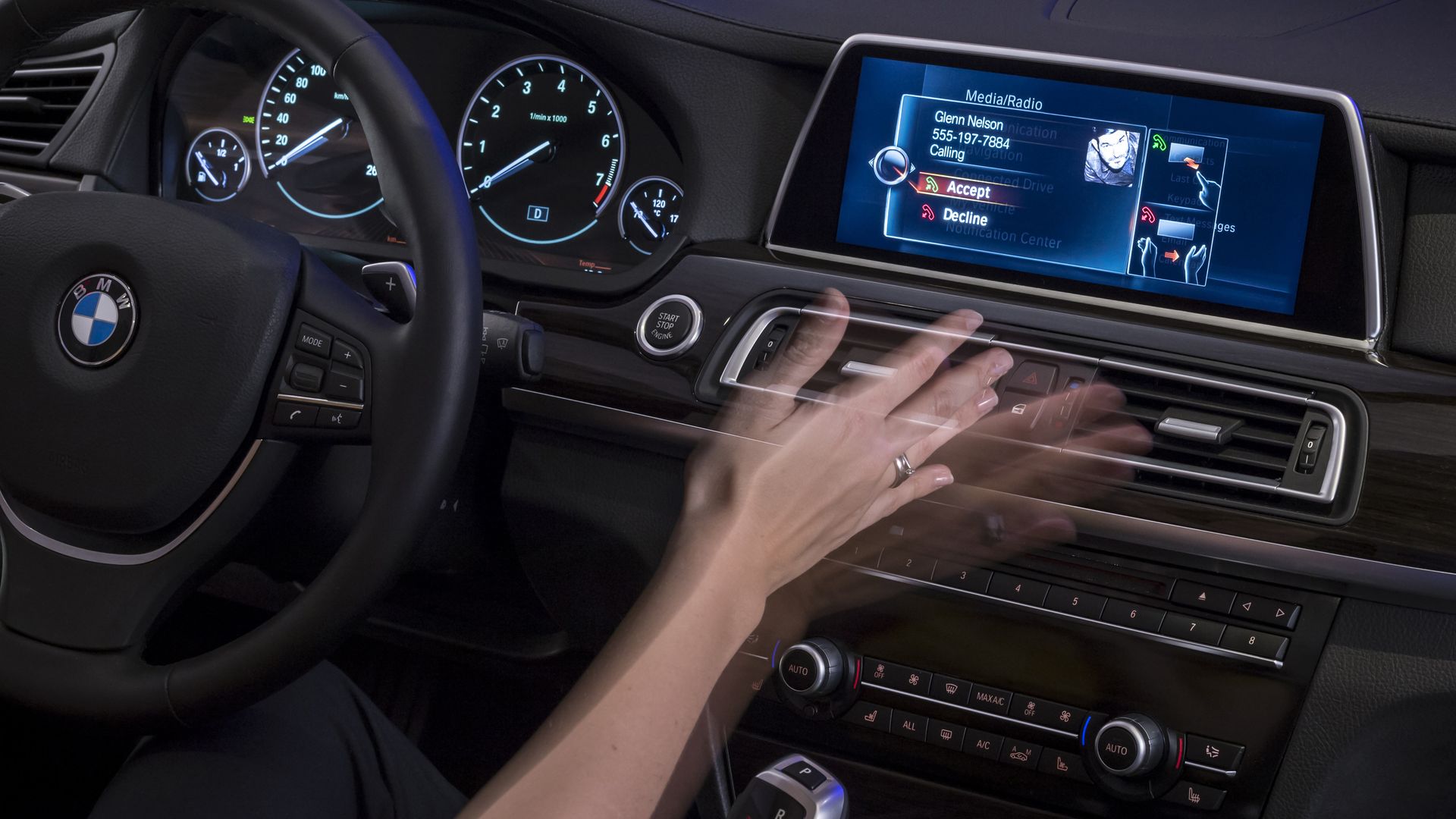
BMW's gesture control technology is a great example. It's supposed to let you wiggle a finger or wave your hand to perform tasks like adjusting the radio volume or answering a call — as opposed to touching a screen or button.
But the tech had the lowest overall satisfaction score in J.D. Power's annual U.S. Tech Experience Index for the second year in a row, with owners reporting 41 problems — meaning complaints — per 100 vehicles.
My thought bubble:I drove a BMW X6 last year that had gesture control as part of a $2,300 Premium package. I concur with BMW owners. It was easier to just use the buttons.
Other built-in technologies often go unused, despite big investments by automakers to add them. Some examples:
Digital marketplace: General Motors was the first to equip millions of cars with an in-car commerce platform called Marketplace that lets you order food, make restaurant and hotel reservations, and find gas stations from your dashboard.
But 61% of owners say they've never used their car's digital marketplace, and 51% said they don't need it.
Driver/passenger communications: Honda, Hyundai and Toyota are among carmakers that let drivers talk more easily with rear-seat occupants via a microphone or camera.
52% say they've never used the system, and 40% say they don't need it. (Who needs a mic when you can just turn around and yell at your kids?)
Between the lines: Consumers are more likely to use emerging technology if the car dealer does a good job of demonstrating how it works, J.D. Power found.
But a lot of car salespeople aren't fully trained to explain all the features of the cars they sell — and often buyers don't ask, aren't interested, or can't take it all in.
Some dealers encourage buyers to schedule a follow-up visit to the dealership for a refresher.
When a buyer does get a lesson from their dealer about how to use an advanced feature, they use it more, the study found.
Examples of these features include "safe exit assist technology" — which warns parked drivers to wait for traffic before opening the door — and trailer assistance technology, which helps drivers maneuver a boat or RV, for example.
Yes, but: Owners are more than twice as likely to learn about such technology from an outside source (71%) than from a dealer (30%), the study found.
What car owners love: cameras, cameras and more cameras.
The top-rated technologies all provide an extra set of eyes: backup cameras with trajectory guidance, rear-view mirror cameras that enhance visibility, and 360-degree ground view cameras.
Electric vehicle owners also love one-pedal driving technology — which allows a driver to lift their foot off the accelerator to slow or stop without having to brake.
The bottom line: In-car technology has to be simple to use — and well-explained to the driver ahead of time — or it's not worth the money.
A whopping 87% of U.S. teenagers have iPhones,per a new survey of 10,000 young people from investment bank Piper Sandler.
Why it matters: The economy is going mobile as the next generation of consumers shops for clothes, watches TV and meets romantic partners almost exclusively on their phones.
Code hosting company GitLab will begin trading Thursday morning on the Nasdaq after raising about $800 million at a valuation of about $11 billion in an initial public offering.
Why it matters: This is a milestone that GitLab's older and arguably better known rival, GitHub, didn’t get to experience. GitHub, instead, sold to Microsoft in 2018 for $7.5 billion.
The CEOs of several Blue Cross Blue Shield insurance companies received significant pay raises and bonuses in 2020, according to an analysis by AIS Health.
Why it matters: The not-for-profit Blue Cross Blue Shield insurers keep executive compensation more hidden than publicly traded insurers. And the data show pay increased during the pandemic, as insurers retained higher profits due to people delaying care.
Some 10,000 unionized Deere & Company workers went on strike early Thursday after rejecting a contract proposal from the agriculture equipment manufacturer.
The big picture: The John Deere tractors maker and negotiators for the United Automobile Workers (UAW) reached a deal on the proposal earlier this month. 90% of union members voted against the agreement, per Reuters.
Netflix co-CEO Ted Sarandos on Monday responded to growing frustrations among employees about the company's handling of anti-transgender comments made by comedian Dave Chappelle in his most recent Netflix special "The Closer."
Yes, but: His justification has only intensified frustrations, sources told Axios on Wednesday.